Age of Exploration Unit Study: Spark Curiosity with Interactive Maps
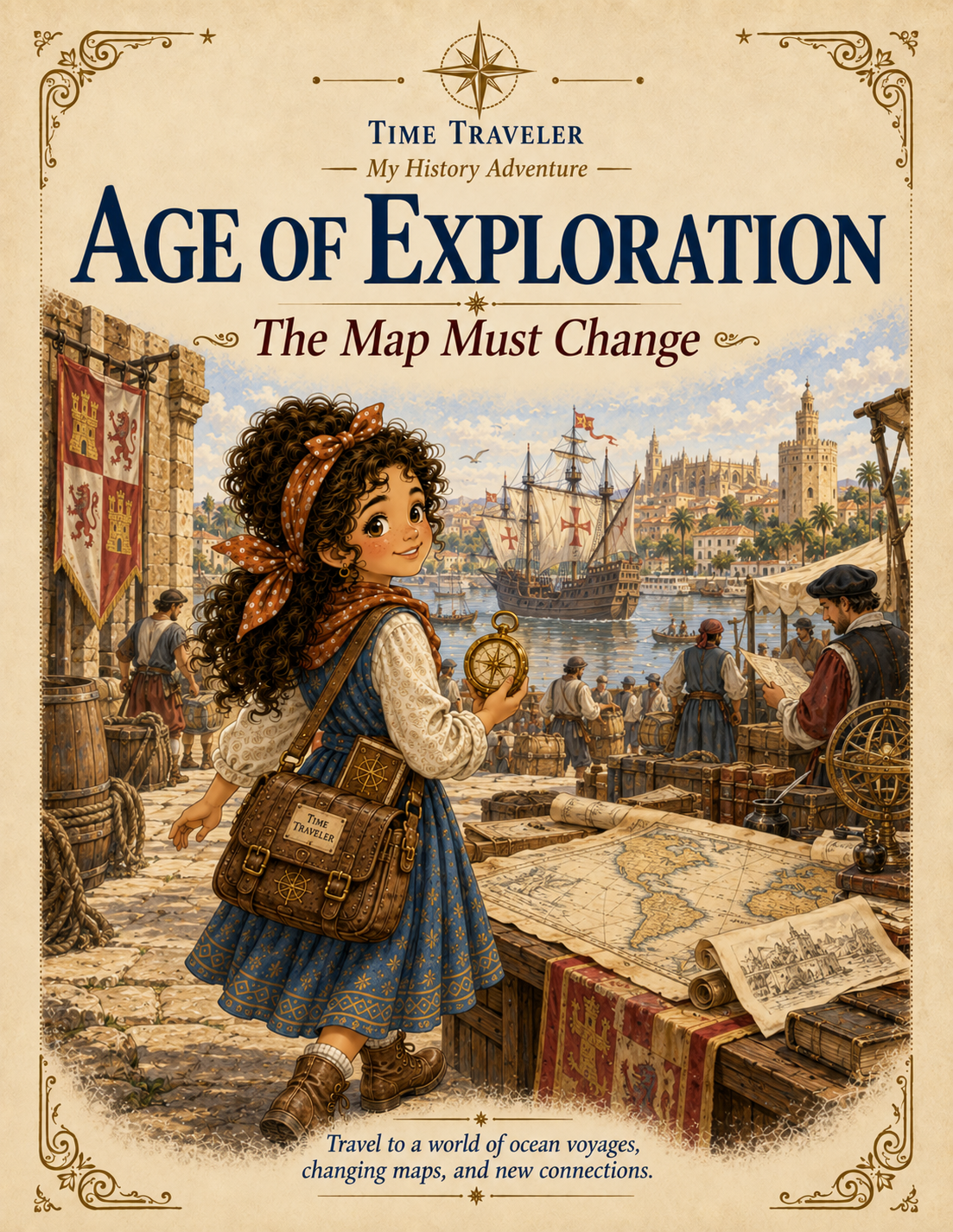
When it comes to capturing a child’s imagination, the Age of Discovery is a historical powerhouse. Between the busy ports of Seville, sweeping ocean voyages, and changing maps of the world, it is an era practically designed to thrill young minds. But how do we turn this natural fascination into genuine educational value? The answer lies in an engaging Age of Exploration unit study that prioritizes interactive learning and critical analysis over passive reading.
By using thoughtfully designed materials, parents can transform a simple history lesson into a hands-on adventure. Let’s explore how interactive history books about early navigation, coastal sketches, and mapmaking develop a child’s curiosity, spatial reasoning, and analytical skills.
Why Interactive History for Kids Works
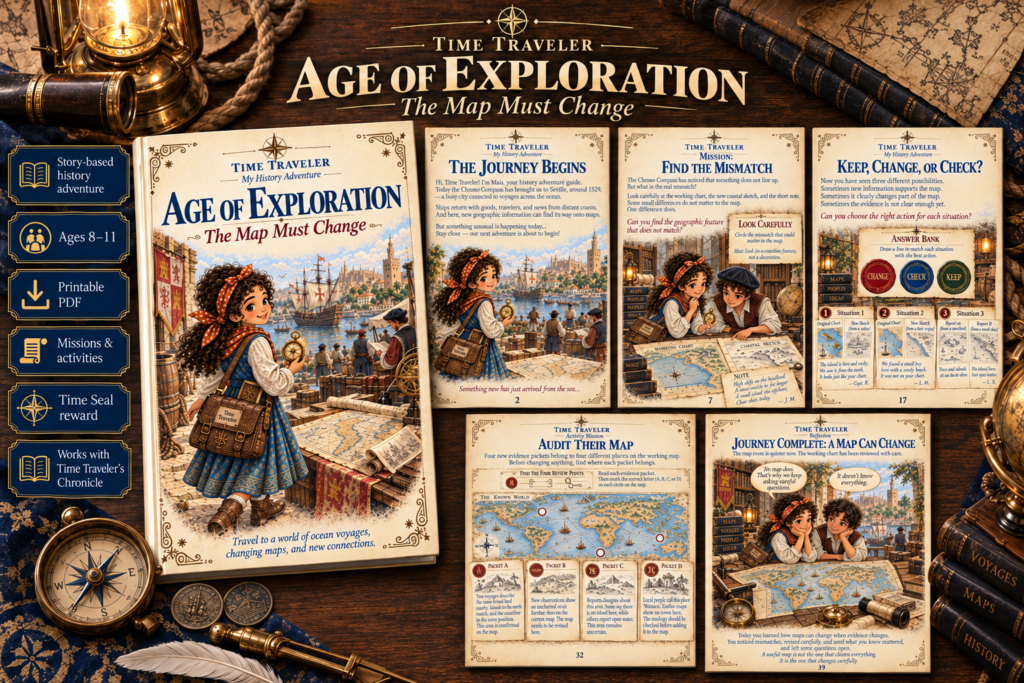
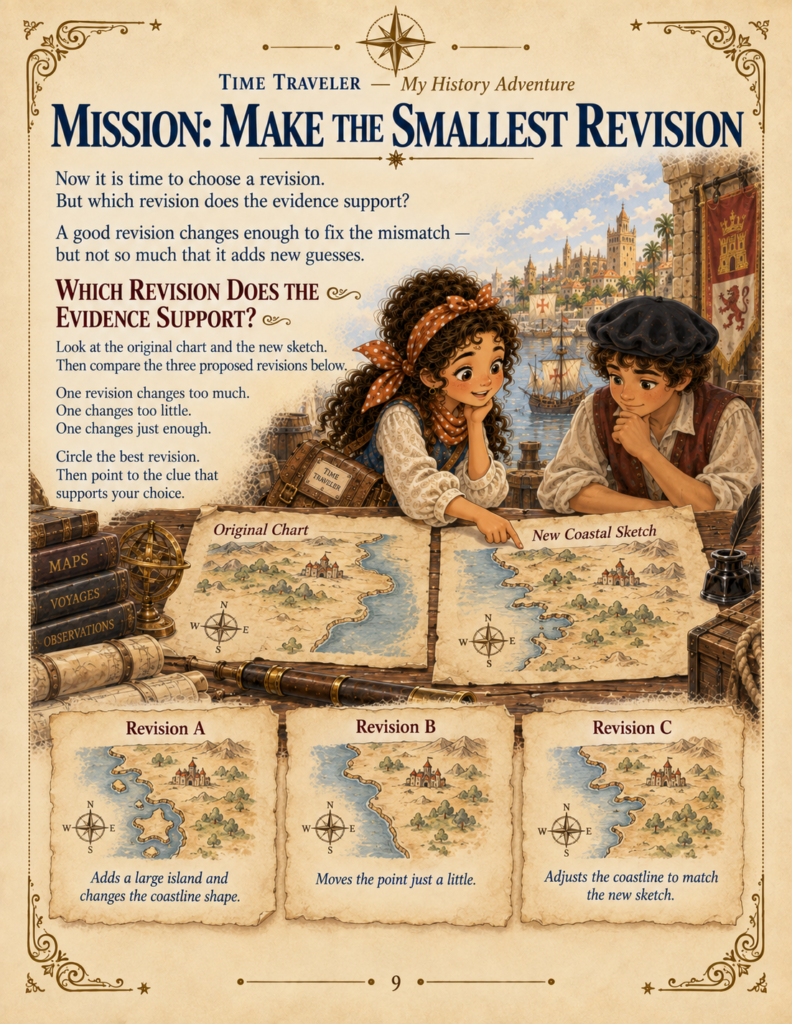
Children learn best when they are analyzing, solving, and doing. A standard textbook might just show a finished, centuries-old map, but an interactive workbook asks children to look at new coastal sketches and figure out what actually needs to change when a mismatch occurs. This shift from passive consumption to active participation is the core of effective education.
When you incorporate a structured interactive history for kids curriculum, you aren’t just teaching them dates and names. You are teaching them how to evaluate working models, spot discrepancies, and think like young historians.
Exploring the Map Room and Navigation Ecosystem
One of the most effective ways to teach history is to show children that historical maps were not static or perfect; they were working models that constantly evolved. A mapmaker’s readiness depended on an ecosystem of returning pilots, coastal observations, ship logs, and careful reviews.
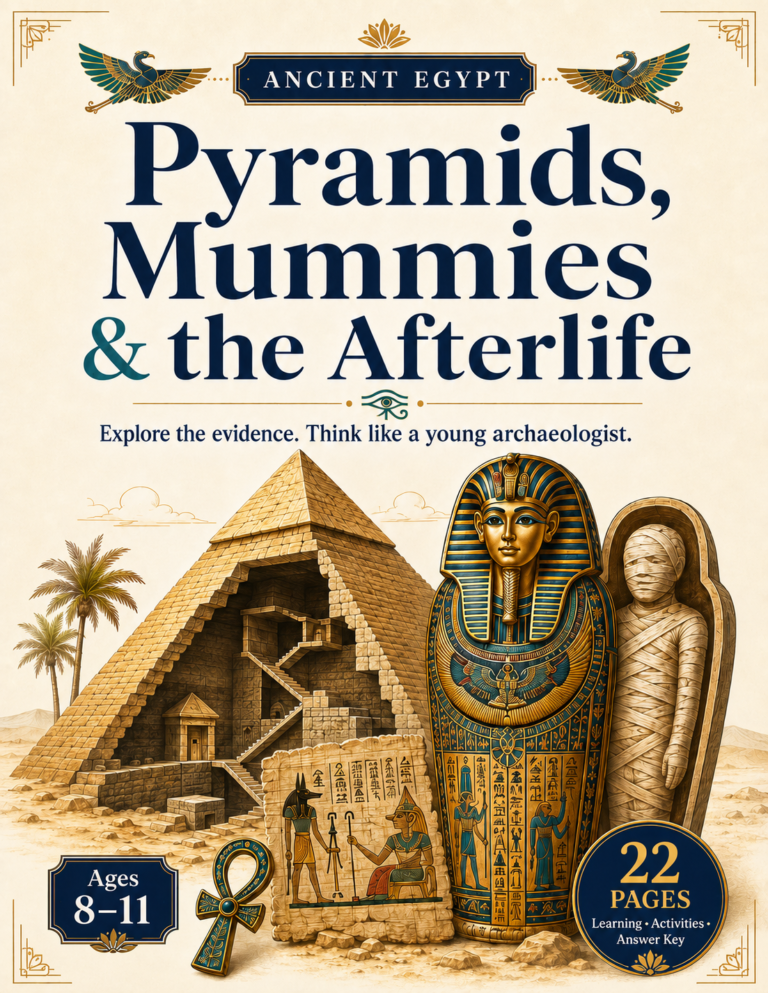
Much like the spatial puzzles we foster in our Ancient Egypt activities for kids, the sanctuary navigation in our Ancient Greece unit study, and the structural analysis in our Knights and Castles unit study, a well-rounded Age of Exploration unit study asks children to make connections. If two reports disagree about an island’s position, what should a mapmaker do next? Check the evidence before redrawing!
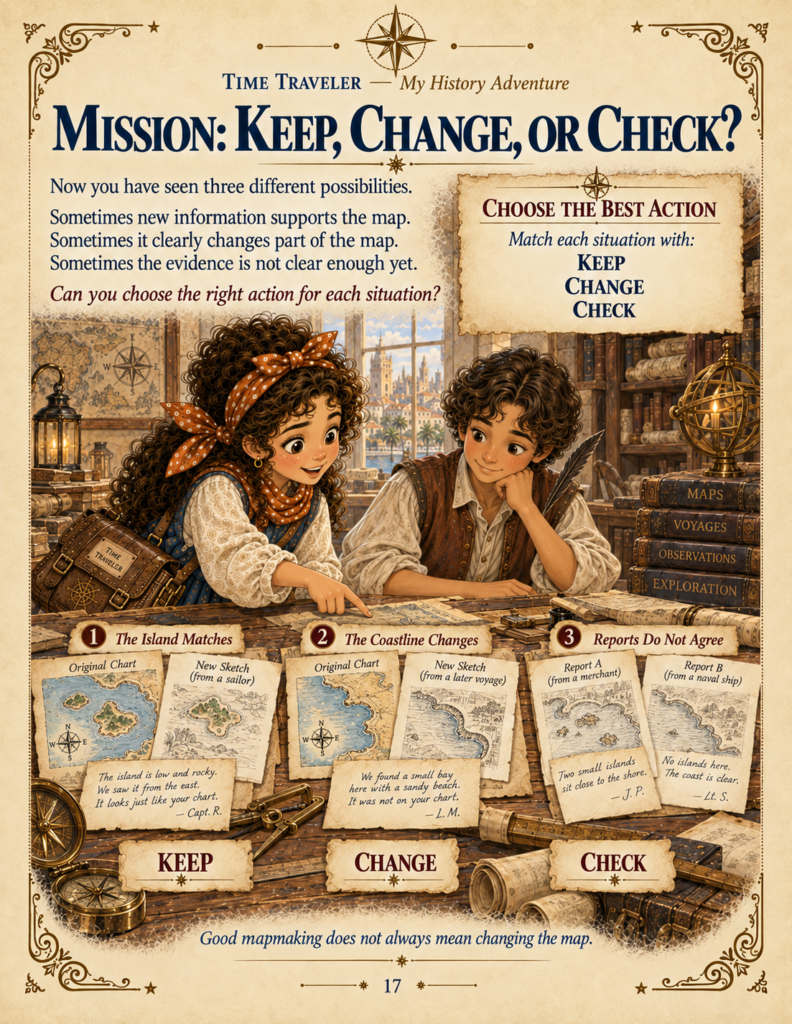
Learning Through Doing: «Keep, Change, Check, or Update?» Activity
To truly spark curiosity, children need to feel like they are managing the past. Engaging worksheets allow them to step into the shoes of an archivist or mapmaker trying to decide whether to keep an old coastline, revise it, or mark it as uncertain.
Thinking Like a Young Historian: Whose Knowledge Matters?
The ultimate goal of any educational resource should be to teach children how to think. This is where an in-depth Age of Exploration unit study truly shines.
History often presents a single perspective, but interactive history books introduce children to a broader view. They learn the crucial question: New to whom? A place could be new to a European traveler’s chart, while local residents had known its shores, names, and safe landing places for generations.
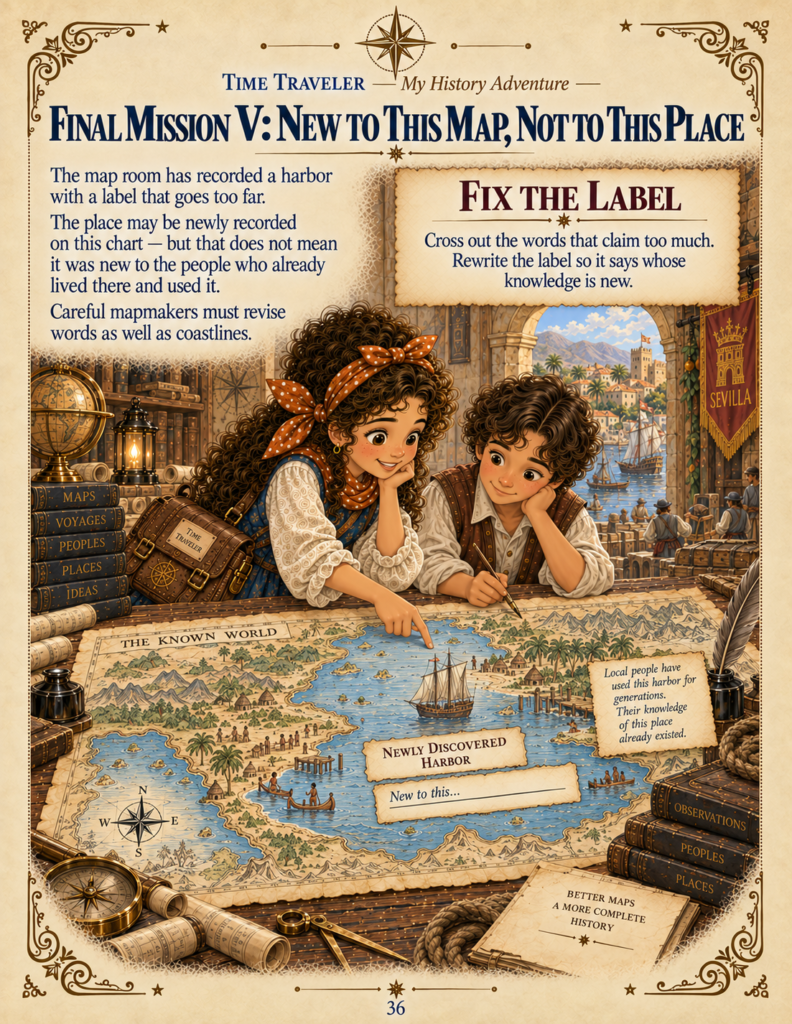
By asking kids to evaluate map claims, lines of territorial division, and differing perspectives, they learn to differentiate between what an official chart shows and the full human reality of a place. These are the kinds of critical thinking challenges that prepare children for advanced academic success.
Spark Your Child’s Curiosity Today
Parents are always on the lookout for resources that are both educational and highly engaging. Books and materials that focus on hands-on history offer the perfect balance. They take a naturally fascinating subject like maritime discovery and layer it with map-reading, problem-solving, and evidence evaluation.
By providing your child with resources that treat them like young historians, you are doing more than just teaching them about old ships and compasses. You are fostering a lifelong curiosity about the world, how knowledge changes over time, and the diverse perspectives that built our history.
Ready to dive into the past? Start your adventure today and watch your child’s historical curiosity come to life!