The Ultimate Guide to Flags of the World Activities for Kids: A Geography Adventure!
Let’s be completely honest: if you want to make a 7-year-old’s eyes glaze over, hand them a stack of 200 geography flashcards and ask them to memorize which flag belongs to which country. Traditional rote memorization is one of the fastest ways to kill a child’s natural curiosity about the globe.
Yet, learning to identify flags is a foundational part of any solid homeschool geography curriculum. Flags are vibrant, symbolic, and deeply tied to the history and culture of the people they represent. They tell stories about revolutions, natural landscapes, and ancient beliefs. So, how do we bridge the gap between boring memorization and the colorful reality of global symbols?
The answer is simple: you turn your child into a «Flag Detective.»
If you are looking for flags of the world activities for kids that actually stick, you need to transition from passive reading to active, puzzle-based learning. In this comprehensive guide, we are going to explore five incredibly engaging, hands-on ways to teach your children about world flags—without spending your entire weekend prepping lesson plans!
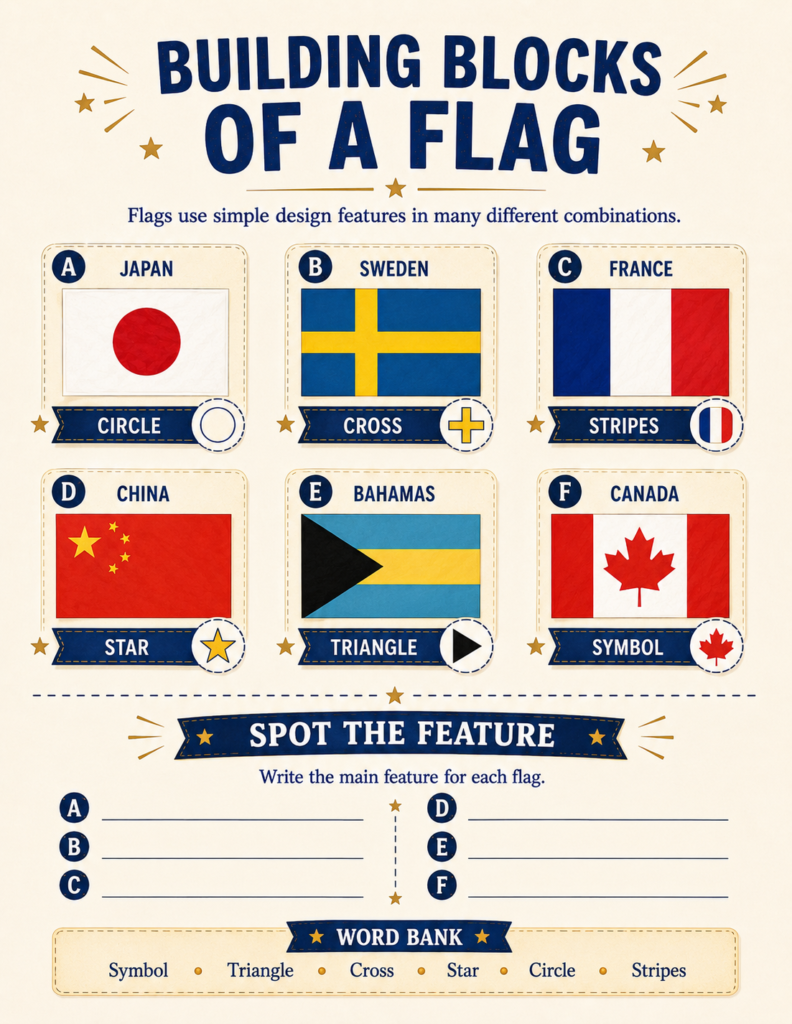
1. Decode the «Building Blocks» of a Flag
Before a child can memorize dozens of complex flags, they need to understand how flags are built. Flags are essentially just combinations of simple geometric shapes, colors, and specific cultural symbols.
Instead of showing them a flag and demanding the country name, break the design down into its core components. Teach them to spot the recurring patterns:
- The Nordic Cross: Show them how countries like Sweden, Denmark, and Finland share an off-center cross design.
- Stripes and Order: Point out the difference between horizontal stripes (like Germany) and vertical stripes (like France).
- Stars and Suns: Investigate flags that feature the Southern Cross constellation (like Australia and New Zealand) or a prominent sun symbol (like Argentina).
When kids learn to identify these «building blocks,» they stop seeing a chaotic mix of colors and start seeing a logical code waiting to be cracked.
2. Spot the «Look-Alikes» (Attention to Detail)
One of the most fun ways to make learning fun is to introduce an element of visual trickery. Many flags around the world look almost identical to the untrained eye, and figuring out the differences requires intense focus and attention to detail.
Create a «Look-Alike Challenge» for your young explorer. Put two highly similar flags side-by-side and ask them to play «Spot the Difference.»
- Compare Ireland (Green, White, Orange) and Côte d’Ivoire (Orange, White, Green). Simply reversing the color order changes the entire continent!
- Compare Australia and New Zealand. How many stars do they each have? What color are the stars?
This type of activity dramatically improves a child’s visual discrimination skills and proves that in geography, tiny details matter immensely.
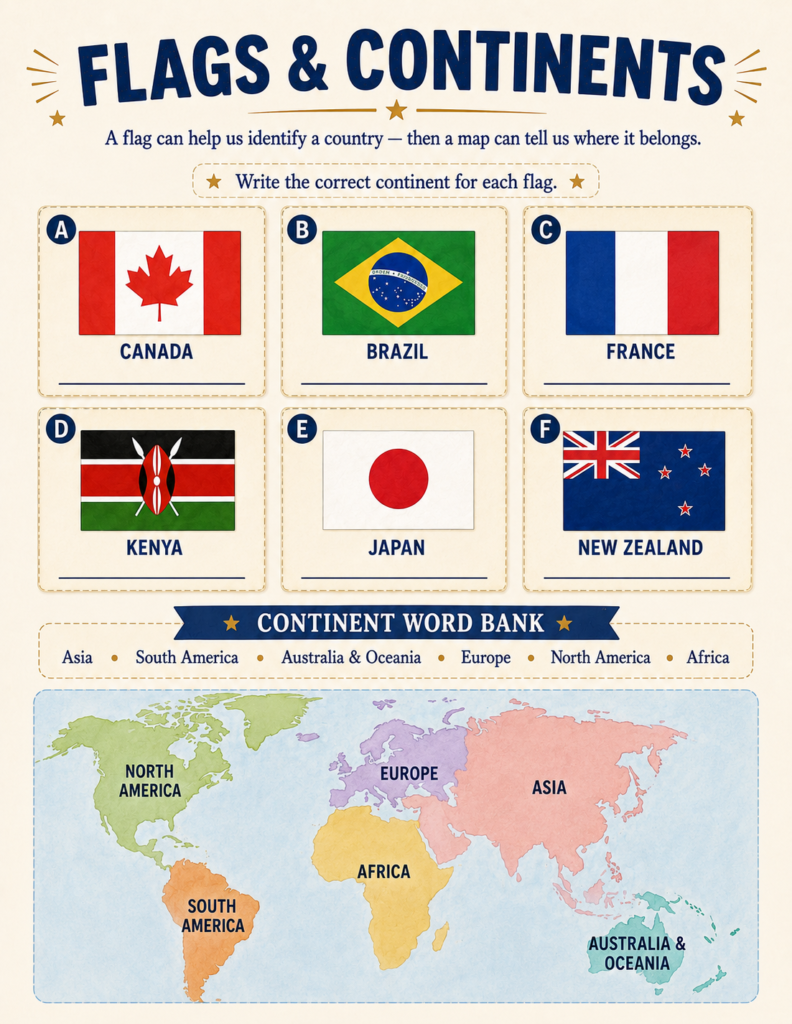
3. Connect the WHO to the WHERE (Mapping)
A flag tells you who a country is, but a map tells you where it is. Teaching flags in isolation from world maps is a huge missed opportunity.
To create truly effective hands on geography activities, you must connect the symbols to the continents. Give your child a blank world map and a set of flag stickers or cut-outs. Challenge them to place the Canadian maple leaf in North America, the Brazilian diamond in South America, and the Japanese circle in Asia.
You can even take this a step further by creating an «Around-the-World Flag Route.» Have your child draw a flight path that starts in Canada, crosses the Atlantic to France, travels south to South Africa, and soars east to Japan. This seamlessly blends flag recognition with essential map-reading skills, aligning perfectly with the principles of Montessori geography.
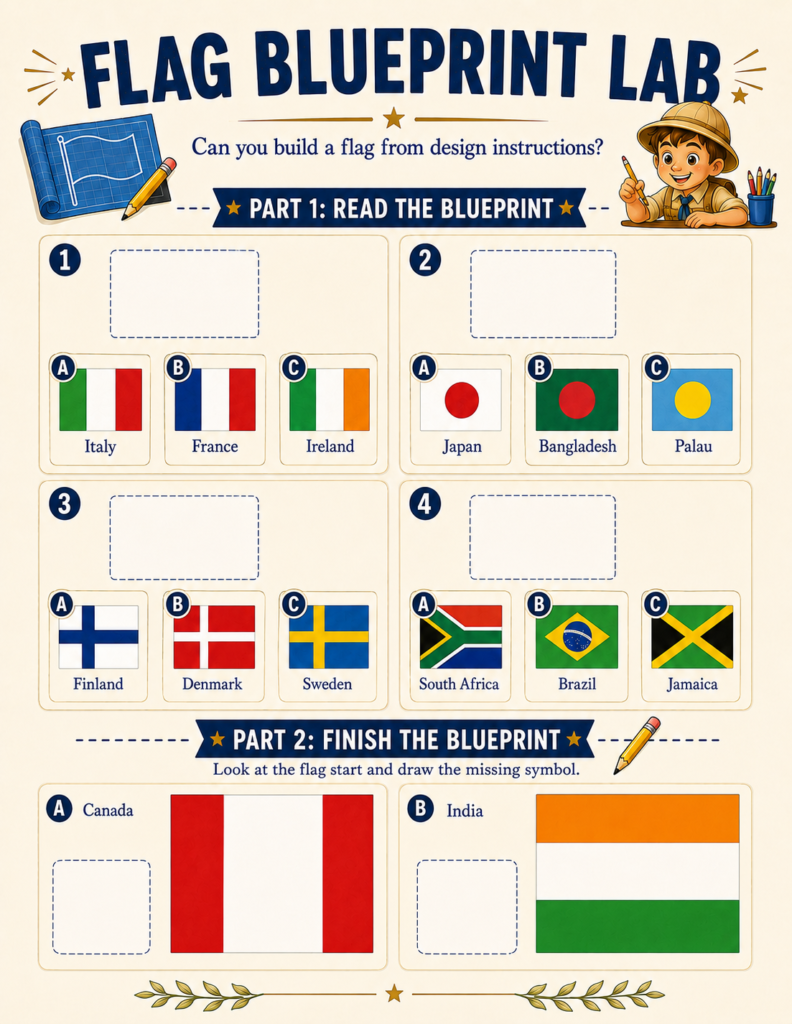
4. The Flag Blueprint Lab (Reading & Drawing)
If you want to test whether a child truly understands a concept, ask them to recreate it from scratch. The «Flag Blueprint» activity is a brilliant way to combine reading comprehension, fine motor skills, and geography.
Instead of showing your child a picture of a flag, give them a set of written instructions (a blueprint). For example:
- «Draw a white field with one red circle in the exact center.» (Japan)
- «Draw a green field with a yellow diamond in the middle, and a blue circle inside the diamond.» (Brazil)
- «Draw three vertical stripes: blue on the left, white in the middle, and red on the right.» (France)
Letting them draw and color the flags based on written clues forces them to slow down and process the information deeply. Plus, coloring is a fantastic, calming way to prevent summer slide on a quiet afternoon!
5. Gamify the Experience with a Passport Challenge
We have said it before, and we will say it again: gamification is the ultimate secret weapon for homeschool parents. Kids thrive when they have clear goals and tangible rewards.
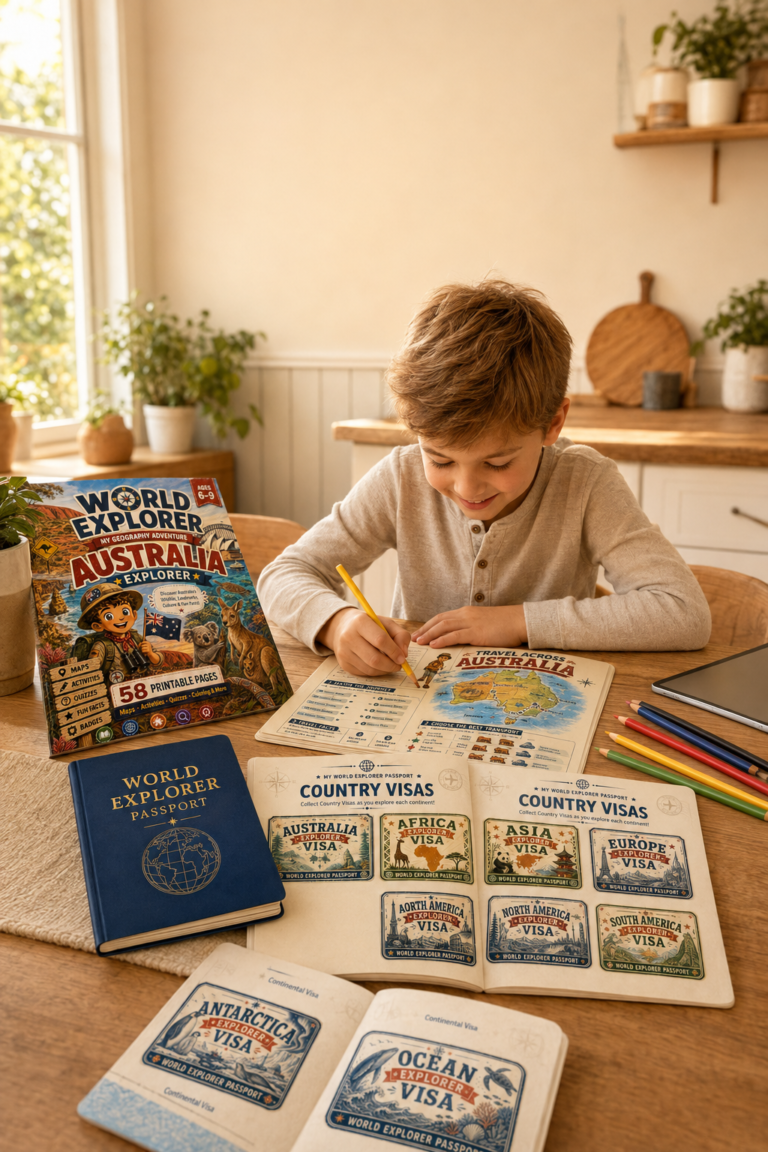
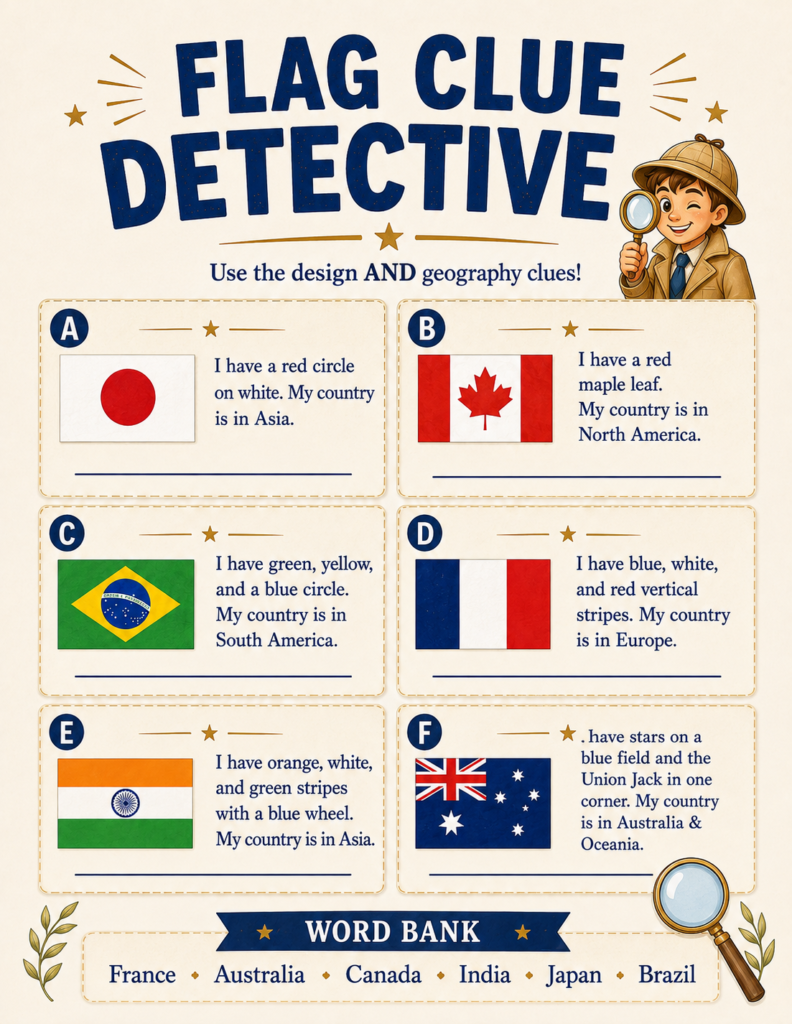
Instead of grading a quiz at the end of your flag unit study, send your child on a «Passport Challenge.» Tell them they are traveling around the globe, and to enter a new region, they must correctly identify a flag based on a set of clues.
- «My flag has a red maple leaf. I am located in North America. Who am I?» Once they guess correctly, reward them with a tangible prize—like an official «Visa Stamp» or a cut-out badge to glue into their very own explorer journal. Collecting these stamps taps into their psychological desire for completion and transforms a standard lesson into a highly anticipated game.
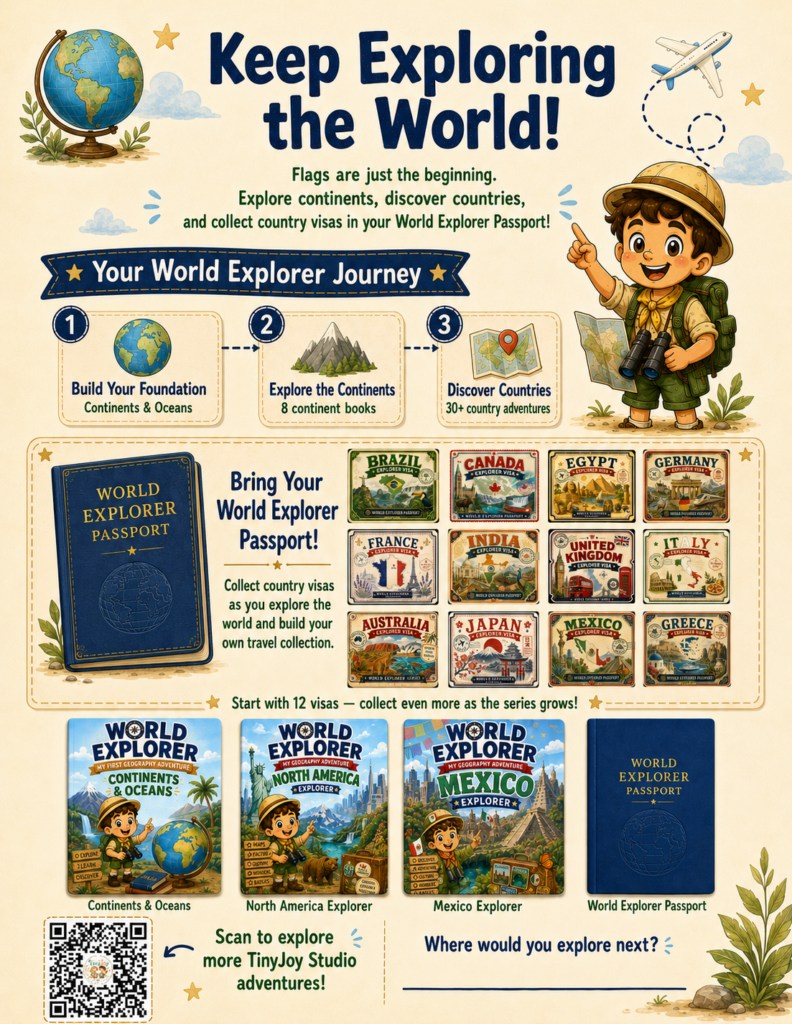
The Ultimate «Open-and-Go» Solution: Flags of the World Explorer
We know that reading through all these project ideas might leave you feeling a bit overwhelmed. As a busy parent, you don’t have hours to spend drawing look-alike flags, writing out blueprint instructions, and designing printable passport stamps from scratch.
You need something that provides the deep, immersive experience of a hands-on project, but with the ease of an «open-and-go» resource.
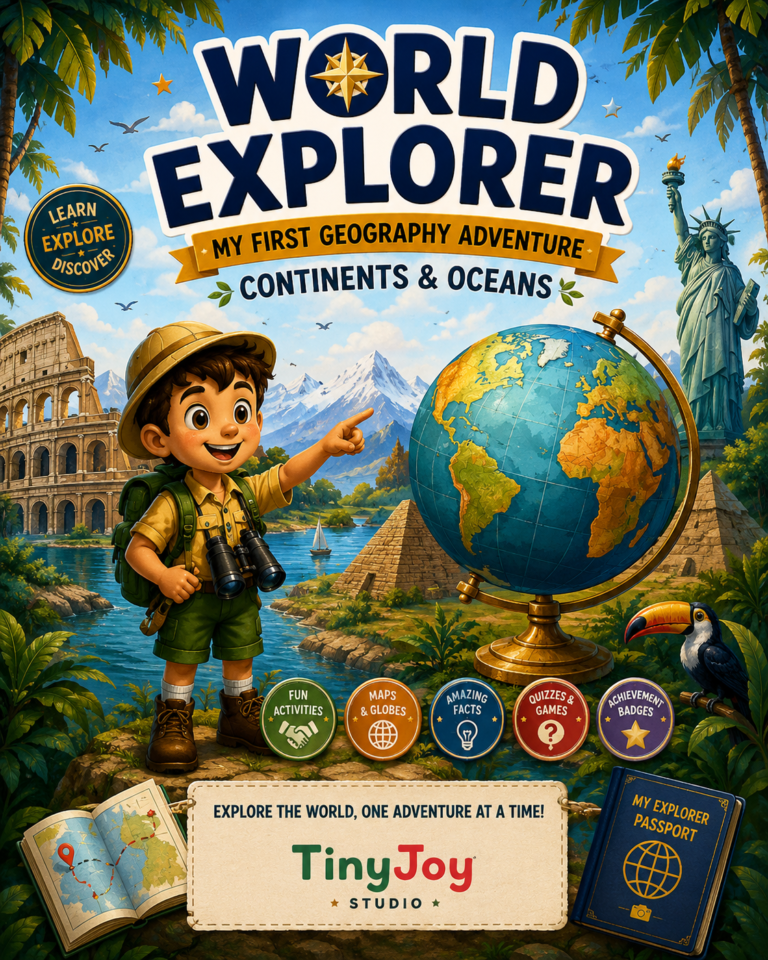
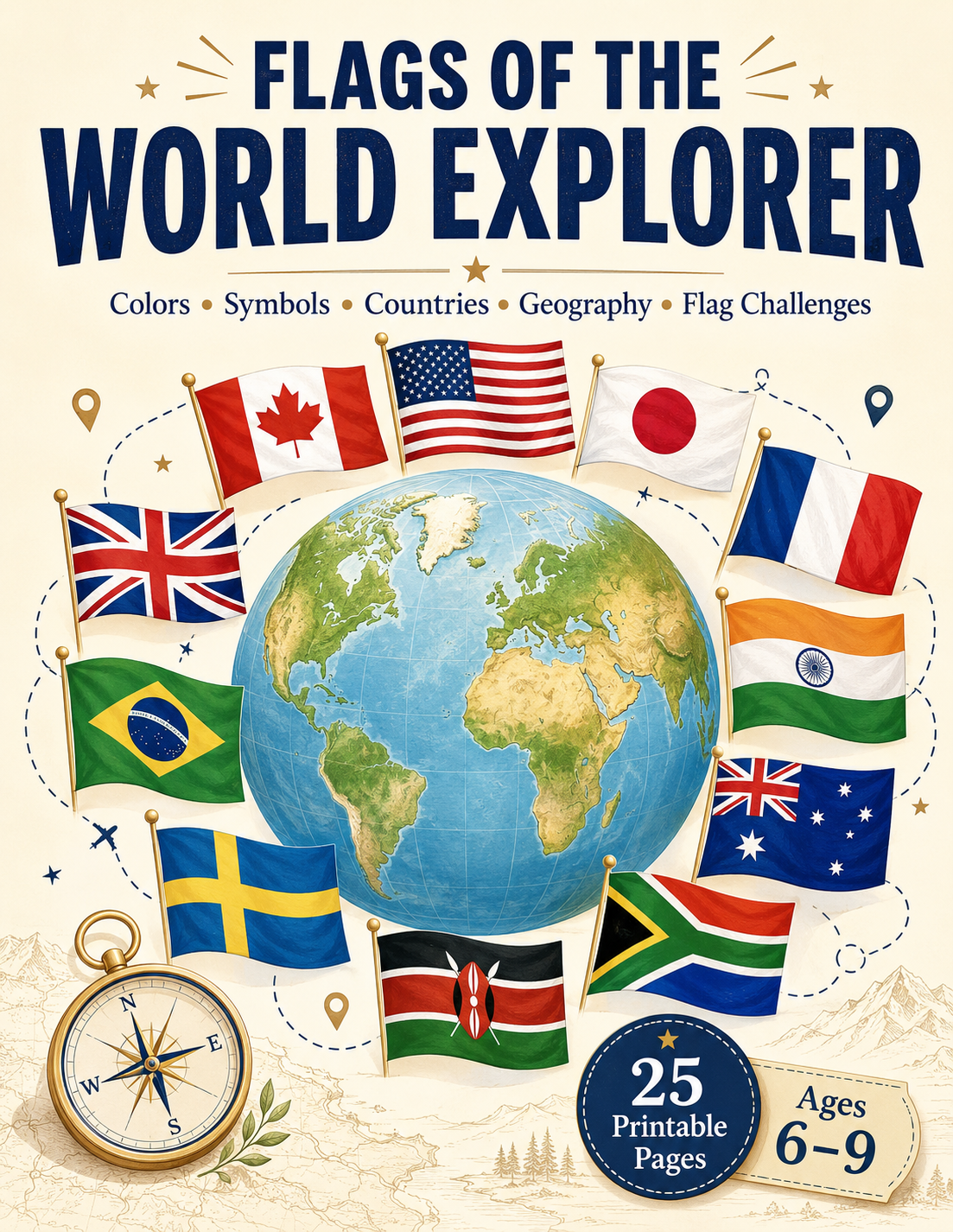
That is exactly why we created the Flags of the World Explorer activity book at Tiny Joy Studio!
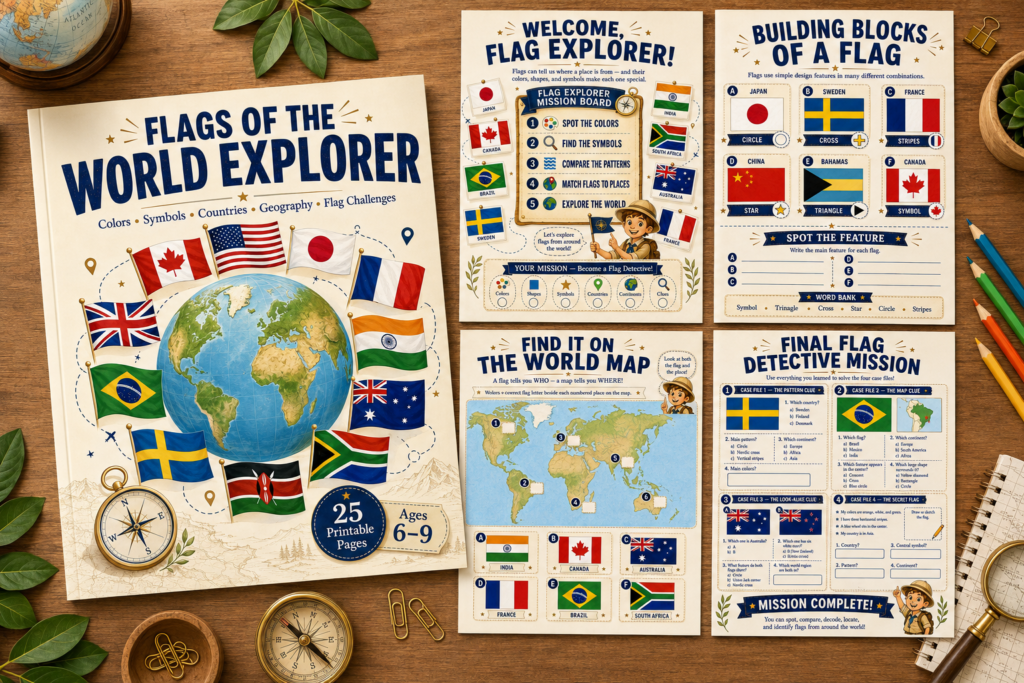
Designed specifically for curious 6 to 9-year-olds, this 25-page digital workbook takes the heavy lifting completely off your shoulders. Inside, your child will:
- Identify the building blocks of global flags (crosses, stars, stripes, and suns).
- Solve «Odd Flag Out» puzzles and Grid Coordinate challenges.
- Crack the code on look-alike flags.
- Map famous flags to their correct continents.
- Complete the ultimate Flag Passport Challenge, collecting stamps for every region they master!
There is absolutely zero prep required. Just print the pages, grab a set of markers, and watch your child transform into a global Flag Detective right at your kitchen table!
Are you ready to turn geography into an unforgettable adventure?
👉 Grab the Flags of the World Explorer Activity Book in the Tiny Joy Studio Etsy Shop Today!