Ancient Rome Unit Study: Spark Curiosity with Interactive History
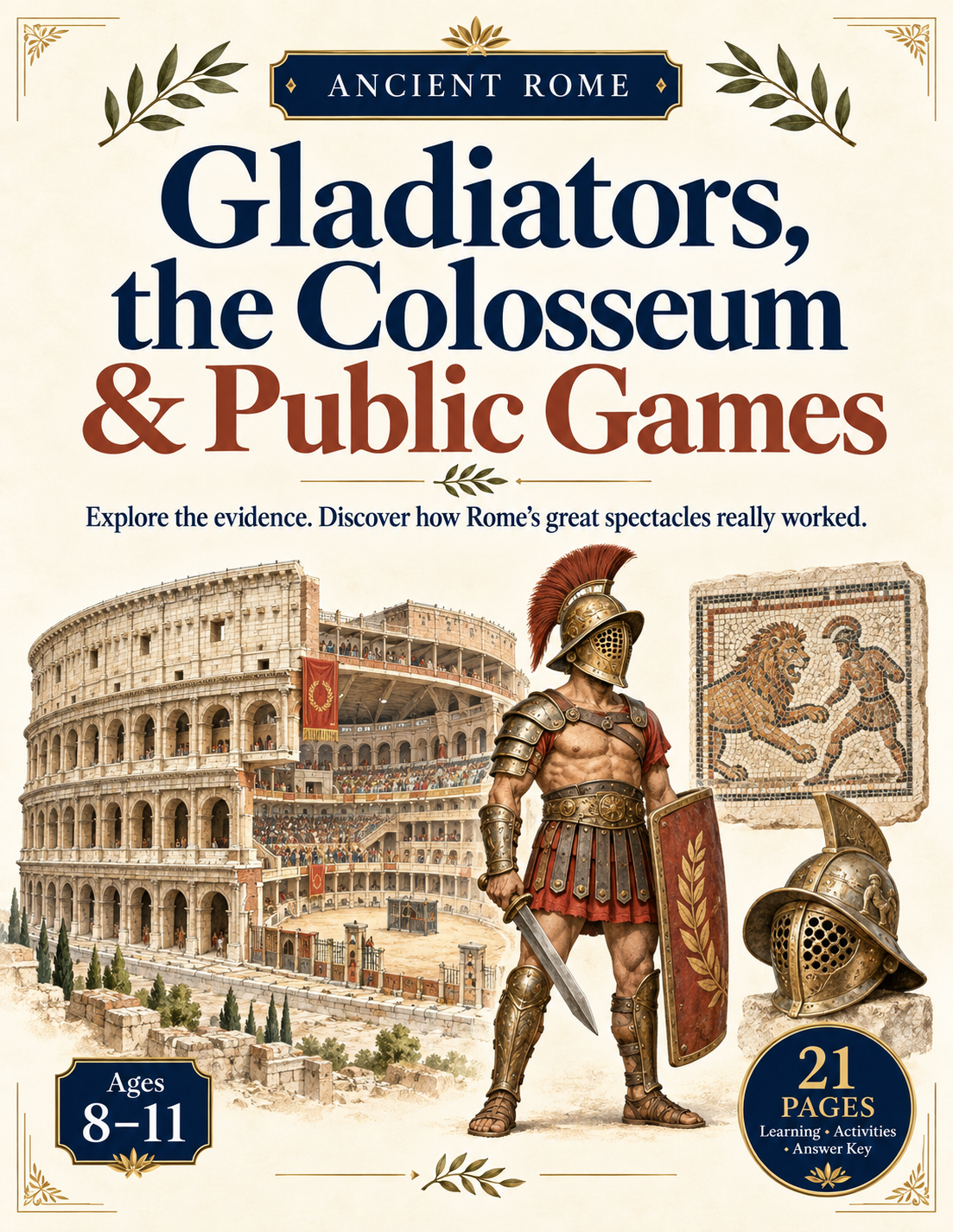
When it comes to capturing a child’s imagination, Ancient Rome is a historical powerhouse. Between the roaring crowds of the Colosseum, the discipline of the gladiators, and the massive scale of public games, it is an era practically designed to thrill young minds. But how do we turn this natural fascination into genuine educational value? The answer lies in an engaging Ancient Rome unit study that prioritizes interactive learning and critical thinking over passive reading.
By using thoughtfully designed materials, parents can transform a simple history lesson into a hands-on adventure. Let’s explore how interactive history books about Roman spectacles, arenas, and historical evidence develop a child’s curiosity, spatial reasoning, and analytical skills.
Why Interactive History for Kids Works
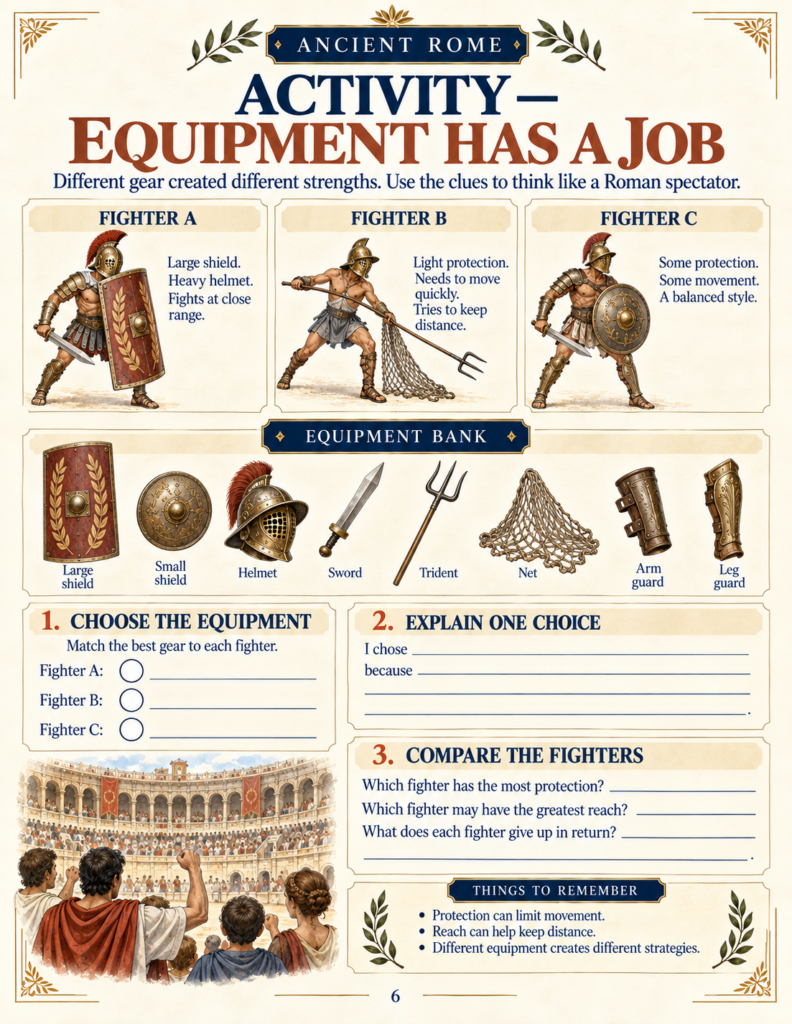
Children learn best when they are analyzing, solving, and doing. A standard textbook might just list the types of gladiators, but an interactive workbook asks children to look at historical clues and figure out why different armor created different fighting styles. This shift from passive consumption to active participation is the core of effective education.
When you incorporate a structured interactive history for kids curriculum, you aren’t just teaching them dates and names. You are teaching them how to evaluate evidence, reconstruct past events, and think like young historians.
Exploring the Colosseum and Public Games
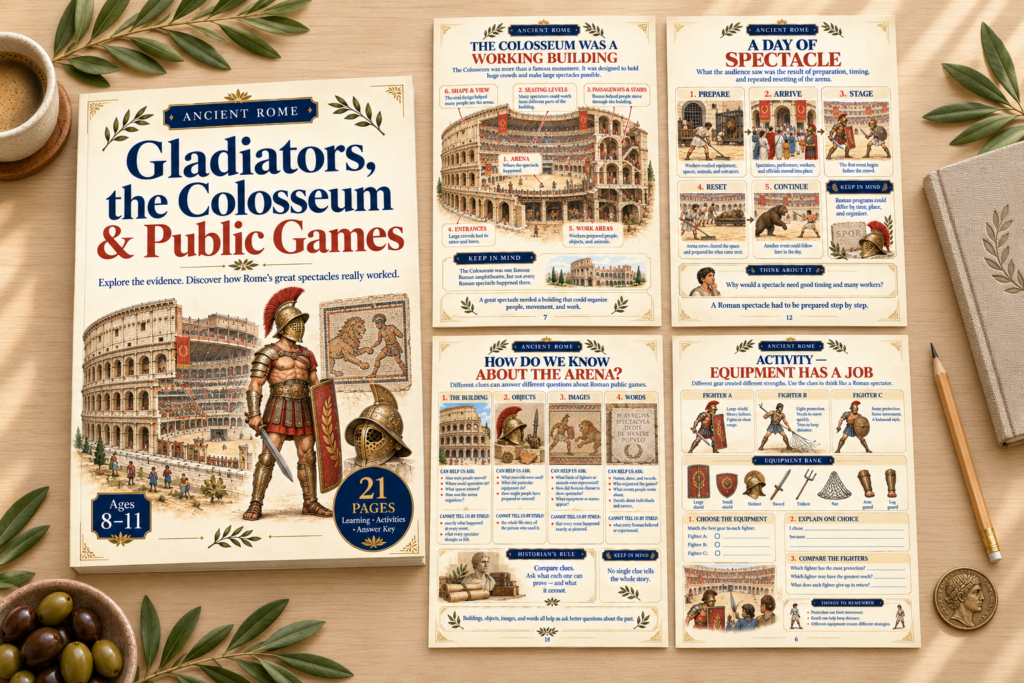
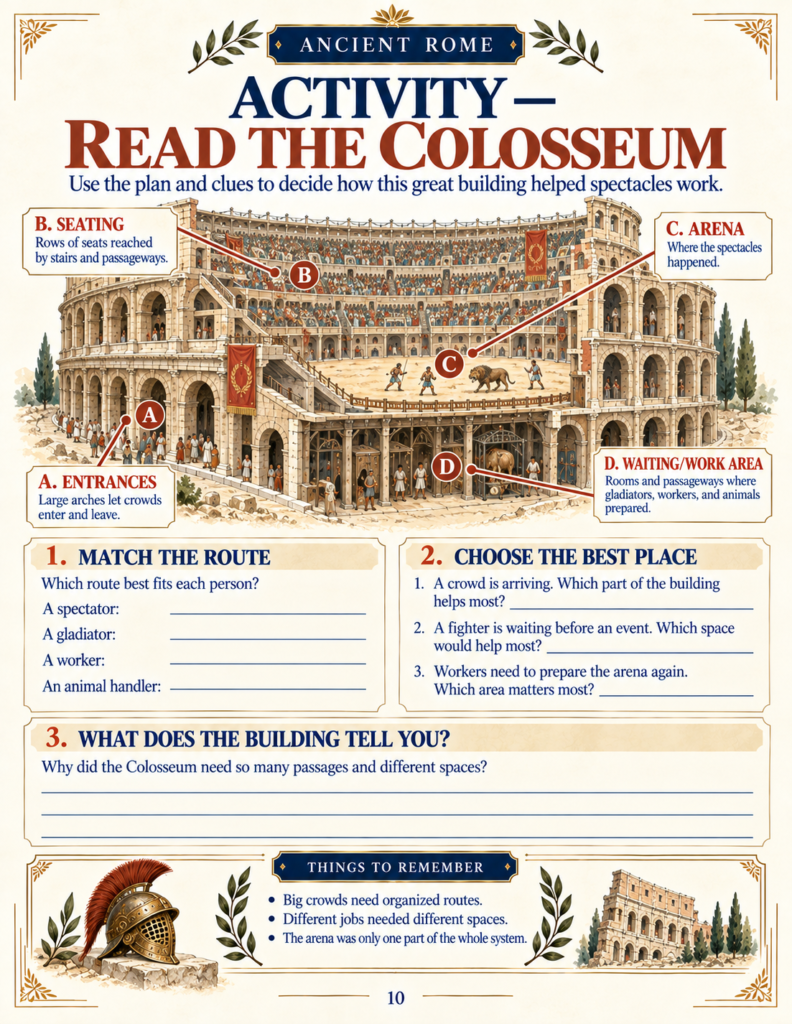
One of the most effective ways to teach history is to show children that monuments like the Colosseum were not just static stone buildings; they were highly functional, bustling machines designed to manage thousands of people. Roman public games connected people, places, preparation, and crowds.
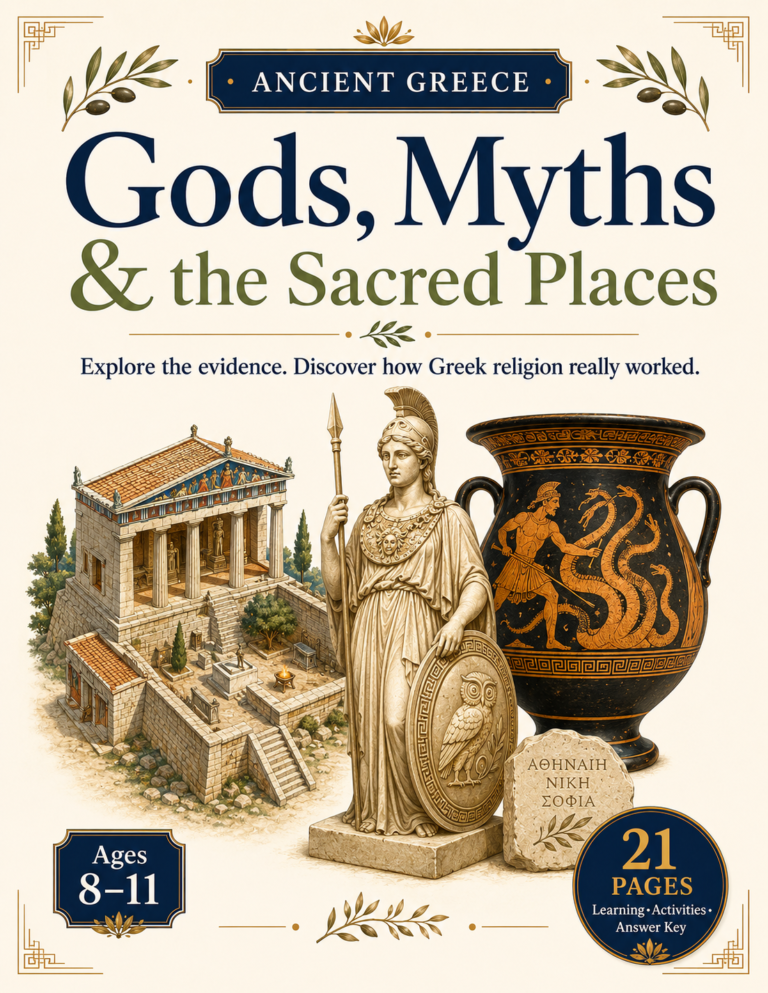
Much like the spatial puzzles we foster in our Ancient Egypt activities for kids and the evidence analysis in our Ancient Greece unit study, a well-rounded Ancient Rome unit study asks children to make connections. How did a gladiator get from the waiting area to the arena? How did thousands of spectators find their seats?
Learning Through Doing: «Read the Colosseum» Activity
To truly spark curiosity, children need to feel like they are managing the past. Engaging worksheets allow them to step into the shoes of an ancient architect or event planner trying to figure out how the building actually worked.
Thinking Like a Young Historian
The ultimate goal of any educational resource should be to teach children how to think. This is where an in-depth Ancient Rome unit study truly shines.
Historians rarely find perfect answers. They find ruins, objects, images, and words. Interactive history books introduce children to this reality by presenting them with the «Historian’s Rule»: compare clues and ask what each one can prove—and what it cannot.
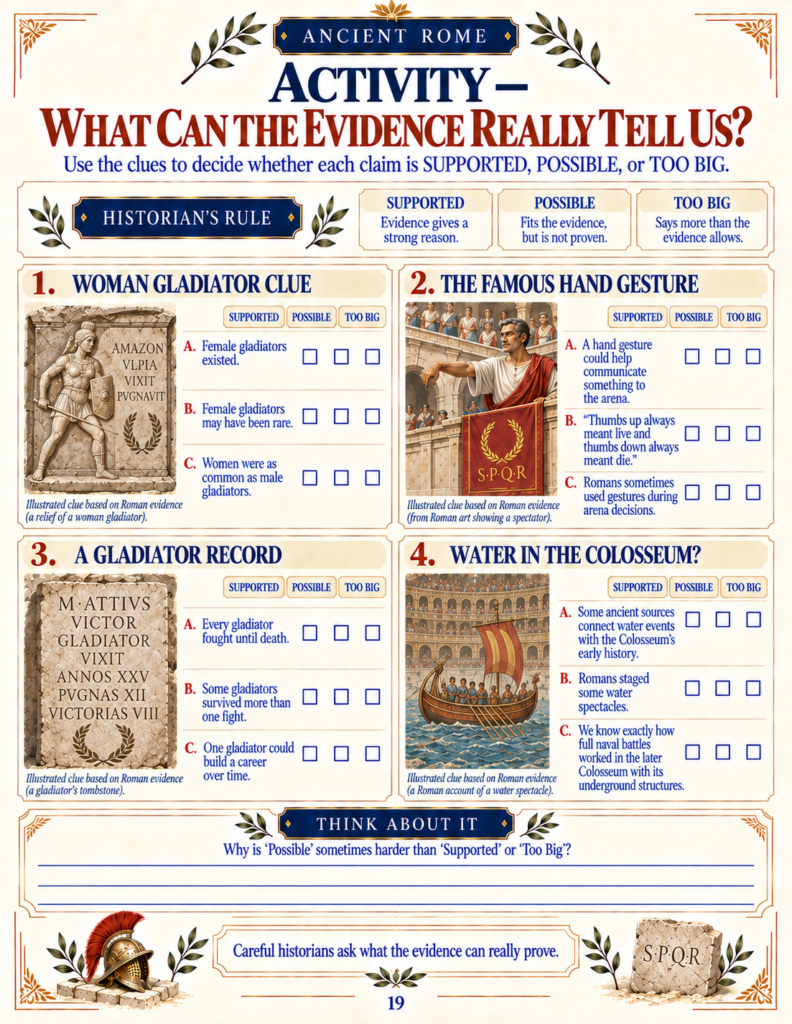
By asking kids to act as evidence detectives, they learn to differentiate between a claim that is completely supported by evidence, one that is possible, and a claim that is simply too big to make. If they find a tombstone of a female gladiator, does it prove women were as common as male gladiators? Or does it just show that female gladiators existed? These are the kinds of critical thinking questions that prepare children for advanced academic success.
Spark Your Child’s Curiosity Today
Parents are always on the lookout for resources that are both educational and highly engaging. Books and materials that focus on hands-on history offer the perfect balance. They take a naturally fascinating subject like gladiators and layer it with puzzle-solving, spatial reasoning, and evidence analysis.
By providing your child with resources that treat them like young historians, you are doing more than just teaching them about the Colosseum. You are fostering a lifelong curiosity about the world, its history, and the clues left behind by ancient civilizations.
Ready to dive into the past? Start your adventure today and watch your child’s historical curiosity come to life!