Medieval Knights Unit Study: Spark Curiosity with Interactive History
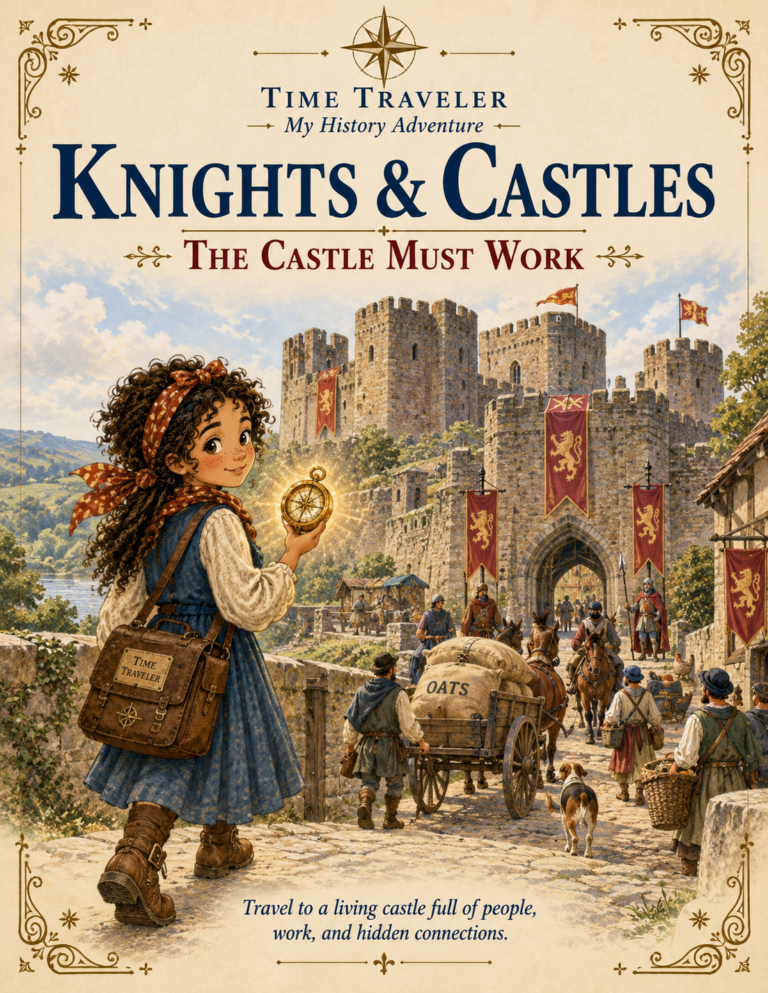
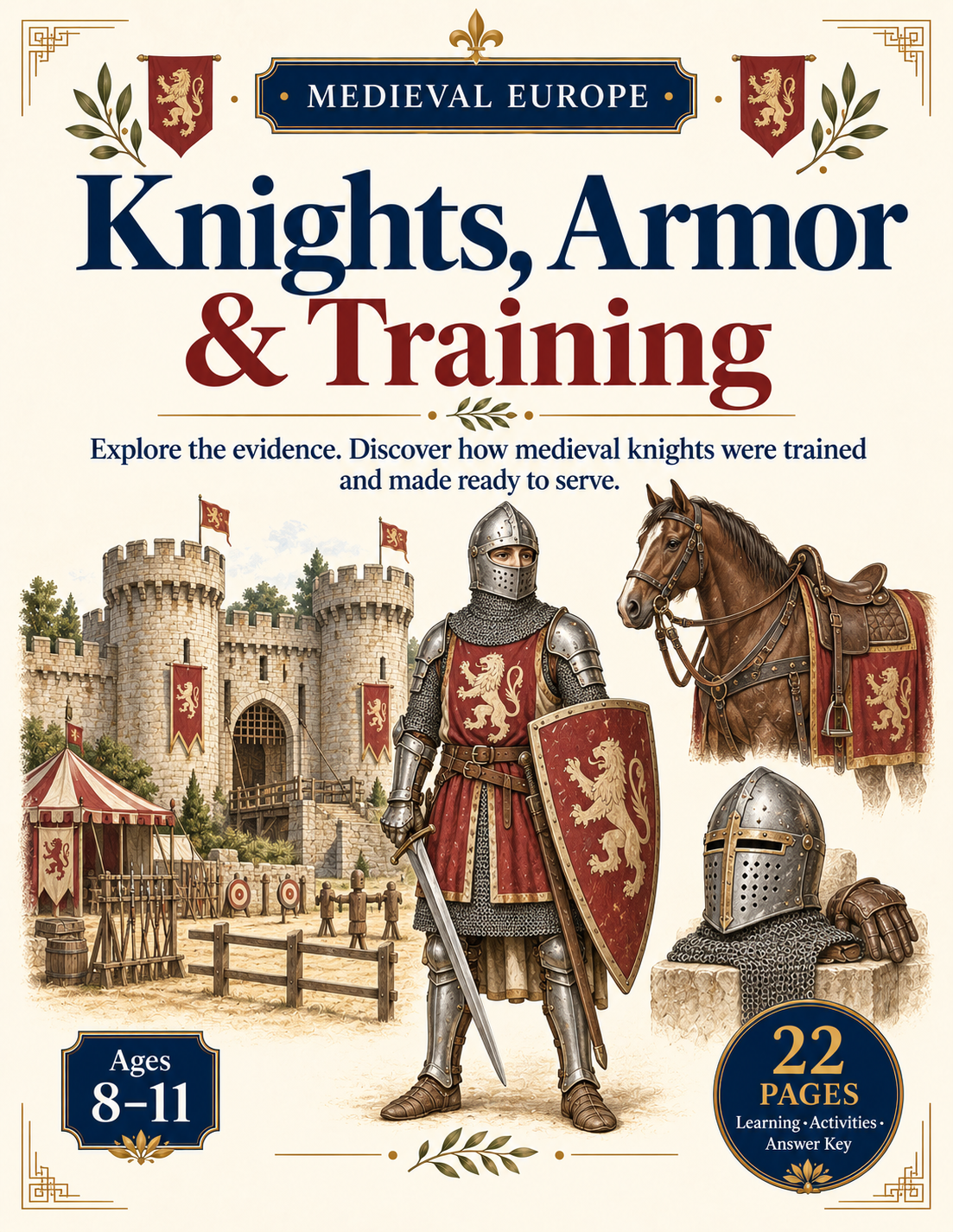
When it comes to capturing a child’s imagination, the Middle Ages are a historical powerhouse. Between the shining armor, the disciplined training, and the powerful warhorses, it is an era practically designed to thrill young minds. But how do we turn this natural fascination into genuine educational value? The answer lies in an engaging Medieval Knights unit study that prioritizes interactive learning and critical thinking over passive reading.
By using thoughtfully designed materials, parents can transform a simple history lesson into a hands-on adventure. Let’s explore how interactive history books about knight training, medieval equipment, and historical evidence develop a child’s curiosity, logical reasoning, and analytical skills.
Why Interactive History for Kids Works
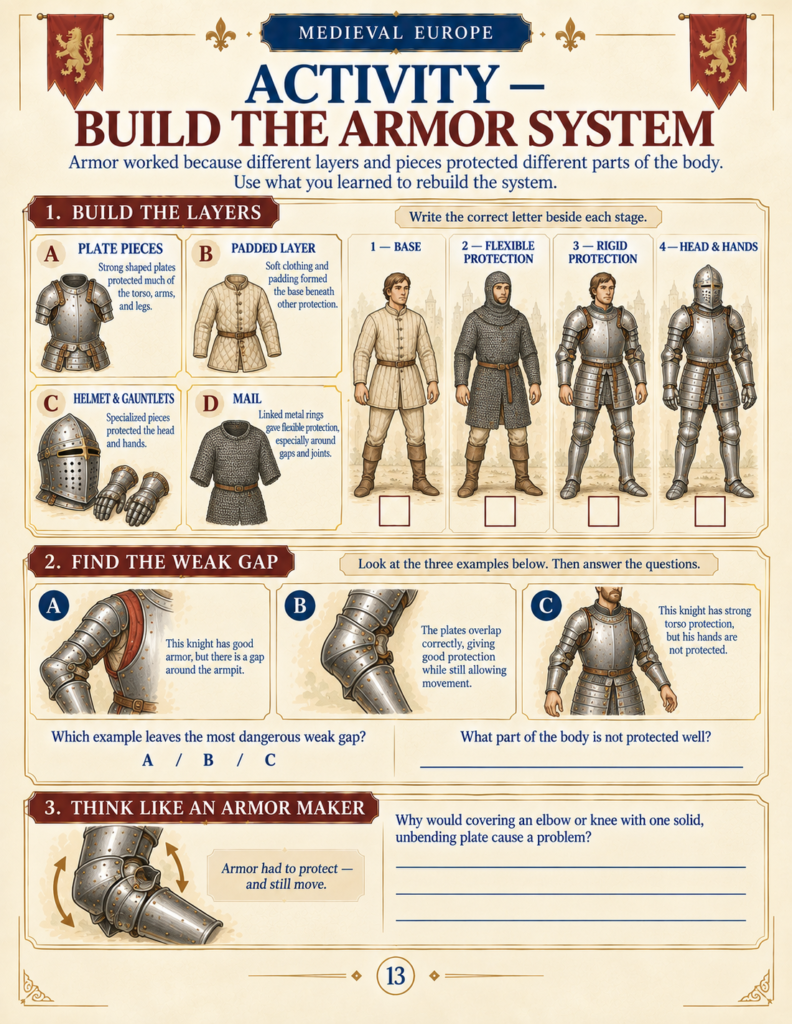
Children learn best when they are analyzing, solving, and doing. A standard textbook might just list the pieces of a knight’s armor, but an interactive workbook asks children to look at the different layers and figure out why joints needed flexible mail instead of solid plates. This shift from passive consumption to active participation is the core of effective education.
When you incorporate a structured interactive history for kids curriculum, you aren’t just teaching them dates and names. You are teaching them how to evaluate systems, spot weak links, and think like young historians.
Exploring the Knight Ecosystem and Support
One of the most effective ways to teach history is to show children that a knight did not exist in a vacuum. A knight’s readiness depended on a whole ecosystem of skilled people: armorers, farriers, grooms, and squires. Readiness was more than one person; it depended on many small things working together.
Much like the spatial puzzles we foster in our Ancient Egypt activities for kids and the evidence analysis in our Ancient Greece unit study, a well-rounded Medieval Knights unit study asks children to make connections. If a horse is missing a shoe, who do you call? The farrier! Without this support network, the knight cannot perform his duties.
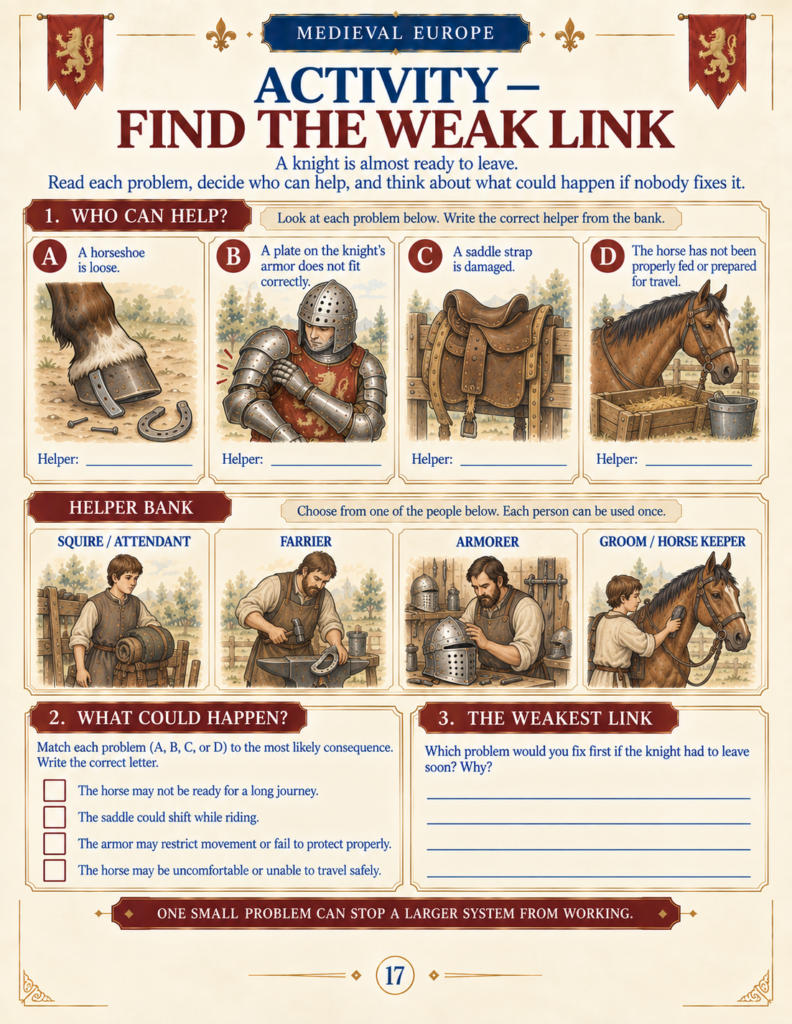
Learning Through Doing: «Find the Weak Link» Activity
To truly spark curiosity, children need to feel like they are managing the past. Engaging worksheets allow them to step into the shoes of a squire or an attendant trying to figure out what needs to be fixed before a journey.
Thinking Like a Young Historian
The ultimate goal of any educational resource should be to teach children how to think. This is where an in-depth Medieval Knights unit study truly shines.
Historians rarely find perfect answers. They piece together history using different clues: surviving objects, tomb effigies, manuscript images, and written records. Interactive history books introduce children to the «Historian’s Rule»: different clues answer different questions, and strong explanations usually use more than one kind of evidence.
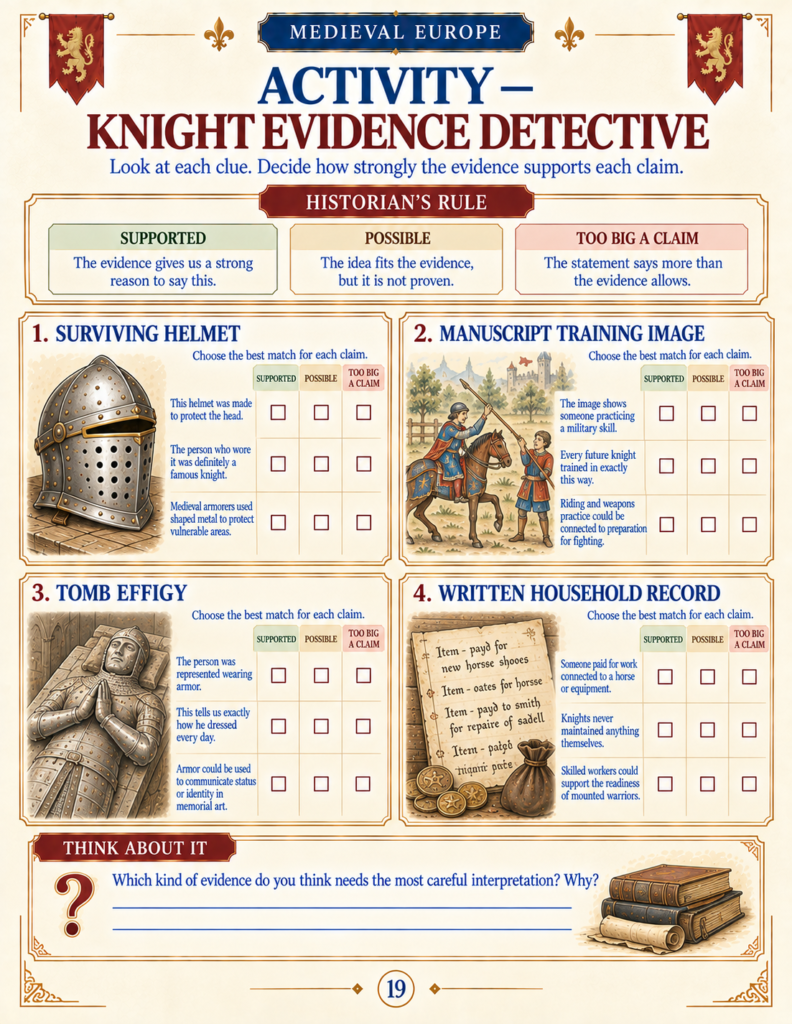
By asking kids to act as evidence detectives, they learn to differentiate between a claim that is completely supported by evidence, one that is possible, and a claim that is simply too big to make. If they look at an image of a knight training, does it prove every future knight trained exactly in this way? Or does it just show that riding and weapons practice were connected to preparation? These are the kinds of critical thinking questions that prepare children for advanced academic success.
Spark Your Child’s Curiosity Today
Parents are always on the lookout for resources that are both educational and highly engaging. Books and materials that focus on hands-on history offer the perfect balance. They take a naturally fascinating subject like knights and layer it with problem-solving, systems thinking, and evidence analysis.
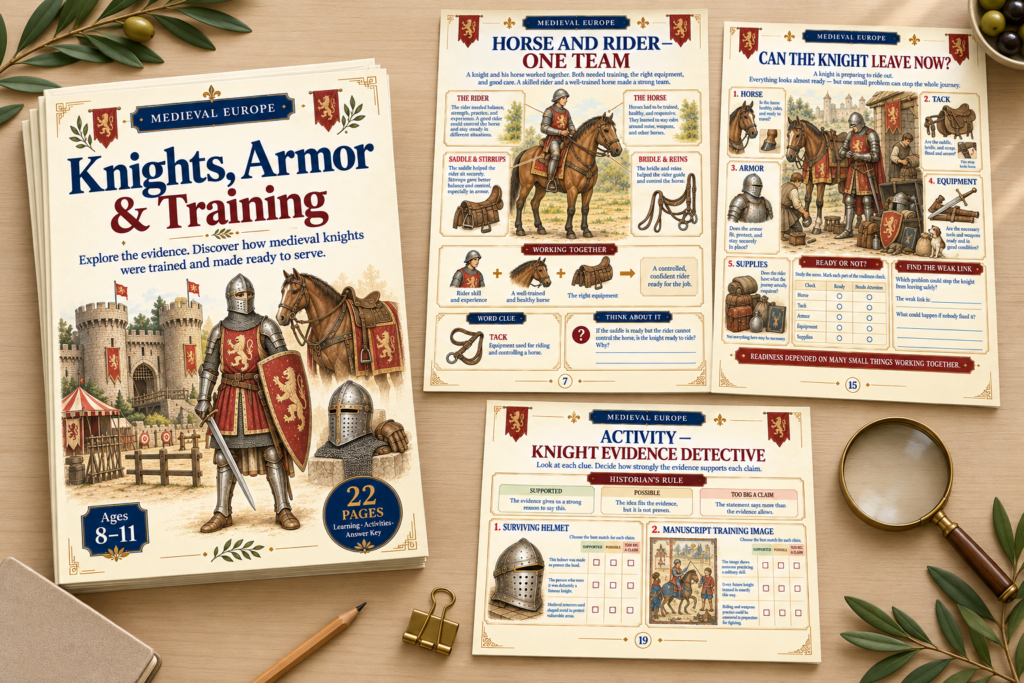
By providing your child with resources that treat them like young historians, you are doing more than just teaching them about armor and swords. You are fostering a lifelong curiosity about the world, its history, and the clues left behind by the people who built our history.
Ready to dive into the past? Start your adventure today and watch your child’s historical curiosity come to life!