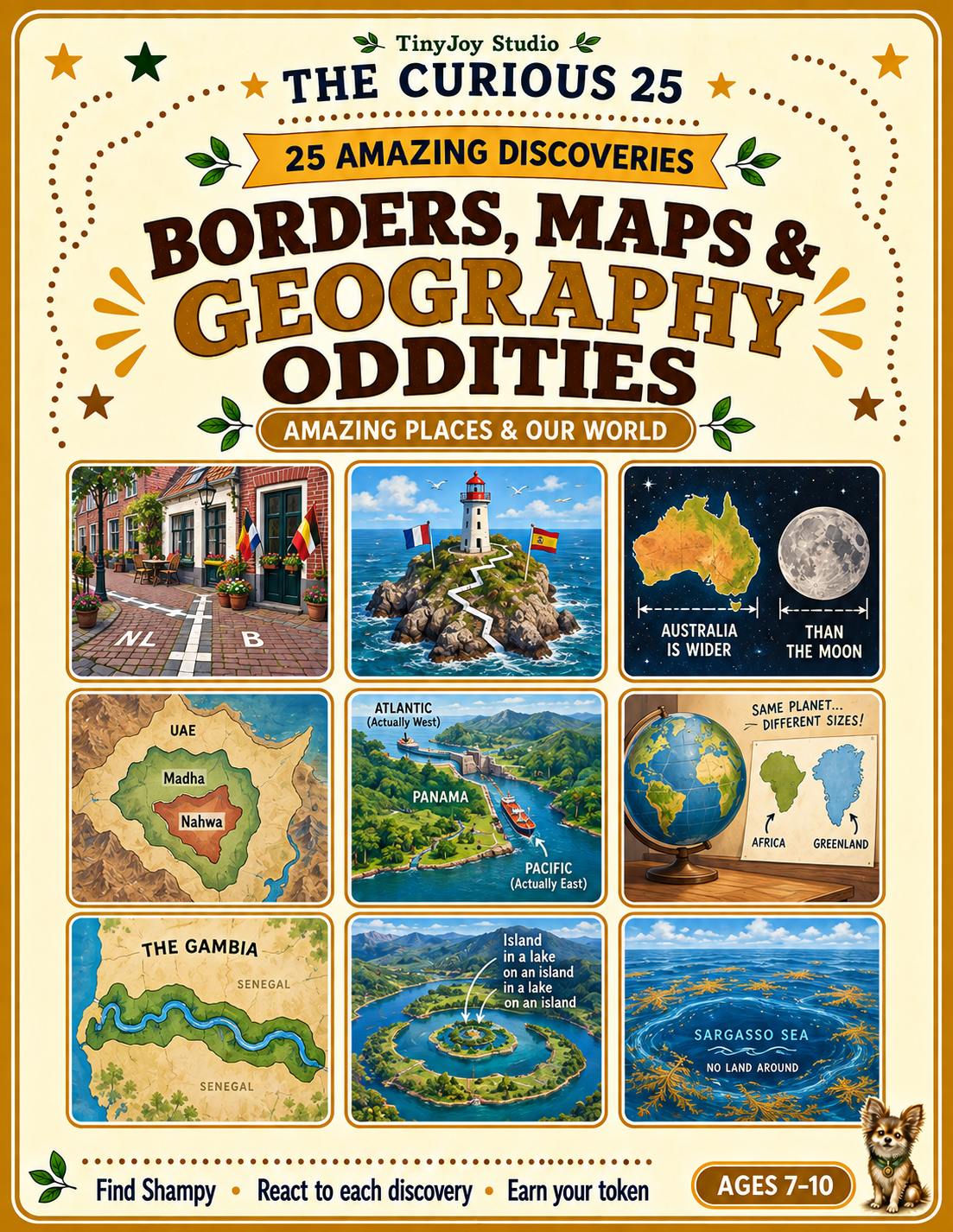
25 Amazing Geography Facts for Kids: Borders, Maps & Oddities
Our world is full of incredible places, but it is also packed with bizarre boundaries, surprising map tricks, and geographical oddities that sound like pure fiction. For children, discovering how strange and fascinating our planet’s layout can be is an amazing way to spark a lifelong passion for exploration.
To help young adventurers uncover the wild side of our planet, we are thrilled to introduce the newest addition to The Curious 25 series: Borders, Maps & Geography Oddities. Packed with 25 incredible geography facts for kids, this book takes readers on a global journey through the most unusual places on Earth.
If your child loved exploring space in Secrets of the Solar System or unraveling bizarre truths in Things That Sound Fake – But Are True, they will be completely captivated by these real-life map mysteries!
Why Learning About Geography Oddities Matters
When children dive into geography facts for kids, they aren’t just memorizing country capitals or mountain heights. They are learning how borders are shaped, how global time zones function, and how flat maps can sometimes play tricks on our eyes. Discovering that a single town can sit inside two countries at once teaches young minds to look past the obvious and question how the world works.
Instead of a dry textbook lesson, we designed this book to highlight the most extreme, unexpected, and awe-inspiring geographical quirks found across the globe.
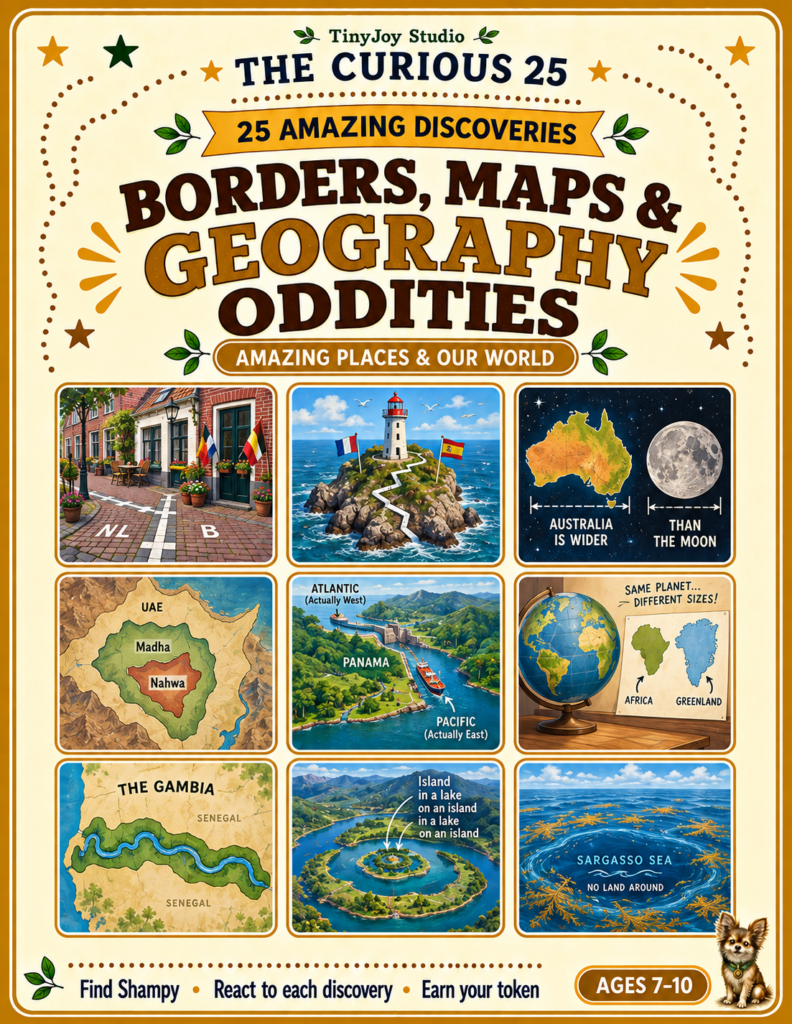
A Global Sneak Peek: Discoveries That Will Blow Your Mind
What kind of geographical oddities are waiting to be uncovered? We have expanded on a few of our favorite discoveries from the book to give you a taste of the unbelievable world facts inside.
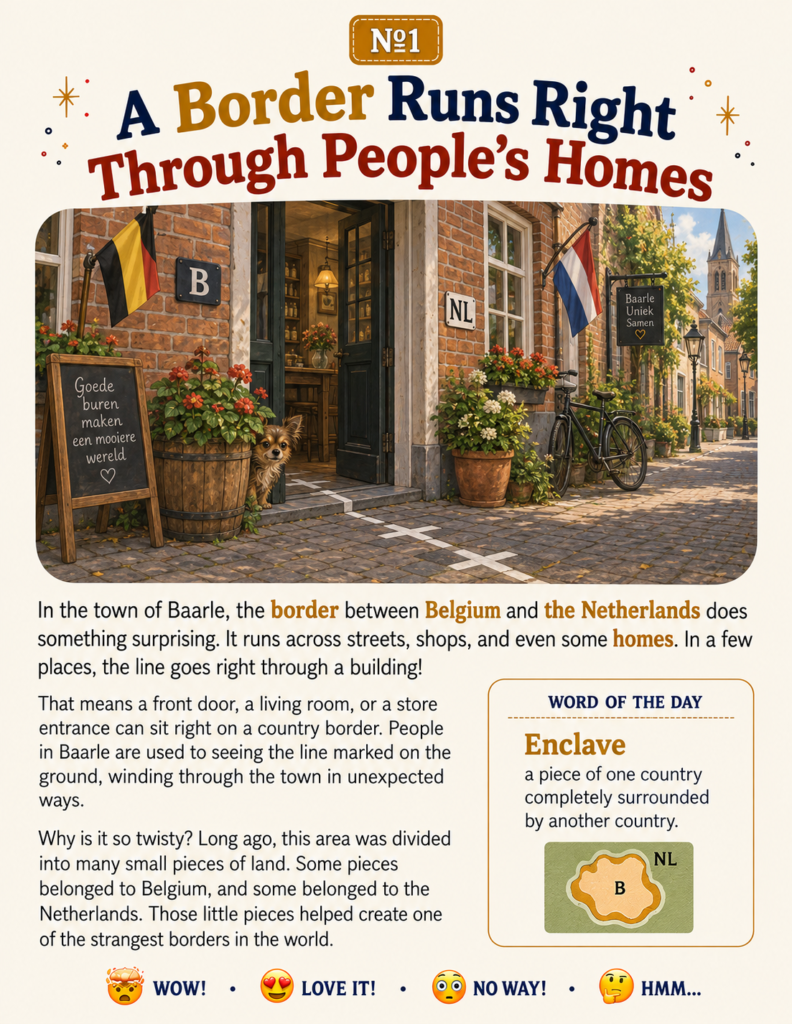
1. A Border That Runs Right Through People’s Homes In the European town of Baarle, the international border between Belgium and the Netherlands doesn’t just separate countries—it runs right across streets, shops, and even residential homes! In a few unique places, the line splits a building right down the middle, meaning a family’s living room might be in Belgium while their front door sits in the Netherlands.
2. Who Runs This Island Changes Every Six Months In the Bidasoa River between France and Spain sits a tiny piece of land called Pheasant Island. Both countries share ownership of it, but they take turns being in charge. Spain has authority for the first six months of the year, and then France takes over for the next six! The island never moves, but its governmental responsibility constantly shifts back and forth.
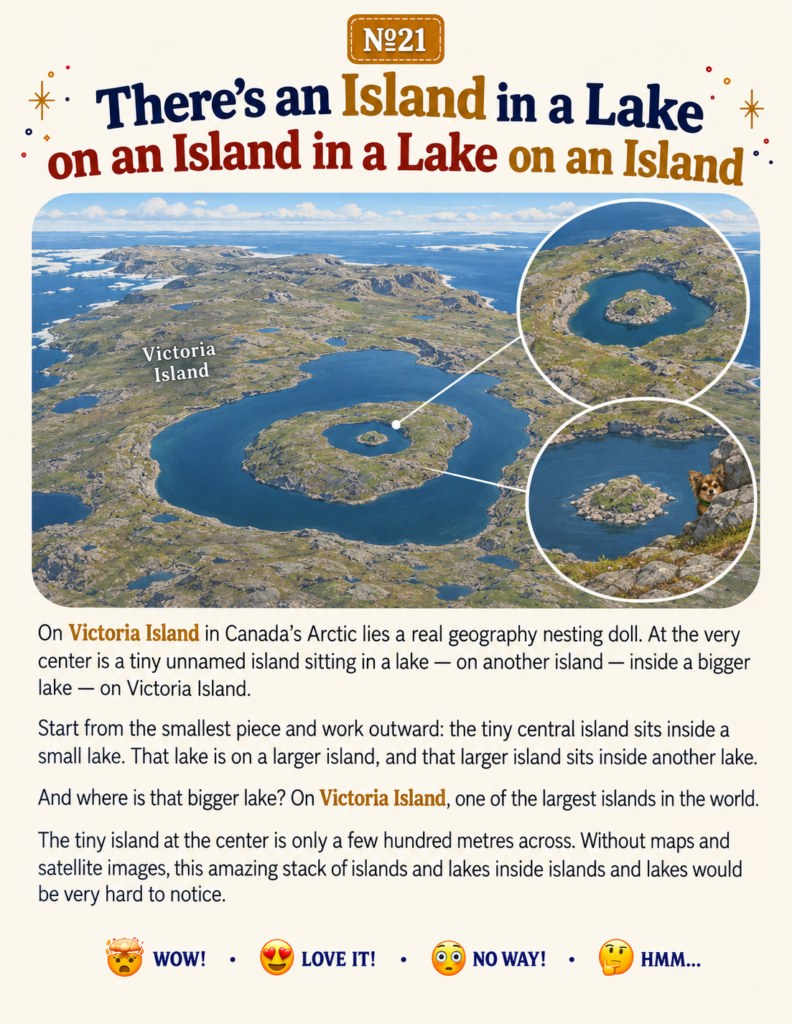
3. An Island in a Lake on an Island in a Lake on an Island Deep in Canada’s Arctic on Victoria Island lies a mind-boggling geographical puzzle. At the center is a tiny, unnamed island sitting inside a small lake. That lake sits on a larger island, which sits inside another lake, which is located on Victoria Island itself! It is a true natural nesting doll made entirely of land and water.
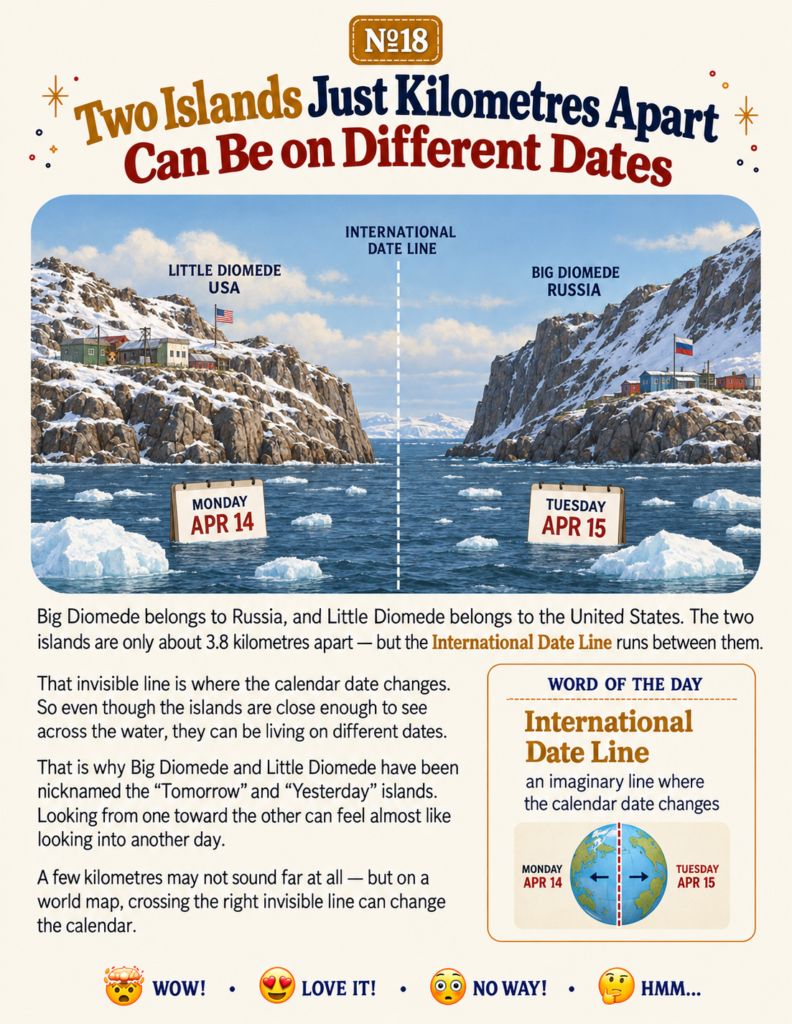
4. Two Islands Just Kilometres Apart Living on Different Dates Big Diomede belongs to Russia and Little Diomede belongs to the United States. They sit only about 3.8 kilometres apart in the middle of the water. However, the International Date Line runs right between them! This means that even though you can literally wave across the water from one island to the other, they are often on completely different calendar days.
The Curiosity Ecosystem: Read, Play, and Collect!
Just like all the adventures in The Curious 25 series, this book is part of a grand interactive ecosystem designed to make reading an active quest, which you can read all about in our foundational guide on how our curiosity books for kids work.
While exploring these global oddities, your child will also be on a visual mission to spot Shampy the dog, who is hiding in every single discovery picture—whether he is peeking out from a European doorway or exploring an Arctic lake!
Once they finish the book, they will flip back to reflect on their Top 3 discoveries, cut out their brand-new Curiosity Token, and proudly add it to their grand Curious 25 Collection Poster. Every token earned is a visual trophy of their growing global knowledge!
Ready to Explore the World’s Weirdest Borders?
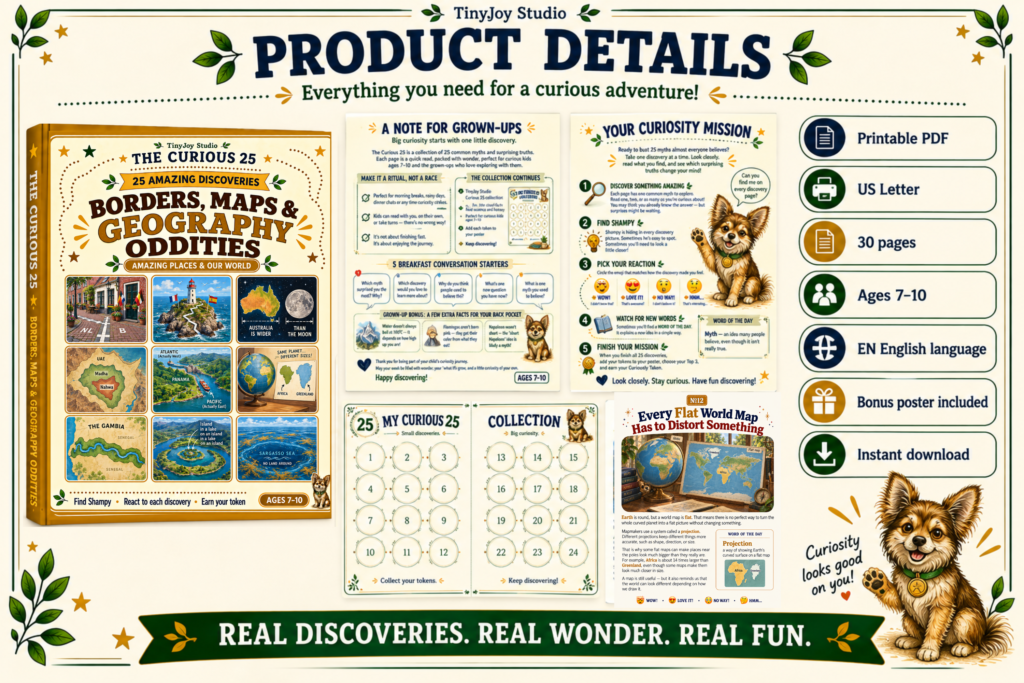
Are you ready to learn why France’s longest border is with Brazil, why the Pacific Ocean is bigger than all Earth’s land combined, and why Everest isn’t actually the point farthest from Earth’s center? Grab your copy of Borders, Maps & Geography Oddities today, and let the global adventure begin!