The Ultimate Earth Layers Unit Study for Kids (No Prep!)
When we look around at the world outside our windows, it is easy to think of Earth as a solid, unchanging place. We see green forests, deep oceans, and towering mountains, but we rarely think about what is happening thousands of miles beneath our feet. If you have ever tried to explain to a 6- to 9-year-old child that the ground they are standing on is actually resting on giant, slowly moving pieces, or that the center of our planet is as hot as the surface of the sun yet pressed into a solid ball, you know how quickly abstract science concepts can cause eyes to glaze over.
Trying to piece together a comprehensive, visually stunning earth science unit from random internet printouts can feel overwhelming. If you want to transform your science lessons into an exciting journey from the surface straight to Earth’s core without spending your weekends cutting out papier-mâché or hunting for worksheets, we have the ultimate «open-and-go» solution.
Meet Your Earth Science Guide: The Inside Our Planet Workbook
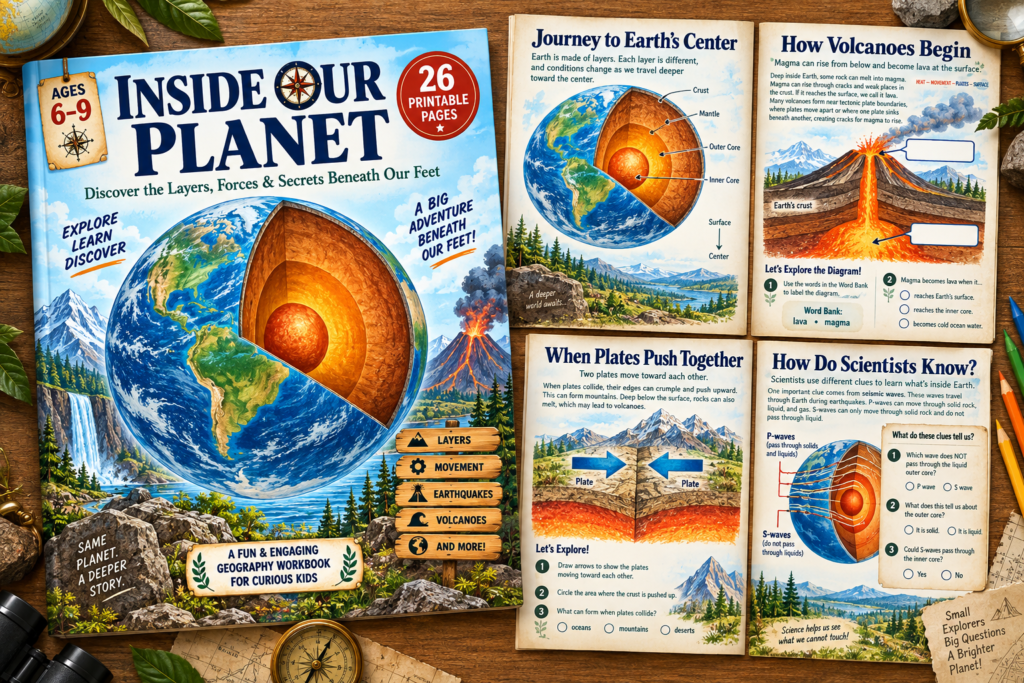
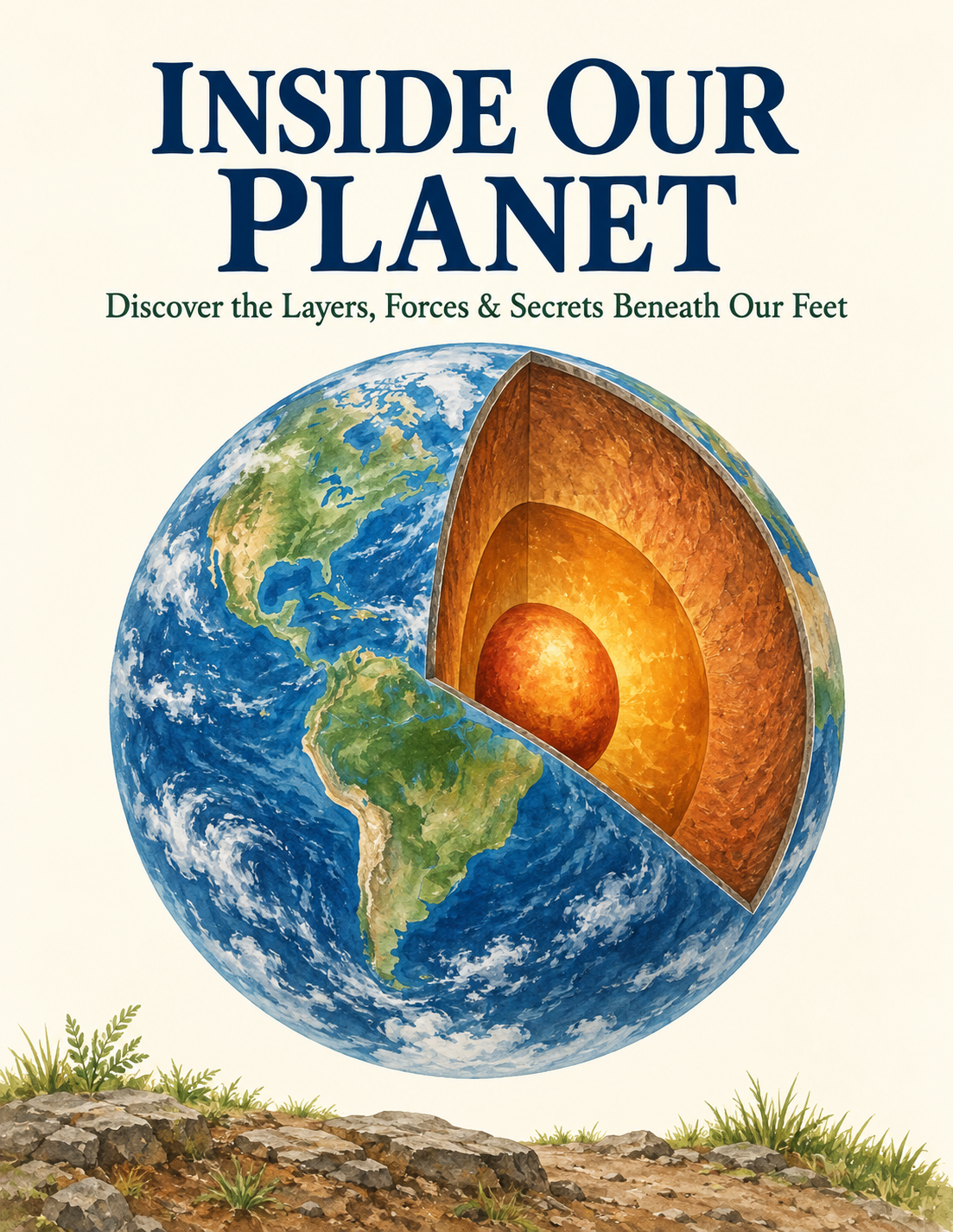
Instead of overwhelming young minds with dry textbook paragraphs, the Inside Our Planet: Discover Layers, Forces & Secrets Beneath Our Feet activity book invites your child on a guided, hands-on subterranean expedition.
Designed specifically for curious elementary students, this workbook acts as a personal elevator to the center of the Earth. It seamlessly fits into your geography learning path for kids, taking them on a structured journey through Earth’s hidden interior. Let’s explore the hands-on missions your child will complete on their journey!
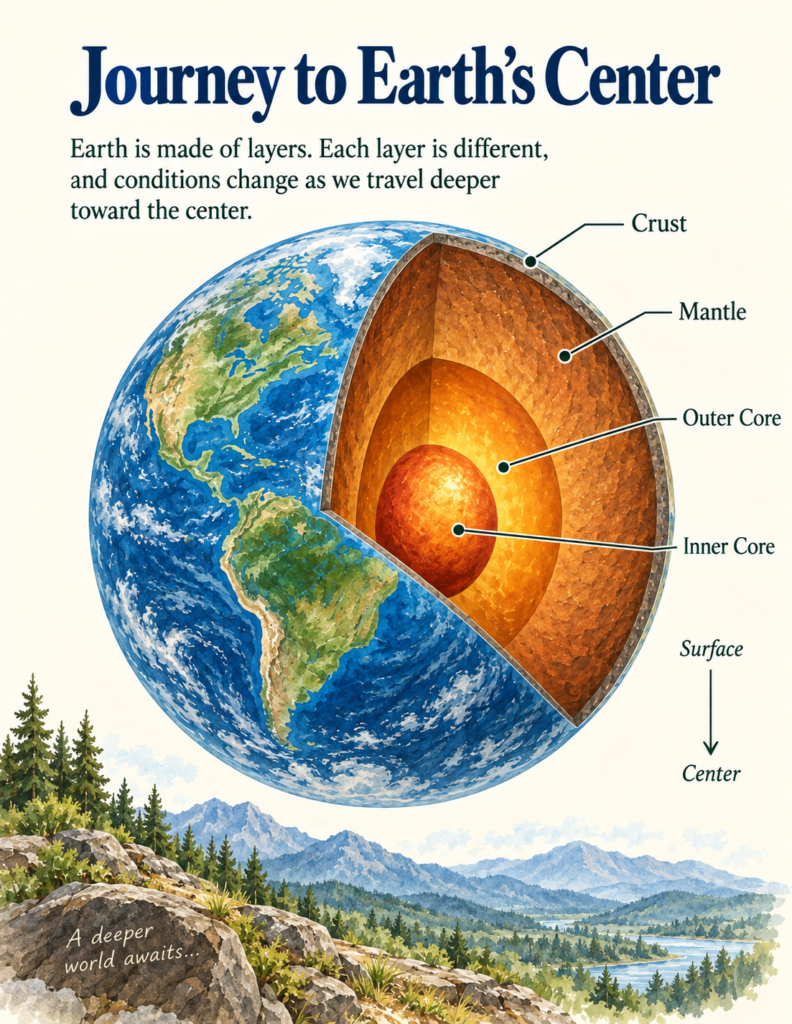
1. Build Earth from the Outside In: Layers of Our Planet
Before we can understand earthquakes or volcanoes, children need to understand the fundamental architecture of our world.
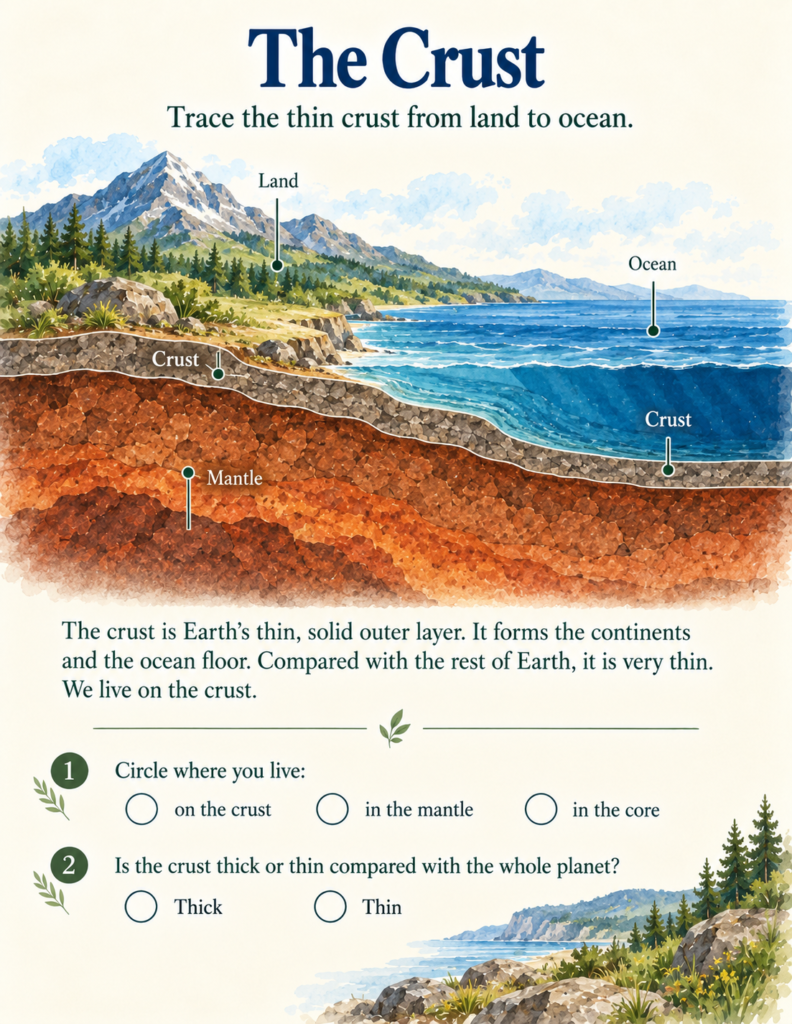
- What’s Inside the Book: Kids start their journey by analyzing a colorful cross-section of Earth. They learn to identify and label the four main layers: the thin, rocky Crust where we live; the massive, slow-flowing Mantle; the super-hot liquid iron-and-nickel Outer Core; and the under-extreme-pressure solid Inner Core.
- How to Bring It to Life at Home: Bake a simple layered treat together, like a hard-boiled egg (representing the crust, mantle, and core) or a layered cake, to physically show how Earth is built from the outside in!
2. Solid… But Still Moving! The Mighty Mantle
One of the most mind-blowing concepts for kids is discovering that rock can flow.
- What’s Inside the Book: Young explorers dive deep into the mantle—Earth’s thickest layer. They learn that while the mantle is mostly solid rock, the intense heat deep inside causes warmer rock to slowly rise and cooler rock to slowly sink over enormous periods, acting a bit like very thick putty.
- How to Bring It to Life at Home: This is a brilliant opportunity to discuss why project-based learning is essential! Warm up a bowl of thick oatmeal or pudding and watch how bubbles or blobs slowly rise and fall, mimicking the convection currents inside Earth’s mantle.
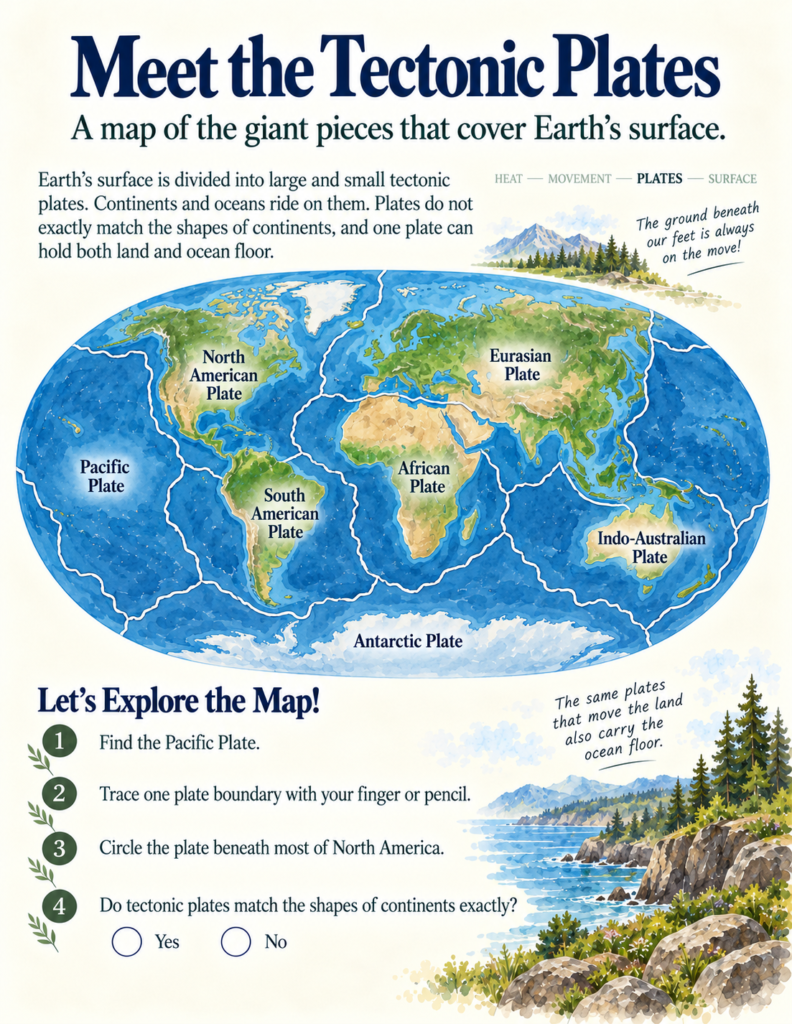
3. The Ground in Motion: Tectonic Plates, Earthquakes, and Volcanoes
Earth isn’t a cracked eggshell sitting still; it’s a dynamic puzzle!
- What’s Inside the Book: Children discover that Earth’s hard outer shell is broken into giant pieces called tectonic plates. They explore the three main ways plates interact: pushing together (forming mountains and subduction zones), pulling apart (forming new crust and ocean floors), and sliding past each other at transform boundaries. They also learn how locked rocks build stress until they suddenly slip, sending out seismic waves that cause earthquakes, and how magma rises to form volcanoes!
- How to Bring It to Life at Home: Grab two graham crackers and a layer of frosting or peanut butter. Gently push them together to watch mountains form, or pull them apart to see gaps open up—a classic, mess-free geology model!
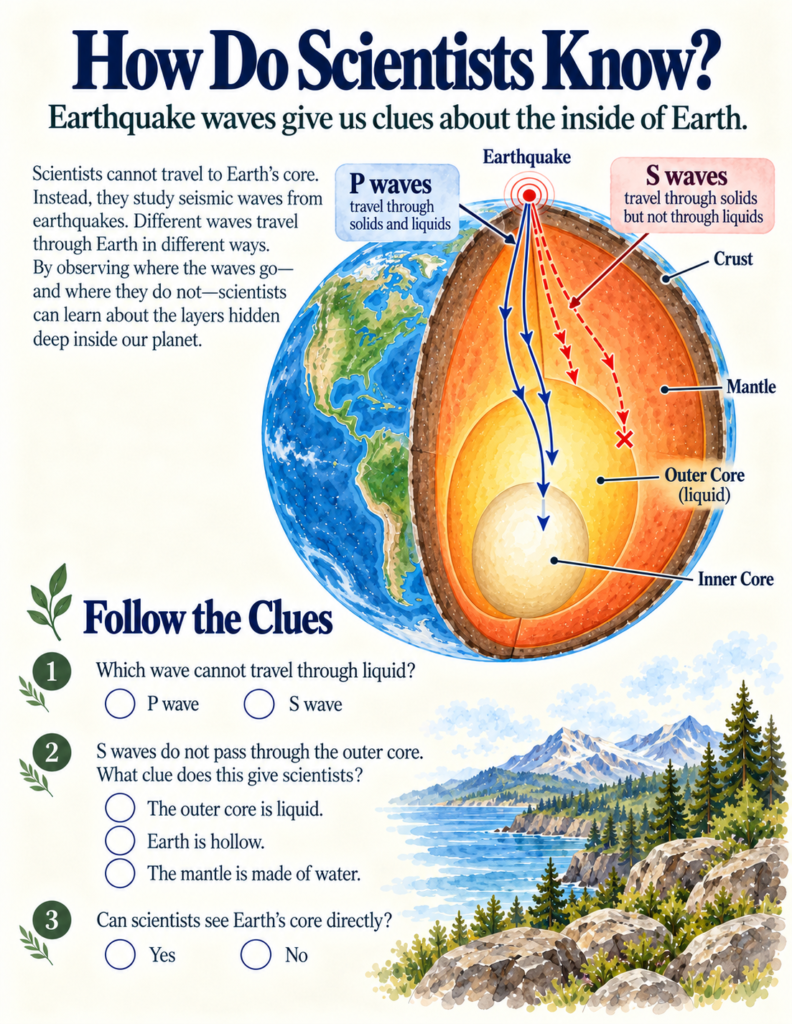
4. How Do Scientists Know? Solving Earth’s Deepest Mysteries
How do we know what’s at the center of the Earth if nobody has ever traveled there?
- What’s Inside the Book: Kids put on their detective hats to learn how scientists use earthquake waves—specifically P-waves and S-waves—to map Earth’s interior. Because S-waves cannot travel through liquids, scientists discovered that the outer core must be liquid!
- How to Bring It to Life at Home: Discuss how indirect evidence works. It teaches kids critical thinking and analytical reasoning skills without needing complex laboratory equipment.
The Secret to Motivation: Making Science an Adventure
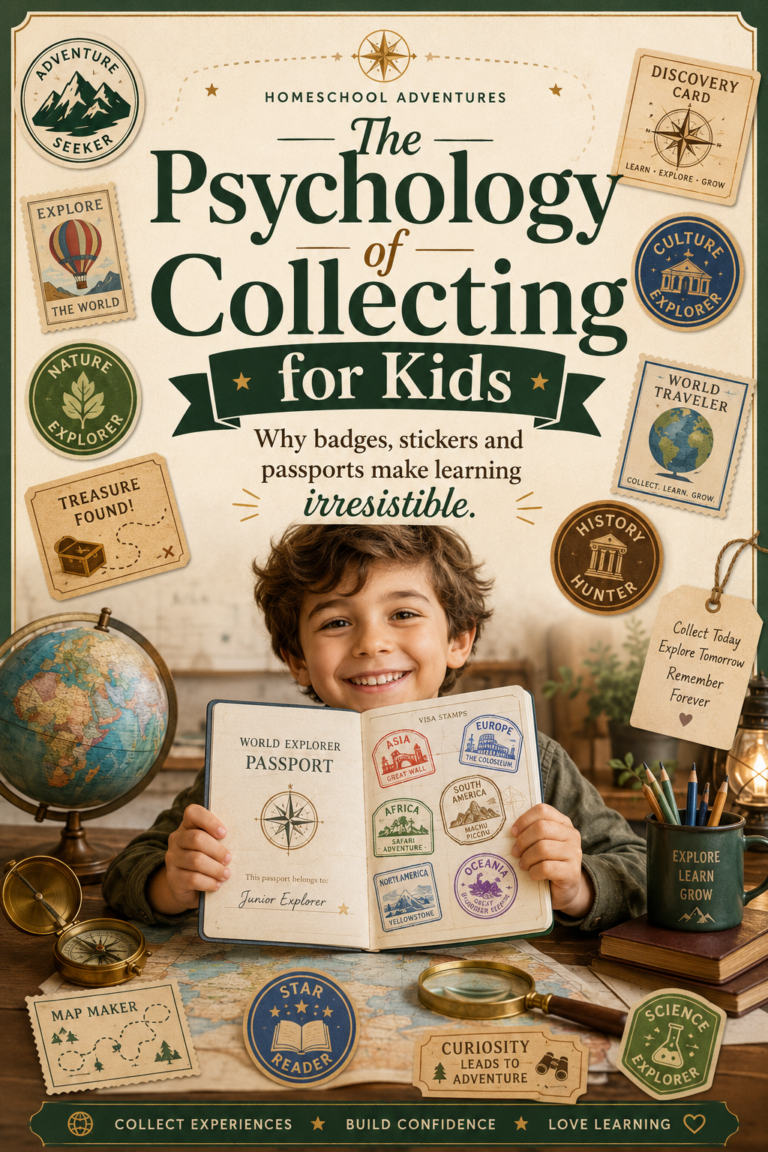
Even with the most fascinating geological mysteries, children can sometimes lose focus. The secret to keeping them engaged until the final page is incorporating interactive challenges and a tangible sense of progress. This is why learning through collecting for kids is such a powerful educational framework!
Throughout the workbook, your child isn’t just passively reading; they are labeling diagrams, solving seismic puzzles, tracing plate boundaries, and sequencing rock-recycling steps.
Are you ready to take your kids on an unforgettable journey to the center of the Earth? Grab your colored pencils, print the workbook at home, and let the subterranean adventure begin!
👉 Grab the Inside Our Planet Activity Book in the Tiny Joy Studio Etsy Shop Today!