Project-Based Learning in Homeschooling: Turning Geography into a Quest
When you first begin homeschooling, it is easy to fall into the routine of replicating a traditional classroom at home. We buy thick textbooks, print out stacks of multiple-choice worksheets, and ask our children to read paragraphs and answer comprehension questions. But within a few months, many homeschooling parents notice a frustrating trend: the information goes in one ear and out the other.
Why? Because traditional, passive instruction rarely creates long-term cognitive retention—especially for active 6- to 9-year-olds.
Enter Project-Based Learning (PBL).
Instead of teaching children abstract facts in case they need them someday, Project-Based Learning immerses children in meaningful, hands-on challenges where they must acquire knowledge to solve a real-world problem. And when it comes to early elementary education, no subject is better suited for PBL than world geography.
In this comprehensive guide, we will explore why project-based learning is taking the homeschooling world by storm, how you can transform daily geography lessons into an epic investigative quest, and introduce a ready-to-use, passport-driven curriculum that makes hands-on exploration effortless for busy parents.
What is Project-Based Learning in the Homeschool Context?
At its core, Project-Based Learning is an educational approach where students learn by actively engaging in real-world and personally meaningful projects. In a homeschool setting, PBL shifts your child’s role from a passive receiver of information to an active creator, scientist, and explorer.
In a traditional geography lesson, a child might read a chapter about the Amazon Rainforest and memorize the definition of «canopy.» In a PBL geography quest, that same child is tasked with a mission: «You are an ecologist sent to map an unexplored sector of the Amazon to save an endangered tree frog.» To complete the project, they must research the layers of the forest, map the river systems, and document their findings in a field journal.
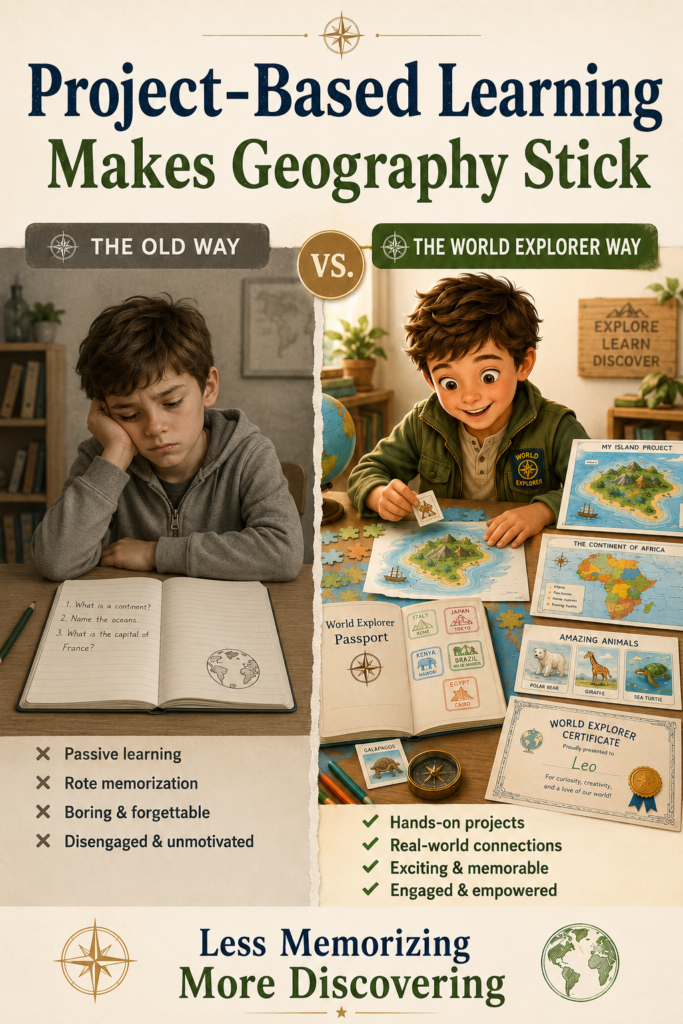
The 4 Core Benefits of PBL for Elementary Homeschoolers:
- Deep Concept Retention: When children physically draw, map, and solve puzzles to complete a project, muscle memory and visual processing lock the information into long-term memory.
- Cross-Curricular Synergy: PBL naturally dissolves the artificial boundaries between school subjects. A single geography quest seamlessly blends reading comprehension, earth science (climate and ecosystems), mathematics (coordinates and distance), and art (illustration and mapping).
- Development of Executive Function: Projects require children to plan ahead, follow multi-step instructions, and organize their materials—critical skills that worksheets simply cannot teach.
- High Intrinsic Motivation: When learning is framed as a quest with a tangible final deliverable (like a completed map or an official badge), children become deeply invested in the outcome.
Traditional Worksheets vs. A Geography Quest
To understand why Project-Based Learning is a game-changer for your homeschool routine, let’s examine how it transforms standard daily tasks into high-engagement adventures:
| Feature | Traditional Worksheet Approach | Project-Based Geography Quest |
| The Hook | «Read pages 14–16 and answer the questions at the bottom.» | «We’ve received an encrypted mission from our guide, Leo. Let’s investigate!» |
| The Student’s Role | Memorizing facts to pass a Friday quiz. | Cartographer, detective, or wildlife biologist solving a problem. |
| Daily Activities | Reading dense text, filling in blanks, copying definitions. | Decoding maps, navigating mazes, sorting climate data, and tactile drawing. |
| The Final Output | A graded paper that eventually gets thrown in the recycling bin. | A permanent, growing portfolio of earned badges and passport visas. |
| Parental Role | Enforcer, grader, and lecturer. | Co-explorer, facilitator, and mission commander. |
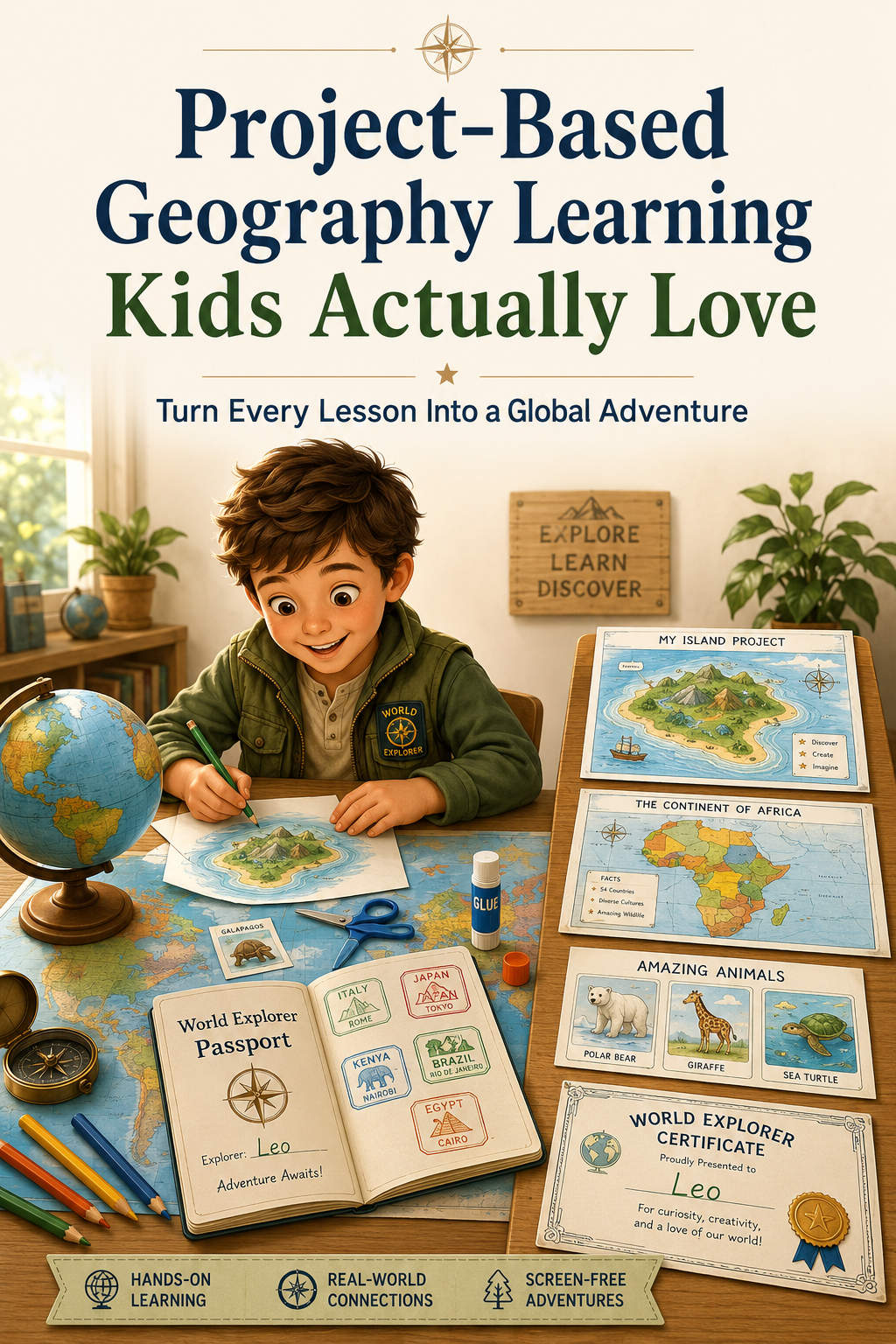
A Simple At-Home PBL Idea: The «Island Creator» Challenge
You don’t need an advanced degree in education to start integrating project-based learning into your homeschool week. One of the best ways to test this methodology is through an open-ended mapping challenge.
- The Scenario: Tell your child that a volcanic eruption has just formed a brand-new, undiscovered island in the middle of the Pacific Ocean. As the world’s top cartographer, it is their job to explore and map this new landmass.
- Step 1 (Geography & Math): Have them draw the outline of their island on a large piece of paper. They must include at least three geographical features (a mountain range, a river, and a bay) and create a basic map key with symbols and a compass rose.
- Step 2 (Earth Science & Biology): Ask them to determine the island’s climate. Is it tropical, polar, or temperate? Based on that climate, what kind of animals and plant life thrive there? Have them draw and label two native species.
- Step 3 (The Presentation): At the end of the week, your child presents their island to the family, explaining how the geography affects the animals that live there.
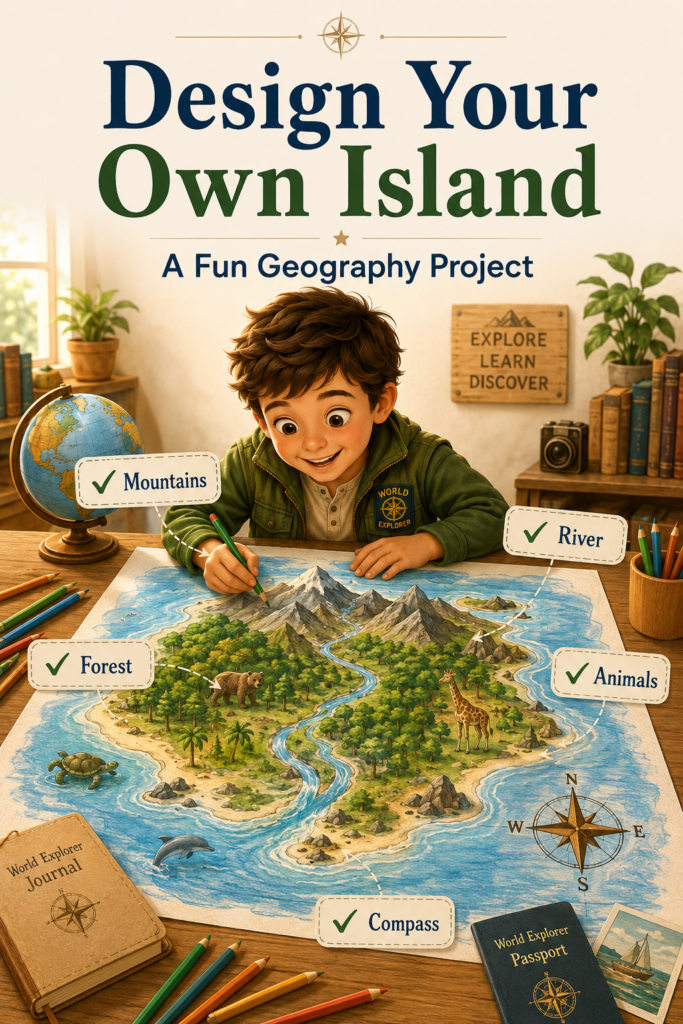
This simple project covers more academic ground in two days than a week of rote memorization—and your child will love every second of it!
The Zero-Prep Solution: The World Explorer Series
While DIY projects like the «Island Creator» are fantastic, most homeschooling parents simply do not have the time to brainstorm scenarios, draw custom maps, and prep multi-step projects every single week. Between cooking meals, managing household chores, and teaching multiple children, parental burnout is real.
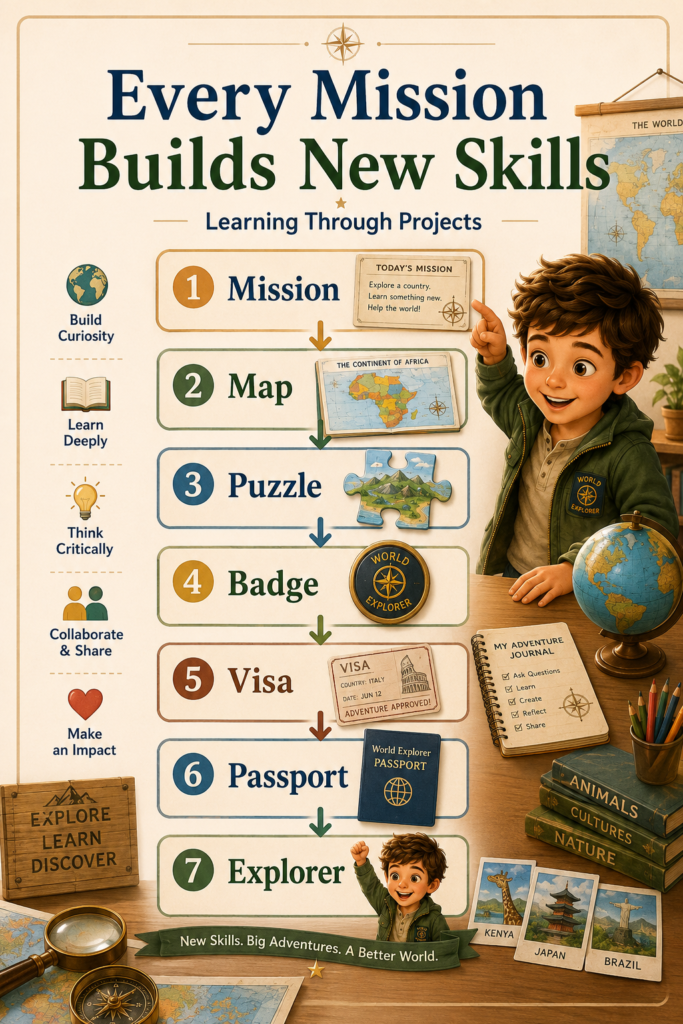
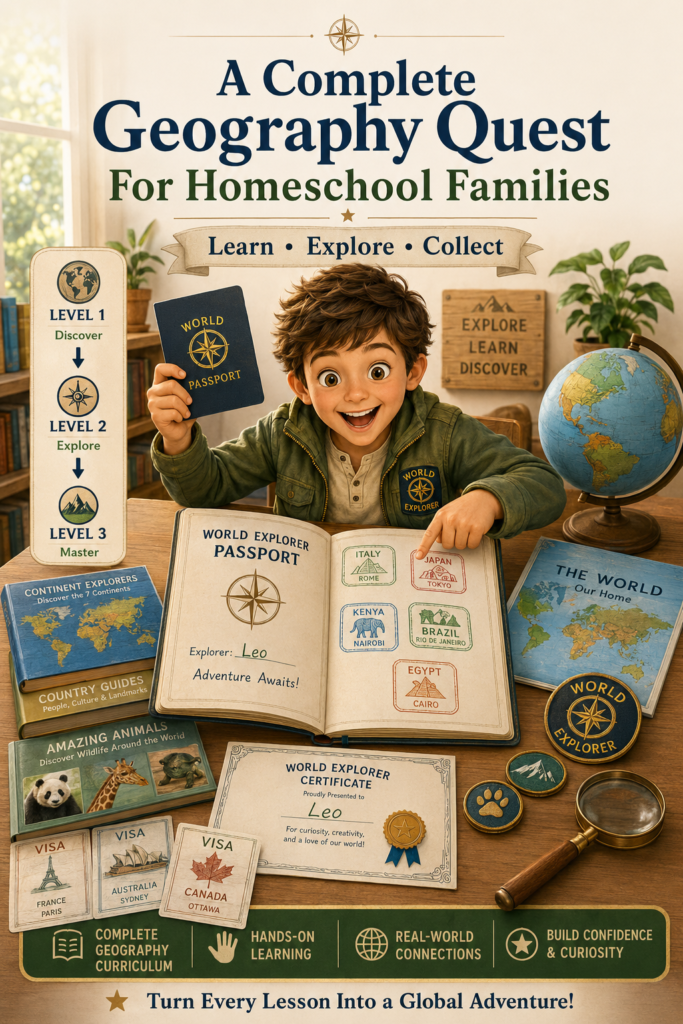
That is why Tiny Joy Studio created The World Explorer Series—a comprehensive, open-and-go curriculum specifically designed to give your 6- to 9-year-old all the benefits of Project-Based Learning with zero parent preparation time.
Led by an enthusiastic cartoon guide named Leo, this curriculum replaces dry textbooks with a structured, interactive global quest. Every activity book in the series is structured as a standalone project where your child actively investigates our planet through multi-sensory challenges.
How the 3-Level Ecosystem Powers PBL:
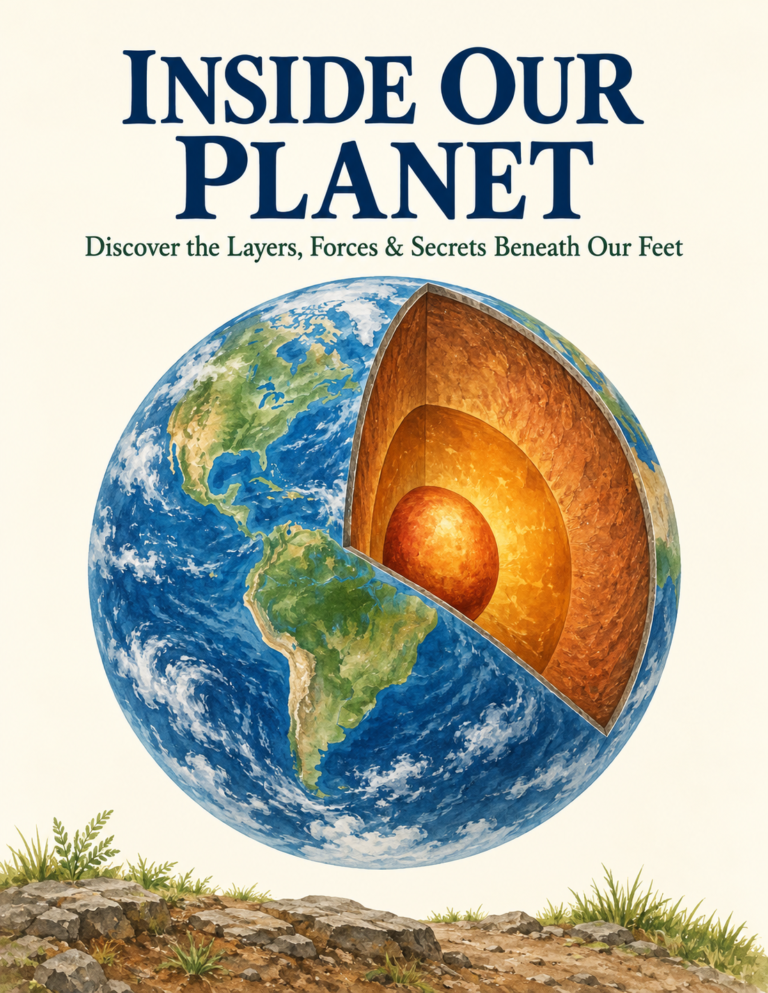
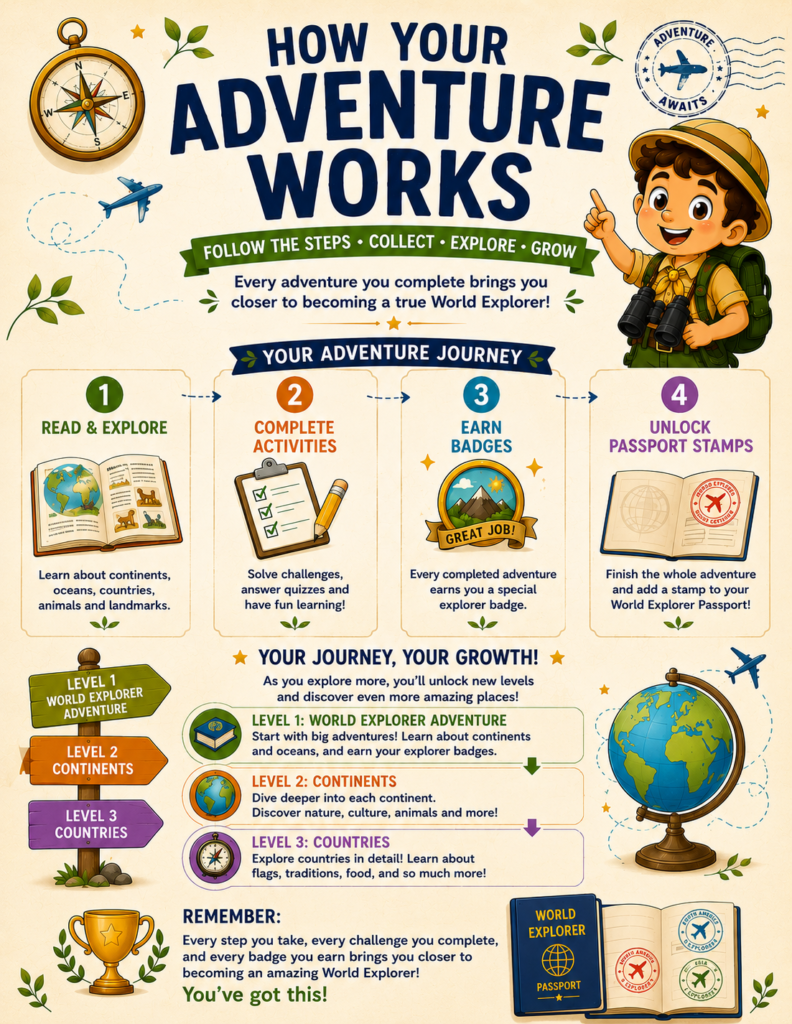
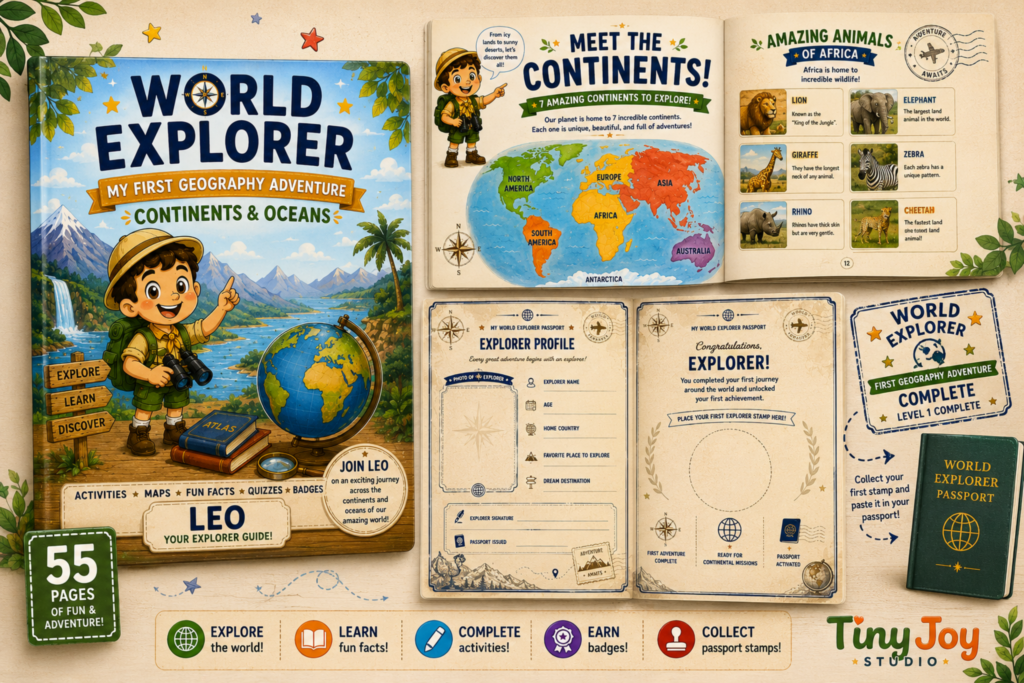
- Level 1: The Foundation (Continents & Oceans): The journey begins with the foundational mechanics of our Earth. Your child undertakes exciting projects to understand tectonic plates, ocean currents, and continental navigation through hands-on puzzle solving and visual mapping.
- Level 2: Continental Mastery: Once the foundation is mastered, the project expands into 8 dedicated continental and ocean books. Each book is a 10-part expedition where children explore regional biomes, famous landmarks, and native wildlife.
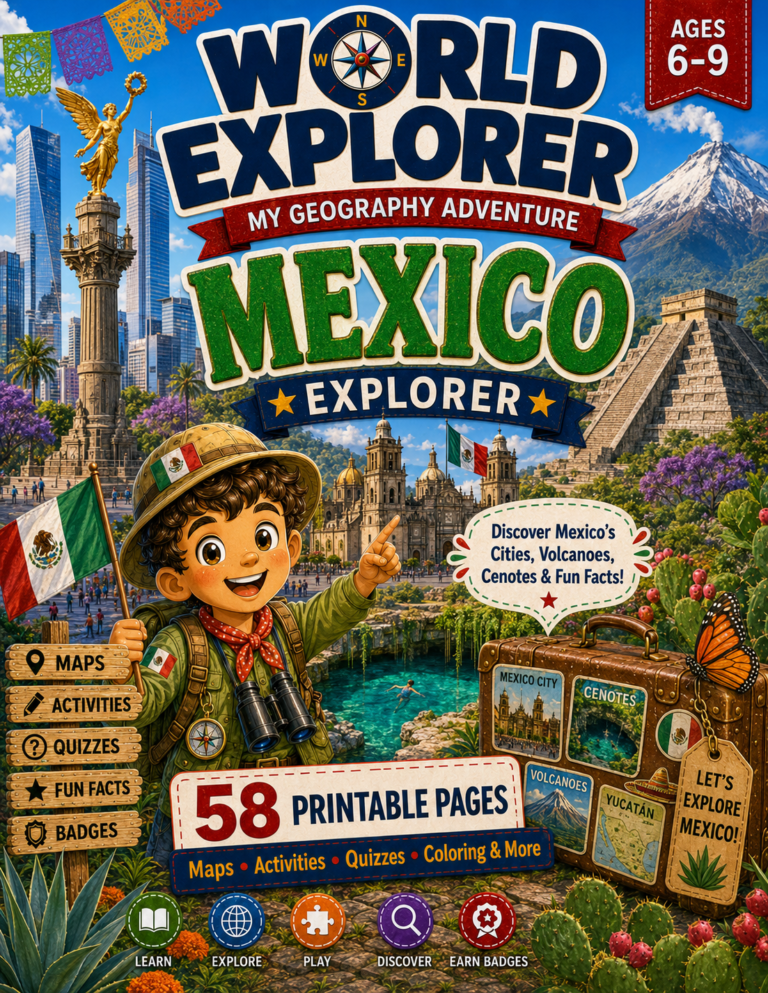
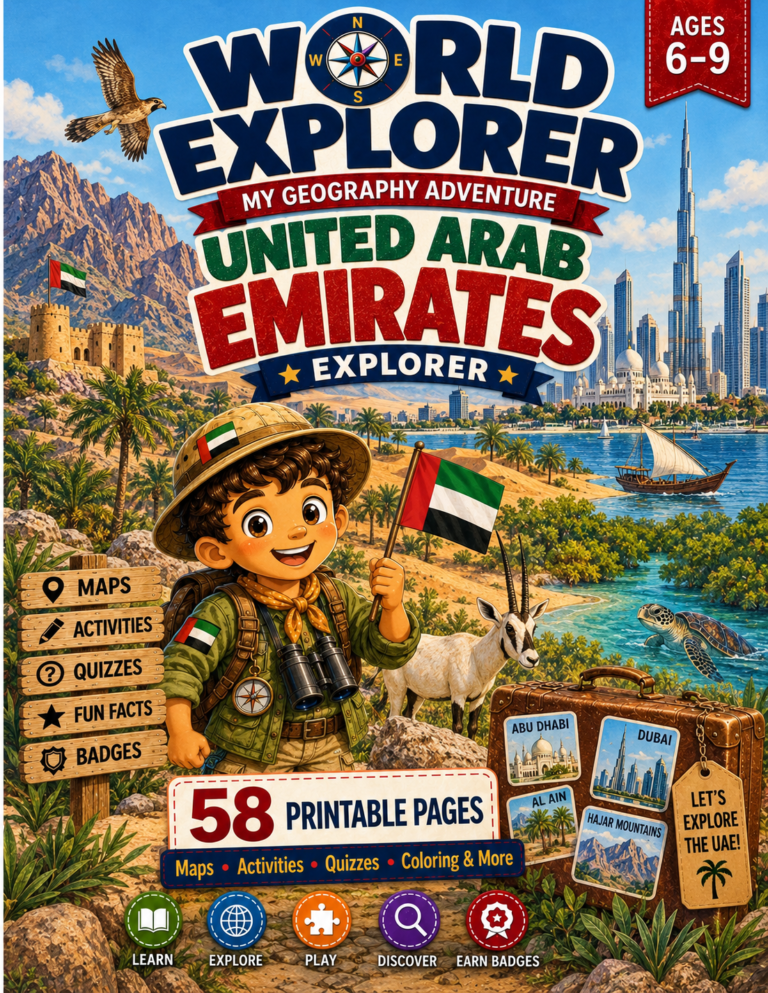
- Level 3: Country Explorations: For deep unit studies, Level 3 offers 30 individual country books. Your child can immerse themselves in the cultural architecture of Italy, the rainforests of Brazil, or the ancient history of Egypt.
The Ultimate Project Portfolio: The Universal Passport
In traditional school, the end result of a student’s hard work is a report card. In Project-Based Learning, the goal is to create a tangible, lasting portfolio of achievement.
Tiny Joy Studio has mastered this concept through their brilliant Universal Passport System.
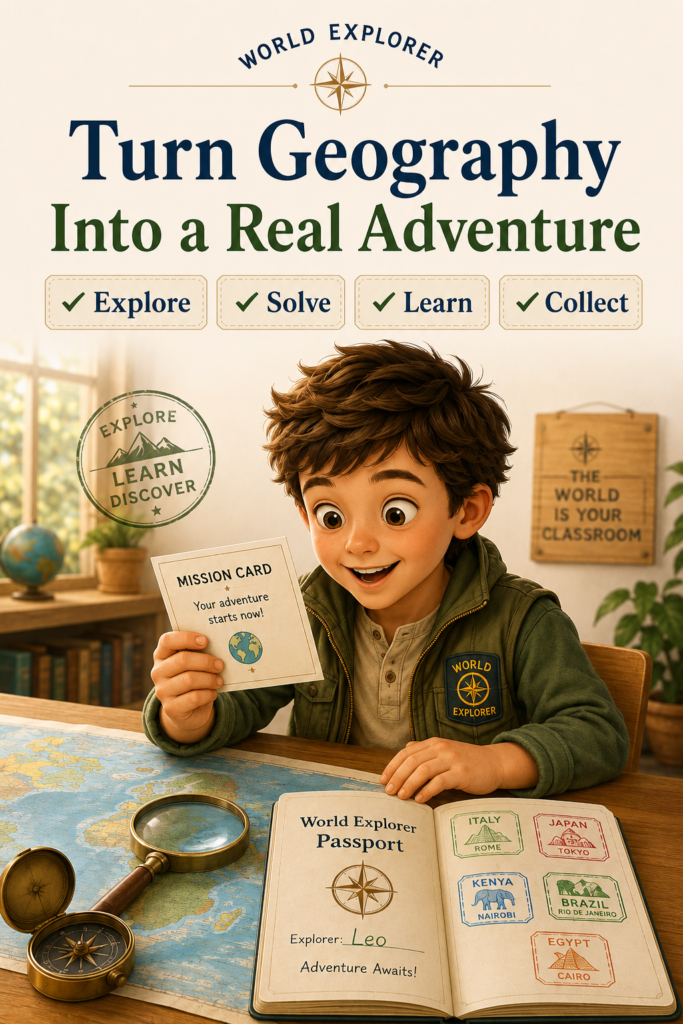
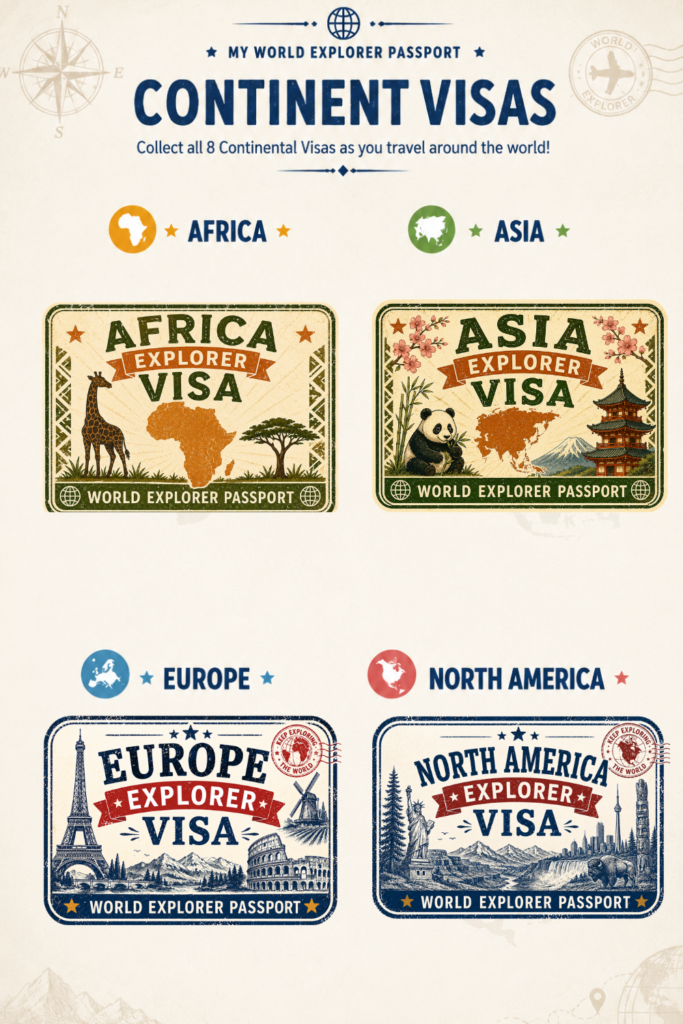
When you start your homeschool year with the foundational Continents & Oceans book, your child receives an official World Explorer Passport. This physical booklet serves as the ultimate project tracker for their entire geographical education:
- Personalized Ownership: Your child begins their quest by filling out their explorer profile, logging their age, and drawing a self-portrait.
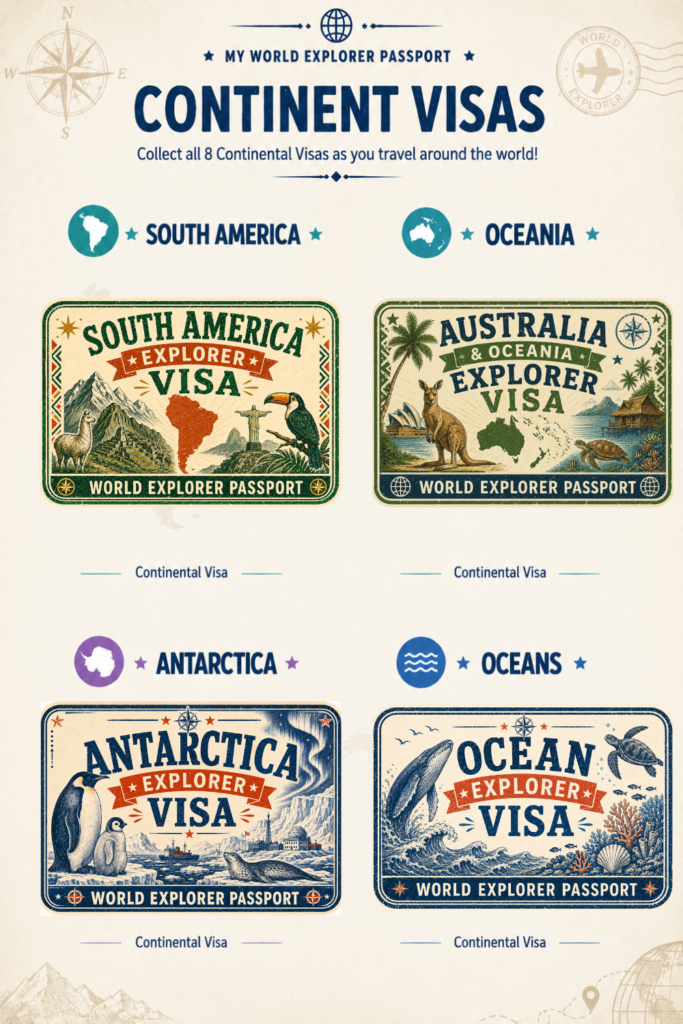
- 38 Mastery Slots: The passport features dedicated spaces structured across the entire curriculum: foundational knowledge slots, 8 Continental & Ocean Visa slots, and 30 individual Country Visa slots.
- Tactile Completion: As your child completes each mission in their activity books—decoding secret messages, tracking animals across coordinates, and mastering visual geography—they earn colorful, cut-out Badges and official Visa Stamps.
Instead of filing away a stack of loose worksheets, your child cuts out their earned rewards and glues them directly into their Universal Passport. This tactile loop creates a powerful psychological incentive: the passport becomes a treasured visual record of their intellectual journey. When they see empty visa slots waiting to be filled, they will actively ask you for more geography lessons!
Why Digital Printables are a Homeschooler’s Best Friend
The entire World Explorer Series is available directly via Etsy as high-resolution digital printables. For a project-based homeschool routine, print-on-demand files offer distinct advantages:
- No Fear of Mistakes: In project-based learning, trial and error is part of the process. If your child makes an error on a map or wants to redesign a badge, simply print that page again!
- Budget-Friendly for Multiple Kids: If you are homeschooling multiple children in early elementary grades, you only purchase the digital file once. You can print out separate activity books and Universal Passports for every child in your family.
- Instant Start: No waiting for shipping or tracking packages. You can download your materials and launch your global quest in less than five minutes.
Final Thoughts: Start Your Next Adventure Today
Transitioning your homeschool geography curriculum to a Project-Based Learning model doesn’t require overhauling your entire life or spending your weekends prepping craft supplies. By framing lessons as investigative quests, utilizing interactive mapping, and giving your child a physical portfolio like the Universal Passport to track their victories, you turn education into an unforgettable adventure.
When children are empowered to act as explorers rather than passive readers, their natural curiosity takes over.
Ready to transform your homeschool geography routine into an exciting global quest? Grab your colored pencils, download the foundational Level 1: Continents & Oceans Activity Book, and help your child set up their very own Universal Passport today directly via the Tiny Joy Studio Etsy Collection.
Your world expedition starts now—let’s go explore!