Why Kids Learn Geography Better Through Adventures, Collections, and Progression
Geography learning through adventure is one of the most effective ways to keep children engaged while exploring the world. By combining exploration, achievements, collectible passport stamps, and progression systems, learning becomes an exciting journey rather than a school assignment.
Many children start learning geography with excitement.
They love maps, animals, famous landmarks, and discovering new places around the world.
But there is one common problem.
After finishing a worksheet, activity book, or lesson, the excitement often disappears.
The challenge is not getting children interested in geography.
The challenge is keeping them interested.
That is why some of the most successful learning systems use the same ideas found in games, adventures, and collecting activities:
- Progression
- Achievements
- Levels
- Rewards
- Collections
When children feel they are moving forward and unlocking something new, learning becomes much more exciting.
Why Traditional Geography Resources Often Lose Attention
Many educational resources are designed as standalone products.
A child completes the book.
The learning experience ends.
There is no next mission.
No new destination.
No visible progress.
For many children, motivation quickly disappears once the final page is finished.
Imagine if a video game ended after the first level.
Most children would stop playing.
Learning works the same way.
Children enjoy seeing progress and having a reason to continue.
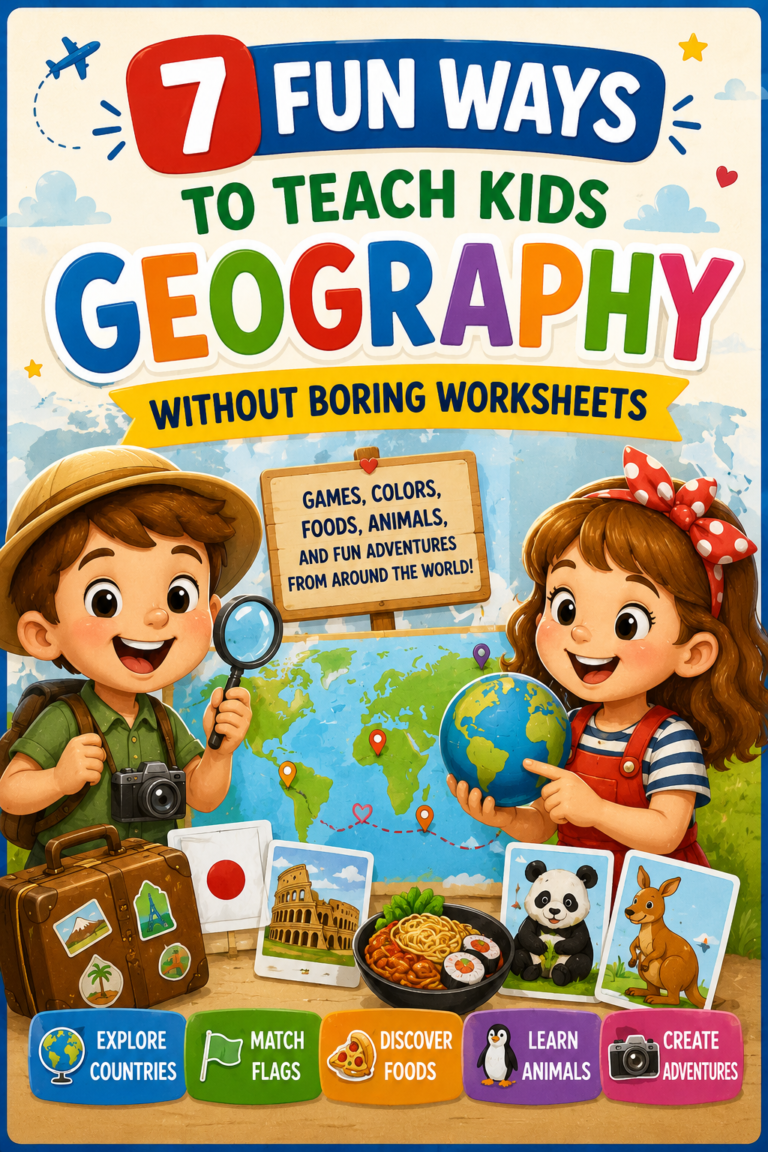
This is one reason many parents look for alternatives to memorization-heavy approaches and focus on more interactive ways children can learn geography.
Turning Geography Into an Adventure
Instead of treating geography as a collection of facts to memorize, it can become an ongoing adventure.
Children naturally enjoy:
- Exploring new places
- Unlocking achievements
- Collecting rewards
- Completing challenges
- Tracking progress
When these elements are combined, geography becomes more than a school subject.
It becomes a journey.
This approach is often called geography learning through adventure because children learn by progressing through missions, collecting achievements, and discovering new places step by step.
The World Explorer Learning System
At TinyJoy Studio, we designed the World Explorer series as a connected learning journey.
Each book becomes part of a larger adventure.
Children do not simply finish one book and stop.
They move through different levels, unlock new destinations, and collect achievements along the way.
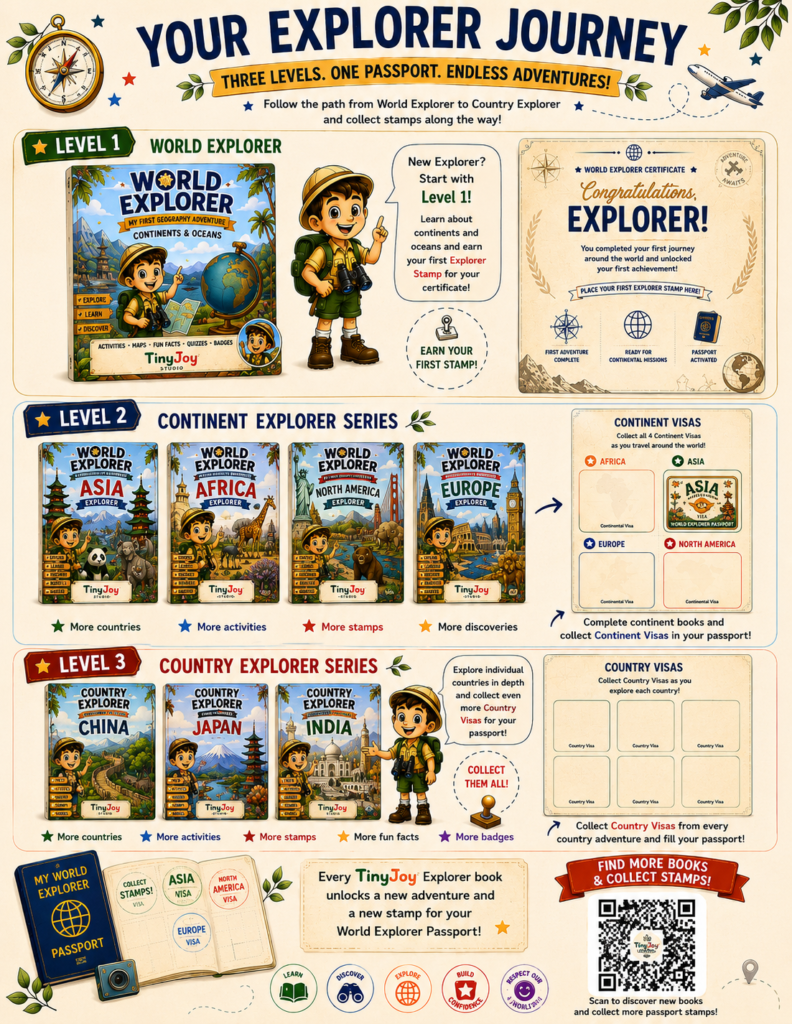
The system is built around three learning levels.
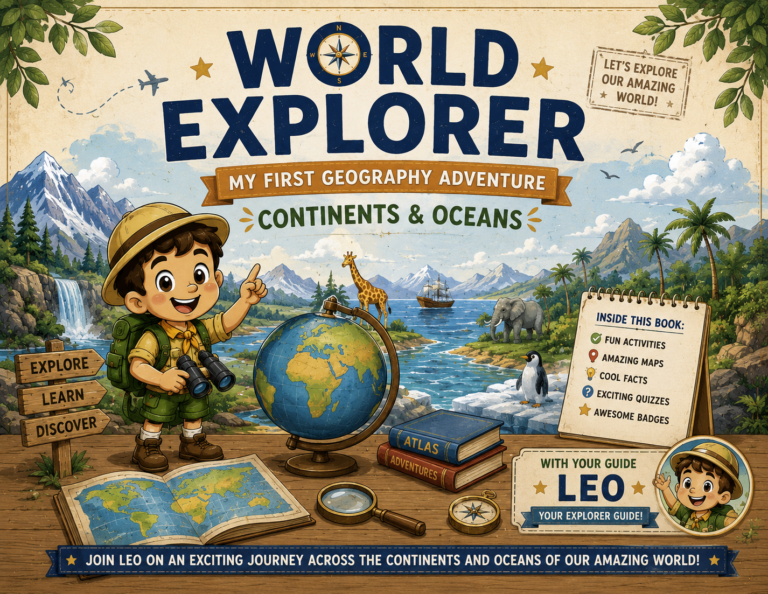
Level 1: World Explorer – The Beginning of the Journey
Every explorer needs a starting point.
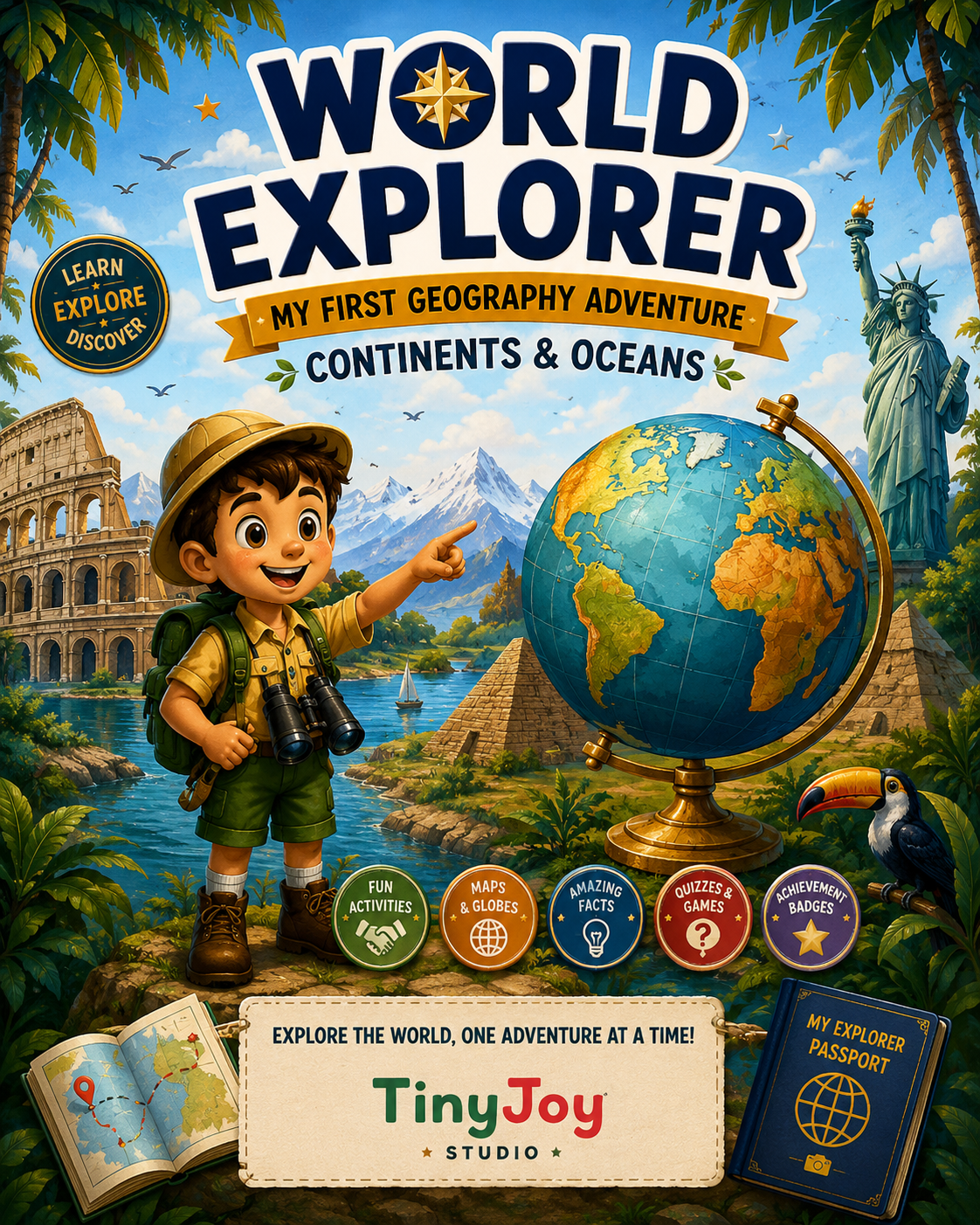
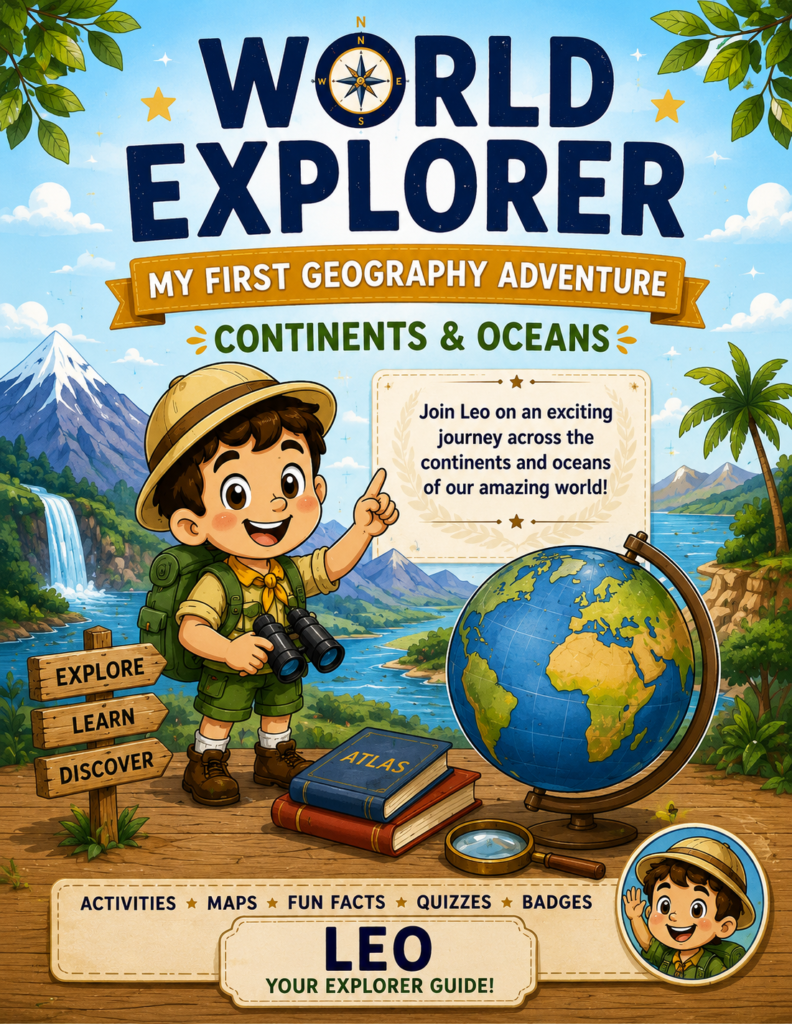
The World Explorer: Continents & Oceans activity book introduces children to:
- The seven continents
- The world’s oceans
- Maps and geography basics
- Famous animals
- Interesting landmarks
- Fun geography facts
As children complete activities and challenges, they earn their very first achievement and unlock their first explorer stamp.
This first adventure creates the foundation for everything that follows.
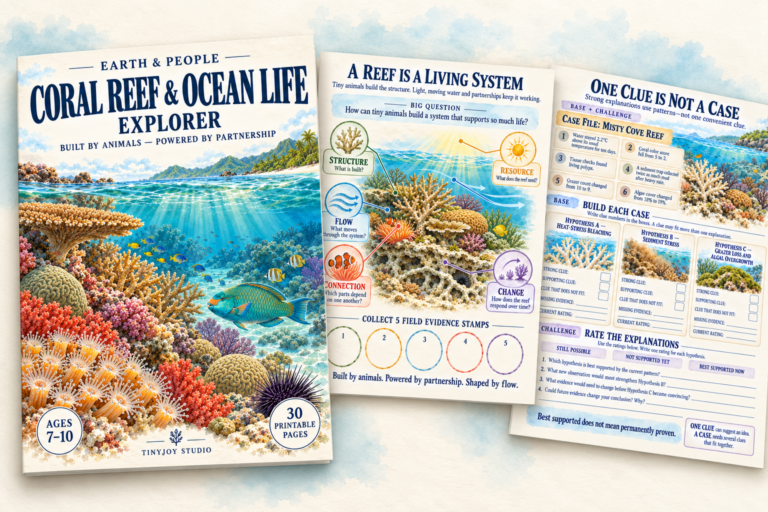
Level 2: Continent Explorer Series
Once children understand the basics, they are ready to dive deeper.
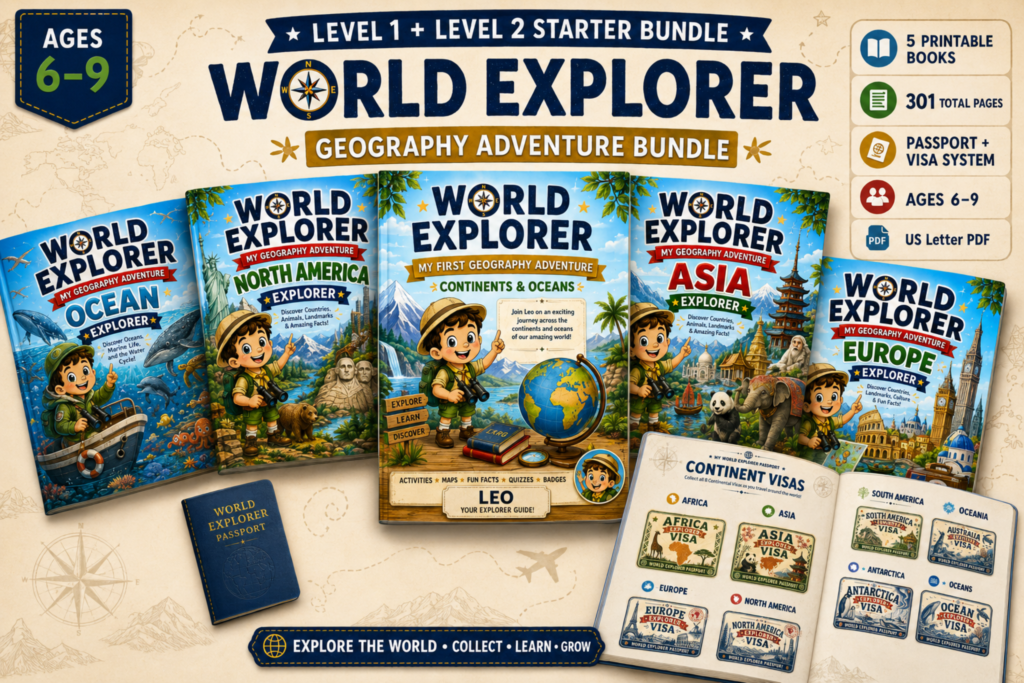
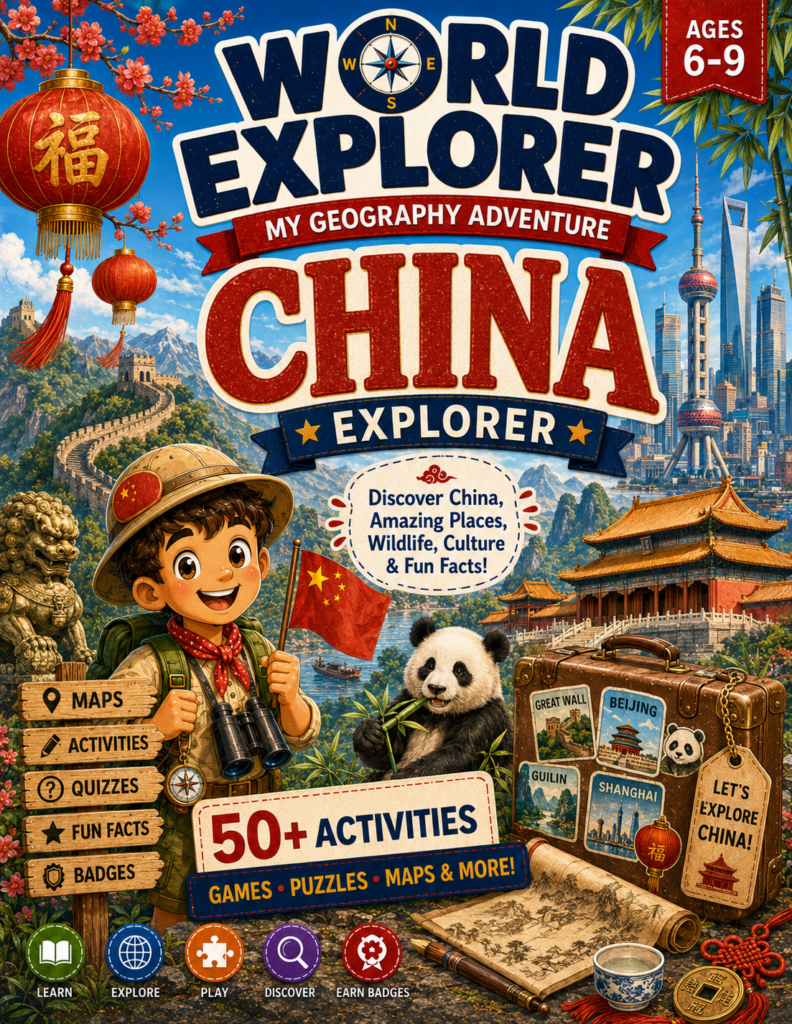
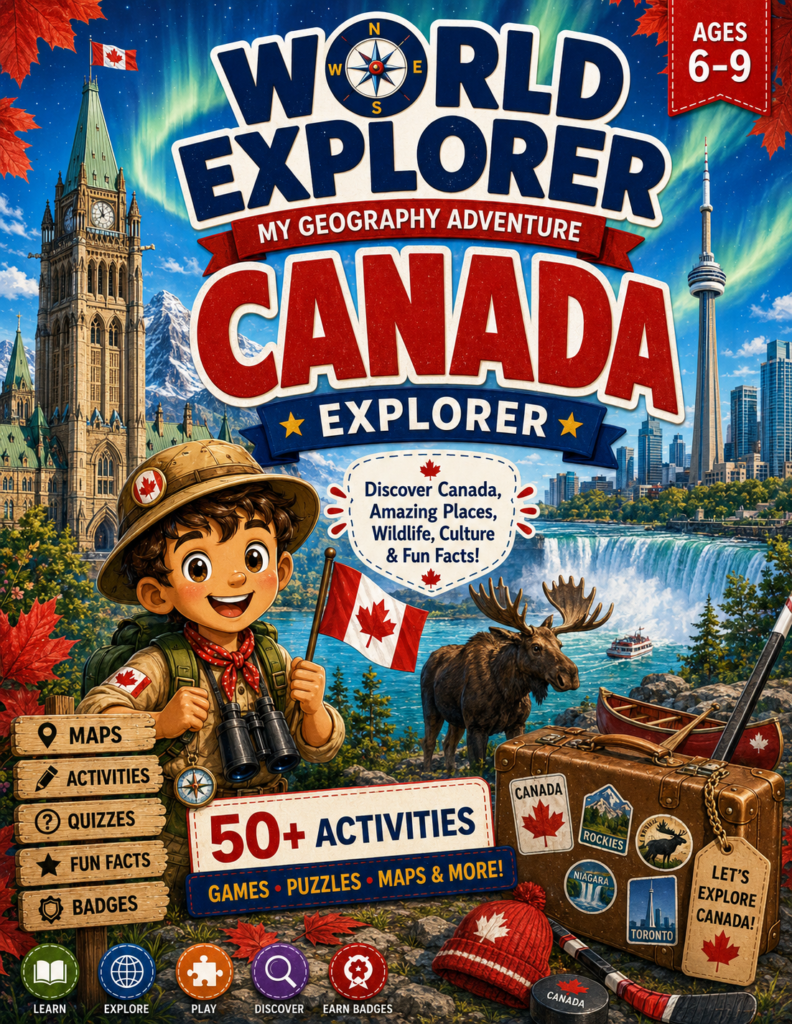
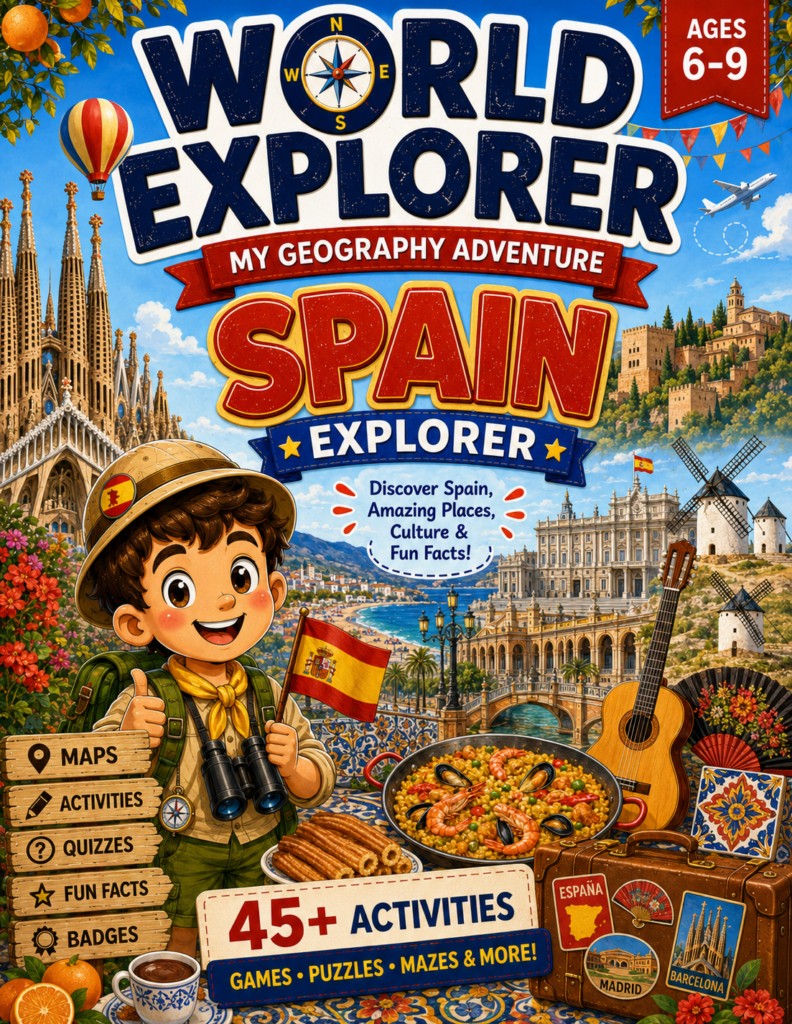
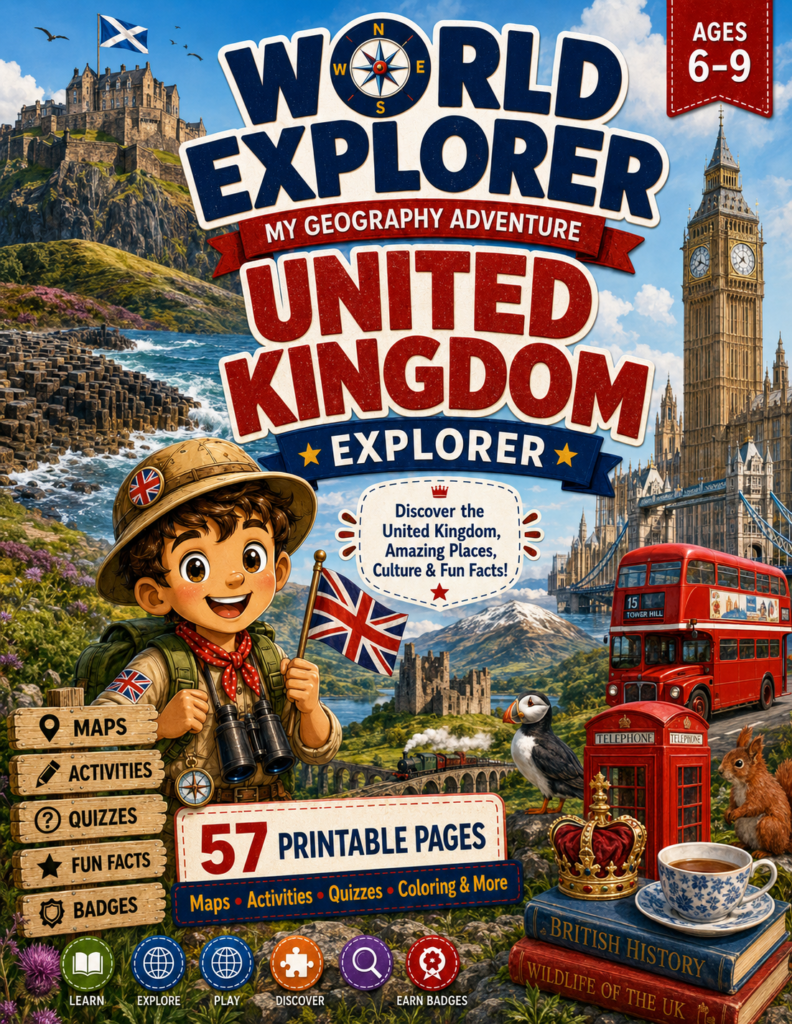
The Continent Explorer books focus on individual continents and allow children to explore countries, cultures, animals, foods, landmarks, and traditions in greater detail.
Current and upcoming adventures include:
- Africa Explorer
- Asia Explorer
- Europe Explorer
- North America Explorer
- South America Explorer
- Australia & Oceania Explorer
- Antarctica Explorer
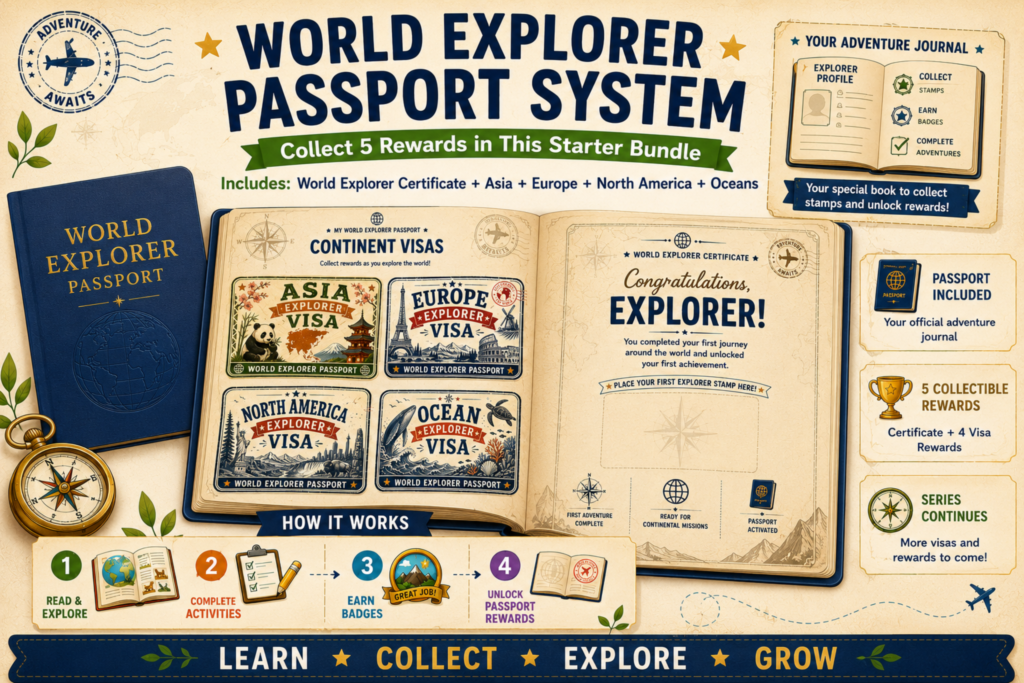
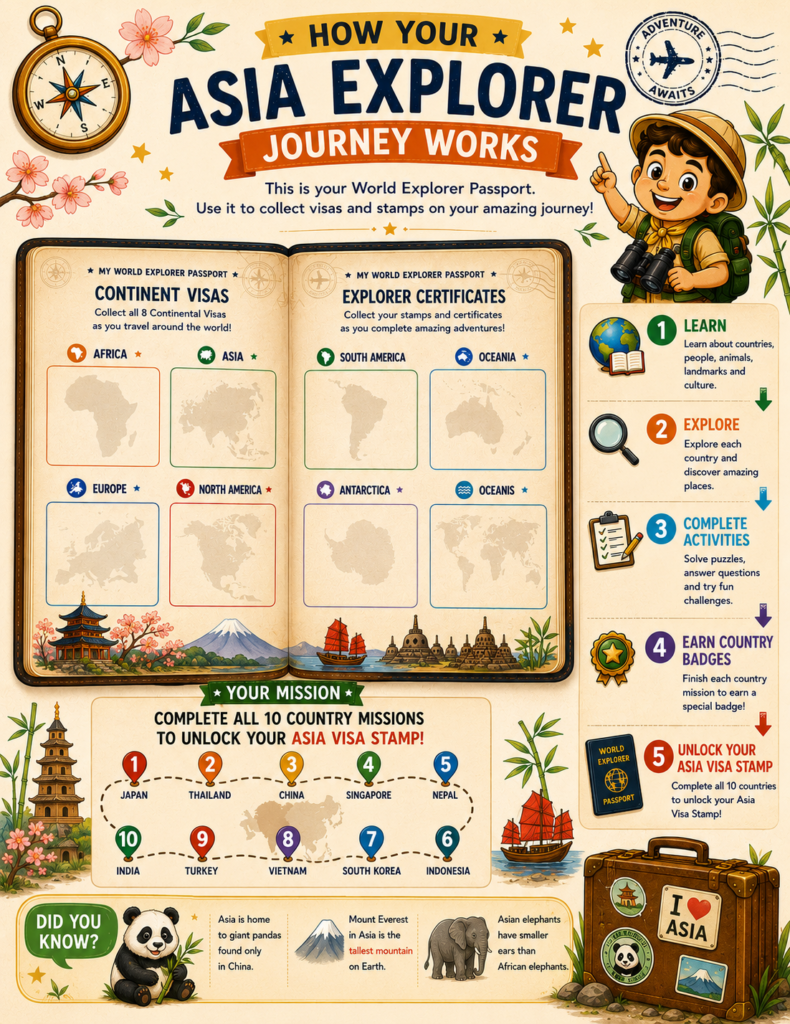
Each completed continent adventure unlocks a special Continent Visa for the World Explorer Passport.
Suddenly learning geography feels less like studying and more like collecting travel memories.
Level 3: Country Explorer Series
The final stage takes children even deeper into the world.
Instead of learning about entire continents, children begin exploring individual countries.
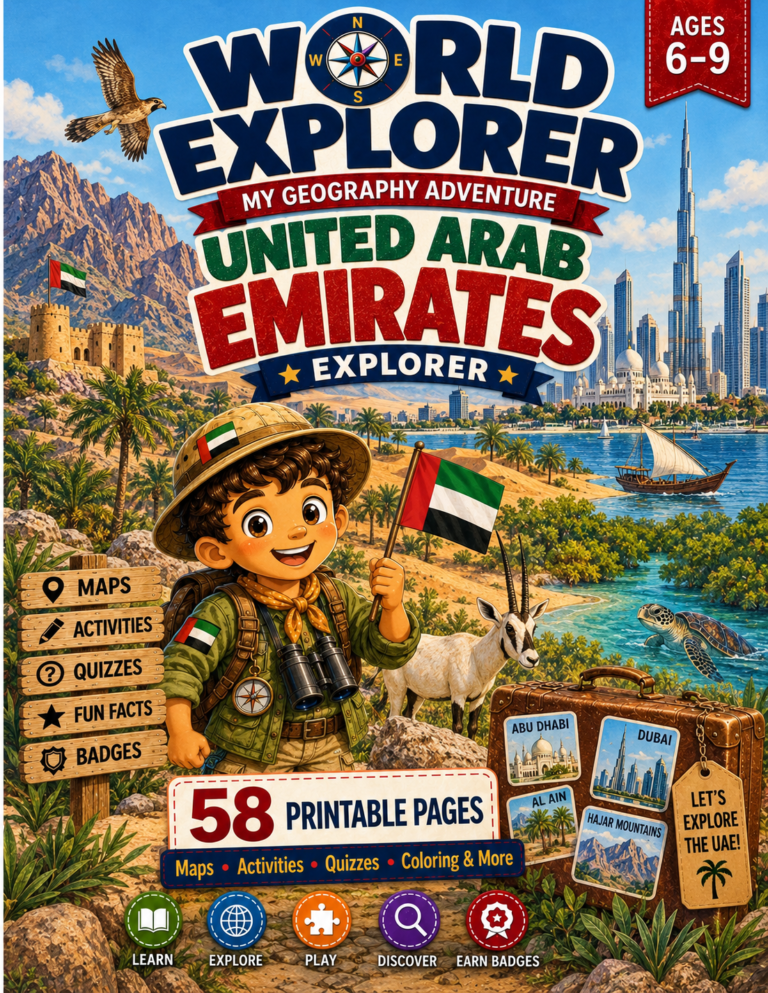
Future adventures include destinations such as:
- Japan
- China
- India
- France
- Egypt
- Brazil
- Australia
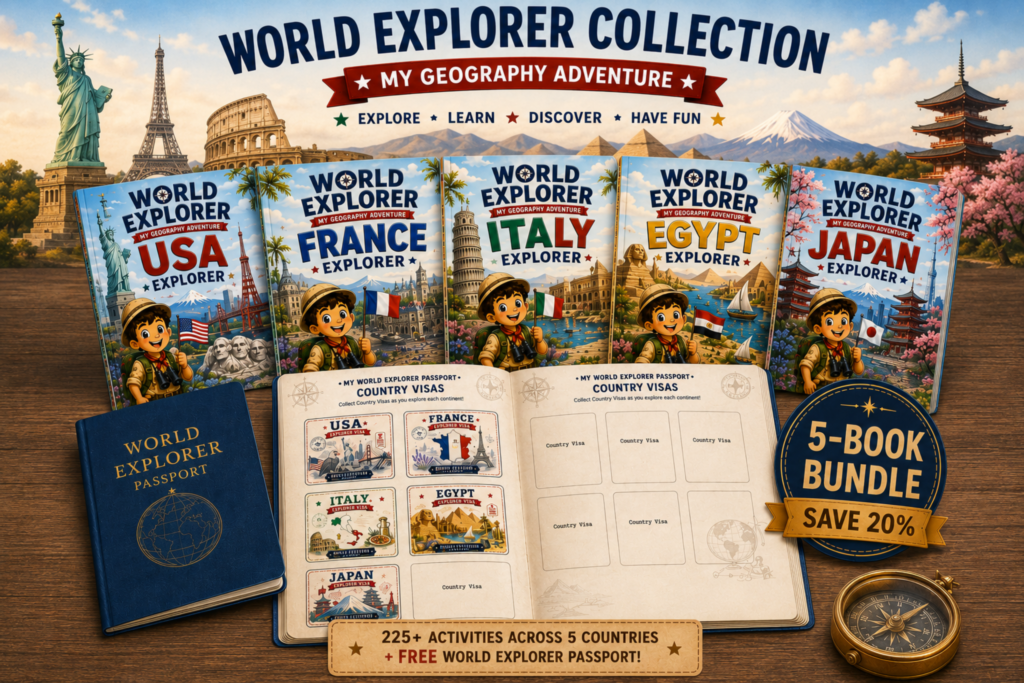
Country Explorer books allow children to discover unique traditions, foods, wildlife, landmarks, flags, and cultures while collecting even more passport achievements.
Each completed country earns another visa and another reason to continue learning.
The Power of the World Explorer Passport
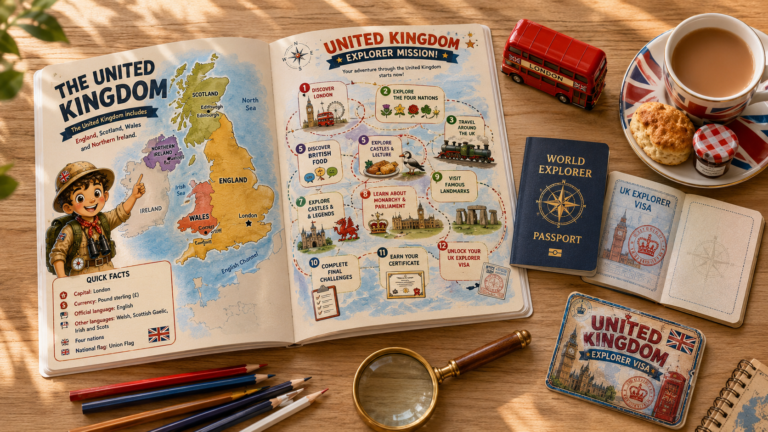
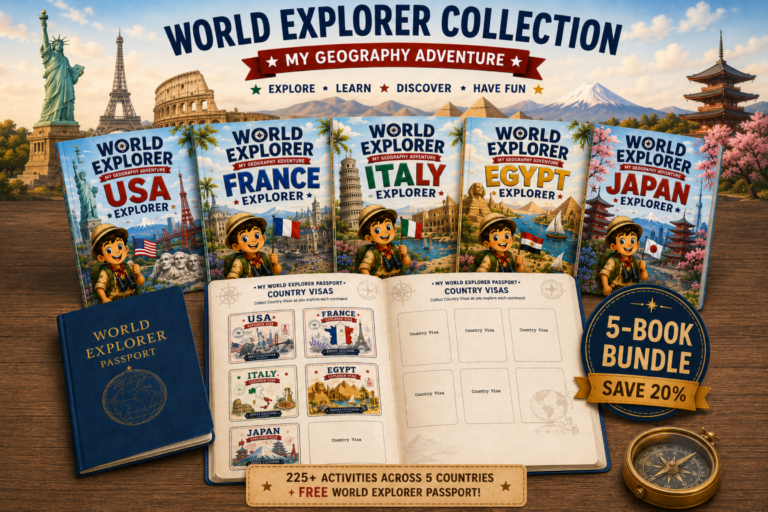
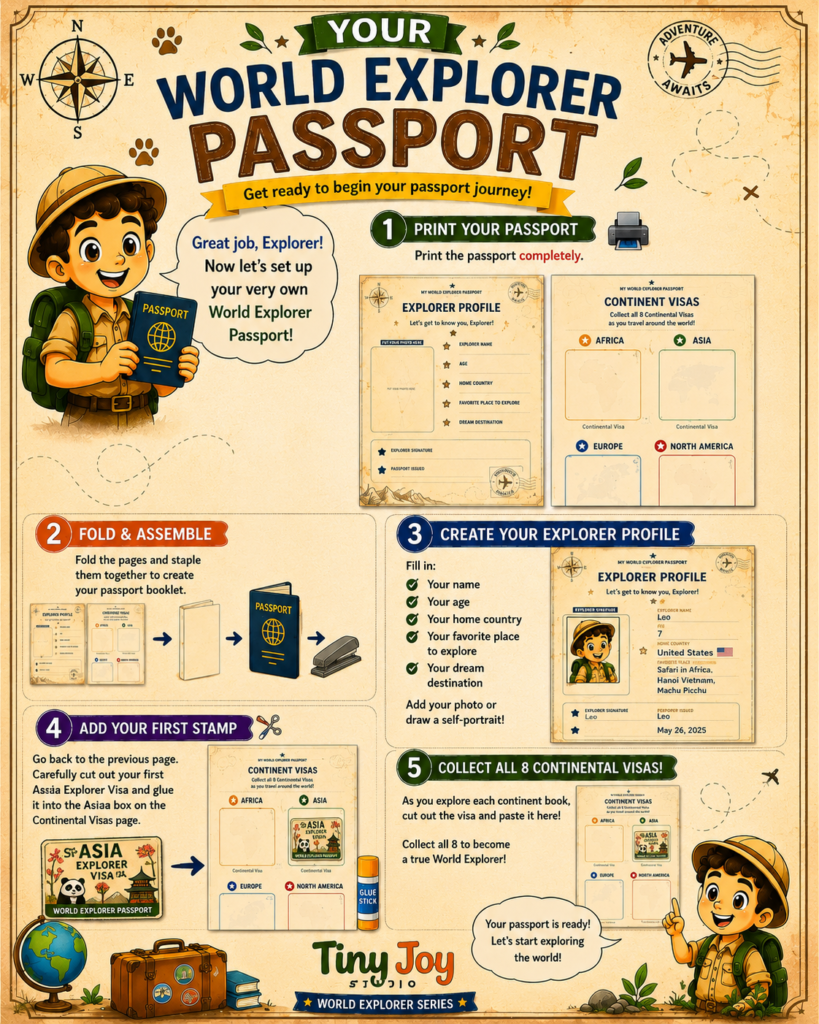
One of the most exciting parts of the system is the World Explorer Passport.
The passport transforms learning into a visible collection of achievements.
Children can:
- Collect Explorer Stamps
- Earn Continent Visas
- Unlock Country Visas
- Track their learning journey
- Celebrate completed adventures
Instead of asking:
«How much geography have I learned?»
Children begin asking:
«What can I unlock next?»
That simple shift creates powerful motivation.
Explorer passports are one of the most effective tools for turning educational progress into something children can actually see and collect.
Why Collection-Based Learning Works
Children naturally enjoy collecting things.
Stickers.
Trading cards.
Badges.
Achievements.
Stamps.
Collections create a sense of ownership and progress.
Every new stamp represents a completed challenge and a successful learning experience.
The collection itself becomes part of the reward.
Why Kids Love Level Systems
Video games use levels.
Sports use rankings.
Scouting programs use badges.
Learning can use the same principles.
Levels help children:
- See progress
- Set goals
- Stay motivated
- Build confidence
- Continue learning longer
Instead of feeling overwhelmed by a huge subject, children simply focus on the next destination.
One adventure at a time.
Learning Through Curiosity Instead of Pressure
The ultimate goal is not to memorize geography facts.
The goal is to inspire curiosity.
When children become excited about collecting stamps, unlocking countries, and filling their passport, they naturally begin asking questions about the world.
They want to know:
- Where animals live
- What people eat
- How countries are different
- Which landmarks are famous
- What they can explore next
Curiosity becomes the engine that drives learning.
Conclusion
The best learning systems do more than teach information.
They create motivation.
By combining geography, adventures, collections, passport stamps, and progression levels, children stay engaged long after finishing a single book.
Every completed challenge unlocks a new achievement.
Every stamp tells a story.
And every new destination becomes the beginning of another adventure.
Because learning about the world should feel like exploring it.