Animal Adaptations Activities for Kids: The Ultimate Science Unit Study (No Prep!)
Animal Adaptations Activities for Kids: The Ultimate Science Unit Study (No Prep!)
When we take children on a walk through nature, they are naturally captivated by animals. They marvel at a squirrel leaping effortlessly between branches, wonder how a polar bear stays warm in freezing water, or giggle at the sight of a skunk scampering away. But beneath that cuteness and curiosity lies one of the most fascinating driving forces in biology: survival.
If you have ever tried to explain to a 6- to 9-year-old child how evolution, natural selection, or specialized physiology work using a traditional, dry textbook, you know how quickly eyes can glaze over. Abstract scientific terms like «physiological camouflage» or «behavioral thermoregulation» mean very little to an early elementary student unless they can visualize and interact with them.
Trying to piece together a comprehensive, visually stunning life science unit from random internet printouts can feel overwhelming. If you want to transform your science lessons into an exciting global safari without spending your weekends cutting out flashcards or hunting for worksheets, we have the ultimate «open-and-go» solution.
Meet Your Wildlife Guide: The Animal Adaptations Workbook
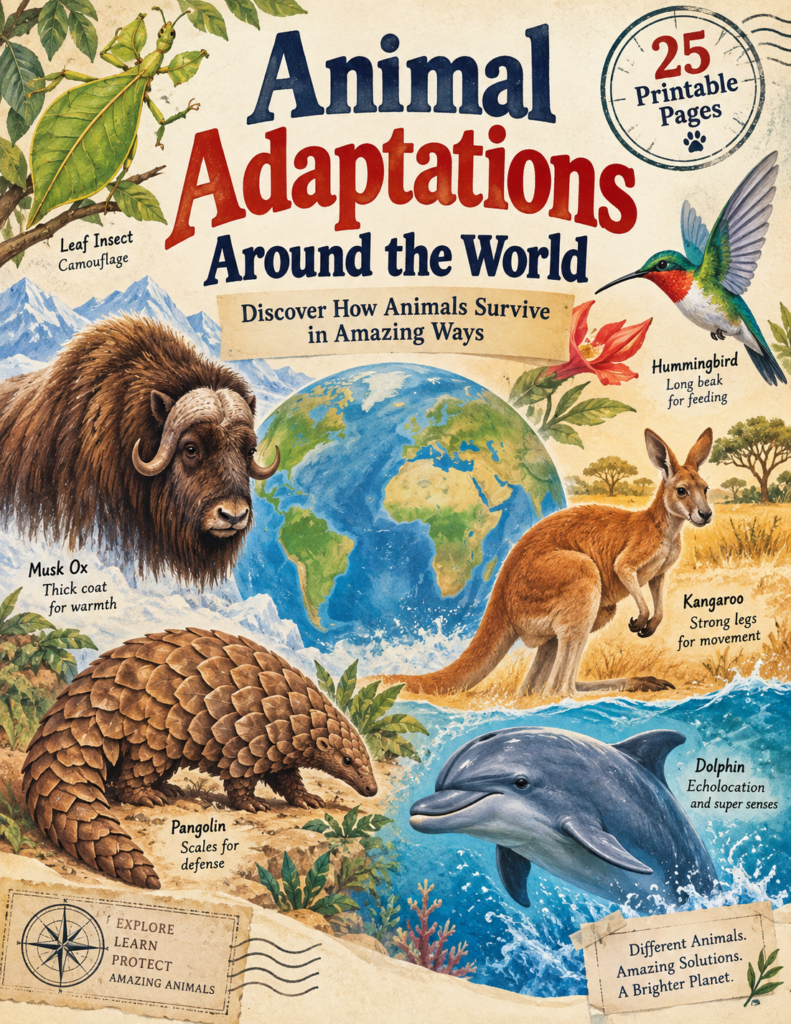
Instead of overwhelming young minds with heavy paragraphs, the Animal Adaptations Around the World activity book invites your child on a guided, hands-on expedition across global ecosystems.
Designed specifically for curious elementary students, this workbook acts as a passport to the wild. It seamlessly fits into your geography learning path for kids, taking them on a structured journey to discover how animals eat, move, stay safe, and survive. Let’s explore the hands-on missions your child will complete on their journey!
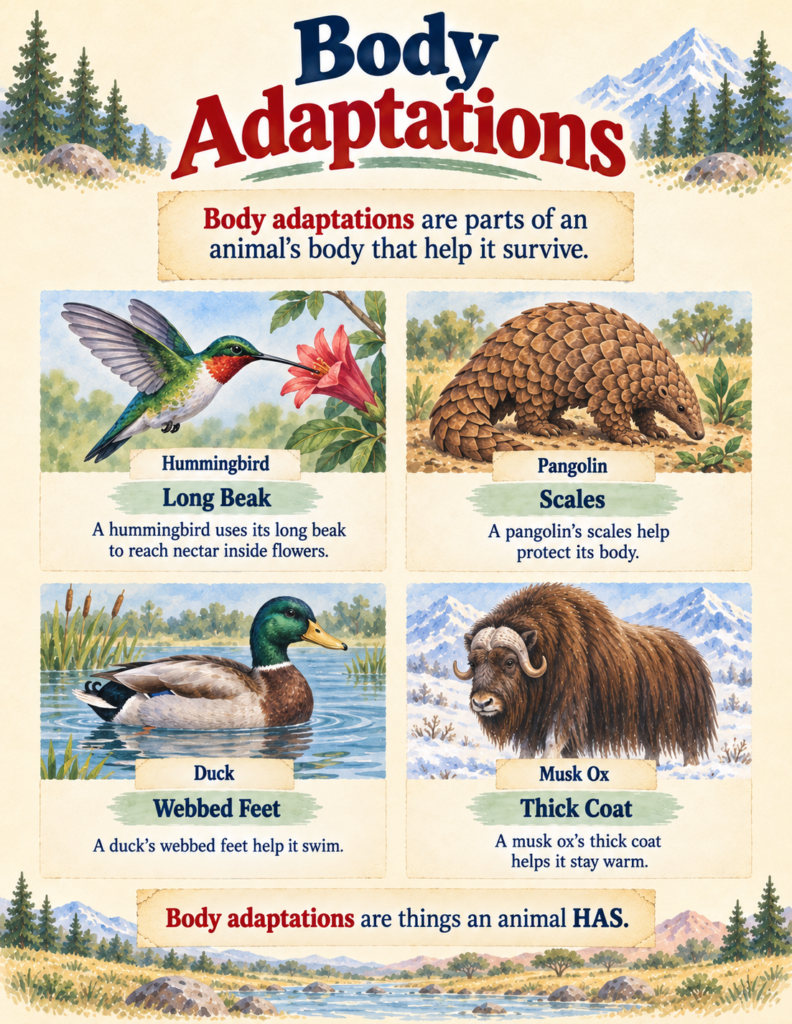
1. What Is an Adaptation? Body vs. Behavior
Before we can explore specific creatures, children need to understand the fundamental rule of survival: an adaptation is any body feature or behavior that helps an animal live in its environment.
2. Built for Eating: Beaks, Teeth, and Mouthparts
An animal’s feeding tool must match the job it needs to do.
- What’s Inside the Book: Young explorers examine how form meets function. They discover why an anteater has a long, sticky tongue to reach termites, how a flamingo uses a specialized filtering bill to strain tiny food from water, and how a parrotfish uses beak-like teeth to scrape algae from hard coral surfaces.
- How to Bring It to Life aligning with why project-based learning is essential: Set up a simple «bird beak simulation» station using different kitchen tools (tweezers, spoons, and clothespins) to pick up various «foods» (rice, rubber bands, and marbles) out of a bowl. Kids instantly see why shape dictates survival!
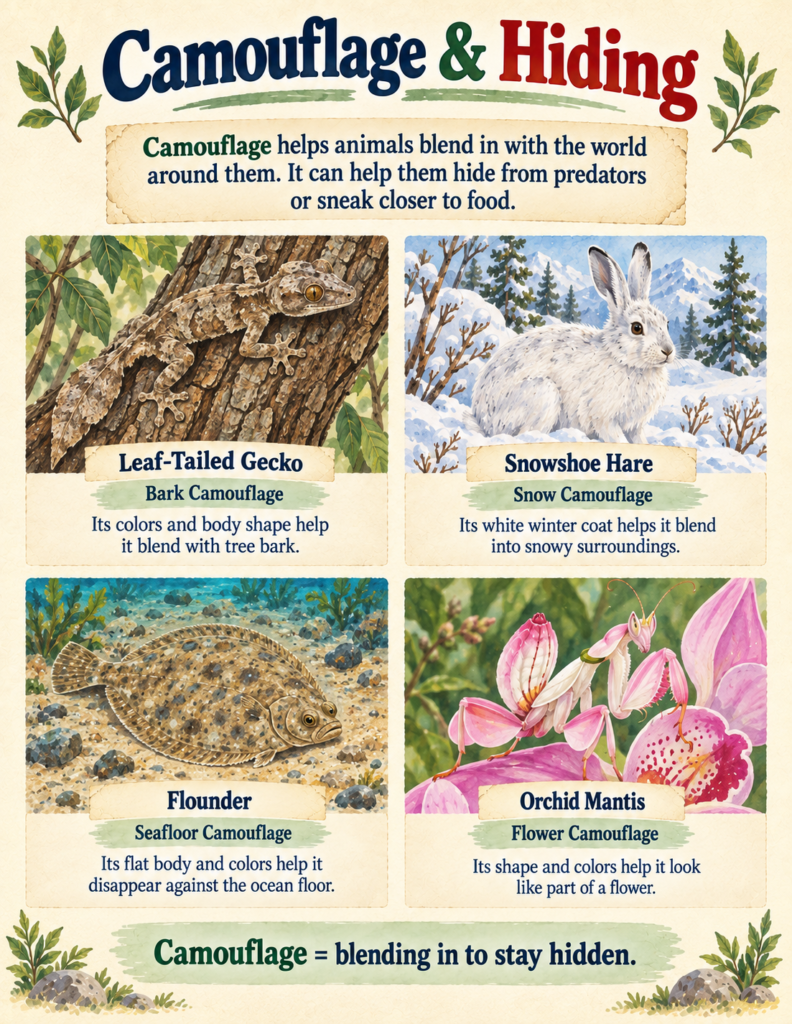
3. The Master of Disguise: Camouflage & Hiding
Sometimes the best way to survive is to simply disappear.
- What’s Inside the Book: Children explore how camouflage helps animals hide from predators or sneak closer to prey. They examine the bark-matching colors of the leaf-tailed gecko, the snow-white winter coat of the snowshoe hare, the flat, seafloor-disappearing flounder, and the brilliant floral disguise of the orchid mantis. They even tackle a «Camouflage Challenge» visual puzzle to spot hidden animals!
- How to Bring It to Life at Home: Cut out paper shapes of animals, color them to match different rooms in your house, and hide them in plain sight. Let your kids play predator and hunt for the camouflaged creatures!
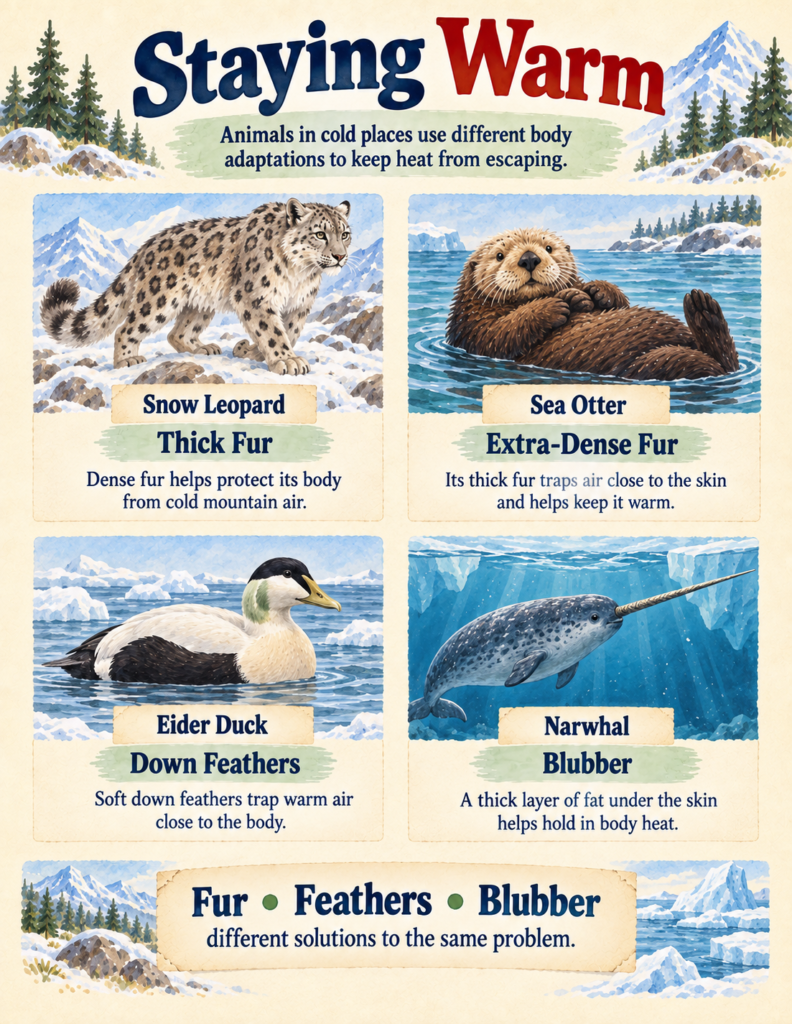
4. Staying Warm and Surviving the Seasons
How do animals handle freezing winters and scorching deserts? They adapt or move!
- What’s Inside the Book: Kids discover different solutions to the same cold-weather problem. They compare the dense fur of a snow leopard, the air-trapping down feathers of an eider duck, and the thick layer of fat (blubber) under a narwhal or seal’s skin. They also explore seasonal behaviors like monarch butterfly migration, wood frog freeze tolerance, and emperor penguins huddling together for warmth.
- How to Bring It to Life at Home: Try the classic «Crisco Blubber Experiment»! Coat one hand in a plastic bag filled with shortening (blubber) and submerge both hands in a bowl of ice water. Kids will physically feel how fat protects animals from freezing temperatures.
The Secret to Motivation: Making Science an Adventure
Even with the most fascinating wildlife facts, children can sometimes lose steam. The secret to keeping them engaged until the final page is incorporating interactive challenges and a tangible sense of progress. This is why learning through collecting for kids is such a powerful educational framework!
Throughout the workbook, your child isn’t just reading about biology; they are matching animals to their adaptations, solving detective clues, designing their own hypothetical surviving animal, and earning official rewards.
Are you ready to take your kids on an unforgettable global safari? Grab your colored pencils, print the workbook at home, and let the adaptation adventure begin!
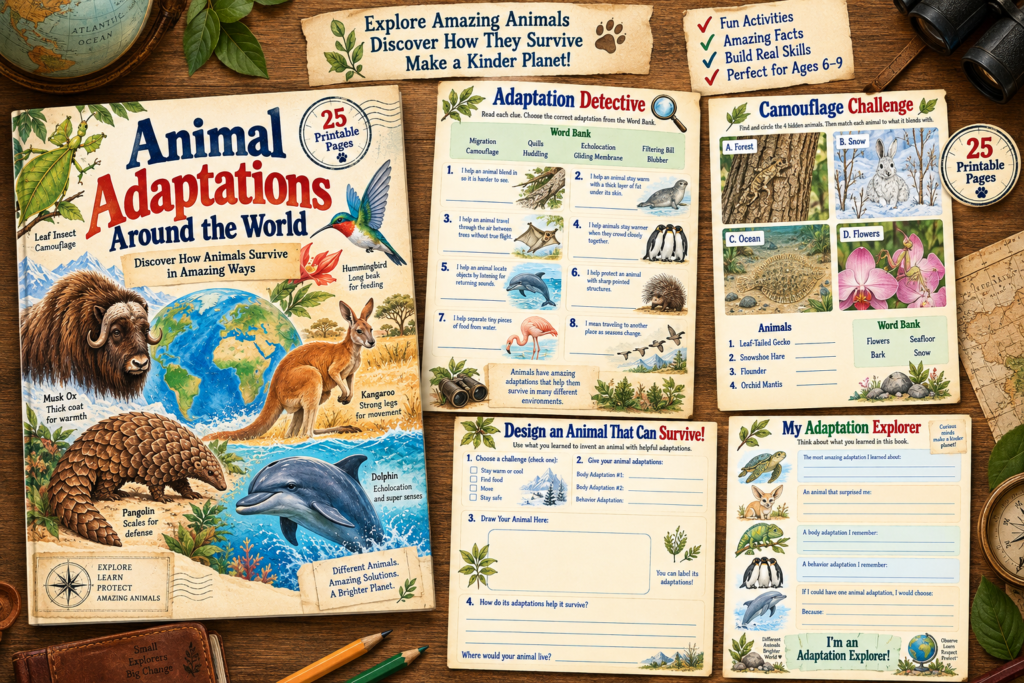
👉 Grab the Animal Adaptations Activity Book in the Tiny Joy Studio Etsy Shop Today!