Protect Our Planet: 5 Fun Conservation & Nature Activities for Kids
When we take children on a walk through a forest, along a stream, or across a grassy meadow, they are naturally captivated by the living world. They marvel at a frog resting on lily pads, watch bees dance among wildflowers, or collect smooth pebbles by the water. But beneath that immediate joy lies a critical lesson for the next generation: how to care for and protect our environment.
Teaching complex ecological concepts like biodiversity, habitat fragmentation, and conservation to 6- to 9-year-olds can feel overwhelming. If you rely on dry textbooks or dense scientific articles, young minds quickly lose focus.
If you want to transform your earth science and conservation lessons into an exciting, hands-on journey without spending your weekends hunting for random worksheets, we have the ultimate «open-and-go» solution.
Meet Your Nature Guide: The Protect Our Planet Workbook
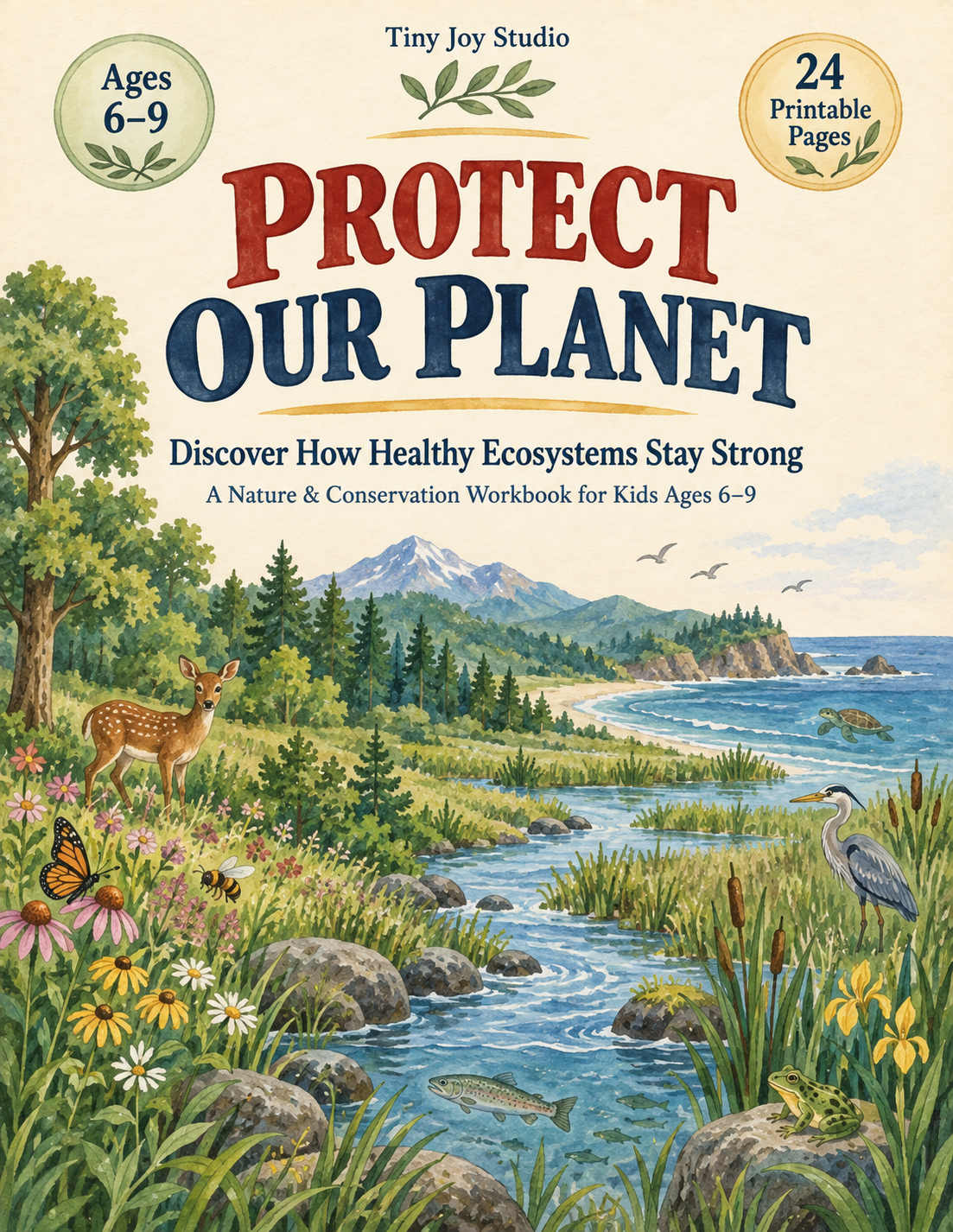
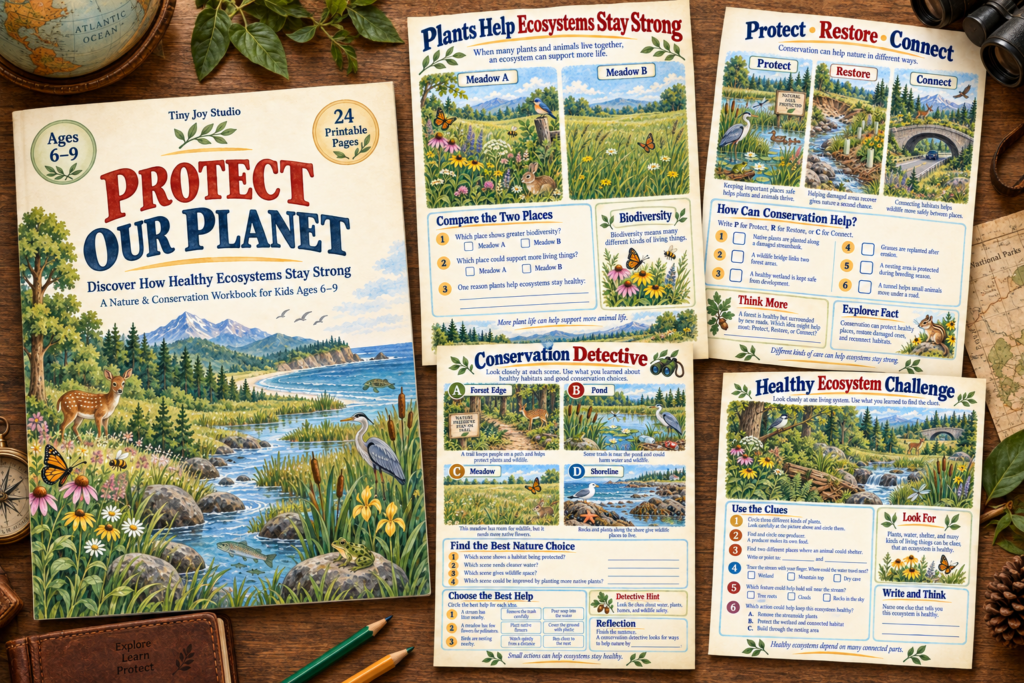
Instead of overwhelming young minds with heavy paragraphs, the Protect Our Planet: Discover How Healthy Ecosystems Stay Strong activity book invites your child on a guided, interactive expedition into the heart of nature.
Designed specifically for curious elementary students, this workbook acts as a personal field guide. It seamlessly fits into your geography learning path for kids, taking them on a structured journey to explore how plants, animals, water, and soil work together to keep ecosystems thriving. Let’s explore the hands-on missions your child will complete on their journey!
1. Discover the Power of Biodiversity
Before kids can protect nature, they need to understand what makes a living system strong and resilient.
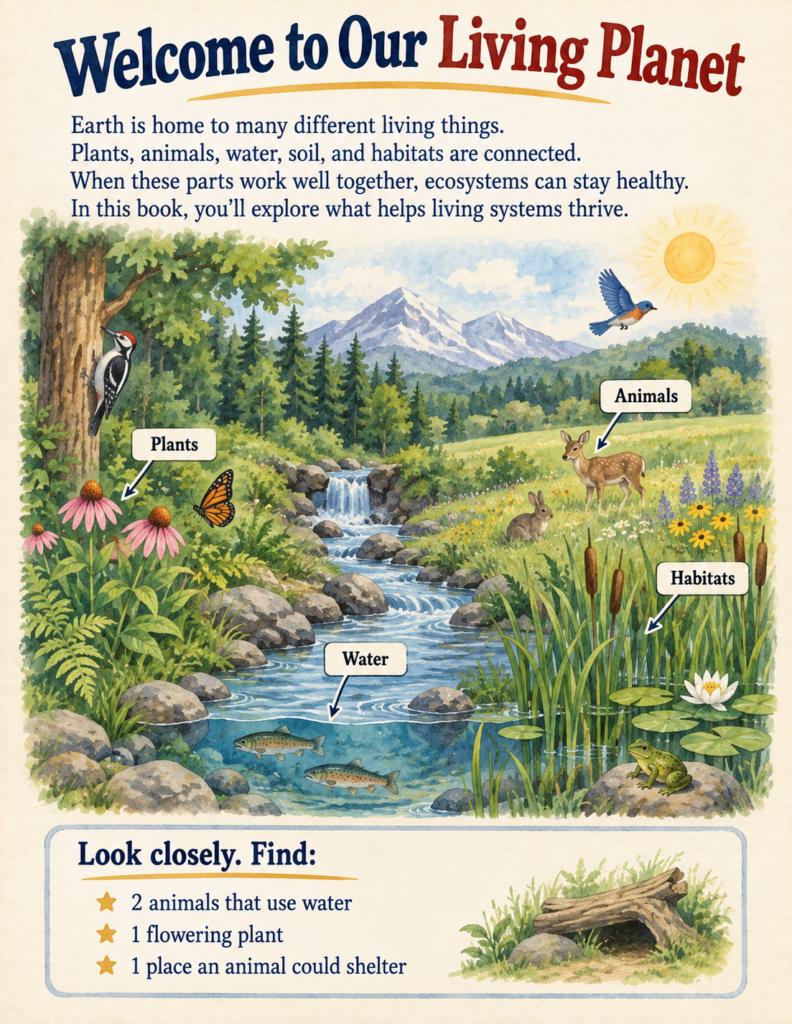
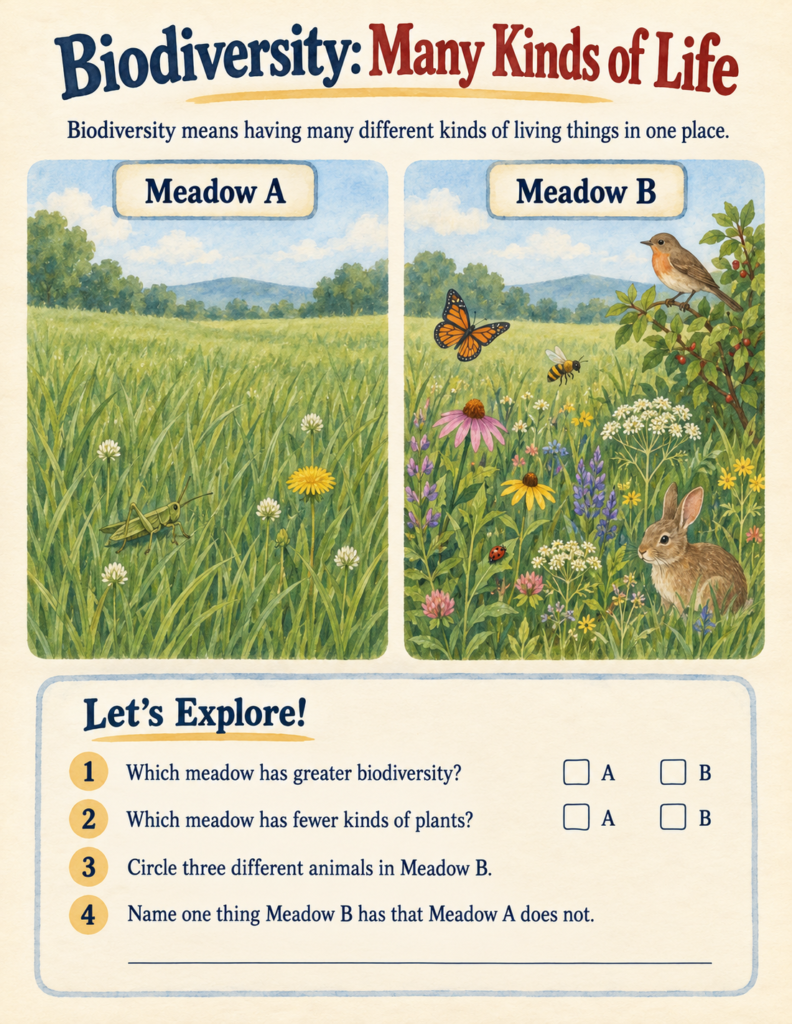
- What’s Inside the Book: Young explorers learn that a healthy ecosystem requires variety—clean water, food sources, shelter, healthy soil, and many different kinds of life. Through engaging visual puzzles, they compare two meadows (Meadow A and Meadow B) to identify which one has greater biodiversity, discovering firsthand why a rich variety of plants and animals creates a stronger community.
- How to Bring It to Life at Home: Head out to your local park or backyard and run a mini «Biodiversity Count.» Challenge your child to find and count how many different types of leaves, insects, and bird species they can spot in ten minutes!
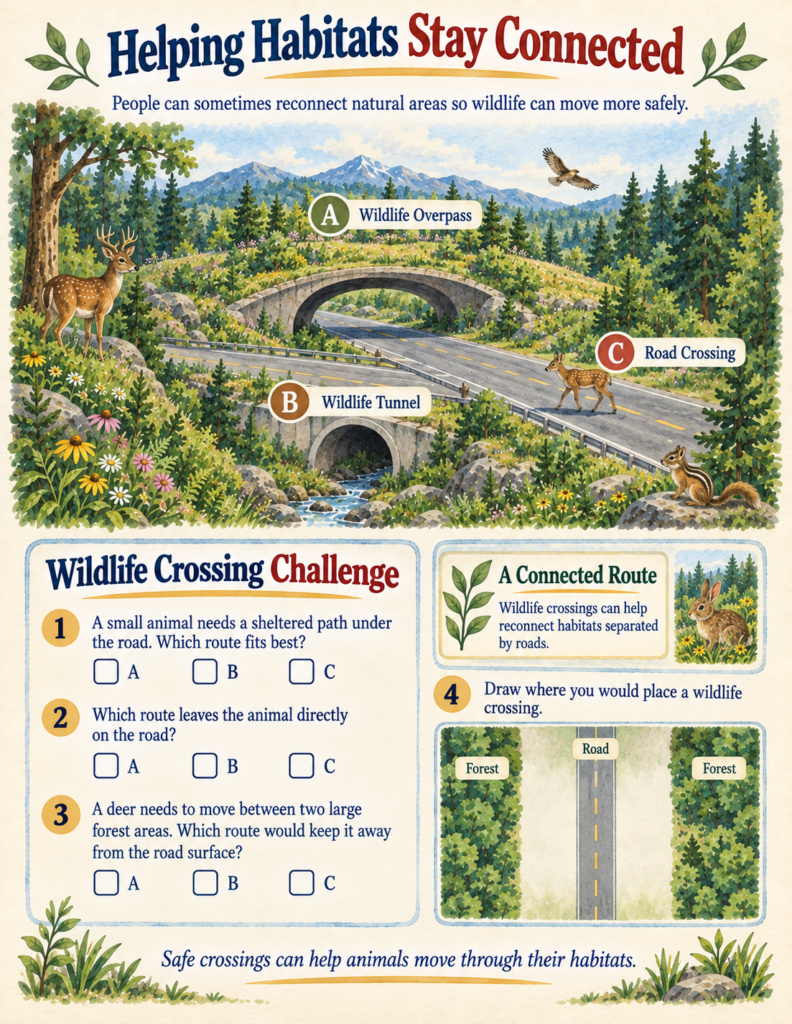
2. Connected Habitats: Helping Wildlife Move Safely
Human development and roads can sometimes change natural landscapes in dramatic ways.
- What’s Inside the Book: Children explore how a single connected forest can be split into two separate parts by a road, making it difficult and dangerous for animals to reach food and water. They take on a «Wildlife Crossing Challenge,» learning how engineers design wildlife overpasses, tunnels, and bridge crossings to reconnect fragmented habitats and keep animals safe.
- How to Bring It to Life at Home: This perfectly demonstrates why project-based learning is essential! Grab some blocks, toy cars, and stuffed animals, and let your kids build a cardboard «wildlife overpass» across a mock highway to save their animal toys.
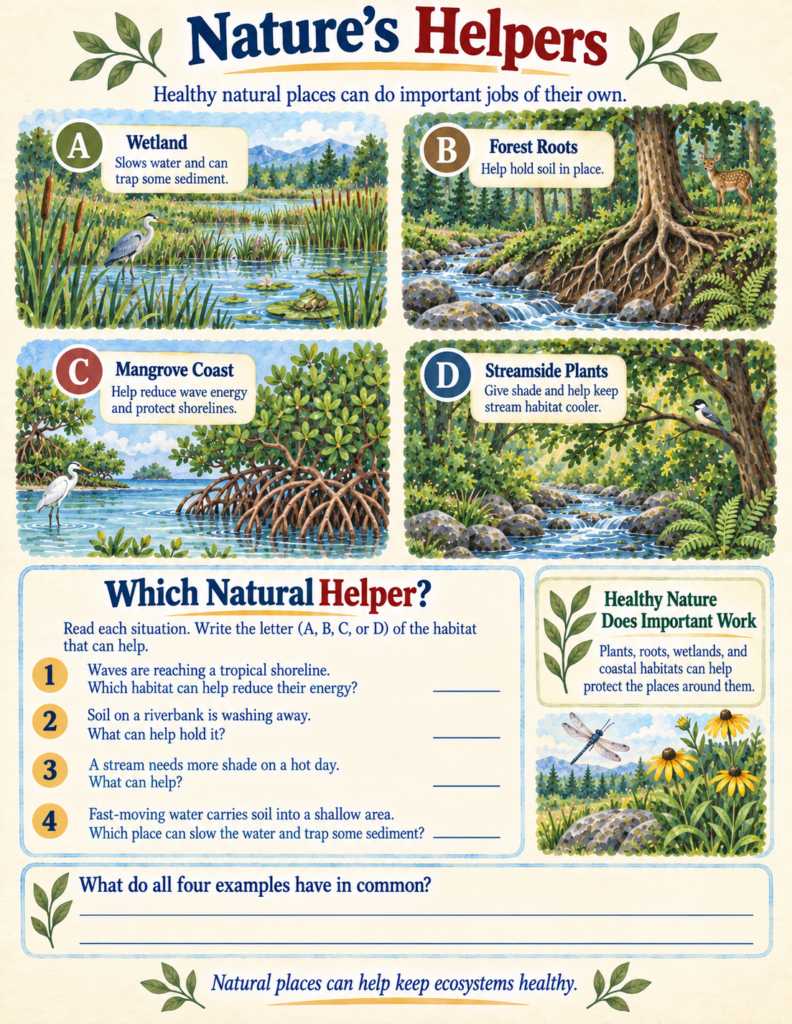
3. Nature’s Helpers: How Ecosystems Protect Themselves
Nature has its own built-in engineering systems that keep our planet clean and stable.
- What’s Inside the Book: Kids discover «Nature’s Helpers,» exploring how wetlands slow down water and trap sediment, how forest roots hold soil in place to prevent erosion, how mangrove coasts reduce wave energy to protect shorelines, and how streamside plants provide shade to keep water cool.
- How to Bring It to Life at Home: Try a simple erosion experiment in a baking pan using loose dirt, a watering can, and a small clump of grass to see how roots keep soil from washing away!
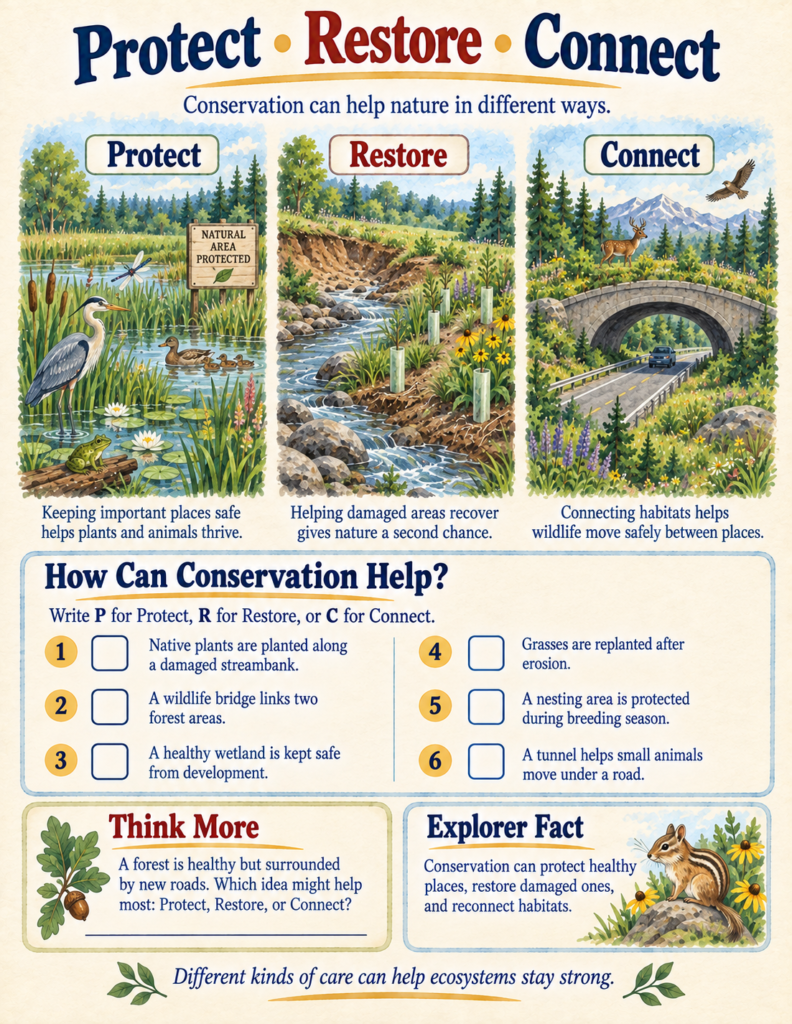
4. The Three Pillars of Conservation: Protect, Restore, and Connect
How can everyday people make a real difference for the environment?
- What’s Inside the Book: The workbook breaks conservation down into three actionable, easy-to-understand strategies: Protecting healthy areas from harm, Restoring damaged environments by planting native species, and Connecting separated habitats with wildlife bridges. Kids complete scenario matching challenges to determine the best conservation action for coral reefs, wetlands, and forests.
The Secret to Motivation: Small Actions, Big Impact
Even with the most inspiring environmental lessons, children can sometimes feel like the problems of the world are too big. The secret to keeping them hopeful and engaged is showing them that every small action matters. This is why learning through collecting for kids is such a powerful educational framework!
Throughout the workbook, your child isn’t just reading about ecology; they are acting as a «Conservation Detective,» solving clues about water flow, planting native flowers on paper, and earning a sense of true environmental stewardship.
Are you ready to inspire the next generation of Earth protectors? Grab your colored pencils, print the workbook at home, and let the conservation adventure begin!
👉 Grab the Protect Our Planet Activity Book in the Tiny Joy Studio Etsy Shop Today!