5 Engaging Time Zones Activities for Kids: A No-Prep Geography Unit
Have you ever tried calling a relative who lives on the other side of the world, only to realize that while you are finishing up dinner, they are just waking up to eat breakfast? To an elementary student, this feels almost like magic. Explaining why clocks in New York, London, Cairo, and Tokyo all show completely different times at the exact same moment can make abstract science and geography concepts feel overwhelming.
If you rely on dense, dry textbooks or confusing online charts, young learners quickly lose focus. Parents and educators constantly search for hands-on, practical time zones activities for kids that make learning about Earth’s rotation, longitude, and global connectivity both intuitive and fun.
If you want to transform your geography and earth science lessons into an exciting, open-and-go global adventure without spending your weekends designing worksheets, you are in the exact right place!
Meet Your Global Guide: The World Time Zones Workbook
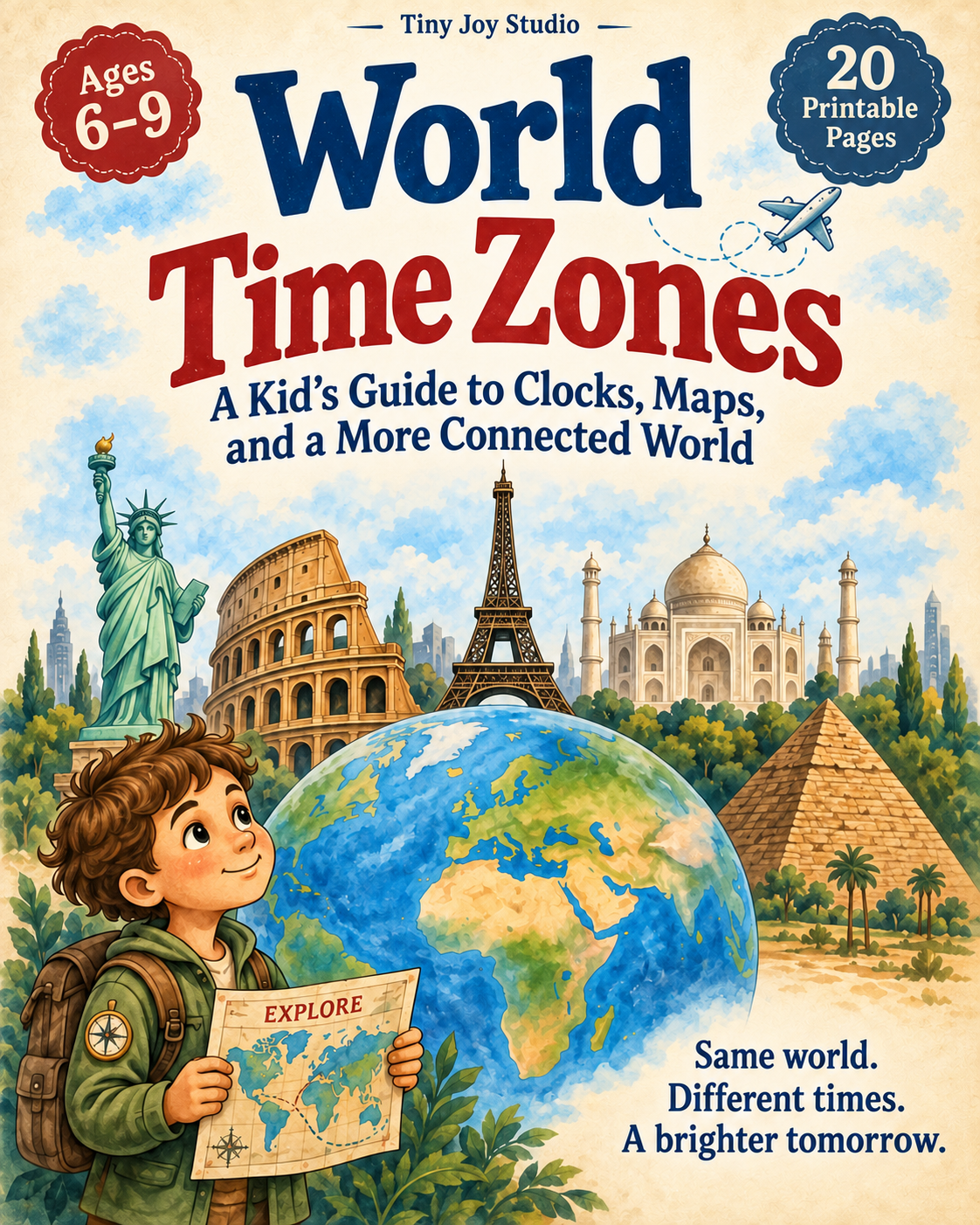
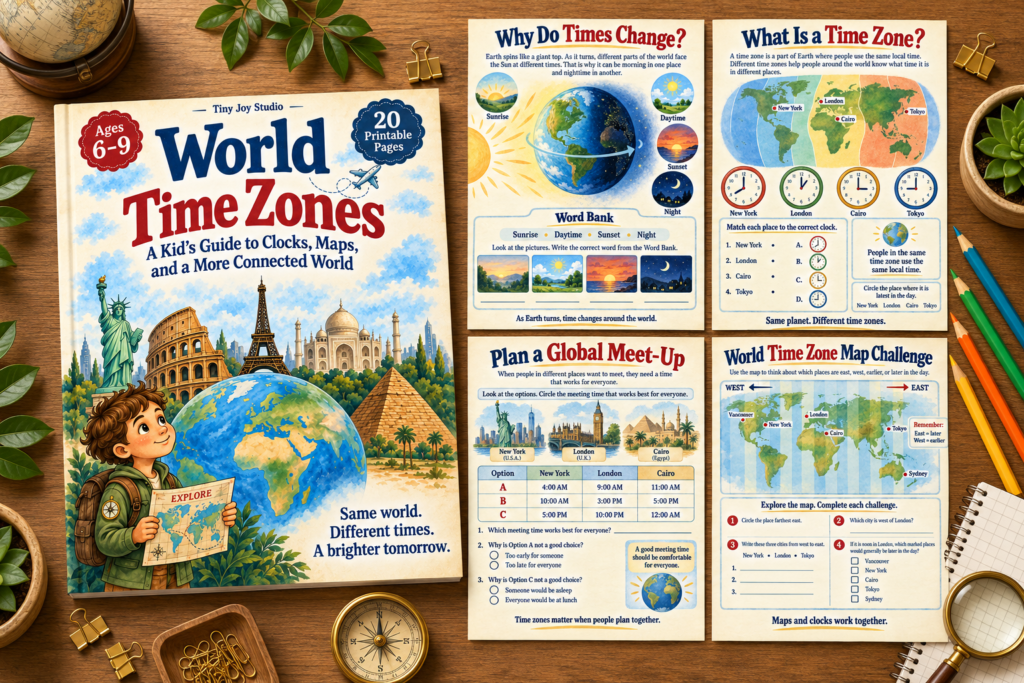
Instead of handing your child a confusing map filled with lines and numbers, the World Time Zones: A Kid’s Guide to Clocks, Maps, and a More Connected World activity book invites them to become an official «Time Explorer».
Designed specifically for curious 6- to 9-year-olds, this interactive workbook breaks down the mechanics of Earth’s rotation, analog clock-reading, and international communication into manageable, bite-sized missions. Let’s look at five hands-on ways this workbook will elevate your homeschool curriculum!
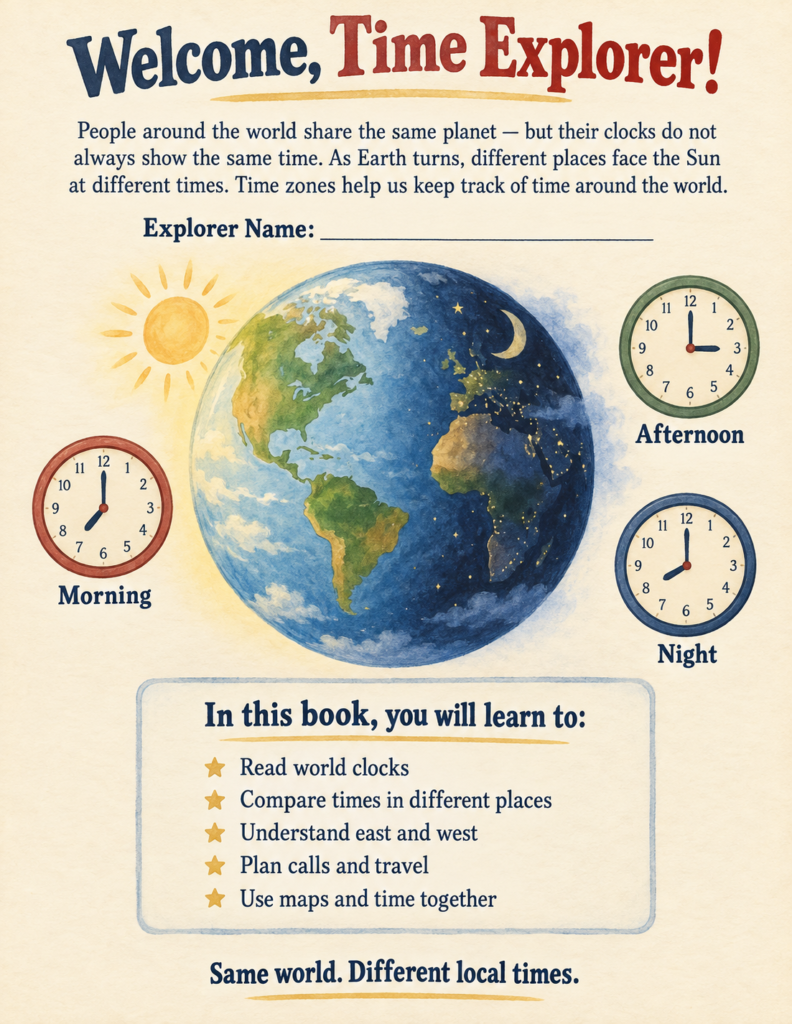
1. Visualizing Earth’s Rotation: Why Do Times Change?
Before children can calculate time differences, they must understand the physical reason why time zones exist.
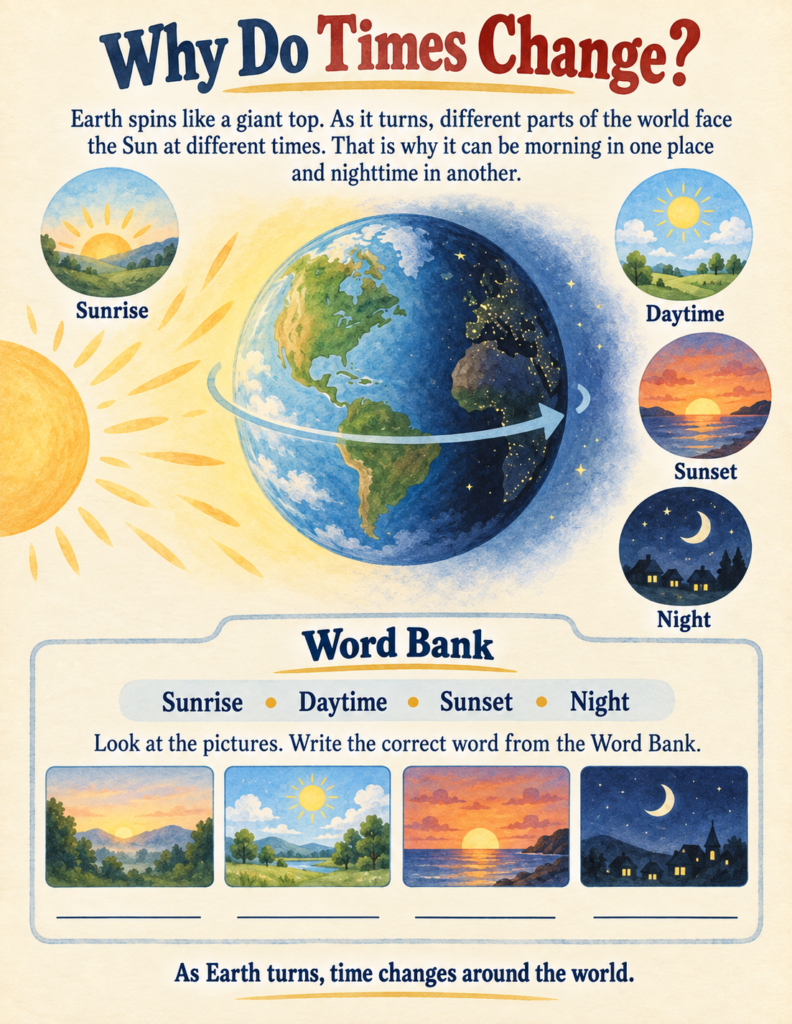
- What’s Inside the Book: Young explorers learn that Earth spins like a giant top in space. As our planet turns, different regions face toward or away from the Sun, creating sunrise, daytime, sunset, and night across the globe. Children complete visual matching and labeling exercises using a dedicated Word Bank to connect these natural phases of light and shadow with the rotation of the Earth.
- How to Bring It to Life at Home: Grab a flashlight (representing the Sun) and a small globe or a round ball (representing Earth). Turn off the lights in the room, spin the ball slowly from west to east, and watch how the light hits different sides. This tactile demonstration is a brilliant example of project-based learning in homeschooling!
2. Mastering Direction: East First, West Later
Understanding cardinal directions is essential for map-reading, and it holds the secret to understanding world clocks.
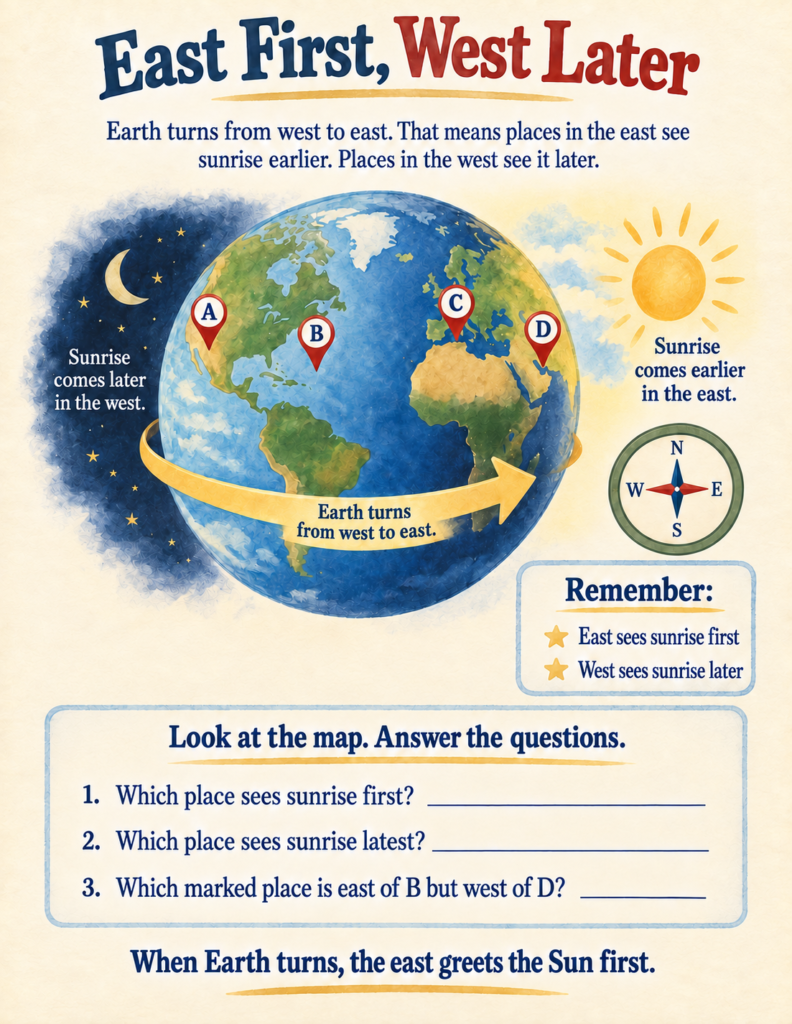
- What’s Inside the Book: The workbook introduces the golden rule of global time: Earth turns from west to east, meaning places in the east see sunrise earlier, while places in the west see it later. Children use compass roses and world maps to solve directional puzzles, answering questions about which regions greet the morning sun first.
- How to Bring It to Life at Home: Practice directional awareness in your living room. Stand up, point to where the Sun rises in the morning to find East, and discuss how waking up early in New York happens hours after someone in London has already started their afternoon.
3. Comparing Global Schedules: Same Moment Around the World
One of the most mind-expanding exercises for young children is realizing that different daily routines happen simultaneously around our planet.
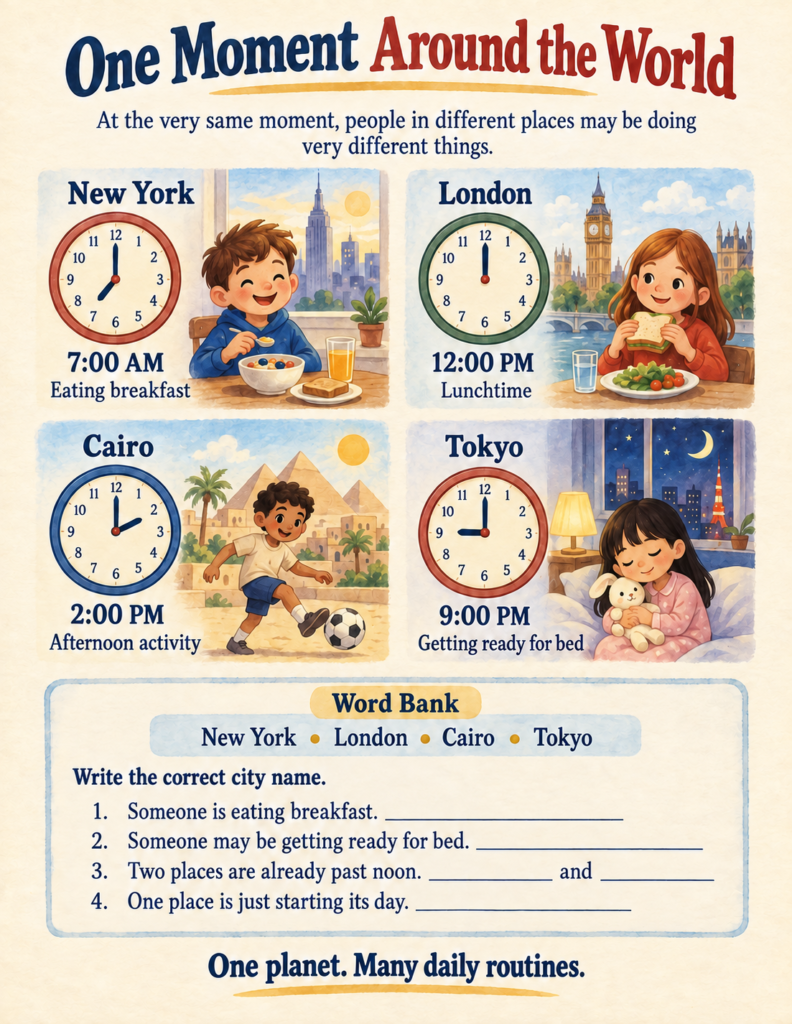
- What’s Inside the Book: Kids examine side-by-side analog clocks and matching illustrations for major global cities. At the very same moment, a child in New York is eating breakfast at 7:00 AM, someone in London is sitting down for noon lunchtime, a student in Cairo is enjoying afternoon activities at 2:00 PM, and a child in Tokyo is getting ready for bed at 9:00 PM! Children match the cities to their respective clocks and sort daily routines using structured word banks.
- How to Bring It to Life at Home: Exploring daily life across different cultures keeps children naturally curious. This visual variety is a fantastic way to prevent summer slide by keeping critical thinking active through engaging lifestyle comparisons!
4. Practical Problem Solving: Planning a Global Meet-Up
Geography isn’t just about trivia; it’s a vital life skill that helps us connect with friends, family, and colleagues across borders.
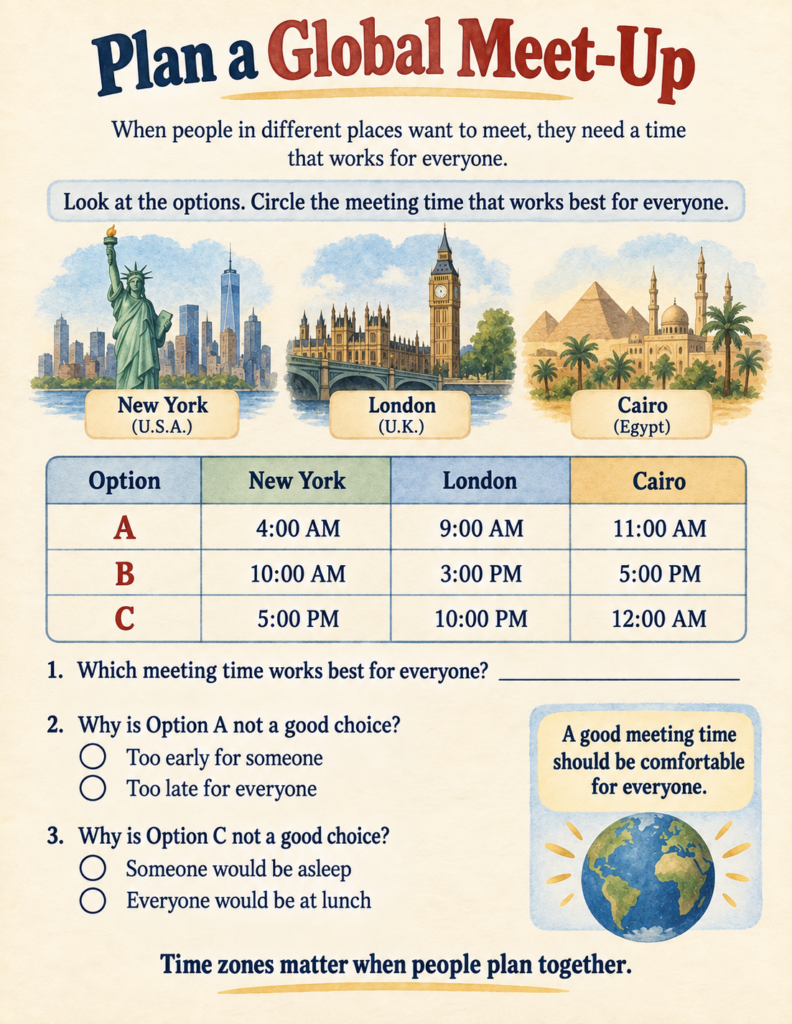
- What’s Inside the Book: The workbook elevates learning into real-world application by asking children to plan virtual meetings or video calls between New York, London, Cairo, and Tokyo. Kids learn to evaluate «Good Calling Hours» (typically 8:00 AM to 8:00 PM local time) to discover why scheduling a 4:00 AM call isn’t practical because someone would be fast asleep!
- How to Bring It to Life at Home: Let your child help you figure out what time it is where your favorite international relatives or content creators live. Involving them in real scheduling tasks shows why educational games help kids learn better by turning abstract math and geography into a meaningful communication tool.
The Secret to Sustained Engagement: Gamified Global Exploration
Even with the fascinating realization that the world is sleeping and waking up at different times, children need a clear sense of progress to stay motivated through the final page.
Throughout the workbook, your child isn’t just memorizing numbers on a clock face; they are acting as a «Time Zone Detective,» calculating hour differences, tracing travel routes east and west, and earning an official sense of global mastery.
Are you ready to help your child connect the dots between clocks, maps, and our spinning planet? Grab your colored pencils, print the workbook at home, and let the time-traveling adventure begin!
👉 Grab the World Time Zones Activity Book in the Tiny Joy Studio Etsy Shop Today!