Why Gamification in Education for Kids is the Secret to Learning
Have you ever watched your child spend two uninterrupted hours trying to defeat a difficult boss in a video game, only to watch them lose focus after just five minutes of reading a traditional science textbook? As parents, it can be deeply frustrating. We often ask ourselves: Why are they so persistent when playing games, but so easily discouraged when it comes to learning?
The answer doesn’t lie in your child’s attention span or intelligence. It lies in the delivery method. Traditional schoolwork often relies on passive memorization and delayed rewards, whereas games are masterclasses in human motivation. When we introduce gamification in education for kids, we aren’t replacing real learning with mindless entertainment. Instead, we are taking the powerful psychological triggers that make video games so irresistible—like autonomy, progression, and instant feedback—and using them to spark a lifelong love for exploring the real world.
In this guide, we will break down the science behind why children’s brains respond so powerfully to gamified learning. We’ll share actionable strategies you can use at home today, and introduce an interactive, passport-based adventure series designed to make global geography your child’s favorite hobby.
The Science: Why Your Child’s Brain Craves Gameplay
To understand why gamification works so well, we have to look at the brain’s primary reward system: dopamine.
When a child reads a dense paragraph of facts about South America, their brain processes it as abstract data. There is no immediate incentive or sensory reward. However, when that same child solves a secret code to reveal the hidden location of the Amazon rainforest, their brain releases a burst of dopamine. This chemical not only makes them feel happy and proud, but it also physically cements the newly learned information into their long-term memory.
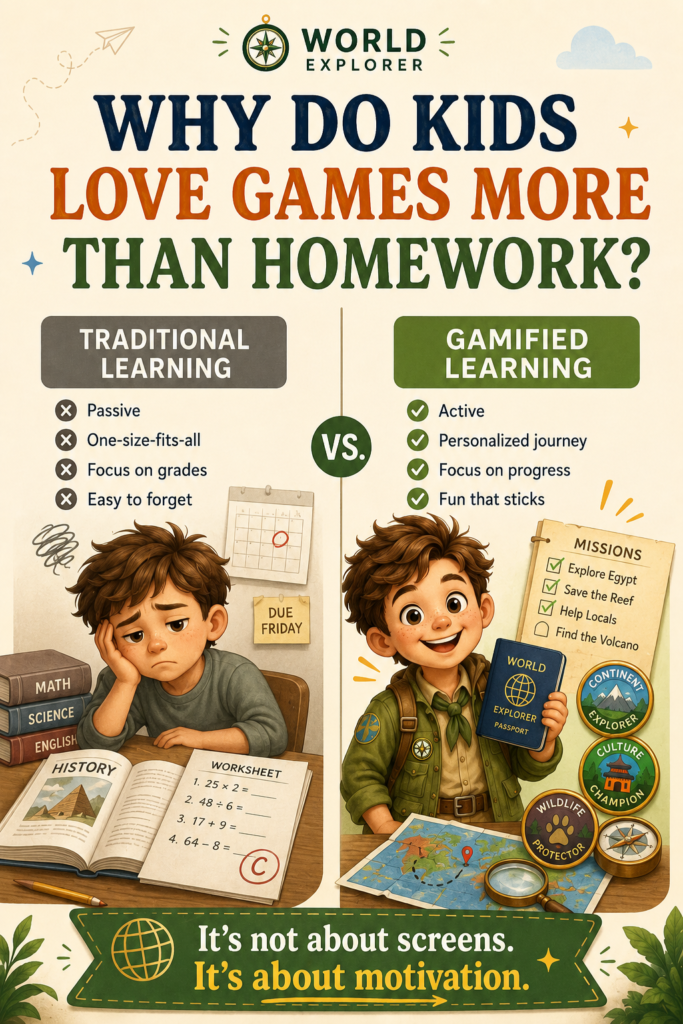
The 3 Core Pillars of Gamified Motivation:
- Autonomy (Be the Captain): In a classroom, children are told what to do. In a game, they make choices. Framing lessons as quests where the child chooses which path to explore first gives them a sense of ownership over their education.
- Mastery (The Joy of Leveling Up): Games break monumental challenges down into bite-sized, achievable tasks. A child doesn’t start by fighting the final dragon; they start by learning how to jump. Educational gamification uses this same principle to turn complex subjects—like oceanography or world geography—into manageable, confidence-building steps.
- Purpose (The Epic Mission): Kids don’t want to fill out a worksheet just to get a checkmark; they want to save a endangered species, uncover a buried pirate treasure, or earn their wings as a certified pilot. A compelling narrative gives learning a beating heart.
(If you want to dive deeper into the research behind tactile, interactive play, read our comprehensive guide on why educational games help kids learn better: the science behind play-based learning.)
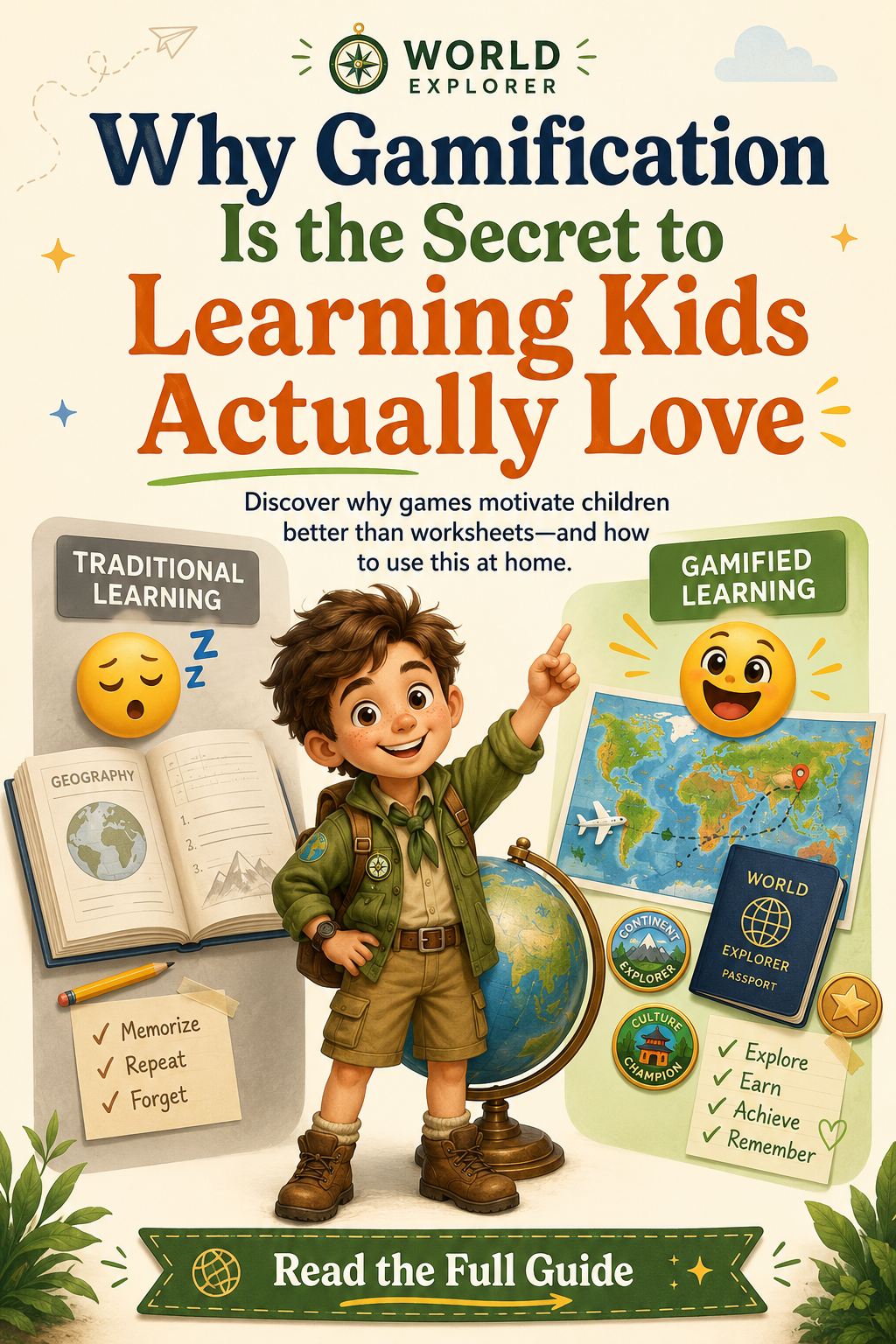
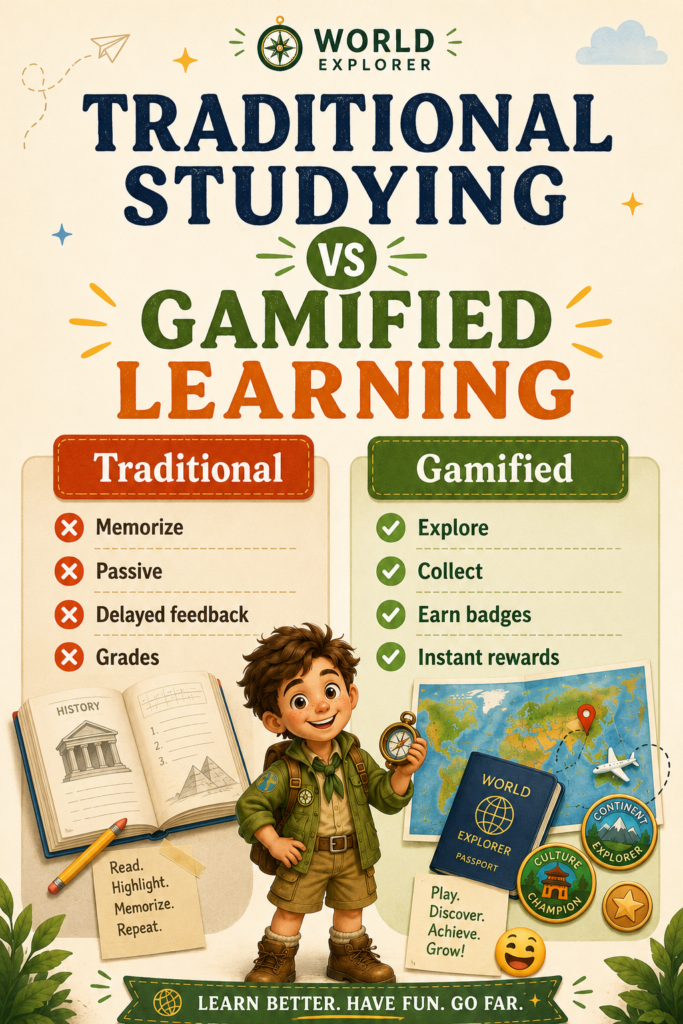
Traditional Studying vs. Gamified Learning: What’s the Difference?
To see why simple adjustments make such a massive impact, let’s compare standard studying methods with gamified techniques:
4 Easy Ways to Bring Gamification into Your Home Today
You don’t need to write complex computer code or spend hundreds of dollars on specialized educational software to gamify your child’s routine. You simply need to change the way you present everyday challenges.
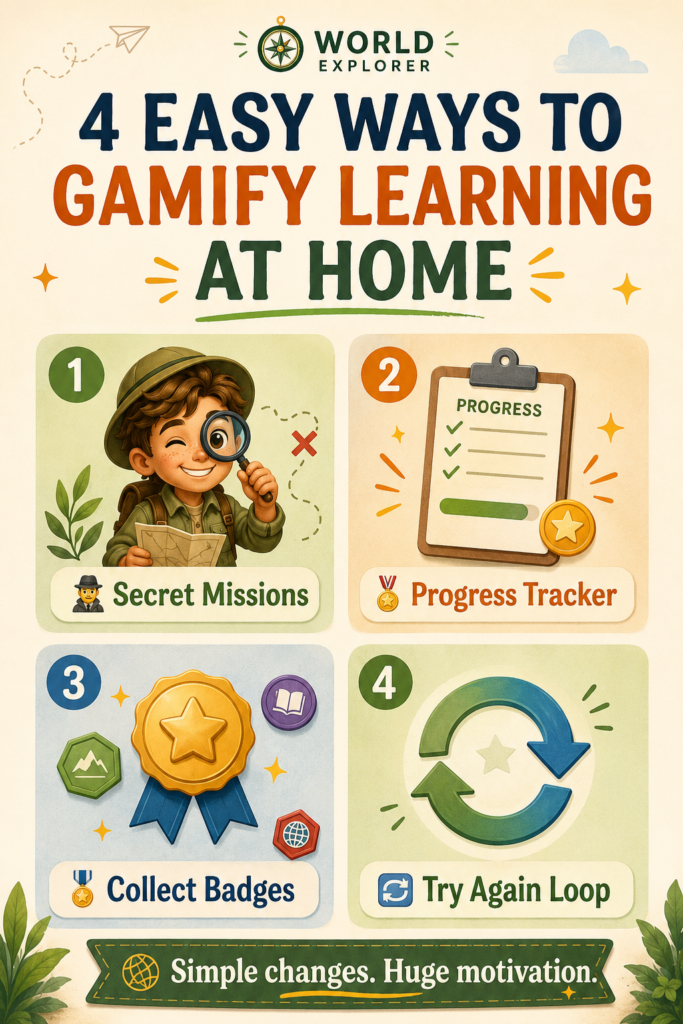
1. Reframe Homework as «Secret Missions»
Words hold immense psychological power. Instead of telling your 7-year-old, «It’s time to do your reading and geography practice,» try framing it as an adventure: «Attention, Explorer! We have just received an encrypted message from Antarctica. I need my top cartographer to analyze this map and report back to base in 15 minutes.»
2. Implement a «Visual Progress Tracker»
Children are visual learners who struggle with abstract timelines. Create a physical tracker on your refrigerator or classroom wall. Every time your child completes an educational task, lets them add a sticker, color in a continent on a giant world map, or move their personal player token one step closer to a grand reward (like a family movie night or a trip to the zoo).
3. Use the Magic of Collectibles and Badges
Why do kids obsessively collect trading cards or digital trophies? Because collecting taps into a fundamental human drive for order and completion. When learning is tied to collecting physical evidence of their success—like earning custom stickers, cutting out merit badges, or collecting stamps from different regions—learning ceases to be a chore and becomes an exciting hobby.
(Discover how to use this powerful habit to your advantage in our detailed breakdown of why kids learn geography better through adventures, collections, and progression.)
4. Celebrate the «Try Again» Loop
In video games, when a player falls off a cliff, they don’t cry and throw the game away; they instantly hit «Restart» because they know what to do better next time. Bring this into educational playtime. If your child gets a quiz question wrong or misidentifies a country on a globe, don’t correct them with a red pen. Say, «Oh no! The bridge collapsed! We need to redirect our supply ship. Let’s look at the map together and try a new route!»
At-Home Activity: The «Mystery Box» Sensory Quest
Want to test gamified learning at your kitchen table this afternoon? Try this simple, multi-sensory guessing game that teaches world geography without a single screen:
- The Setup: Take an empty tissue box or shoebox and cut a hole in the top just big enough for your child’s hand.
- The Mission: Explain that they are an archaeologist reaching into a newly discovered ancient cave. Hide a distinct household item inside the box (e.g., a handful of coffee beans, a smooth seashell, a toy kangaroo, or a piece of dry pasta).
- The Gamified Twist: They must use only their sense of touch and smell to identify the artifact. Once they guess correctly, pull out a world map or globe! Challenge them to find the continent or country where that «artifact» originated (e.g., Italy for pasta, Australia for the kangaroo, Brazil for coffee).
- The Reward: For every artifact they correctly map, they earn an «Explorer Point» toward picking tonight’s bedtime story!
Meet the Ultimate Gamified Experience: The World Explorer Series
If you love the concept of transforming geography into an epic quest but simply lack the time to design missions, print out badges, and craft storylines after a long workday, there is a ready-to-use ecosystem waiting for your bookshelf.
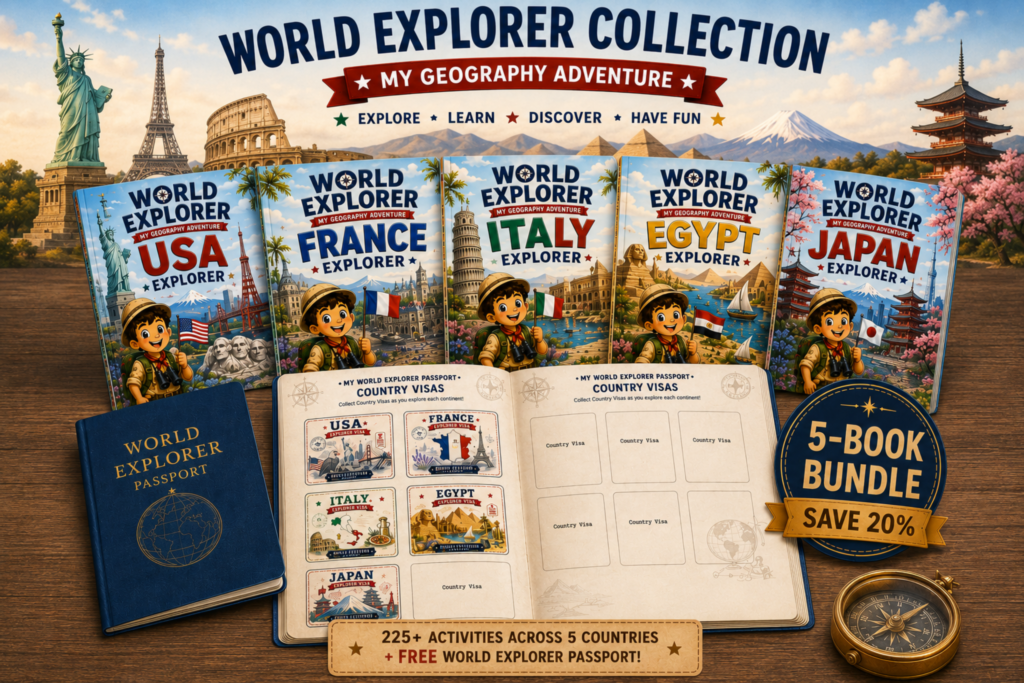
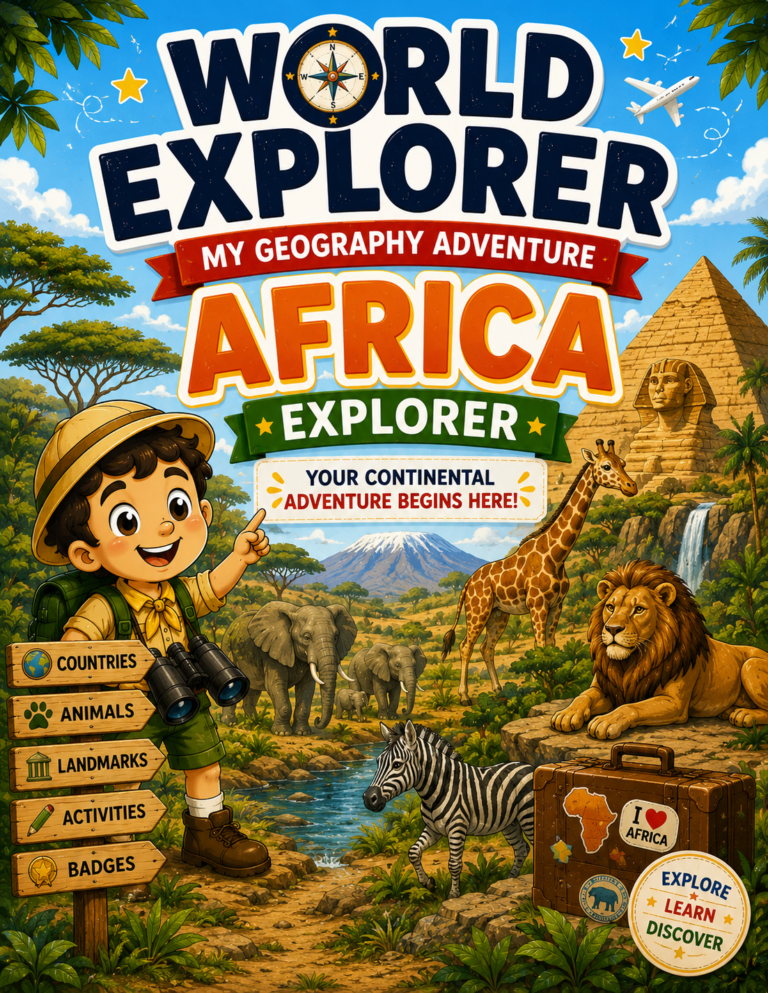
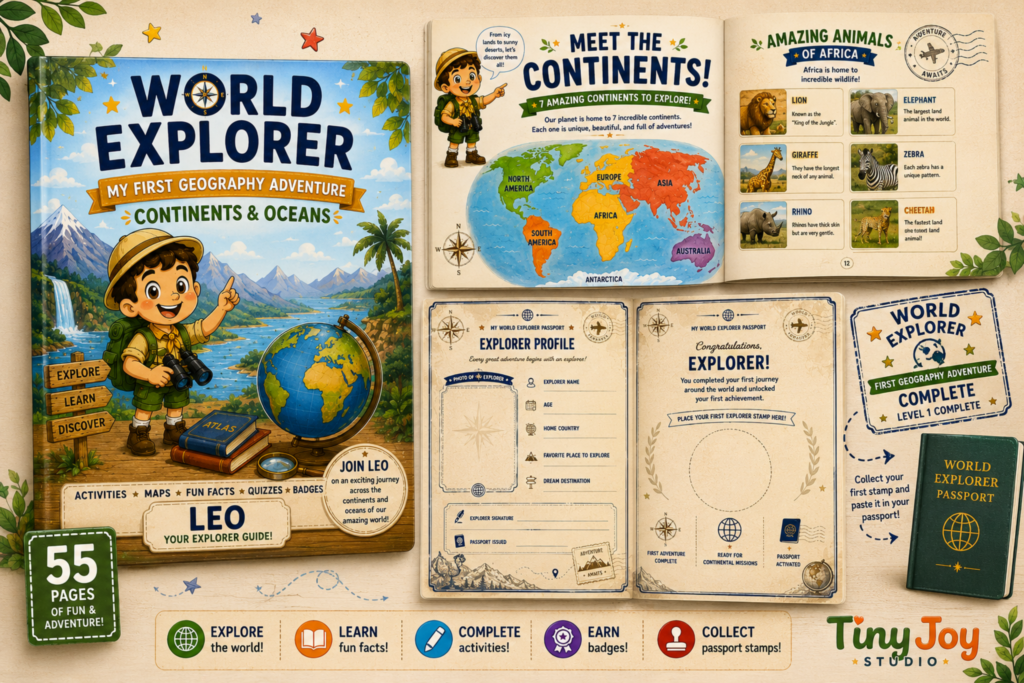
Enter The World Explorer Series by Tiny Joy Studio—a meticulously designed educational program that builds the magic of gamification directly into every page. Led by an adorable, enthusiastic cartoon guide named Leo, this series takes the heavy lifting off parents’ shoulders and immerses curious 6- to 9-year-olds in a structured, multi-level global journey.
Why It Works: The Universal Passport System
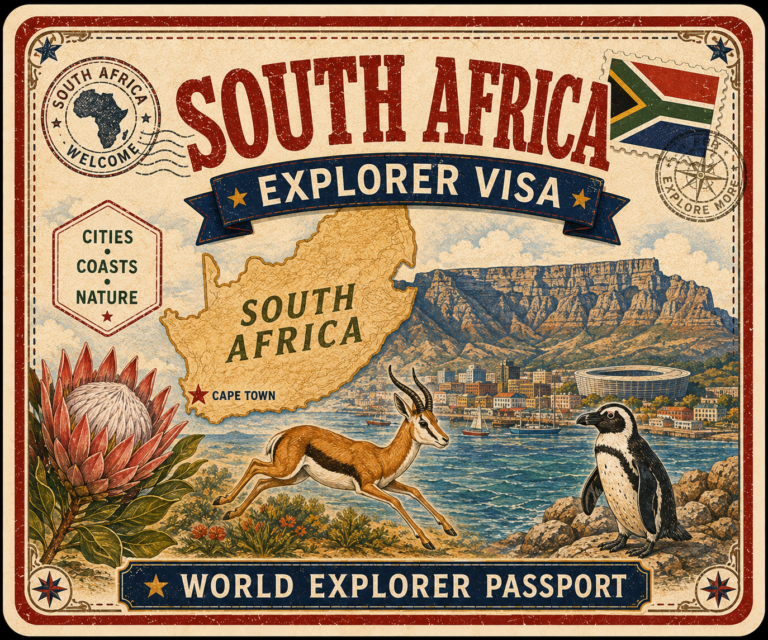
The secret beating heart of the World Explorer Series is its brilliant Universal Passport concept. Instead of treating activity books as disposable sheets of paper, Tiny Joy Studio gives every child a permanent visual record of their growing intellect:
- Your Child is the Protagonist: The journey begins with the child setting up their very own World Explorer Passport. They fill out their official explorer profile, draw their self-portrait, and sign their name. Instantly, they aren’t just reading a book—they are stepping into a role.
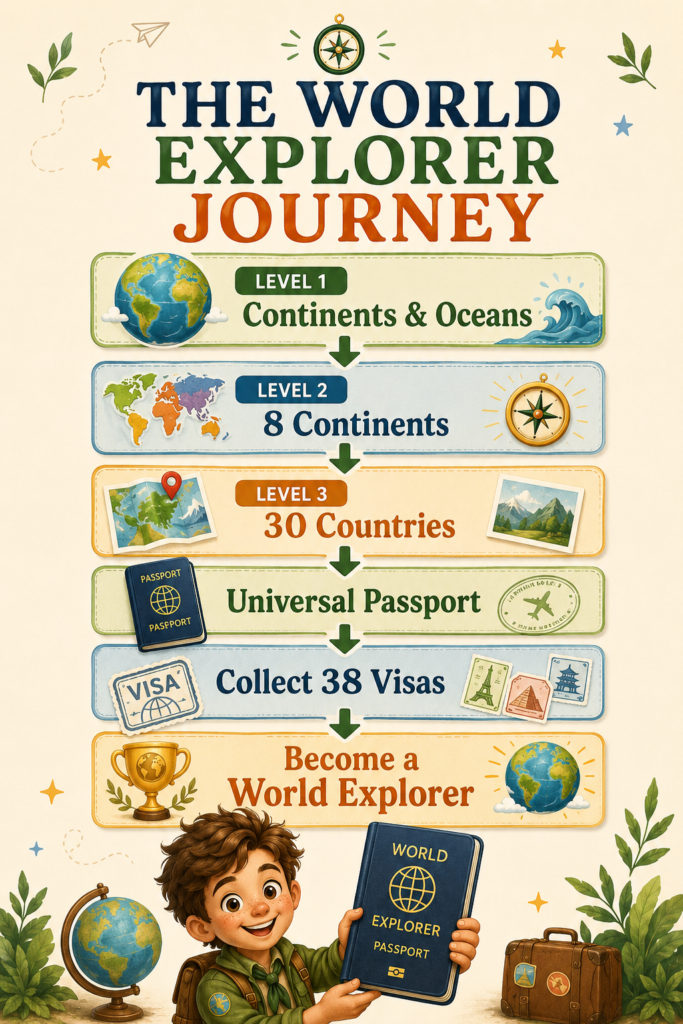
- The Ultimate Progression Hook: The Universal Passport features dedicated slots structured across three distinct mastery levels:
- Level 1 (The Foundation): Dedicated slots for fundamental world concepts in the Continents & Oceans book.
- Level 2 (The Continents): 8 official slots for Continental & Ocean Visas.
- Level 3 (The Countries): 30 individual slots waiting to be filled by exploring specific country books!
- Tactile, Earned Rewards: As your child works through Level 1: Continents & Oceans—navigating iceberg mazes, decoding animal tracks, and discovering how our planet is pieced together—they don’t get letter grades. Instead, they earn colorful, cut-out Badges and official Visa Stamps to glue directly into their Universal Passport.
When a child sees those 38 empty slots in their passport waiting to be filled, you no longer have to beg them to learn. They will be the ones pulling you toward the map, eagerly asking: «Mom, we just unlocked our Continents Visa! Can we explore Egypt or Japan next so I can earn my next stamp?»
Final Thoughts: Turn Learning into an Adventure
Unlocking your child’s natural love for learning doesn’t require forcing them to sit still with boring textbooks. By leveraging the power of gamification in education for kids—using missions, narrative storytelling, and tactile collectibles—you can turn daily education into an exciting family adventure.
When you give a child autonomy, a compelling mission, and a passport to track their victories, the world suddenly becomes a boundless playground of knowledge.
Ready to start your family’s global quest? Grab some colored pencils, print out your foundational Level 1: Continents & Oceans Activity Book, and help your child set up their very own Universal Passport today directly via the Tiny Joy Studio Etsy Collection.
The world is waiting—let’s go explore it!