The Ultimate Netherlands Unit Study for Kids (No Prep!)
When we think of the Netherlands, images of colorful tulip fields, historic spinning windmills, bustling bicycle-filled canal streets, and flat landscapes immediately come to mind. But the geography, culture, and engineering marvels of this unique European country offer so much more for curious young minds! Did you know that a significant portion of the Netherlands lies below sea level? Or that the Dutch have spent centuries cleverly using dikes, pumps, and polders to reclaim land from the sea?
Teaching this rich, multi-layered geography can be a challenge for busy homeschool parents. If you want to move beyond dry textbook reading and immerse your kids in the daily life, wildlife, and water management systems of the Netherlands without spending hours gathering supplies, we have the ultimate «open-and-go» solution.
Meet Your Global Guide: The World Explorer Series
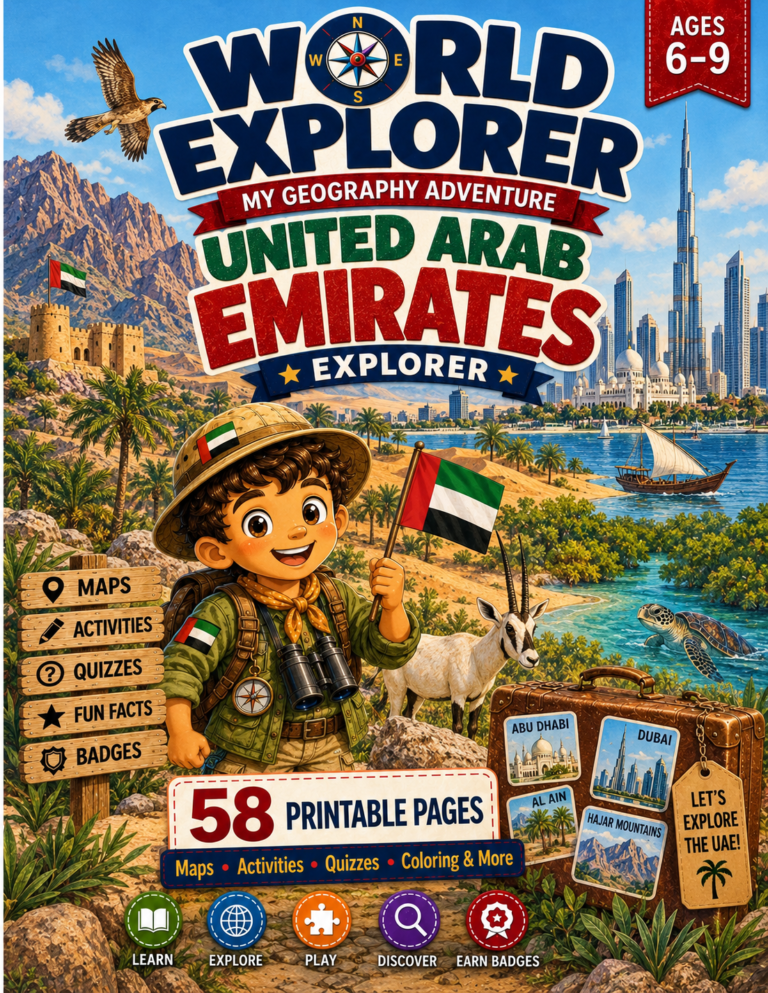
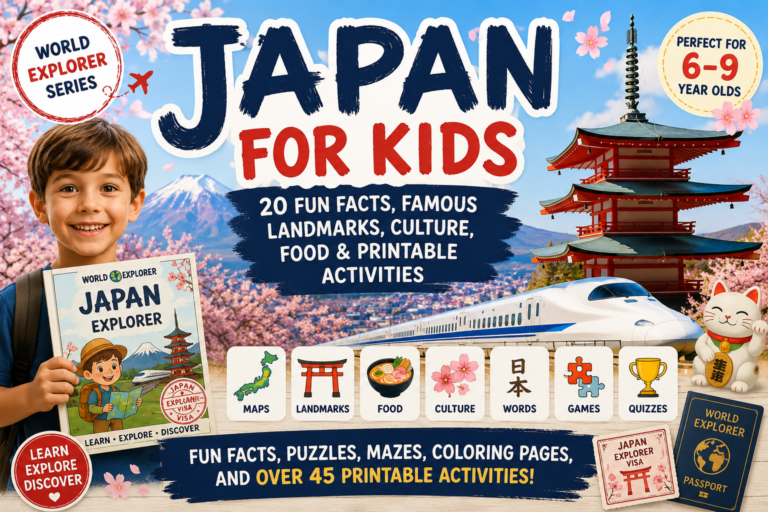
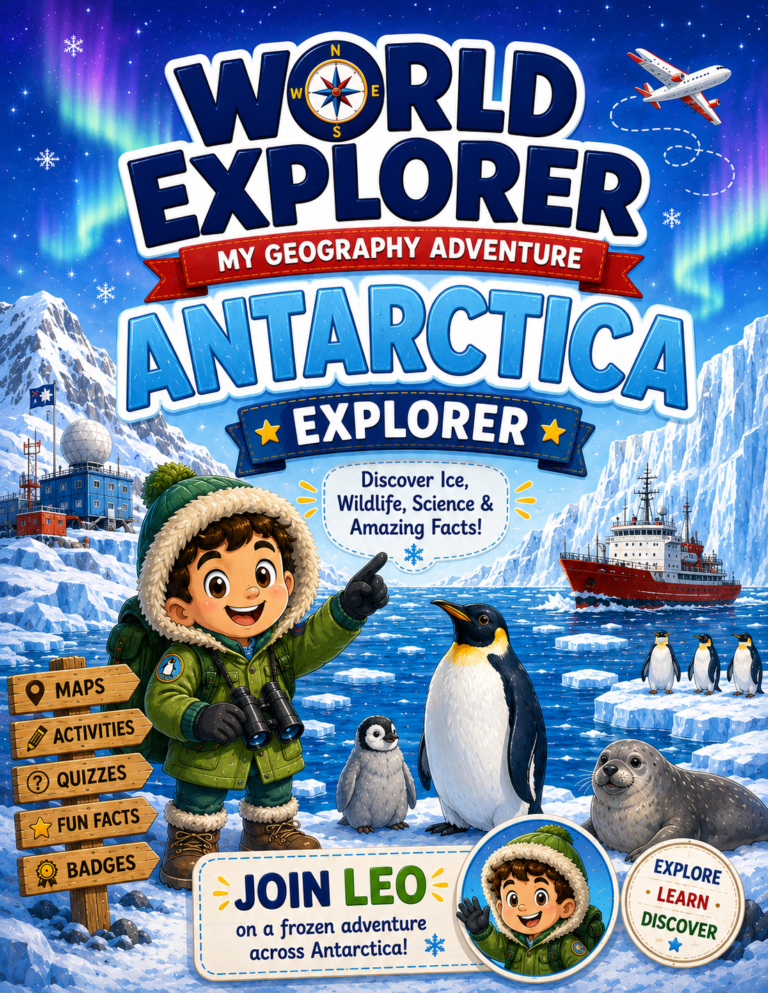
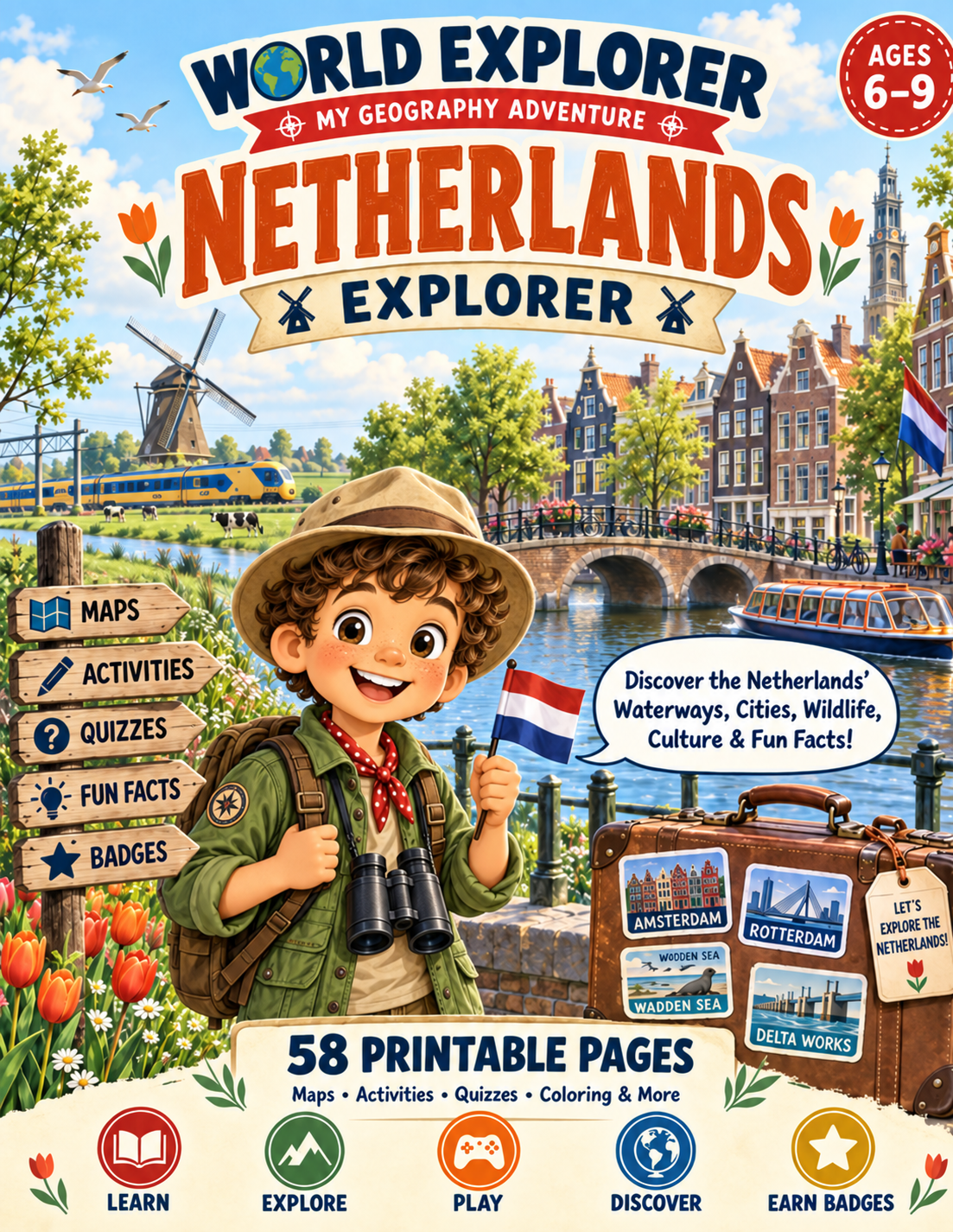
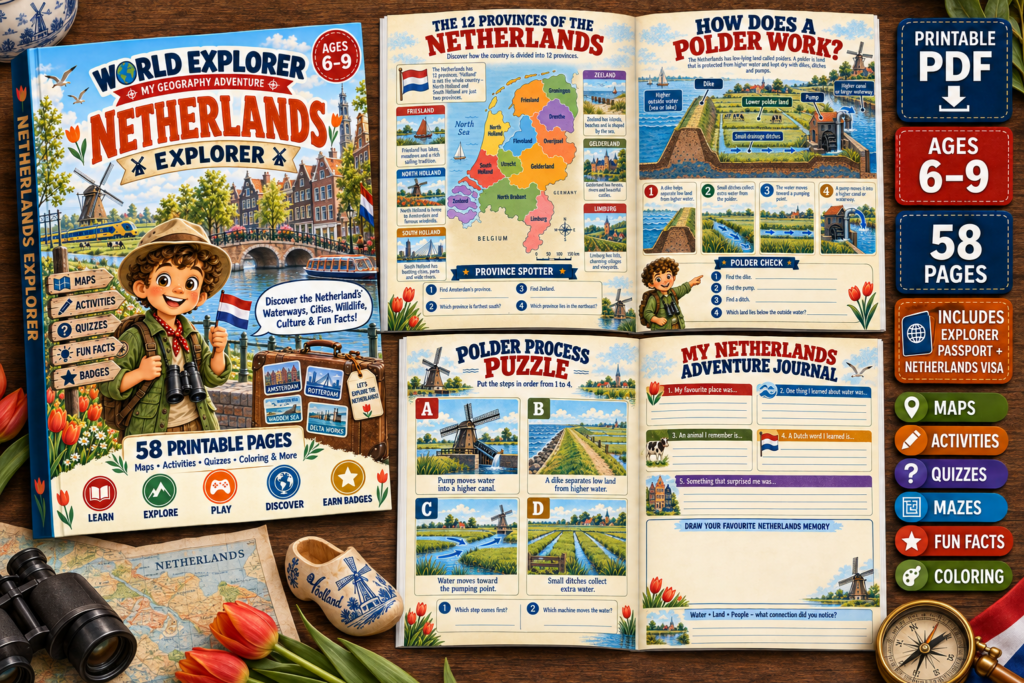
Instead of overwhelming young minds with dense paragraphs and uninspired maps, the Netherlands: World Explorer Series activity book invites your child on a guided, hands-on expedition across Western Europe alongside a friendly, animated travel guide named Leo.
Designed specifically for curious 6- to 9-year-olds, this workbook acts as a personal ticket to cultural and geographical exploration. It seamlessly fits into your geography learning path for kids, taking them on a structured journey through Dutch cities, lowlands, and coastal ecosystems. Let’s explore the hands-on missions your child will complete on their journey!
1. Master Water Management: How Polders Work
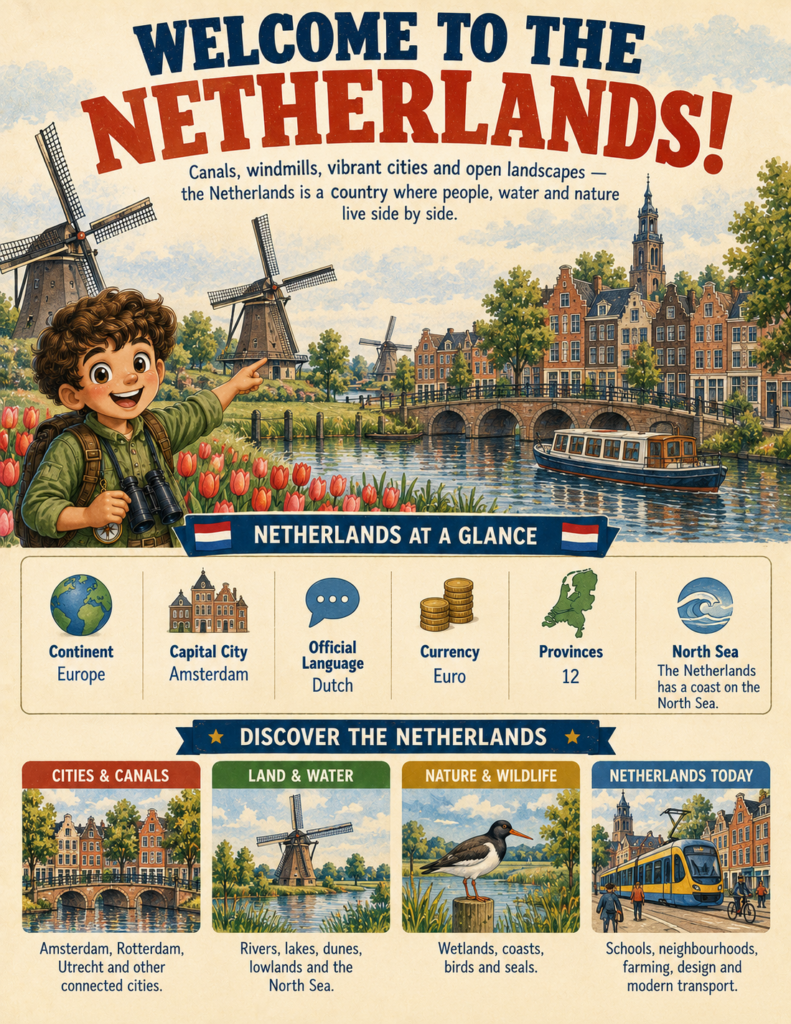
One of the most fascinating aspects of Dutch geography is its relationship with water. Living in a low-lying country means the Dutch don’t just fight water—they work with it.
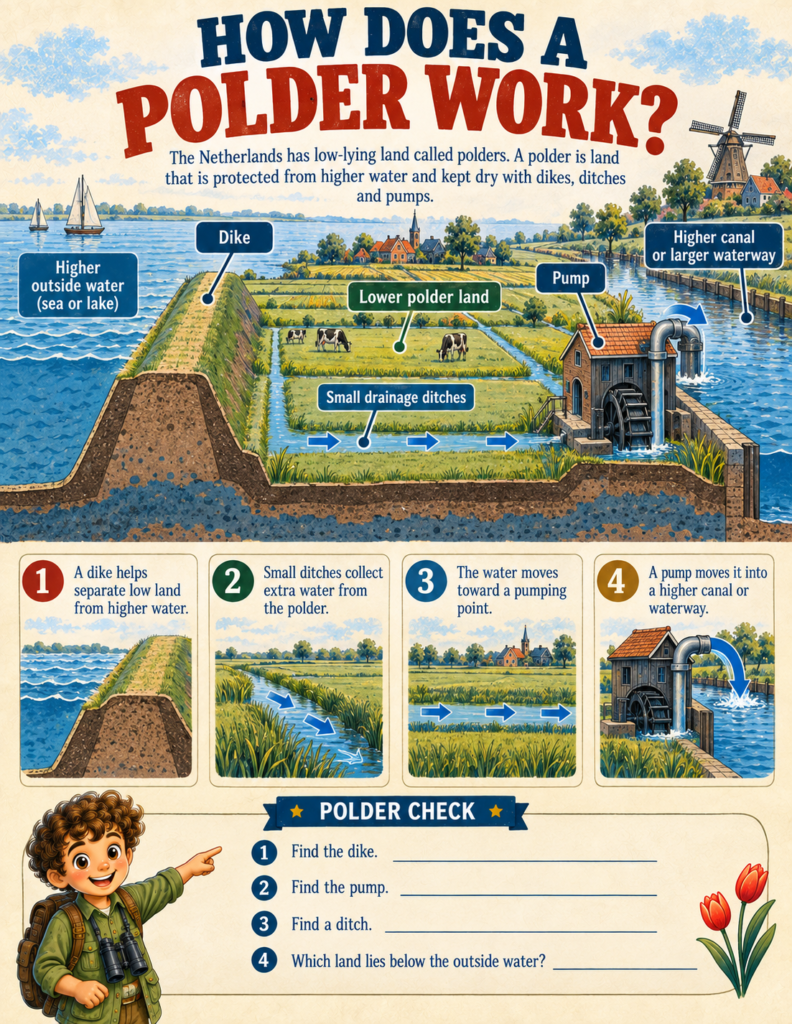
- What’s Inside the Book: Young explorers dive into physical geography by learning how a polder works. They trace how dikes hold back the sea, how small drainage ditches collect excess rainwater, and how clever pumps move water up into higher canals. Kids complete a «Water Engineer Challenge» matching real-world problems (like rising sea levels or heavy rainfall) to smart engineering solutions like storm-surge barriers and river floodplains.
- How to Bring It to Life at Home: Set up a simple sensory bin with water, sand, and small toy blocks to build your own mini-dike and channel system. It’s a fantastic hands-on STEM experiment that bridges geography and engineering!
2. Urban Exploration: Canals, Trams, and Tilted Houses
The Netherlands is famous for its vibrant urban centers where history and modern design stand side by side.
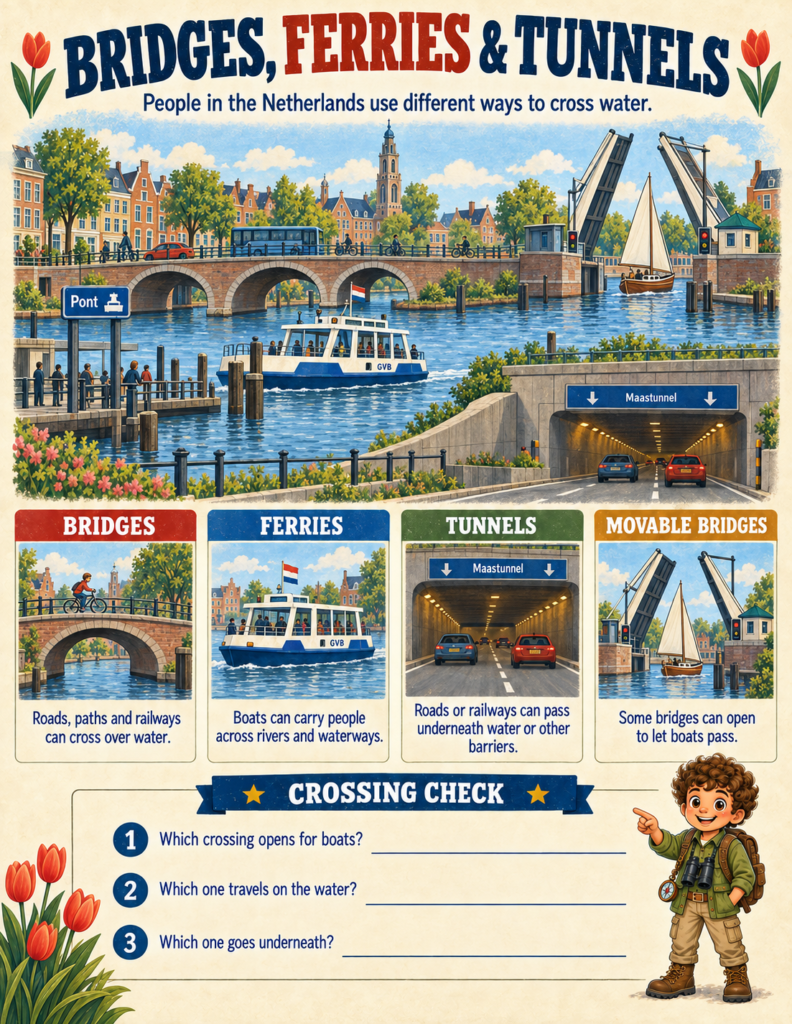
- What’s Inside the Book: Kids become «City Detectives,» exploring major Dutch hubs like Amsterdam, Rotterdam, The Hague, and Utrecht. They learn how modern public transit systems connect seamlessly—combining trains, trams, buses, and bicycle paths. They also discover architectural wonders, from the historic gabled canal houses to Rotterdam’s famous modern Cube Houses (Kubuswoningen).
- How to Bring It to Life at Home: Grab some graph paper and challenge your child to design their own «water-smart neighbourhood» featuring bike lanes, bridges over canals, and houses with slanted roofs.
3. Wildlife of the Coasts, Wetlands, and Fields
A comprehensive unit study must always explore local ecosystems and biodiversity!
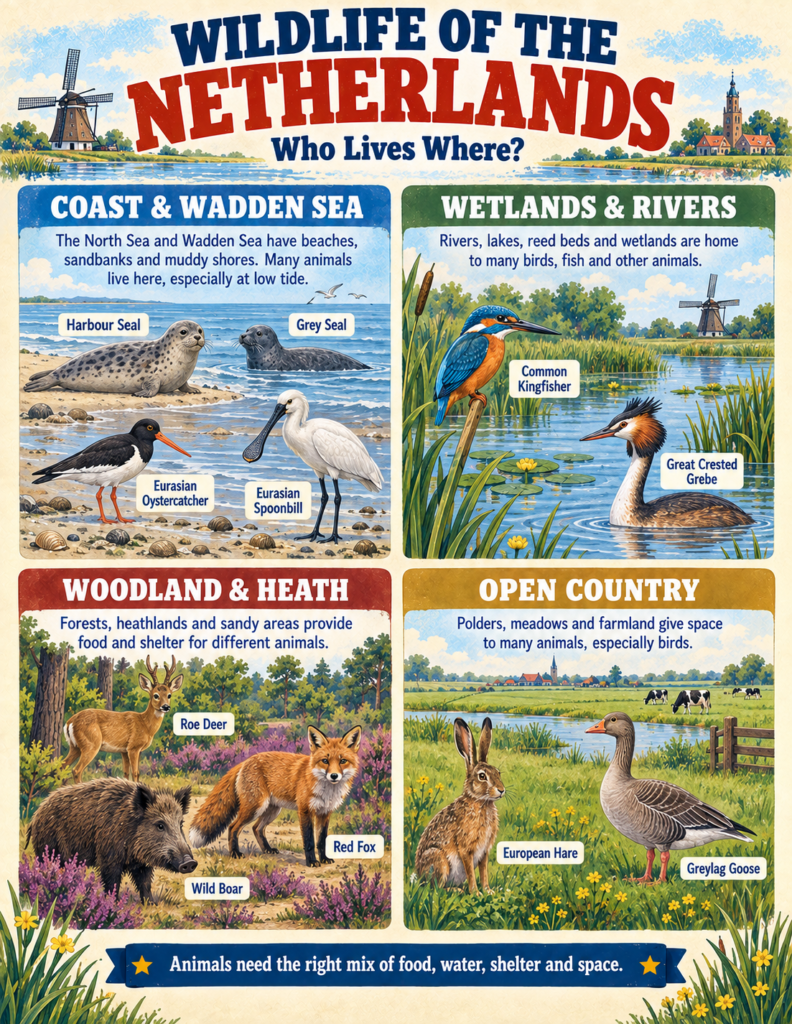
- What’s Inside the Book: Children explore four distinct Dutch landscape worlds: the North Sea Coast & Dunes, Lowlands & Farmland, Rivers & Delta Landscapes, and Heath & Woodland. They meet amazing animals that call these habitats home, including harbour seals resting on Wadden Sea sandbanks, Eurasian oystercatchers searching for food on tidal flats, and colorful kingfishers diving for fish in quiet rivers.
- How to Bring It to Life at Home: Discuss how different habitats provide animals with food, water, and shelter, and talk about why protecting coastal dunes is vital for both wildlife and human safety.
4. Language, Culture, and Delicious Dutch Treats
No cultural unit study is complete without tasting local foods and learning a few phrases!
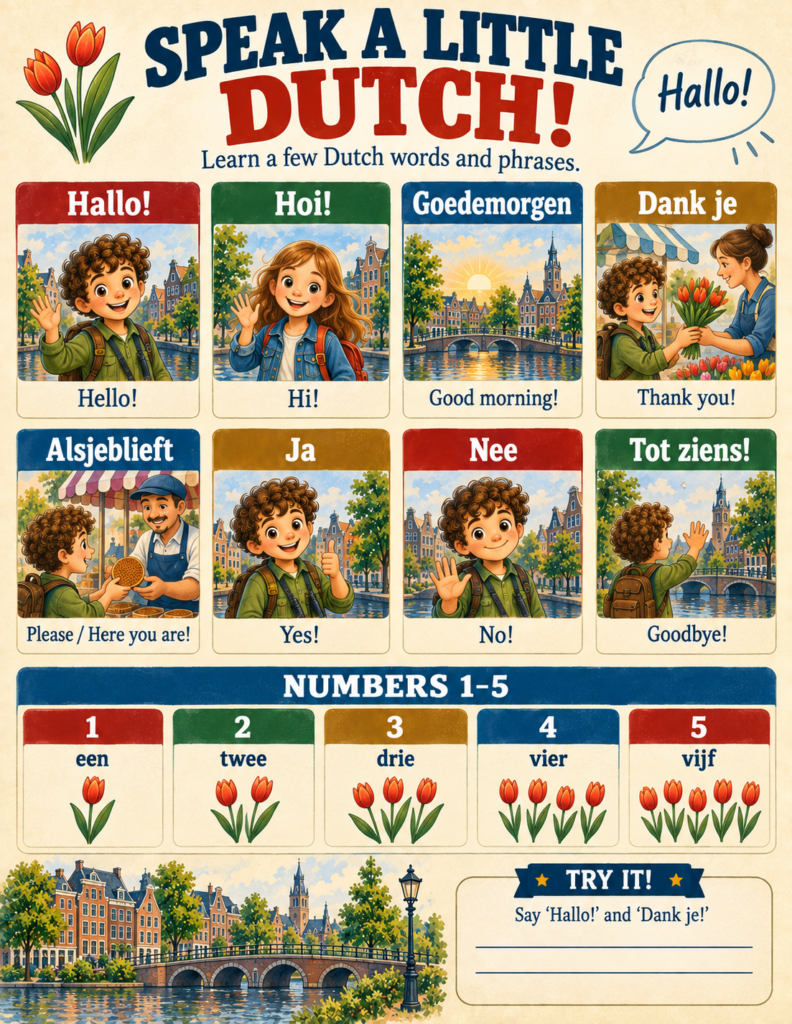
- What’s Inside the Book: Leo introduces young explorers to everyday Dutch words like Hallo!, Hoi!, Alsjeblieft, and Dank je. Kids also explore traditional Dutch symbols—from iconic red-and-white windmills and bright tulip fields to blue-and-white Delft pottery. Plus, they learn about delicious Dutch snacks like stroopwafels, poffertjes (mini fluffy pancakes), and famous local cheeses.
- How to Bring It to Life at Home: Bake a batch of small pancakes or enjoy some stroopwafels while practicing your Dutch greetings over family breakfast!
The Secret to Motivation: The World Explorer Passport
Even with the most fascinating geography and engineering facts, children can sometimes lose focus. The secret to keeping them hooked until the very last page is incorporating a visual reward system. This is why learning through collecting for kids is such a powerful educational tool!
Throughout the book, your child isn’t just passively reading; they are actively solving map grid coordinates, decoding sign language symbols, and navigating canal maze routes.
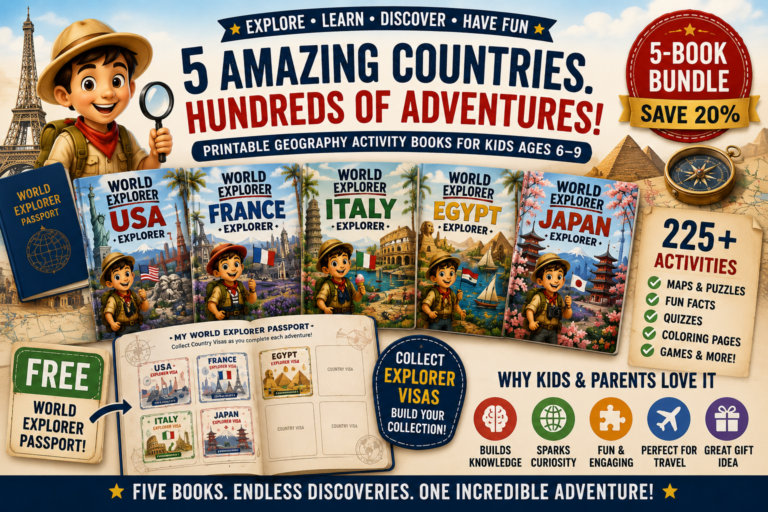
Once they complete all their missions, they are rewarded with an official, full-color Netherlands Explorer Visa and a Certificate of Exploration! They get to cut out the visa stamp and proudly place it into their Universal World Explorer Passport. This simple, tactile sense of progression turns a regular social studies lesson into an addictive, rewarding quest.
Are you ready to travel to the land of windmills, canals, and polders? Grab your colored pencils, print the workbook at home, and let the adventure begin!
👉 Grab the Netherlands Explorer Activity Book in the Tiny Joy Studio Etsy Shop Today!