The Ultimate Australia Unit Study: 7 Hands-On Biome & Wildlife Activities
Australia isn’t just a country; it’s a continent, a massive island, and one of the most biologically diverse places on Earth! For kids, it’s a land of pure magic—where mammals lay eggs, giant birds run at top speed, and the world’s largest coral reef is visible from space. If you are putting together an australia unit study for your homeschool or classroom, you know there is a lot of ground to cover.
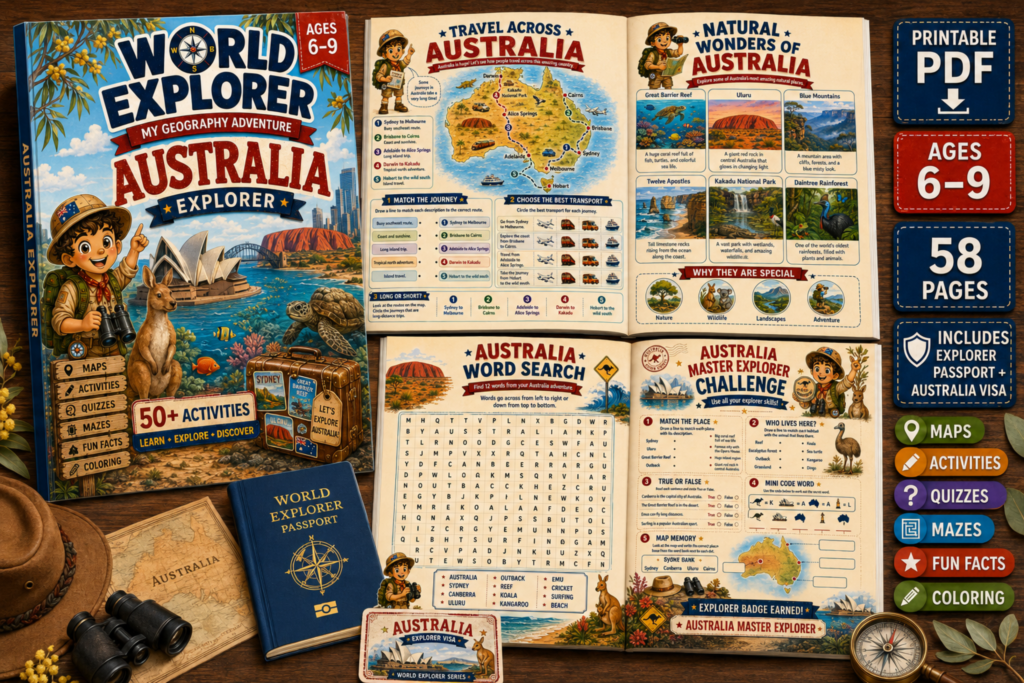
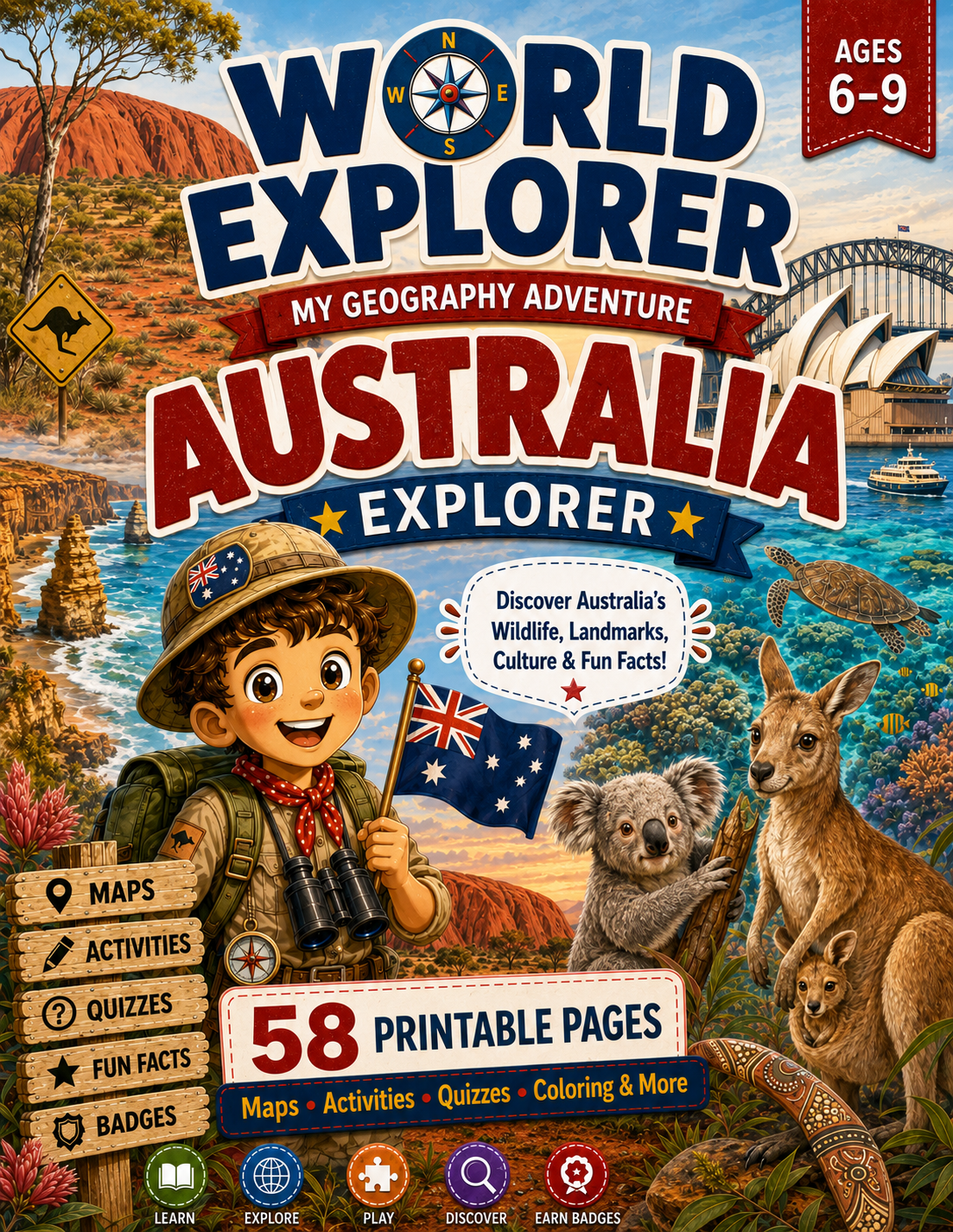
Instead of spending hours printing random, disconnected worksheets, we’ve gathered 7 hands-on, low-prep activities that cover Australia’s unique biomes and wildlife. And the best part? You can do all of this using the Australia Explorer: My Geography Adventure activity book (part of the World Explorer Series by Tiny Joy Studio), which turns learning into a gamified quest!
1. Map the Australian Habitats (Biomes)
Australia is famous for its extreme environments. In our unit study, kids don’t just memorize dry facts on a map; they explore the six main habitats: Tropical Rainforests, Eucalyptus Forests, Grasslands, the Desert (Outback), Rivers, and Coasts.
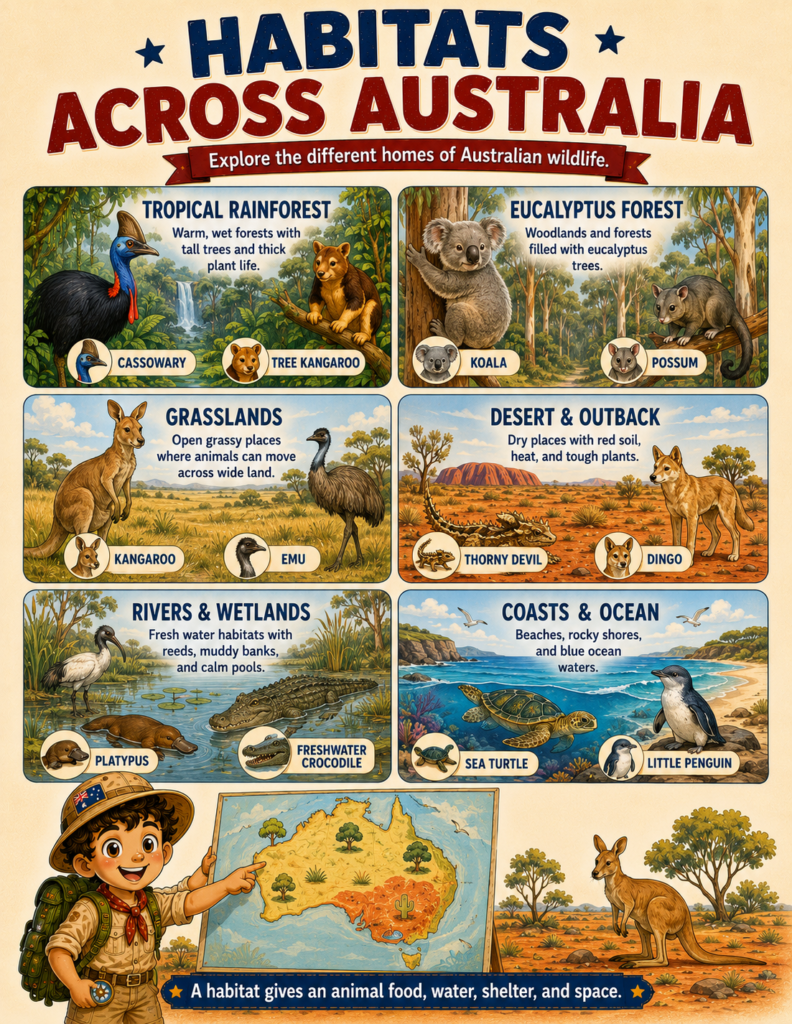
By understanding where these biomes are located, kids can figure out why certain animals live where they do. For example, koalas need the eucalyptus forests, while the thorny devil is perfectly adapted to the hot, red soil of the desert!
2. Meet the Unique Wildlife (Marsupials & Monotremes)
Did you know that many Australian animals are found nowhere else in the wild? Introduce your kids to famous marsupials (like the kangaroo, koala, and wombat) and the fascinating monotremes (egg-laying mammals like the platypus and echidna).
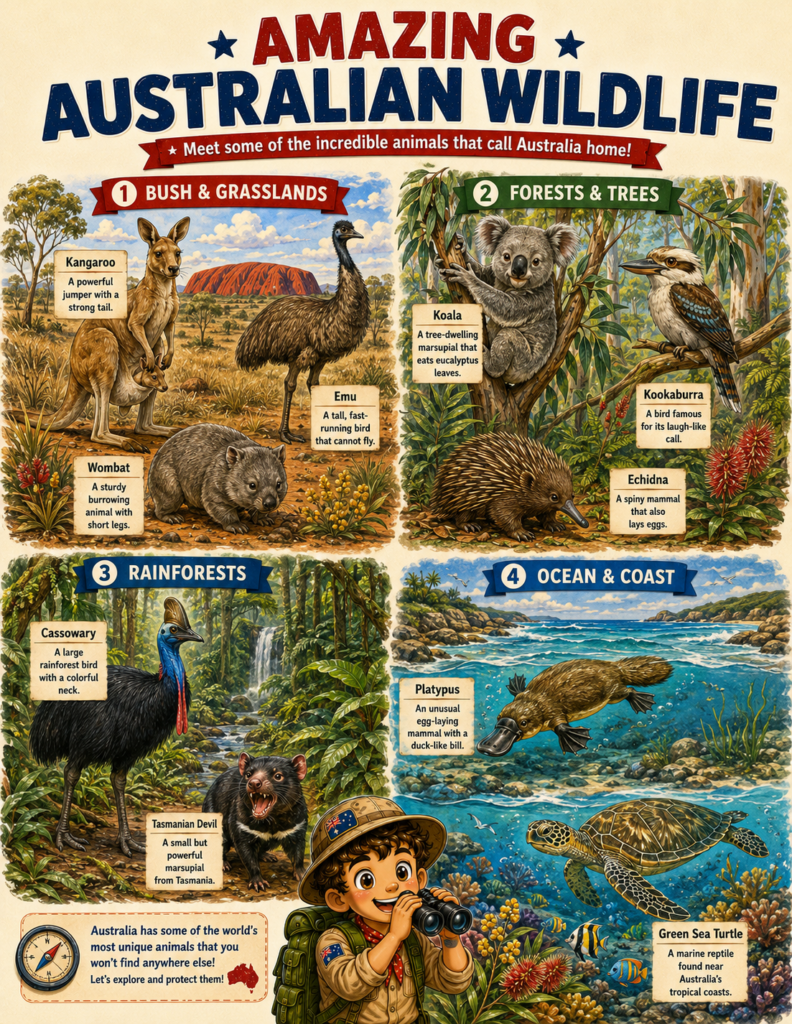
You can have your kids research their favorite animal’s «superpower.» They will be amazed to learn about the wombat’s strong digging claws for burrows or the platypus’s ability to sense tiny electrical signals underwater!
3. Dive into the Great Barrier Reef
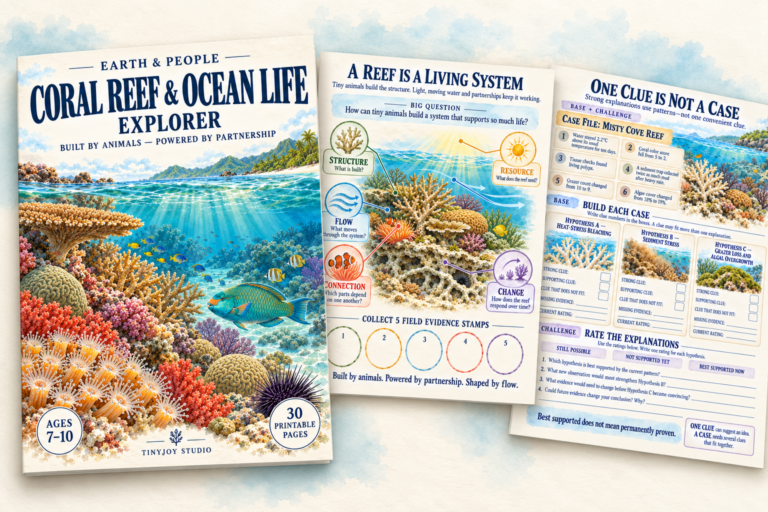
No australia unit study is complete without exploring the Great Barrier Reef off the coast of Queensland. Teach your kids about coral polyps—the tiny animals that actually build the reef—and the incredible marine life that calls it home, from green sea turtles to giant clams and manta rays.
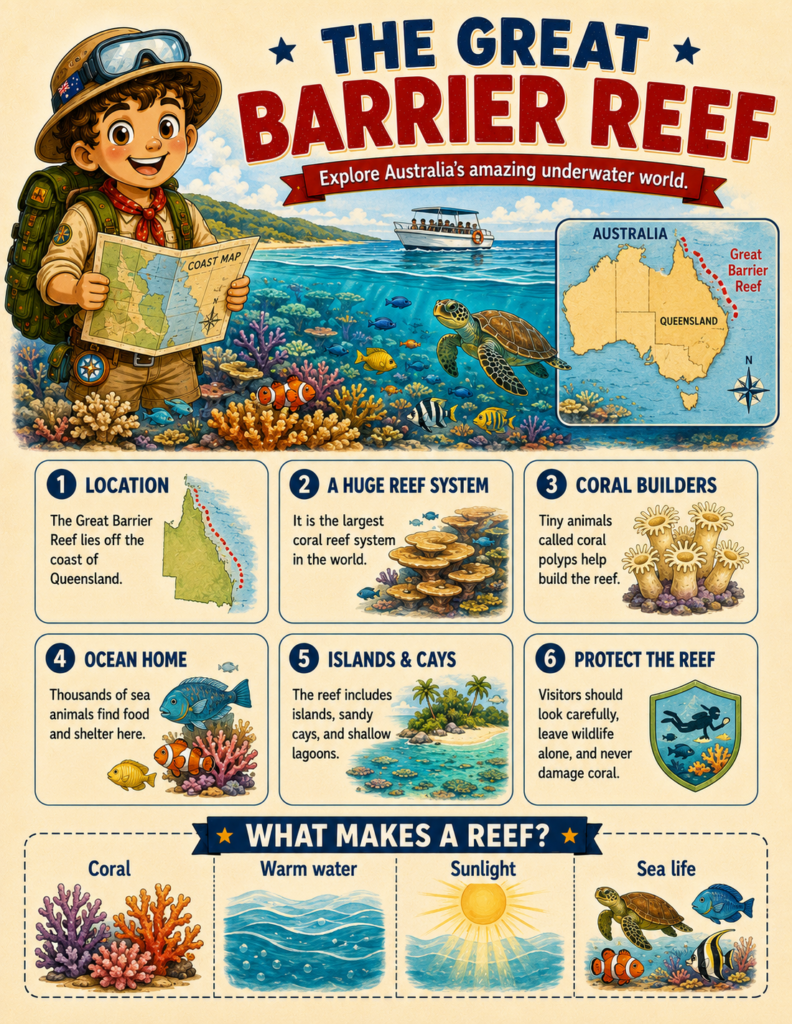
It’s a great opportunity to discuss ocean conservation and how we can protect these delicate ecosystems. If you are expanding your geography lessons, this pairs perfectly with our guide on how to teach continents and oceans without boring textbooks .
4. Survive and Explore the Outback
The Outback is Australia’s vast, red, and rugged interior. Have your kids explore famous natural landmarks like Uluru (the giant red rock in the Red Centre). You can turn this into a fun logic and survival game: ask them what they would need to pack for a trip to the Outback (sunscreen, water, a wide-brimmed hat) versus what they should leave behind (like ice skates or an umbrella!).
5. Become an Animal Tracks Detective
Kids love a good mystery! Take learning outside the traditional reading format by having them match Australian animals to the tracks they leave behind.
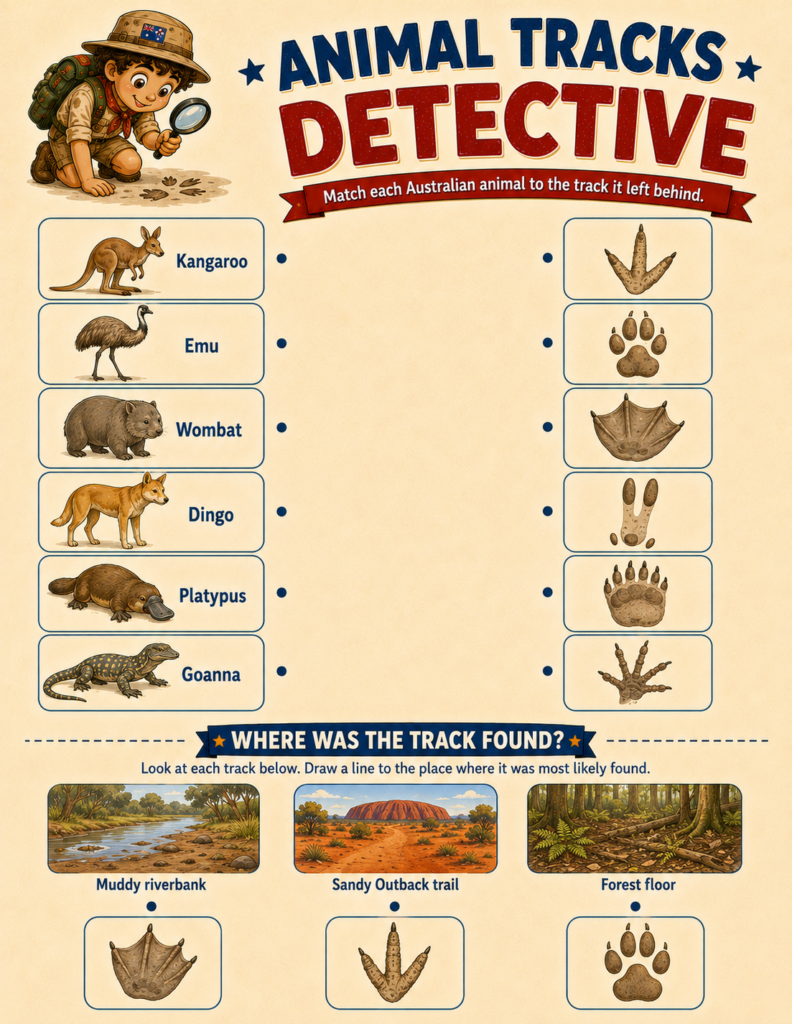
Can they identify the webbed footprint of a platypus near a muddy riverbank, or the massive three-toed track of an emu on a sandy Outback trail? This is one of those perfect screen free geography activities that keeps kids engaged, curious, and thinking critically.
6. Learn About Aboriginal Culture and Connection to Country
Australia is home to the world’s oldest continuing living cultures. A well-rounded unit study must include learning about Aboriginal and Torres Strait Islander peoples. Teach your kids about the concept of «Connection to Country»—how land, water, living things, and culture are all deeply intertwined and must be cared for with respect.
7. Collect Your Official Australia Visa!
Here is the ultimate motivation hack for your homeschool geography curriculum : gamification! Once your child completes their Australian missions, learns about the cities, and spots the wildlife, they earn their official Australia Explorer Visa.
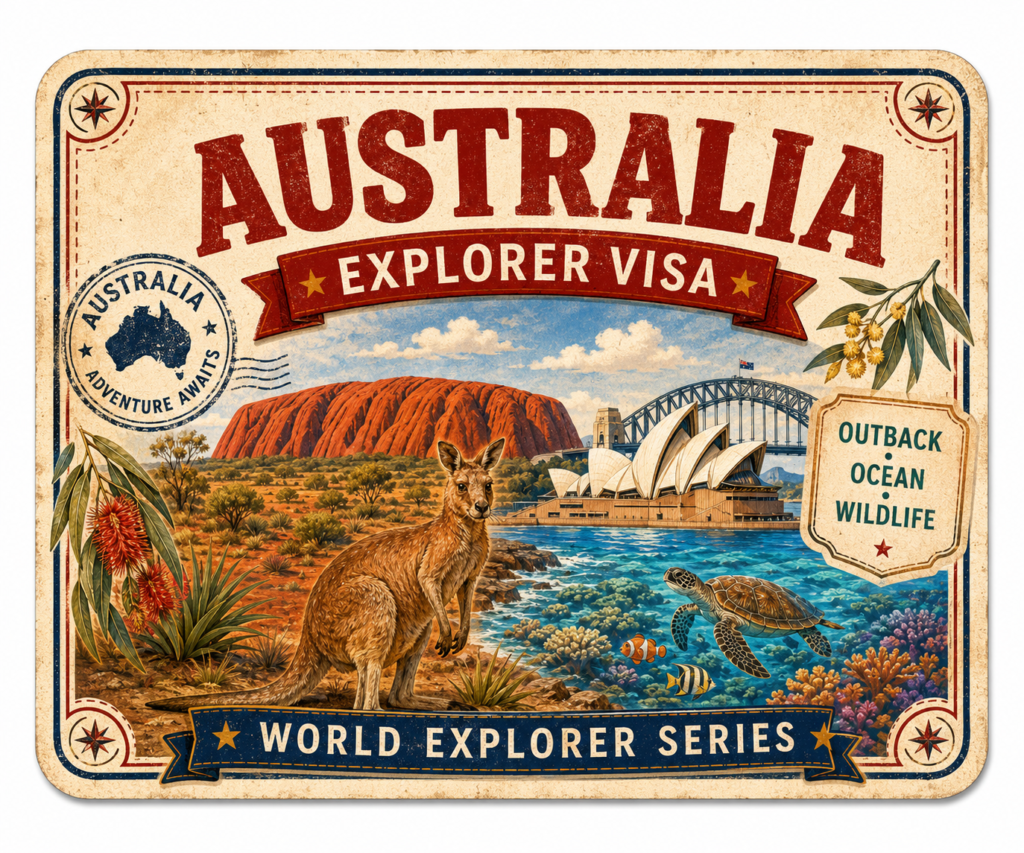
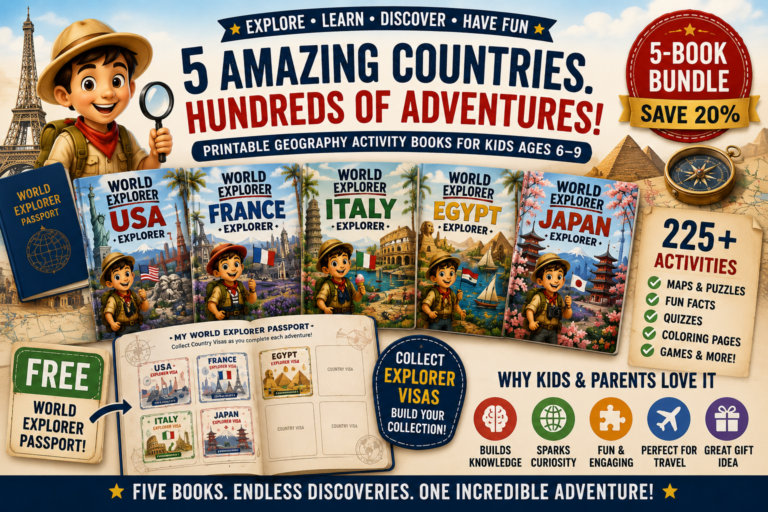
They can cut it out and glue it right into their World Explorer Passport. It turns an ordinary geography lesson into a highly rewarding collection game. They won’t just learn about Australia; they will feel like they actually traveled there!
Ready to Explore Down Under?
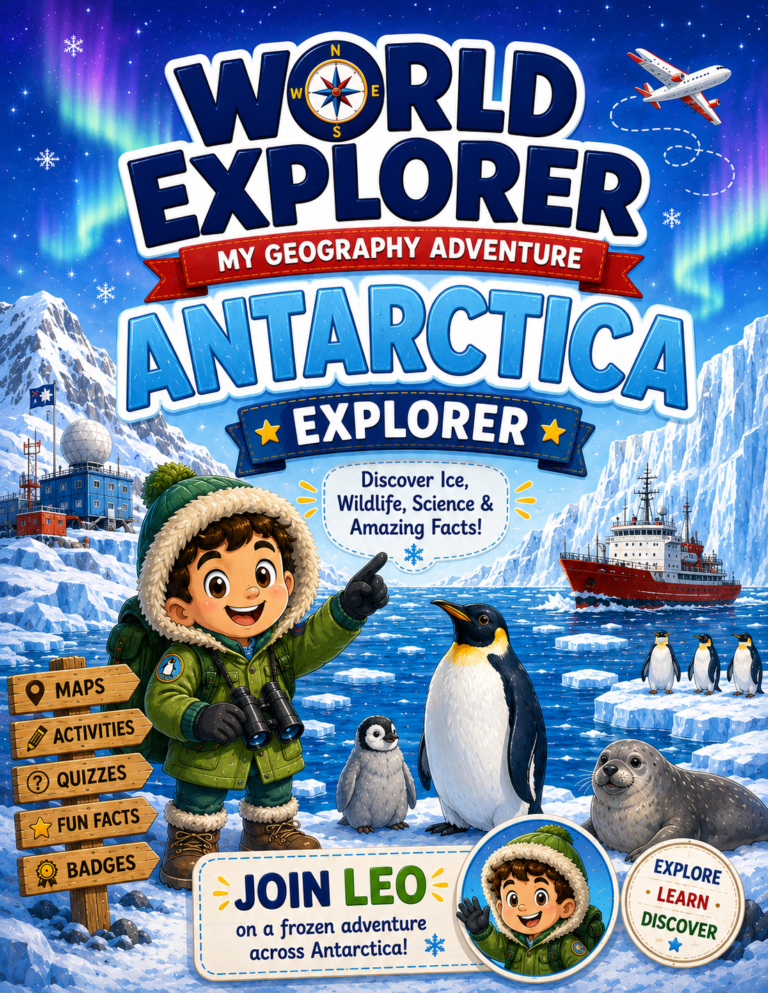
You don’t need to stress over lesson plans or spend your Sunday nights searching for printable maps. Grab the Australia Explorer activity book, print it at home, and let Leo the Guide take your kids on an unforgettable journey through the Land Down Under.