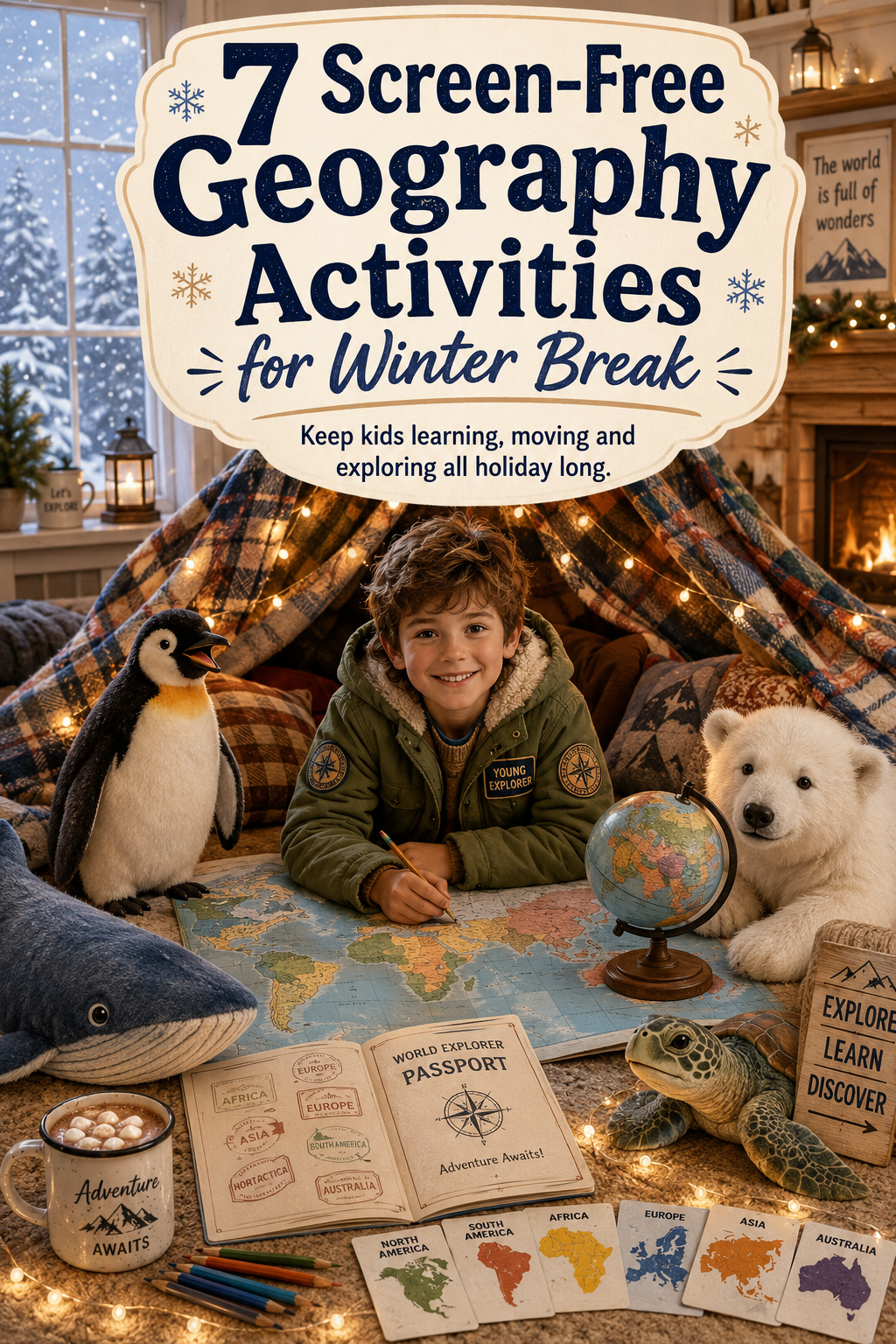
7 Screen Free Geography Activities for Winter Break Fun
If you are a parent of a 6- to 9-year-old, you know that the second half of winter break can be a daunting challenge. Once the holiday excitement fades, the wrapping paper is cleared away, and the freezing temperatures keep everyone trapped inside, cabin fever quickly sets in. It usually starts with restless fidgeting, escalates into sibling squabbles, and inevitably leads to the dreaded phrase echoing down the hallway: «I’m bored! There is nothing to do!»
In these freezing mid-winter moments, handing over a tablet or turning on the television feels like the easiest survival strategy. But as parents, we often battle a heavy dose of screen-time guilt. We know our children need less passive digital scrolling and more active, hands-on play, yet finding structured indoor games that don’t require hours of exhausting prep work or expensive craft supplies can feel impossible.
Here is the secret that changes everything: You don’t need tropical weather or a digital screen to explore the world. When structured correctly, indoor play provides an incredible opportunity for immersive storytelling, sensory experiments, and active movement. In this guide, we will explore 7 simple, low-prep screen free geography activities to keep kids busy, engaged, and learning all winter break long. Plus, we will introduce a brilliant passport-based curriculum that you can download and print instantly—without ever stepping outside into the cold!
Why Winter Break Cabin Fever Happens (And How to Beat It)
Before we jump into the activities, it helps to understand what is happening inside your child’s brain during winter break. Throughout the regular school year, children’s days are anchored by predictable external routines, social interaction, and physical recess. When winter vacation arrives, that structure suddenly disappears.
Combine a lack of physical movement with the constant, high-dopamine stimulation of holiday video games and fast-paced movies, and you get a recipe for sensory overload followed by a sharp dopamine crash. When you suddenly turn off the iPad and tell them to «go find something to play with,» a quiet living room feels overwhelmingly boring compared to a flashing digital screen.
To bridge this gap without triggering daily meltdowns, we need to provide structured gamification. By turning educational concepts into tactile, goal-oriented challenges with a storyline, we channel their natural competitive drive and pent-up physical energy into creative real-world learning.
(If you want to dive deeper into the neurological science behind why tactile, structured play improves focus and memory retention, explore our comprehensive guide on why educational games help kids learn better.)
7 Screen Free Geography Activities for Winter Break
You do not need a degree in elementary education or a closet full of obscure craft materials to make a freezing afternoon thrilling. These seven interactive games use simple household items, leftover holiday recycling, and active movement to transform your living room into a global expedition.
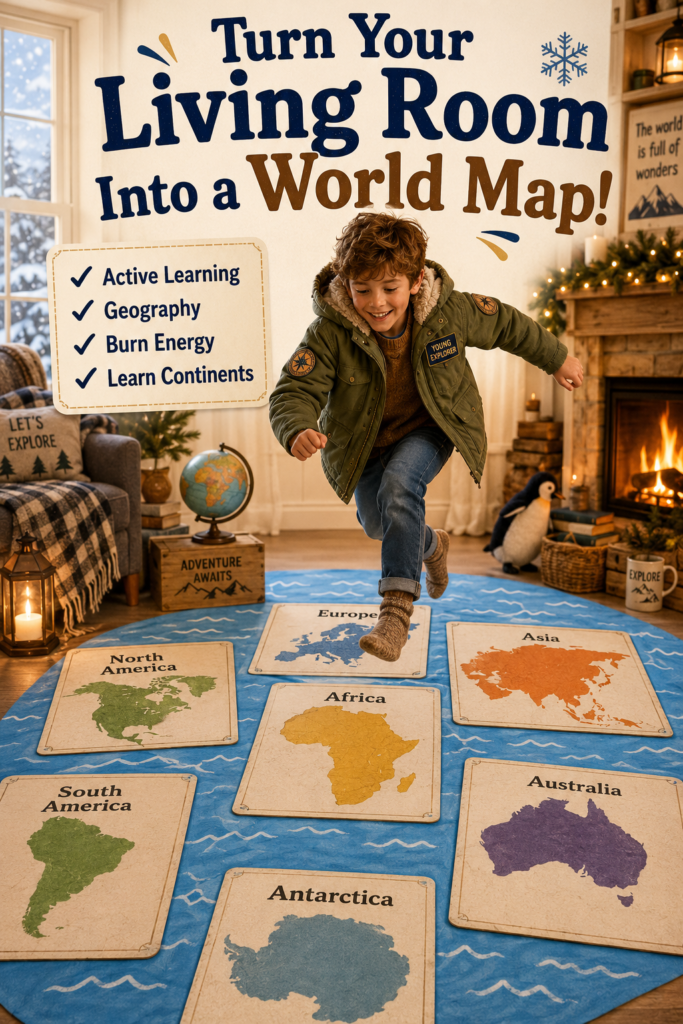
1. The «Living Room Globe» Expedition (Active Movement)
When kids are bouncing off the walls with pent-up winter energy, don’t force them to sit still at a desk. Use physical jumping and running to teach the layout of the Earth!
- The Setup: Write the names of the 7 continents on separate pieces of colored paper or leftover holiday gift boxes. Spread them widely across your living room rug or hallway floor, leaving open floor space in between to represent the 5 major oceans (Pacific, Atlantic, Indian, Southern, and Arctic).
- The Mission: Turn your child into a cargo pilot caught in a winter storm! Call out flight directions: «Captain, we need to fly emergency holiday supplies from North America across the Atlantic Ocean to Europe!» Your child must physically leap over the «ocean floor» and land safely on the correct paper continent without touching the water.
- Why It Works: Kinesthetic learning connects bodily movement to spatial memory, helping kids remember the relative locations of landmasses and oceans while burning off restless energy.
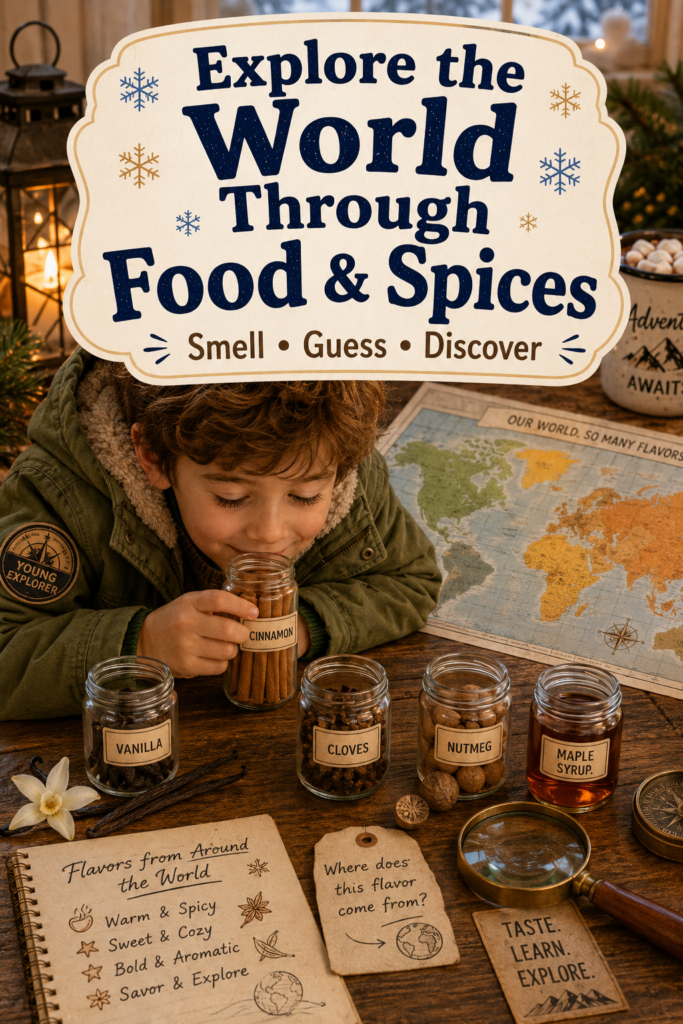
2. The «Blindfold Holiday Spice Tour» (Sensory Empathy)
Winter holiday baking fills our pantries with rich, aromatic spices from all over the world. Turn those scents into an exciting sensory guessing game!
- The Setup: Blindfold your child at the kitchen table and announce that they are embarking on a sensory world tour. Present them with 4 or 5 distinct aromas from your spice cabinet: a pinch of cinnamon or vanilla (South America/Africa), a whiff of nutmeg or cloves (Asia), a piece of citrus peel (Mediterranean Europe), or a drop of maple syrup (North America).
- The Mission: After they guess the scent or taste, pull out a world map or a globe and locate the exact tropical or temperate region where that ingredient originated. Ask them to imagine the warm, sunny climate required to grow it while freezing winds blow outside your window.
- Why It Works: Engaging the senses of smell and taste creates vivid memory anchors and fosters early cultural empathy and global curiosity.
3. Cardboard Continental Drift (Tactile Earth Science)
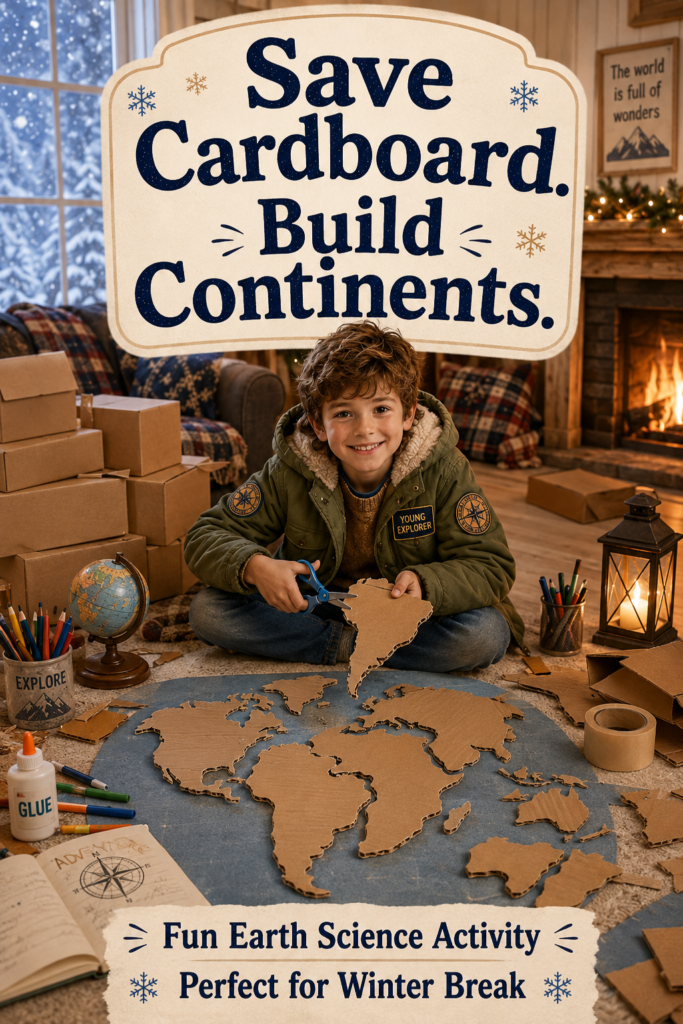
Instead of throwing away all those leftover holiday delivery boxes, repurpose them into a hands-on geology lesson!
- The Setup: Take a large, flattened cardboard box. Draw roughly simplified shapes of the 7 continents and let your child cut them out using safe scissors (an excellent fine-motor exercise!).
- The Mission: Challenge your child to fit the cardboard landmasses together like a giant, prehistoric jigsaw puzzle across the living room rug to form Pangaea—the supercontinent that existed millions of years ago.
- Why It Works: As they slowly drift the cardboard pieces apart to their current global positions, explain how plate tectonics shape our mountains, earthquakes, and deep ocean trenches. It turns abstract earth science into something they can actually build and control.
4. The «Where Did My Holiday Gifts Come From?» Hunt (Everyday Geography)
Children often assume that their holiday gifts and winter clothes magically appear at the local store. Connecting familiar household items to global trade routes teaches them how deeply we rely on people all over the planet.
- The Setup: Pick five items around the house—a new holiday sweater, a favorite plastic toy, a wooden puzzle, a banana from the kitchen, and a bedtime book.
- The Mission: Become global detectives! Examine the clothing tags, toy boxes, and food stickers together to locate the country of origin (e.g., made in Vietnam, grown in Ecuador, printed in Italy). Pull out your map and trace the thousands of miles that item traveled across oceans and continents to reach your hands.
- Why It Works: This simple routine builds spatial mapping skills and encourages sincere gratitude for the farmers, factory workers, and sailors around the world who made their winter comfort possible.
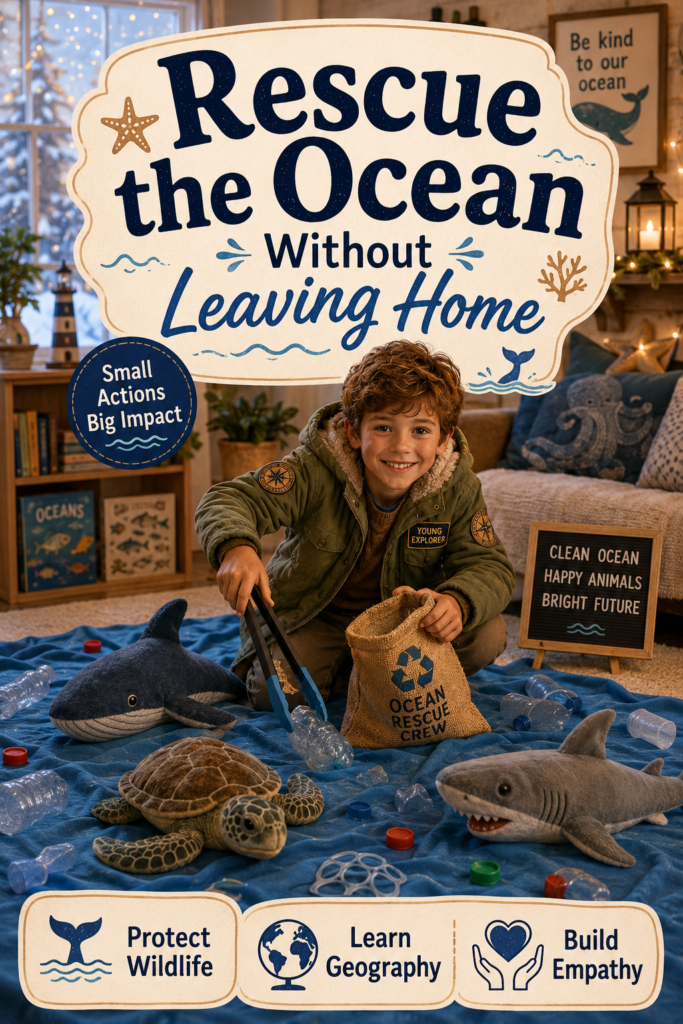
5. The «Indoor Ocean Rescue» (Environmental Stewardship)
You cannot truly love the world without learning to care for its ecosystems. This imaginative role-playing game introduces marine conservation without leaving the warmth of your home.
- The Setup: Spread a large blue blanket across the floor to represent the «Global Ocean.» Scatter a few stuffed marine animals (whales, sea turtles, sharks) across the blanket, but also toss in some clean «plastic hazards» like empty plastic bottles, reusable shopping bags, or paper straws.
- The Mission: Give your child kitchen tongs and announce that they are an official Ocean Helper captaining a marine research vessel. They must navigate their boat around the room, safely retrieving the plastic waste without disturbing the marine wildlife.
- Why It Works: This empowering game teaches children that their everyday habits—like reducing single-use plastics—directly protect real marine creatures living thousands of miles away.
6. Cozy Blanket Fort Storytelling (Global Folklore)
When the weather outside is frightful, nothing beats building an epic living room blanket fort. Use this cozy space to expand your child’s literary horizons beyond standard fairy tales.
- The Setup: Build a fort using dining chairs, bedsheets, and pillows. Bring in a flashlight or battery-operated twinkle lights and cuddle up inside.
- The Mission: Instead of reading the same local stories, introduce folktales, myths, and legends from different continents—such as Anansi the Spider tales from West Africa, or Dreamtime legends from Indigenous Australia.
- Why It Works: Discussing the universal themes of bravery, kindness, and cleverness across different cultures teaches children that despite varying climates and traditions, human beings around the world share the exact same core values. (To see how narratives supercharge lesson retention, explore our article on geography learning through adventure and progression.)
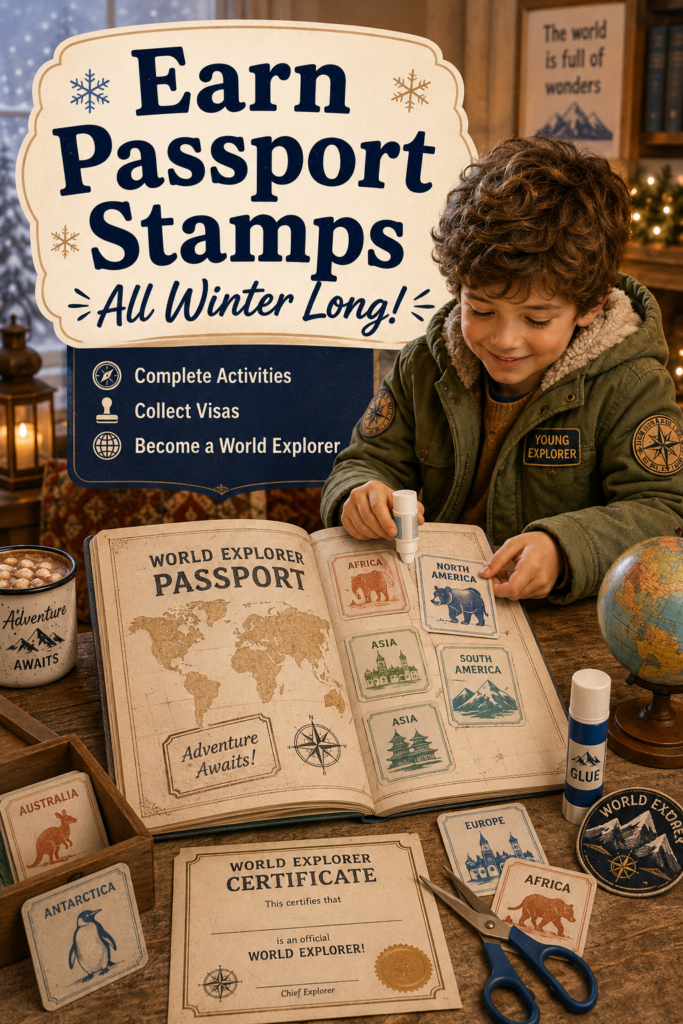
7. The Universal Passport Stamp Quest (Gamified Collecting)
The most powerful long-term strategy to beat winter break boredom is to give children a hobby built around collecting and progression. Why do kids love video game achievements? Because they crave visible proof of their effort!
- The Setup: Set your child up with an official «Explorer Profile» and a physical passport booklet.
- The Mission: Every time your child completes one of the indoor winter expeditions above—whether it’s mapping holiday gifts, rescuing ocean animals, or identifying global spices—they don’t get a boring letter grade. Instead, they earn a colorful, cut-out badge or an official «Visa Stamp» to glue directly into their journal.
- Why It Works: Visually tracking their learning milestones shifts motivation from external rules (parental nagging) to internal pride. They cease to feel stuck indoors and proudly step into the identity of a World Explorer! (Learn more about engaging animal themes in our guide on how animal activity books make learning more fun.)
Summary Table: Winter Break Activity Matrix
| Activity Name | Primary Skill Developed | Prep Time | Best For Ages |
| Living Room Expedition | Spatial Awareness & Active Movement | 5 Minutes | 6–8 Years |
| Blindfold Spice Tour | Sensory Mapping & Cultural Empathy | 10 Minutes | 6–9 Years |
| Cardboard Continental Drift | Tactile Earth Science & Geology | 15 Minutes | 6–9 Years |
| Holiday Gift Tag Hunt | Global Trade & Mapping Literacy | 5 Minutes | 6–9 Years |
| Indoor Ocean Rescue | Environmental Stewardship (Ocean Helper) | 10 Minutes | 6–9 Years |
| Blanket Fort Folklore | Literary Empathy & Listening Skills | 10 Minutes | 6–9 Years |
| Universal Passport Quest | Long-Term Focus & Goal Setting | Zero Prep (with tools!) | 6–9 Years |
Meet Your Winter Break Secret Weapon: The World Explorer Series
If you love the idea of using gamification, sensory play, and passport collections to survive winter break without screens, but you simply don’t have the hours required to design maps, cut out badges, and write lesson plans after a busy holiday season, there is a beautifully crafted solution ready for your family.
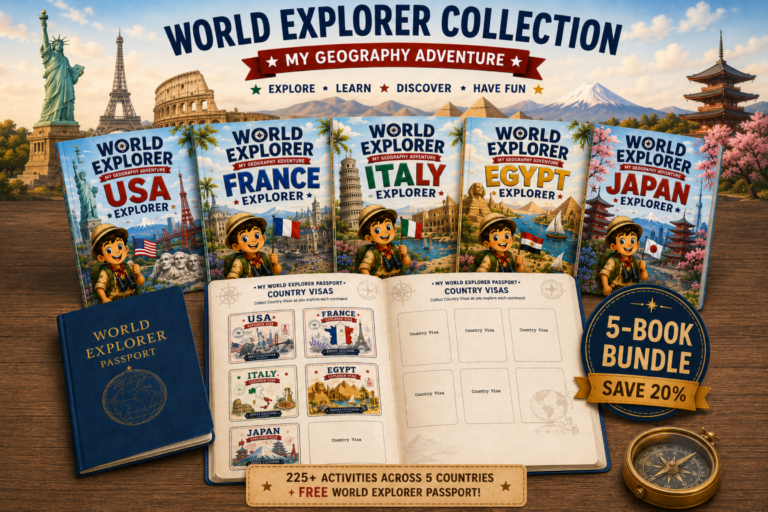
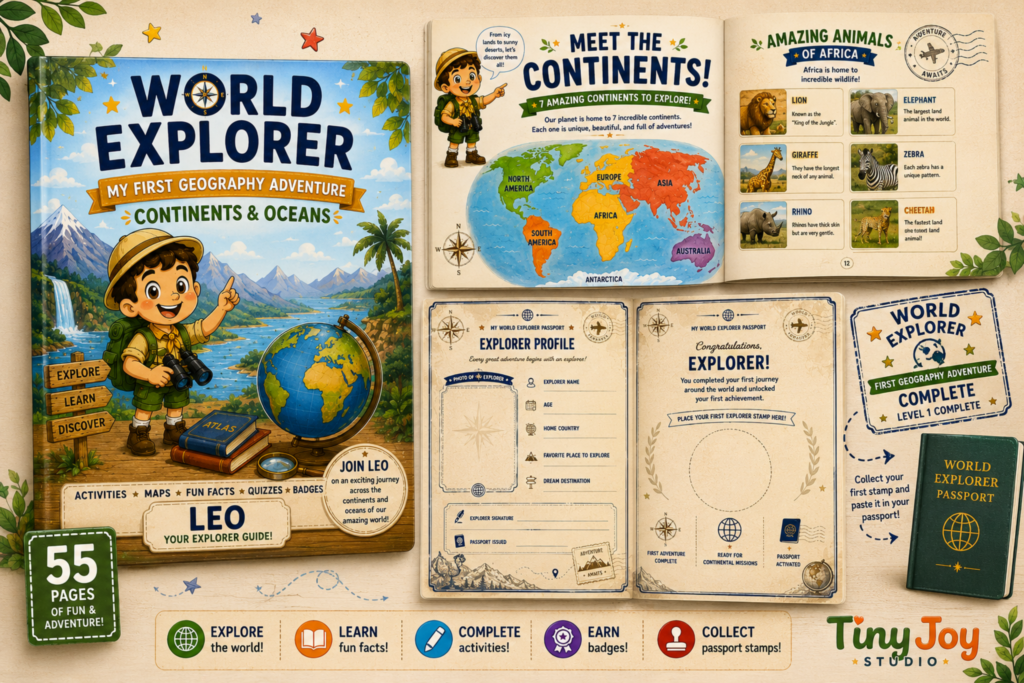
Enter Level 1: Continents & Oceans, the foundational activity book from the acclaimed World Explorer Series by Tiny Joy Studio. Designed specifically for curious 6- to 9-year-olds, this beautifully illustrated curriculum takes the heavy lifting off parents’ shoulders. Led by an enthusiastic cartoon guide named Leo, this book replaces passive screen scrolling with an interactive, open-and-go voyage across our entire planet.
Why Homeschoolers Love It for Winter Break:
- The Universal Passport Experience: Every foundational book comes bundled with an exclusive, customizable World Explorer Passport. Your child takes ownership from day one by filling out their explorer profile, recording their age, and drawing a self-portrait.
- A 3-Level Collectible Ecosystem: The Universal Passport features 38 dedicated slots structured to keep kids engaged through the winter and beyond:
- Level 1 (The Foundation): Mastering global earth science, tectonic plates, ocean currents, and major landmasses with the Continents & Oceans Activity Book.
- Level 2 (The Continents): Earning 8 Continental & Ocean Visas by exploring regional ecosystems in depth.
- Level 3 (The Countries): Earning 30 individual Country Visas by zooming in on specific cultures, landmarks, and traditions!
- Tactile, Earned Rewards: Rather than filling in boring bubbles on a worksheet, children navigate iceberg mazes in Antarctica, decode ocean currents, and solve spatial mapping puzzles. As they master each section, they use scissors and glue to cut out official Badges and Visa Stamps, pasting them directly into their Universal Passport.
- Instant Weather-Proof Delivery: Available directly via Etsy as high-resolution digital printables, you don’t need to drive to a store in a winter blizzard or wait days for delayed holiday shipping. You can download the files instantly, print exactly what you need at home, and launch an epic global journey within minutes!
How to Build a Cozy «Screen-Free Winter Routine»
To make the transition away from holiday screen time peaceful and permanent, try combining the activities above with these three simple daily rules:
- Create «Transition Bridges»: Never ask a child to go straight from playing a video game to sitting quietly at a table. Use high-energy physical games (like the Living Room Expedition) as a «bridge» to release pent-up physical energy before settling down with an activity book.
- Establish «Cozy Explorer Hours»: Dedicate a specific time of day—such as the quiet hour right after lunch or when the late-winter sun goes down at 4:00 PM—as official «World Explorer Time.» Prepare warm cocoa, put on cozy slippers, and make exploration a predictable family ritual.
- Celebrate Every Stamp: When your child completes a mapping challenge and glues a new Visa into their Tiny Joy Studio Passport, make a big deal out of it! High-five them, hang their completed continental map on the refrigerator, and celebrate their growing knowledge of the globe.
Final Thoughts: Trade Cabin Fever for World Discovery
Surviving winter break doesn’t have to be an exhausting battle filled with cabin fever, sibling arguments, and screen-time guilt. By shifting your parenting strategy from restriction to inspiration, you can transform a cold, dreary afternoon into an exciting world tour right at your kitchen table.
When you give children an engaging quest, tactile rewards, and a vibrant world to explore, the glowing digital screens suddenly lose their hypnotic power.
Ready to rescue your winter break from boredom? Grab a box of colored pencils, download your foundational Level 1: Continents & Oceans Activity Book, and set up your child’s very own Universal Passport today directly via the Tiny Joy Studio Etsy Collection.
The snow may be falling outside, but the whole world is waiting inside—let’s go explore it!