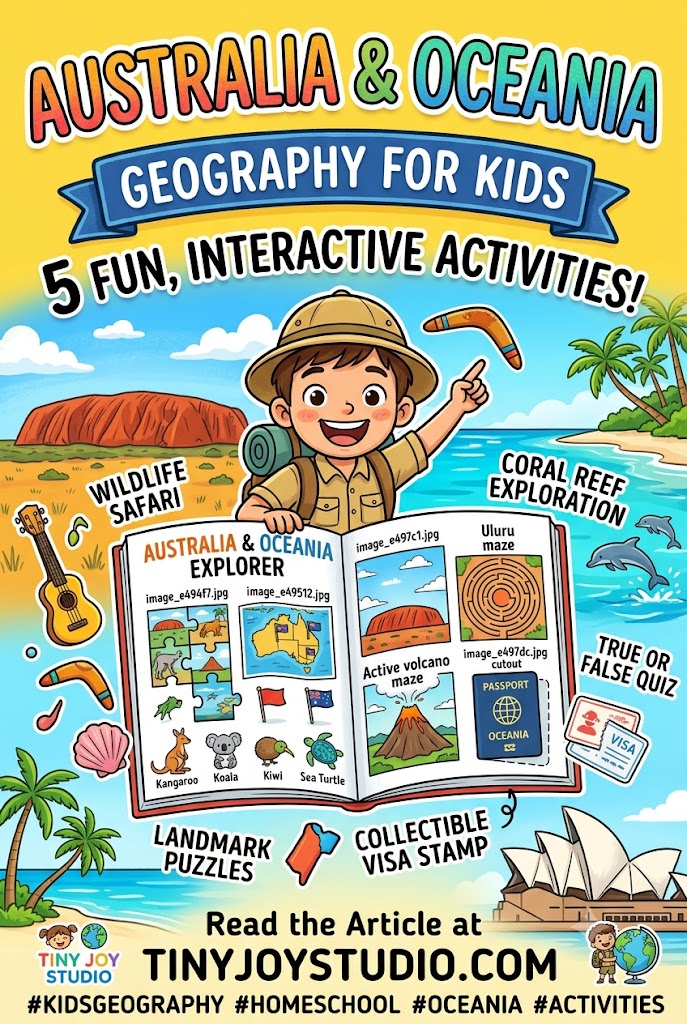
How to Teach Australia and Oceania Geography for Kids: 5 Fun, Interactive Activities (No Boring Textbooks!)
If you are looking for creative and engaging ways to teach australia and oceania geography for kids, you know how traditional textbooks can fail to hold attention. In an era dominated by flashing screens, video games, and short-form digital consumption, dry paragraphs and monochrome outline maps simply cannot compete for a child’s imagination. Kids don’t want to just memorize lists of island nations—they want to be explorers, detectives, and captains of their own learning adventures.
This is exactly why kids learn geography best through adventure, collections, and progression . When children feel like real travel journalists completing missions rather than students doing homework, their intrinsic motivation skyrockets.
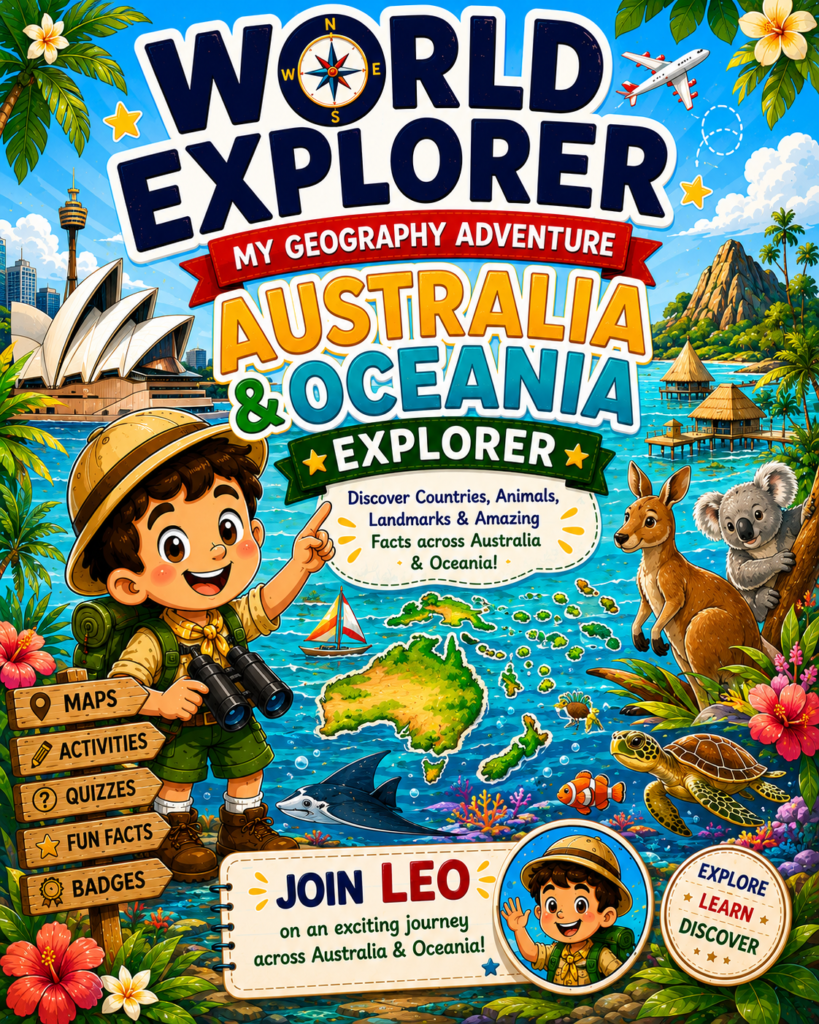
One of the most exciting and visually spectacular regions to jumpstart this global journey is Australia & Oceania! It is a corner of the planet bursting with dramatic contrasts—from the endless red sands of the Australian outback and volcanic island chains to crystalline turquoise lagoons teeming with marine life. In this comprehensive guide, we’ll share 5 hands-on ways to transform your continental lessons into an interactive quest, using specific pages from the new Australia & Oceania Explorer activity book by Tiny Joy Studio as your ultimate open-and-go tool.
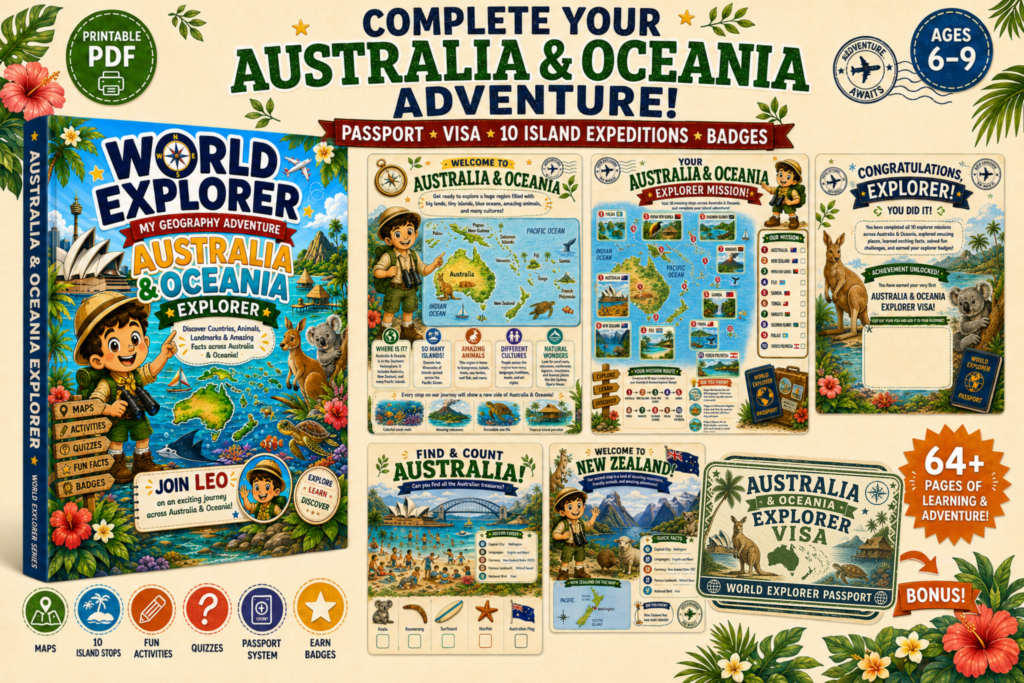
Meet Leo and the World Explorer Passport System
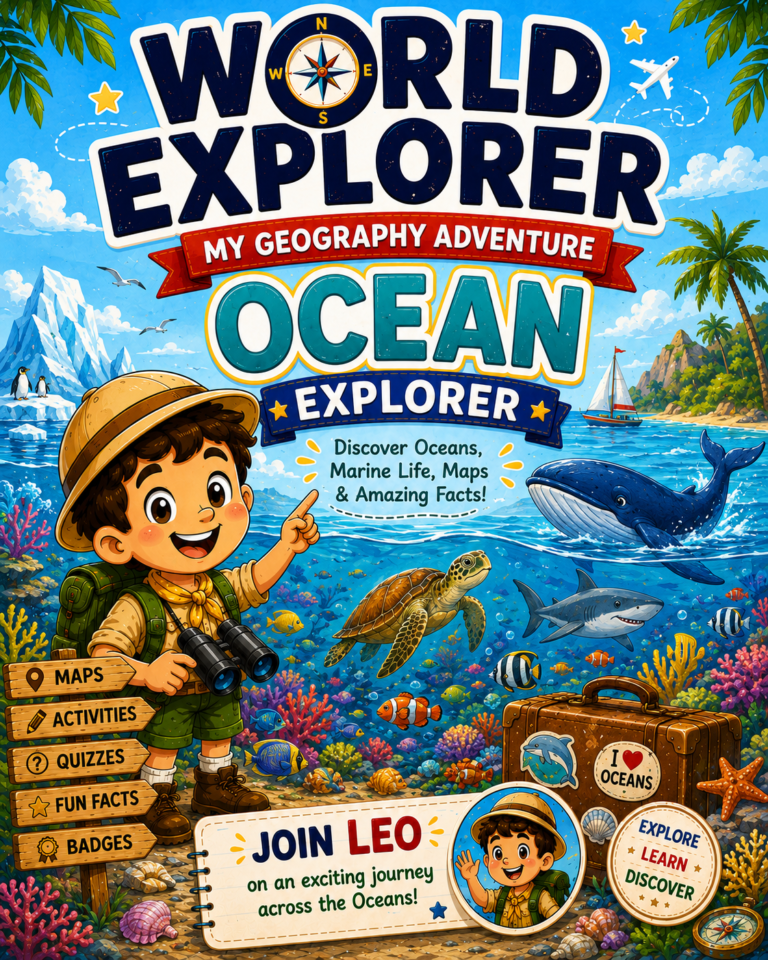
Instead of overwhelming young minds with dry geographical encyclopedias, the Australia & Oceania Explorer book invites your child on a guided expedition alongside a friendly, animated travel buddy—a boy named Leo.
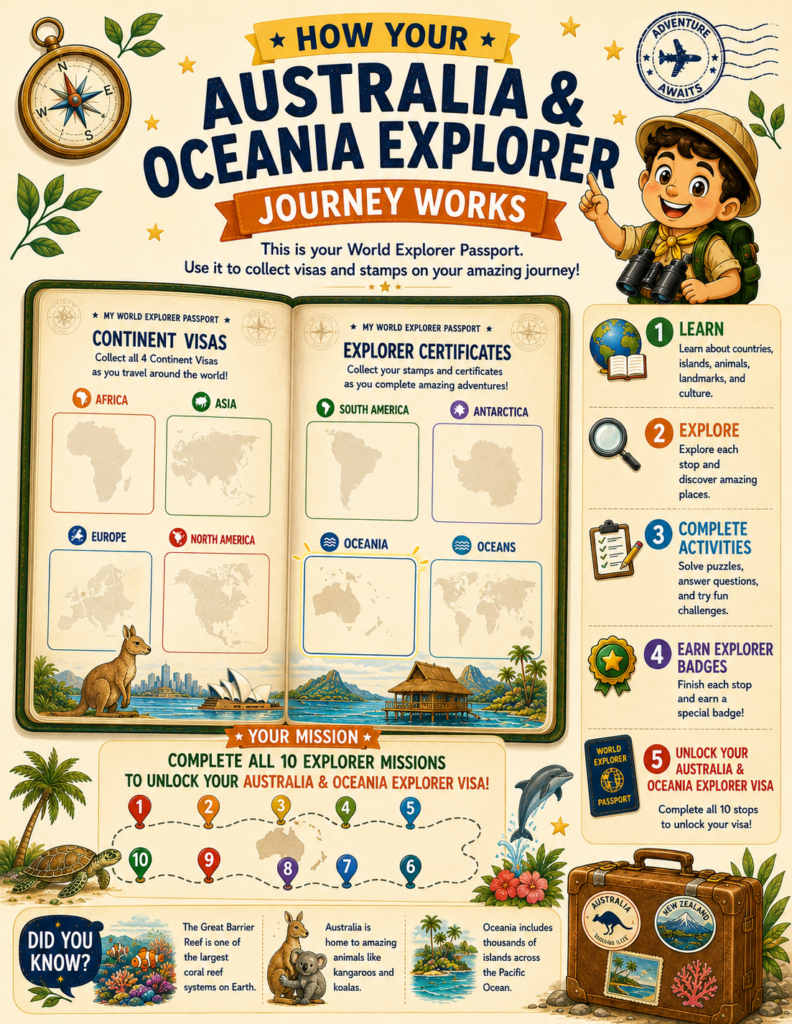
The core engine of this learning method is the World Explorer Passport. Your child begins by filling out their personal explorer credentials, and their overarching mission throughout the book is to complete educational challenges, earn collectible Explorer Badges, and unlock their official Oceania Visa Stamp. Let’s open the pages and break down 5 specific activity sheets that will make your child fall in love with this region!
1. 10 Amazing Places & The «Match the Destination» Puzzle
Oceania is a massive, diverse region spanning thousands of scattered islands and deep indigenous cultures. How do you introduce this without confusing a young child? You start with an open map and a game of detective.
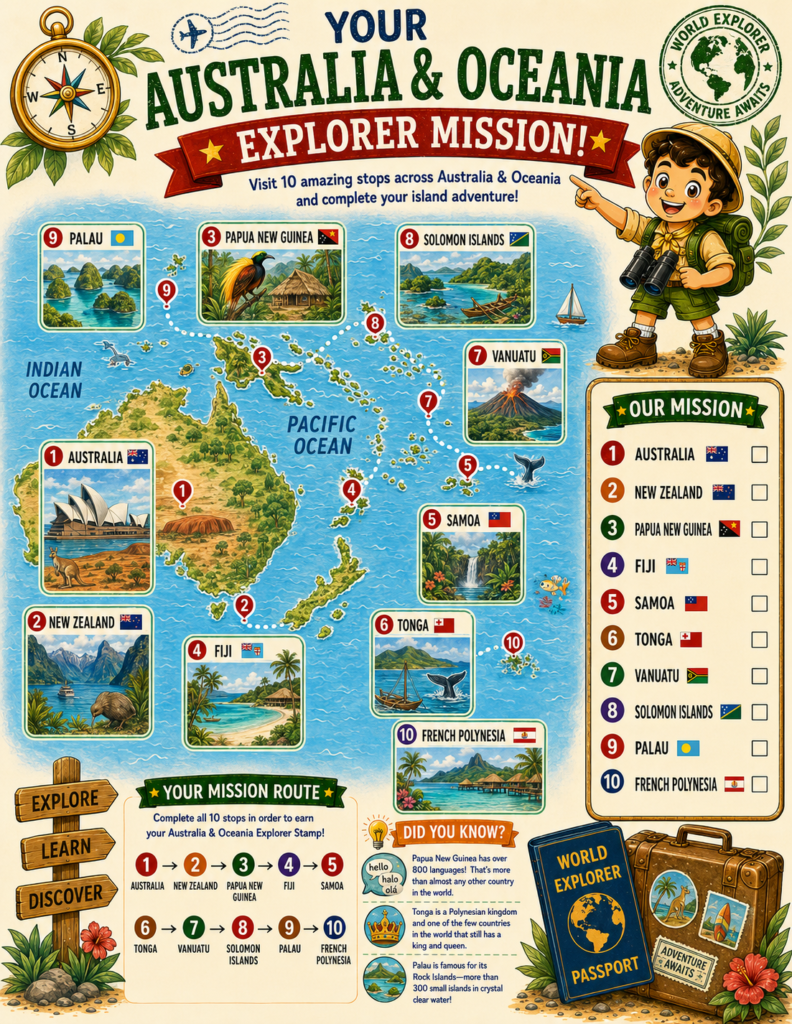
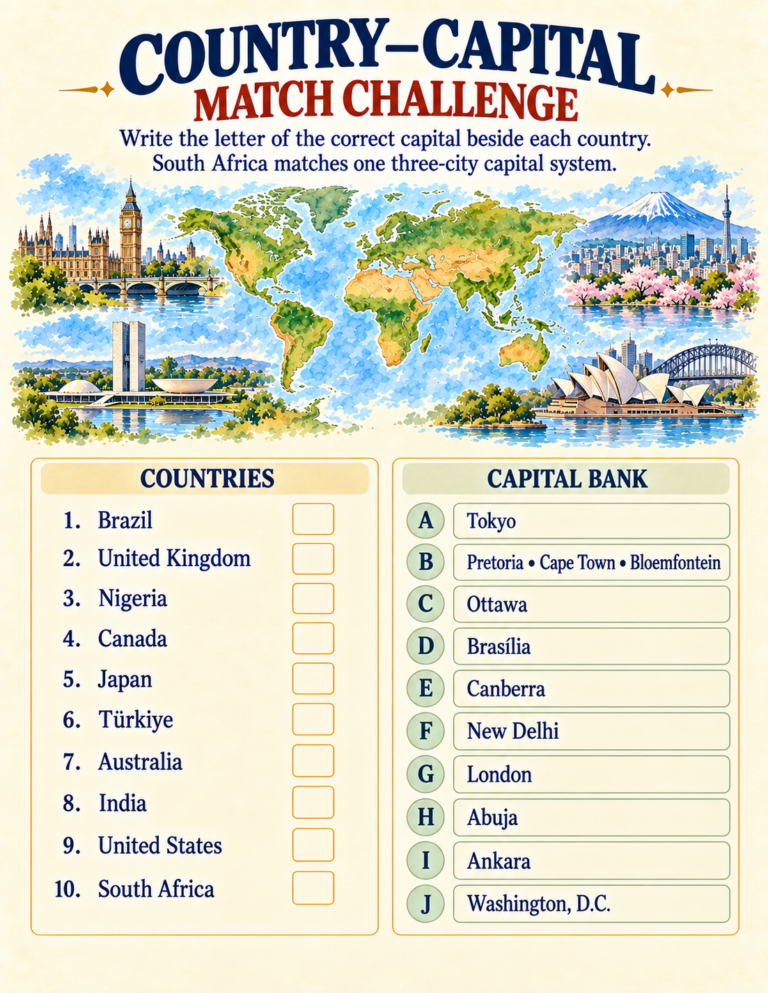
- What’s Inside the Book: Leo introduces young explorers to 10 iconic destinations across the continent: mainland Australia, the rolling green valleys of New Zealand, and exotic island paradises like Fiji, Samoa, Tonga, Hawaii, and Papua New Guinea. To cement their spatial awareness, the book features a «Match the Destination» game. Kids must carefully read clues and descriptions of each location and match them to the correct lettered pins on the region map.
- How to Bring It to Life at Home: After completing the page, pull out a physical globe or a large wall map for a game of «Island Patrol.» Call out a destination your child just discovered (like Fiji or New Zealand), and challenge them to point to it as fast as possible while shouting out one fun fact they learned from Leo!
2. Wildlife Safari: Outback Marsupials & The Great Barrier Reef
The fauna of Australia and Oceania is an absolute fairytale for kids. Because of millions of years of geographic isolation, this region is home to creatures found nowhere else on Earth!
- What’s Inside the Book: The «Meet Incredible Animals» section takes children on a vivid safari from the red outback sand to the depths of the ocean. Young learners discover the hopping secrets of kangaroos, the sleeping habits of koalas, the bizarre biology of the duck-billed platypus, the flightless kiwi bird of New Zealand, and the majestic sea turtles gliding through the Great Barrier Reef.
- How to Bring It to Life at Home: Use this wildlife focus to spark conversations about adaptation: Why do marsupials have pouches? Why does the platypus look like a mix between a bird, a beaver, and a reptile? Grab some blue paper and crayons and let your child sketch their own coral reef. This hands-on integration perfectly shows how activity books transform complex scientific topics into memorable family bonding moments .
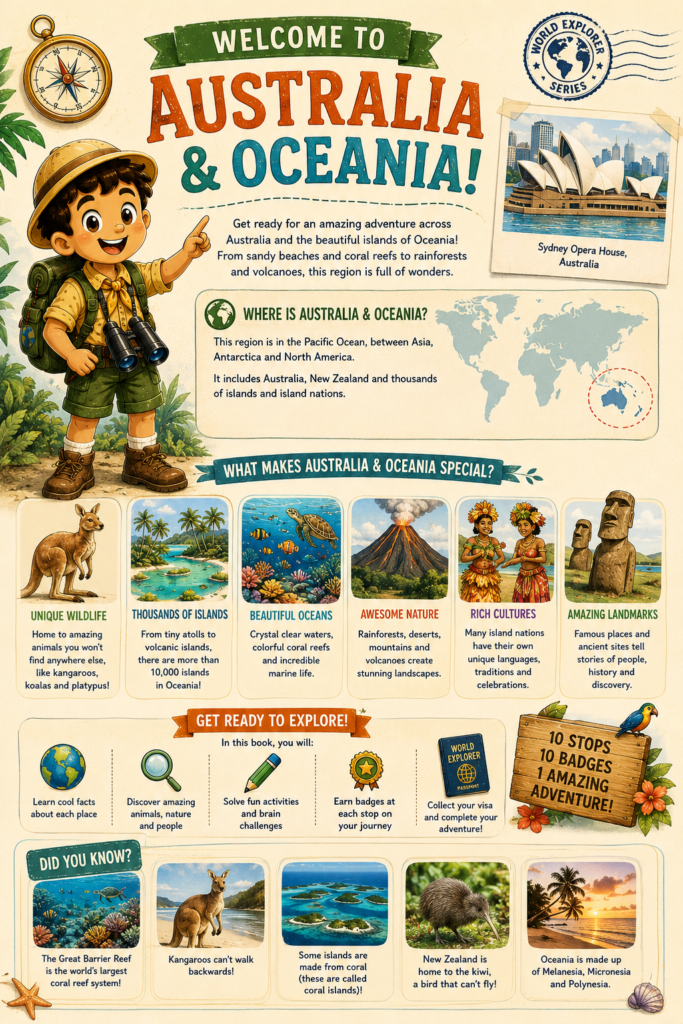
3. The «True or False» Ultimate Review Quiz
Children absolutely love feeling like experts and putting their newfound knowledge to the test. A low-stakes, fun quiz format helps lock in core geographical facts without the stress of grades or tests.
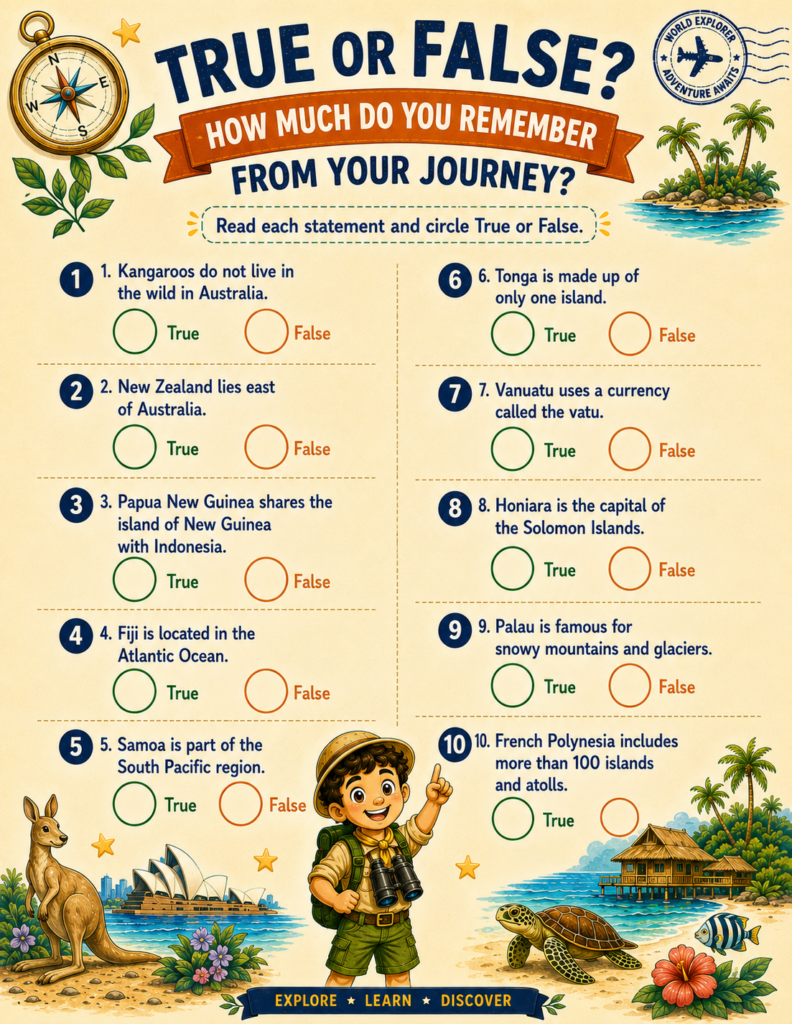
- What’s Inside the Book: Near the conclusion of their journey, young pioneers face Leo’s «True or False Quiz.» Leo asks clever, engaging questions to test their observation skills: Is a koala actually a bear? Are corals rocks, plants, or animals? Does winter in Australia begin in June? It’s a wonderful way to encourage critical thinking.
- How to Bring It to Life at Home: Turn this page into a lively family game show over dinner! Read Leo’s questions aloud and have family members raise their hands or hold up thumbs up/thumbs down to vote. Then, let your child act as the «Head Scientist» and check the official Answer Key on page 64 to reveal the winners.
4. Natural Wonders: From Uluru to Active Volcanoes
Geography is the study of how landscapes shape our world. Oceania features some of the most dramatic geological formations on the planet.
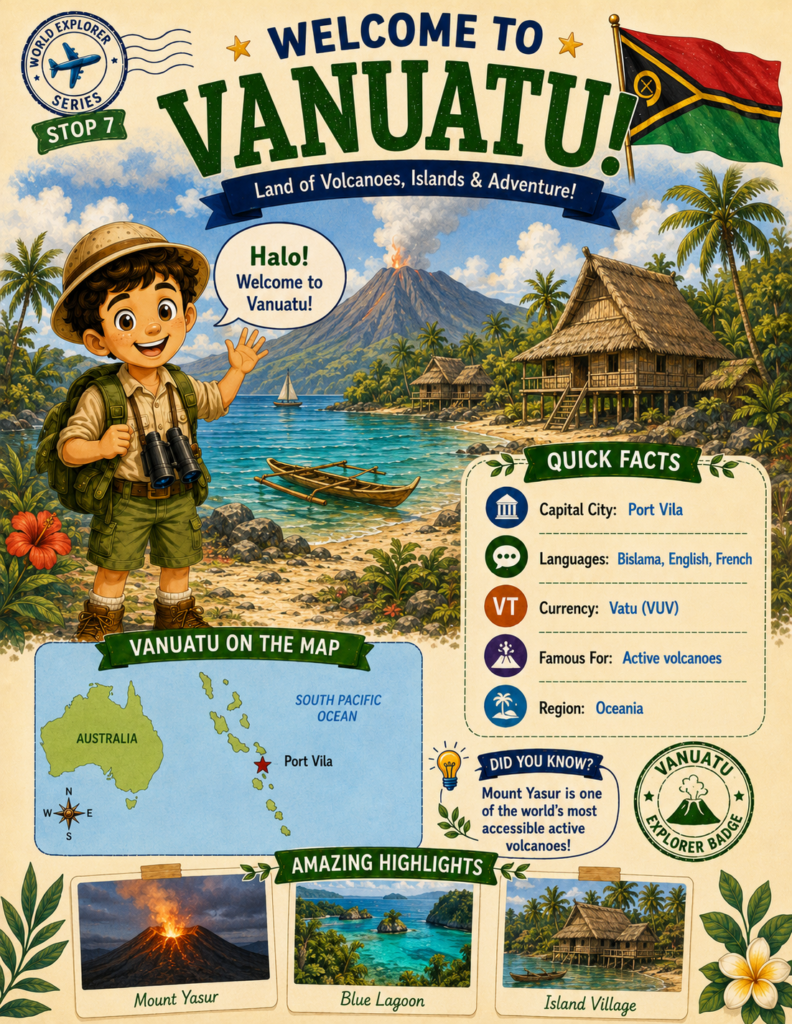
- What’s Inside the Book: The «See Awesome Landmarks» section transports your child directly to the base of Uluru (Ayers Rock)—the massive sacred sandstone monolith that changes color at sunset. They will explore New Zealand’s bubbling geothermal geysers, Hawaii’s fiery volcanic chains, and man-made architectural wonders like the Sydney Opera House. These topics are taught through intricate mazes, spot-the-difference games, and word searches.
- How to Bring It to Life at Home: While your child is navigating the mazes or solving the word searches, put on some atmospheric regional background music—like the gentle strumming of a Hawaiian ukulele or the deep drone of an Australian didgeridoo. This multisensory immersion shows why educational games and visual puzzles supercharge knowledge retention by engaging a child’s visual, auditory, and motor pathways simultaneously.
5. Achieving the Goal: Explorer Badges & The Oceania Visa Stamp
Every great adventure needs a triumphant conclusion! In the World Explorer ecosystem, learning is not motivated by stress or grades—it is driven by the joy of progression and collection.
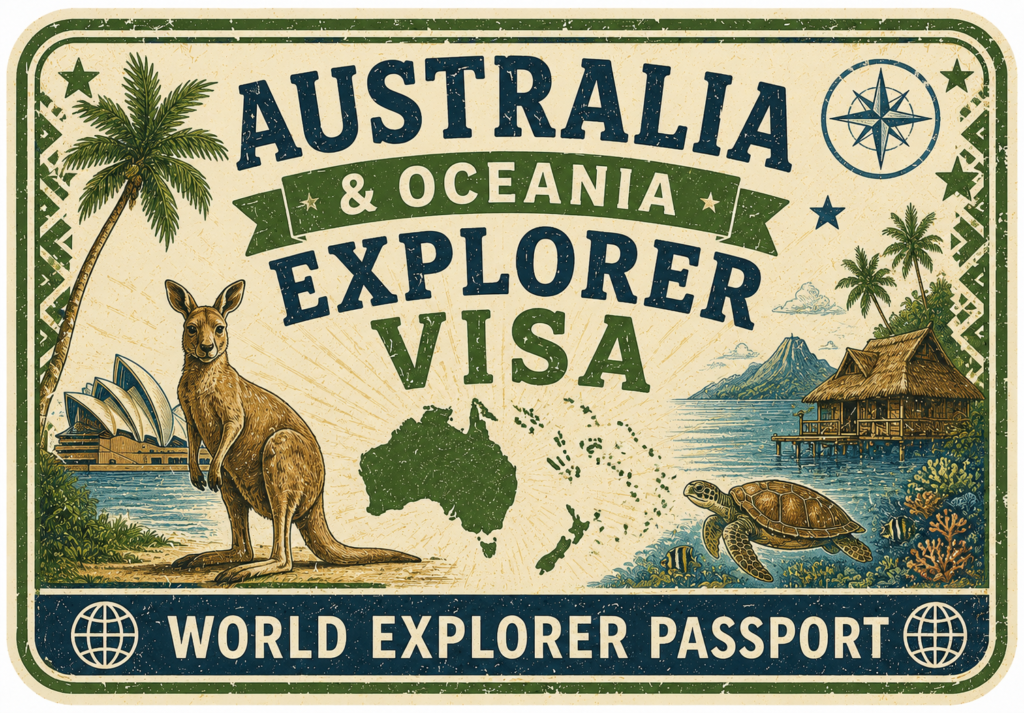
- What’s Inside the Book: Throughout their continental study, kids track their achievements by checking off Explorer Badges for every milestone. But the ultimate reward is saved for the end: the official Oceania Visa Stamp! Children carefully cut out the illustrated stamp along the dotted line and proudly paste it into their personal World Explorer Passport.
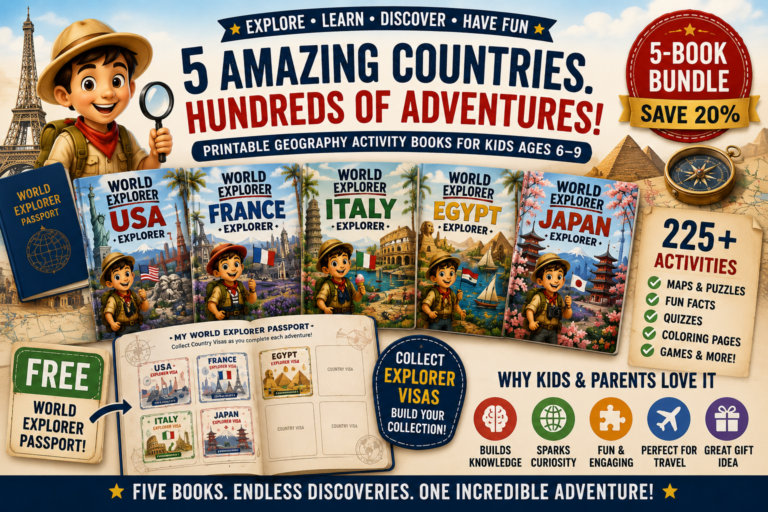
- How to Bring It to Life at Home: Host an official «Visa Stamping Ceremony.» Shake your child’s hand, sign their Certificate of Achievement found on page 47, and let them glue the Oceania visa into their passport. Watching their physical passport fill up naturally builds confidence and motivates them to ask for their next country adventure, perfectly matching the ideal geography learning path for 6–9 year olds (moving smoothly from continents to countries) .
Start Your Oceania Adventure Today!
Teaching Australia and Oceania geography for kids doesn’t have to require hours of lesson planning or arguments over screen time. By transforming social studies into an interactive, tactile, and gamified quest, you give your child a lifelong gift: a deep curiosity about global cultures, a love for science, and the mindset of a true world explorer.
Ready to pack your bags and join Leo? Grab your colored pencils, open up your passport, and let the journey begin!