Weather vs. Climate for Kids: Interactive Experiments & Mapping Ideas
Teaching weather vs climate for kids can sometimes feel like trying to explain why the sky is blue—it seems simple until you actually have to put it into words. Many children (and let’s be honest, adults too!) use the words interchangeably. However, understanding the difference is a foundational skill for both earth science and world geography.
If you have ever stared at a blank lesson planner wondering how to make meteorology exciting without spending hours gathering supplies, you are in the right place. In this guide, we will break down the easiest ways to explain these concepts, share some hands-on interactive experiments, and introduce you to the ultimate open-and-go workbook that will turn your child into a Junior Meteorologist!
The Closet Analogy: The Easiest Way to Explain the Difference
Before we dive into maps and thermometers, you need a simple explanation that clicks instantly with a 6 to 9-year-old. The best way to explain it? The Wardrobe Analogy.
- Climate is your entire wardrobe. It represents what you expect the weather to be like over a long period. If you live in Alaska, your «climate wardrobe» is full of thick winter coats, boots, and scarves. If you live in Hawaii, your wardrobe is full of swimsuits and shorts. Climate tells you what clothes to buy.
- Weather is what you wear today. Even if you live in sunny Hawaii (a tropical climate), it might rain on a random Tuesday. Weather tells you what to wear today.
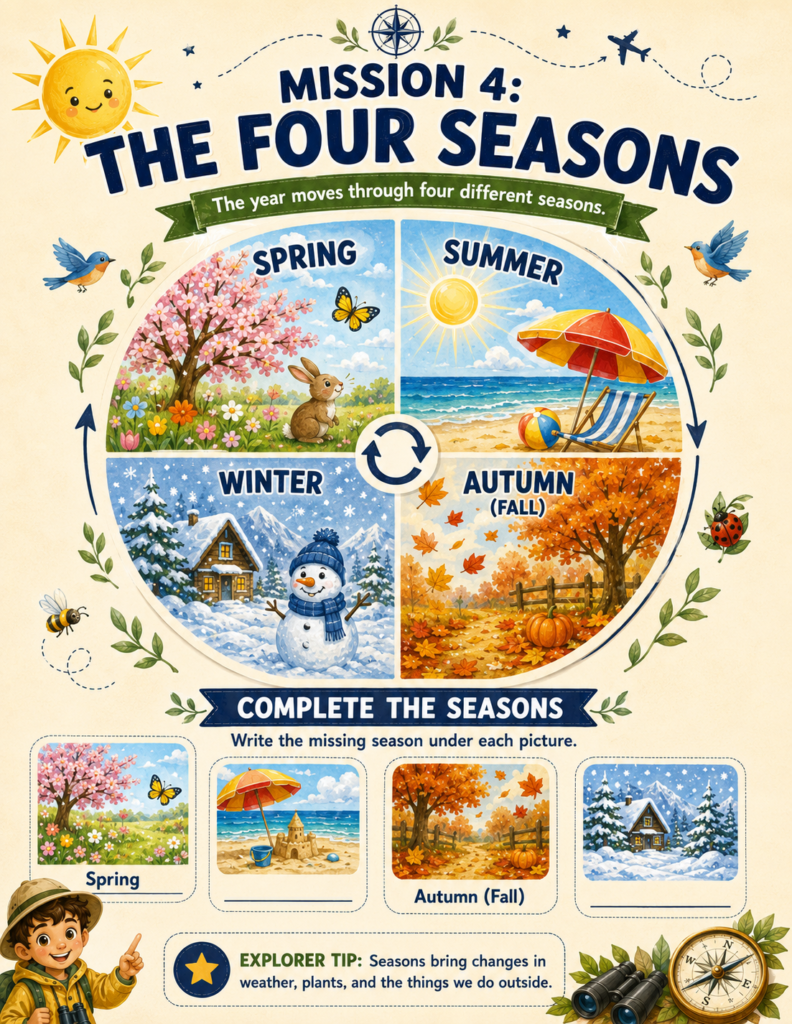
Weather changes every single day, sometimes hour by hour. Climate is the pattern of weather over many years. Once kids grasp this, the rest of the science falls into place!
If you want to gamify your homeschool curriculum, introducing real-world analogies like this is the perfect first step before diving into activities.
3 Interactive Experiments to Teach Weather and Climate
Kids learn best when they can touch, see, and track data. Here are three simple, low-prep activities you can do this week.
1. The Daily Temperature Tracker (Weather)
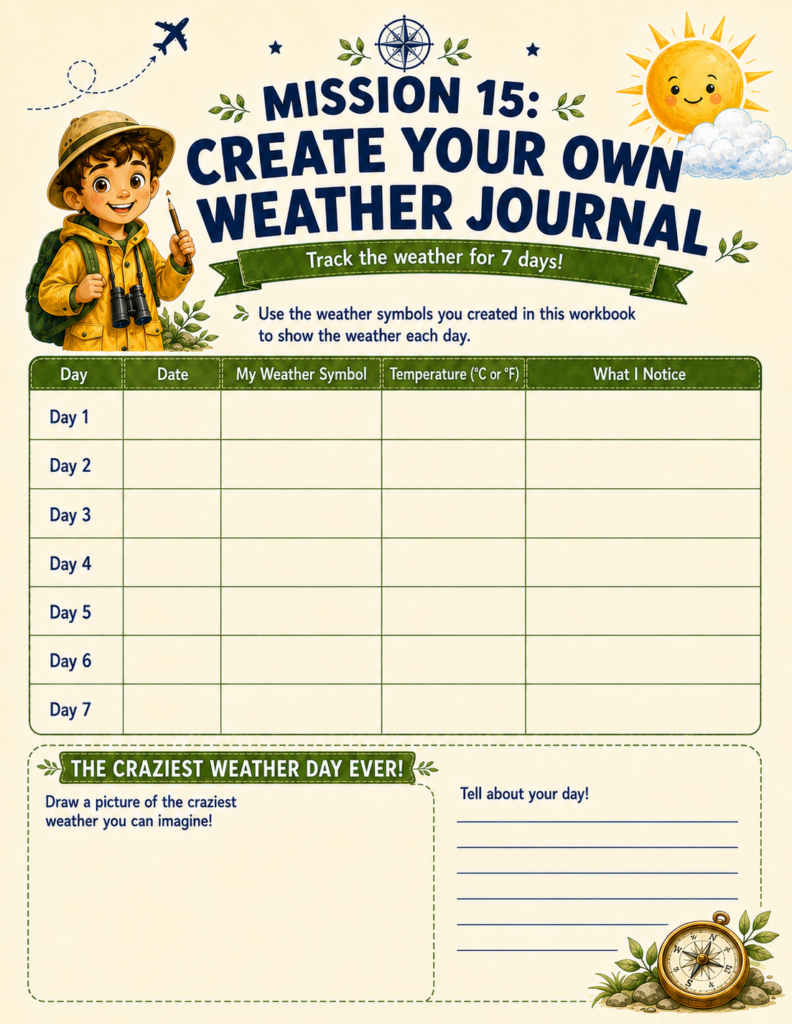
To understand weather, kids need to observe it. Set up a simple outdoor thermometer. Have your child check the temperature at the exact same time every morning for a week. They can record whether it is sunny, cloudy, windy, or raining. The Lesson: By the end of the week, they will visually see how quickly weather fluctuates from day to day.
2. The Biome Mapping Activity (Climate)
Print out a blank world map. Give your kids green, yellow, and white crayons. Ask them to color the equator green (tropical rainforests/hot climate), the deserts yellow (dry climate), and the poles white (polar climate). The Lesson: This visually demonstrates that climate is tied to geography and location, not just today’s forecast.
This kind of mapping is a fantastic addition to any hands-on montessori geography setup, allowing children to connect physical spaces with weather patterns.
3. The «Cloud in a Jar» Experiment
You cannot talk about weather without talking about clouds! Pour a little warm water into a glass jar, swirl it around to warm the glass, and place a bag of ice on top. Light a match, blow it out, and quickly drop it into the jar before sealing the ice on top. Watch as a «cloud» forms inside!
The Open-and-Go Solution: My First Weather & Seasons Workbook
If you want to seamlessly teach weather vs climate for kids without printing dozens of random Pinterest worksheets, we have the ultimate solution.
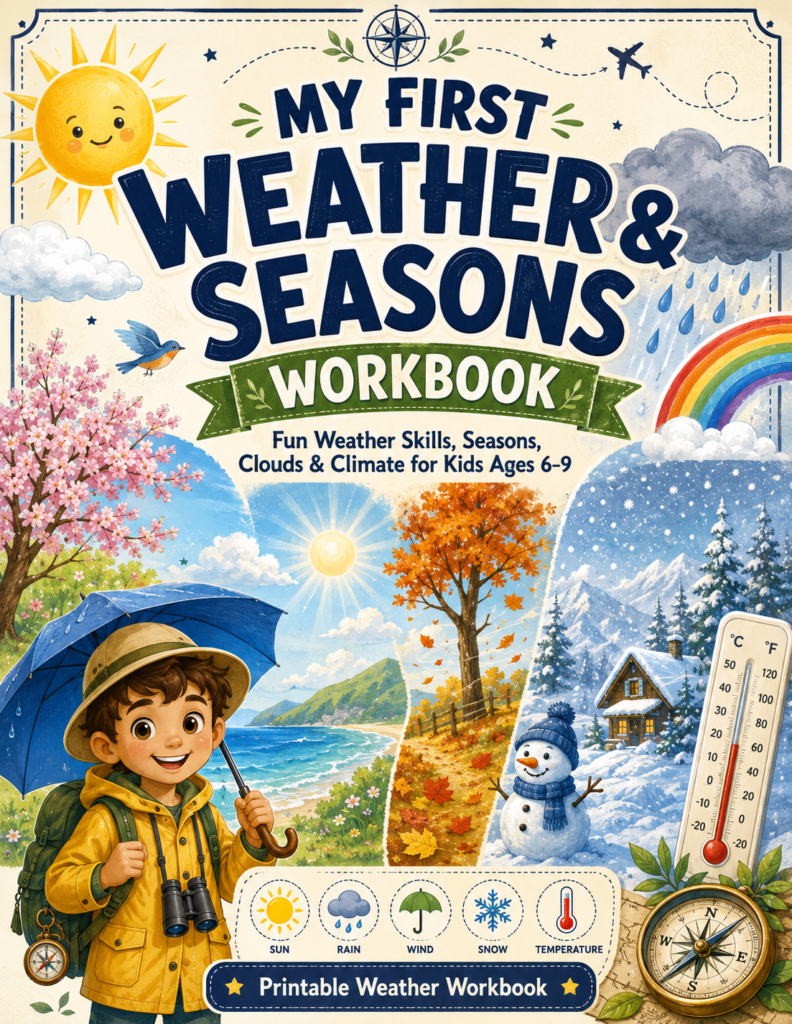
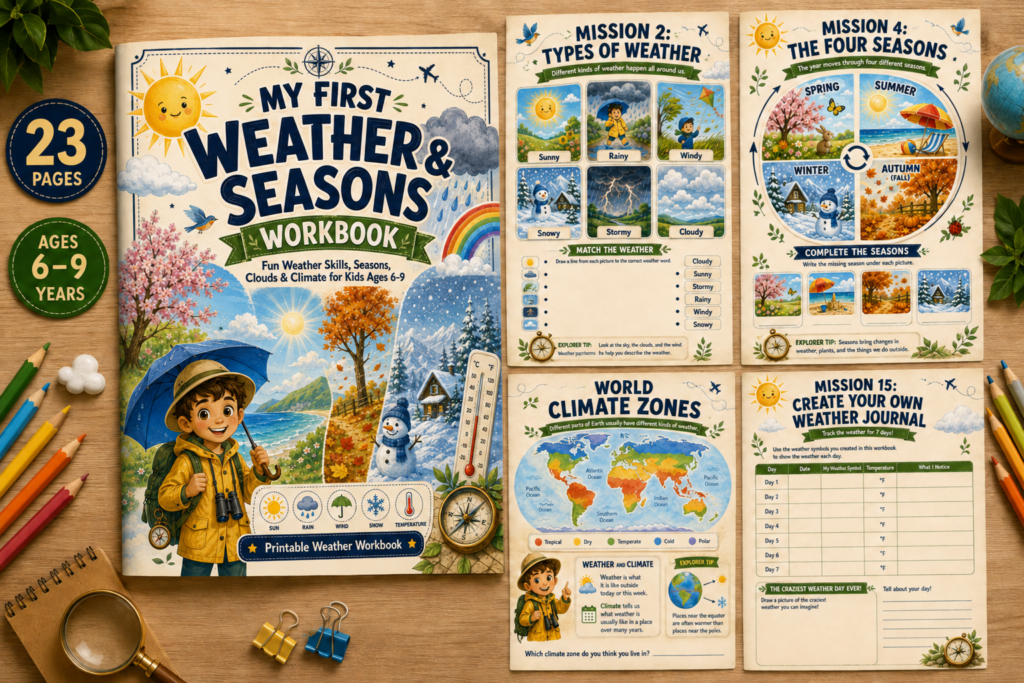
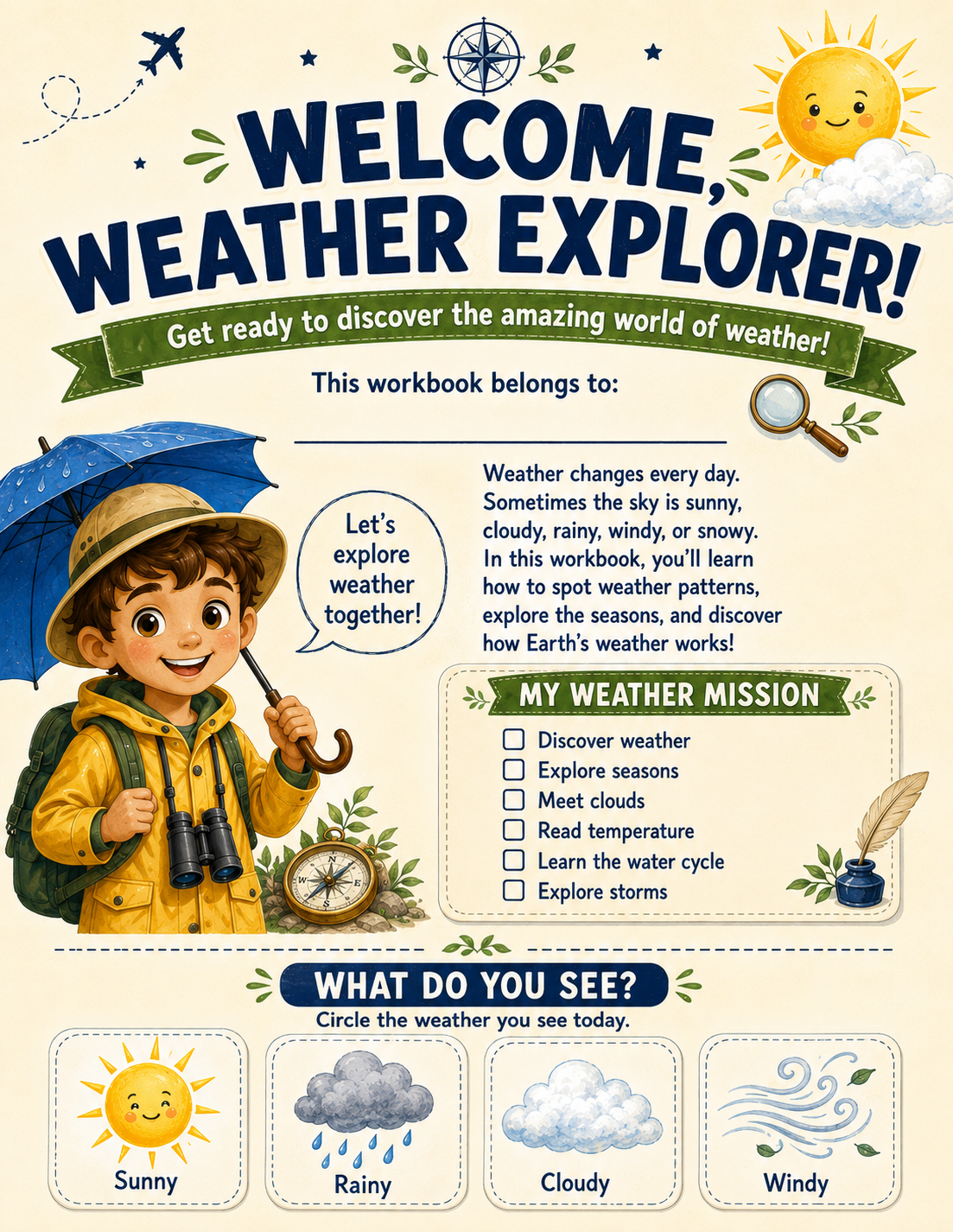
The My First Weather & Seasons Workbook by Tiny Joy Studio is specifically designed for kids ages 6-9. It takes complex concepts and breaks them down into fun, bite-sized missions. Instead of boring reading assignments, your child is invited on a «Weather Mission» to become an official Junior Meteorologist.
What is Inside the Workbook?
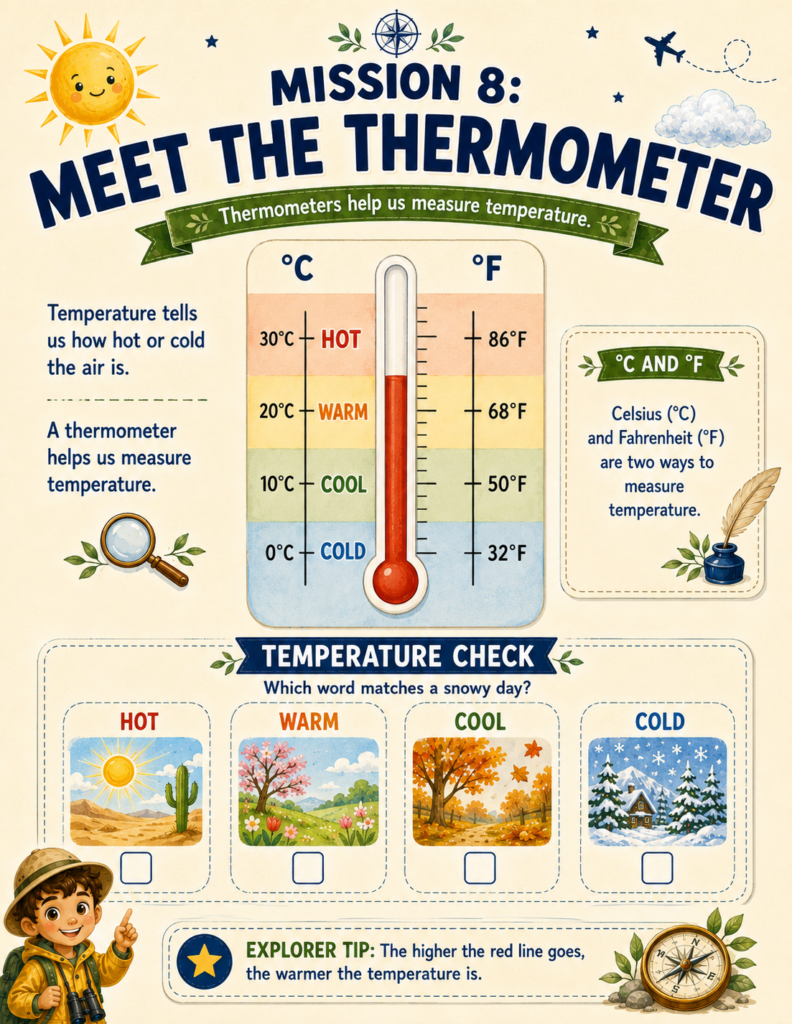
- Weather vs. Climate Demystified: The workbook includes clear, beautifully illustrated pages that tackle this exact topic, complete with quick activities to test their knowledge.
- Reading Temperatures: Kids will learn how to read a thermometer in both Celsius and Fahrenheit, turning abstract numbers into practical life skills.
- The Water Cycle & Clouds: Interactive pages help children understand where rain comes from and how to identify different types of clouds.
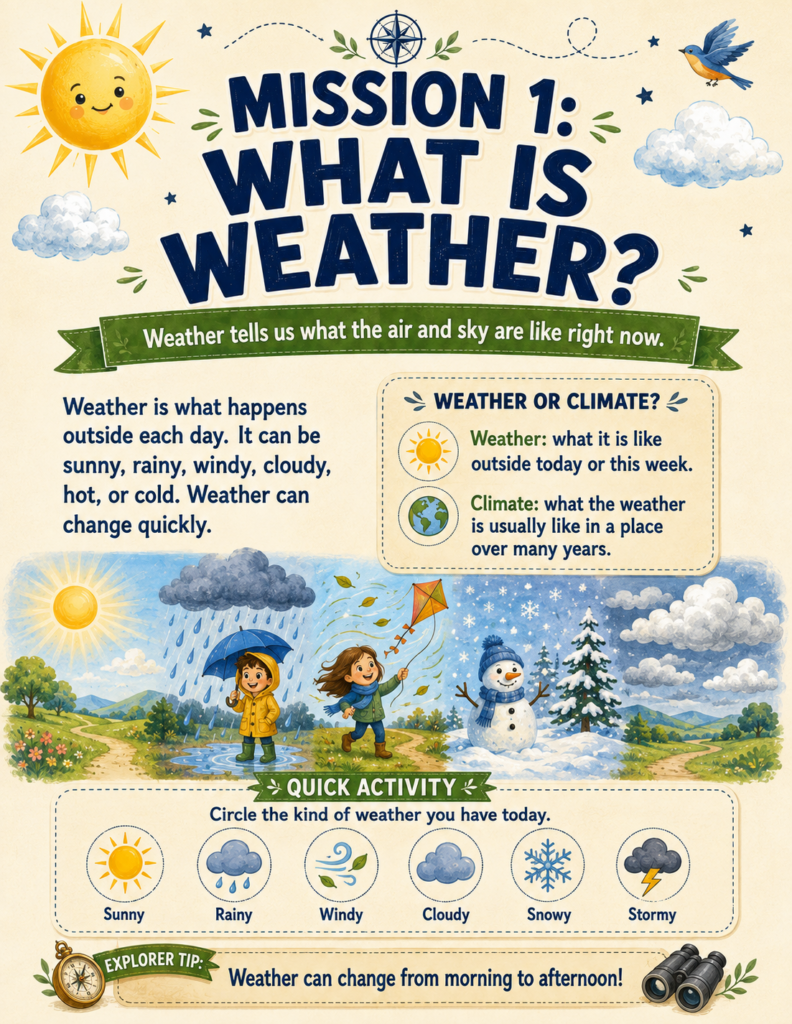
- Seasons & Storms: Explore how the Earth’s tilt creates seasons and what causes fascinating weather events like thunder and lightning.
Because this workbook is highly interactive and requires zero prep from parents, it is also a brilliant way to prevent summer slide during the off-months!
Earning the Junior Meteorologist Badge
We know that kids thrive on rewards and a sense of accomplishment. That is why the My First Weather & Seasons Workbook concludes with an official Certificate of Achievement.
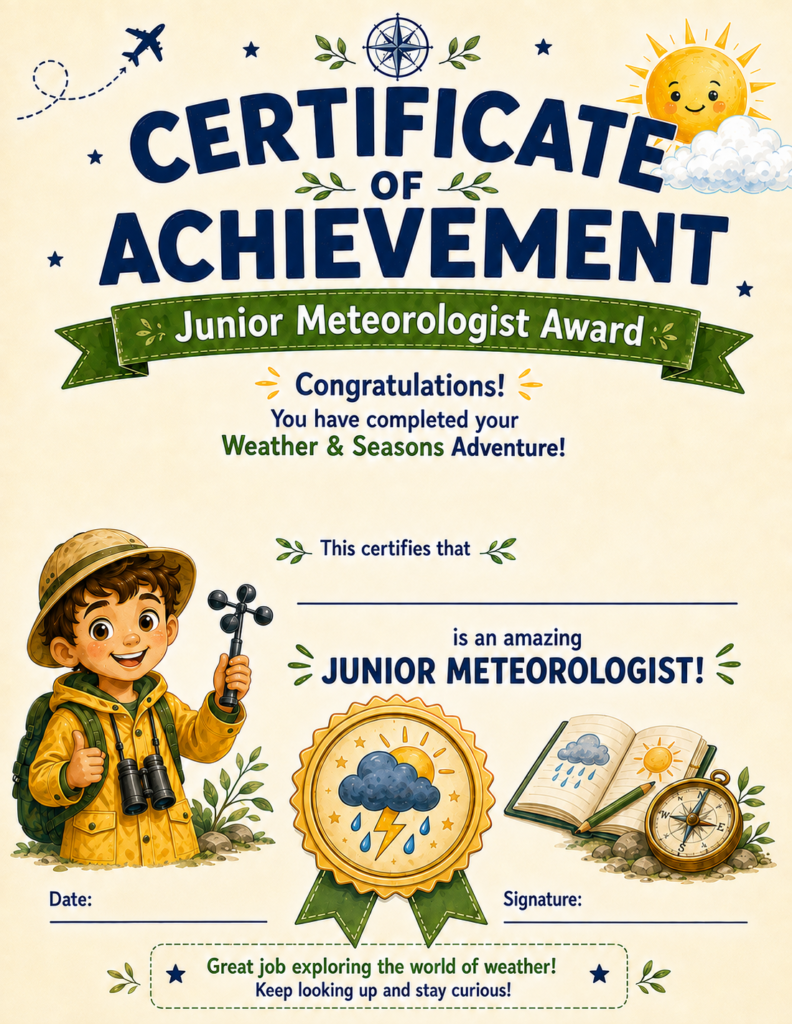
When your child finishes the workbook, they can sign their name on their Junior Meteorologist Award. It is a fantastic confidence booster and a great addition to their homeschool portfolio.
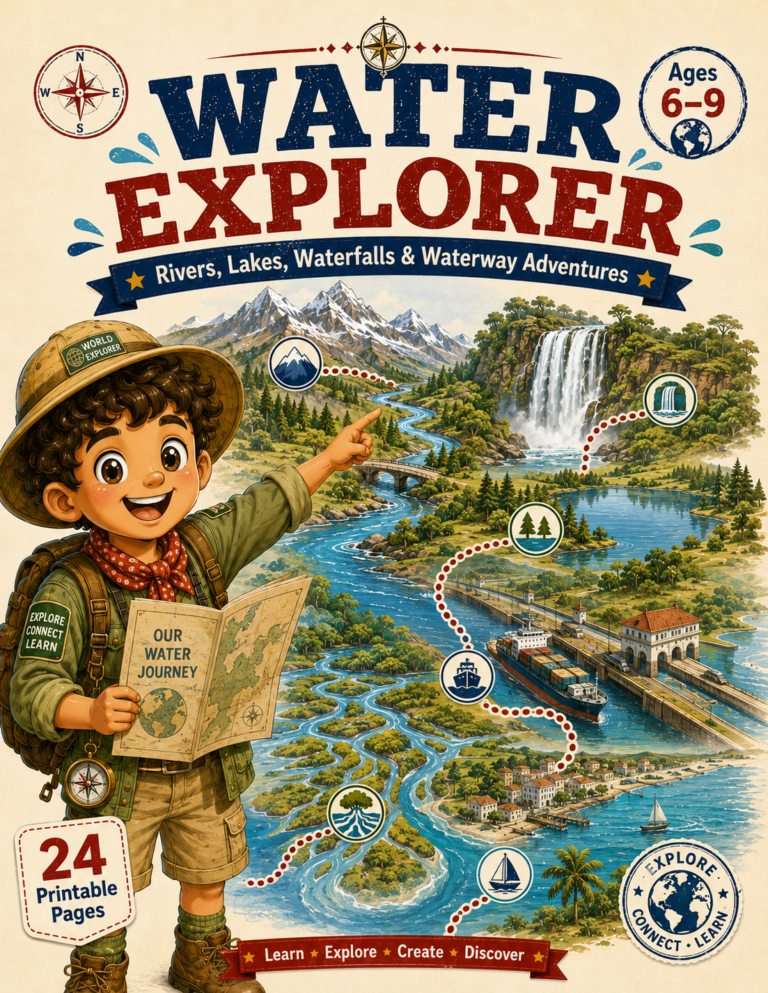
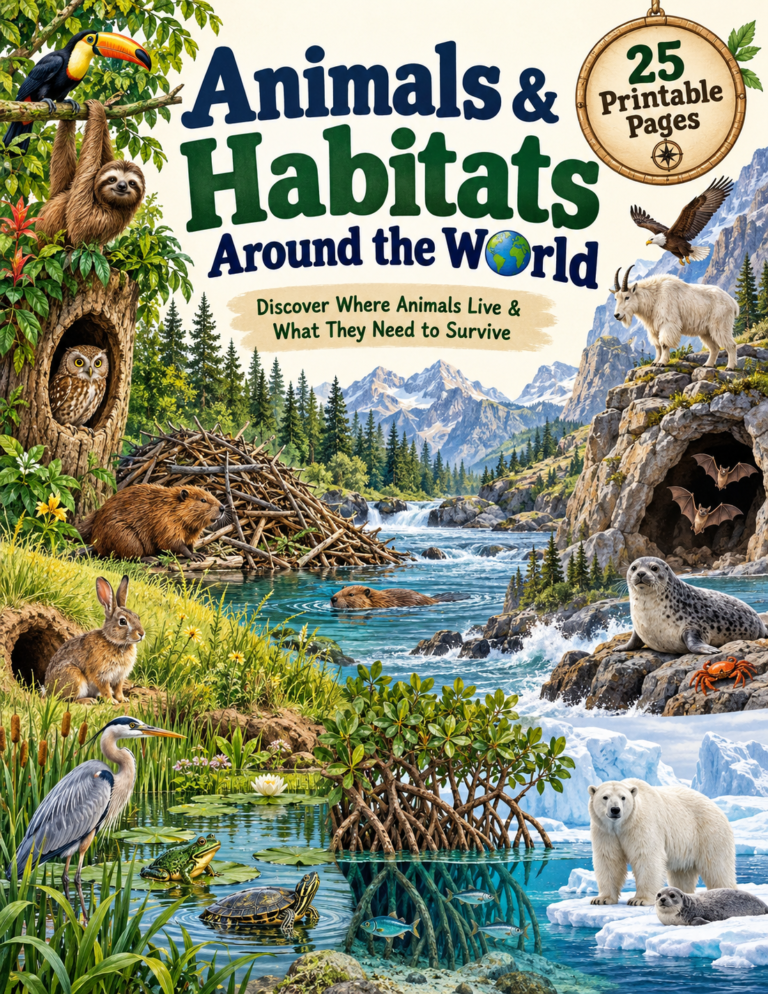
But the journey does not stop there. Understanding weather and climate is the perfect launchpad for exploring the world. Once your child knows how climate works, they are ready to dive into the World Explorer Series, learning about the unique animals, cultures, and landscapes on different continents!
Start Your Weather Adventure Today!
Teaching meteorology doesn’t have to be intimidating. With a few simple experiments and the right tools, your child will be predicting the forecast and understanding global climates in no time.
Ready to make science fun, tactile, and completely stress-free? Grab your pencils and let’s explore the sky!