10 Fun World Landmarks Activities for Kids: A Global Geography Adventure
If you have ever tried to teach your 6- to 9-year-old about global geography, you know that staring at a blank political map doesn’t always spark joy. Children are highly visual and tactile learners. They aren’t naturally interested in borders or capital cities, but their eyes light up when you tell them about a massive iron tower in Paris, a giant stone pyramid in the desert, or a lost city hidden high in the Andes mountains!
Focusing on iconic structures is one of the best ways to bring the world to life. When you introduce world landmarks activities for kids, you seamlessly blend geography, history, engineering, and culture into one thrilling adventure. Instead of just memorizing countries, your child becomes a global explorer uncovering the secrets of human achievement.
If you want to ditch the boring textbooks and take your child on an exciting trip around the globe, here are some of the best, low-prep ways to explore world wonders right from your living room.
Why Teach Geography Through Landmarks?
Before we dive into the activities, it helps to understand why this approach is so incredibly effective for early elementary students. A landmark is a place that people can recognize and remember. While some are made by nature (like waterfalls), human-made landmarks like towers, monuments, and temples teach us invaluable lessons about the people who built them.
When children study the Colosseum or the Great Wall of China, they aren’t just learning a location; they are asking big questions: Where is it? What is it? Why is it special? What can it teach us about people and places?. This multidisciplinary approach builds critical thinking and cultural empathy.
Top World Landmarks Activities for Kids
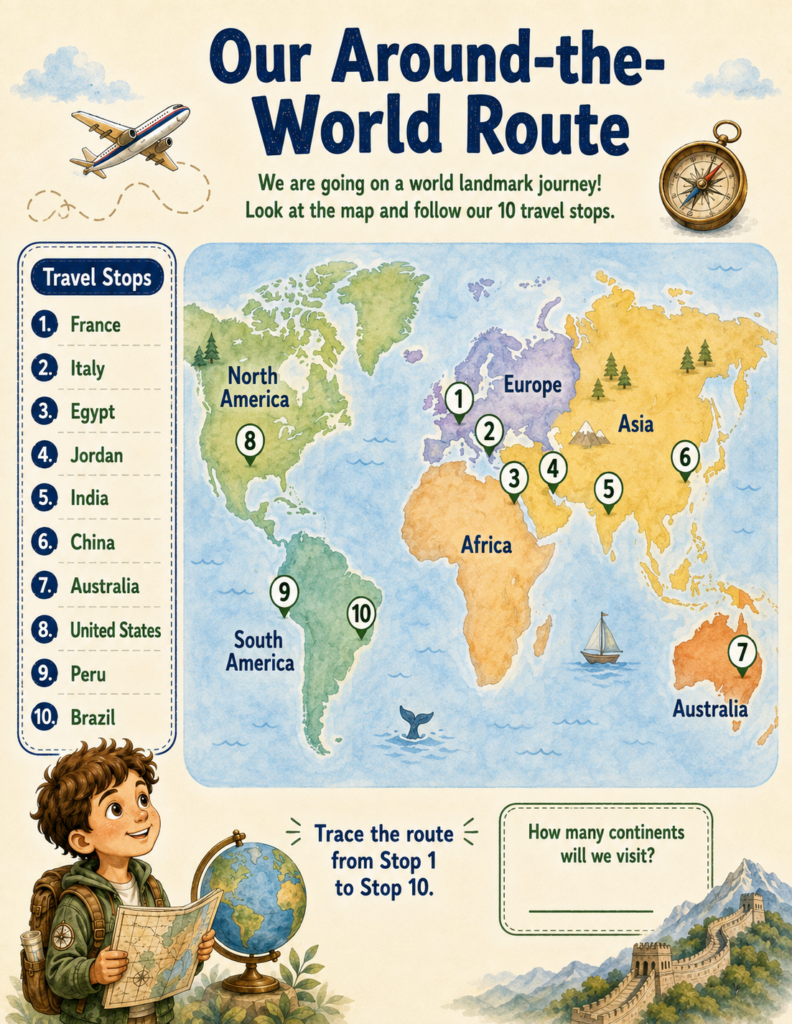
1. Map the Global Journey Before zooming in on specific buildings, establish a geographical foundation. Grab a world map and plot out a 10-stop global adventure. Have your child trace the route from France to Italy, down to Egypt, across to Asia for India and China, down to Australia, and finally over to the Americas. Mapping out the journey helps children understand spatial relationships and the vastness of our oceans and continents.
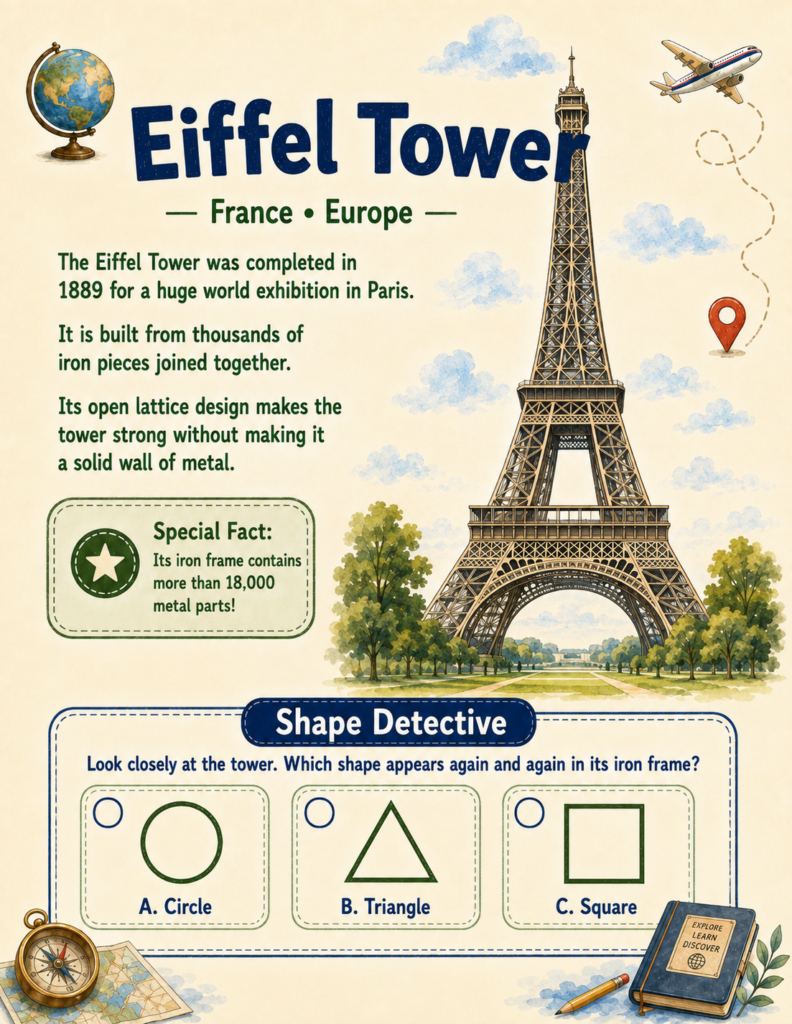
2. Become an Architecture Detective Great landmarks are essentially massive math and engineering puzzles! Encourage your child to look closely at the shapes and materials used to build these wonders. For example, when looking at the Eiffel Tower, have them act as a «Shape Detective» to spot how the triangle appears again and again in its iron frame to give it strength. When looking at the Great Pyramid of Giza, discuss the geometry of its square base and triangular sides.
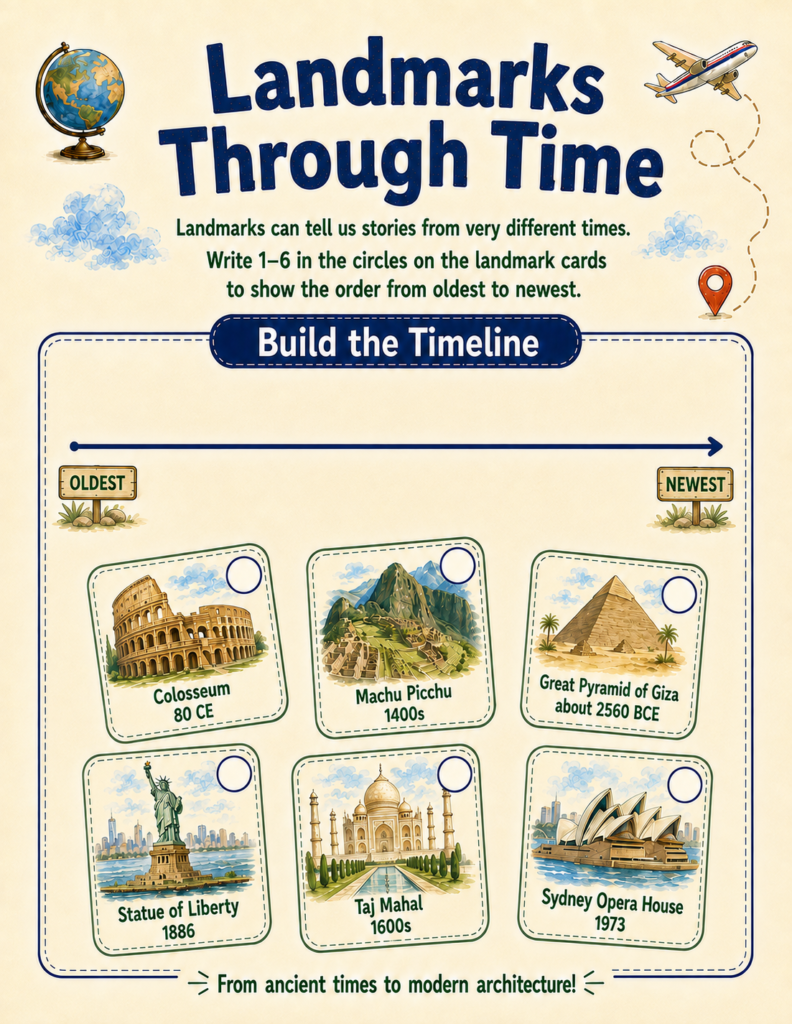
3. Build a «Wonders of the World» Timeline Landmarks can tell us stories from very different times. To help your child grasp the concept of historical eras, create a visual timeline. Have them arrange famous places from the oldest to the newest. For instance, they can place the Great Pyramid of Giza (built around 2560 BCE) at the very beginning, follow it up with the Colosseum (80 CE) and Machu Picchu (1400s), and end with modern marvels like the Sydney Opera House (1973). This transforms abstract dates into a concrete, visual sequence.
4. Match the Landmark to Its Landscape Landmarks do not stand apart from geography; people design places to fit the land around them. Create an activity where kids have to match a landmark to its geographical challenge. For example, the Nabataeans carved Petra directly into sandstone mountains and created clever channels to collect rainwater in a dry environment. The Inca built Machu Picchu with terraces fitted into steep mountain slopes to create flat spaces for farming. This teaches kids how humans adapt to extreme environments.
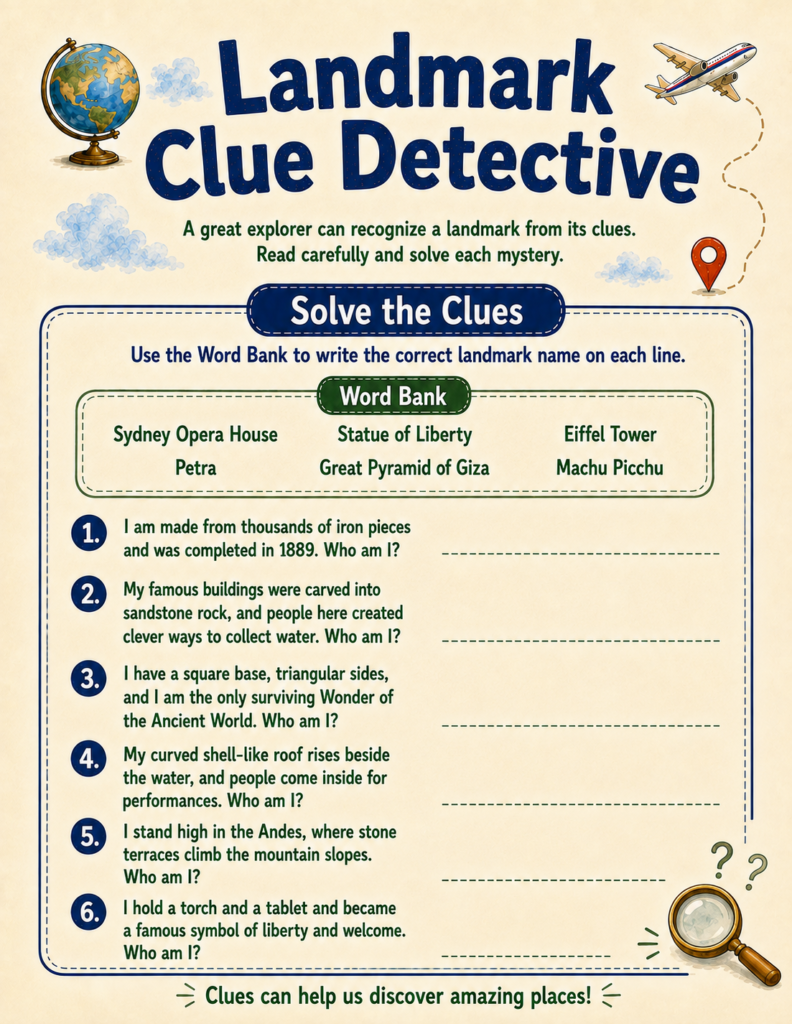
5. Play the «Clue Detective» Game Gamify your review session by turning it into a mystery game! Read out descriptive clues and have your child guess the landmark. For example: «I am made from thousands of iron pieces and was completed in 1889. Who am I?» (Eiffel Tower) or «I have a square base, triangular sides, and I am the only surviving Wonder of the Ancient World. Who am I?» (Great Pyramid of Giza).
Your «Open-and-Go» Solution: The World Landmarks Explorer Book
If you love these ideas but are dreading the thought of spending hours sourcing images, creating timelines, and writing out clues, we have the perfect solution.
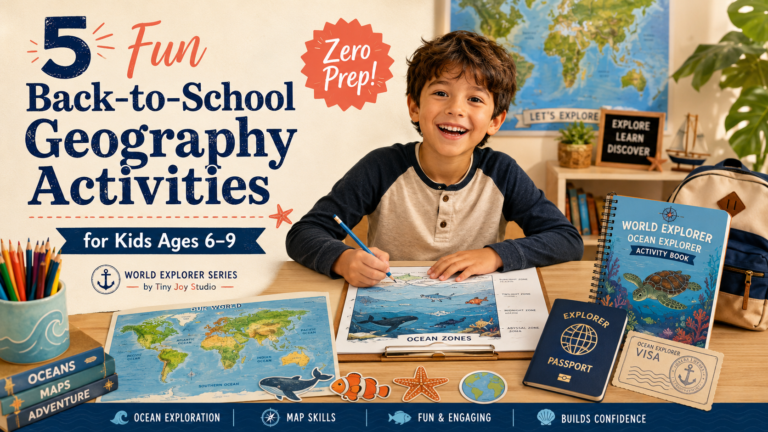
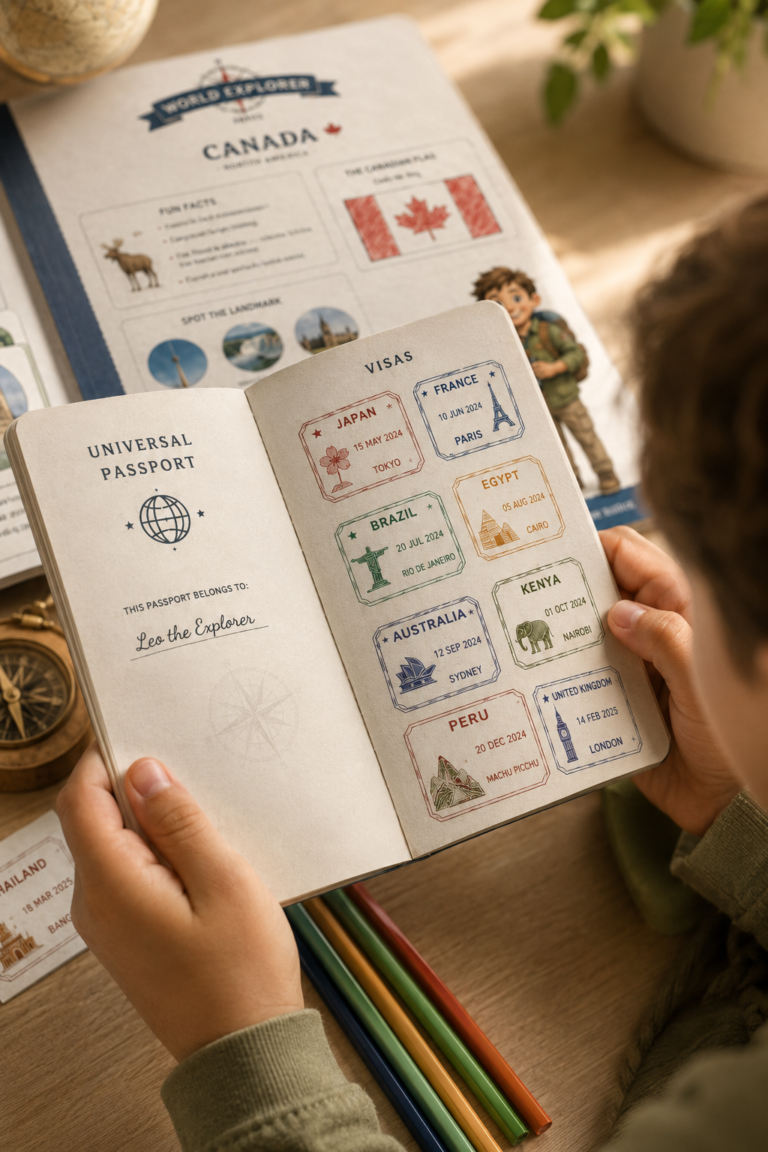
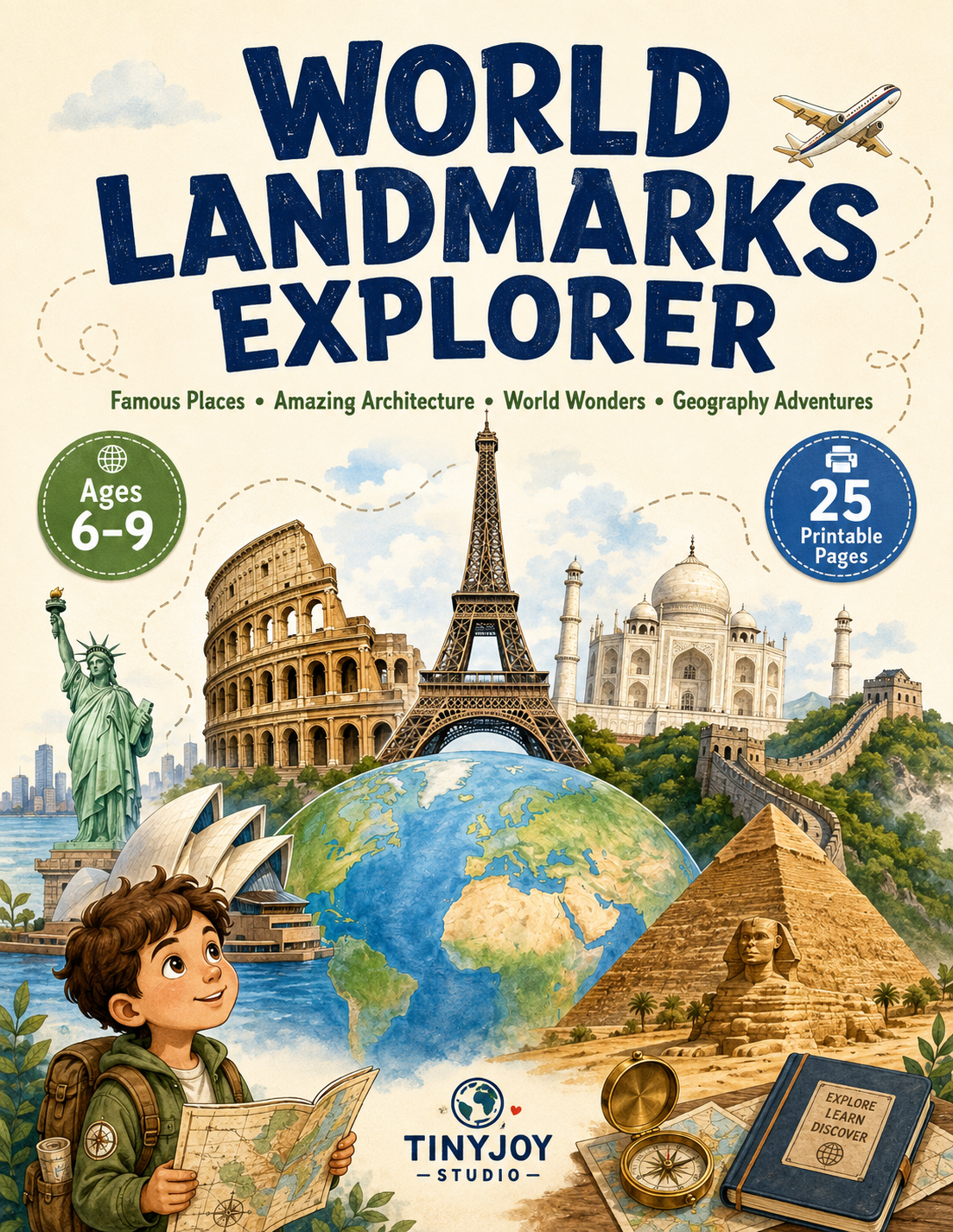
The World Landmarks Explorer is a 25-page, printable activity book designed specifically for kids ages 6-9. Included in the acclaimed World Explorer Series by Tiny Joy Studio, this workbook is the ultimate «open-and-go» resource. It covers 10 famous world landmarks, from the Taj Mahal to Christ the Redeemer.
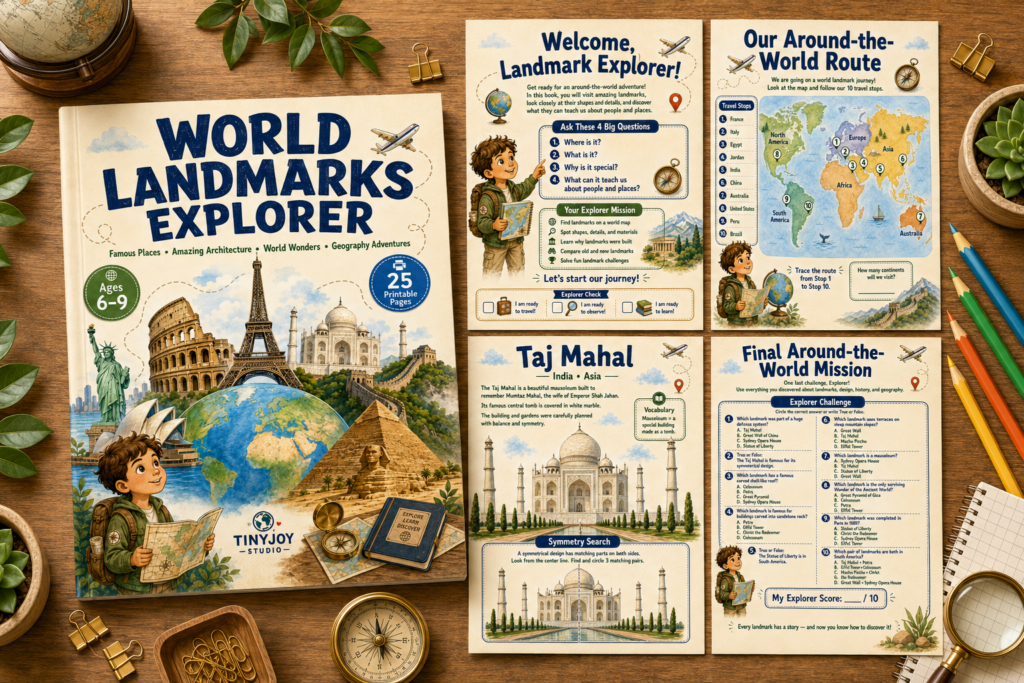
Inside the Landmarks your child will complete symmetry searches, defend the Great Wall of China, discover the materials used for the Statue of Liberty, and even pass a final map challenge! There is absolutely no prep required—just print, grab some pencils, and watch your child embark on a global architectural adventure.