The Ultimate Ancient Rome Unit Study for Kids: One City, Many Lives!
When we think of teaching Ancient Rome to elementary students, the first things that come to mind are usually gladiators fighting in the Colosseum, mighty emperors, and marching legions. While those topics are certainly exciting, they only scratch the surface of what made the Roman Empire so fascinating.
To truly understand history, children need to know how everyday people lived. Where did they sleep? How did they get their food and water? What was life like for a wealthy child compared to someone who wasn’t free? If you are looking for an ancient rome unit study that goes beyond the basic textbook facts and immerses your child in the bustling streets of a massive ancient metropolis, you are in the right place!
Let’s explore how you can bring the ancient world to life in your homeschool without spending hours gathering craft supplies or building messy cardboard aqueducts.
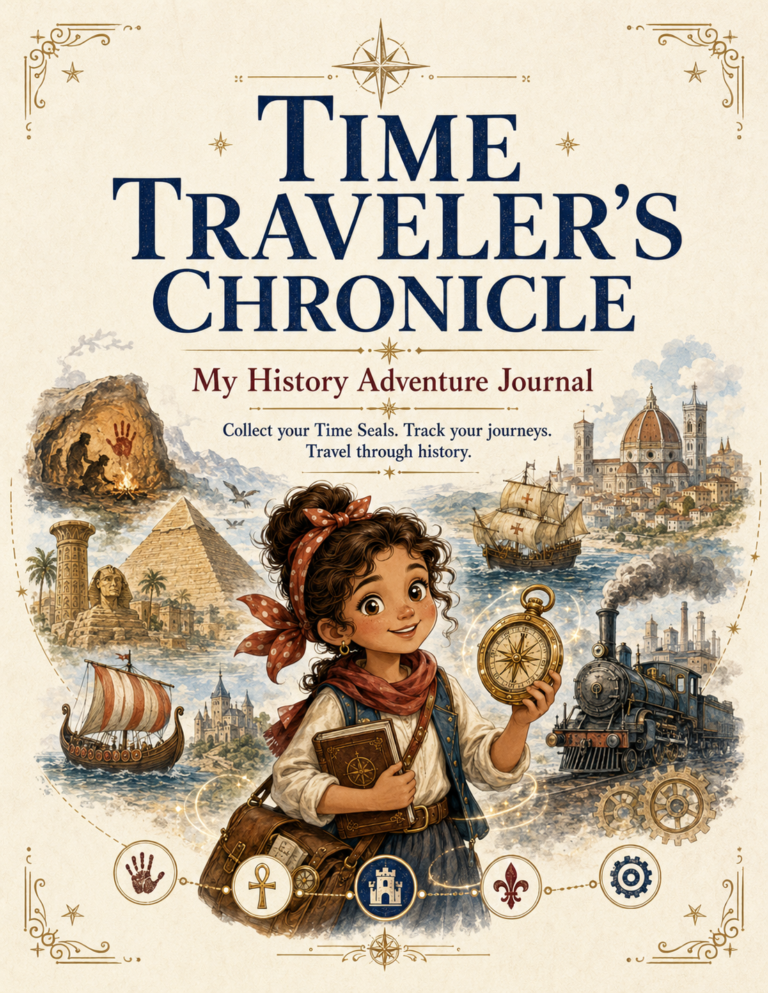
Move Beyond Memorization: Enter the Time Traveler’s Chronicle
The biggest mistake we make in history education is focusing purely on dates and dry events. To capture a child’s attention, you have to turn history into a story.
This is the core philosophy behind our interactive history for kids curriculum. Instead of passive reading, kids need a structured adventure.
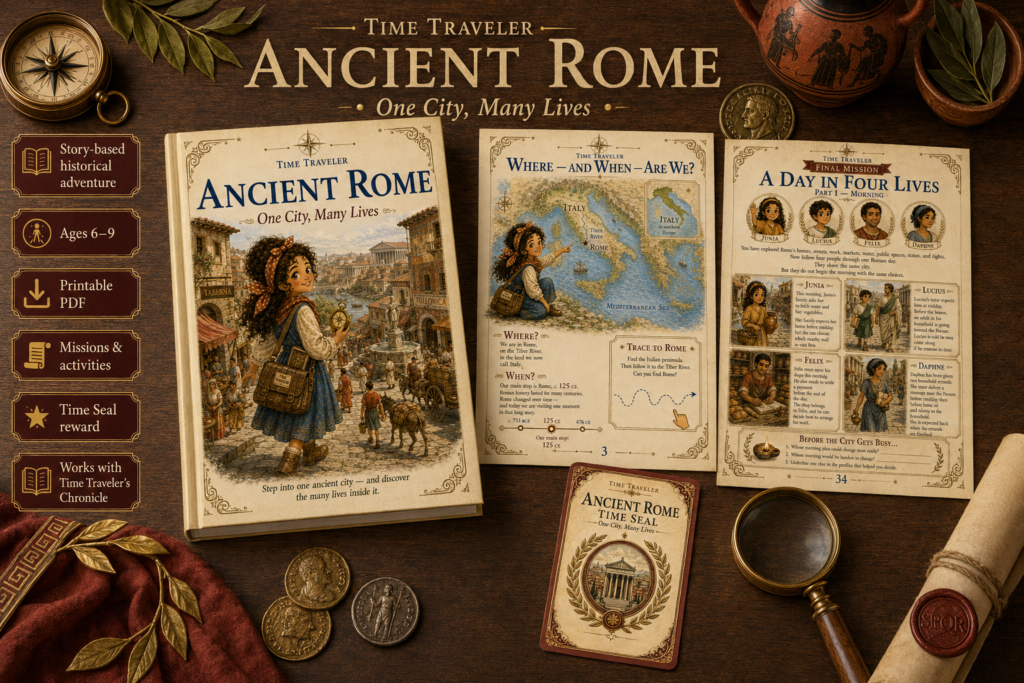
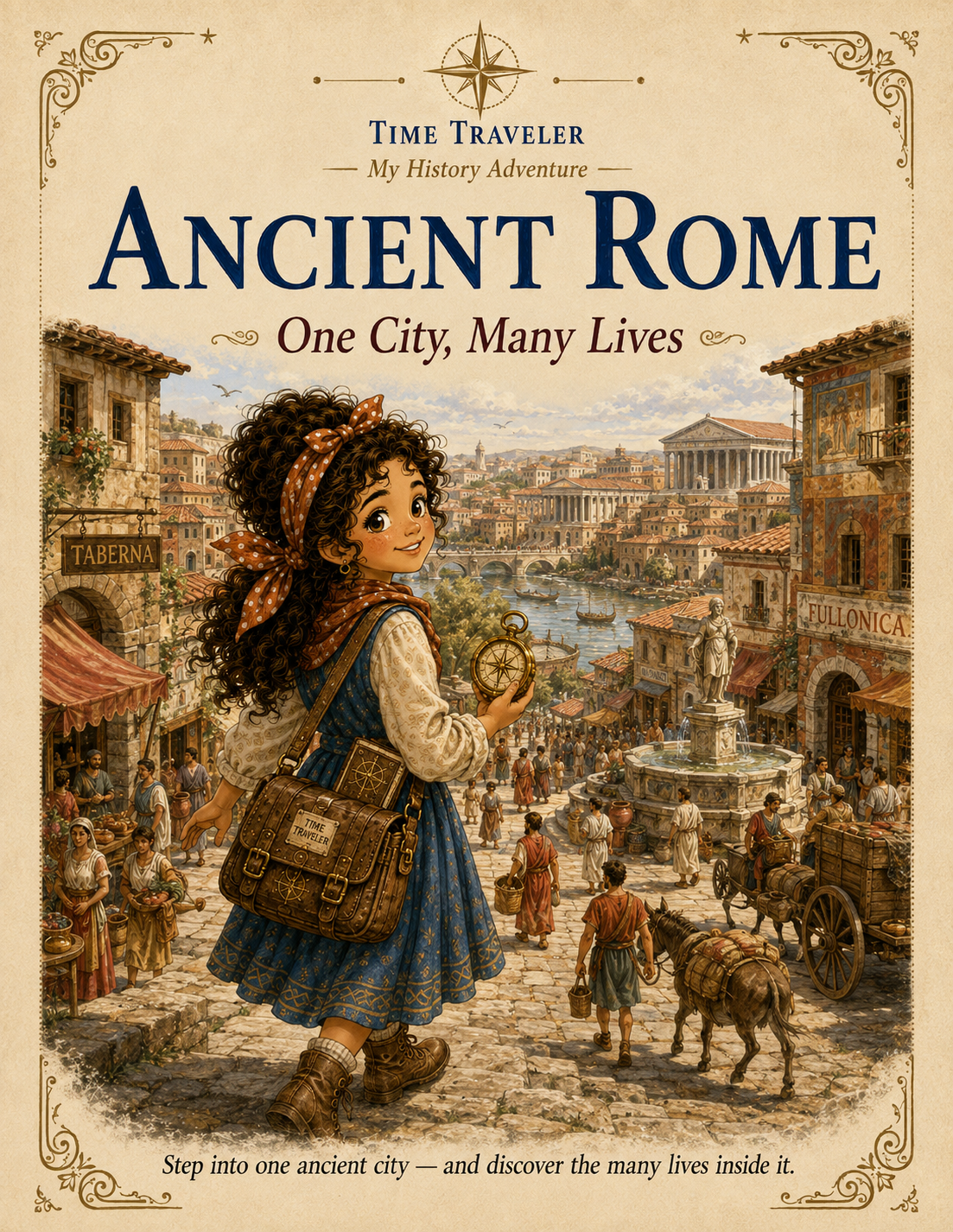
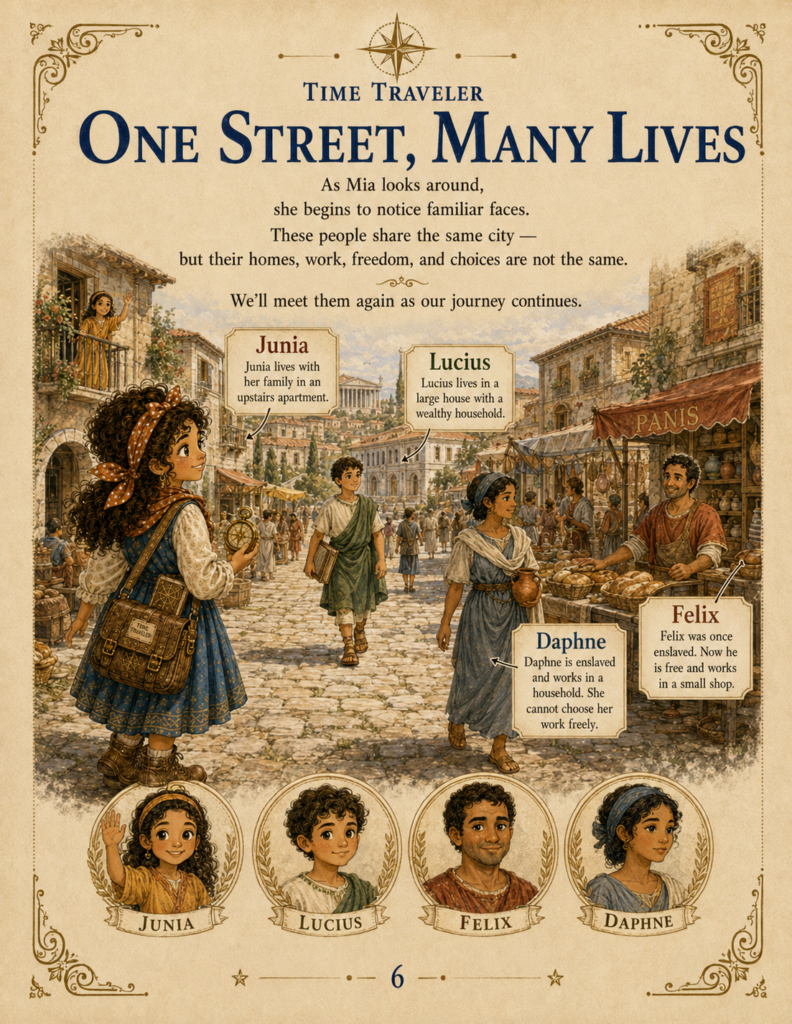
Using the open-and-go Time Traveler: Ancient Rome activity book from Tiny Joy Studio, your child joins Mia, our historical guide, using her glowing Chrono Compass to land right in the middle of Rome around 125 CE. But this isn’t just a sightseeing tour; it is a deep dive into the lives of four different people sharing the exact same city.
1. Social History: Walking in Someone Else’s Sandals
History is deeply personal. One of the best ways to teach empathy and critical thinking is to show kids that «Ancient Rome» meant something very different depending on who you were.
- What’s Inside the Book: Your child will meet four characters: Junia (a girl living in a noisy apartment or insula), Lucius (a boy in a wealthy private house), Felix (a freedman running his own shop), and Daphne (an enslaved girl working in a household). Kids solve logic puzzles to determine who has control over their own schedule and how homes changed daily routines.
- Why It Works: It introduces complex concepts like social classes and slavery in an age-appropriate, accessible way. Comparing these lives is a brilliant exercise in project-based learning in homeschooling, as kids actively analyze situations instead of just reading about them.
2. Urban Engineering: How Does a Megacity Survive?
Rome was home to over a million people! How did they all get water? How did they get enough bread?
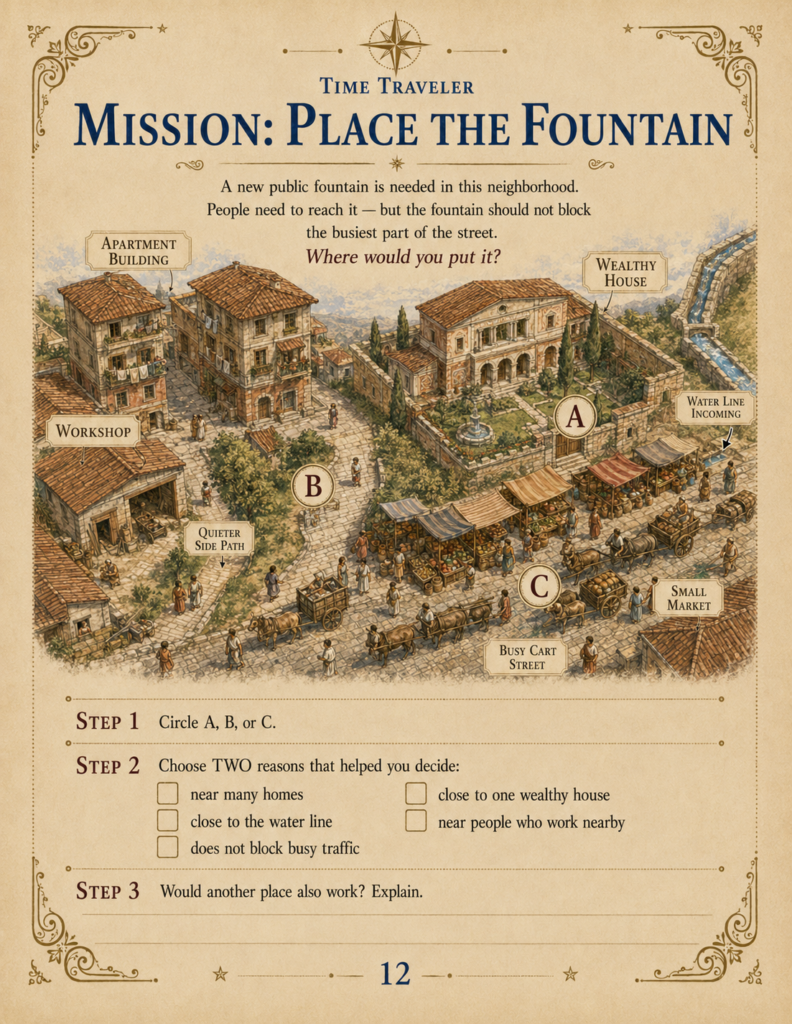
- What’s Inside the Book: Kids get to play urban planner. They map out the route of an aqueduct to public fountains and are challenged to choose the best location to build a new fountain without blocking busy cart traffic. They also trace the logistical journey of a sack of grain traveling all the way from Egypt, across the Mediterranean Sea to the port of Ostia, and up the Tiber River!
- Connection to Past Eras: Discussing how Roman farmers and engineers manipulated water is a fantastic way to review what your child learned if they have already completed our mesopotamia unit study for homeschoolers about the Tigris and Euphrates rivers!
3. History Detectives: How Do We Know This?
A great history curriculum teaches kids how historians know what they know.
- What’s Inside the Book: Children explore the «Voices that Survived.» Since ordinary people didn’t write massive history books, kids learn to look for clues in tombstones, maker’s marks on pottery, and graffiti scratched into city walls!
- Building Skills: Looking for historical clues is a skill your child can build over time. If they started their journey tracking footprints in our early humans activities for kids, analyzing Roman artifacts is the perfect next step!
![homeschool history curriculum roman artifacts and graffiti]](https://tinyjoystudio.com/wp-content/uploads/2026/08/ChatGPT-Image-29-авг.-2026-г.-13_59_39-1-792x1024.png)
The Ultimate Reward: The Ancient Rome Time Seal
Even with the most fascinating logic puzzles, kids need a sense of progression to stay focused. How do you keep them begging for the next history lesson? Gamification in education.
Throughout the Roman adventure, your child isn’t just reading; they are making choices, charting maps, and solving the «Day in Four Lives» final mission. Once they complete the book, they are rewarded with an official, full-color Ancient Rome Time Seal!
They get to proudly cut it out and paste it into their overarching Time Traveler’s Chronicle. This simple, tactile reward system turns a regular social studies unit into an addictive, satisfying quest.
Are you ready to step into the Forum and explore the greatest city of the Ancient World? Grab your colored pencils, print the workbook, and let the adventure begin!