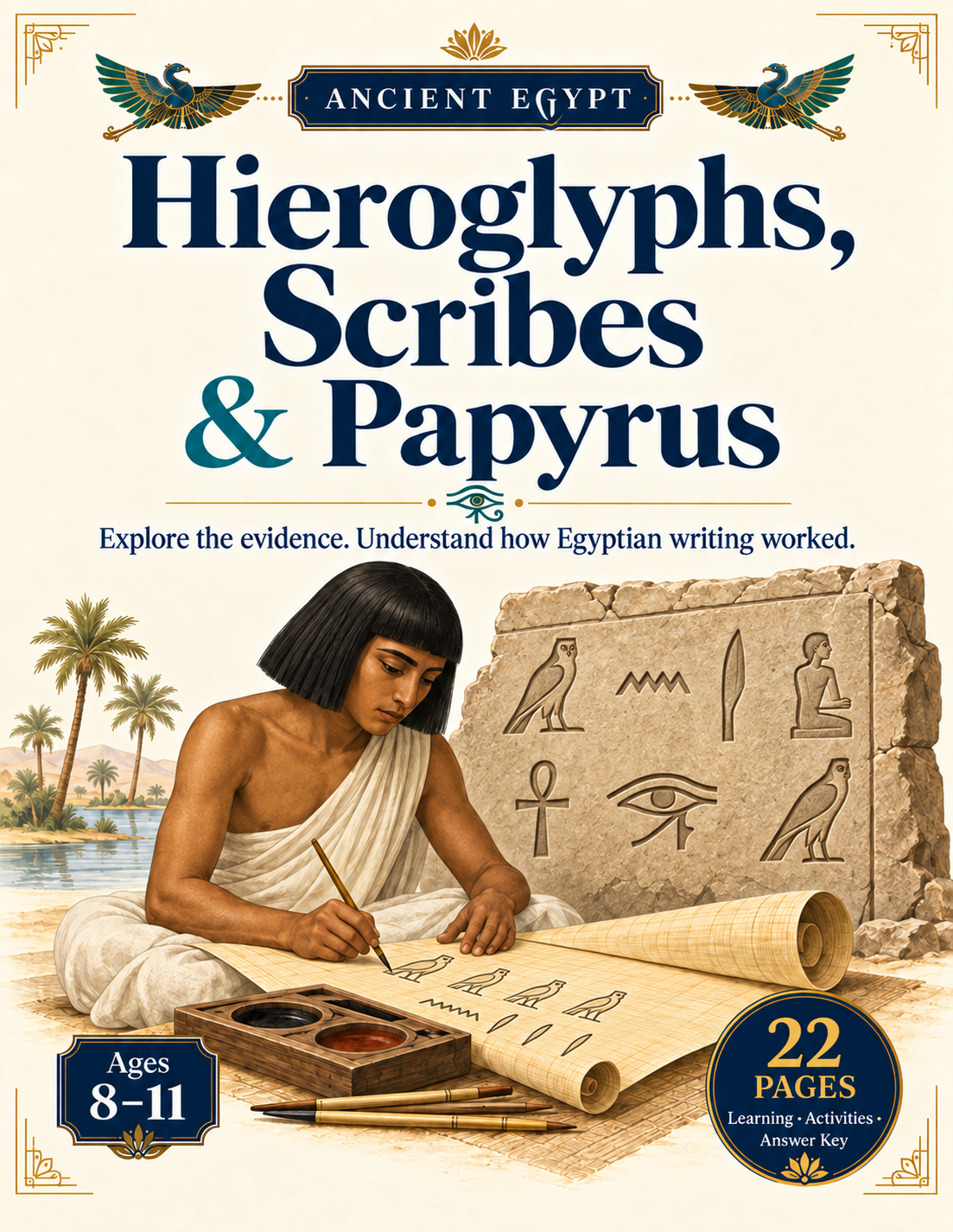
Ancient Egypt Unit Study: Spark Curiosity with Hieroglyphs
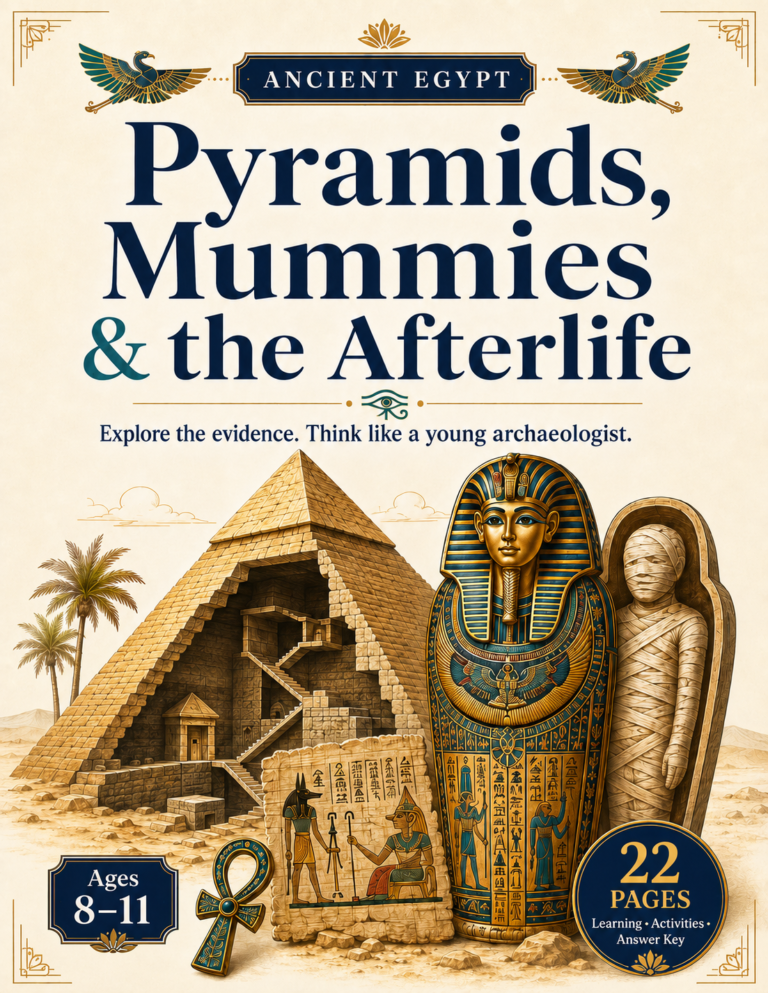
When it comes to capturing a child’s imagination, Ancient Egypt is a historical powerhouse. Between the mysterious carved hieroglyphs, the bustling work of ancient scribes, and the secrets of the Rosetta Stone, it is an era practically designed to thrill young minds. But how do we turn this natural fascination into genuine educational value? The answer lies in an engaging Ancient Egypt unit study that prioritizes interactive learning and analytical reasoning over passive reading.
By using thoughtfully designed materials, parents can transform a simple history lesson into a hands-on archaeological adventure. Let’s explore how interactive history books about writing systems, scribe tools, and historical evidence develop a child’s curiosity, logical deduction, and critical thinking skills.
Why Interactive History for Kids Works
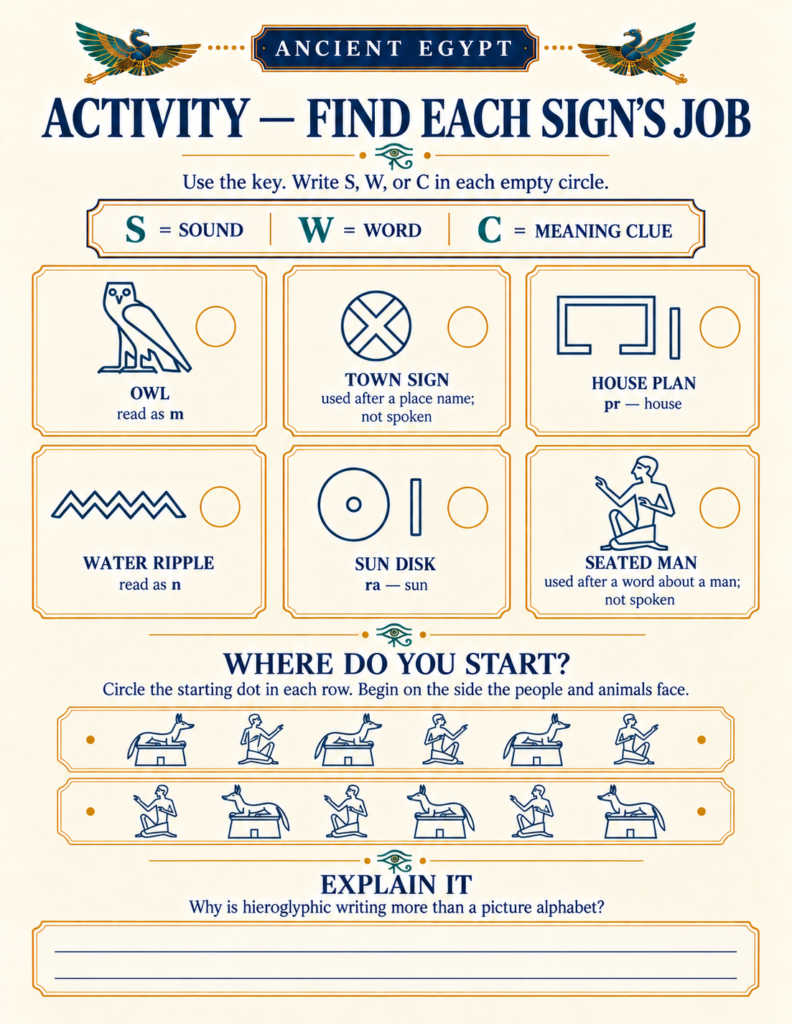
Children learn best when they are analyzing, solving, and doing. A standard textbook might just list the alphabet equivalents of hieroglyphs, but an interactive workbook asks children to look at a sign’s context and figure out whether it represents a sound, a whole word, or a hidden meaning clue. This shift from passive consumption to active participation is the core of effective education.
When you incorporate a structured interactive history for kids curriculum, you aren’t just teaching them dates and names. You are teaching them how to evaluate communication systems, decode symbols, and think like young historians.
Exploring Writing Surfaces and the Scribe’s Ecosystem
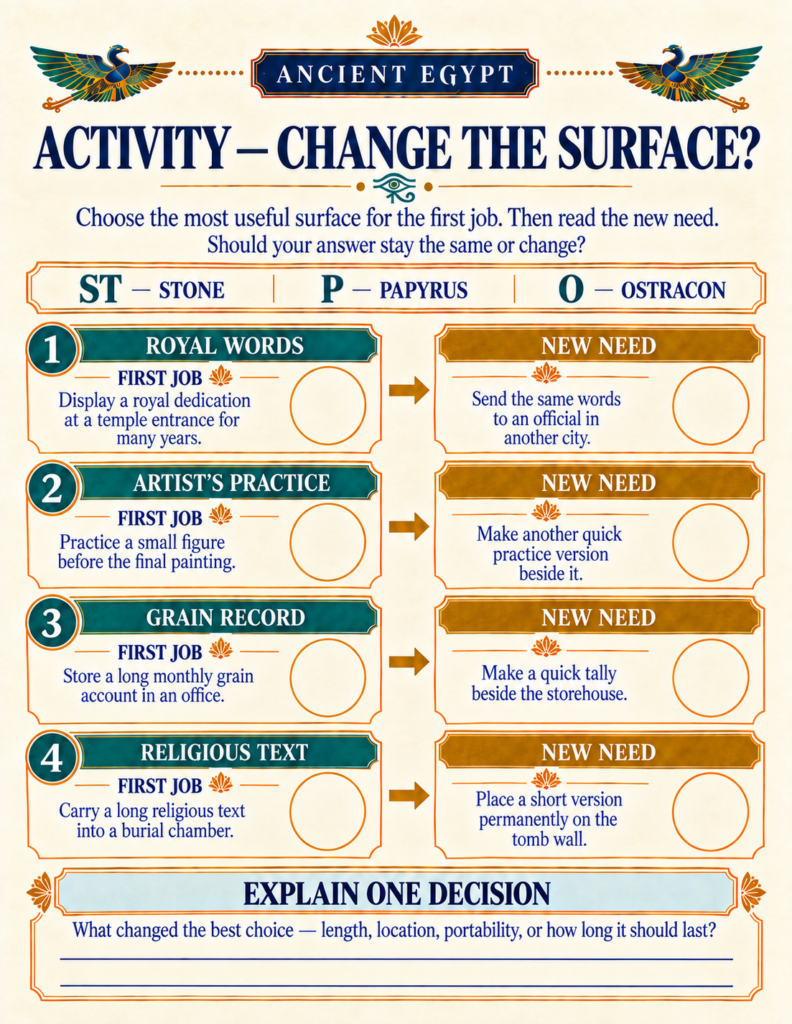
One of the most effective ways to teach history is to show children that ancient communication depended on the right tool for the job. Storing grain, carving temple walls, or writing quick notes required different surfaces—from monumental stone and delicate papyrus rolls to recycled pottery shards called ostraca.
Much like the spatial puzzles we foster in our Ancient Greece unit study, the structural analysis in our Knights and Castles unit study, and the map evaluations in our Age of Exploration unit study, a well-rounded Ancient Egypt unit study asks children to make connections. If an official needed a quick attendance record at a worksite, why grab a limestone ostracon instead of an expensive papyrus scroll? Practicality and context always mattered!
Learning Through Doing: «Change the Surface?» Activity
To truly spark curiosity, children need to feel like they are managing the past. Engaging worksheets allow them to step into the shoes of an ancient administrator or scribe trying to match a message with the proper writing surface.
Thinking Like a Young Historian: Following Decipherment Clues
The ultimate goal of any educational resource should be to teach children how to think. This is where an in-depth Ancient Egypt unit study truly shines.
Historians rarely find a ready-made dictionary for ancient languages. They have to piece together clues using multilingual inscriptions like the Rosetta Stone. Interactive history books introduce children to this reality by presenting them with step-by-step decipherment challenges.
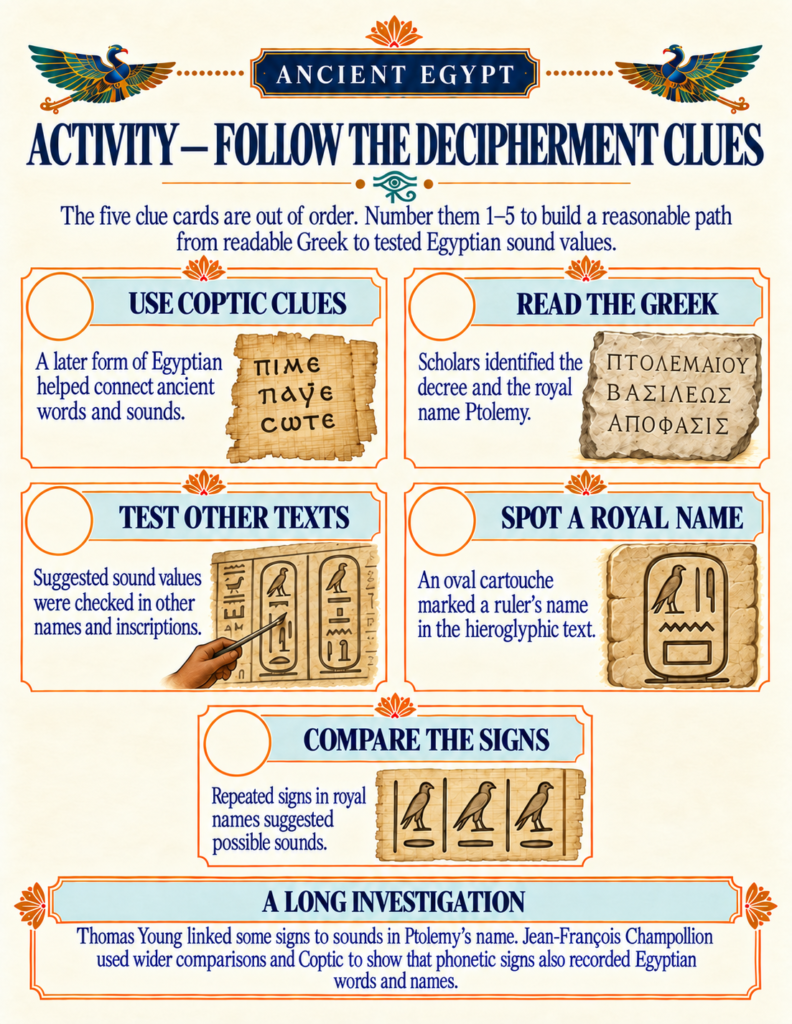
By asking kids to follow these decipherment clues, they learn how scholars tested hypotheses against real inscriptions. They realize that unlocking the past takes patience, comparison, and rigorous logic. These are the kinds of critical thinking challenges that prepare children for advanced academic success.
Spark Your Child’s Curiosity Today
Parents are always on the lookout for resources that are both educational and highly engaging. Books and materials that focus on hands-on history offer the perfect balance. They take a naturally fascinating subject like hieroglyphs and layer it with puzzle-solving, material science, and evidence evaluation.
By providing your child with resources that treat them like young historians, you are doing more than just teaching them about mummies and pyramids. You are fostering a lifelong curiosity about how human communication evolved, how writing shaped ancient societies, and the clues left behind by the people who built our history.
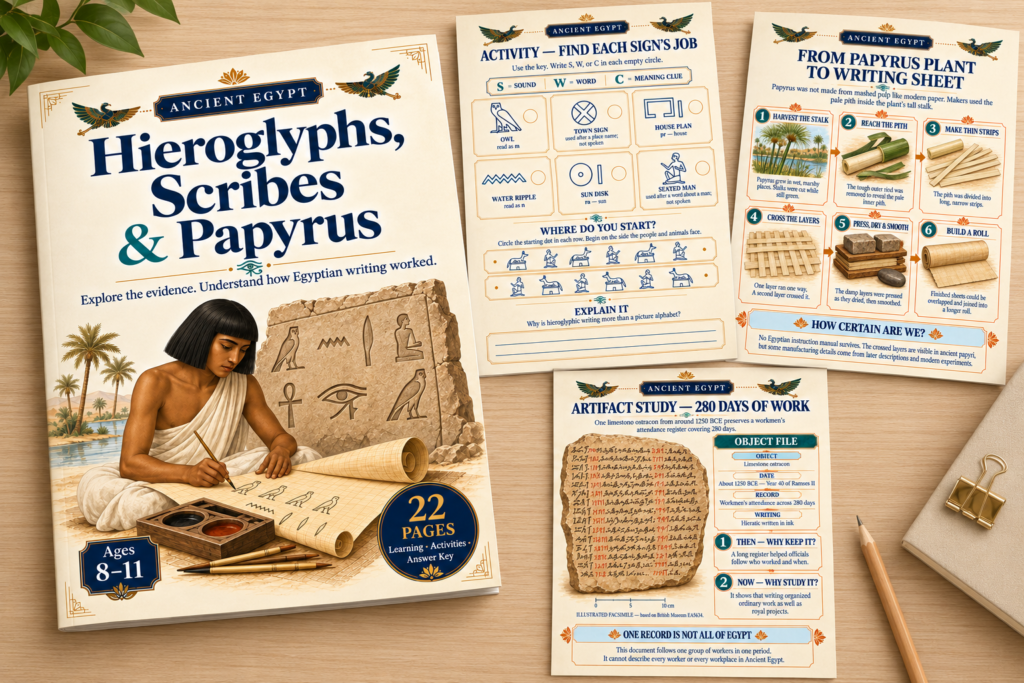
Ready to dive into the past? Start your adventure today and watch your child’s historical curiosity come to life!