Ancient Rome Unit Study: Spark Curiosity with Engineering Systems
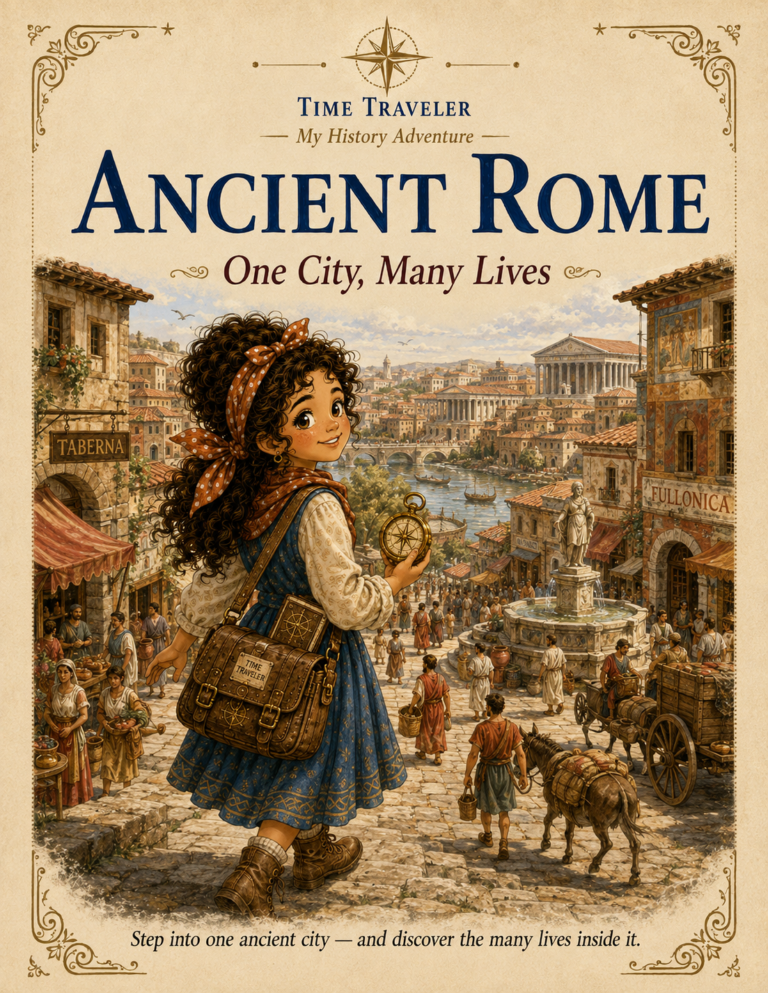
When it comes to capturing a child’s imagination, Ancient Rome is a historical powerhouse. Between the soaring arches of the Pont du Gard, the straight-paved stretches of the Via Appia, and the complex network of urban water supplies, it is an era practically designed to thrill young minds. But how do we turn this natural fascination into genuine educational value? The answer lies in an engaging Ancient Rome unit study that prioritizes interactive learning, problem-solving, and systems thinking over passive reading.
By using thoughtfully designed materials, parents can transform a simple history lesson into a hands-on engineering adventure. Let’s explore how interactive history books about Roman infrastructure, surveying tools, and historical evidence develop a child’s curiosity, logical reasoning, and analytical skills.
Why Interactive History for Kids Works
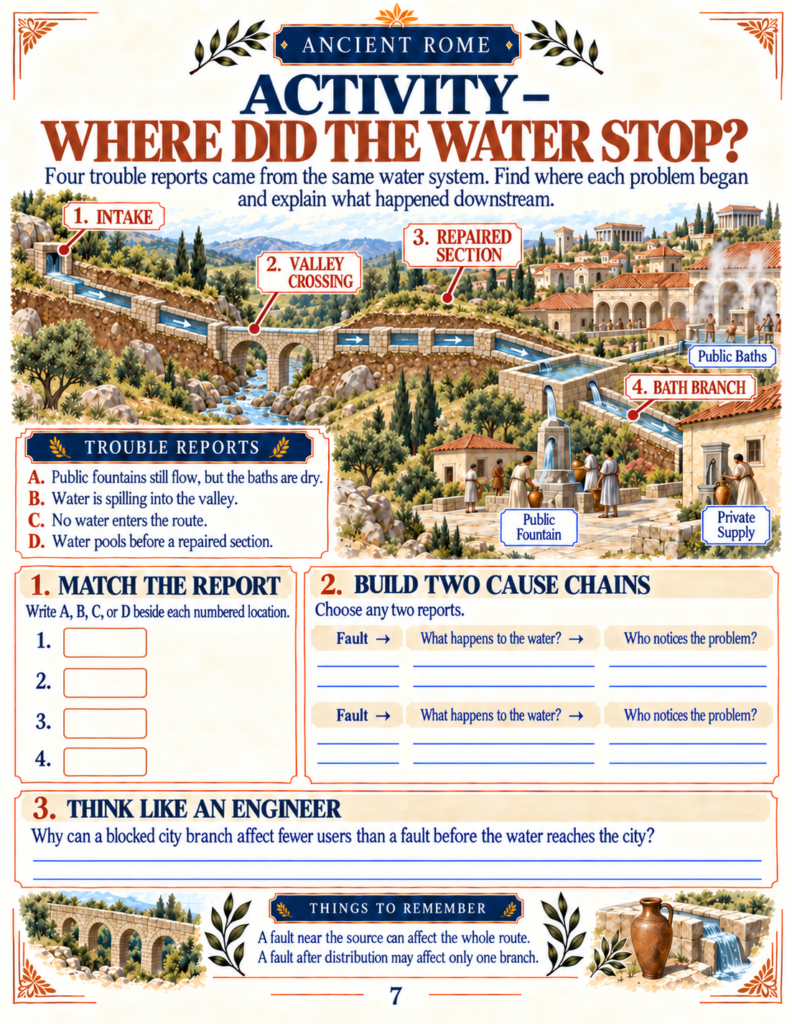
Children learn best when they are analyzing, solving, and doing. A standard textbook might just state that the Romans built aqueducts, but an interactive workbook asks children to trace a water system and figure out what happens downstream when an intake is blocked or a branch fails. This shift from passive consumption to active participation is the core of effective education.
When you incorporate a structured interactive history for kids curriculum, you aren’t just teaching them dates and names. You are teaching them how to evaluate complex systems, spot infrastructure failures, and think like young engineers and historians.
Exploring the Roman Infrastructure Ecosystem
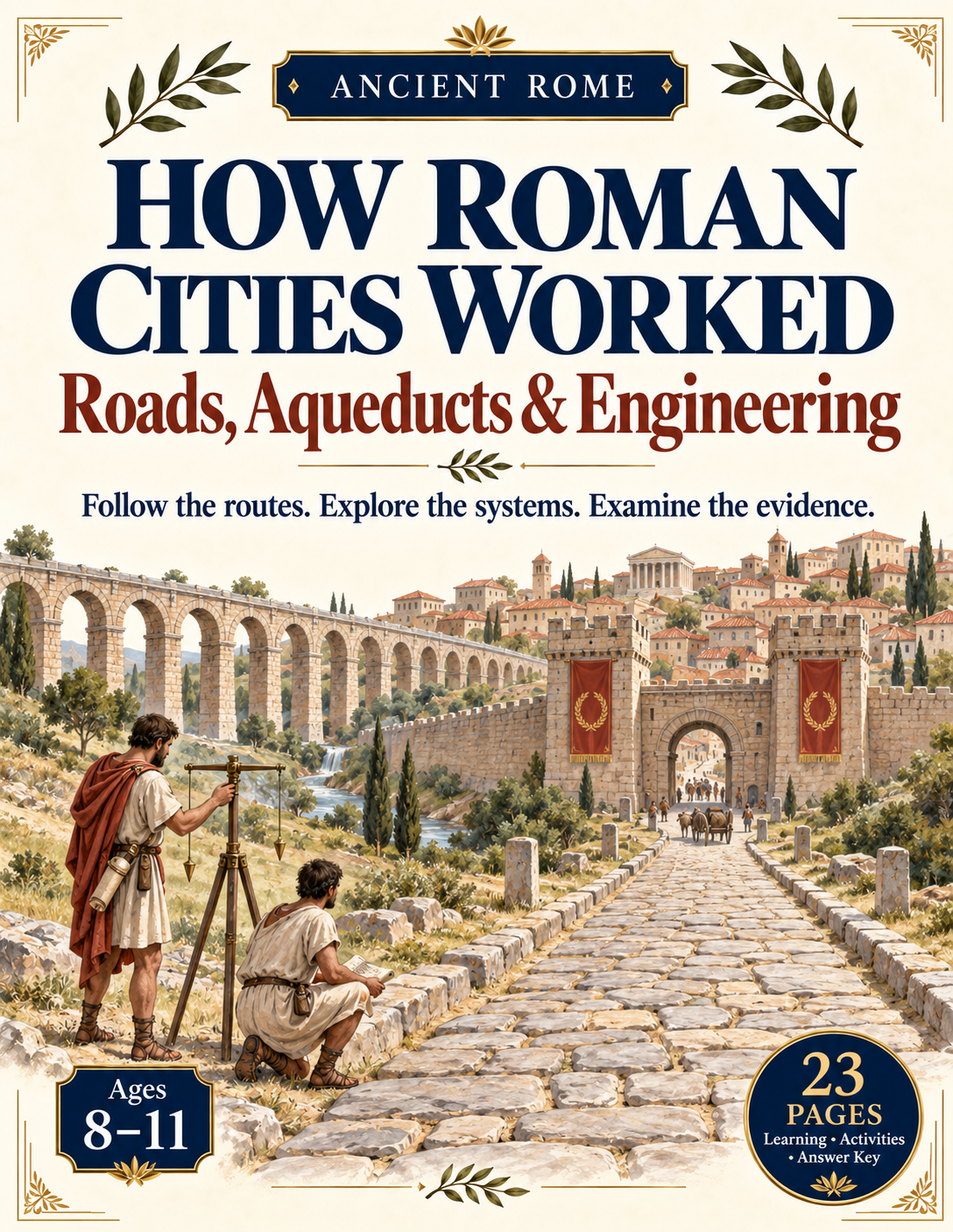
One of the most effective ways to teach history is to show children that a Roman city did not depend on a single invention; it survived through connected networks where roads, water channels, and drainage had to work together. Maintaining these networks required careful planning, surveying tools like the chorobates, and constant upkeep.
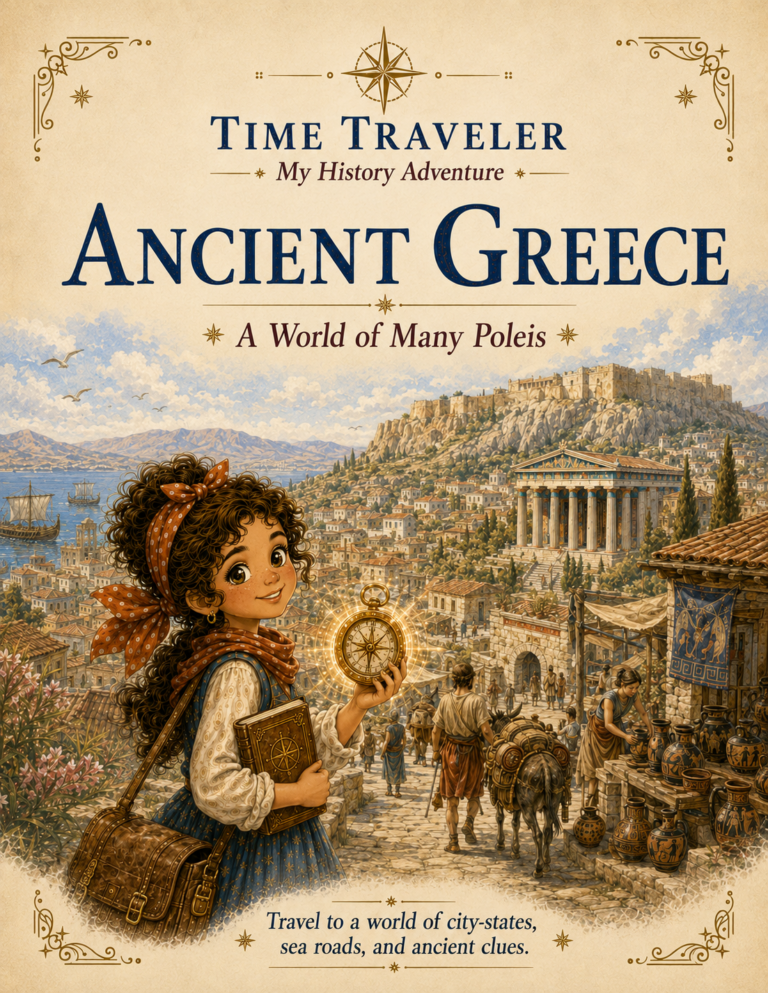
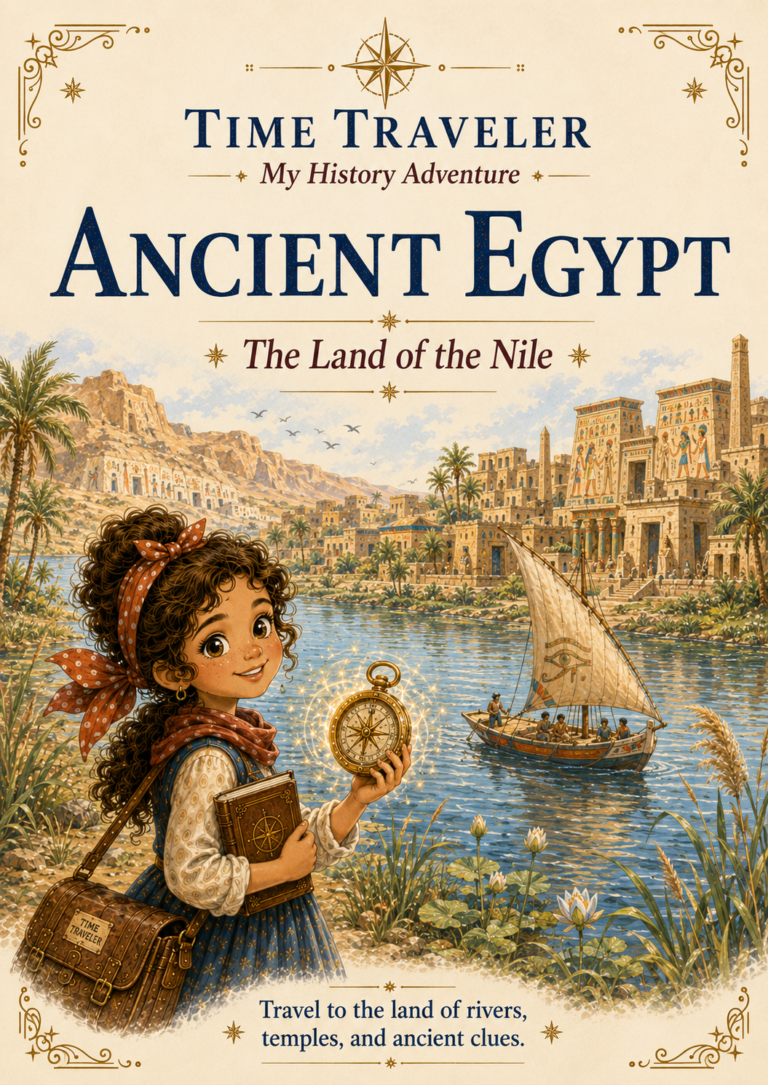
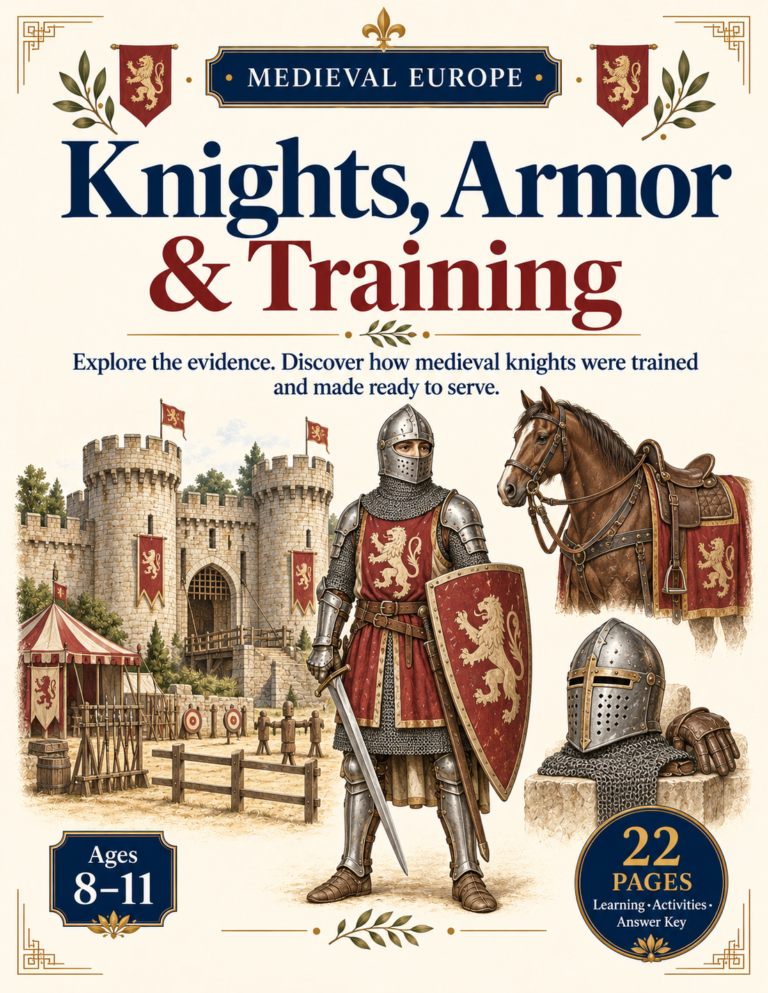
Much like the spatial puzzles we foster in our Ancient Egypt activities for kids, the sanctuary navigation in our Ancient Greece unit study, and the structural dependencies in our Knights and Castles unit study, a well-rounded Ancient Rome unit study asks children to make connections. If a road carrying grain is cut off, what are the trade-offs of taking a longer detour versus repairing a bridge?
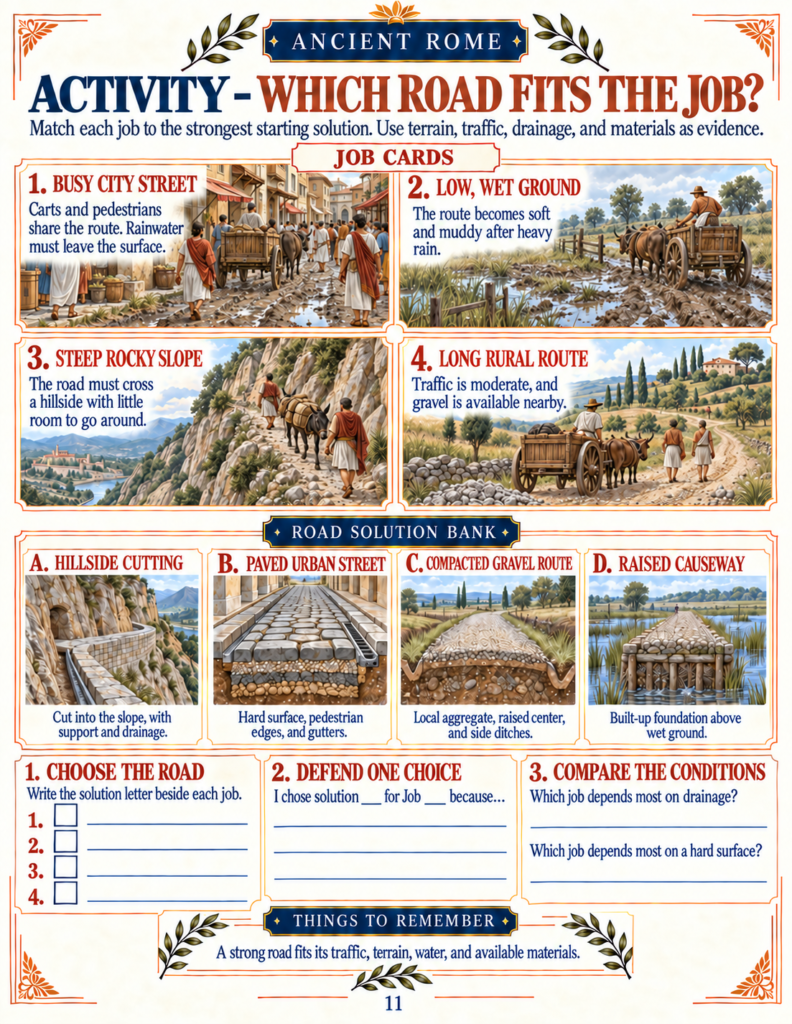
Learning Through Doing: «Which Road Fits the Job?» Activity
To truly spark curiosity, children need to feel like they are managing the past. Engaging worksheets allow them to step into the shoes of a Roman builder matching terrain, traffic, and materials to the correct structural solution.
Thinking Like a Young Historian: Testing the Evidence
The ultimate goal of any educational resource should be to teach children how to think. This is where an in-depth Ancient Rome unit study truly shines.
Historians rarely rely on just one source. They reconstruct the past by comparing surviving structures, stamped water pipes, milestones, and written records like the report of Frontinus, Rome’s water commissioner. Interactive history books introduce children to this reality by presenting them with evidence evaluation challenges.
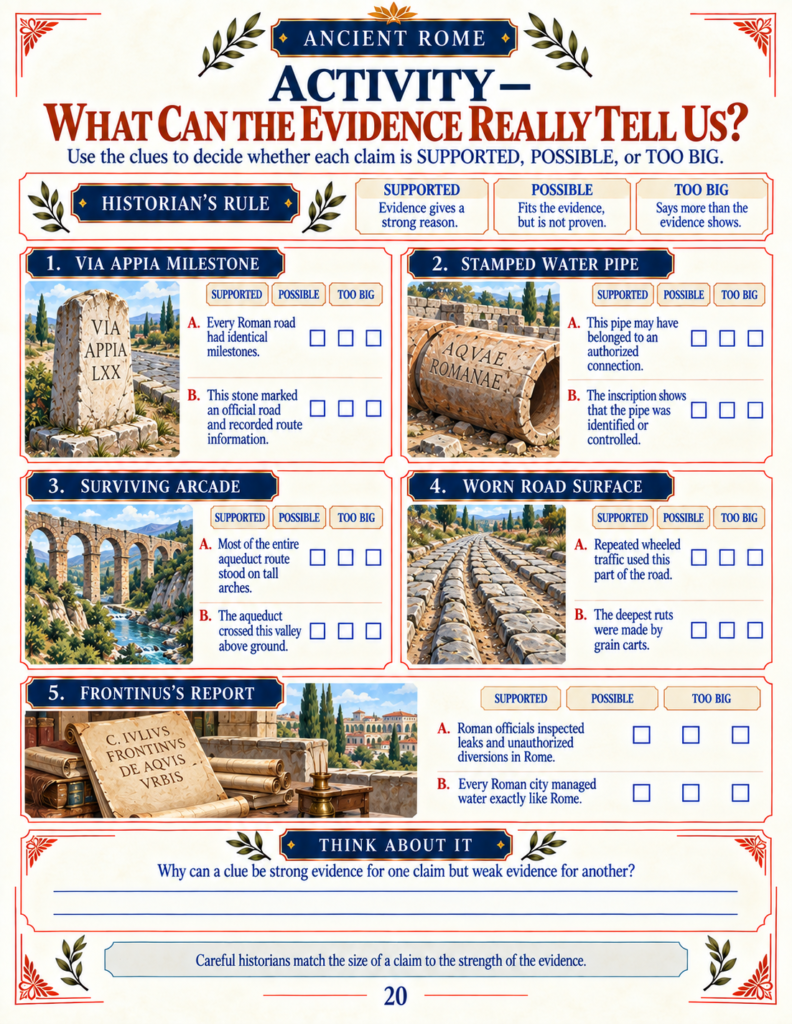
By asking kids to test these claims, they learn to differentiate between what a specific milestone or stamped pipe can prove and what is an overgeneralization. They realize that careful historians match the size of a claim to the strength of the evidence. These are the kinds of critical thinking challenges that prepare children for advanced academic success.
Spark Your Child’s Curiosity Today
Parents are always on the lookout for resources that are both educational and highly engaging. Books and materials that focus on hands-on history offer the perfect balance. They take a naturally fascinating subject like Roman engineering and layer it with puzzle-solving, systems analysis, and evidence evaluation.
By providing your child with resources that treat them like young historians and engineers, you are doing more than just teaching them about old stones and aqueducts. You are fostering a lifelong curiosity about how societies build, maintain, and sustain the infrastructure of civilization.
Ready to dive into the past? Start your adventure today and watch your child’s historical curiosity come to life!