Industrial Revolution Unit Study: Spark Curiosity with 1836 History
When children learn about the Industrial Revolution, social studies lessons often turn into a dry parade of inventors, steam engine diagrams, and factory dates. Yet behind the whirring machines of 19th-century Britain was a dramatic human transformation—one that reshaped how families measured time, moved goods across oceans, and debated fair rules for young workers. How can parents turn this complex era into captivating, meaningful education? The key lies in an immersive Industrial Revolution unit study that prioritizes systems thinking, historical empathy, and evidence-based inquiry over passive memorization.

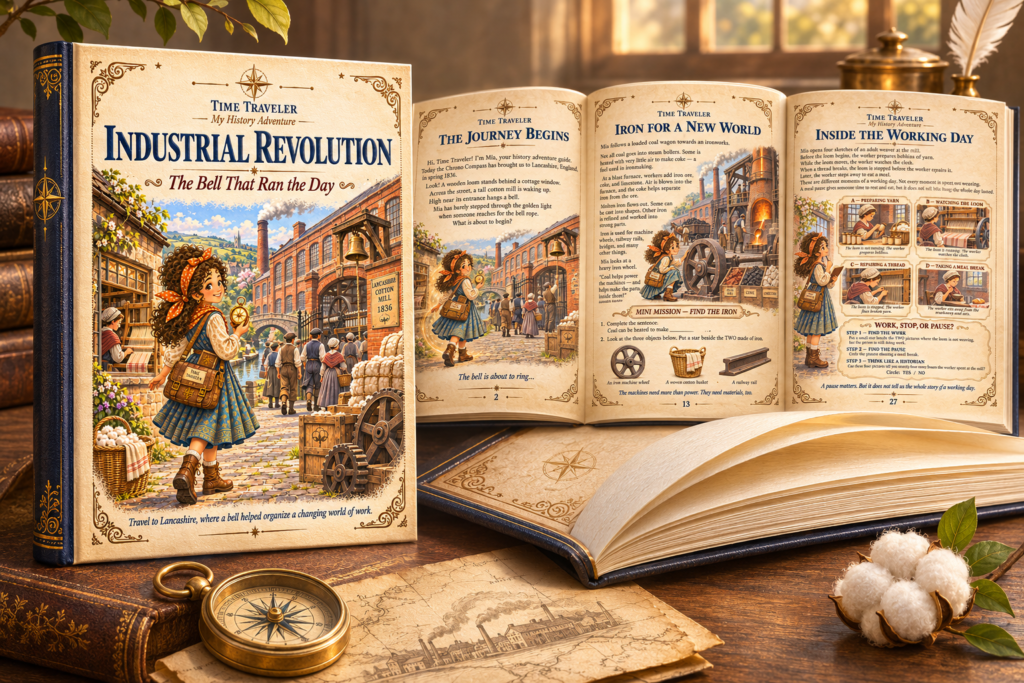
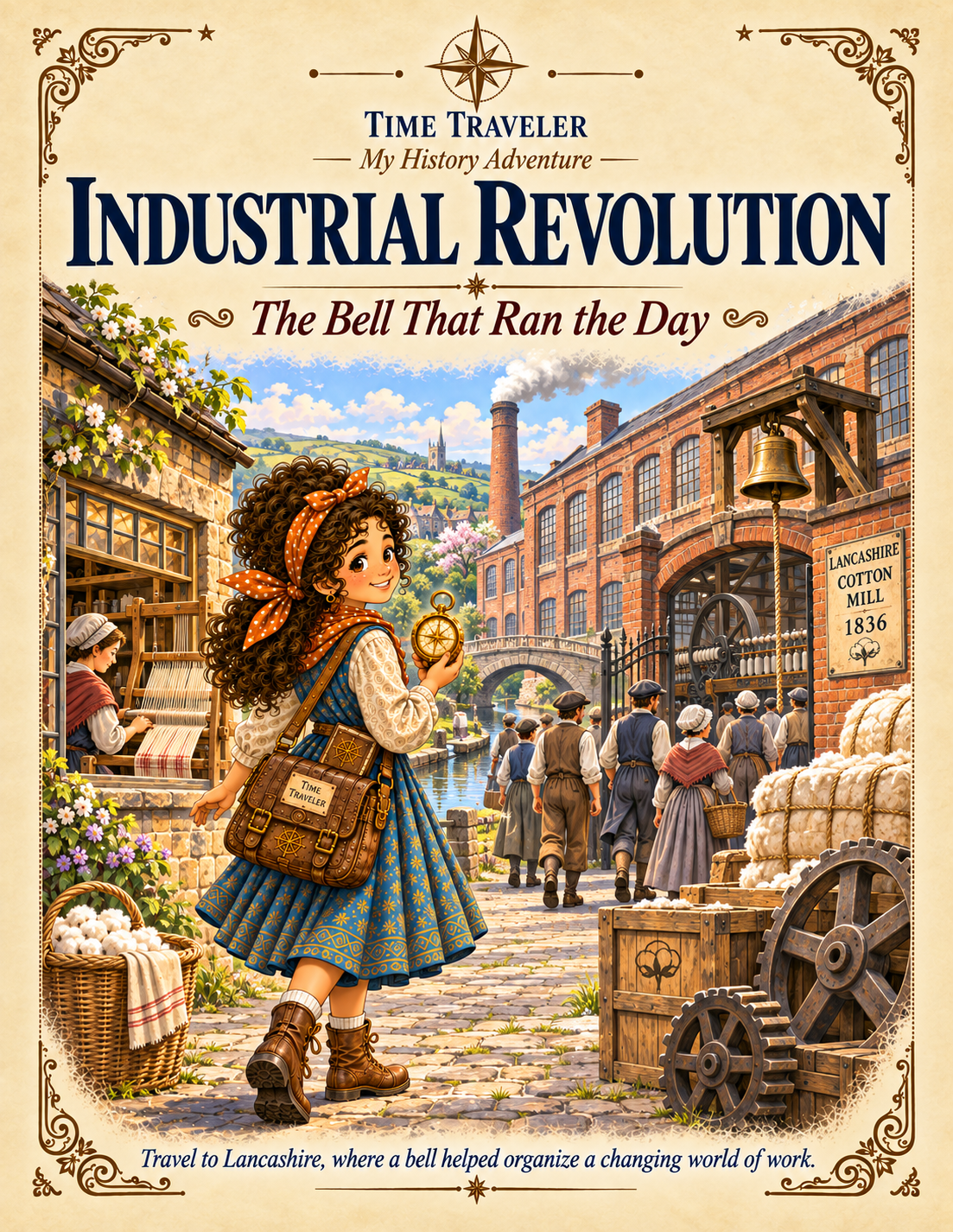
By stepping through the golden light of the Chrono Compass into Lancashire, England, in the spring of 1836, interactive history workbooks turn textbook chapters into a hands-on investigative mission. Let’s explore how following time-traveling guide Mia through bustling cotton mills, canal towpaths, and official factory inspections cultivates analytical reasoning and genuine curiosity.
Why Interactive History for Kids Works
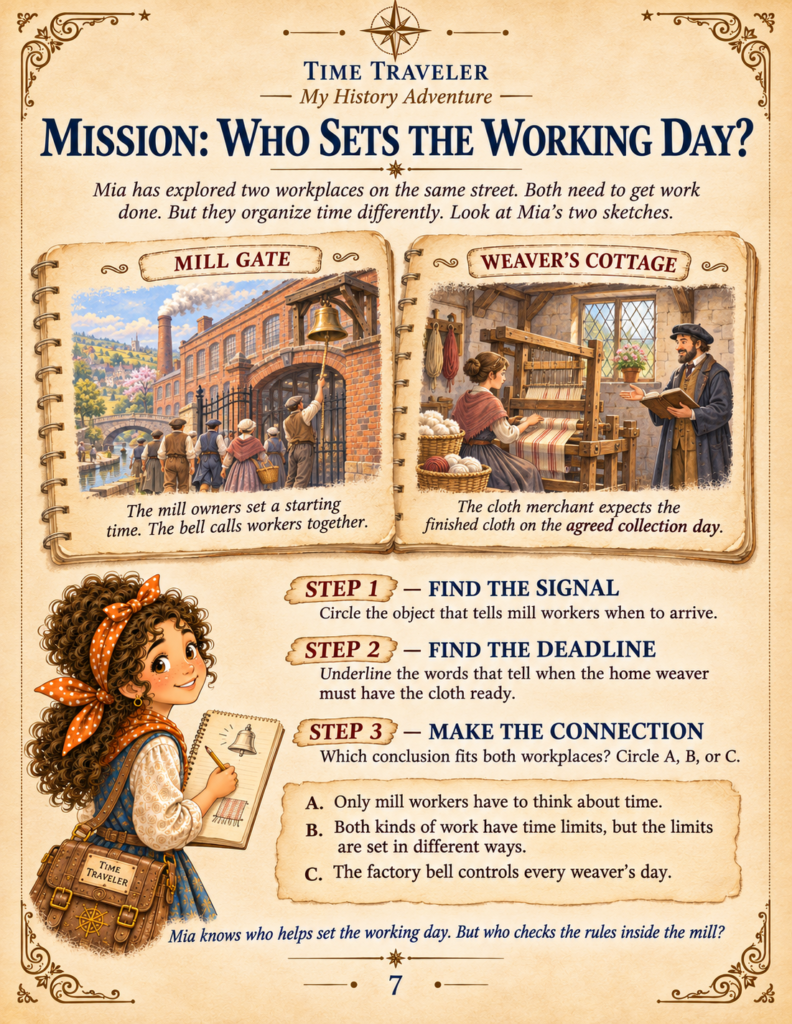
Children connect with the past on a much deeper level when they are invited to compare real-world trade-offs rather than memorize isolated facts. A conventional textbook might simply state that factories replaced home workshops, but an interactive workbook challenges young learners to examine how both workplaces organized time. Across the street from a noisy cotton mill ruled by a clanging morning bell, a cottage handloom weaver works without a factory clock—yet still faces a strict collection deadline from the cloth merchant.
When you integrate a structured interactive history for kids curriculum into your homeschool routine, you equip your child with the analytical tools of a real historian. Instead of passively reading about progress, students trace supply chains, calculate working hours, and question what visual scenes can and cannot prove.
Exploring Machines, Supply Chains, and Global Connections
One of the most eye-opening lessons interactive history provides is showing that a single piece of striped cotton cloth connected people across continents. Inside the mill, steam engines burned coal mined deep underground, while iron machine wheels and railway rails depended on coke-fired blast furnaces. Meanwhile, bales of raw cotton arrived at Liverpool docks from plantations in the southern United States—where enslaved men, women, and children were forced to grow and harvest the crop.
Just as we guide young explorers to uncover civic ecosystems in our Ancient Egypt unit study, decode urban infrastructure in our Ancient Rome unit study homeschool, trace household dependencies in our Knights and Castles unit study, and evaluate civic rules in our Ancient Greece unit study, a comprehensive Industrial Revolution unit study reveals the hidden networks behind everyday objects. Learners follow a single marked cotton bale from ocean ship to railway goods wagon to horse-drawn cart, discovering that rapid industrial growth also brought crowded courtyards, smoky skies, and polluted streams to booming towns like Manchester.
Learning Through Doing: «How Does the Mill Keep Moving?»
To foster authentic STEM and historical thinking, learning resources must show how energy, machinery, and human skill depend on one another.
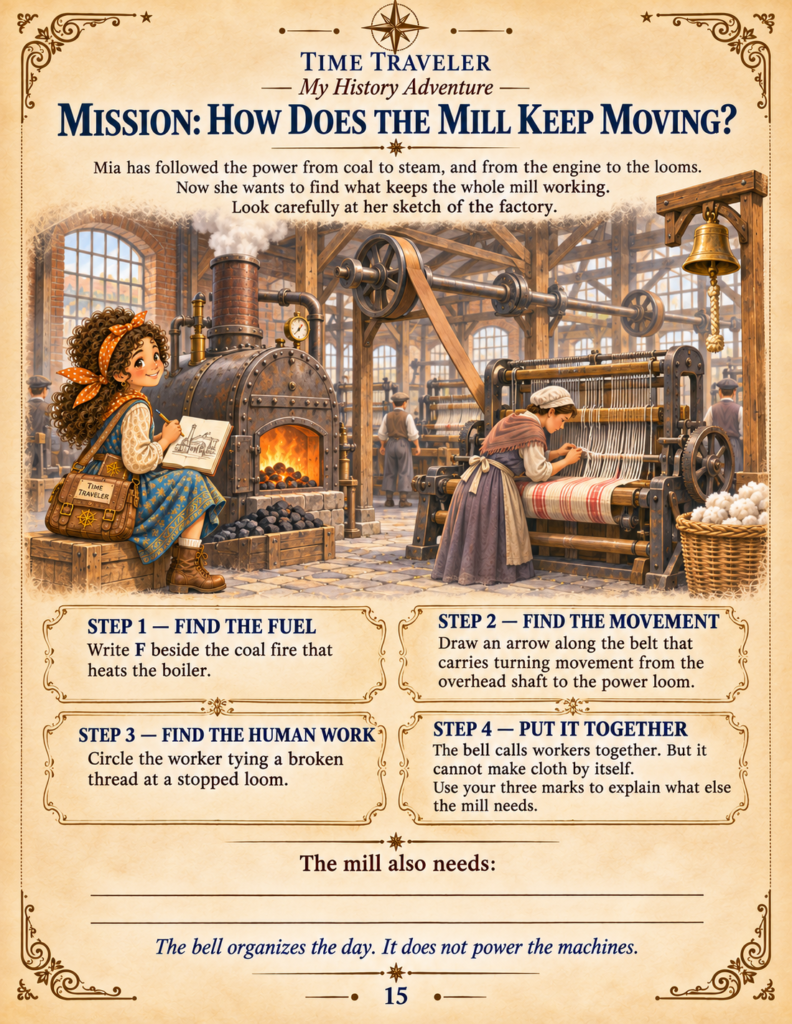
In activities examining the factory floor, children trace power from burning coal and pressurized steam to overhead turning shafts and leather belts. Yet they quickly realize that machines could not look after themselves: when a thread snapped, a worker had to stop the loom and tie the yarn back together. Seeing how fuel, mechanics, and human attentiveness worked together helps kids grasp the true mechanics of early industry.
Thinking Like a Historian: The 1836 Factory Inspection
The ultimate hallmark of high-caliber history education is teaching young minds how to evaluate evidence before jumping to conclusions. This is where an investigative Industrial Revolution unit study truly shines.
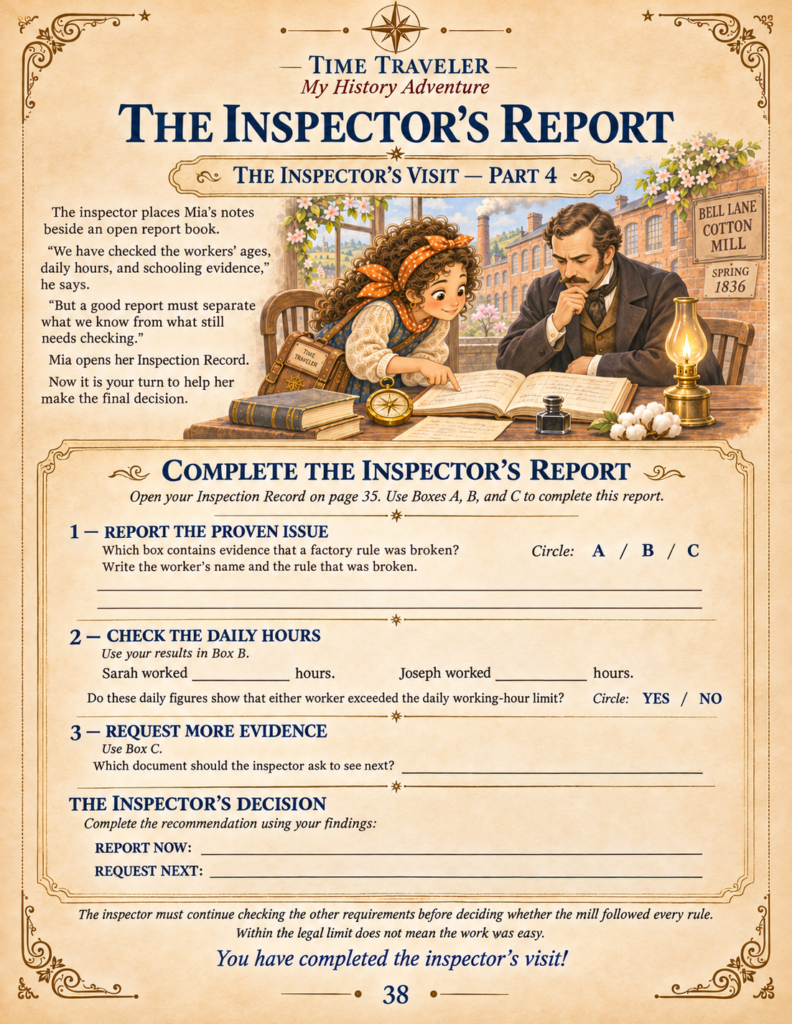
After learning how public petitions and reformers led to Britain’s Factory Act of 1833, students join a government factory inspector visiting Bell Lane Cotton Mill in spring 1836. Armed with an Inspector’s Pocket Reference card, kids audit real-style workplace records:
- Checking Age Limits: Identifying that eight-year-old Edward is working beside a spinning frame in violation of the under-nine rule.
- Calculating Net Working Hours: Subtracting meal breaks from elapsed shift times for eleven-year-old Sarah (8 working hours) and fifteen-year-old Joseph ($11\frac{1}{2}$ working hours) to verify daily limits.
- Auditing Missing Records: Recognizing that when Sarah’s schoolmaster’s attendance voucher is missing from the file packet, an investigator must request the document rather than guess whether she skipped school.
Spark Your Child’s Curiosity Today
Parents and educators want social studies resources that cultivate critical reasoning, mathematical accuracy, and thoughtful empathy without relying on monotonous memorization. An interactive Industrial Revolution unit study delivers that ideal synthesis. By inviting children to step into 1836 Lancashire—comparing cottage looms with steam-powered mills, tracing global cotton routes, and auditing factory records alongside an inspector—you build analytical habits that last a lifetime.
Equip your young learners with curriculum materials that respect their intelligence and bring the human story of industrial change to life. Unlock the Industrial Revolution Time Seal today, and watch your child’s curiosity and critical thinking flourish!