Why Jack-o’-Lanterns Weren’t Always Pumpkins: Teaching Halloween History and Community Traditions
When October arrives, children naturally become thrilled about costumes, candy bags, and spooky porch decorations. Finding a meaningful halloween traditions workbook for kids allows parents and teachers to transform that seasonal excitement into rich cultural history and hands-on creativity. A well-crafted halloween traditions workbook for kids shows young learners that the modern rituals of trick-or-treating, jack-o’-lanterns, and dressing up are not random inventions, but living customs that traveled across oceans and evolved over centuries.
Standard holiday printables frequently reduce the season to cut-and-paste monsters or sugar-focused coloring sheets. While entertaining, these activities miss the deeper human story: how ancient agricultural communities marked the changing seasons, why carved turnips predated American pumpkins, and how modern neighborhoods can practice empathy and safety so every child feels welcome.
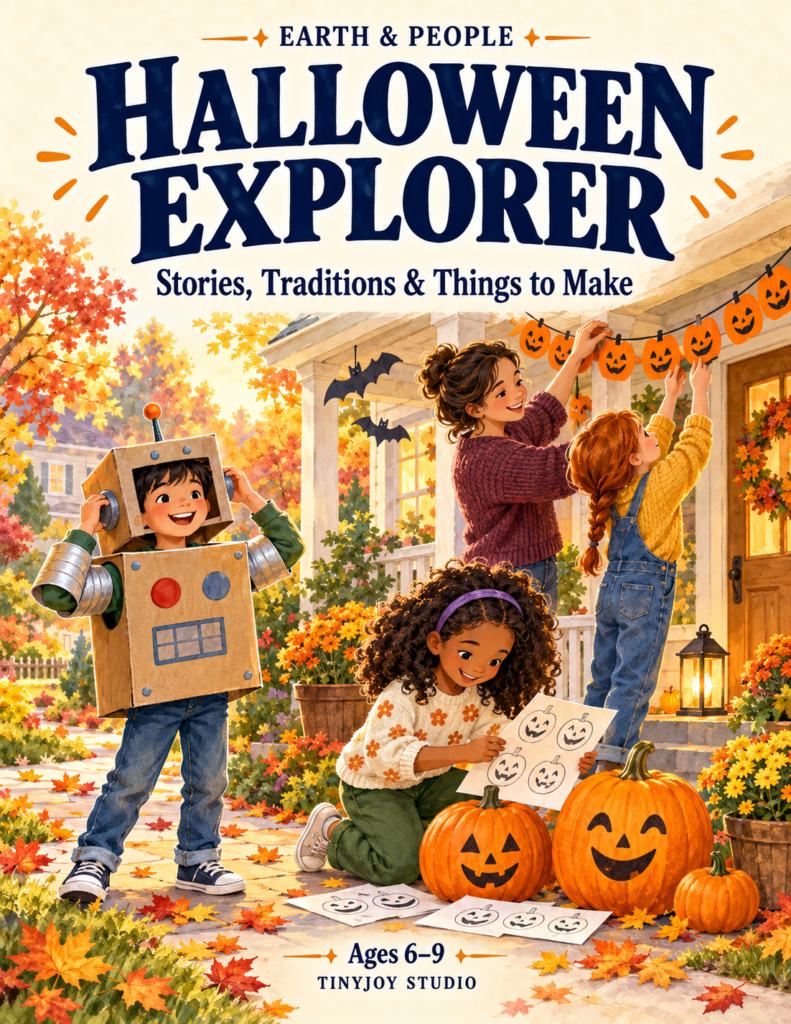
In Halloween Explorer: Stories, Traditions & Things to Make (designed for ages 6–9 by TinyJoy Studio), children do not just observe holidays—they trace their origins, design imaginative costumes from recycled materials, and engineer their own welcoming celebrations.
Cultural Migration: How Traditions Travel
To understand why we celebrate October 31, children must explore where these customs originated. Halloween Explorer introduces the historical roots of the holiday through accessible, evidence-based storytelling:
- The Turn of the Seasons: In ancient Ireland, the festival of Samhain marked the harvest’s end and the threshold of winter, a time when families gathered around warmth and shared stories of spirits.
- A Merging of Names: The Christian calendar designated November 1 as All Saints’ Day, making October 31 «All Hallows’ Eve,» which gradually compressed into the word Halloween.
- Traditions on the Move: When immigrant families from Ireland and Scotland relocated across the Atlantic to North America, they brought their folklore, hearth games, and seasonal customs with them.

Connecting how ideas travel when people move across continents is an essential aspect of historical literacy. For families who want to show young learners how civilizations evolve and how primary evidence tells human stories, our interactive history curriculum for elementary learners provides a structured roadmap through ancient worlds, inventions, and cultural timelines.
From Turnips to Pumpkins: Adapting to the Landscape
One of the most surprising historical discoveries for young readers is learning that the original jack-o’-lantern was not an orange pumpkin, but a hard, carved root vegetable.
In Ireland, people carved eerie faces into hollowed-out turnips and placed small embers inside to light dark country pathways. An ancient folktale told of a wanderer named Jack who carried an ember trapped inside a carved turnip. But when Irish and Scottish immigrants reached North America, they encountered native pumpkins—a fruit that was softer to carve, larger, and plentiful in autumn harvests.
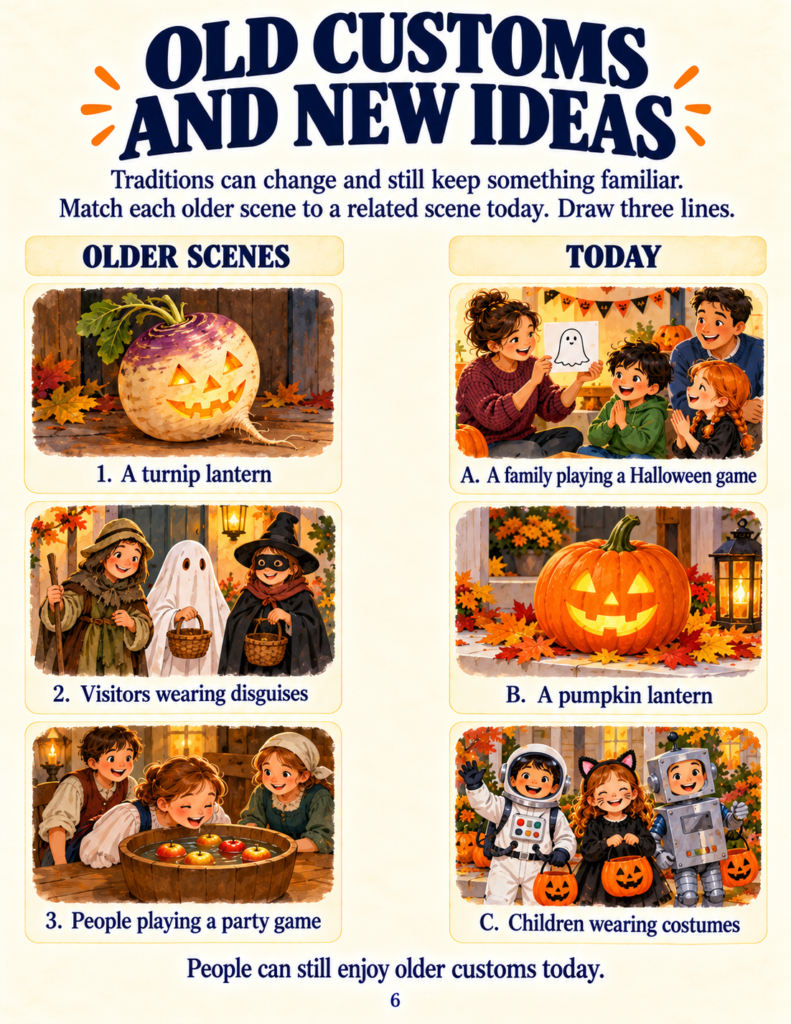
In Halloween Explorer, children analyze the geometric differences between a round pumpkin and a root turnip, connecting cultural change directly to local botany and geography. Helping young minds wonder about everyday objects—whether asking why crops grow differently in new soils or how simple tools work—is the driving spirit behind our curiosity books for kids in the Curious 25 series, which encourages children to investigate daily life through quick, bite-sized questions.
Creative Agency: Cardboard Costumes and Mindful Making
Instead of pushing expensive commercial products, the workbook champions creative resourcefulness. In the design spread «One Box, Three Costumes,» students discover how a single everyday cardboard box can transform into a mechanical robot, a rolling train, or a blooming flower pot with just paint and paper details.
The book also emphasizes low-mess, non-carving decoration options:
- Paper Faces: Drawing and cutting paper facial features to affix to pumpkins with removable tape.
- Painted Patterns: Applying non-toxic craft paint to create bold geometric dots and stripes without sharp carving tools.
- Paper Pumpkin Displays: Flat paper pumpkin templates that can be customized, colored, and mounted on display boards for apartments or classrooms that cannot accommodate real gourds.

Social Etiquette, Inclusion, and Neighborhood Care
Halloween is fundamentally a community festival, and Halloween Explorer places deliberate emphasis on social awareness and neighborly respect. Rather than assuming that every child or family participates in identical ways, the workbook includes dedicated spreads on mindful celebration:
- Friendly Dialogues: Practicing polite conversational exchanges at neighborhood doorsteps—from greeting with «Trick or treat!» to offering a clear «Thank you!» and cheerful farewell.
- Respecting Boundaries: Recognizing and honoring private home signs such as «No visitors tonight» without knocking or trespassing.
- Sensory Awareness: Choosing gentle, quiet games when a friend or sibling feels overwhelmed by loud surprises or dark masks.
- Safety First: Ensuring costumes do not drag underfoot, keeping sightlines clear, and having adults check treats before snacking.

Understanding how diverse communities organize their celebrations and navigate shared spaces is deeply tied to human geography. If your learner loves discovering how different regions develop unique housing, regional layouts, and terrain-based settlements, stepping into our comprehensive geography learning path for kids provides an enriching journey through global maps and communities.
Practical Use for Home and Classroom
Because Halloween Explorer includes open-ended creative pages, cut-and-paste architectural templates, and a full adult guidance guide, it serves several educational roles:
- Homeschool Cultural Mini-Unit: Spend a week exploring Samhain history, mapping immigrant migration routes, and writing imaginative stories.
- Classroom Craft & Decor Station: Use the «My Halloween House» cut-and-arrange building sheets and repeating garland patterns for cooperative art centers.
- Neighborhood Scavenger Hunt: Take the printable checklist on an outdoor autumn walk to spot paper bats, glowing lanterns, and decorated porches in the local community.
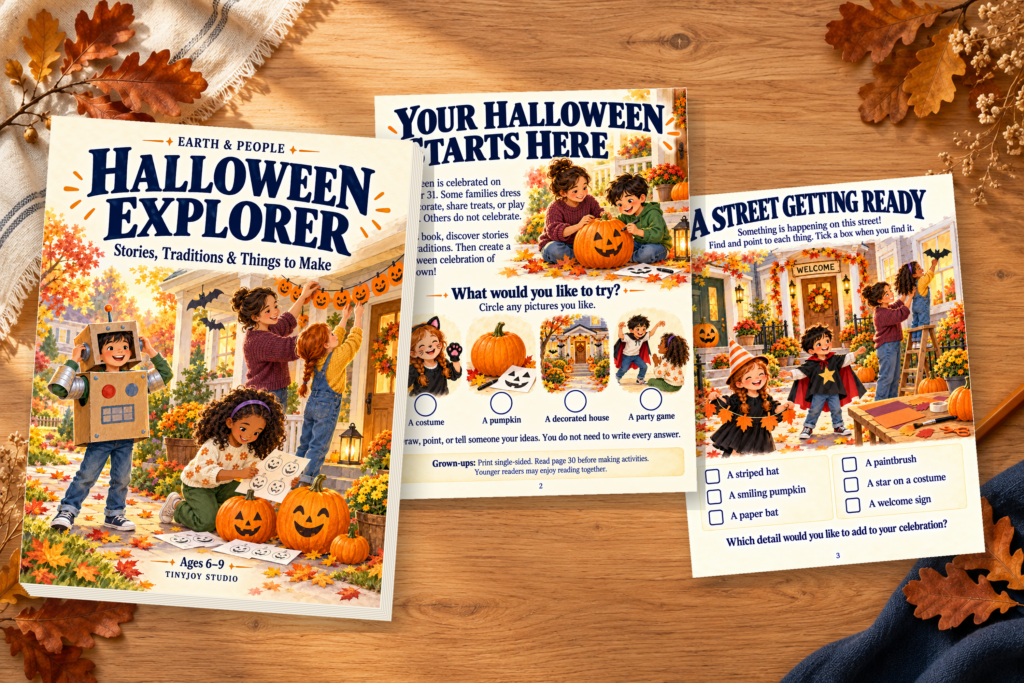
If you are looking for a seasonal printable that trades cheap jump-scares for authentic history, creative craft design, and thoughtful community empathy, Halloween Explorer gives young learners an engaging, welcoming window into autumn traditions.