23 Easy Screen Free Activities for Preschoolers That Kids Actually Love
Simple, low-prep ideas to keep little kids learning, creating, and having fun without screens
Introduction
These screen-free activities for kids help create calmer, more creative daily routines without relying on phones, tablets, or constant TV time.
Many parents today are searching for simple ways to reduce screen time without hearing “I’m bored!” every five minutes. The good news is that kids don’t need tablets or constant entertainment to stay happy and engaged. Often, the best activities are the simplest ones — coloring pages, matching games, mazes, drawing, and creative play.
Screen-free activities help children build important skills like focus, creativity, problem-solving, and fine motor coordination while still feeling fun and relaxing. They also create more opportunities for meaningful family moments and independent play.
Whether you need a quiet afternoon activity, a rainy day idea, or something educational that doesn’t feel like schoolwork, these screen-free ideas are easy to set up and enjoyable for kids ages 3–6.
In this list, you’ll find 25 fun and low-prep activities that encourage creativity, learning, and imagination — without relying on screens.
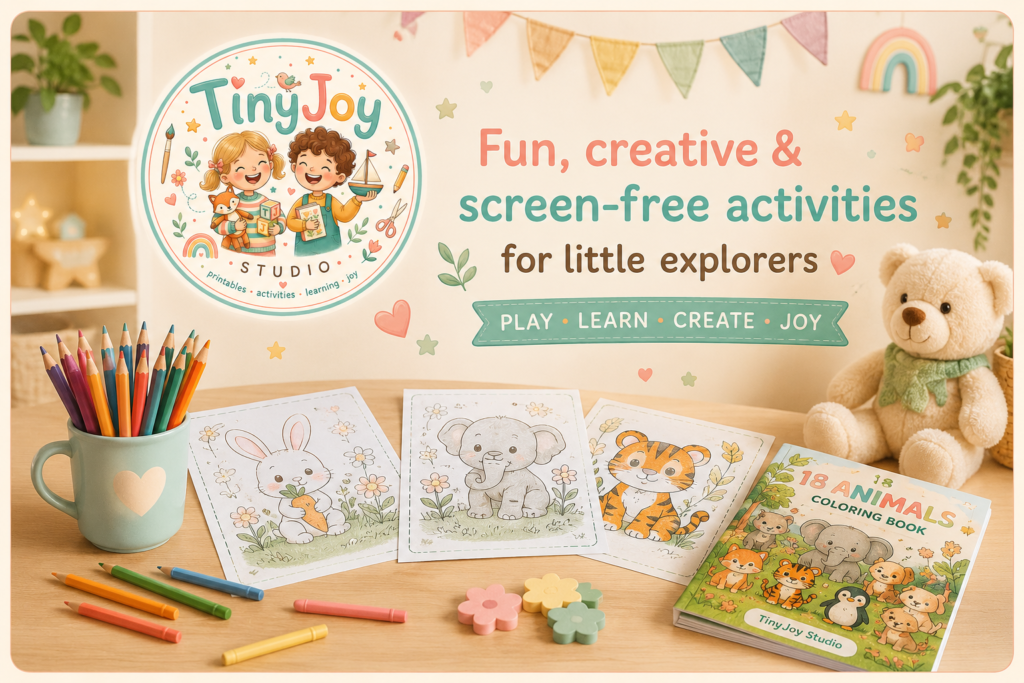
Section 1 — Creative Activities
1. Coloring Pages
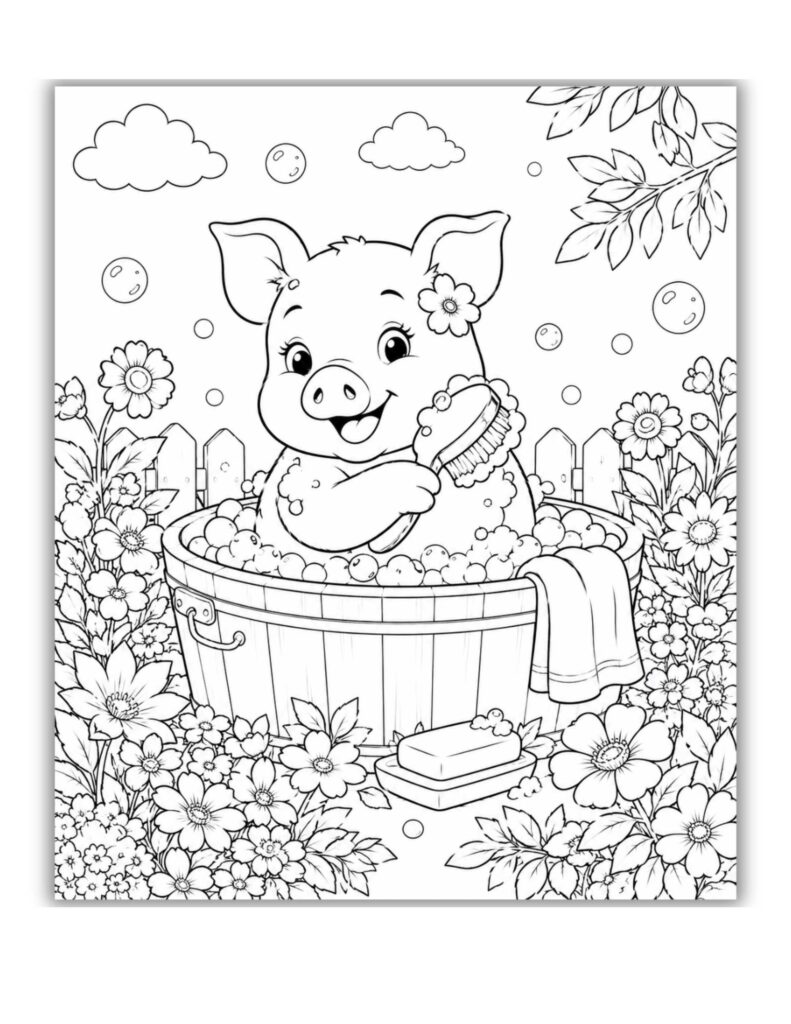
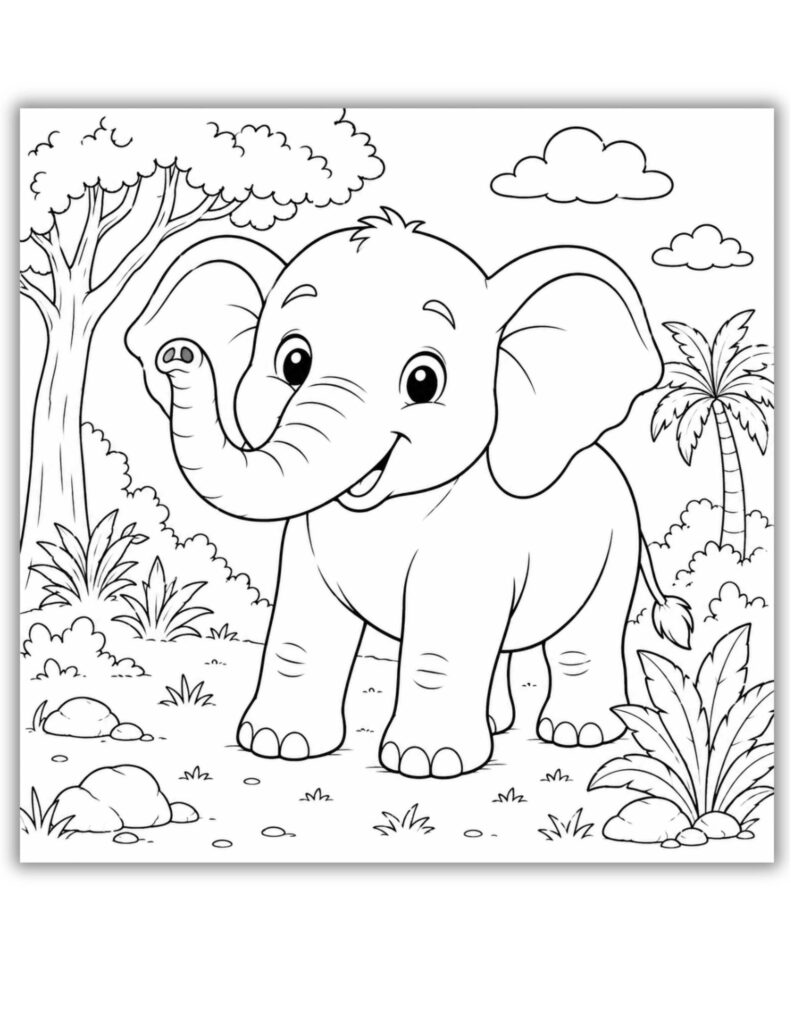
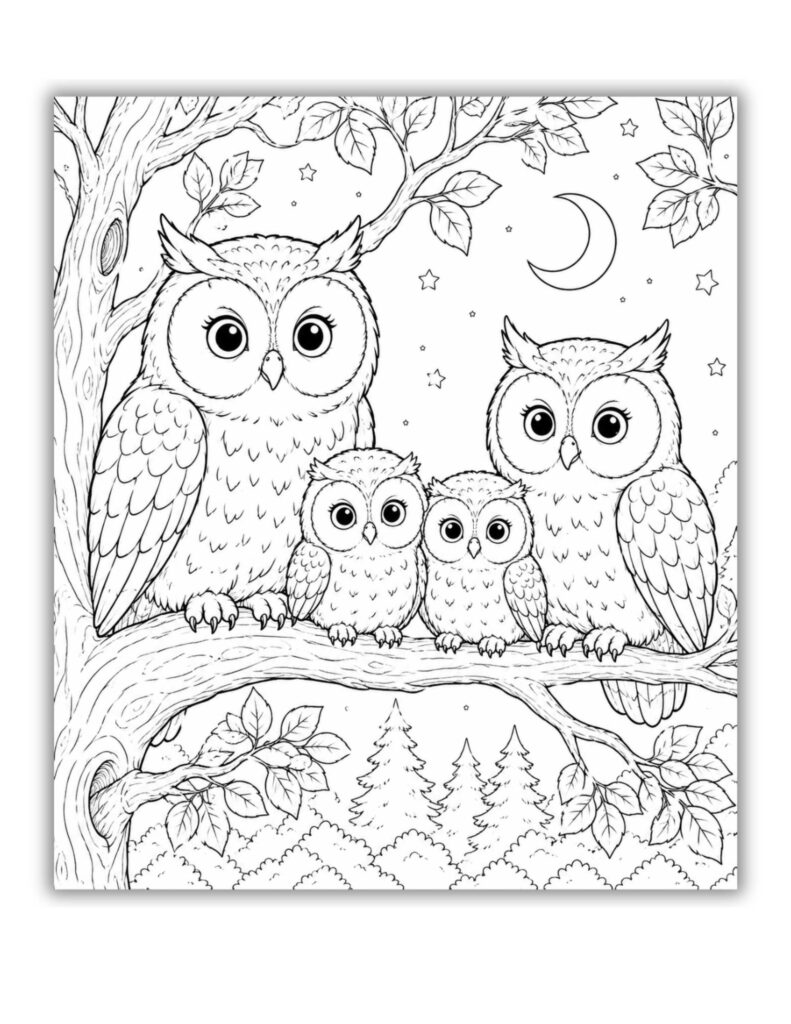
Coloring pages are one of the easiest and most relaxing screen-free activities for young children. Simple coloring activities help kids improve hand control, concentration, creativity, and color recognition while giving them a calming and enjoyable creative outlet.
Animal coloring pages are especially popular because children naturally connect with cute characters and playful scenes. Even a short coloring session can help kids slow down, focus, and feel proud of what they create.
Printable coloring activities are also perfect for quiet time, travel, rainy afternoons, or independent play at home.
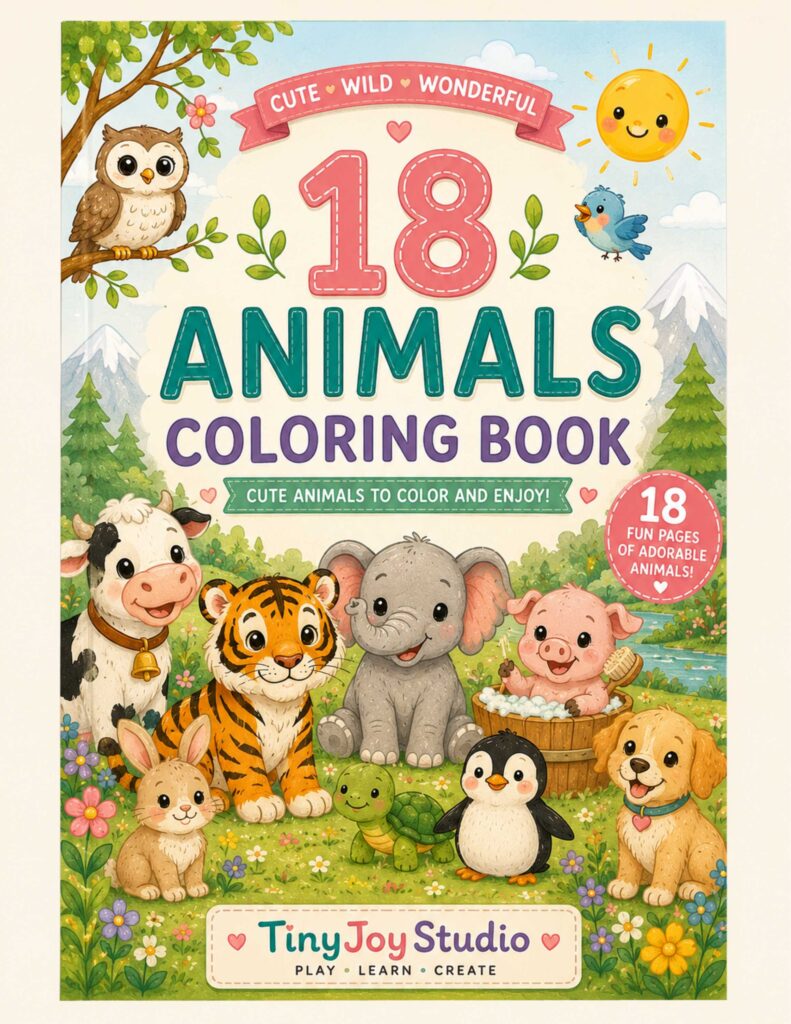
Some days, the simplest activities become the most memorable. A cozy coloring session at the kitchen table, a handful of crayons, and a few quiet moments together can feel surprisingly special. That’s one of the reasons we created our 18 Animals Coloring Book — a gentle printable collection filled with adorable animals, cheerful scenes, and easy-to-enjoy pages designed for little artists ages 3–6. From playful foxes and sleepy owls to tiny penguins and jungle friends, every page was made to encourage creativity without overstimulation or screens.

2. Build a Cozy Reading Corner
You don’t need a perfectly designed playroom to create meaningful moments with your child. Sometimes a small corner with a few pillows, soft blankets, and a stack of favorite books is enough to completely change the atmosphere at home. Children naturally slow down when they have a calm space that feels comforting and safe.
Try adding a tiny “reading basket” filled with picture books, printable coloring pages, crayons, or even a stuffed animal they can “read” to. These quiet little rituals often become part of the memories children carry for years.
Even 15 peaceful minutes together can feel more valuable than an hour of distracted screen time.
3. Create Simple Indoor Treasure Hunts
Kids don’t need expensive toys or complicated activities to stay entertained. Sometimes the most exciting moments come from the simplest little adventures created right at home.
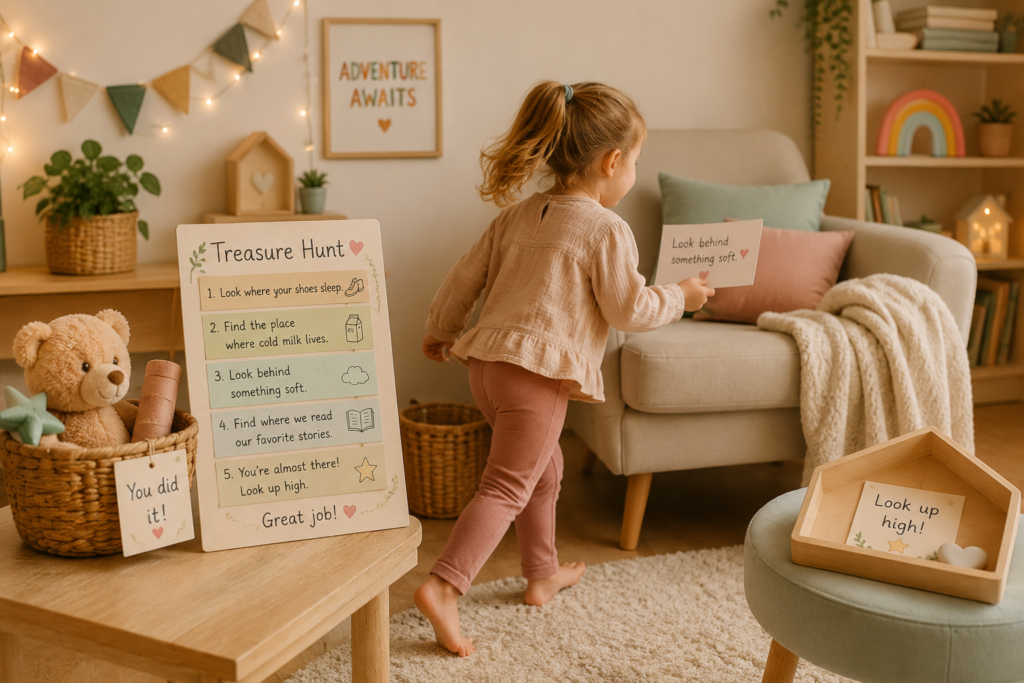
Indoor treasure hunts are a wonderful way to encourage movement, curiosity, and problem-solving while keeping children away from screens for a while. You can hide tiny surprises, favorite snacks, crayons, stickers, or even handwritten notes around the house and create playful clues for your child to follow.
Simple hints like:
“Look where your shoes sleep,”
or
“Find the place where cold milk lives,”
instantly turn an ordinary afternoon into a fun memory.
For younger children, you can make it even easier by asking them to find colors, animals, or shapes hidden around the room. Older preschoolers usually love following short clues and solving tiny “mysteries” on their own.
The best part is that these activities require almost no preparation, but children often remember them far longer than another hour spent scrolling or watching videos.
4. Make Your Own Mini Art Station
Children are naturally creative when they have easy access to simple materials and a space that feels like their own. You don’t need a large craft room or expensive supplies to encourage creativity at home.
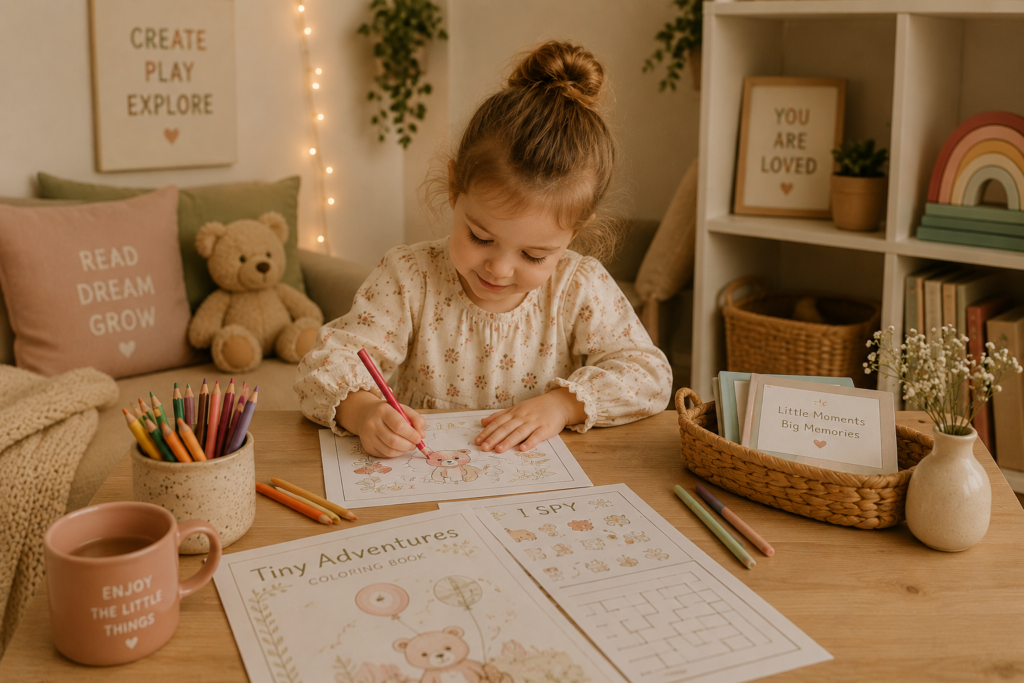
A small “art station” can be as simple as a basket filled with crayons, washable markers, paper, stickers, safety scissors, and printable activities stored within easy reach. When materials are visible and accessible, kids are much more likely to choose creative play on their own instead of automatically asking for a screen.
You can even rotate supplies every few days to make the space feel fresh and exciting again. One week might include coloring pages and tracing activities, while another could focus on cutting practice, stickers, or simple drawing prompts.
The goal isn’t perfection — it’s creating an environment where imagination feels natural and easy.
Children often don’t need constant entertainment. They simply need an invitation to create.
5. Try Ready-to-Print Learning Activities
Some days, parents have the time and energy to create games and activities from scratch. Other days, having something already prepared can feel incredibly helpful.
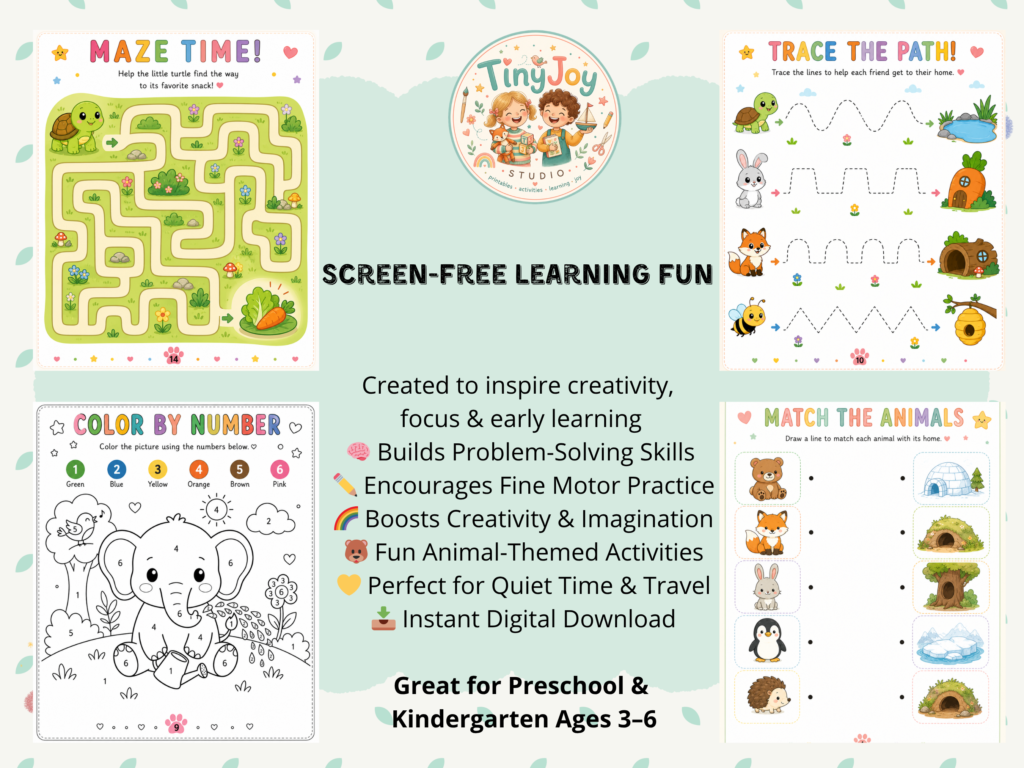
That’s where printable learning activities can make everyday routines much easier. Instead of reaching for a phone or turning on another cartoon, you can simply print a few pages and instantly create a calm, engaging activity for your child.
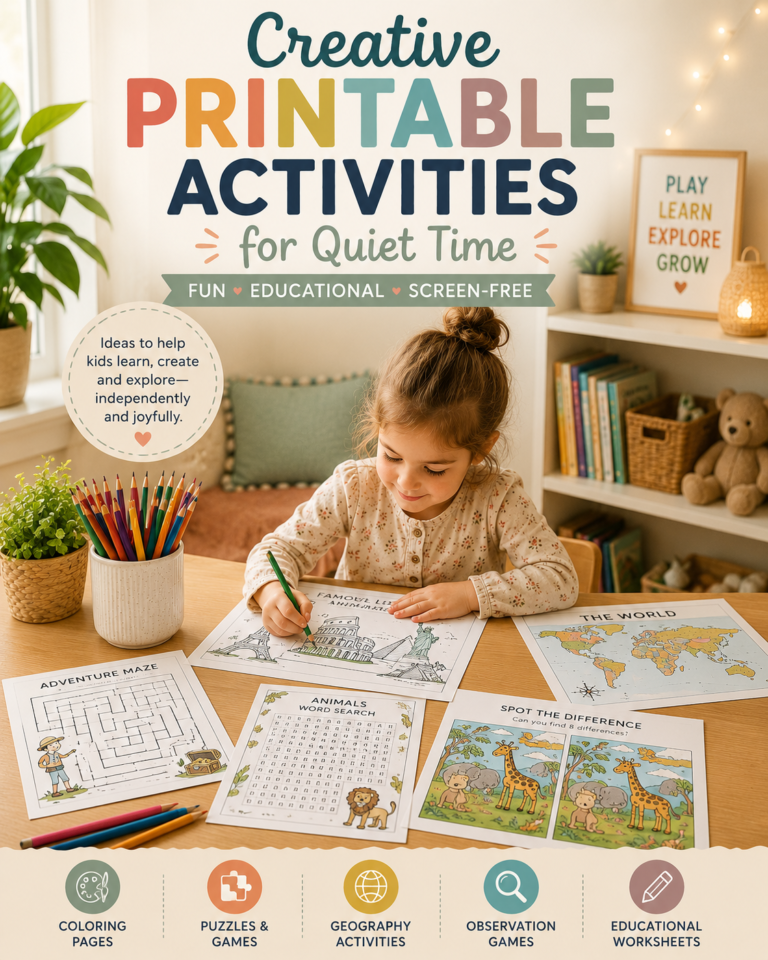
Simple matching games, tracing pages, mazes, coloring sheets, and beginner learning activities help children practice focus, creativity, fine motor skills, and independent play in a gentle, screen-free way.
We especially love using printable activity books during:
- rainy afternoons,
- quiet time,
- travel days,
- restaurant waits,
- or slow weekend mornings at home.
One of our favorite things about printable activities is that they don’t need to be perfect or educational in a strict sense. Sometimes children simply need something peaceful and creative to do with their hands.
That quiet moment of coloring at the table often becomes more meaningful than we expect.
6. Create a Simple “Boredom Box”
One of the easiest ways to reduce screen time at home is to prepare activities before boredom happens.
A simple “Boredom Box” can become a lifesaver during long afternoons, sick days, bad weather, or those moments when children instantly say, “I’m bored.”
The idea is simple:
Fill a small box, basket, or drawer with easy screen-free activities your child can choose from independently.
You don’t need expensive toys or complicated setups. In fact, children often enjoy the simplest things the most.
Here are a few ideas to include:
- crayons and paper,
- printable coloring pages,
- stickers,
- matching games,
- mini puzzles,
- tracing sheets,
- simple crafts,
- animal flashcards,
- reusable activity pages,
- or small sensory toys.
The magic of a boredom box is not just entertainment — it also encourages independence and creativity. Instead of waiting for constant stimulation from a screen, children begin learning how to create fun on their own.
Many parents are surprised by how often kids return to these quiet little activities once they become easily accessible.
And honestly, sometimes the most peaceful moments at home begin with a simple basket of crayons on the kitchen table.
7. Turn Everyday Moments Into Mini Adventures
Not every meaningful activity needs to be carefully planned.
Some of the best childhood memories come from small everyday moments:
- building a blanket fort,
- making funny snacks together,
- going on a “nature treasure hunt,”
- drawing with sidewalk chalk,
- or creating stories before bedtime.
Children don’t always need constant entertainment.
What they truly enjoy is connection, attention, and the feeling of doing something together.
Even 15–20 minutes of simple shared play can feel more exciting to a child than hours spent scrolling videos.
Screen-free activities become much more special when they feel personal, playful, and relaxed.
8. Screen-Free Time Doesn’t Have to Be Complicated
One of the biggest misconceptions about screen-free parenting is the idea that every activity needs to be educational, perfectly planned, or highly creative.
In reality, children usually need something much simpler:
- a little attention,
- a chance to create,
- freedom to explore,
- and small moments that feel calm and meaningful.
Coloring pages, scavenger hunts, printable activities, cozy reading corners, crafts, and imaginative play may seem simple, but these are often the activities children remember most.
The goal isn’t to eliminate screens completely. It’s simply to create more space for creativity, curiosity, movement, and connection in everyday life.
And sometimes, the smallest activities end up creating the biggest memories.
Simple Screen-Free Activities for Kids at Home
Section 2 — Simple Activities That Build Connection & Creativity
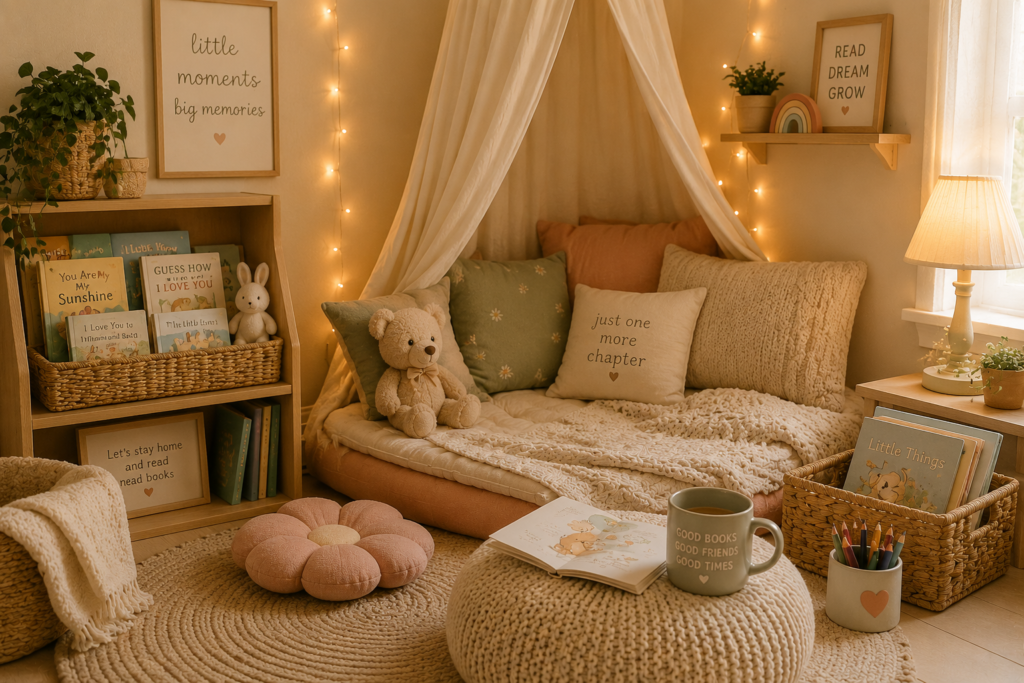
9. Create a Cozy Reading Corner
A cozy reading corner can completely change the atmosphere of a home.
It doesn’t need to be large or perfectly designed. A few pillows, soft lighting, a small basket of books, and a quiet corner are often enough to create a space children naturally return to.
Reading corners help children slow down, relax, and build positive associations with books and quiet time.
You can make the space even more inviting by adding:
- stuffed animals,
- blankets,
- calming music,
- printable coloring pages,
- or a small rotating collection of books and activities.
Children love spaces that feel like they belong to them.
And sometimes, creating a tiny peaceful corner is all it takes to replace a little extra screen time with imagination and calm.
10. Let Kids Help in the Kitchen
Simple kitchen activities can become some of the most memorable moments of childhood.
Children naturally enjoy helping:
- washing fruits,
- mixing ingredients,
- decorating cookies,
- pouring pancake batter,
- or preparing simple snacks.
These little tasks build confidence, independence, and fine motor skills while also creating quality family time.
The goal isn’t perfection — it’s participation.
Even toddlers love feeling included in everyday routines, and small kitchen moments often turn into meaningful conversations, laughter, and connection.
Plus, children are usually much more excited to try healthy foods when they helped prepare them themselves.
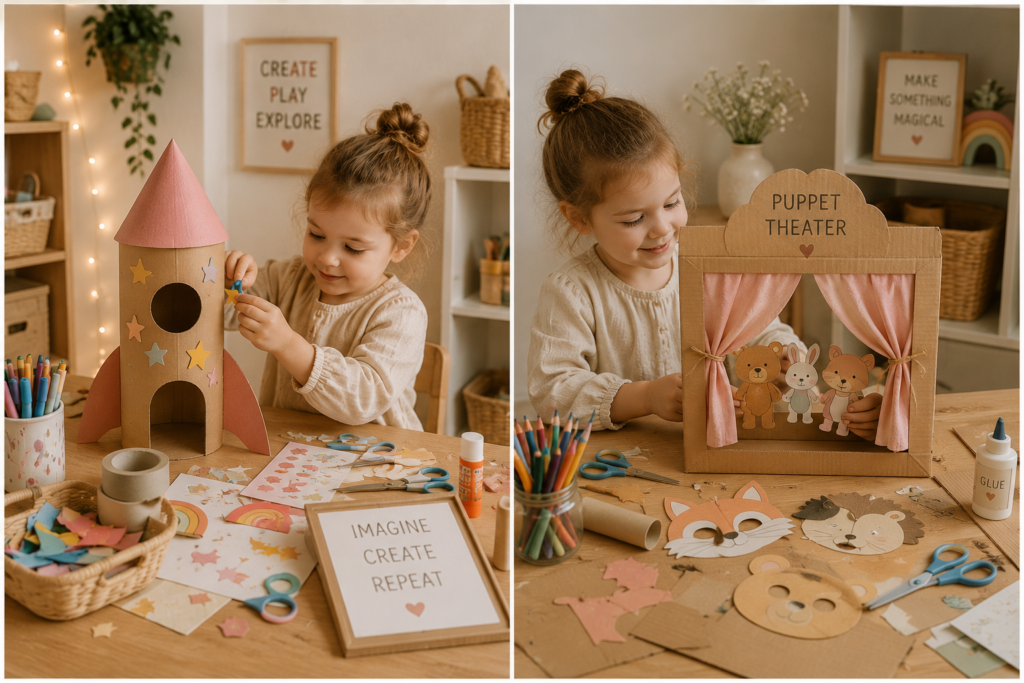
12. Make DIY Art With Everyday Supplies
Creative activities don’t need expensive craft kits or perfectly planned projects.
Some of the best DIY art ideas start with simple things already lying around the house:
- cardboard boxes,
- paper rolls,
- stickers,
- old magazines,
- tape,
- markers,
- glue,
- or leftover paper scraps.
Children love turning ordinary objects into something imaginative.
One day it’s a rocket ship.
The next day it becomes a tiny puppet theater or an animal mask.
Open-ended creative play helps children explore ideas freely without worrying about rules or perfect results.
And often, the messiest projects become the most memorable ones.
If you enjoy creating your own printable activities, coloring pages, or craft materials, platforms like Creative Fabrica can also be a great source for graphics, templates, and creative inspiration for family-friendly projects.
13. Go on a Backyard or Nature Scavenger Hunt
Children naturally love exploring the world around them.
A simple scavenger hunt can turn an ordinary walk into an exciting little adventure — without needing screens, expensive toys, or complicated preparation.
You can create a simple list of things to find:
- a yellow flower,
- a smooth rock,
- something shaped like a heart,
- a bird feather,
- or a funny-shaped leaf.
Nature activities encourage curiosity, movement, observation, and imagination all at the same time.
And the best part is that every walk feels different depending on the season, weather, and what children discover along the way.
Even a short 20-minute outdoor adventure can completely reset the mood of the day.
14. Create “No-Screen Morning” Rituals
The way mornings begin often shapes the mood of the entire day.
Creating a simple no-screen morning routine can help children feel calmer, more focused, and less overstimulated before school or daily activities begin.
The routine doesn’t need to be strict or complicated.
Even small habits can make a difference:
- reading together for a few minutes,
- coloring while breakfast is prepared,
- listening to calm music,
- doing a simple puzzle,
- or talking about plans for the day.
Many families notice that children become more relaxed and cooperative when mornings start slowly instead of immediately reaching for screens.
And over time, these little rituals often become comforting family traditions children genuinely look forward to.
15. Build Simple Learning Games at Home
Learning activities don’t always need worksheets or formal lessons.
Very often, children learn best through simple games that feel playful and natural.
You can create easy learning moments at home using everyday objects:
- sorting colors,
- counting snacks,
- matching shapes,
- memory games,
- animal flashcards,
- printable mazes,
- tracing pages,
- or simple “find the difference” activities.
Children are far more engaged when learning feels like play instead of pressure.
This is also why printable activity books have become so popular with parents looking for calm, screen-free learning ideas at home. They make it easy to keep a variety of educational activities ready for quiet time, travel, rainy days, or independent play.
Our TinyJoy printable activity collection was created with this exact idea in mind — simple, playful learning moments that help children stay curious, creative, and engaged without needing a screen.
SECTION 3 — Easy Low-Prep Activities for Busy Parents
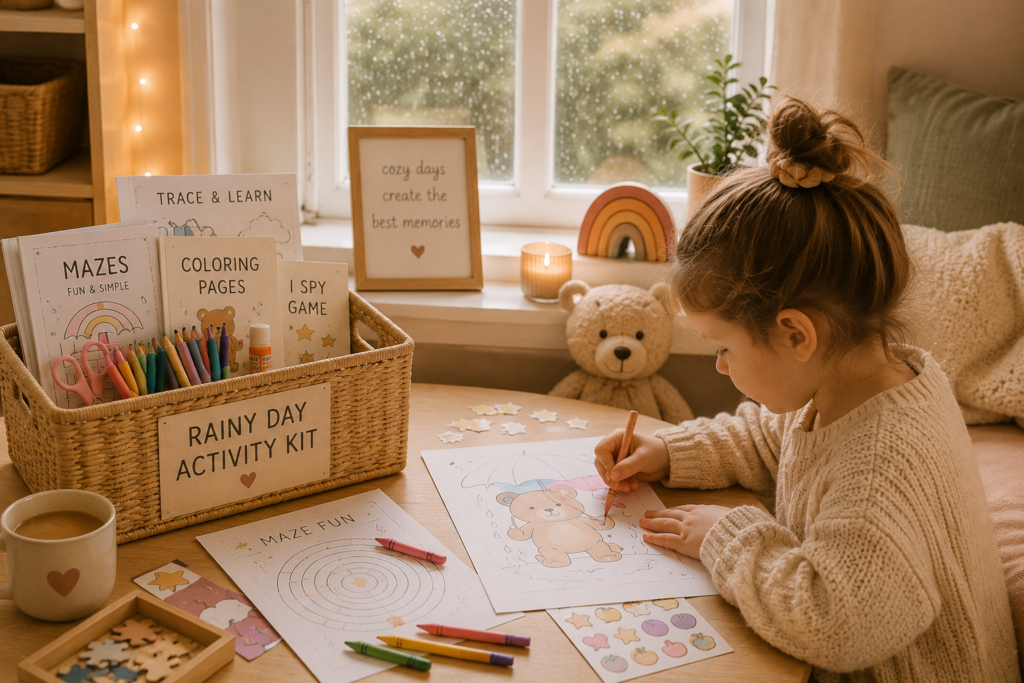
16. Keep a Small “Rainy Day Activity Kit”
Every parent knows the feeling:
bad weather outside, low energy inside, and a child who suddenly needs entertainment immediately.
That’s why having a simple “Rainy Day Activity Kit” ready can make everyday life feel much easier.
You don’t need anything complicated. A small box or drawer filled with a few rotating activities is often enough:
- coloring pages,
- stickers,
- crayons,
- mini puzzles,
- printable games,
- tracing sheets,
- or simple craft supplies.
The key is accessibility.
When children can easily grab an activity themselves, they become more independent and much less likely to default to screens out of boredom.
Many parents even keep small printable kits in the car, diaper bag, or kitchen drawer for quiet moments during errands, travel, or long afternoons at home.
Sometimes the simplest preparation creates the calmest days.
17. Use Printable Activities for Travel & Quiet Time
Long car rides, waiting rooms, flights, restaurants, and quiet afternoons at home all have one thing in common:
children quickly become restless when they have nothing engaging to do.
Printable activities are one of the easiest ways to keep kids entertained without relying entirely on screens.
Parents love them because they’re:
- lightweight,
- affordable,
- easy to reprint,
- and simple to bring anywhere.
A few printable coloring pages, mazes, matching games, or tracing activities can turn stressful moments into calm, focused quiet time.
Many families keep a small folder of printable activities ready specifically for travel days, restaurant visits, or independent play moments during busy afternoons.
And because printable packs include a variety of activities, children often stay interested much longer compared to a single toy or app.
For parents looking for cute educational printables, marketplaces like Etsy and creative platforms filled with downloadable resources have made finding screen-free activities easier than ever.
18. Rotate Toys & Activities Instead of Buying More
One of the easiest ways to make old toys feel exciting again is surprisingly simple:
stop keeping everything available all at once.
Many parents notice that children become overwhelmed when too many toys and activities are constantly visible.
Toy rotation works because it brings back novelty.
Instead of buying new things every week, try storing part of your toys, books, puzzles, or printable activities away for a little while and rotating them every few weeks.
Children often reconnect with “old” activities as if they’re brand new again.
This approach also helps:
- reduce clutter,
- encourage deeper focus,
- support independent play,
- and create a calmer home environment overall.
The same idea works beautifully with printable activities too.
Rotating coloring pages, matching games, mazes, and creative worksheets keeps children interested without needing endless new entertainment.
Sometimes less available choice actually creates more meaningful play.
19. Create Quick 10-Minute Creativity Challenges
Not every meaningful activity needs a perfect setup or a full afternoon of planning.
Sometimes the best creative moments happen in just ten minutes.
Simple creativity challenges can instantly shift a child’s attention away from screens while encouraging imagination, problem-solving, and confidence.
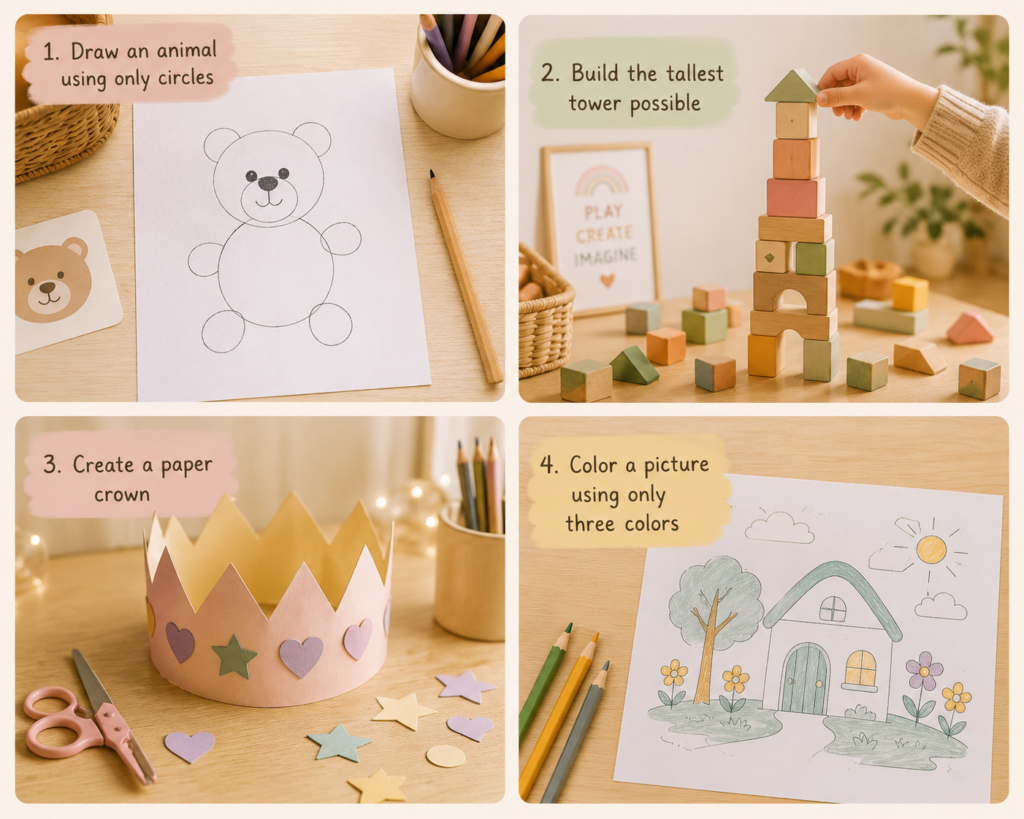
You can try mini challenges like:
- draw an animal using only circles,
- build the tallest tower possible,
- invent a new imaginary creature,
- create a paper crown,
- color a picture using only three colors,
- or make a tiny story about a favorite toy.
The goal isn’t perfection.
It’s simply creating small moments where children feel curious, engaged, and free to create something on their own.
These quick activities work especially well during:
- busy afternoons,
- transitions between tasks,
- quiet time,
- or moments when children say, “I’m bored.”
And very often, those small 10-minute ideas end up turning into much longer stretches of independent creative play.
20. Use Creative Resources to Make Your Own Activities
You don’t always need to invent every activity completely from scratch.
Sometimes the easiest way to make screen-free time feel fresh again is simply using creative resources that help spark new ideas.
Many parents now use printable platforms, templates, fonts, coloring packs, and craft resources to quickly create fun activities at home without spending hours preparing everything themselves.
For example, you can easily find:
- printable games,
- coloring pages,
- seasonal crafts,
- worksheets,
- flashcards,
- tracing activities,
- and DIY learning materials.
Creative resource libraries like Creative Fabrica have become especially popular for parents, homeschool families, teachers, and creators looking for cute printable ideas and ready-to-use educational designs.
Instead of endlessly searching Pinterest for random activities, having access to organized creative resources can save a huge amount of time while keeping children engaged in meaningful play.
And often, the simplest printable activity becomes the one children ask for again and again.
21. Encourage Independent Play in Small Steps
Independent play doesn’t happen overnight.
For many children, learning how to play alone comfortably is something that develops gradually over time.
The good news is that even small moments of independent play can make a big difference for both children and parents.
The key is starting small.
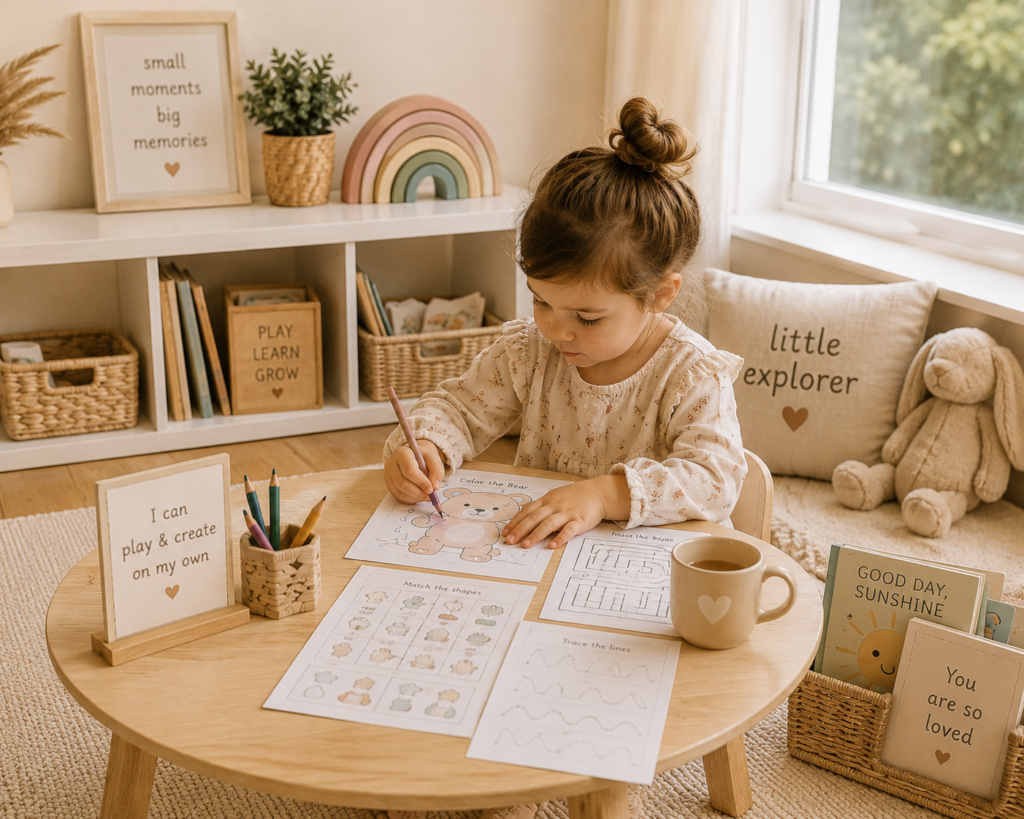
Instead of expecting a child to entertain themselves for an hour, begin with short, manageable activities:
- coloring pages,
- sticker books,
- simple puzzles,
- matching games,
- sensory bins,
- or quiet printable activities.
Children often feel more confident playing independently when they already know the activity and feel successful doing it.
Creating calm, inviting play spaces also helps tremendously.
A small table with crayons, paper, books, or printable activities ready to use can encourage children to naturally explore creativity on their own.
And over time, these quiet independent moments help build:
- confidence,
- imagination,
- problem-solving skills,
- and emotional independence.
Sometimes children simply need a little space and trust to discover how capable they really are.
22. Focus on Connection, Not Perfect Parenting
One of the biggest pressures modern parents face is the feeling that they constantly need to do more.
More activities.
More learning.
More structure.
More “perfect” moments.
But for children, the moments they remember most are rarely the perfectly planned ones.
They remember feeling safe.
They remember laughing together.
They remember small routines, cozy afternoons, bedtime stories, messy crafts, and the feeling of being genuinely connected.
Screen-free activities aren’t really about creating a flawless childhood.
They’re about making space for connection.
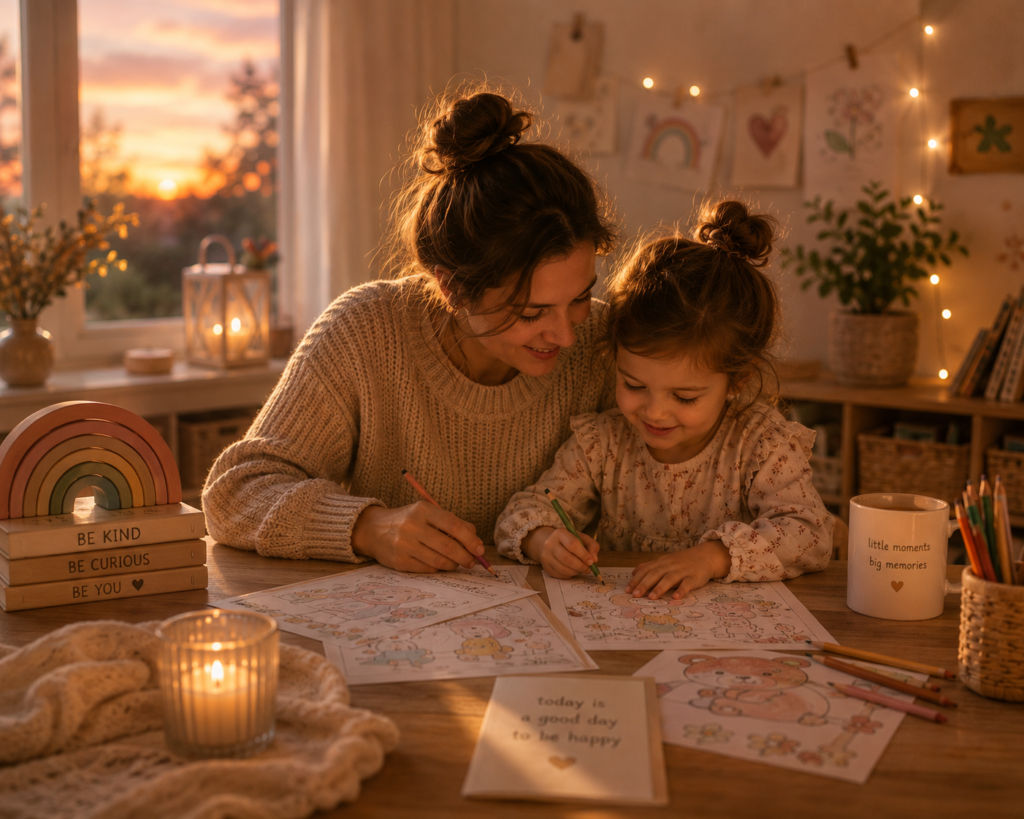
Even simple moments like coloring together for ten minutes, building a blanket fort, or going on a short evening walk can become meaningful memories children carry for years.
And the truth is:
children don’t need perfect parents.
They simply need present ones.
23. Small Moments Become Big Childhood Memories
At the end of the day, children usually won’t remember every toy they owned or every show they watched.
But they will remember how home felt.
They’ll remember the rainy afternoons spent coloring at the kitchen table.
The silly little games before bedtime.
The blanket forts.
The walks.
The crafts taped proudly to the refrigerator.
The moments when someone slowed down long enough to simply be with them.
That’s the beautiful thing about simple screen-free activities:
they’re rarely about perfection.
They’re about presence.
And often, the quiet little moments we almost overlook today become the memories children treasure most years from now.
You don’t need an expensive setup, a perfect routine, or endless entertainment to create meaningful childhood moments.
Sometimes all it takes is:
a few crayons,
a printable page,
a little creativity,
and time together.
Looking for simple printable activities for cozy screen-free moments?
Explore the TinyJoy printable collection designed to inspire creativity, calm play, and joyful learning for little kids.
If you’re looking for even more cozy, creative, and screen-free ideas for little kids, you may also enjoy our guide:
👉 Cute Printable Activities for Kids
https://tinyjoystudio.com/cute-printable-activities-for-kids/
Inside, we share playful printable ideas, creative learning inspiration, and simple activities designed to make everyday moments calmer, more creative, and more fun for young children.
And if you enjoy printable activities like the ones featured in this article, feel free to follow our Etsy shop too — we regularly release new educational printables, coloring pages, activity books, and cozy learning resources for kids and families.
✨ New printable collections are added frequently inside the TinyJoy Studio shop.
Frequently Asked Questions
What are good screen-free activities for kids?
Simple activities like coloring, printable games, scavenger hunts, crafts, puzzles, and imaginative play are great screen-free options for kids.
How can I reduce my child’s screen time naturally?
Creating engaging offline activities, cozy routines, and creative play opportunities can help reduce screen time without constant conflict.
Are printable activities good for kids?
Yes. Printable activities can support creativity, focus, fine motor skills, and independent play while giving children a fun screen-free alternative.