Best Preschool Activities for 4 Year Olds (Part 1)
There’s something quietly magical about the preschool years.
At four years old, children learn through movement, imagination, texture, sound, and play — often all at once. One minute they’re building a castle from couch pillows, and the next they’re asking questions big enough to surprise even adults.
The best preschool activities don’t need expensive supplies or perfectly planned schedules. What matters most is creating small moments that spark curiosity, confidence, and joy.
From simple counting games to sensory bins and pretend play, the right activities can help 4-year-olds strengthen fine motor skills, improve communication, build early literacy, and develop problem-solving abilities — all while having fun.
In this guide, you’ll find easy preschool activities that are engaging, low-prep, and realistic for everyday family life. Whether you’re a parent, caregiver, or preschool teacher, these ideas are designed to turn ordinary moments into meaningful learning experiences.
1. Color Sorting Games
For a 4-year-old, learning often begins with something beautifully simple: noticing differences. Red and blue. Big and small. Soft and rough. Color sorting games may seem basic at first glance, but they quietly build some of the most important early learning skills.
When children sort objects by color, they strengthen visual discrimination, focus, memory, and early math thinking. Just as importantly, these activities give preschoolers a sense of independence — the joyful feeling of “I can do this myself.”
The best part? Most color activities can be created from things already around the house.
Try These Easy Color Sorting Activities
Rainbow Toy Hunt
Ask your child to find toys around the room that match a specific color.
You can use bowls, baskets, or even pieces of colored paper as sorting stations.
This activity encourages movement, observation, and decision-making all at once.
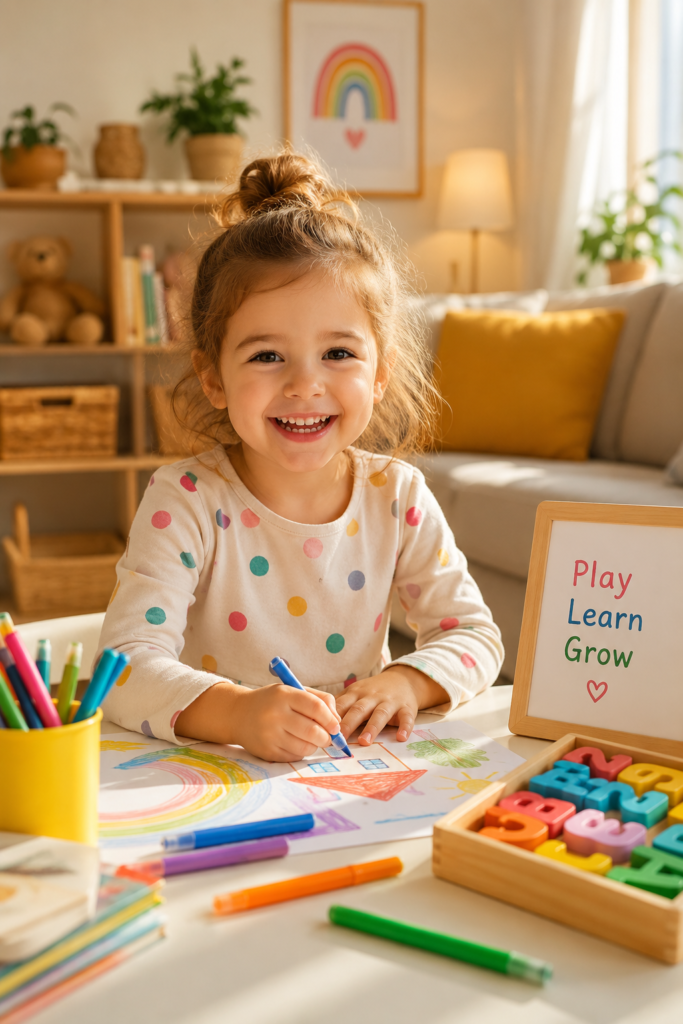
Pom-Pom Sorting
Using tongs or spoons, have children sort colorful pom-poms into matching cups or muffin tins.
This simple game is excellent for developing fine motor skills and hand coordination — important foundations for future writing skills.
Color Matching with Stickers
Draw colored circles on paper and let children place matching stickers on top.
It’s calming, creative, and surprisingly effective for improving concentration.
Snack Time Sorting
Turn snack time into learning time by sorting colorful cereal, fruit, or crackers before eating them.
Preschool learning works best when it feels playful and natural rather than forced.
A Helpful Tip for Parents
At this age, perfection doesn’t matter.
If your child mixes colors, changes the rules halfway through, or turns the activity into imaginative play — that’s still meaningful learning.
The goal isn’t to create perfect little students.
It’s to nurture curious, confident children who enjoy discovering the world around them.
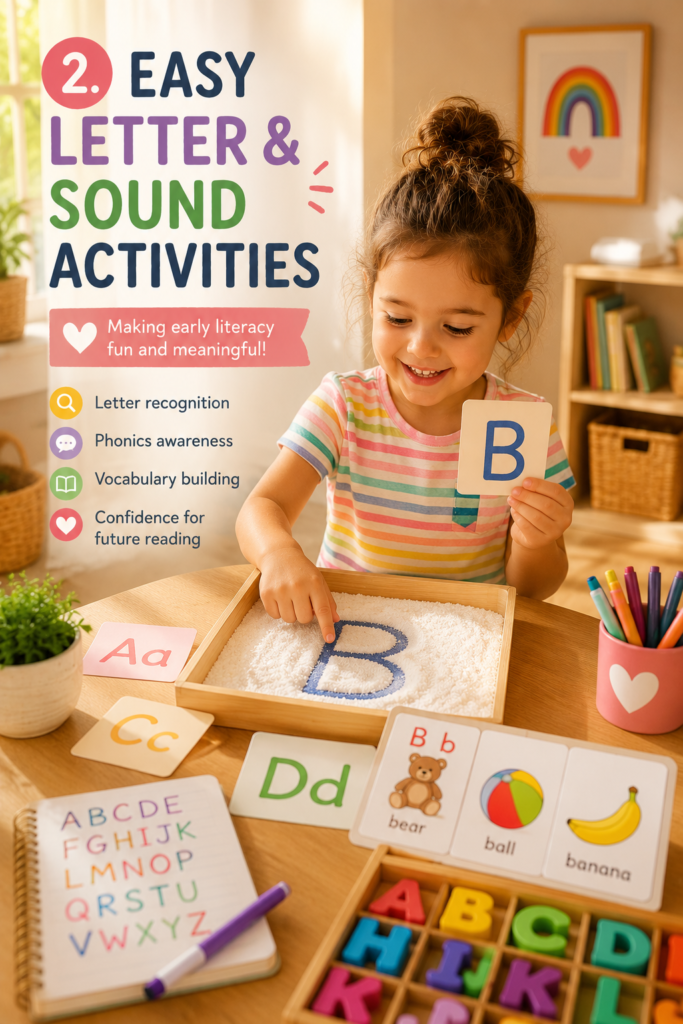
2. Easy Letter & Sound Activities
Long before children learn to read full sentences, they begin noticing something much smaller — the sounds hidden inside words.
At four years old, preschoolers are naturally curious about letters. They point to signs at the grocery store, recognize the first letter of their name, and proudly shout out words they already know. These early moments of recognition are the foundation of literacy.
The key is to keep letter learning playful rather than academic.
At this age, children learn best through conversation, movement, music, and hands-on discovery — not worksheets alone.
Simple Letter Activities Preschoolers Love
Letter Hunt Around the House
Choose one letter for the day and invite your child to search for it around the home.
Maybe they spot the letter “B” on a cereal box or the letter “M” in a magazine title. Suddenly, letters become part of their real world instead of something limited to flashcards.
Beginning Sound Basket
Fill a small basket with objects that start with the same sound.
For example:
- Ball
- Bear
- Banana
- Button
Say each word slowly together and emphasize the beginning sound. This helps children connect spoken sounds with future reading skills.
Alphabet Sensory Tray
Write letters in sand, rice, flour, or shaving cream using fingers or small tools.
Sensory learning makes letter practice feel exciting and memorable — especially for active preschoolers who struggle to sit still for long periods.
Sing the Alphabet in New Ways
Try whispering the alphabet, clapping it, singing it slowly, or using silly voices.
Repetition works best when it feels fun rather than repetitive.
Why These Activities Matter
Early literacy isn’t about pushing children to read too soon.
It’s about helping them build confidence with language.
When preschoolers play with sounds, letters, rhymes, and words in a relaxed environment, they begin developing the skills needed for reading naturally and without pressure.
And sometimes, the most powerful learning moments happen casually — while laughing on the kitchen floor or pointing at letters during a walk outside.
3. Fine Motor Skill Crafts
Some of the most important preschool learning happens through tiny hands doing tiny things.
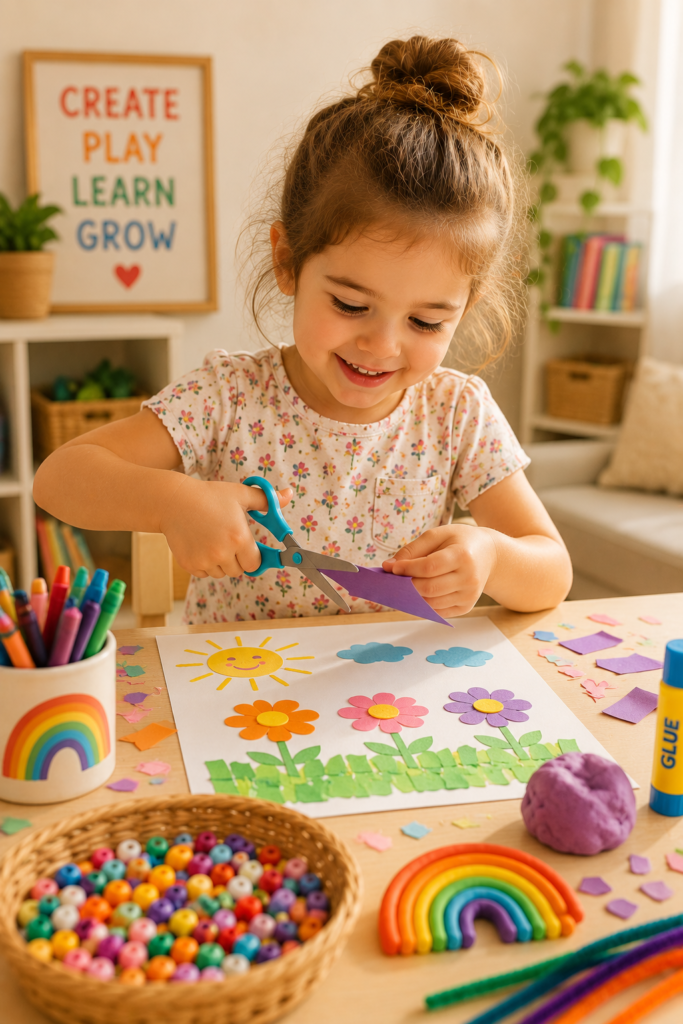
Peeling stickers. Rolling playdough. Threading beads. Using child-safe scissors for the very first time. These simple creative activities may look like ordinary play, but they’re quietly building the muscles and coordination children will later use for writing, drawing, buttoning clothes, and everyday independence.
At four years old, many children are eager to create things on their own. Crafts give them the freedom to experiment, make choices, and feel proud of what they’ve made — even when the final result is wonderfully imperfect.
Easy Fine Motor Activities for Preschoolers
Sticker Collage Art
Give children paper, colorful stickers, and freedom to create.
Peeling and placing stickers strengthens finger muscles and hand control while encouraging creativity and focus.
Playdough Shapes & Letters
Ask children to roll snakes, flatten circles, or shape simple letters using playdough.
The squeezing, rolling, and pinching motions are excellent for developing hand strength needed for future handwriting.
Bead Threading
Using large beads and string or pipe cleaners, children can create simple patterns and necklaces.
This activity improves hand-eye coordination, patience, and concentration.
Cutting Practice
Offer child-safe scissors and strips of paper with thick lines to cut along.
At first, the cuts may zigzag wildly — and that’s completely okay. Preschool crafting is about practice, not perfection.
Why Hands-On Creativity Matters
Craft activities teach much more than art skills.
They encourage problem-solving, independence, persistence, and confidence.
When children create something with their own hands, they begin learning an important lesson early in life:
“I can try. I can improve. I can make something beautiful.”
And sometimes, a table covered in paper scraps and glitter is actually a sign of meaningful learning happening right in front of you.
4. Simple Counting Activities
For preschoolers, math begins long before worksheets and equations.
It starts with little everyday moments: counting blueberries at breakfast, stacking blocks, or asking for “one more” bedtime story.
At four years old, children are naturally curious about numbers when learning feels playful and hands-on. The goal at this stage isn’t memorization — it’s helping children understand that numbers are part of the world around them.
Simple counting activities help preschoolers develop early math confidence, pattern recognition, logical thinking, and problem-solving skills without pressure or frustration.
Fun Counting Activities for 4-Year-Olds
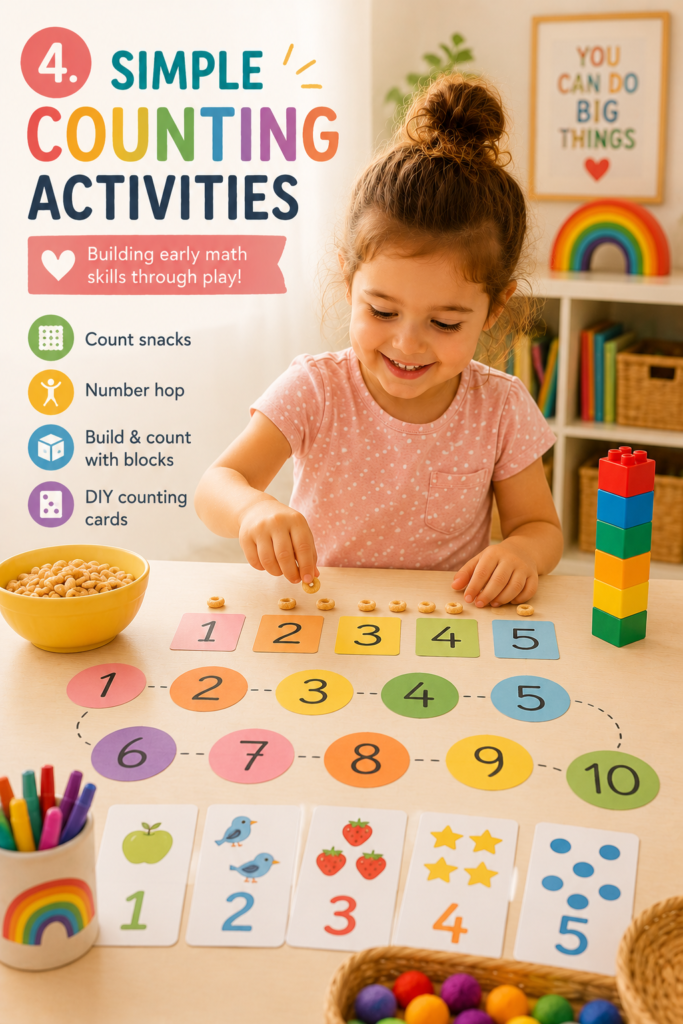
Counting Snacks
Place small snacks like crackers, grapes, or cereal pieces on a plate and count them together.
You can ask simple questions like:
- “How many do we have?”
- “What happens if we add one more?”
- “Can you eat three and count what’s left?”
Math feels much more exciting when it’s edible.
Number Hop Game
Write numbers on paper and place them across the floor.
Call out a number and let your child jump to it. This combines movement with number recognition — perfect for energetic preschoolers who learn best through active play.
Build & Count with Blocks
Encourage children to build towers using a specific number of blocks.
For example:
- “Can you build a tower with 5 blocks?”
- “Which tower is taller?”
- “What happens if we add 2 more?”
Activities like this gently introduce comparison and early problem-solving concepts.
DIY Counting Cards
Draw simple dots, animals, or shapes on cards and ask children to count them aloud.
You can also match the correct number card to each group for an extra challenge.
Why Early Math Should Feel Fun
Many adults grow up believing math is stressful or difficult.
But preschool years offer a chance to build a completely different relationship with learning.
When numbers are introduced through games, conversations, and curiosity, children begin seeing math as something approachable and enjoyable rather than intimidating.
And often, the strongest early learning happens during ordinary moments — counting stairs, sorting toys, or dividing snacks at the kitchen table.
5. Sensory Play Stations
Some preschool activities look messy on the outside — but underneath the scattered rice, water splashes, and piles of kinetic sand, something incredibly valuable is happening.
Sensory play helps children explore the world using touch, movement, sound, and curiosity. For 4-year-olds especially, these hands-on experiences support cognitive development, creativity, emotional regulation, and problem-solving in ways worksheets simply can’t.
And perhaps most importantly: sensory play invites children to slow down, focus deeply, and fully immerse themselves in discovery.
Easy Sensory Activities for Preschoolers
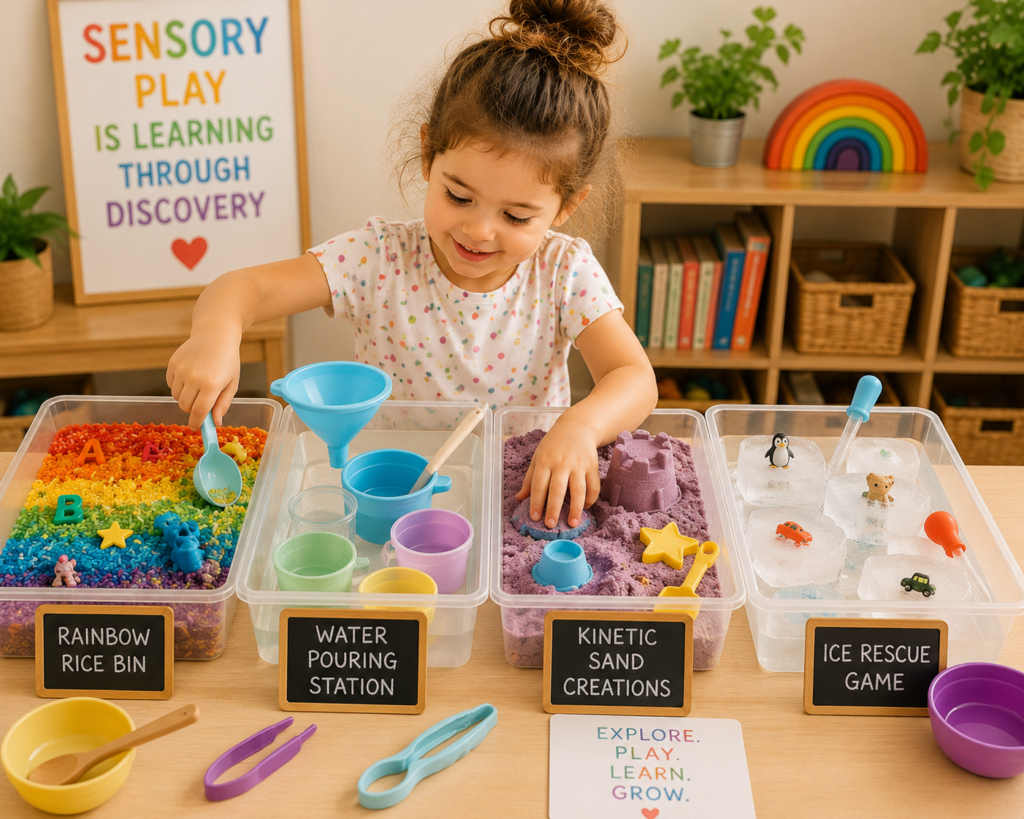
Rainbow Rice Bin
Fill a container with colored rice and hide small toys, letters, or shapes inside.
Children can scoop, pour, search, and sort while strengthening fine motor skills and concentration.
Add measuring cups or spoons to make the activity even more engaging.
Water Pouring Station
Set up cups, funnels, bowls, and spoons near a sink or outdoors.
Simple pouring activities help preschoolers practice coordination, patience, and cause-and-effect thinking — all while feeling surprisingly calming.
Kinetic Sand Creations
Kinetic sand is wonderful for imaginative play because it’s soft, moldable, and endlessly reusable.
Children can build castles, make pretend food, press shapes, or simply enjoy the sensory experience of squeezing and shaping the sand.
Ice Rescue Game
Freeze small toys inside ice cubes or containers and let children “rescue” them using warm water, spoons, or toy tools.
This activity combines sensory exploration with problem-solving and excitement.
Why Sensory Play Matters So Much
To adults, sensory bins may sometimes look like “just play.”
But for preschoolers, sensory experiences are powerful learning opportunities.
Children develop language by describing textures.
They build focus through repetitive motions.
They learn science concepts through experimenting with water, temperature, and movement.
And often, sensory play creates something else modern childhood desperately needs:
moments of calm, open-ended exploration without pressure to perform.
Because sometimes the richest learning happens when children are simply allowed to explore.
Conclusion
The best preschool activities don’t need to be complicated to be meaningful.
At four years old, children learn through movement, curiosity, imagination, repetition, and play. A simple counting game at the kitchen table or a sensory bin on a rainy afternoon can become a powerful moment of growth, connection, and confidence-building.
What matters most isn’t creating a “perfect” learning environment.
It’s creating space for exploration, conversation, creativity, and joy.
Some days your preschooler may stay focused for twenty minutes. Other days they may lose interest after two. Both are completely normal. Early childhood learning is not a race — it’s a collection of small experiences that slowly shape how children see themselves and the world around them.
And often, the memories children carry longest are not the structured lessons, but the moments when learning felt warm, playful, and shared together.
Looking for More Preschool Printables & Learning Fun?
If you’d like even more easy, low-prep activities for preschoolers, explore our growing collection of printable games, worksheets, and creative learning resources at Tiny Joy Studio.
From counting activities to alphabet games and hands-on learning packs, everything is designed to make early learning feel playful, calm, and engaging for young children.
You May Also Like
Looking for even more screen-free learning ideas?
Check out our related guide: