How to Teach Canada Geography for Kids: 5 Fun, Hands-On Activities (No Boring Textbooks!)
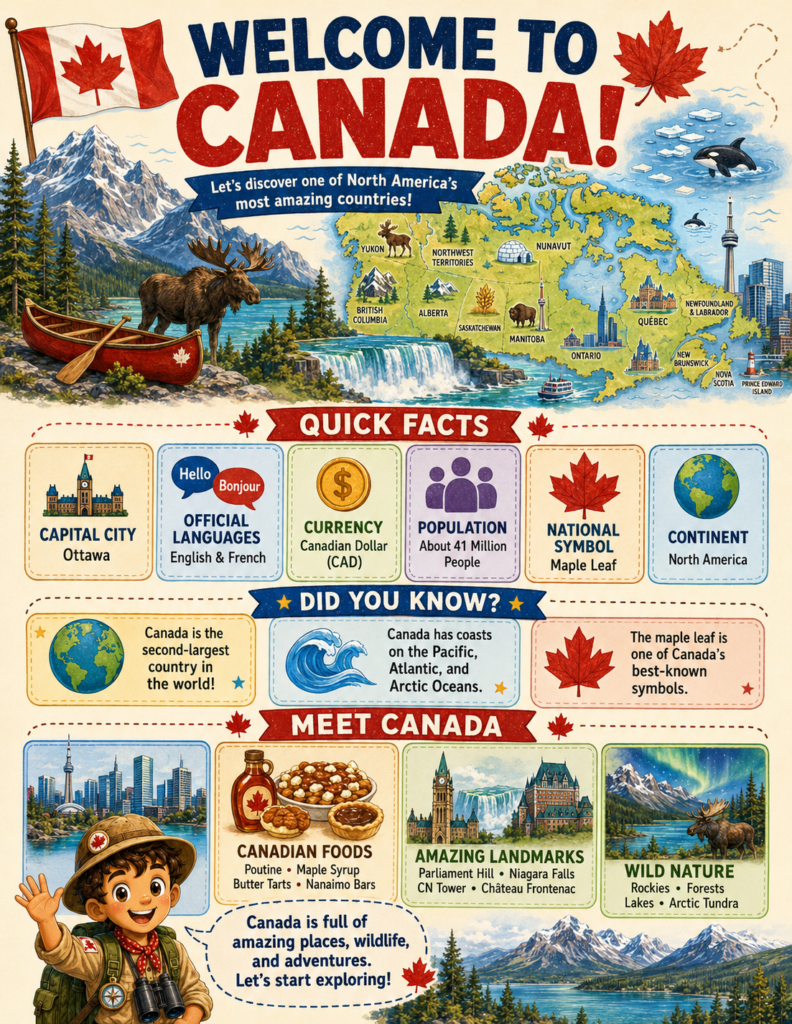
When you look at a globe with your elementary students or homeschoolers, few countries capture the imagination quite like Canada. Stretching from coast to coast to coast—bordered by the Pacific, Atlantic, and Arctic Oceans—Canada is the second-largest country in the world and a living, breathing classroom of extremes. From the towering, snow-capped peaks of the Rocky Mountains to the wide-open golden Prairies, vibrant bilingual cities, and the frozen Arctic tundra, this nation offers an incredible adventure for young learners.
However, teaching social studies and world cultures to 6- to 9-year-olds can feel overwhelming if you rely on traditional, dry textbooks and black-and-white outline maps. Kids don’t want to simply memorize provincial borders; they want to explore, investigate, and feel like active travelers. The secret to long-term educational retention isn’t repetitive drills—it is the thrill of interactive discovery.
In this comprehensive guide, we will explore 5 hands-on, screen-free activities to turn your Canada geography lessons into an unforgettable quest. We will also show you how to use the open-and-go Canada Explorer activity book by Tiny Joy Studio as your ultimate framework!
Meet Leo and the World Explorer Passport System
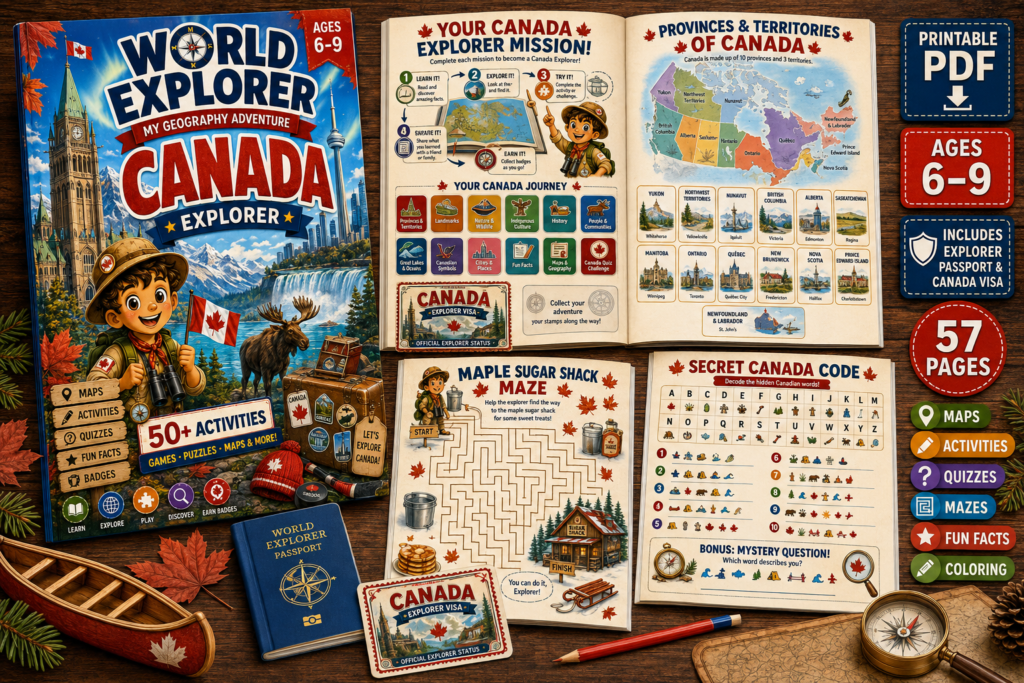
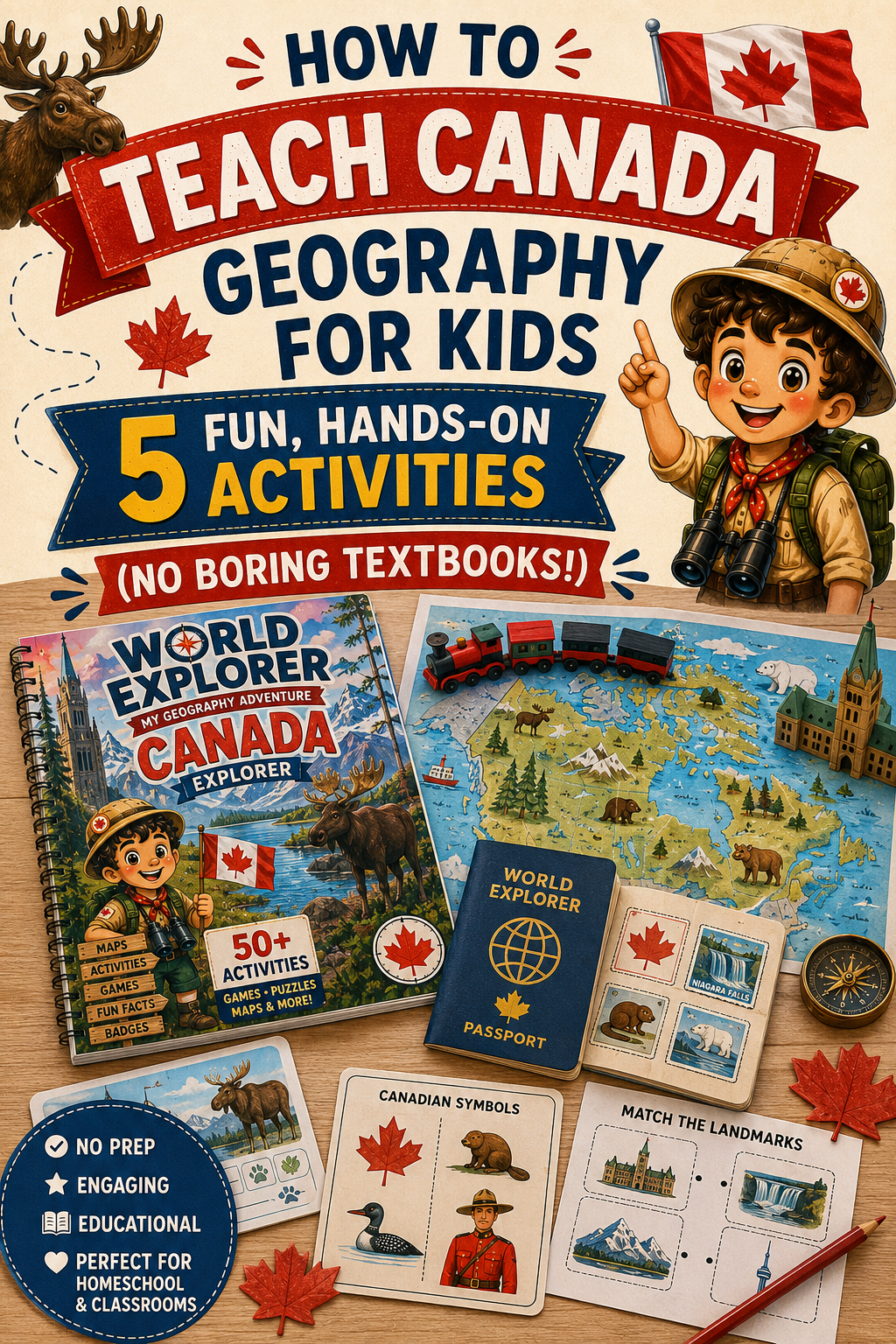
Instead of lecturing children with dense paragraphs, the Canada Explorer activity book (part of the popular World Explorer Series) invites your child on a guided expedition alongside a friendly animated travel buddy—a boy named Leo. Leo leads young adventurers across 10 provinces and 3 territories, asking questions, presenting puzzles, and offering encouragement in a supportive, conversational tone.
The crown jewel of this learning method is the World Explorer Passport. When you give a child a tangible passport booklet, every geography lesson gets a clear, rewarding purpose. As they complete educational challenges throughout the book, their ultimate goal is to unlock achievements and earn an official Canada Explorer Visa Stamp.
Let’s dive into 5 specific activities that will bring Canada to life at your kitchen table!
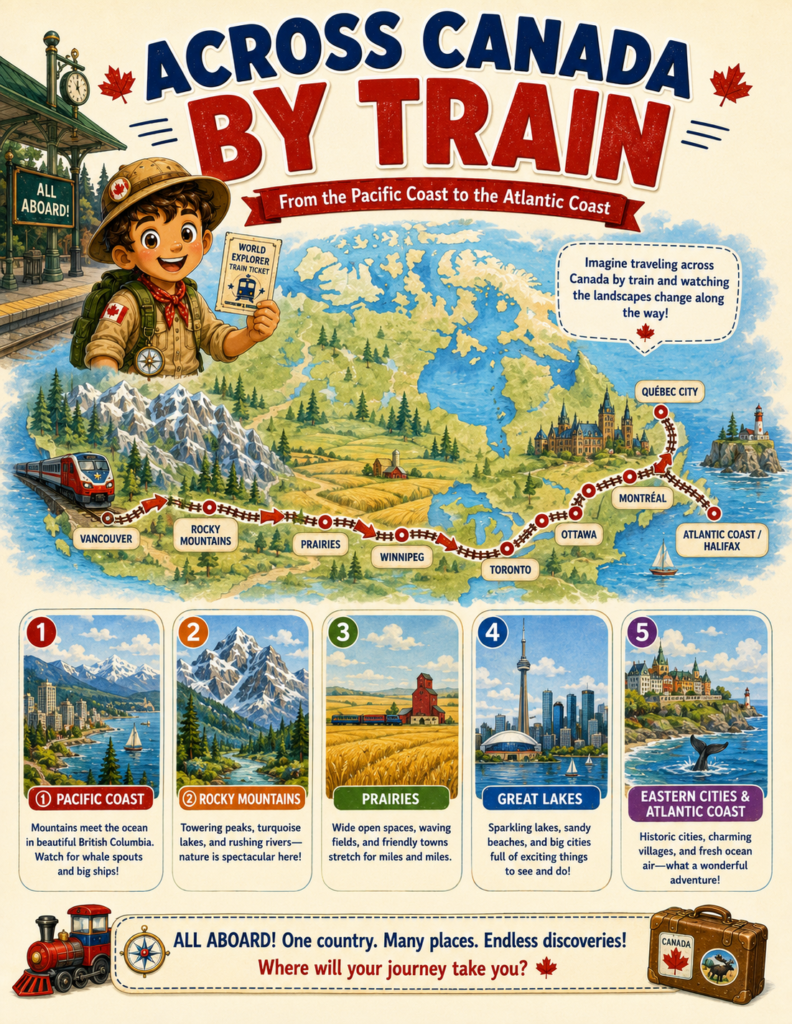
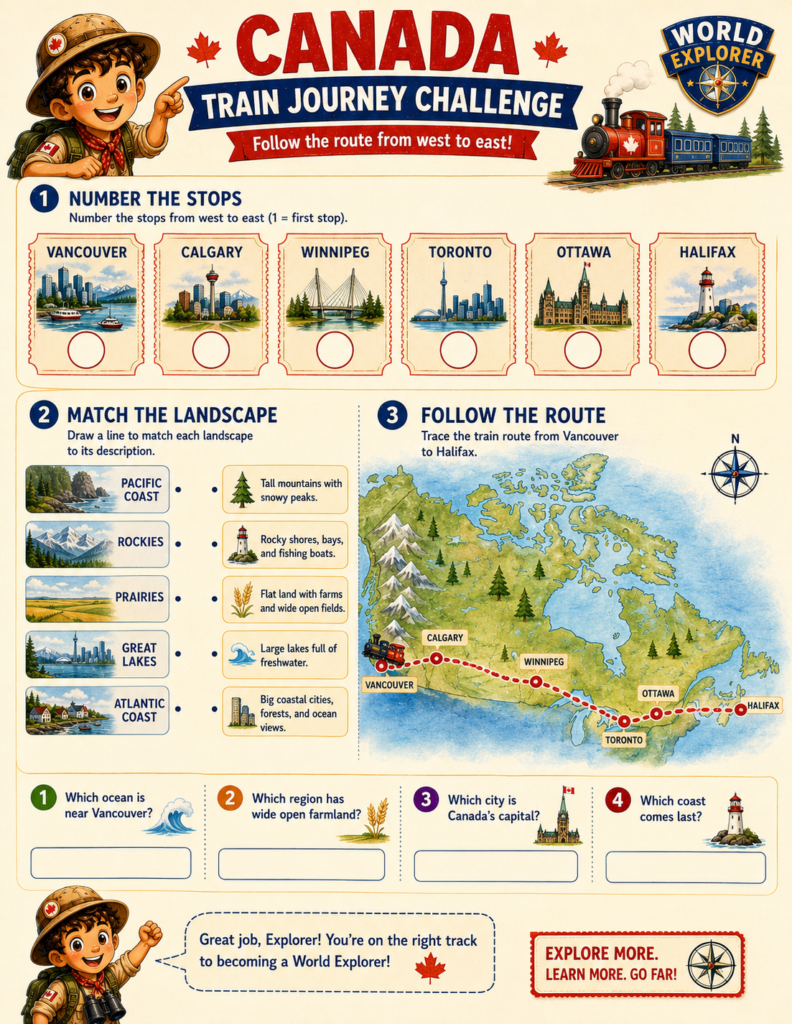
1. All Aboard! Coast-to-Coast Train Journey (Pages 14–15)
One of the most effective ways to teach children about Canada’s vast geography is through a simulated journey. Because the country spans six time zones and multiple distinct landscapes, traveling «by train» helps kids visually connect regional shifts.
- What’s Inside the Book: Pages 14 and 15 feature the «All Aboard! Across Canada by Train» challenge. Children follow a scenic railroad route from west to east, numbering train stops from Vancouver on the Pacific Coast, through the towering Rocky Mountains, across the wide-open farmland of the Prairies, past the sparkling Great Lakes (Toronto and Ottawa), all the way to the historic lighthouses of Halifax on the Atlantic Coast.
- How to Bring It to Life at Home: Set up a train station in your living room! Line up chairs like train cars, give your child a pretend «train ticket,» and have them narrate the changing landscapes out the window as they trace the route on their map.
2. A Culinary & Bilingual Quest: Poutine, Maple Syrup, and French (Pages 20–21)
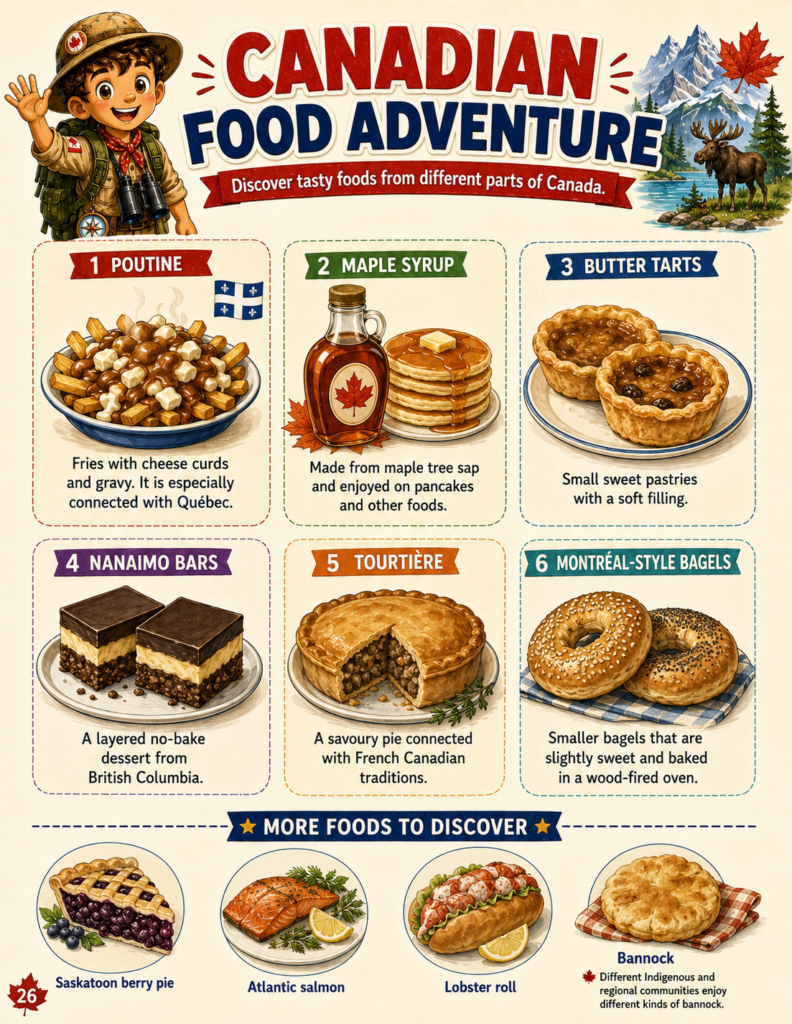
You cannot truly understand a country without exploring its culture, daily life, and gastronomy. Canada is officially bilingual (English and French) and boasts delicious regional dishes that kids love.
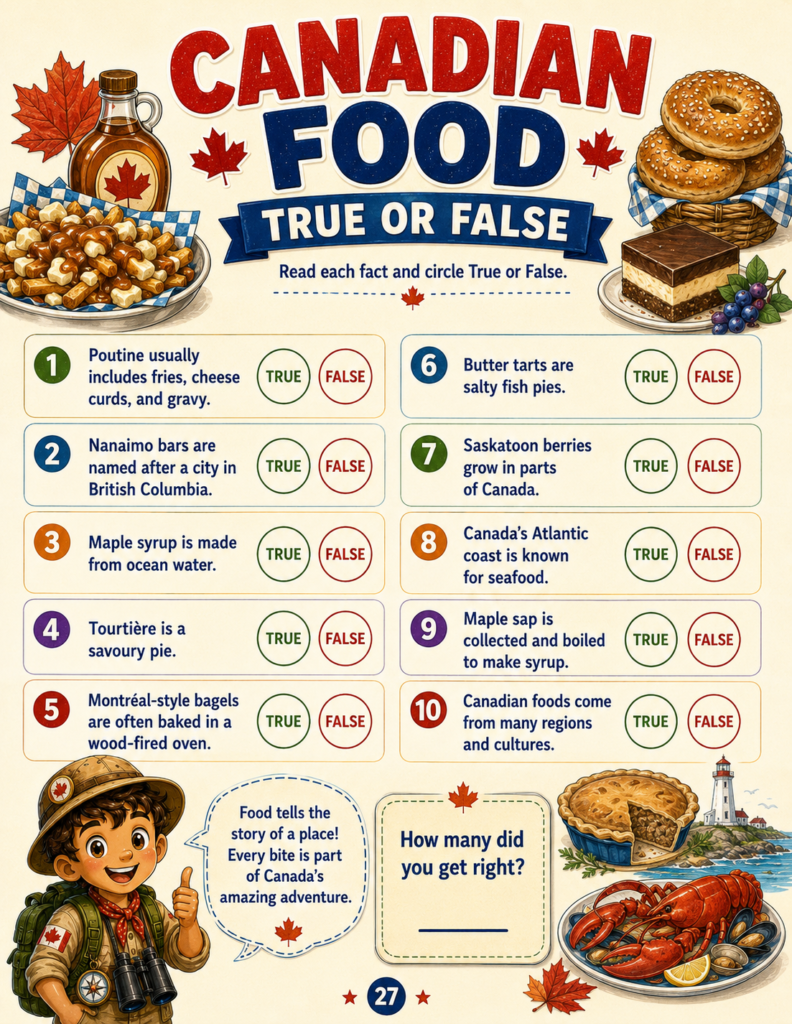
- What’s Inside the Book: Page 20 introduces young explorers to the «Canadian Food Adventure,» featuring iconic treats like poutine (fries with cheese curds and gravy from Québec), pure maple syrup, sweet butter tarts, and Nanaimo bars from British Columbia. Kids then test their culinary knowledge with a fun True or False quiz. On Page 21, Leo introduces Canada’s two official languages, teaching kids useful everyday French words like Bonjour, Merci, and S’il vous plaît through engaging matching puzzles.
- How to Bring It to Life at Home: Host a Canadian pancake morning! Let your children decorate pancakes with real maple syrup and fruit while practicing greeting each other in French. This multi-sensory approach shows exactly why interactive activity books make learning stick, transforming new cultural knowledge into a joyful family memory.
3. Wild Safari: From Boreal Forests to the Arctic Tundra (Pages 22–23)
Elementary children are naturally drawn to zoology. Canada’s pristine wilderness is home to fascinating creatures that have adapted to survive in extreme northern habitats.
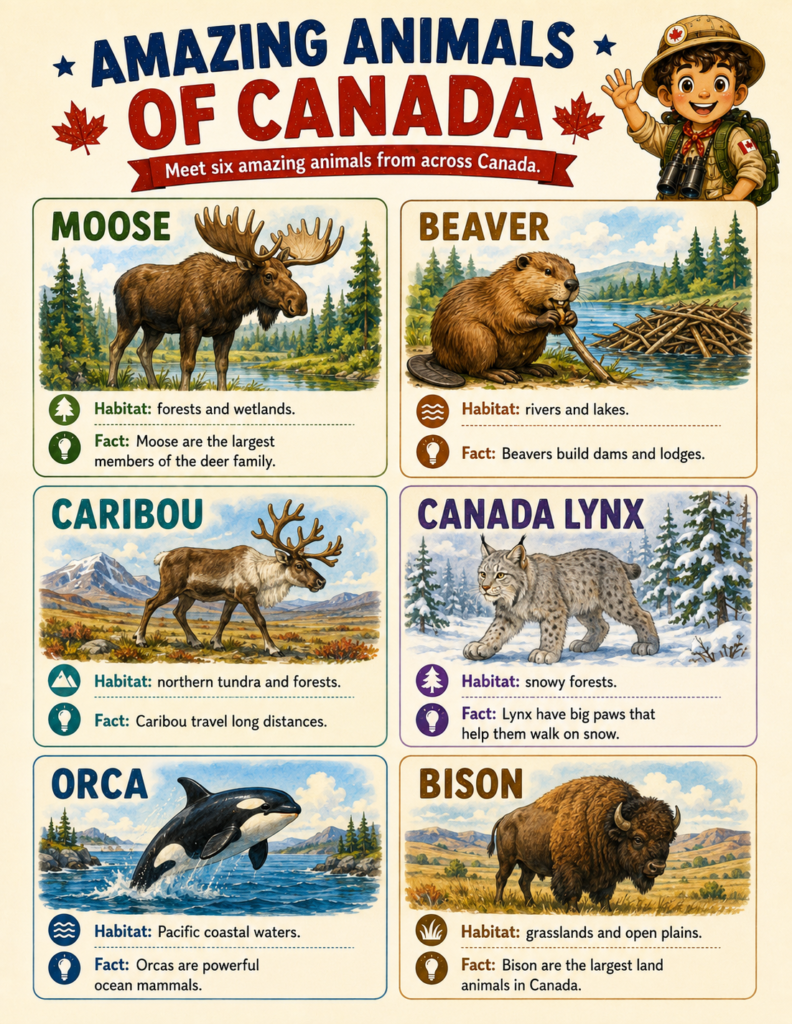
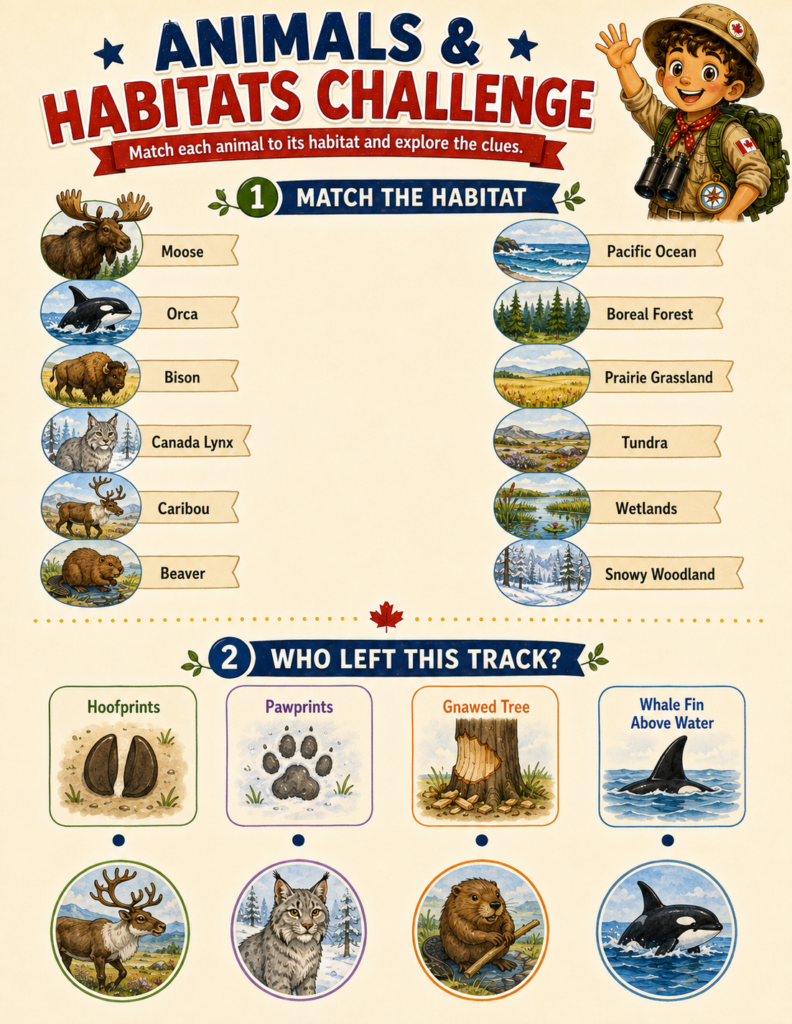
- What’s Inside the Book: Page 22 highlights six iconic Canadian animals: the majestic moose (the largest member of the deer family), the busy dam-building beaver, the migrating caribou, the Canada lynx with its snowshoe-like paws, the powerful ocean orca, and the giant prairie bison. On Page 23, kids tackle the «Animals & Habitats Challenge,» where they must draw lines to match each animal to its correct biome (such as Boreal Forest, Tundra, or Wetlands) and identify mystery animal tracks, comparing hoofprints to pawprints.
- How to Bring It to Life at Home: Create a backyard or living-room animal track investigation. Draw different animal footprints on construction paper, hide them around the room, and let your little zoologists use a magnifying glass to identify which Canadian animal passed through!
4. Landmark Detectives & Secret Codes (Pages 8–10)
Visual puzzles and secret ciphers are fantastic tools for developing focus, attention to detail, and problem-solving skills in 6- to 9-year-olds.
- What’s Inside the Book: In the Ottawa capital section, young detectives explore famous Canadian landmarks like Parliament Hill, the Peace Tower, and the Rideau Canal (which transforms into the world’s largest natural skating rink in winter!). They complete matching activities and solve a spot-the-difference visual challenge in ByWard Market. Later in the book, kids encounter the «Secret Canada Code,» where they must use a symbol key to decipher hidden geography words like Maple, Tundra, Canoe, and Aurora.
- How to Bring It to Life at Home: While your child decodes the secret Canadian messages or colors the architectural lines of Parliament Hill, play background sounds of crackling campfires or rushing waterfalls. Connecting visual puzzles with auditory atmosphere builds immense cognitive engagement and analytical confidence.
5. The Ultimate Reward: Earning the Canada Visa Stamp (Page 58)
Every great educational journey deserves a triumphant finale! In the World Explorer system, there are no stressful grades or tests—only positive reinforcement and the pride of collecting.
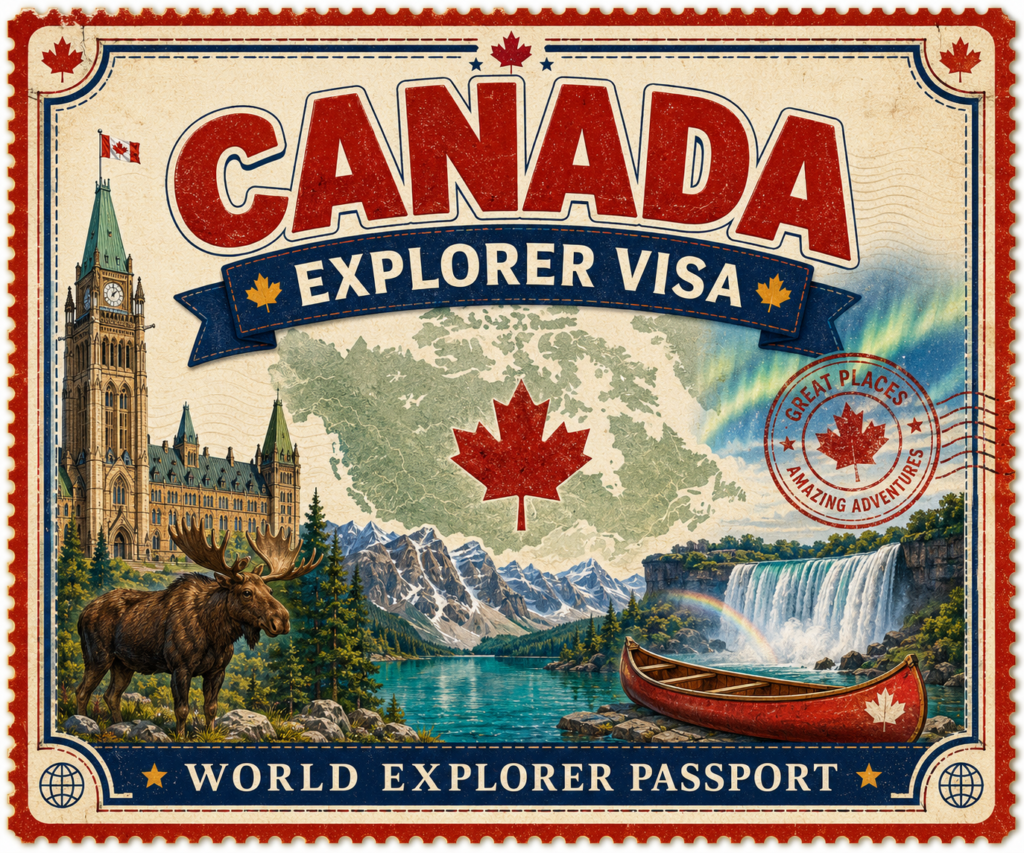
- What’s Inside the Book: After completing the quizzes, mapping challenges, and cultural missions, your child unlocks the official Certificate of Achievement, proudly presented and signed by Leo the Explorer. Right beside it sits their ultimate reward: the Canada Explorer Visa Stamp. Kids carefully cut out the visa along the dotted line and paste it directly inside their personal World Explorer Passport booklet.
- How to Bring It to Life at Home: Host an official «Passport Stamping Ceremony» at home! Shake your child’s hand, sign their certificate, and let them glue their new Canadian visa into their passport. When children see their passport filling up with colorful stamps from around the globe, their curiosity expands, and they immediately begin asking which country they get to explore next!
Expand Your Child’s Global Horizons
To build a truly well-rounded homeschool geography curriculum, it helps to connect continental overviews with deep, country-specific unit studies. If you want to understand the overarching philosophy behind our gamified learning model, read our guide on why kids learn geography best through adventure and progression.
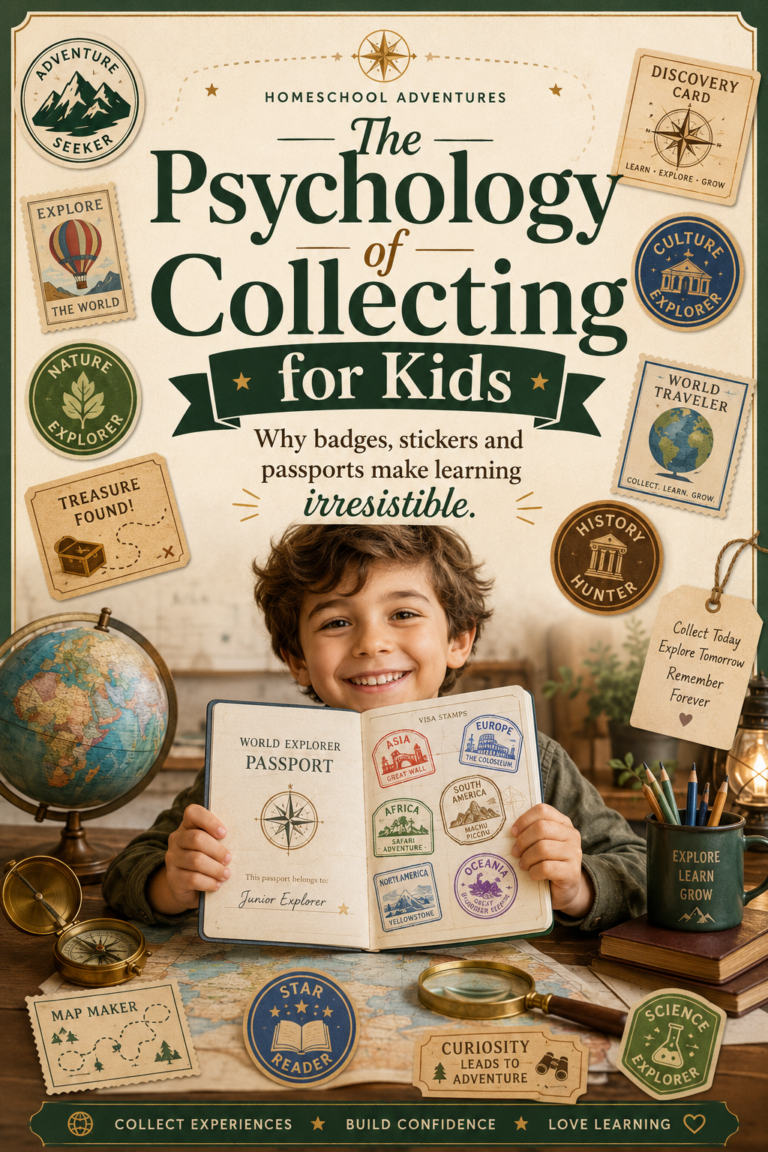
If you are looking for rainy-day inspiration or ways to keep learning active without screens, explore our favorite screen-free geography activities for elementary kids. To see how collecting badges and visa stamps boosts childhood confidence and memory, dive into our article on the psychology of collecting for kids in homeschooling. And when your young explorer is ready to journey south of the border, discover how to transition seamlessly into our Amazon Rainforest to the Andes unit study.
Ready to Start Your Canadian Adventure?
Teaching Canada geography for kids doesn’t have to mean tedious prep work or endless printing of disconnected worksheets. By turning social studies into an interactive, tactile, and gamified quest, you give your child a lifelong gift: cultural empathy, a love for nature, and the mindset of a true world explorer.
Grab your colored pencils, pack your pretend backpack, and let’s explore the mountains, forests, and vibrant cities of Canada together!