How to Reduce Screen Time Without Tears: 5 Fun Learning Games
If you are a parent of a 6- to 9-year-old, you likely know the daily drill all too well. The moment you ask your child to turn off the tablet, put down the gaming console, or step away from the TV, the atmosphere in the room shifts. Shoulders drop, tears well up, and the dreaded phrase echoes through the hallway: «But I’m bored! There’s nothing else to do!»
In an age designed for digital distraction, trying to reduce screen time for kids can feel like negotiating a hostage crisis. As parents, we often experience a heavy dose of guilt. We know our children need less passive screen consumption and more active, hands-on play, but finding screen-free alternatives that actually capture their attention—without requiring hours of elaborate prep work—is tough.
Here is the secret that changes everything: You cannot simply remove a screen; you must replace it with an adventure. Children don’t cling to screens just because they love glowing rectangles; they crave the instant rewards, engaging challenges, and sense of progression that digital games provide. If you want to unplug your kids without triggering a meltdown, you need to bring those same exciting elements into the real world.
In this guide, we will explore 5 fun, low-prep learning games that seamlessly transition your kids from digital consumers to curious real-world explorers. Plus, we’ll introduce a brilliant interactive tool that turns screen-free time into an ongoing global quest!
Why Saying «Turn It Off» Always Ends in Tears
Before we dive into the games, it helps to understand what is happening inside your child’s brain. Video games and fast-paced videos are engineered to deliver constant hits of dopamine—the brain’s «feel-good» chemical. When you suddenly turn off the TV or iPad, that dopamine stream drops precipitously. To a child, this chemical drop feels like a sudden, uncomfortable crash.
When we tell kids to «go find something to do,» a blank room feels overwhelmingly boring compared to a digital screen. To bridge this gap, we need to provide structured gamification. By turning educational concepts into tactile, goal-oriented challenges, we can channel their natural competitive drive into creative learning. (If you want to understand the science behind why structured play works so well, check out our deep dive into why educational games help kids learn better.)
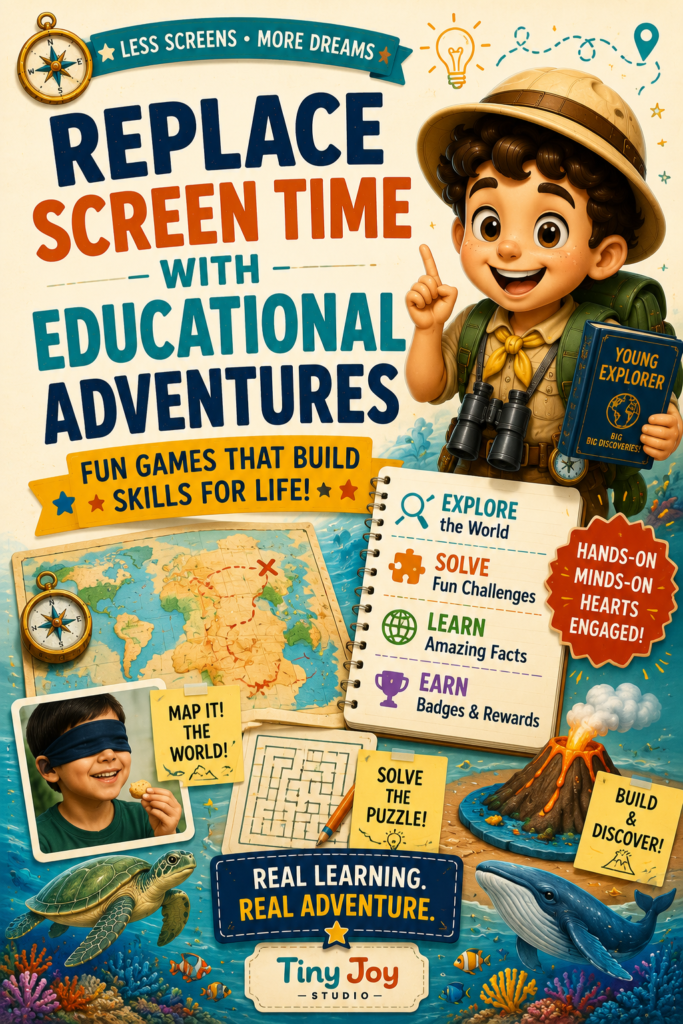
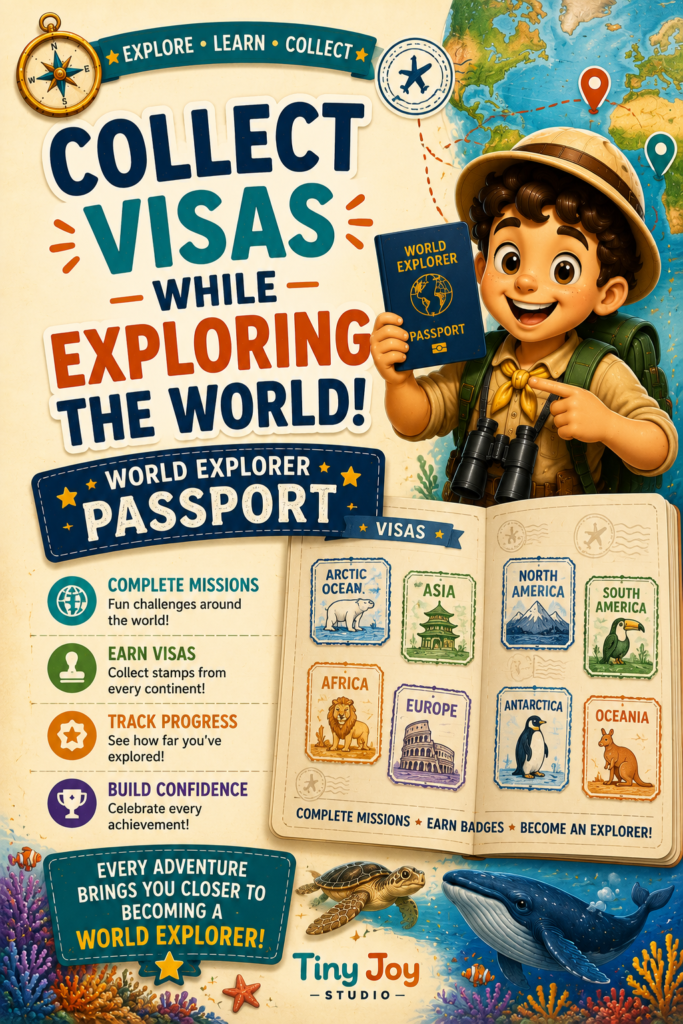
Before we jump into practical activities, here’s a quick visual overview that captures the idea behind turning screen time into real-world exploration.
5 Fun Learning Games to Reduce Screen Time for Kids
You don’t need expensive toys or a degree in elementary education to make screen-free time thrilling. These five interactive games use simple household items, active movement, and a dash of storytelling to keep little minds buzzing.
1. The «Living Room Expedition» (Scavenger Hunt & Mapping)
Instead of fighting screen time, channel your child’s inner explorer by turning your living room into an uncharted territory waiting to be mapped.
- The Mission: Give your child a blank piece of paper and a clipboard. Tell them they are cartographers (map-makers) sent to survey a new land. Their job is to draw an overhead map of the living room or backyard, creating special symbols for «mountains» (sofas), «lakes» (rugs), and «dense forests» (houseplants).
- The Educational Bonus: Once the map is drawn, hide a small «artifact» (like a favorite toy or a coin) somewhere in the room and mark it with an red «X» on their map. Reading a grid and orienting a map builds spatial awareness, foundational geometry skills, and basic geographical literacy!
2. The «Blindfold Taste Test» (Global Cultures & Senses)
Kids are naturally curious about the world, and there is no better way to explore different continents than through their taste buds.
- The Mission: Blindfold your child at the kitchen table and tell them they are going on a sensory world tour. Present them with 4 or 5 distinct flavors from around the globe: a drop of soy sauce (Asia), a piece of feta cheese or olive (Europe), a slice of mango or tortilla (the Americas), or a pinch of cinnamon (Africa).
- The Educational Bonus: After they guess the food, pull out a globe or a world map and find the region where that ingredient originated. Ask them to describe the texture and flavor. It’s a delicious, screen-free way to foster cultural empathy and curiosity about our planet.
Small hands-on experiences like this often create the strongest memories. Here are a few more playful ways to make learning feel like an adventure.
3. The «Mission Impossible» Puzzle Quest (Logic & Problem-Solving)
Digital games hook kids with puzzles and levels. You can recreate this magic at home using simple paper challenges that unlock a reward.
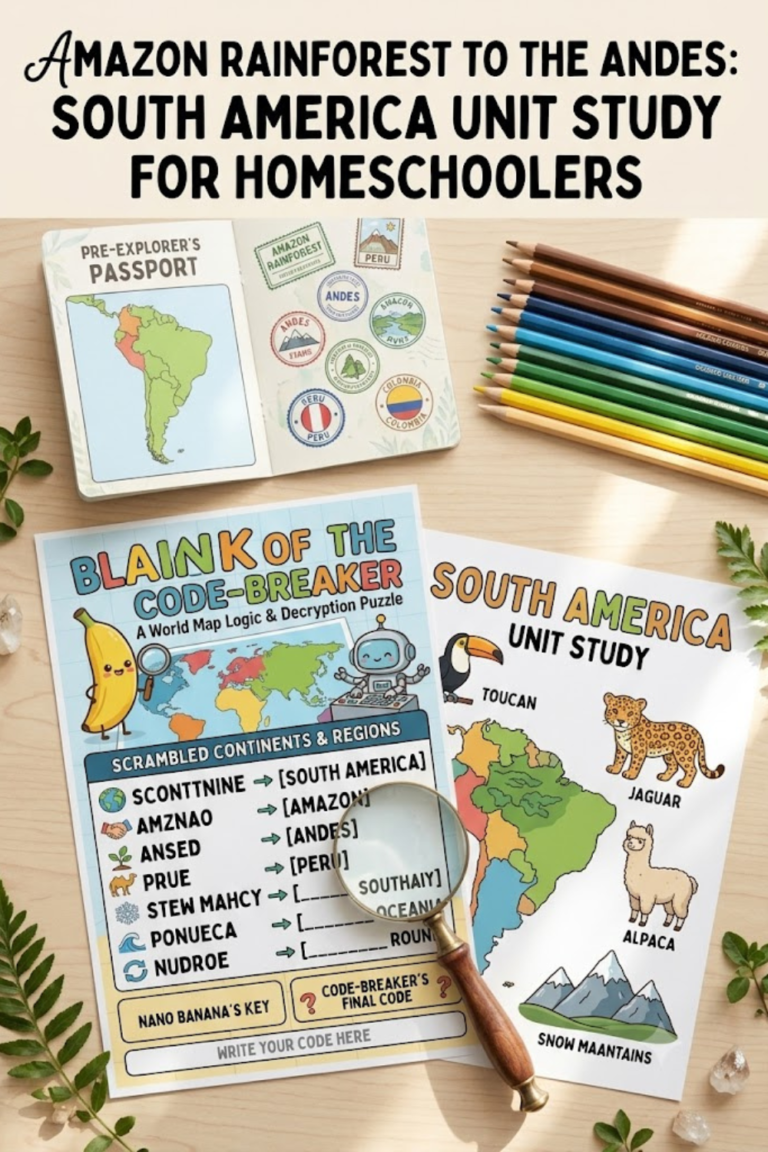
- The Mission: Tell your child they must «hack» a secret code to unlock the afternoon’s snack or a fun family activity. Create a simple cypher where numbers correspond to letters (e.g., 1=A, 2=B, 3=C) and leave them a secret message to decode, or set up a series of physical riddles they have to solve around the house.
- The Educational Bonus: Code-breaking and solving structured paper mazes strengthen critical thinking, reading comprehension, and patience—skills that are frequently eroded by fast-paced digital scrolling.
4. The «Cardboard Continental Drift» (Tactile Earth Science)
When kids use their hands to build and destroy, they are deeply engaged. This activity teaches the physical layout of our Earth using recycling bin materials.
- The Mission: Take an old cardboard delivery box and flatten it out. Draw roughly simplified shapes of the 7 continents and let your child cut them out (safe scissors required!). Then, challenge them to fit the continents together like a giant, prehistoric jigsaw puzzle to form Pangaea—the supercontinent that existed millions of years ago.
- The Educational Bonus: As they slowly drift the cardboard pieces apart across the living room floor to their current global positions, explain how plate tectonics shape our mountains, earthquakes, and oceans. It turns abstract geology into something they can actually touch and control.
5. The «Global Passport Quest» (Progression & Collecting)
The most powerful way to keep kids off screens long-term is to give them a hobby that relies on collecting and progression. Why do kids love video game achievements? Because they like seeing proof of their progress!
- The Mission: Set your child up with an official «Explorer Profile.» Every time they complete a reading session, finish a puzzle, or learn about a new part of the world, they earn an official «Visa Stamp» or a badge to glue into their personal explorer journal.
- The Educational Bonus: When children visually track their achievements through stamps and badges, learning ceases to feel like homework. It transforms into an epic personal journey where every milestone is celebrated. (Discover more about this powerful psychological trigger in our article on why kids learn geography better through adventures, collections, and progression.)
Summary Table: Screen-Free Game Matrix
| Game Name | Primary Skill Developed | Prep Time | Best For Ages |
| Living Room Expedition | Spatial Awareness & Mapping | 5 minutes | 6–8 years |
| Blindfold Taste Test | Cultural Curiosity & Senses | 10 minutes | 6–9 years |
| Mission Impossible | Logic & Reading Comprehension | 10 minutes | 7–9 years |
| Cardboard Drift | Earth Science & Tactile Play | 15 minutes | 6–9 years |
| Global Passport Quest | Long-term Focus & Goal Setting | Zero prep (with right tools!) | 6–9 years |
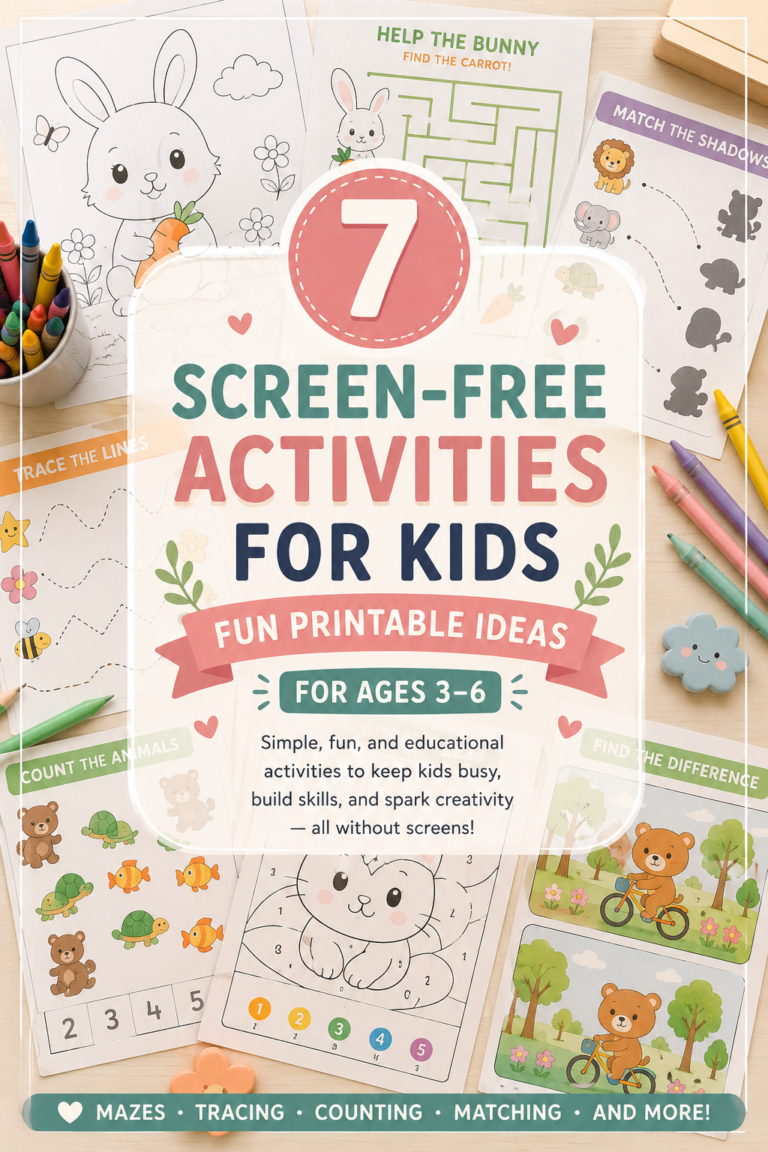
Looking for even more inspiration? Here’s another collection of screen-free learning ideas that families love.
Meet Your Ultimate Screen-Free Secret Weapon: The World Explorer Series
If you love the idea of using gamification, quests, and passport collections to reduce screen time, but you simply don’t have the hours required to design maps, cut out badges, and write lessons after a long workday, there is a beautifully crafted solution ready for your family.
Enter Level 1: Continents & Oceans, the foundational activity book from the acclaimed World Explorer Series by Tiny Joy Studio.
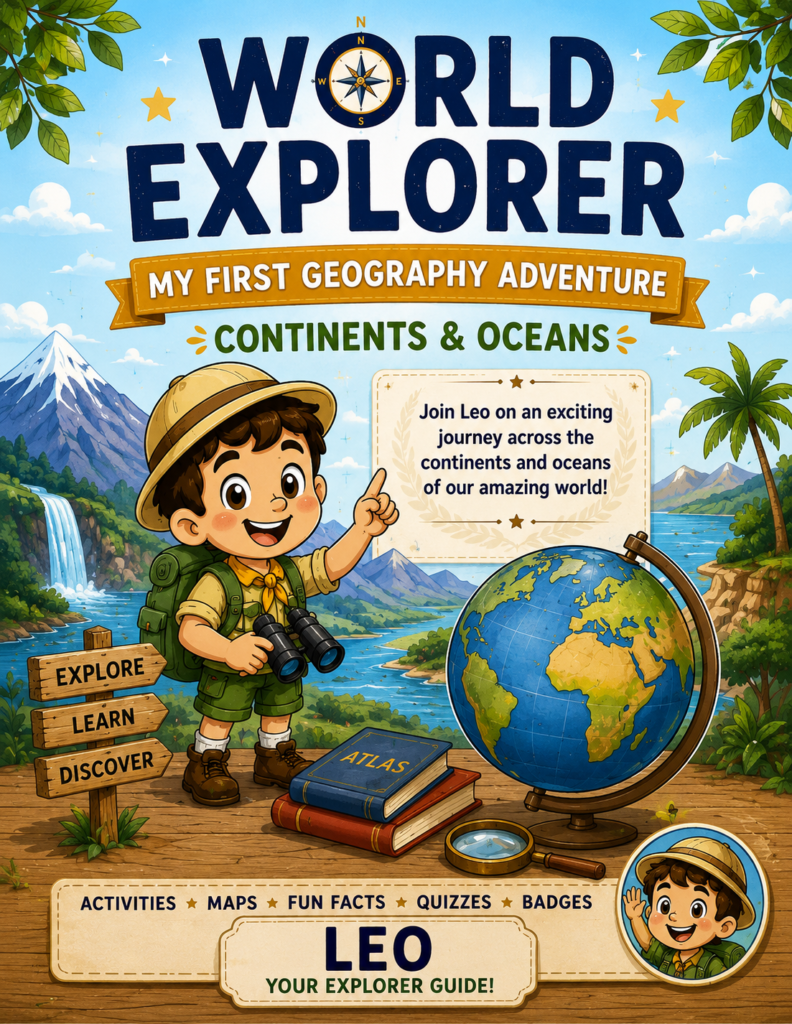
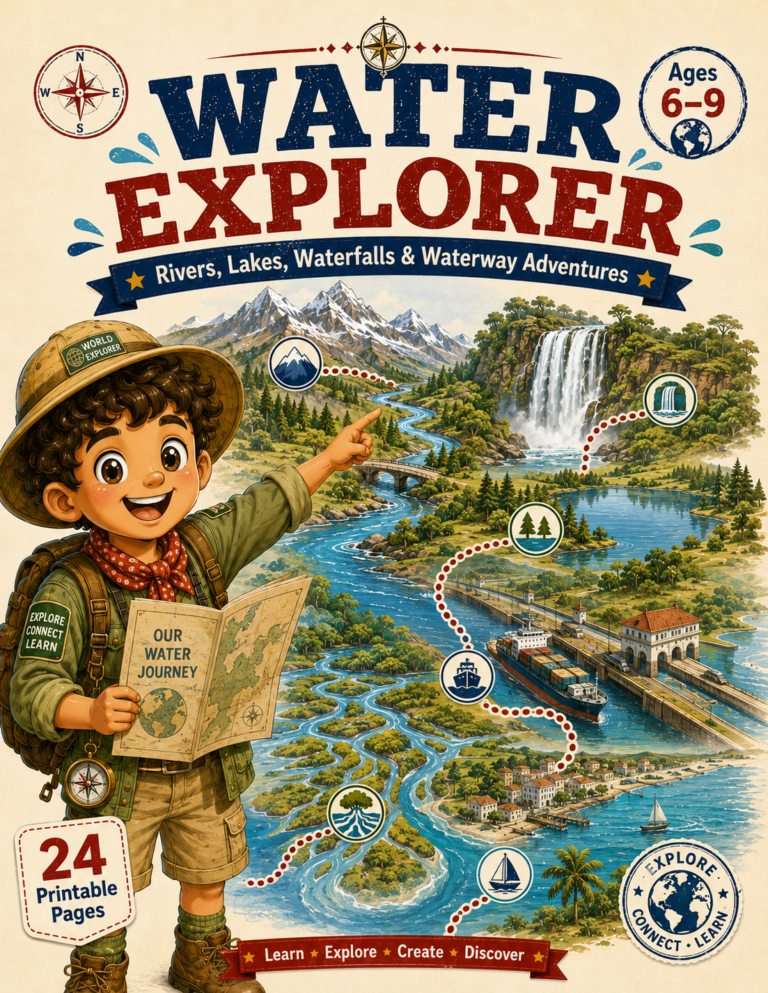
Designed specifically for curious 6- to 9-year-olds, this beautifully illustrated guide takes the heavy lifting off parents’ shoulders. Led by an enthusiastic cartoon guide named Leo, this book replaces passive screen scrolling with an interactive, hands-on voyage across our entire planet.
How It Works: The Universal Passport Experience
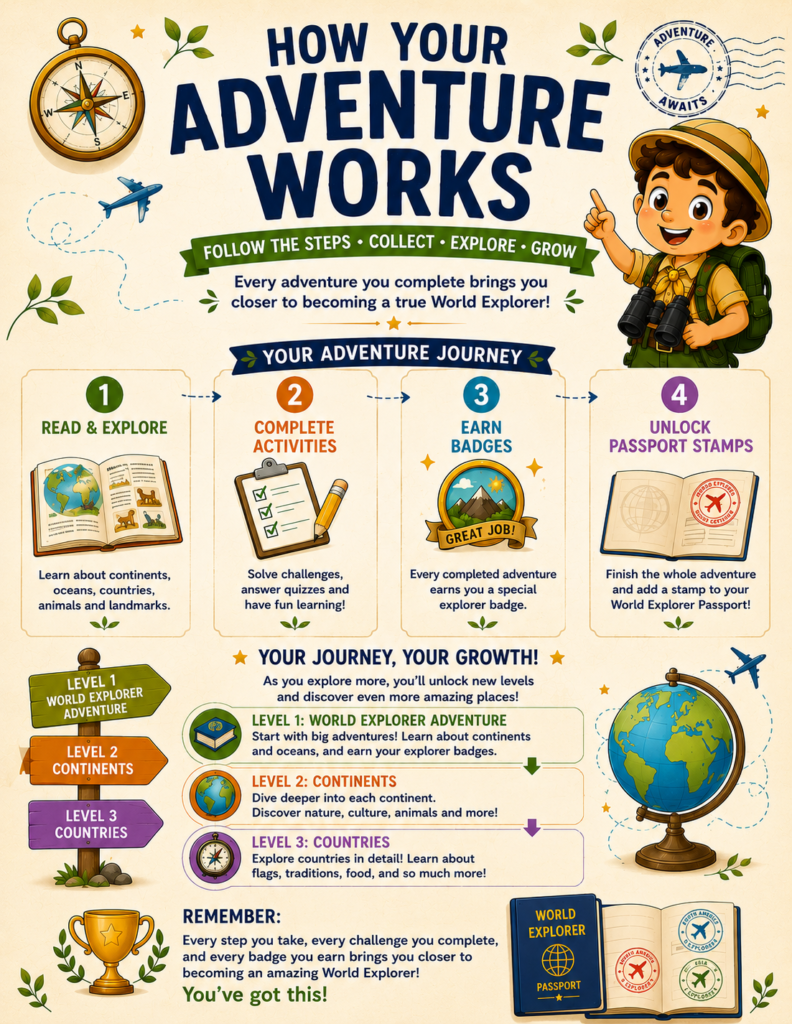
What makes the World Explorer Series so effective at beating screen boredom is its brilliant Universal Passport system:
- A Real Explorer Profile: Every single book in the series comes bundled with an exclusive, customizable World Explorer Passport. Your child starts by filling out their personal profile, drawing their self-portrait, and signing their official explorer name.
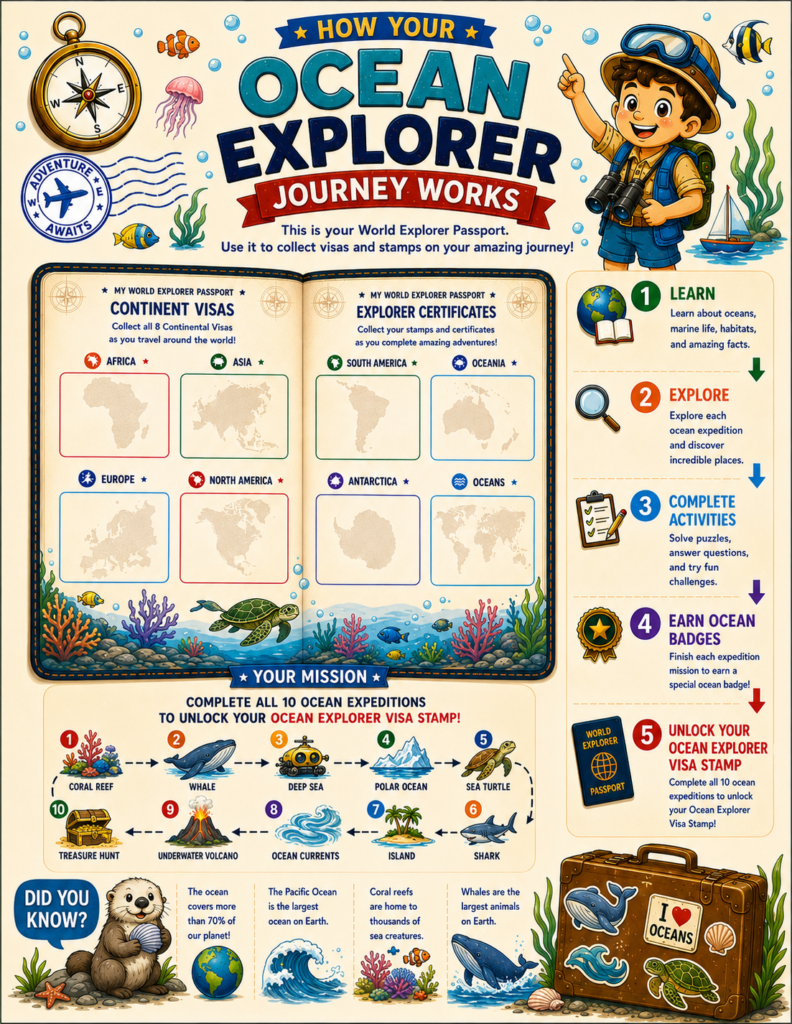
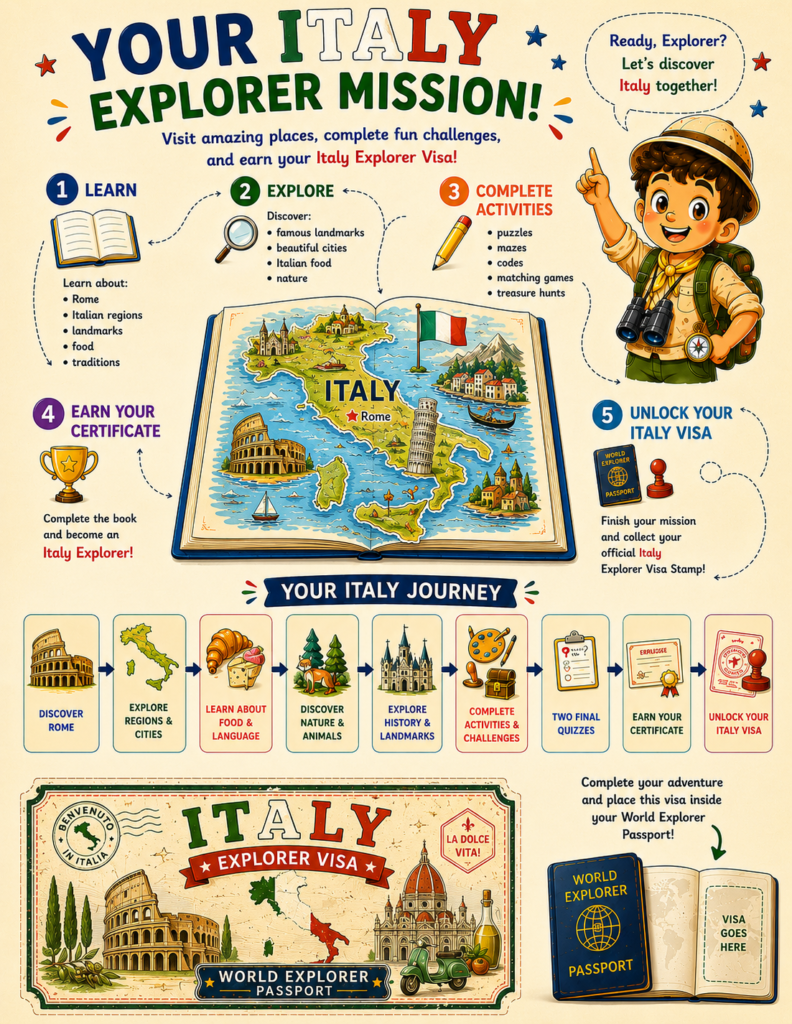
- The Ultimate Progression Hook: The Universal Passport features dedicated slots for fundamental knowledge (Level 1: Continents & Oceans), continental mastery (Level 2: 8 Continental & Ocean Visas), and individual country explorations (Level 3: 30 Country Visas).
- Tactile Achievements: As your child works through the Continents & Oceans book—solving ice mazes in Antarctica, tracing animal habitats in Africa, and decoding ocean currents—they earn cut-out badges and official Visa Stamps to glue directly into their passport.
When a child opens their Universal Passport and sees empty slots waiting to be filled, a powerful psychological switch flips. They aren’t asking for the iPad anymore; they are eagerly asking, «Mom, we just earned our Continents Visa! Can we explore Japan or Brazil next so I can fill the next spot in my passport?»
One of the biggest motivators for children is seeing their own progress. This simple passport system turns every completed activity into a meaningful achievement.
How to Build a «Screen-Free Routine» That Lasts
To make the transition away from screens permanent and peaceful, try combining the games above with these three simple rules:
- Create «Transition Bridges»: Never ask a child to go straight from an iPad to sitting quietly at a table. Use high-energy, physical games (like the Living Room Expedition) as a «bridge» to release their pent-up energy before sitting down with an activity book.
- Establish «Explorer Hours»: Dedicate a specific time of day (for example, the hour right after dinner or on rainy Sunday afternoons) as official «World Explorer Time.» When it becomes a predictable family routine, the resistance to turning off screens fades away.
- Celebrate the Badges: When your child completes an expedition and glues a new Visa into their Tiny Joy Studio Passport, make a big deal out of it! High-five them, put their completed map on the fridge, and celebrate their growing knowledge of the globe.
Every completed challenge brings children one step closer to becoming confident world explorers. Here’s what that adventure can look like.
These previews offer a glimpse of what comes next. After mastering the Level 1 Continents & Oceans adventure, children can continue with Level 2 continent expeditions and later progress to Level 3 country-specific missions.
Final Thoughts: Trade Screen Time for World Time
Reducing screen time doesn’t have to be a daily battle filled with tears, tantrums, and parental guilt. By changing your strategy from restriction to inspiration, you can open up a world of discovery right at your kitchen table.
When you give children a meaningful quest, tactile rewards, and a vibrant world to explore, the glowing screens suddenly lose their hypnotic power.
Ready to start your family’s screen-free adventure? Grab a box of colored pencils, print out your foundational Continents & Oceans Activity Book, and set up your child’s very own Universal Passport today directly via the Tiny Joy Studio Etsy Collection. The world is waiting—let’s go explore it!