The Ultimate Greece Unit Study for Homeschoolers: Myths & Ruins
If you have ever spent hours late at night scouring Pinterest for engaging geography lessons, printing out mismatched worksheets, and trying to piece together a cohesive lesson plan, you know how exhausting homeschooling prep can be. As parents and educators, we want to give our children the world, but we don’t always have the time or energy to build comprehensive curriculums from scratch.
When it comes to capturing a child’s imagination, few countries compare to Greece. It is the cradle of Western civilization, a land where epic mythology, breathtaking geography, and ancient history blend seamlessly. However, simply reading facts from a dry textbook won’t ignite that spark of curiosity. Children need to explore, solve puzzles, and immerse themselves in the culture.
Let’s explore how you can create the ultimate greece unit study for homeschoolers—a spectacular journey through myths, Olympics, and ancient ruins that requires zero prep time from you!
Why Greece is the Perfect Unit Study for Homeschoolers
Greece is a treasure trove for elementary-aged learners. It naturally encompasses multiple educational disciplines in one fascinating package:
- History & Architecture: From the mighty Parthenon to the first Olympic games.
- Geography: Thousands of islands, the deep blue Aegean Sea, and soaring mountains.
- Literature & Logic: Thrilling tales of Greek gods, heroes, and complex mazes.
- Science & Nature: Unique Mediterranean climates and fascinating wildlife, like the Loggerhead sea turtle.
By combining these elements, you create a rich, multi-sensory learning experience. Instead of just memorizing capital cities, your child becomes an active explorer.
Core Elements of a Geography and History Adventure
To build a truly immersive greece unit study for homeschoolers, you need to focus on interactive, visual, and hands-on components. Here are the core pillars your study should include:
Mapping the Islands and Seas
You cannot understand Greece without understanding its unique geography. It is a nation defined by its relationship with the water.
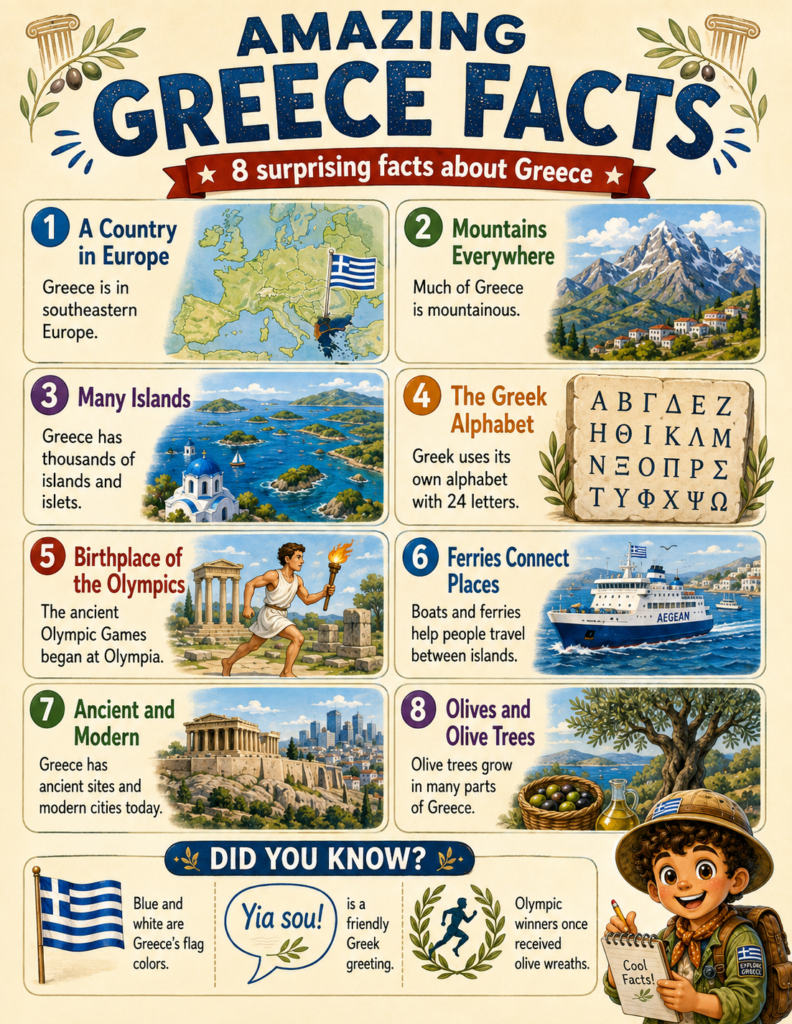
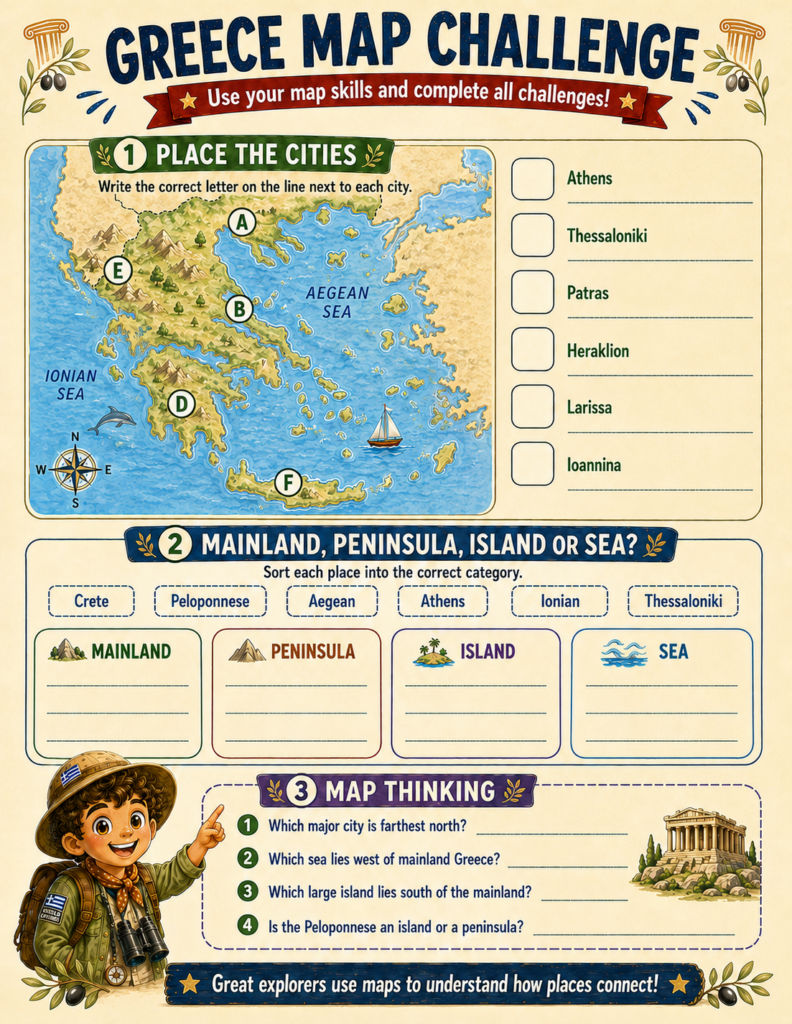
Start your adventure by looking at the big picture. Have your child locate Greece on a world map, and then zoom in on the country itself. Discuss how it is a peninsula surrounded by water on three sides, and point out the thousands of islands scattered across the Aegean and Ionian seas.
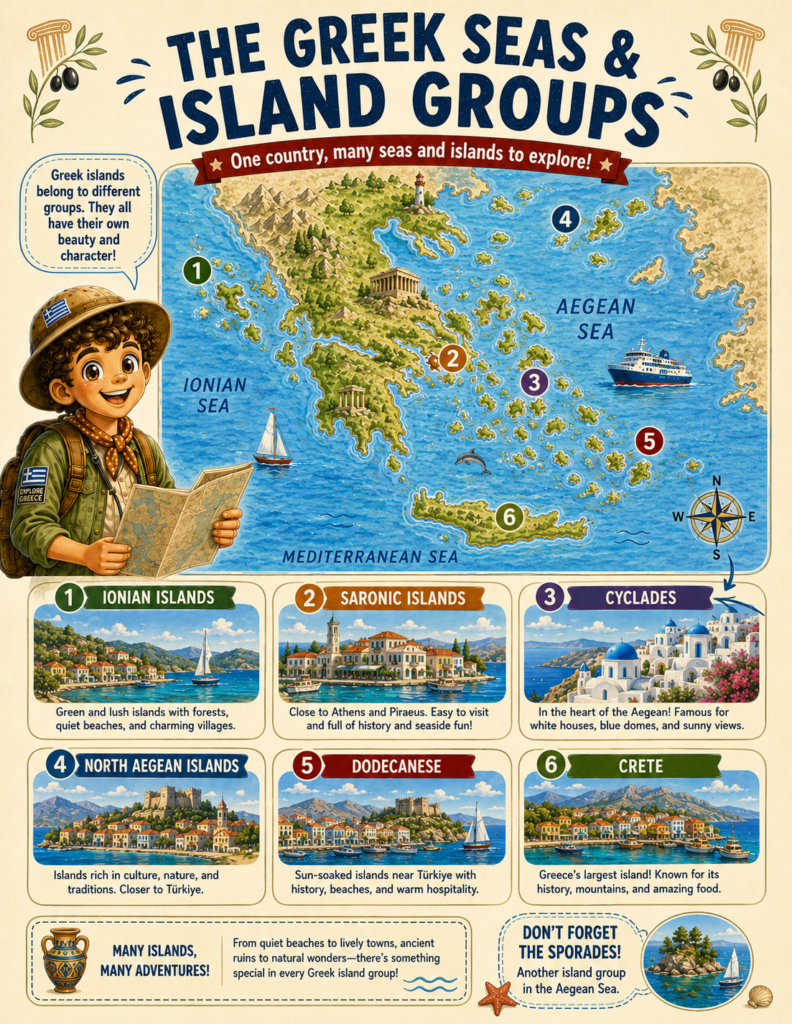
Have your kids trace the ferry routes from Athens to the largest island, Crete. Teaching spatial awareness through vibrant, visual maps is a core principle of Montessori geography, helping children grasp abstract spatial concepts through hands-on observation.
Discovering Ancient Ruins and Architecture
Greece is essentially an open-air museum. Rather than just making your kids memorize dates, invite them to become archaeologists for the day!
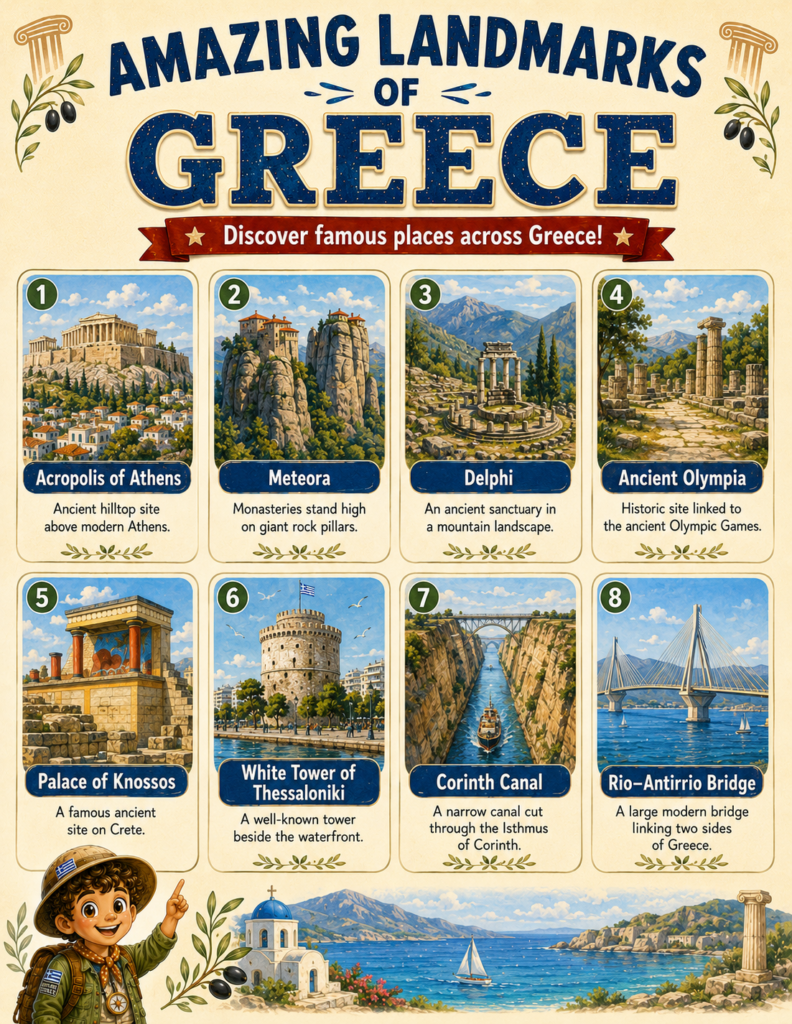
Take them on a virtual tour of Greece’s most iconic landmarks:
- The Acropolis of Athens: Discuss how the ancient Greeks built these massive marble temples without modern machinery, and let your child marvel at the Parthenon.
- Meteora: Show them the breathtaking monasteries perched high atop towering, sheer rock pillars. It looks like something straight out of a fantasy novel and will instantly captivate their imagination!
- Delphi: Introduce the concept of the ancient oracles and how leaders would travel across the sea to seek advice.
Incorporating visual recognition and matching games with these landmarks is a fantastic way to make learning fun and ensure that the historical facts actually stick.
Unlocking the Magic of Greek Mythology
You cannot complete a study of Greece without diving into its legendary myths. To a child, Greek mythology is the original superhero universe!
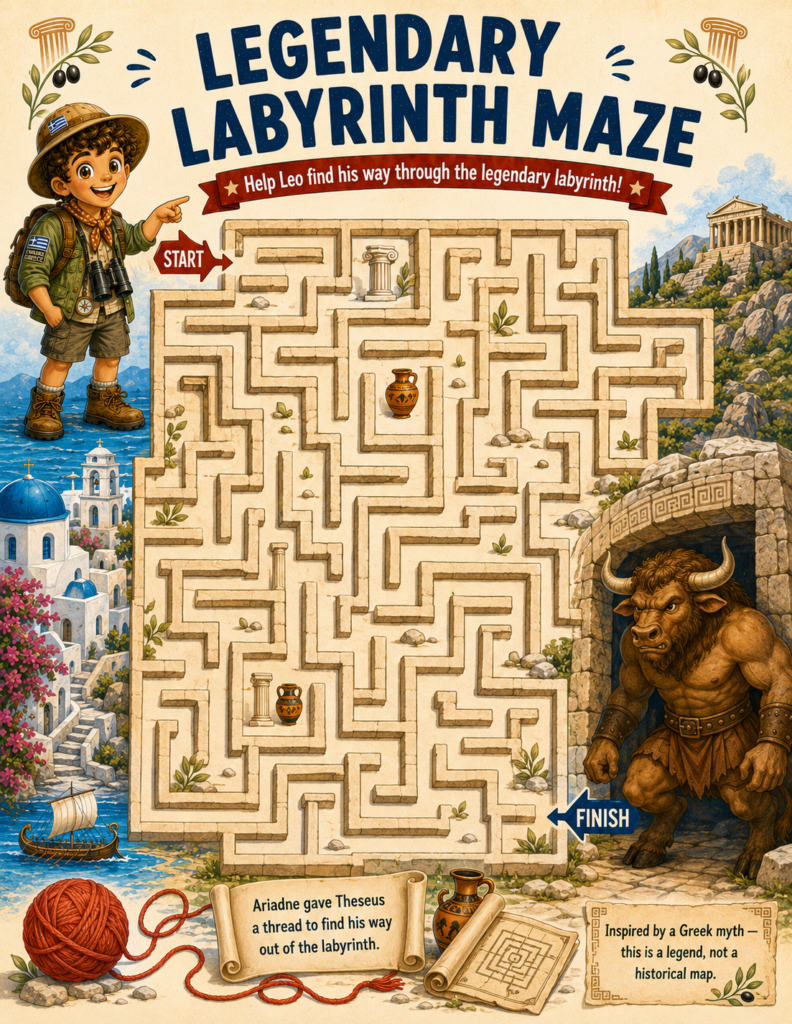
Introduce them to Mount Olympus and the pantheon of gods. But more importantly, dive into the classic hero tales. The story of Theseus and the Minotaur is an absolute favorite for kids ages 6 to 9. You can discuss how Ariadne used a simple ball of thread to help Theseus navigate the dark, twisting labyrinth.
Follow up this story with a practical logic puzzle. Give your child a complex labyrinth maze to solve on paper. Not only does this tie directly into the mythology lesson, but it also develops critical thinking and fine motor skills.
How to Bring Your Unit Study to Life at Home
Knowing what to teach is only half the battle; knowing how to teach it is what makes or breaks your homeschool week. Here are a few ways to maximize your Greece unit study:
Emphasizing Child-Led Learning
Give your child an «Explorer’s Checklist» or a field journal. Let them take the lead on what they want to research next. Do they want to learn about the ancient Olympics and the original olive wreath crowns? Or are they more interested in tracking the nesting habits of the Mediterranean sea turtles? Providing choices fosters independence and a genuine love for learning.
Keeping the Momentum Going Year-Round
A captivating, project-based unit study is also one of the most effective tools in a parent’s arsenal to prevent summer slide. When learning feels like a game—complete with word searches, hidden object challenges, and coloring pages—kids will happily engage with educational materials during school breaks, weekends, and rainy afternoons.
The Ultimate Open-and-Go Solution: Greece Explorer
Building a comprehensive, beautiful, and factually accurate unit study takes an immense amount of time. You have to find the maps, write the facts, design the mazes, and ensure everything is perfectly tailored for a 6 to 9-year-old’s attention span.
If you want to skip the late-night planning and jump straight into the fun, we have the ultimate solution!
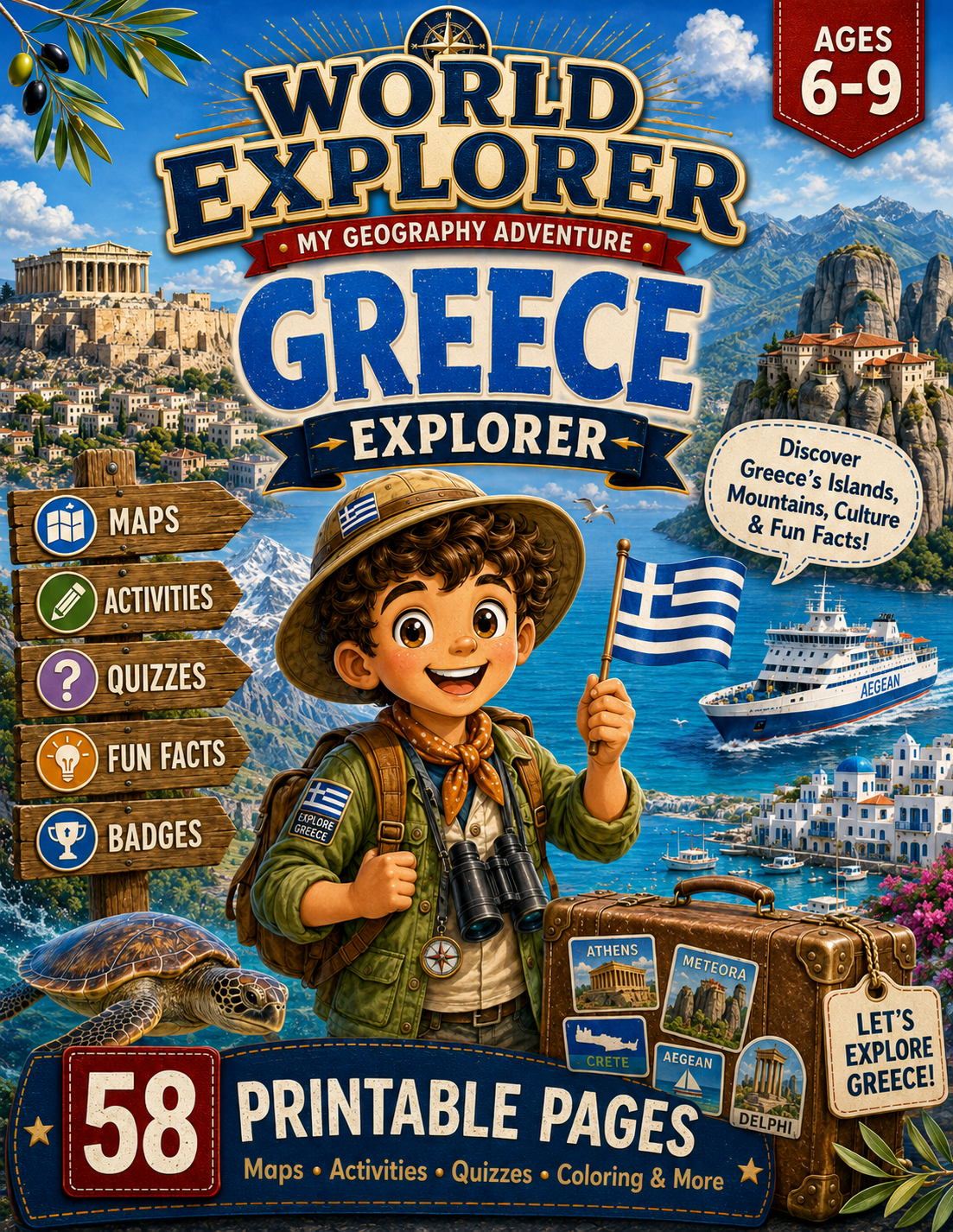
The Greece Explorer: My Geography Adventure workbook by Tiny Joy Studio is a massive, 58-page digital masterpiece designed specifically for homeschool families. It is a complete, «open-and-go» curriculum. Inside, your child will team up with Leo the Guide to navigate the Aegean Sea, discover the soaring rocks of Meteora, solve the Minotaur’s labyrinth, and learn fascinating cultural facts.
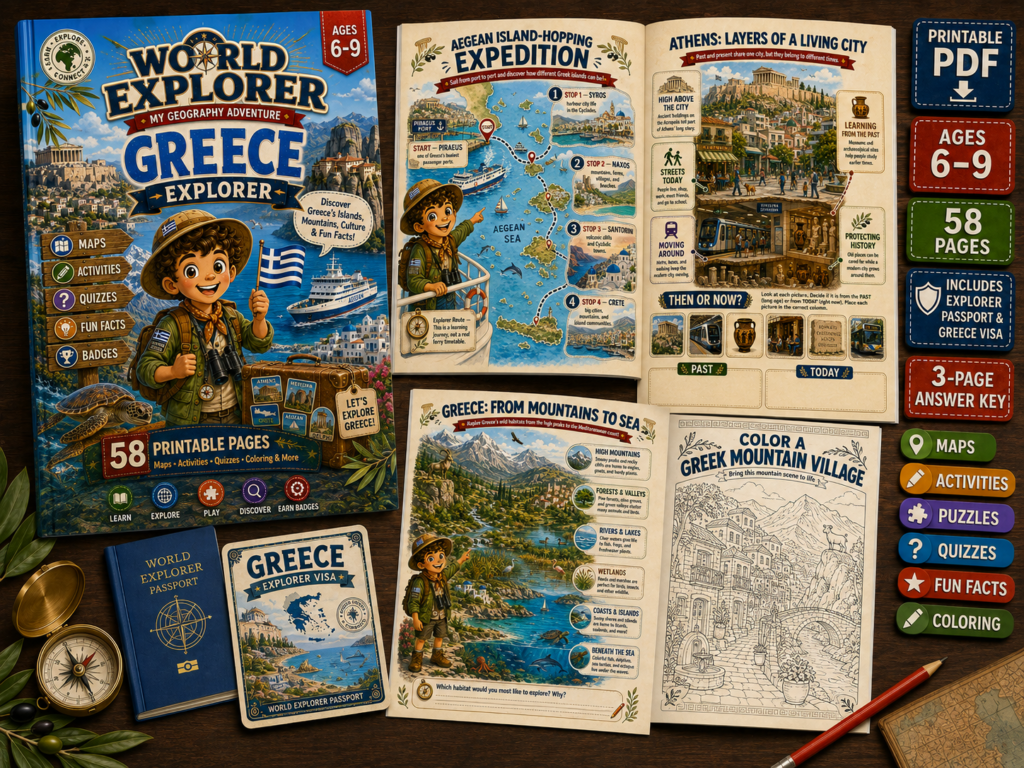
Best of all? As they complete the book, they will earn their official Greek Visa to paste into their Universal World Explorer Passport! It’s the perfect blend of education and gamification.
Ready to embark on an unforgettable Mediterranean adventure without the stress of lesson planning?