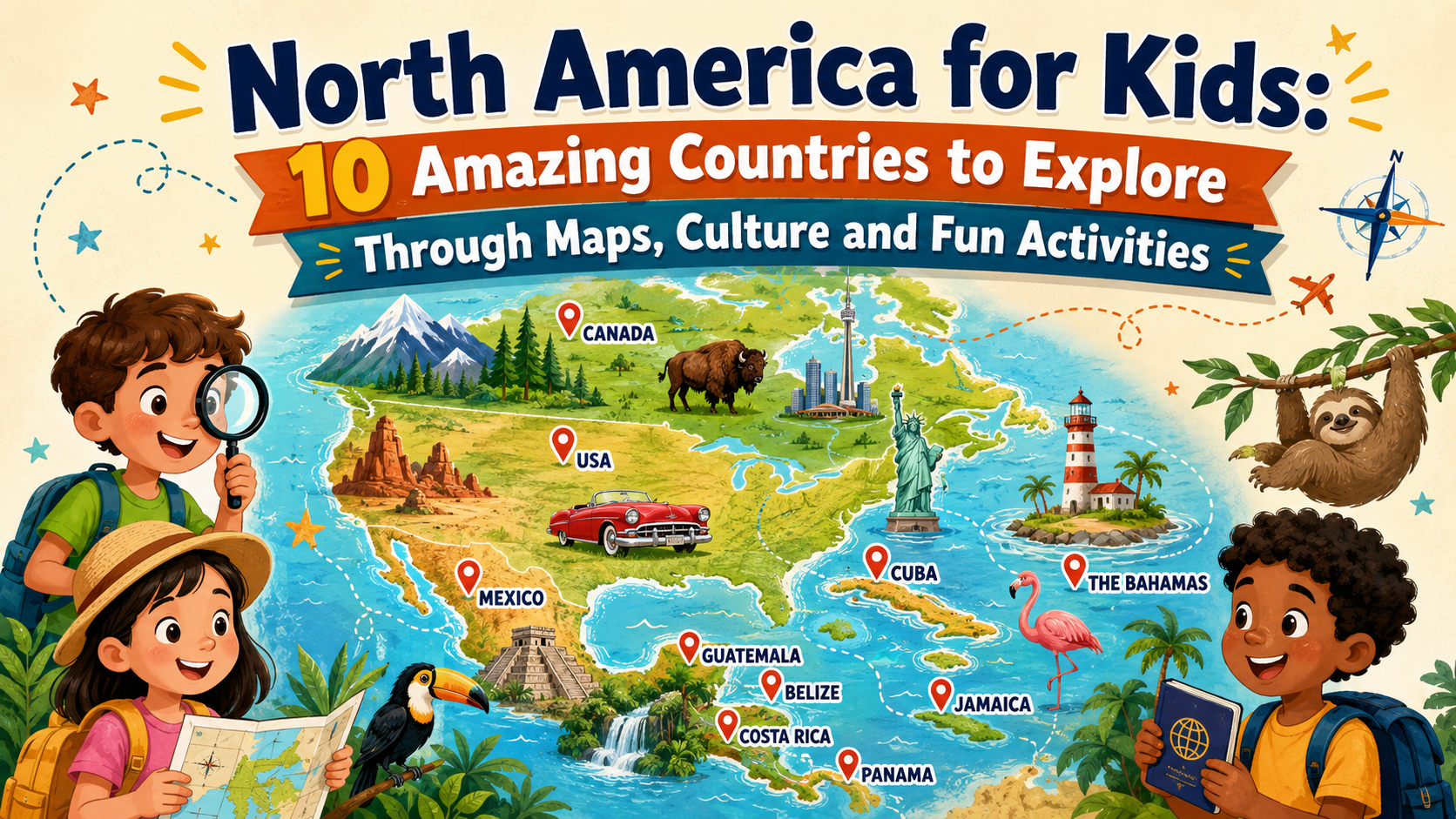
North America for Kids: 10 Amazing Countries to Explore Through Maps, Culture and Fun Activities
Introduction
North America is one of the most exciting continents for children to explore. From snowy mountains and giant forests to tropical islands and ancient pyramids, it offers incredible diversity that sparks curiosity and imagination.
Many children recognize famous places like the Statue of Liberty, Niagara Falls, or the Panama Canal, but North America has much more to discover. Every country has its own landscapes, wildlife, traditions, foods, and fascinating history that make learning geography feel like an adventure rather than a school lesson.
The best way for children to learn about a continent isn’t by memorizing capitals or filling out worksheets. They learn more when they explore maps, solve puzzles, color landmarks, discover interesting facts, and connect new knowledge with fun experiences.
Whether you’re homeschooling, planning summer learning activities, or simply looking for educational resources that keep kids engaged, North America provides endless opportunities for discovery.
Let’s visit ten amazing countries that every young explorer should know.
Where Is North America?
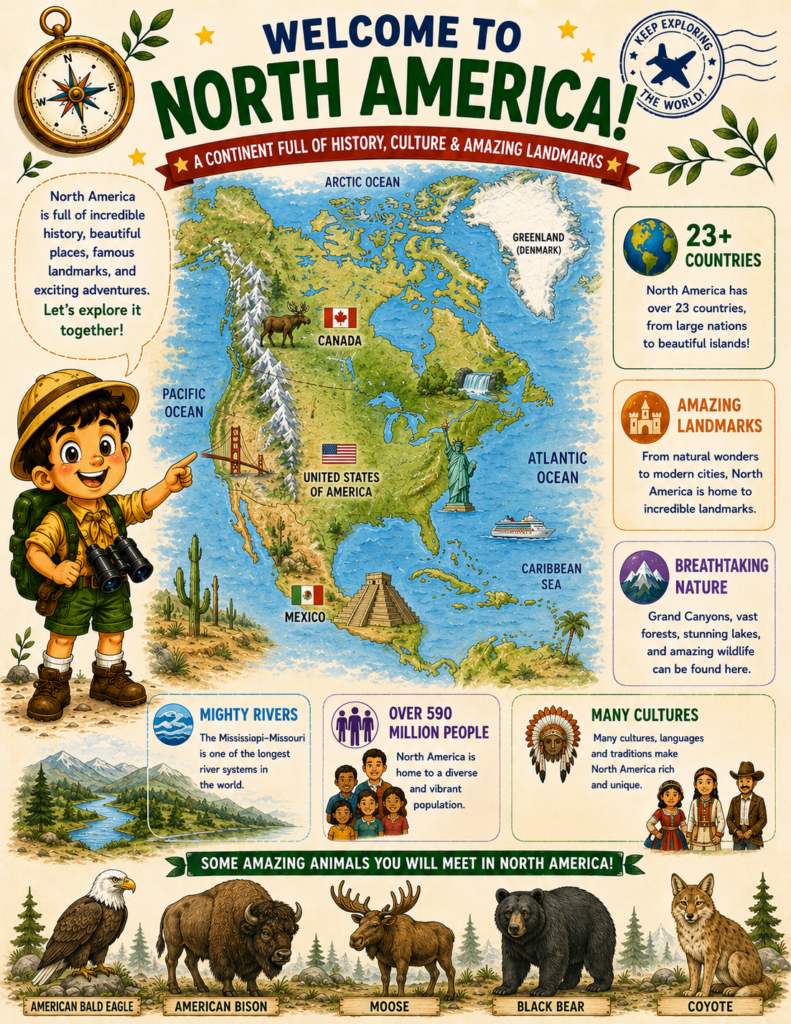
North America is the third-largest continent on Earth. It stretches from the icy Arctic in the north to the warm tropical forests of Central America and the Caribbean in the south.
The continent is home to more than 600 million people and includes countries with completely different climates, cultures, and natural wonders.
Children can discover:
- towering mountain ranges,
- enormous forests,
- sandy deserts,
- tropical beaches,
- volcanoes,
- coral reefs,
- frozen tundra,
- and thousands of islands.
North America is also home to many famous animals, including bears, moose, bald eagles, bison, sloths, sea turtles, parrots, monkeys, and colorful tropical frogs.
Because every region looks so different, it’s one of the easiest continents for children to remember while learning geography.
10 Amazing North American Countries Every Child Should Explore
🇺🇸 United States
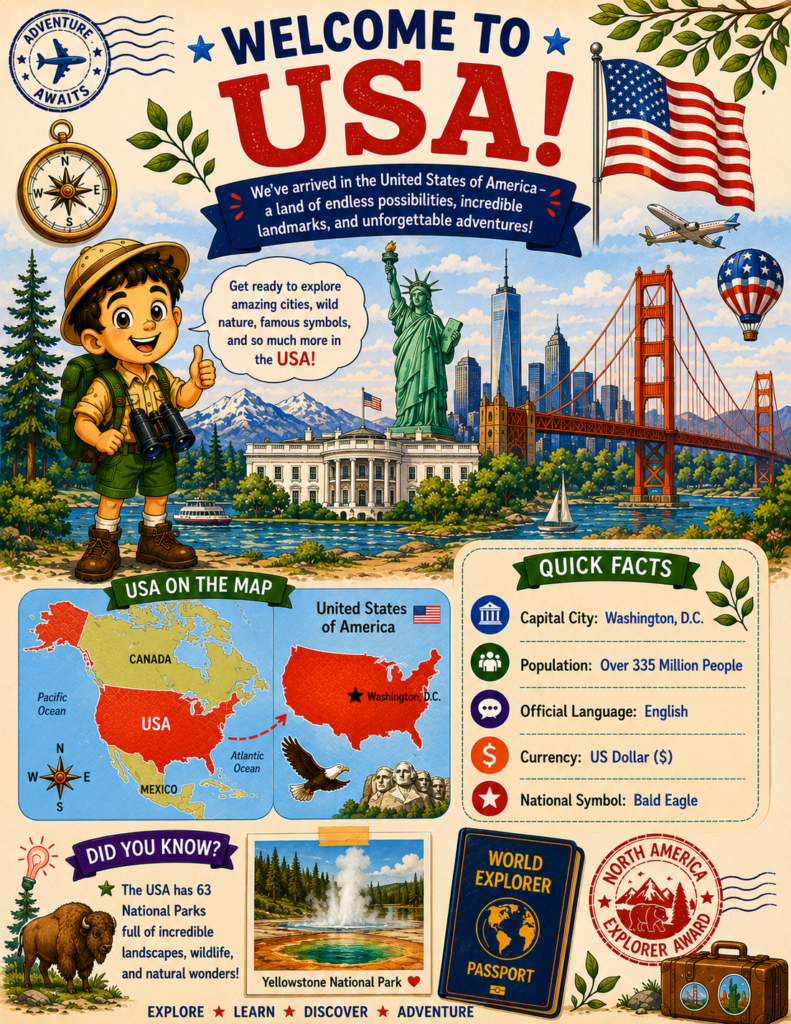
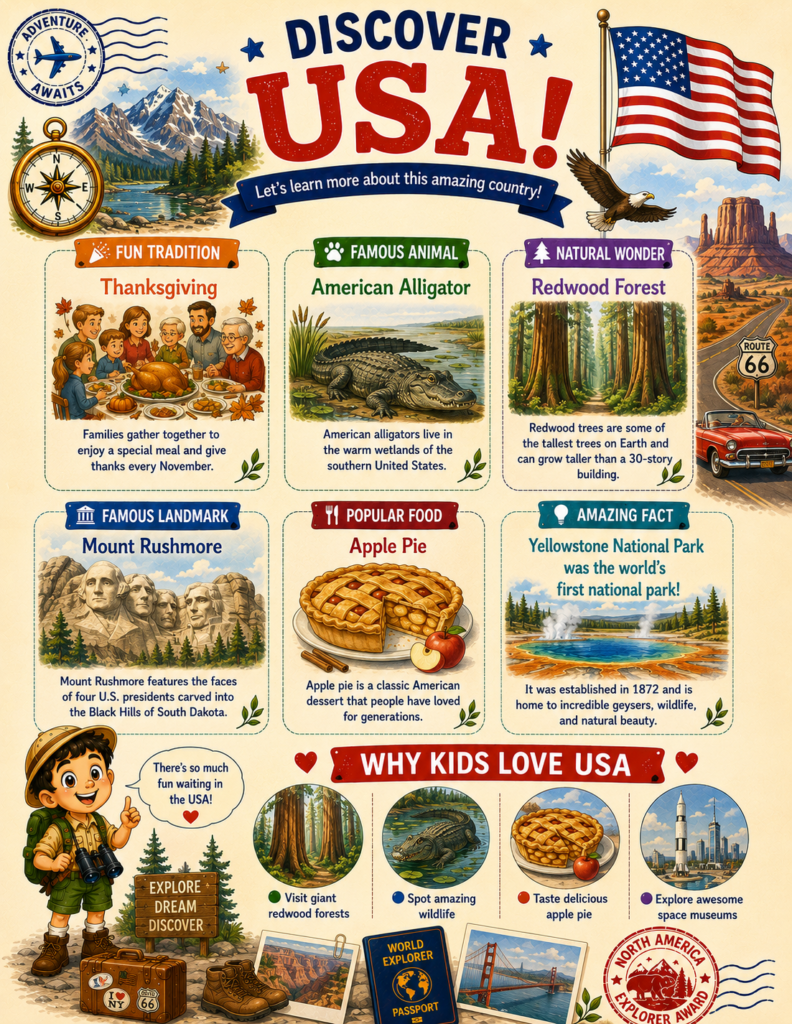
The United States is one of the largest countries in North America and is famous for its incredible variety of landscapes and landmarks.
Children often recognize famous places such as the Statue of Liberty, the Grand Canyon, Yellowstone National Park, and the Golden Gate Bridge. They can also discover giant forests, deserts, snowy mountains, beaches, and bustling cities.
Want to Explore the USA Even Further?
If your child enjoys learning about the United States, don’t stop there.
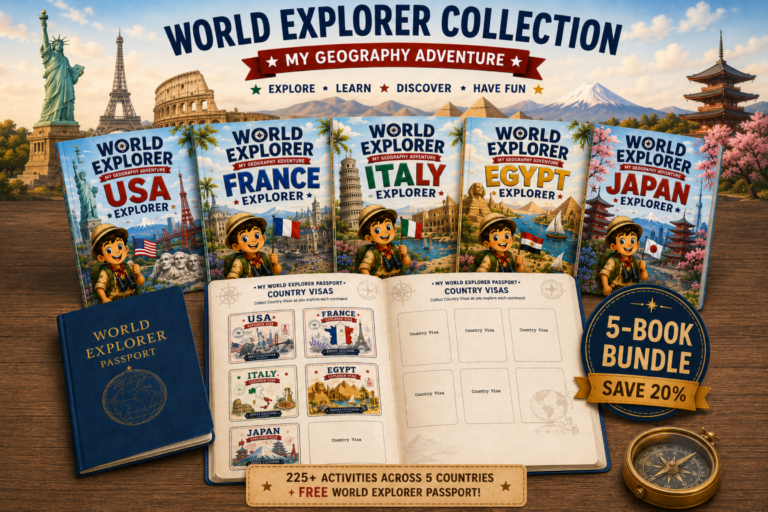
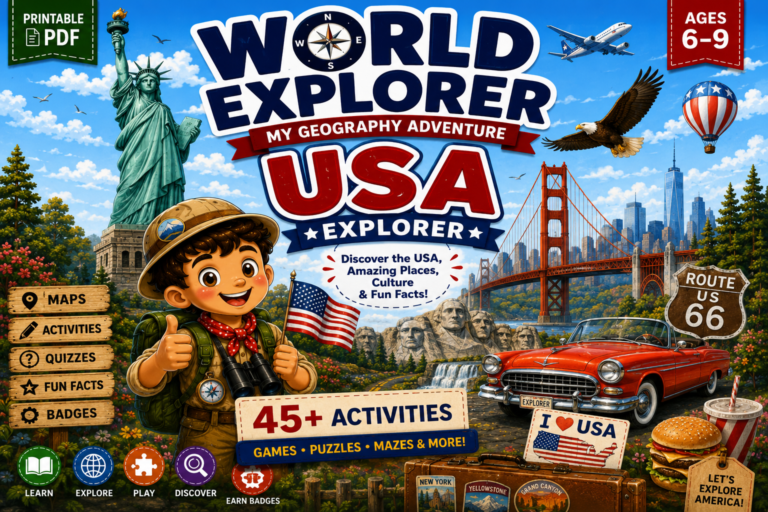
Our World Explorer: USA printable activity book takes young explorers on a much deeper journey through America’s national parks, famous landmarks, state symbols, wildlife, history, maps, quizzes, puzzles, and creative activities.
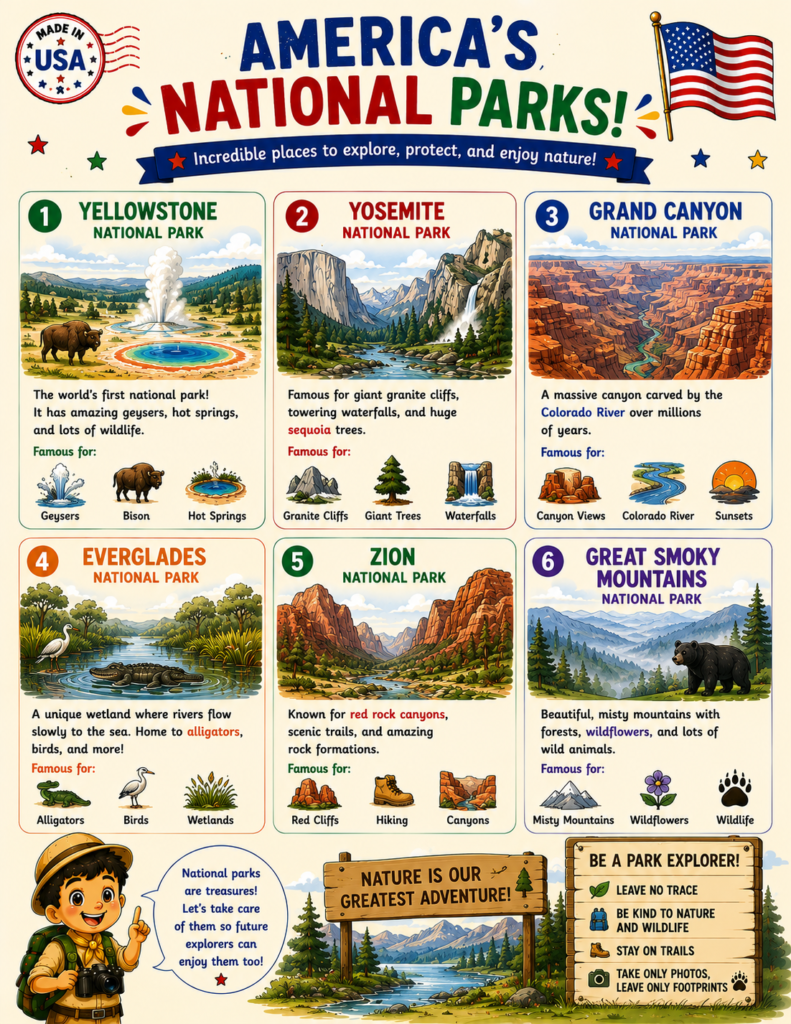
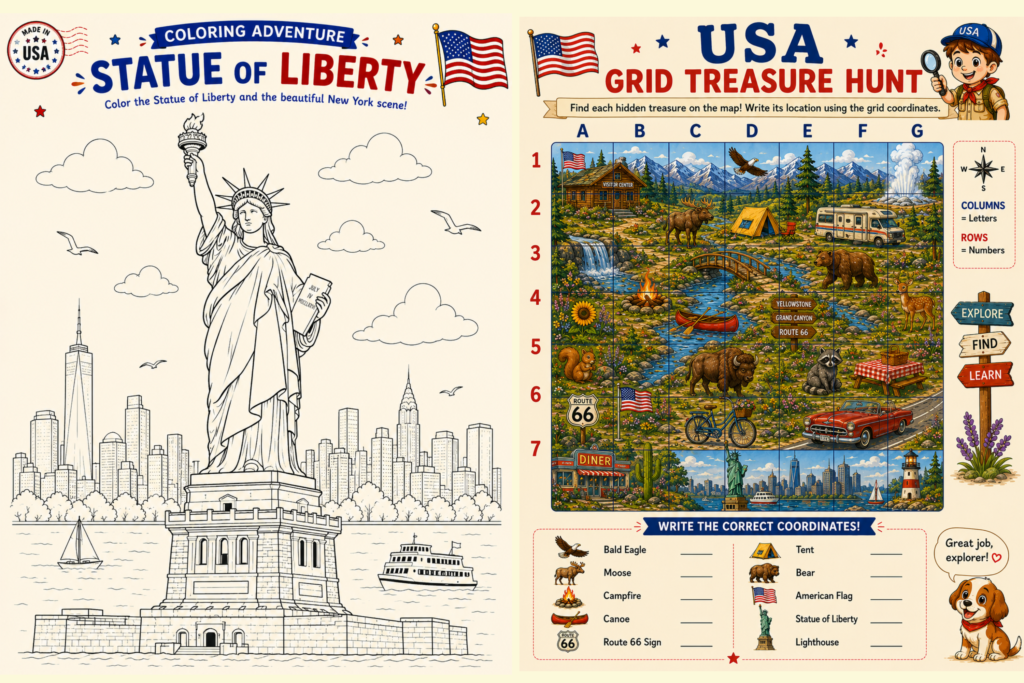
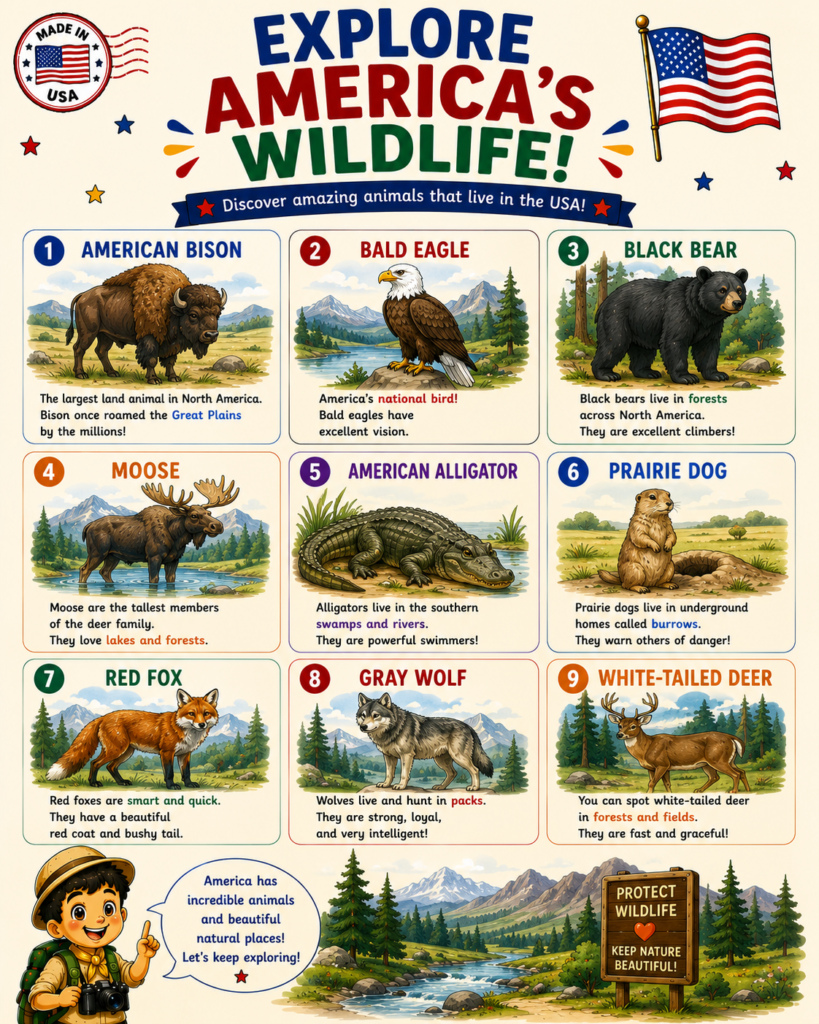
It’s the perfect next step after completing the North America adventure and helps children discover the USA in far greater detail while having fun.
👉 Read more: USA Geography Activity Book for Kids
The United States is home to:
- 50 states,
- hundreds of national parks,
- famous presidents,
- exciting holidays,
- delicious foods,
- and many important inventions.
Young explorers enjoy learning about American symbols like the bald eagle, the flag, and the Liberty Bell while discovering how different each region of the country can be.
Instead of simply reading facts, children remember America much better when they solve geography challenges, complete coloring pages, identify landmarks, and answer fun quizzes.
🇨🇦 Canada
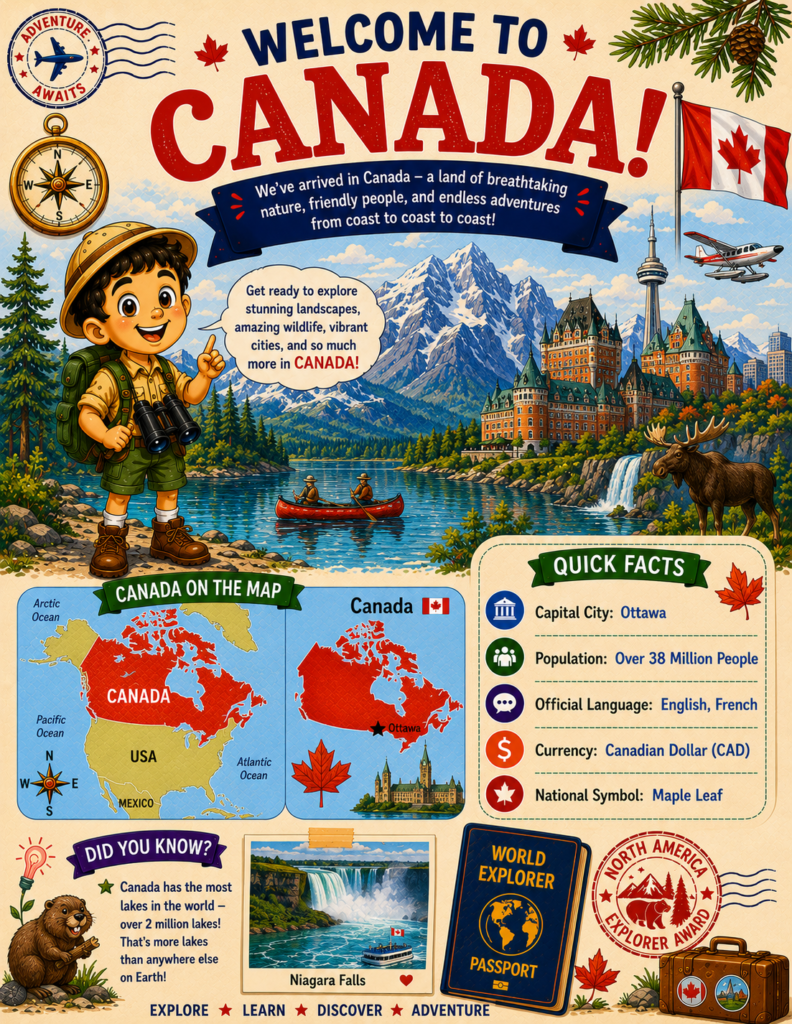
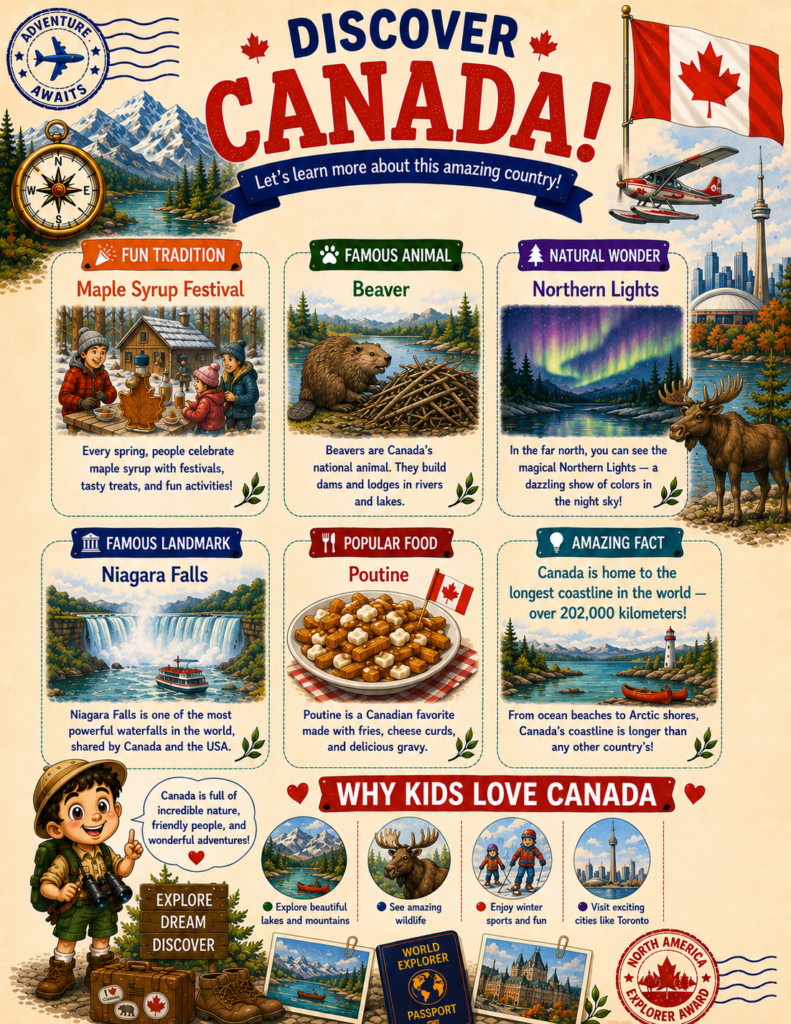
Canada is the second-largest country in the world and is known for its breathtaking nature.
Much of Canada is covered by forests, lakes, rivers, and mountains, making it one of the best places to learn about wildlife.
Children can discover:
- the Rocky Mountains,
- Niagara Falls,
- maple forests,
- polar regions,
- and beautiful national parks.
Canada is also home to animals such as:
- moose,
- beavers,
- black bears,
- wolves,
- and polar bears.
The country experiences four distinct seasons, allowing children to learn how climate changes affect both people and wildlife.
Many kids enjoy discovering fun Canadian traditions, learning about maple syrup, spotting famous landmarks, and exploring colorful cities like Toronto, Vancouver, Montreal, and Quebec City.
Canada teaches children that nature can be just as exciting as famous monuments.
🇲🇽 Mexico
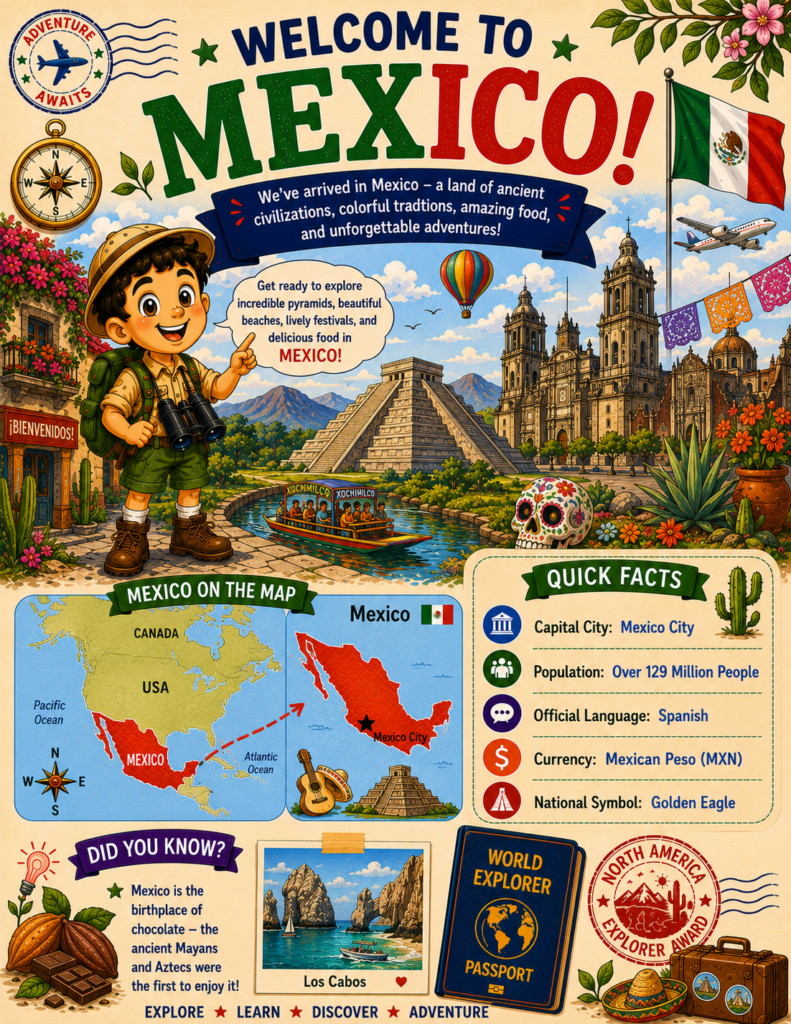
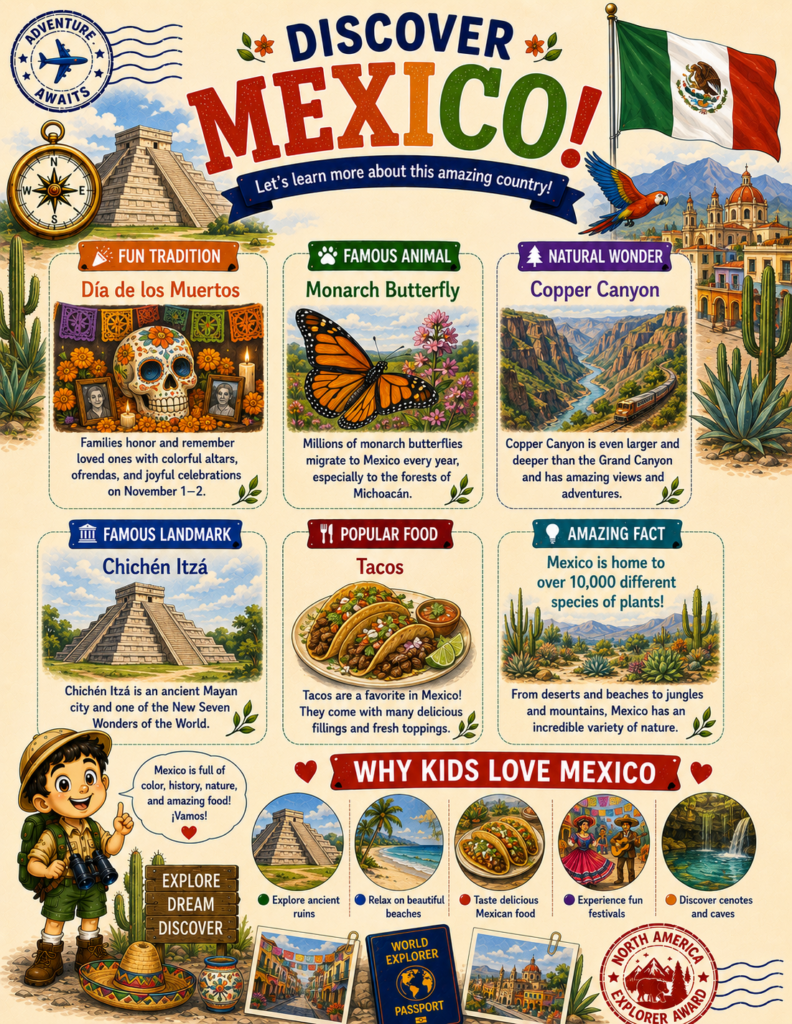
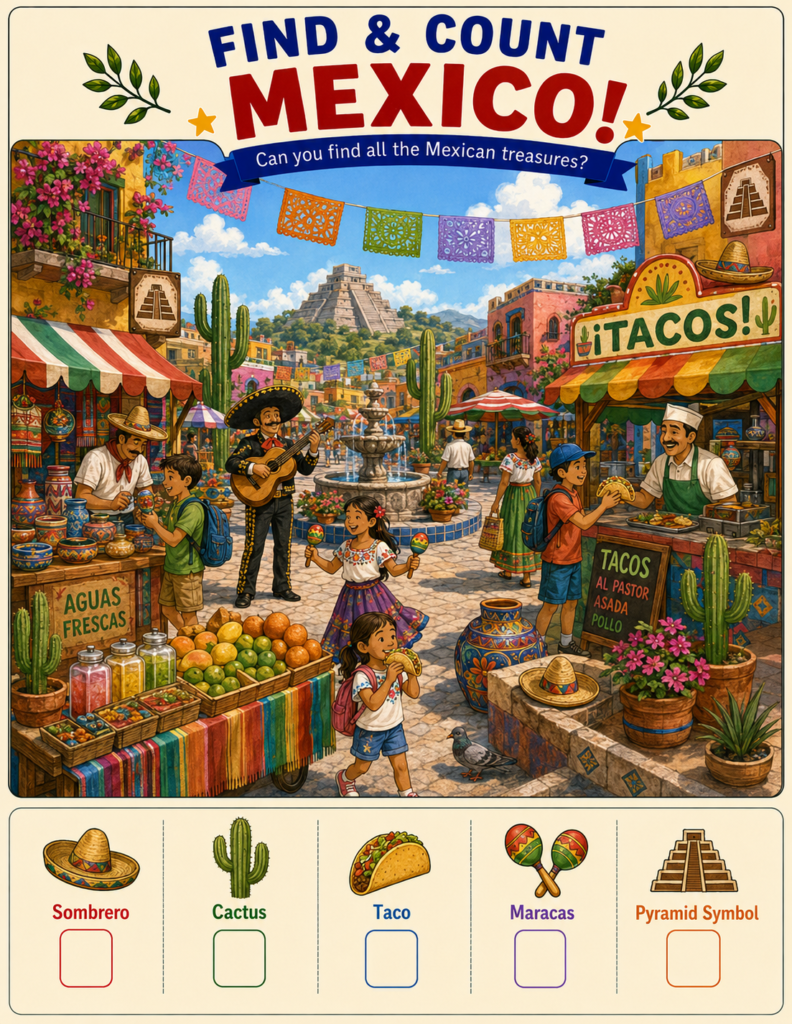
Mexico combines ancient history, colorful traditions, beautiful beaches, delicious food, and fascinating wildlife into one unforgettable country.
Long before modern cities were built, the Maya and Aztec civilizations created impressive pyramids and temples that still amaze visitors today.
Children love exploring:
- Chichén Itzá,
- ancient pyramids,
- colorful festivals,
- traditional music,
- tropical forests,
- and deserts filled with giant cacti.
Mexico is also famous for foods such as tacos, tortillas, guacamole, and fresh tropical fruits.
Its wildlife includes jaguars, sea turtles, parrots, monkeys, crocodiles, and hundreds of colorful birds.
Learning about Mexico helps children understand that history, culture, and nature all work together to create a unique country full of surprises.
🇬🇹 Guatemala
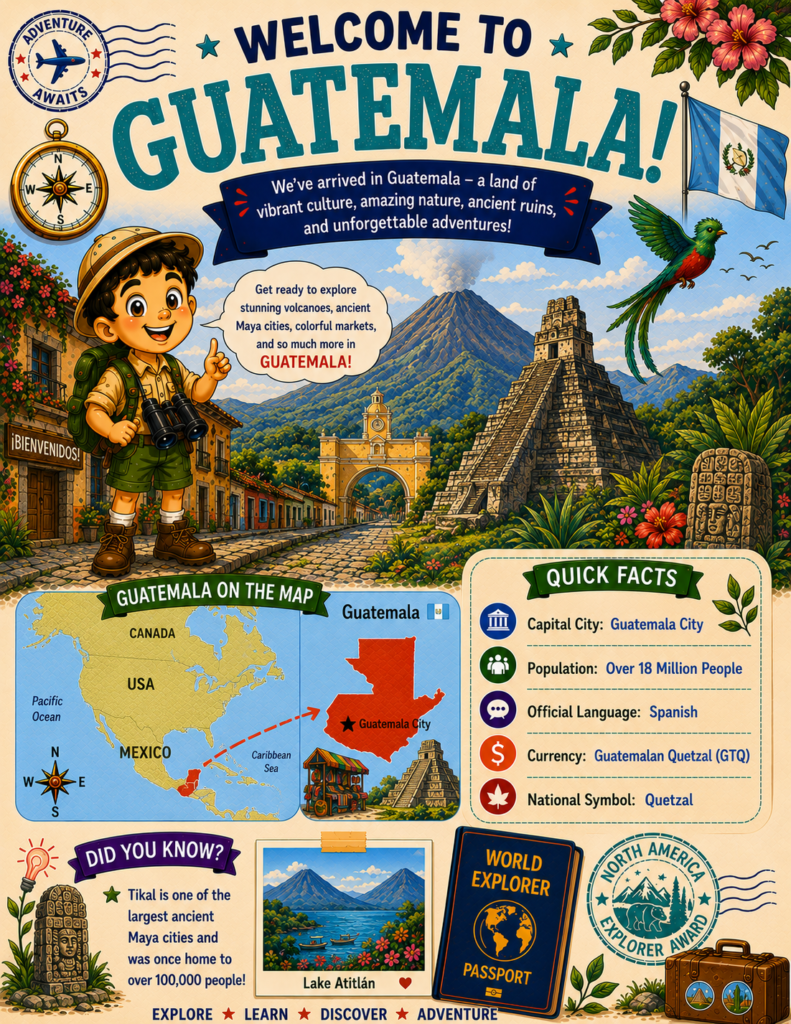
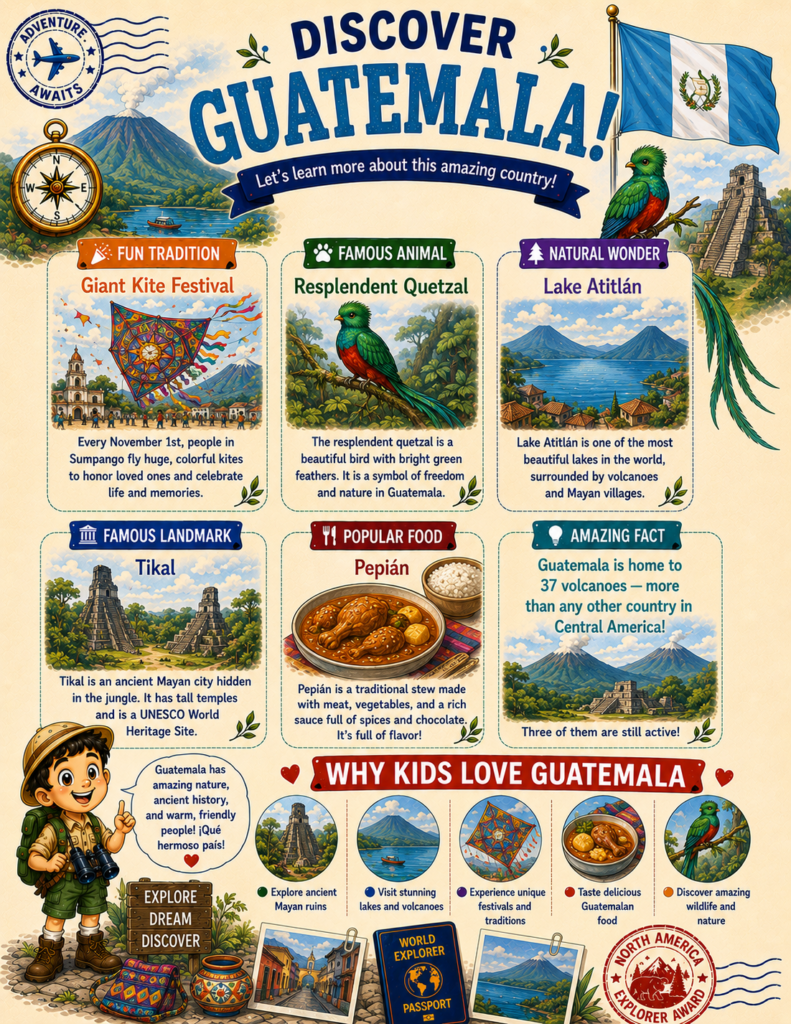
Guatemala may be smaller than its neighbors, but it is filled with incredible adventures.
The country is famous for its ancient Maya cities hidden within lush rainforests. Exploring these archaeological sites feels like stepping into a real-life treasure hunt.
Children can learn about:
- towering volcanoes,
- tropical jungles,
- colorful traditional clothing,
- beautiful lakes,
- and fascinating Maya history.
Lake Atitlán, surrounded by volcanoes, is considered one of the most beautiful lakes in the world.
Guatemala also offers opportunities to discover exotic birds, monkeys, butterflies, and vibrant local markets full of handmade crafts.
Its rich culture makes every lesson feel colorful and exciting.
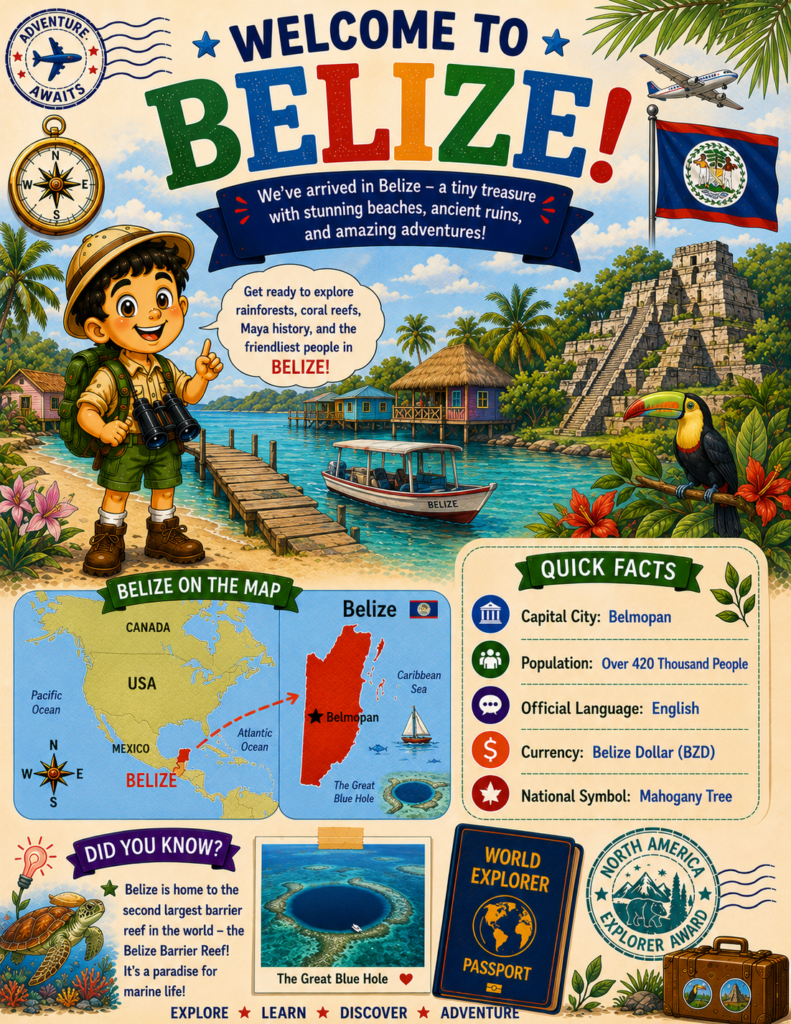
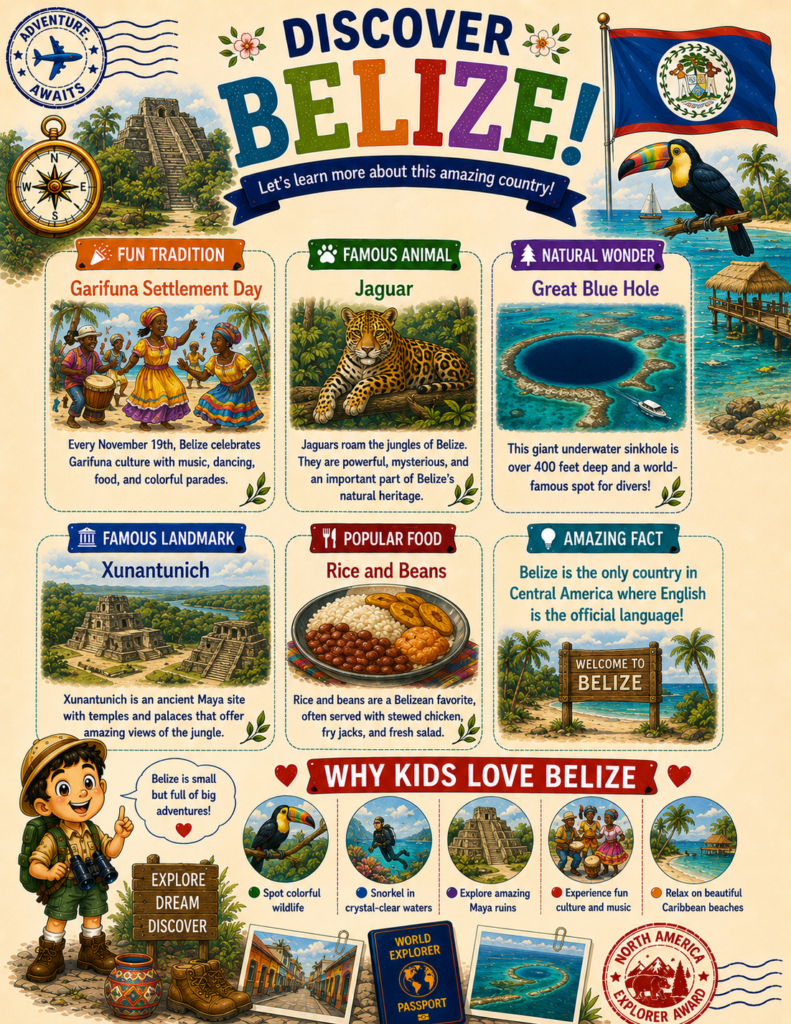
🇧🇿 Belize
Belize is one of the smallest countries in North America, but it offers some of the biggest adventures.
Located on the Caribbean Sea, Belize is famous for its crystal-clear water and the Belize Barrier Reef, the second-largest coral reef system in the world.
Children enjoy discovering:
- coral reefs,
- tropical fish,
- sea turtles,
- colorful coral,
- rainforests,
- caves,
- and ancient Maya ruins.
Belize is also one of the world’s best places to learn about marine life.
Its warm climate and incredible biodiversity make it a perfect country for introducing children to ocean ecosystems and rainforest habitats.
Young explorers quickly realize that even small countries can hold enormous natural treasures.
🇨🇷 Costa Rica
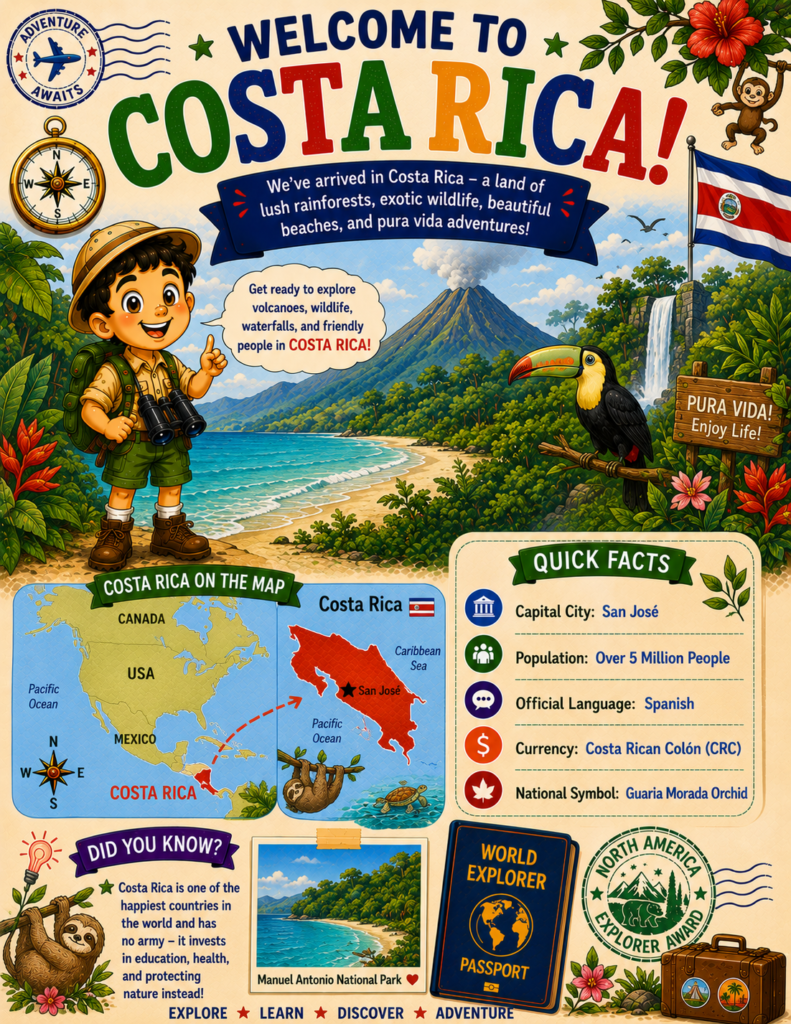
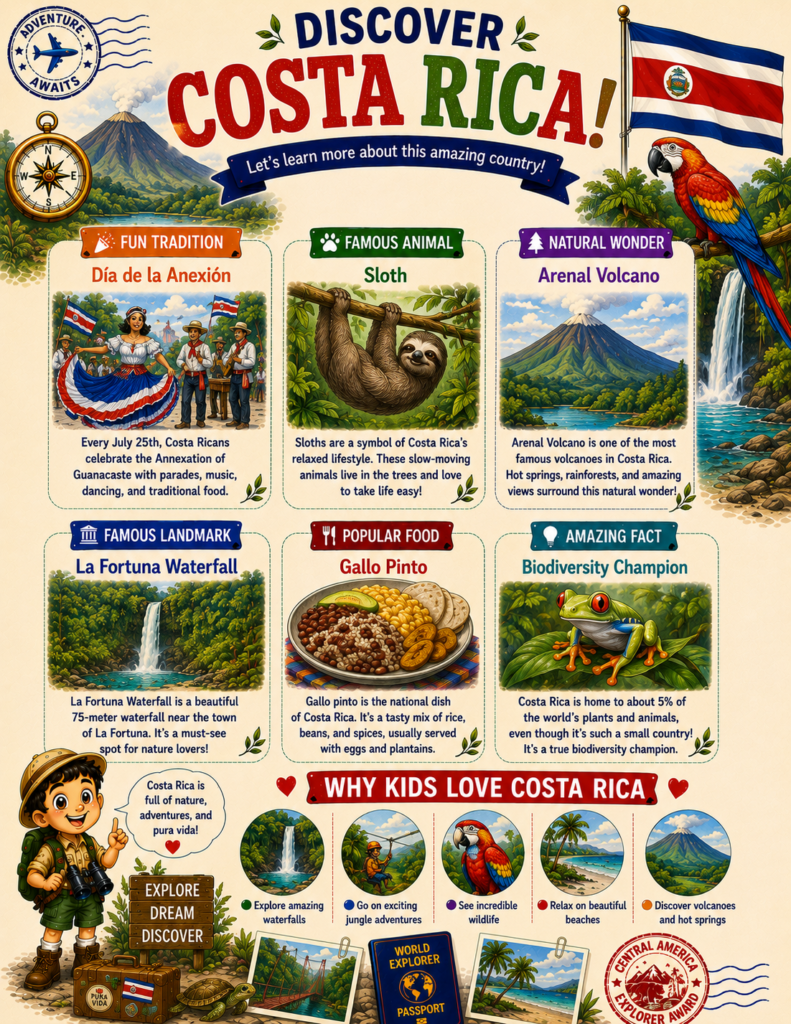
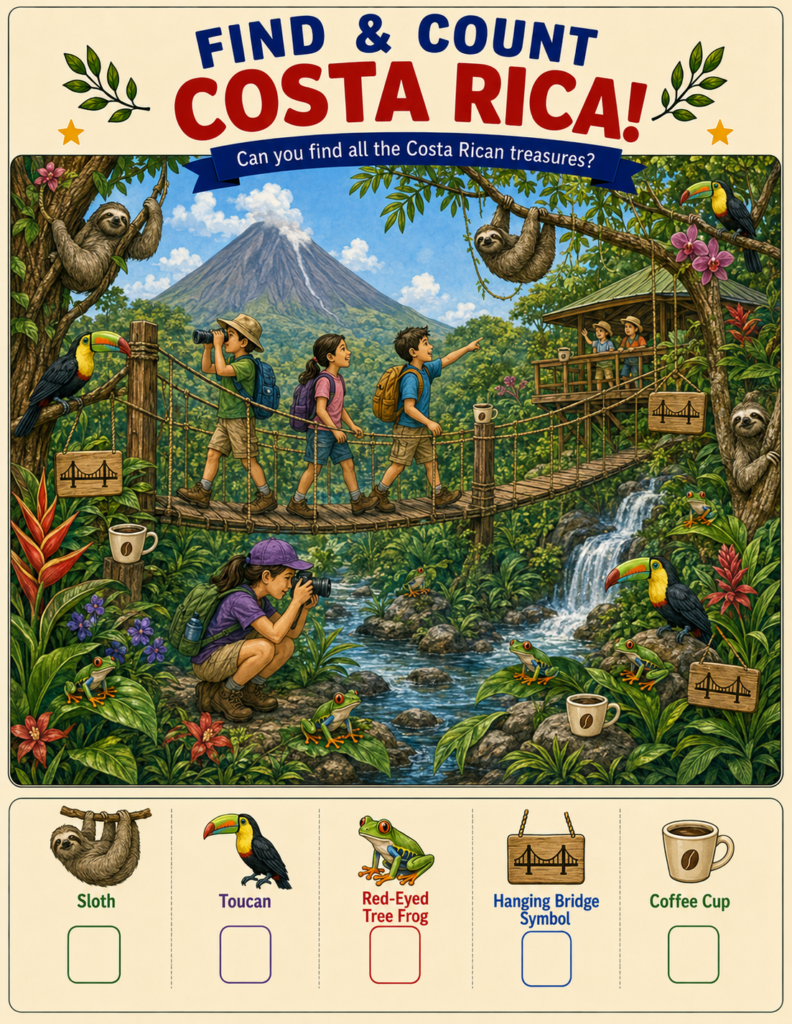
Costa Rica is one of the world’s most famous destinations for wildlife and nature. Although it is a relatively small country, it contains an incredible variety of plants and animals.
Children quickly become fascinated by its lush rainforests, towering volcanoes, colorful birds, playful monkeys, sea turtles, and the country’s most famous animal—the slow-moving sloth.
Young explorers can discover:
- Arenal Volcano,
- tropical waterfalls,
- national parks,
- cloud forests,
- beautiful Pacific and Caribbean beaches,
- and one of the richest ecosystems on Earth.
Costa Rica teaches children the importance of protecting nature and shows how wildlife can thrive when people care for the environment.
Its relaxed lifestyle, often described by the phrase Pura Vida, makes the country even more memorable for young learners.
🇵🇦 Panama
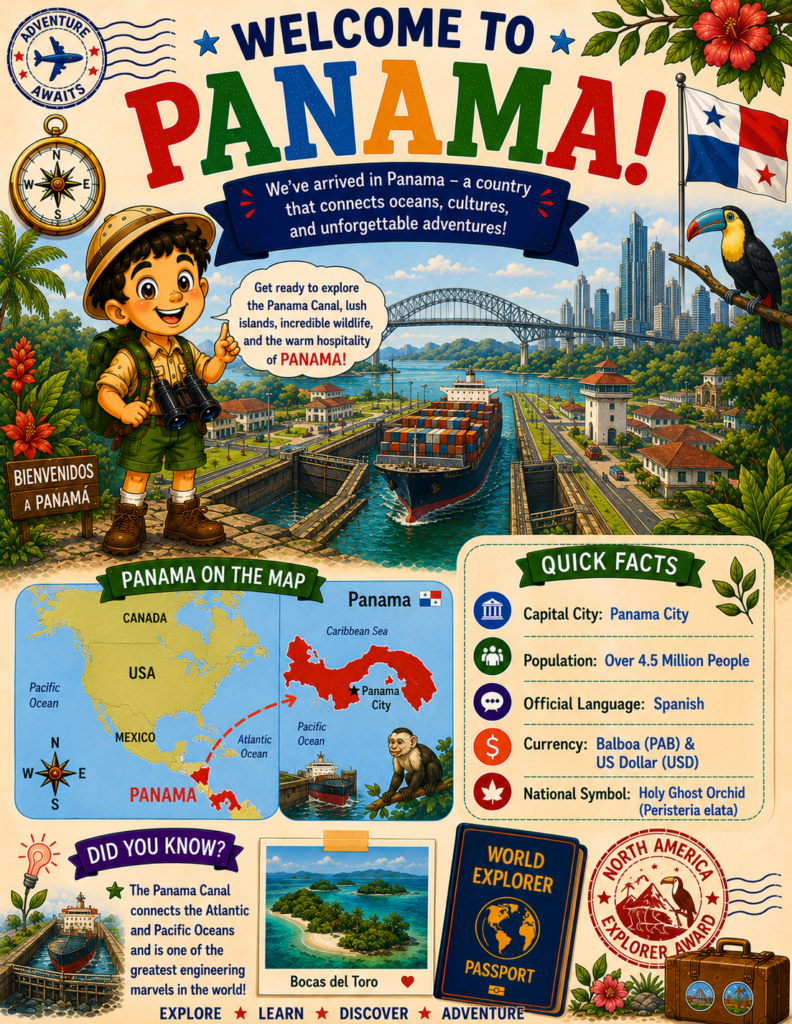
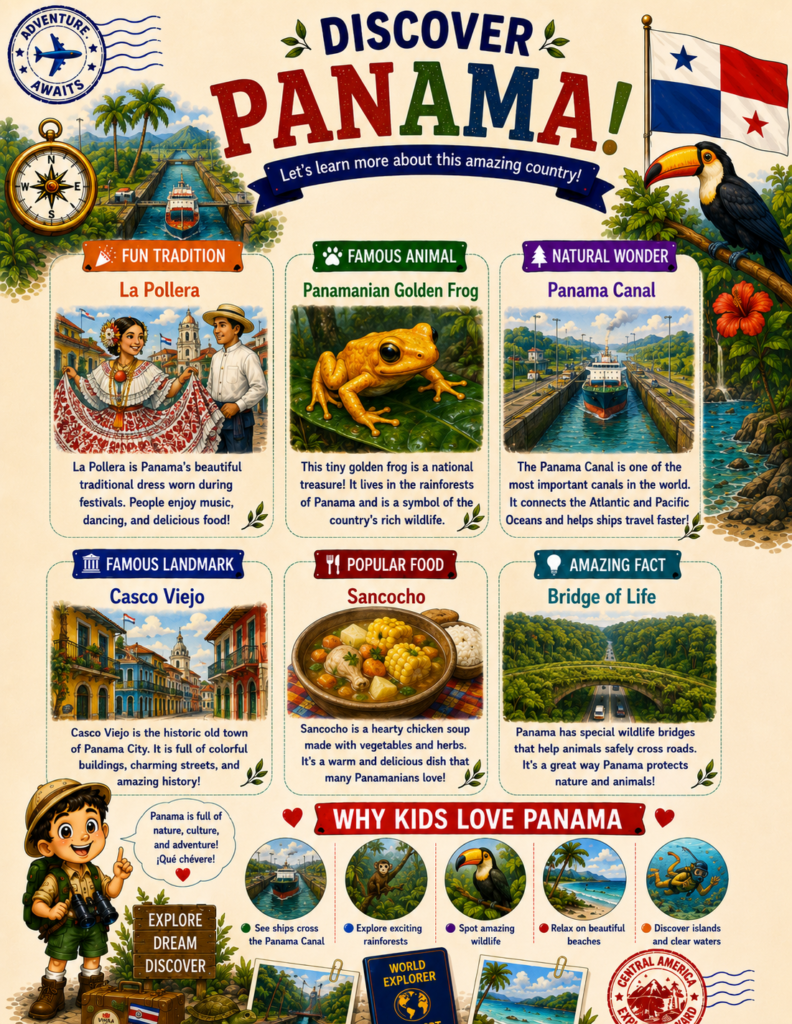
Panama is famous for connecting two continents and two oceans.
Its most recognizable landmark is the Panama Canal, one of the greatest engineering achievements in history. Children love learning how enormous ships travel through a series of locks to move between the Atlantic and Pacific Oceans.
Beyond the canal, Panama offers incredible biodiversity.
Kids can discover:
- tropical rainforests,
- colorful parrots,
- monkeys,
- butterflies,
- beautiful islands,
- indigenous cultures,
- and both Caribbean and Pacific coastlines.
Because Panama sits at the crossroads of North and South America, it is an exciting place to learn about geography, trade, and wildlife all at once.
🇨🇺 Cuba
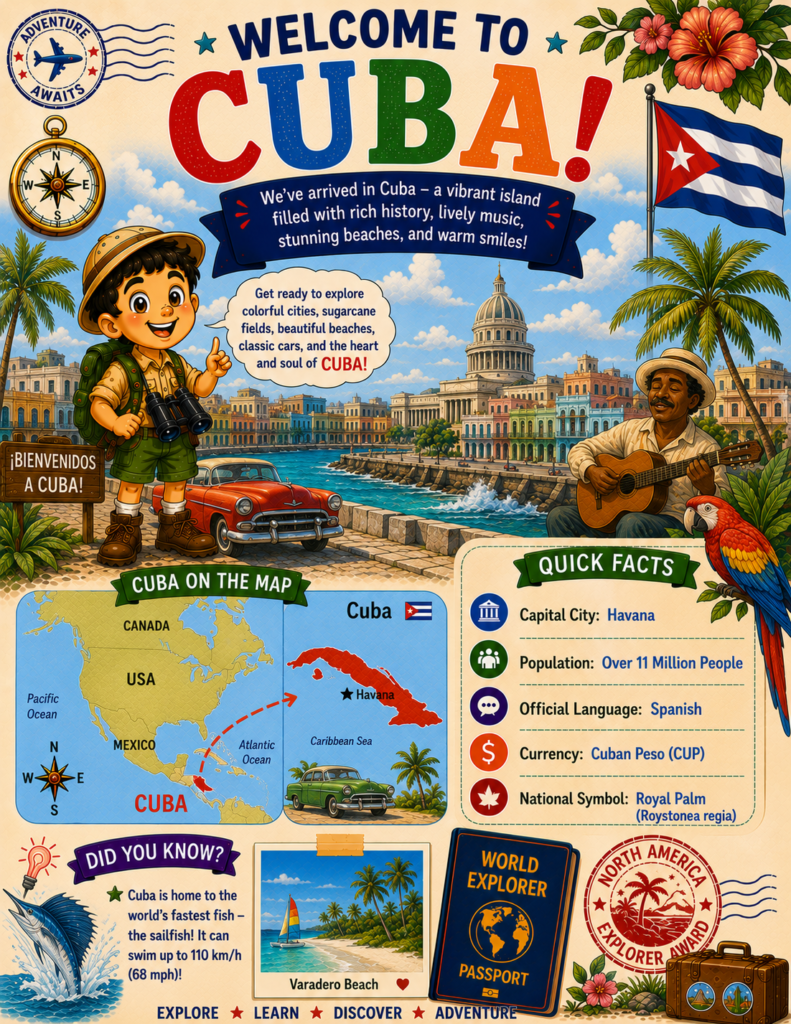
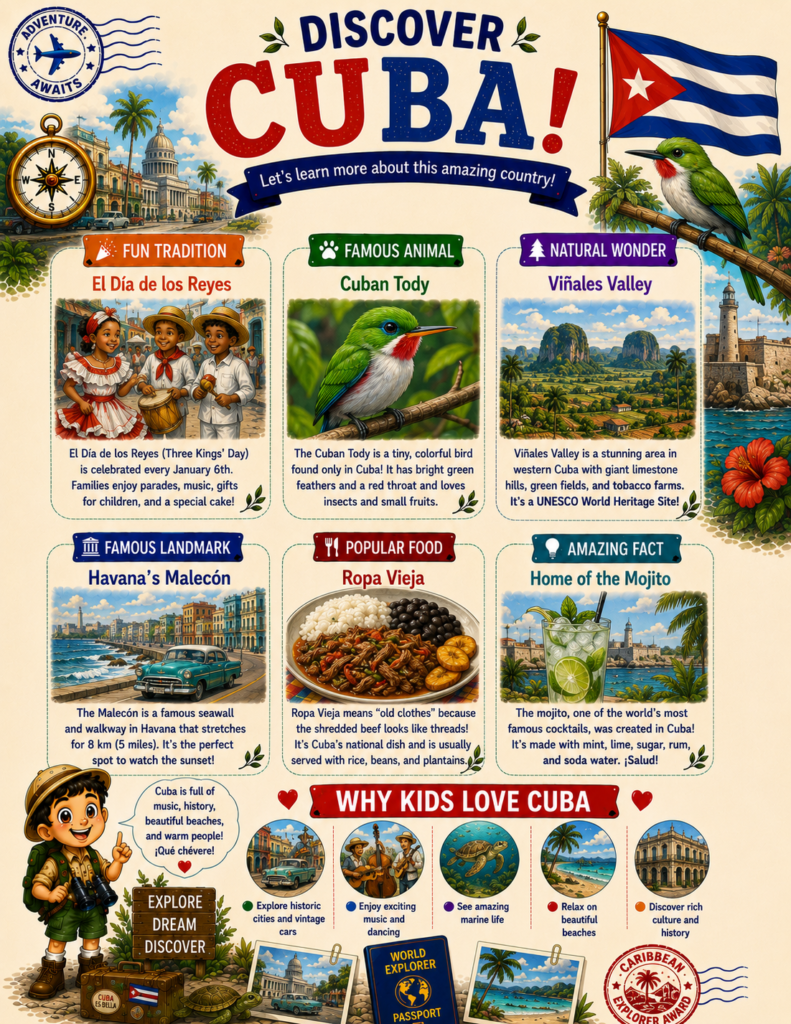
Cuba is one of the Caribbean’s most colorful countries.
Its streets are famous for classic vintage cars, bright colonial buildings, lively music, and warm tropical weather.
Children enjoy discovering:
- colorful cities,
- historic forts,
- white-sand beaches,
- sugar plantations,
- tropical forests,
- and coral reefs.
Cuban culture is filled with music, dance, and celebrations that help children understand how traditions make every country unique.
The island’s combination of history, architecture, and natural beauty makes it a fascinating stop on every North American adventure.
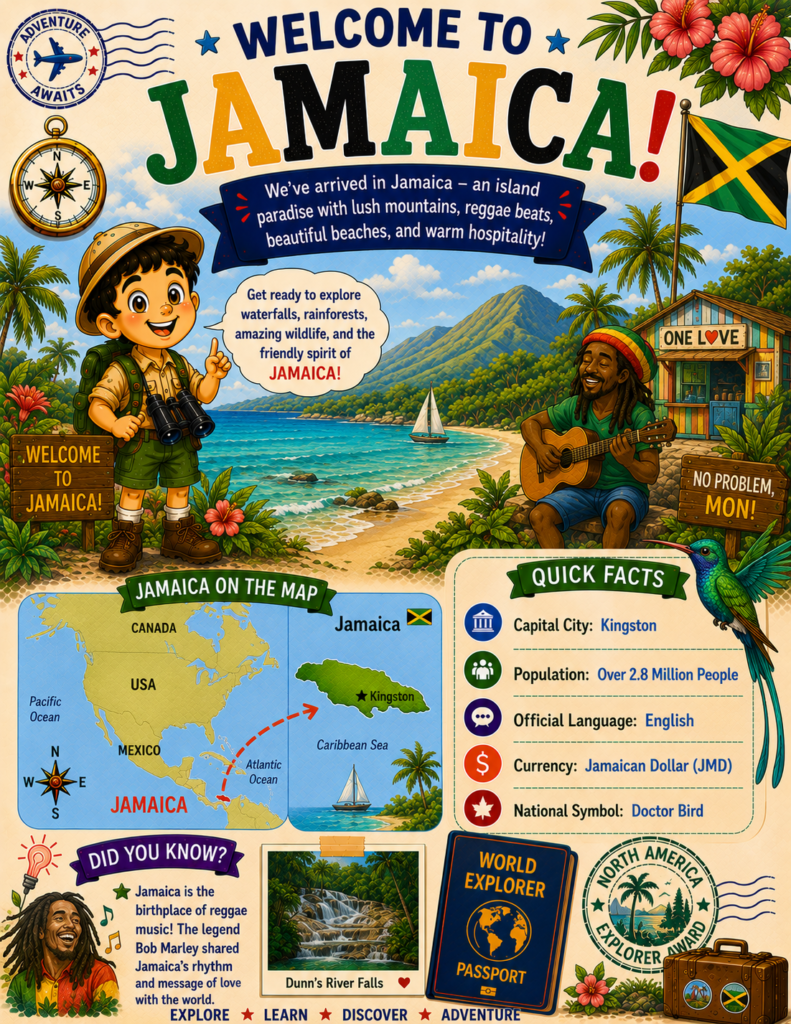
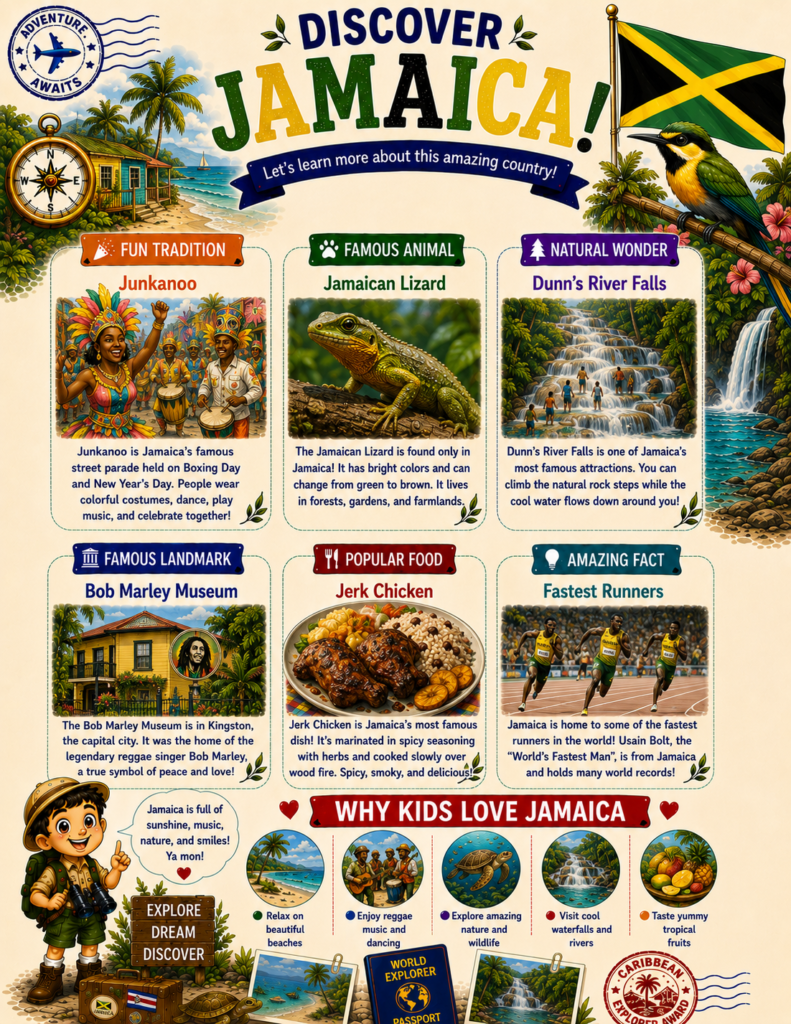
🇯🇲 Jamaica
Jamaica is known for its beautiful beaches, green mountains, waterfalls, and relaxed island atmosphere.
Many children recognize Jamaica because of reggae music, but the island offers much more than music alone.
Young explorers can learn about:
- tropical rainforests,
- waterfalls,
- coral reefs,
- colorful birds,
- sea turtles,
- and delicious tropical fruits.
Jamaica’s warm climate and vibrant culture create exciting opportunities to explore Caribbean geography while learning about local traditions and wildlife.
🇧🇸 Bahamas
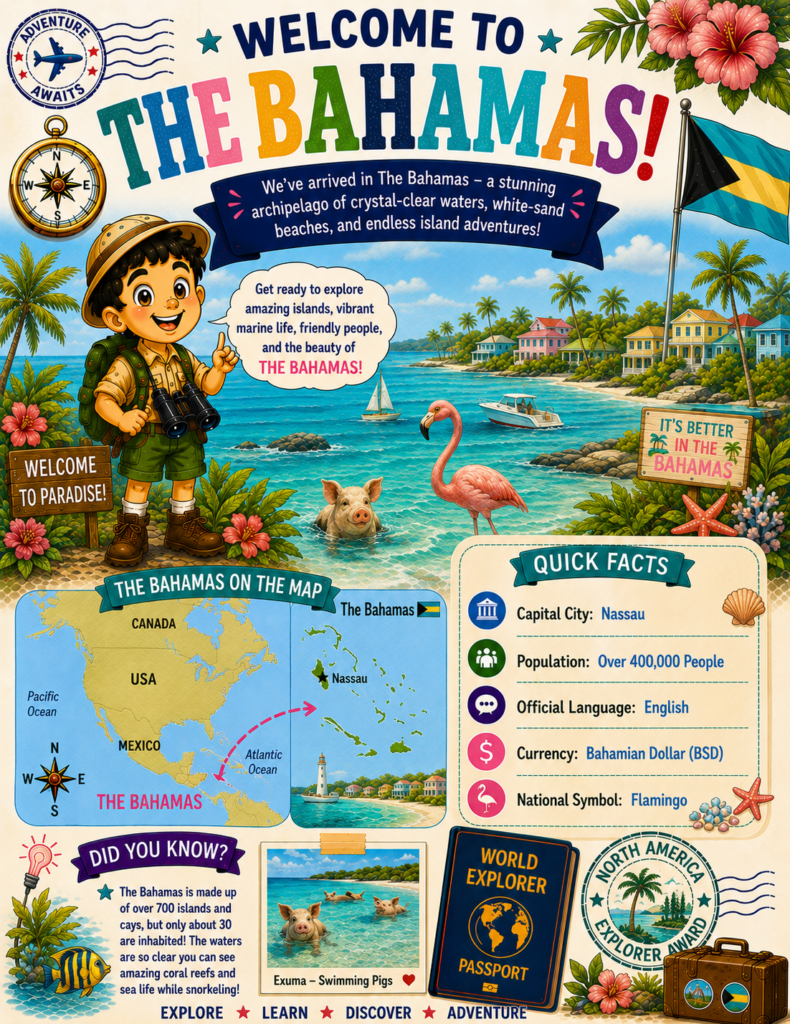
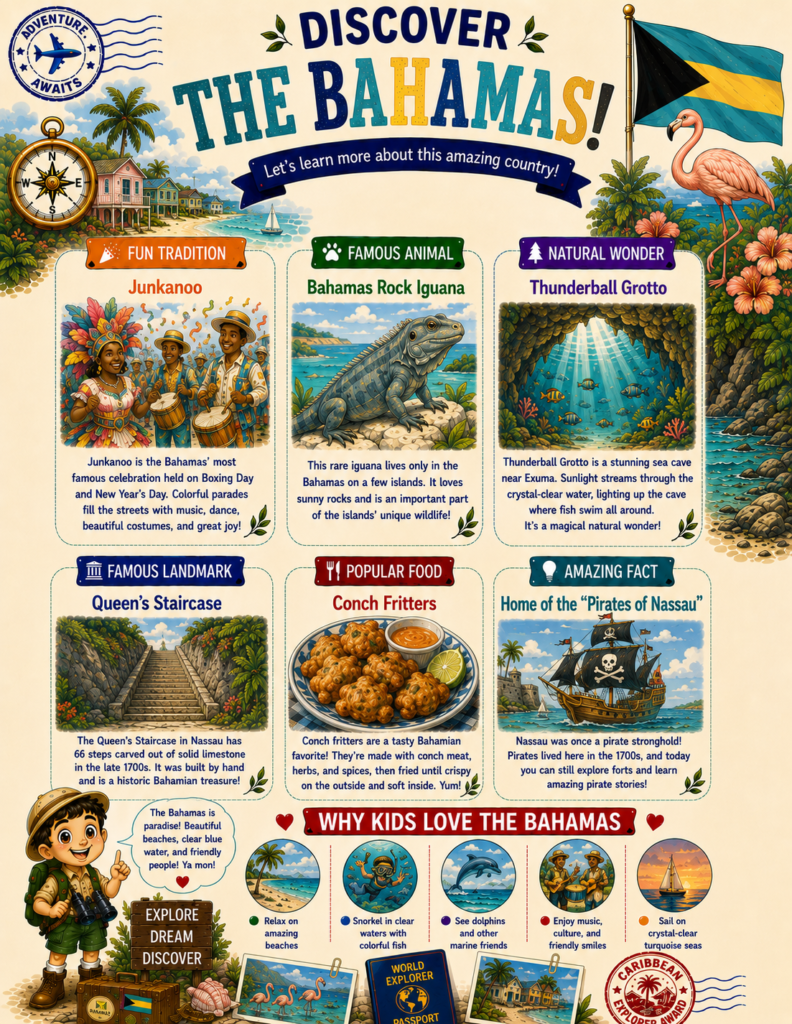
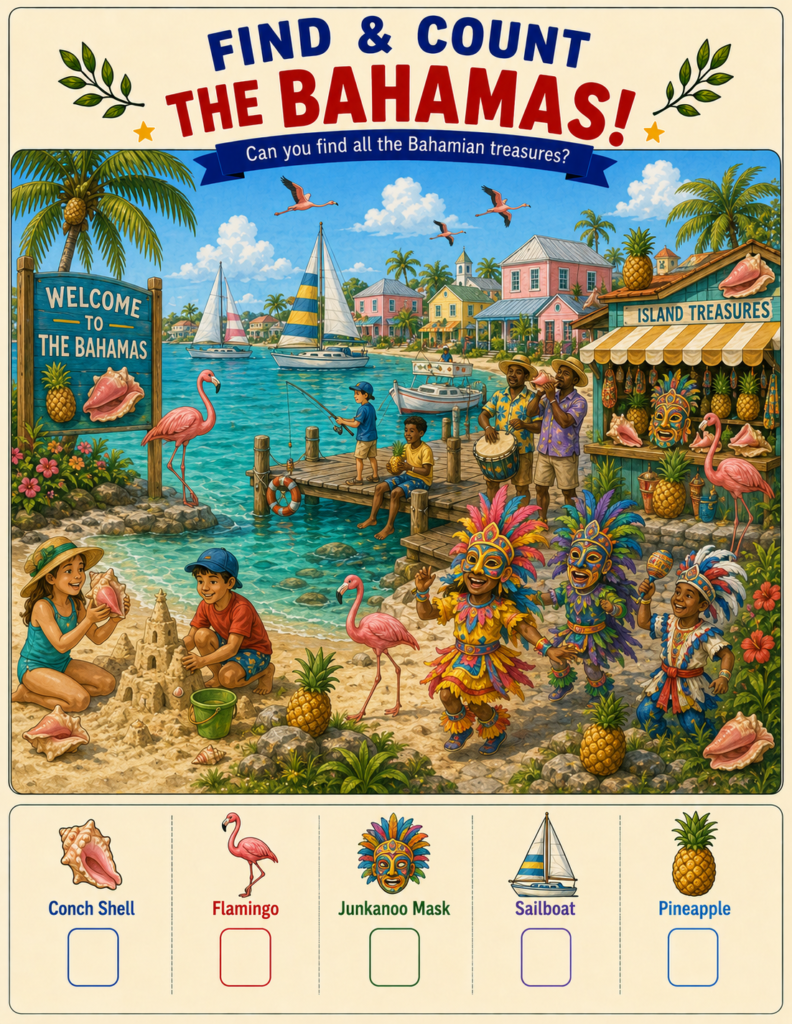
The Bahamas is made up of hundreds of beautiful islands surrounded by some of the clearest water in the world.
Children love exploring:
- white sandy beaches,
- colorful coral reefs,
- tropical fish,
- dolphins,
- sea turtles,
- and peaceful island communities.
The Bahamas also teaches children how islands form, why coral reefs are important, and how ocean ecosystems support countless species of marine life.
For many young learners, it becomes the perfect introduction to the incredible beauty of the Caribbean Sea.
Fun Facts About North America
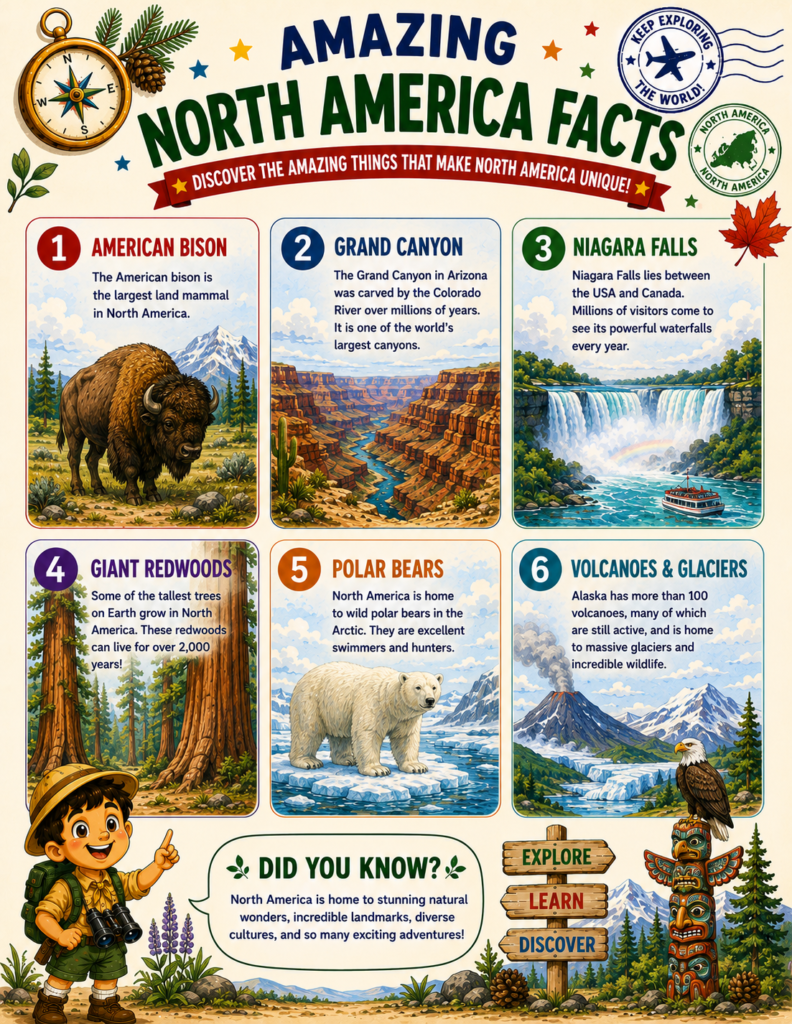
North America is full of surprising discoveries that children love sharing with friends and family.
Here are a few amazing facts:
- North America is the third-largest continent on Earth.
- It is home to more than 600 million people.
- The continent stretches from the icy Arctic all the way to tropical rainforests.
- Canada has more lakes than any other country in the world.
- Belize is home to the second-largest coral reef system on Earth.
- Costa Rica contains around 5% of the world’s biodiversity, despite covering less than 0.05% of Earth’s land.
- The Panama Canal connects the Atlantic and Pacific Oceans.
- Mexico is home to some of the world’s most famous ancient pyramids.
- The Caribbean islands are famous for crystal-clear water, coral reefs, and unique wildlife.
- North America includes deserts, glaciers, volcanoes, mountains, forests, beaches, and tropical islands—all on one continent.
These facts help children realize how diverse and exciting geography can be.
Why Kids Love Exploring North America
Every country in North America feels like a brand-new adventure.
One day children might be discovering giant redwood forests in the United States. The next, they could be spotting moose in Canada, climbing ancient Maya pyramids in Mexico and Guatemala, searching coral reefs in Belize, relaxing on tropical beaches in Jamaica, or learning how ships travel through the Panama Canal.
This variety keeps learning fresh and exciting.
Instead of memorizing isolated facts, children begin connecting countries with memorable experiences:
- volcanoes,
- wildlife,
- famous landmarks,
- delicious foods,
- colorful traditions,
- maps,
- and exciting discoveries.
That emotional connection makes geography easier to remember while encouraging curiosity about the rest of the world.
Why Activity Books Work So Well
Curious why children remember geography better through games than through memorizing facts?
Read our guide:
👉 Why Educational Games Help Kids Learn Better: The Science Behind Play-Based Learning
Learn North America Through Play
The best geography lessons don’t feel like lessons at all.
When children solve puzzles, color famous landmarks, complete matching games, answer quizzes, and explore maps, they stay engaged much longer than they would with traditional worksheets.
The World Explorer: North America activity book was created around this idea.
Instead of simply reading about countries, children complete their own explorer mission across ten amazing destinations:
- United States
- Canada
- Mexico
- Guatemala
- Belize
- Costa Rica
- Panama
- Cuba
- Jamaica
- Bahamas
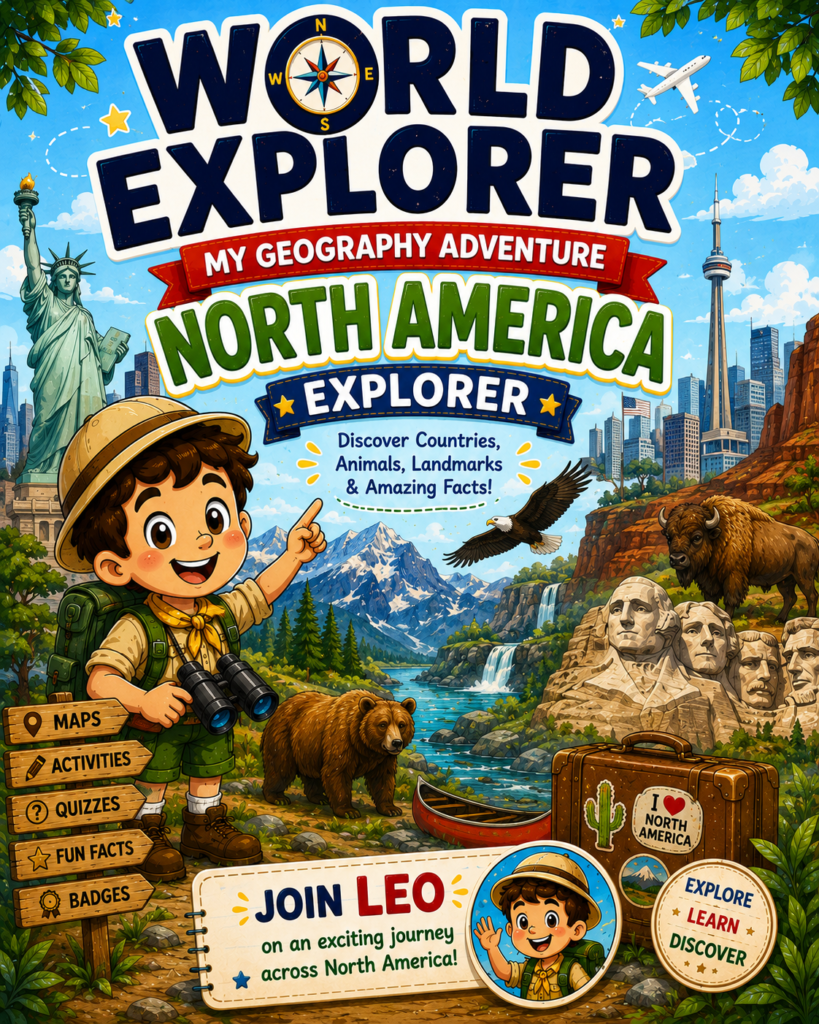
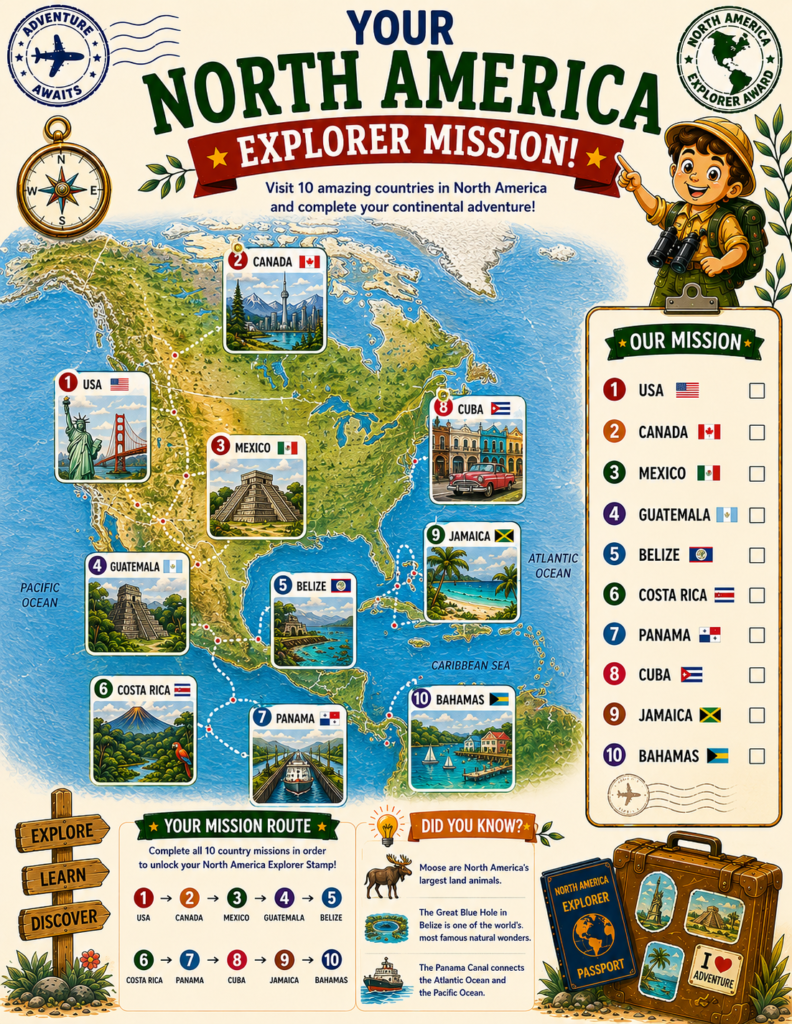
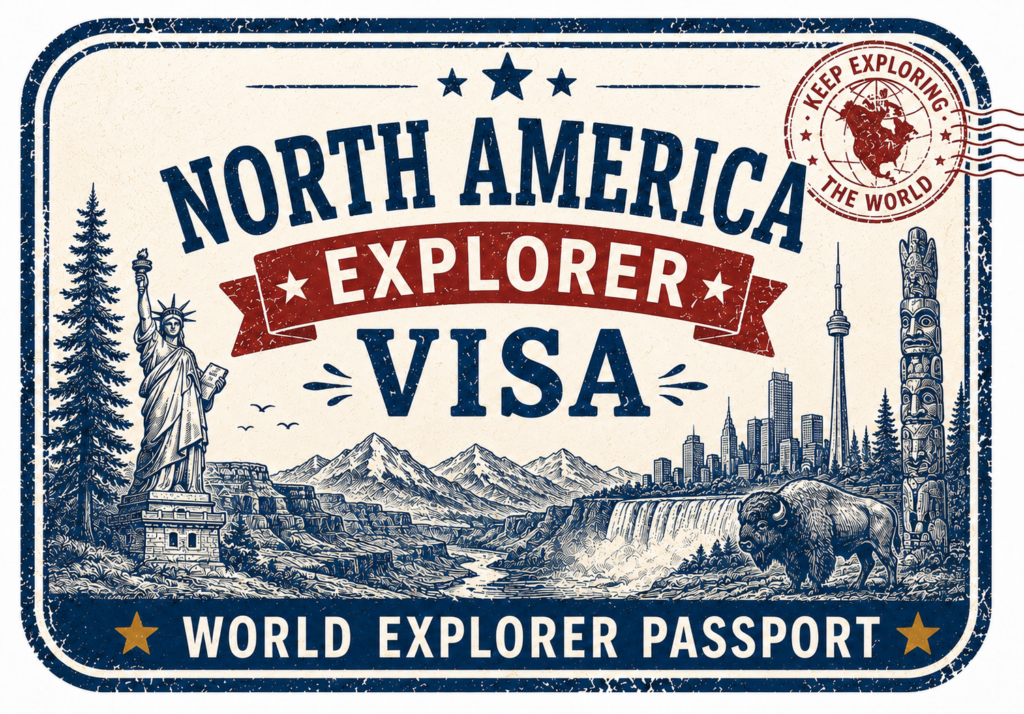
Throughout the activities they explore maps, discover famous landmarks, learn interesting facts, complete creative challenges, and earn their own North America Explorer Visa as part of the World Explorer Passport collection.
Learning gradually becomes an adventure instead of another school assignment.
Final Thoughts
North America is one of the most exciting continents for young explorers. From snowy mountains and giant forests to tropical islands, coral reefs, volcanoes, and ancient civilizations, every country offers something completely different to discover.
Helping children explore geography through stories, games, maps, and creative activities builds curiosity that often lasts far beyond a single lesson. Instead of memorizing names, they begin understanding how different cultures, landscapes, wildlife, and traditions connect to form our world.
Whether your child dreams of visiting the Rocky Mountains, exploring Maya temples, spotting sloths in Costa Rica, sailing through the Panama Canal, or relaxing on Caribbean beaches, every journey starts with curiosity.
With the right activities, geography becomes more than a subject—it becomes the beginning of a lifelong adventure.
Continue Your World Explorer Journey
If your child enjoys discovering new countries, you may also like:
🌍 Why Educational Games Help Kids Learn Better: The Science Behind Play-Based Learning
🌍 The Ultimate Geography Activity Books Bundle for Kids
🇺🇸 USA Geography Activity Book for Kids
Frequently Asked Questions
What countries are included in North America?
North America includes Canada, the United States, Mexico, the countries of Central America, and the island nations of the Caribbean. In this activity book, children explore ten exciting countries: USA, Canada, Mexico, Guatemala, Belize, Costa Rica, Panama, Cuba, Jamaica, and the Bahamas.
What is the best way for kids to learn North America?
Interactive activities work especially well. Maps, coloring pages, quizzes, matching games, puzzles, and country challenges help children remember places naturally while keeping learning enjoyable.
What age is this activity book designed for?
The World Explorer: North America activity book is designed primarily for children ages 6–9, making it ideal for homeschooling, classrooms, travel learning, and educational fun at home.
Why should children learn geography through activities?
Hands-on learning encourages curiosity, improves memory, builds problem-solving skills, and helps children understand the world through exploration rather than memorization.