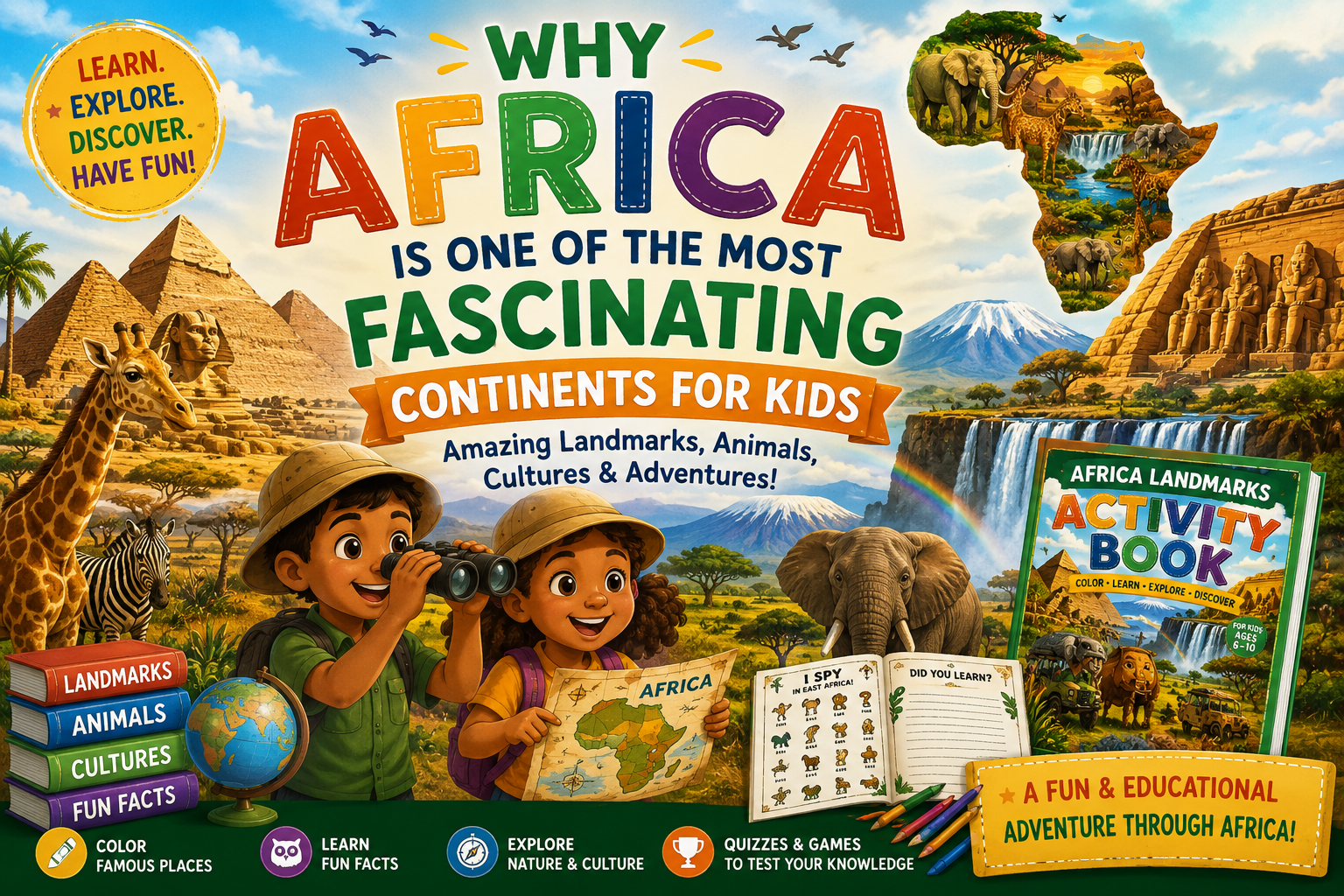
Why Africa Is One of the Most Fascinating Continents for Kids
A World of Discovery, Adventure, and Amazing Facts
Africa for kids is an exciting journey filled with incredible animals, ancient landmarks, natural wonders, and fascinating cultures waiting to be explored.
When children begin learning about the world, certain places naturally capture their imagination. Some are drawn to ancient pyramids, others dream about seeing wild animals roaming across vast landscapes, and many are fascinated by places that seem completely different from their everyday lives.
Few places offer as much wonder and discovery as Africa.
From towering mountains and breathtaking waterfalls to ancient civilizations and incredible wildlife, Africa provides endless opportunities for children to explore geography, history, science, and culture in exciting ways.
Learning about Africa can help children develop curiosity about the world while building knowledge that extends far beyond the classroom.
Why Kids Are Naturally Curious About Africa
Children are often fascinated by things that feel adventurous and unique.
Africa is home to some of the most recognizable animals on Earth, including lions, elephants, giraffes, zebras, and rhinos. Many children first encounter these animals through books, movies, and educational programs.
But Africa is much more than wildlife.
It is the world’s second-largest continent, made up of more than 50 countries, thousands of languages, diverse cultures, and incredible landscapes that range from deserts to rainforests and mountains.
For young learners, Africa offers an exciting introduction to the diversity of our planet.
Africa is just one part of a much bigger world waiting to be explored. If your child enjoys learning about different places and cultures, take a look at our guide to Countries of the World for Kids, where young learners can discover fascinating facts about countries across the globe.
Ancient Wonders That Have Inspired Generations
One reason Africa captures children’s attention is its connection to ancient history.
The continent is home to some of the oldest and most famous landmarks in the world.
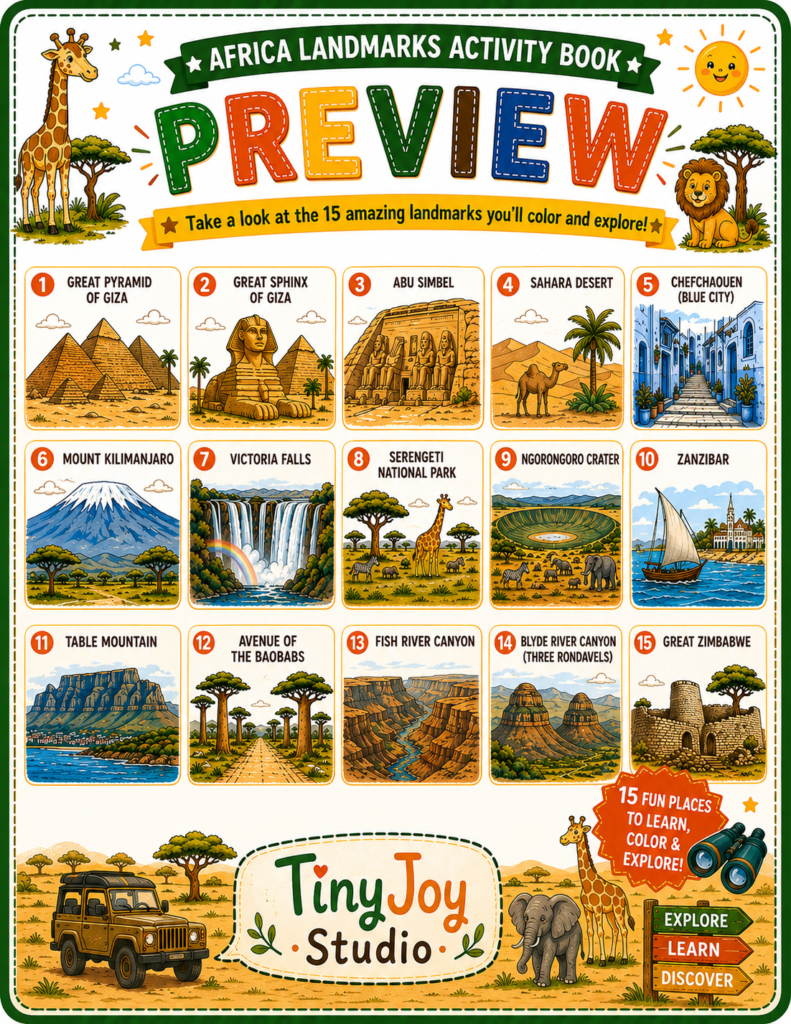
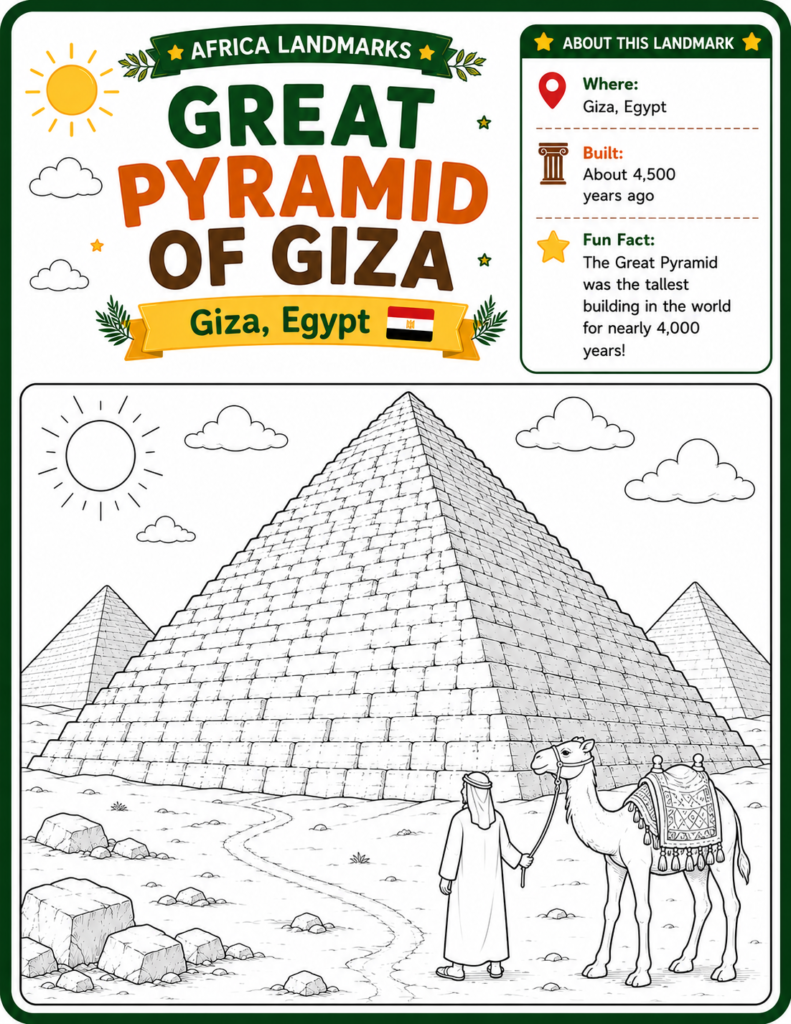
The Great Pyramid of Giza in Egypt has stood for more than 4,500 years and remains one of humanity’s greatest engineering achievements. Nearby, the Great Sphinx continues to spark curiosity with its mysterious appearance and fascinating history.
Children are often amazed to learn that these structures were built thousands of years before modern technology existed.
Other remarkable landmarks, such as Abu Simbel, help young learners discover the stories of ancient civilizations and the people who shaped history.
These landmarks transform history from a collection of dates into real places that children can imagine and explore.
The Great Pyramid of Giza is just one of many incredible places that capture children’s imagination. You can discover even more remarkable destinations in our collection of 20 Famous Landmarks Every Child Should Know.
Incredible Wildlife and National Parks
For many children, Africa is synonymous with wildlife.
The continent contains some of the world’s most famous national parks and conservation areas.
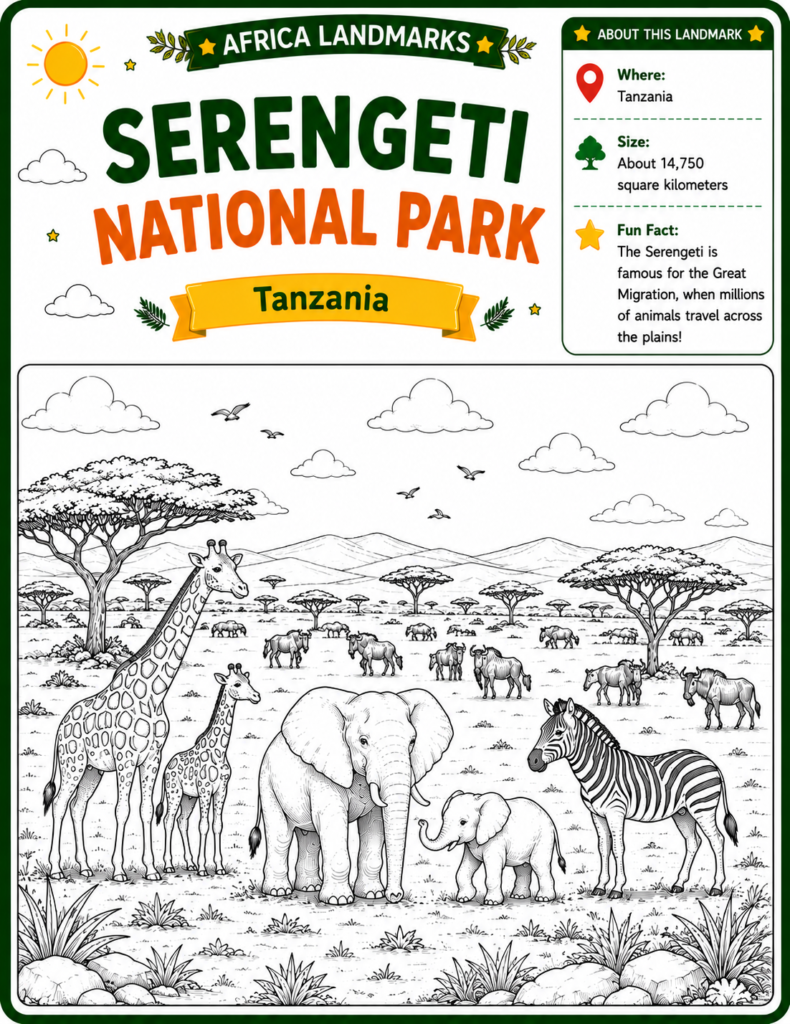
Places like Serengeti National Park in Tanzania are known for extraordinary animal migrations involving millions of wildebeest, zebras, and other species.
Children are often fascinated by the idea of animals traveling across vast plains in search of food and water.
Learning about wildlife also introduces important topics such as habitats, ecosystems, conservation, and environmental responsibility.
These lessons help children understand how nature works and why protecting wildlife matters.
Natural Wonders That Spark Curiosity
Africa is filled with natural wonders that encourage children to ask questions and explore scientific concepts.
Mount Kilimanjaro, the tallest mountain in Africa, inspires discussions about geography, climate, and volcanic activity.
Victoria Falls, one of the largest waterfalls in the world, helps children understand the power of rivers and the natural forces that shape landscapes.
The Sahara Desert introduces concepts such as extreme environments, weather patterns, and adaptation.
These remarkable places show children that our planet is full of incredible natural features worth exploring and protecting.
Exploring landmarks, mountains, deserts, and waterfalls is one of the best ways to introduce geography in a meaningful way. Learn more in our article How Geography Helps Children Understand the World.
Unique Places and Diverse Cultures
One of the most valuable aspects of learning about Africa is discovering its cultural diversity.
Many children are surprised to learn that Africa is not a single country but a vast continent filled with unique traditions, languages, foods, music, and ways of life.
Places like Chefchaouen in Morocco, often called the Blue City, demonstrate how architecture and local traditions can create unforgettable places.
Coastal destinations such as Zanzibar introduce children to maritime history, trade routes, and cultural exchanges that have connected people for centuries.
Learning about these places encourages respect, empathy, and appreciation for cultures that may be different from their own.
How Interactive Learning Helps Children Remember More
Research consistently shows that children learn best when they actively participate in the learning process.
Reading facts is helpful, but combining information with activities often creates stronger memories and deeper understanding.
Activities such as:
- Coloring famous landmarks
- Solving geography challenges
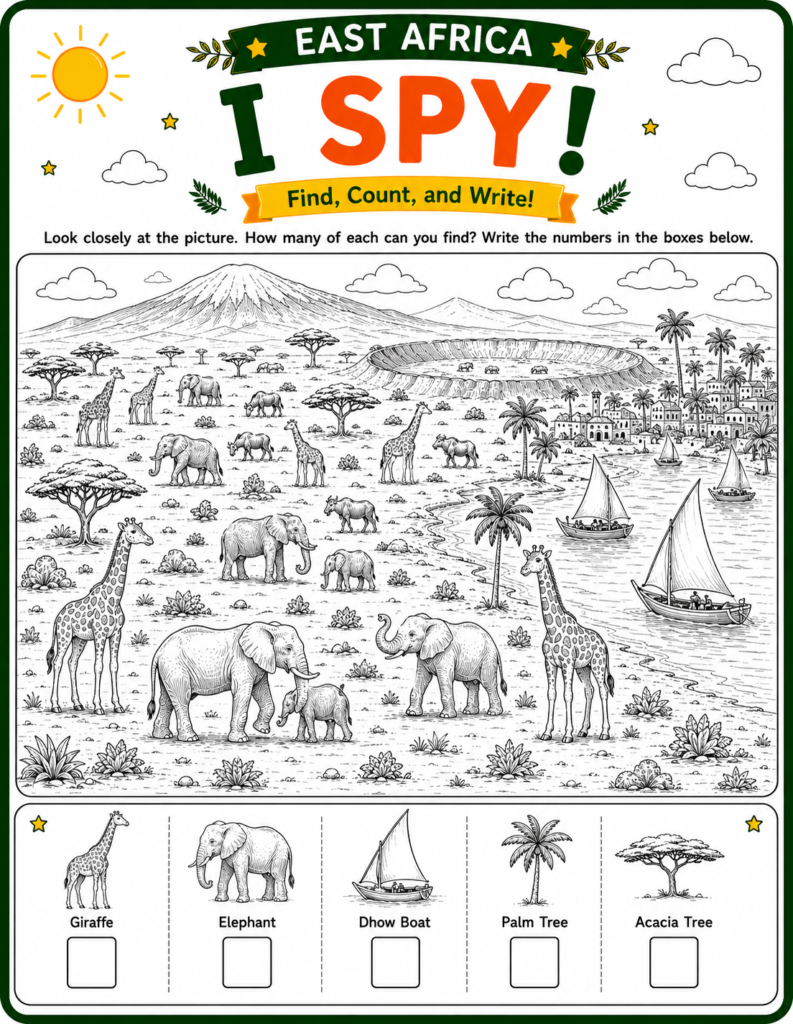
- Completing I Spy games
- Matching facts and locations
- Answering review questions
- Drawing favorite discoveries
encourage children to engage with information rather than simply memorize it.
When learning feels like an adventure, children are more likely to stay curious and retain what they learn.
Turning Geography Into an Adventure
Many parents want to help their children learn about the world but aren’t always sure where to begin.
The good news is that geography doesn’t need to feel complicated.
Exploring famous landmarks, natural wonders, wildlife, and cultures provides an enjoyable introduction to global learning.
A single discovery can lead to dozens of new questions:
Why were the pyramids built?
How tall is Mount Kilimanjaro?
What animals live in the Serengeti?
Why is Chefchaouen painted blue?
These questions encourage curiosity, critical thinking, and a lifelong love of learning.
Ready to explore Africa together?
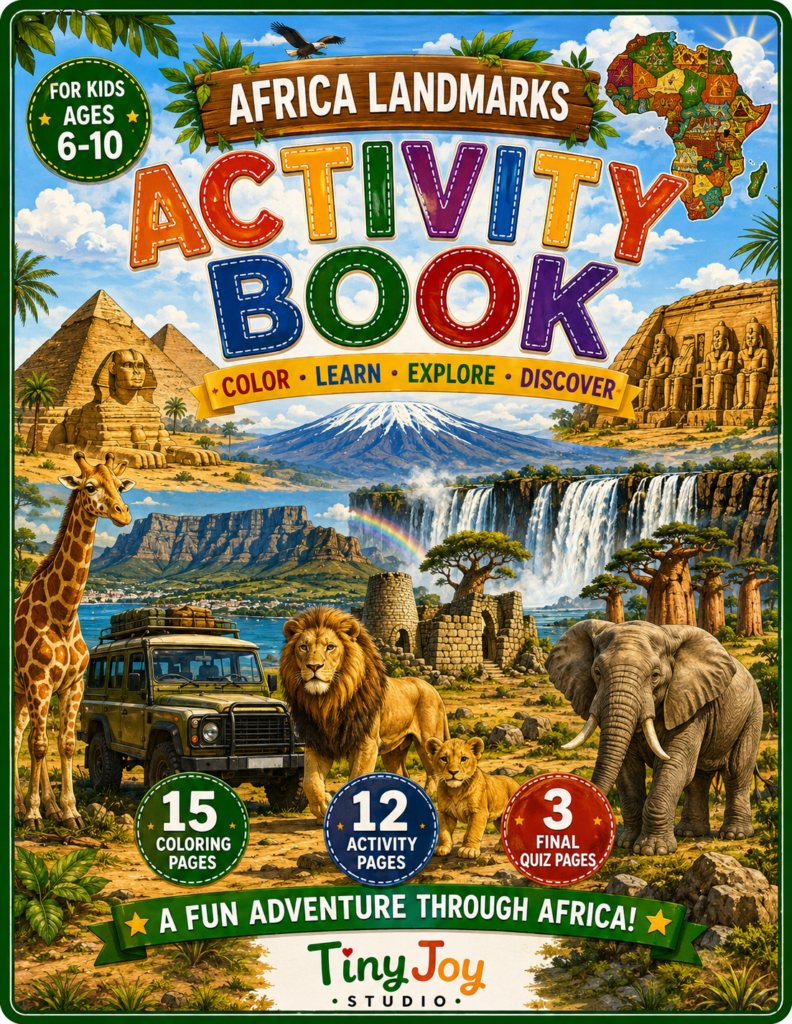
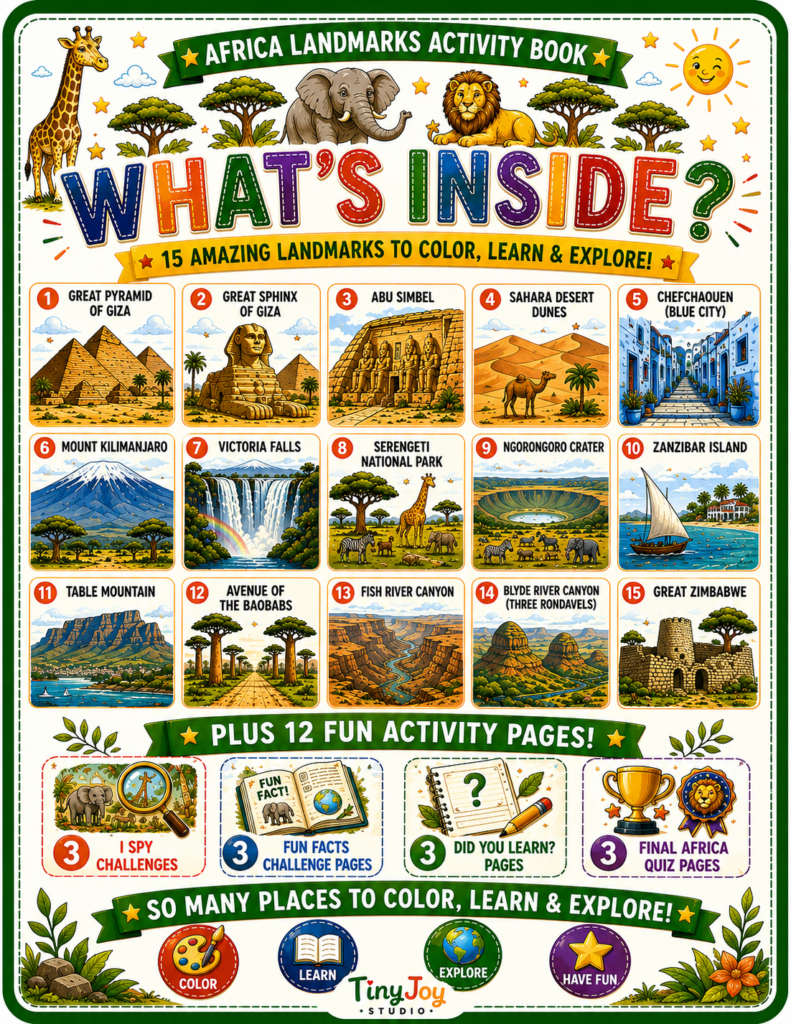
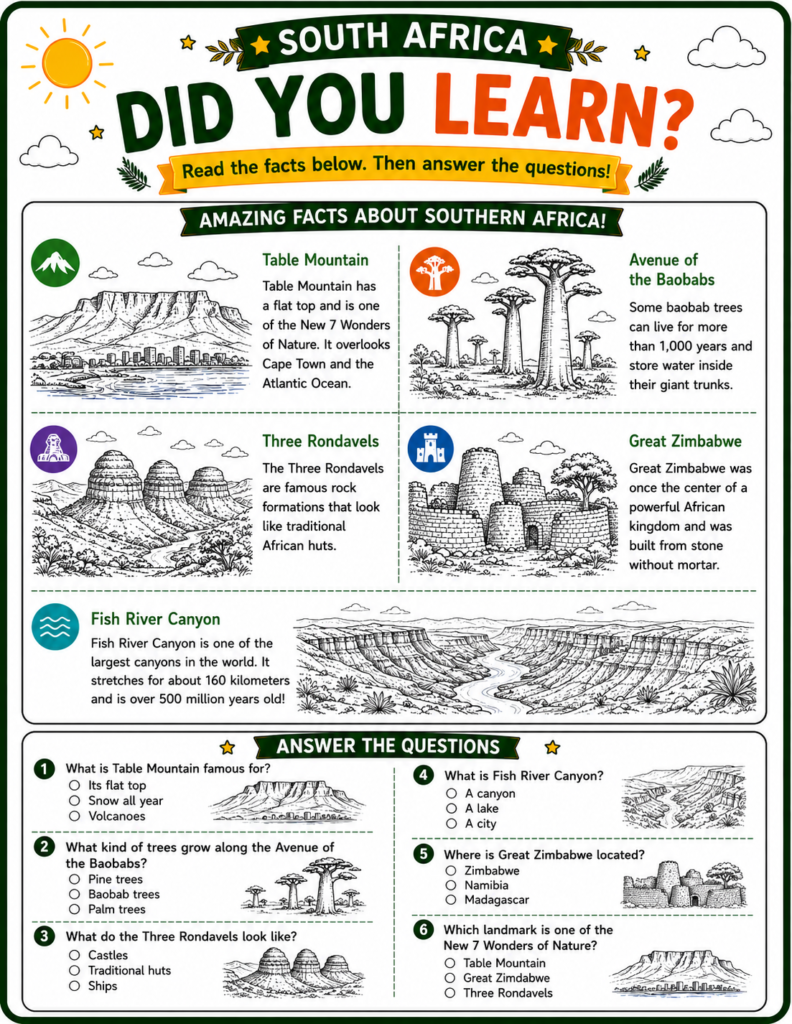
Discover 15 famous African landmarks through coloring pages, I Spy challenges, fun facts, geography activities, review worksheets, and educational games designed for curious young explorers.
Final Thoughts
Africa is one of the most fascinating continents children can explore.
Its combination of ancient history, incredible wildlife, natural wonders, and diverse cultures creates endless opportunities for discovery.
Whether children are learning about the Great Pyramid of Giza, watching the migration of animals across the Serengeti, exploring the Blue City of Chefchaouen, or discovering the power of Victoria Falls, each new fact helps them better understand the world around them.
If you’re looking for a fun, screen-free way to introduce geography, culture, and world landmarks, educational activities can turn learning about Africa into an unforgettable adventure for young explorers.