The Best Homeschool Geography Curriculum: Gamify Your Geography Lessons
If you are a homeschooling parent, you already know the daunting feeling of planning a new school year. You spend hours scouring internet forums, reading curriculum reviews, and downloading sample pages, hoping to find the perfect balance between academic rigor and sheer fun.
When it comes to social studies and world discovery, finding the right homeschool geography curriculum can feel like searching for a needle in a haystack. Traditional textbooks are often dry, heavy on memorization, and packed with dense paragraphs that make young learners’ eyes glaze over. On the other end of the spectrum, simple craft ideas or coloring pages lack the depth needed to build real geographical literacy.
So, how do you teach children about our vast, fascinating planet without spending three hours every Sunday night prepping lesson materials—or fighting daily battles over boring worksheets?
The answer is simple: You stop teaching geography as a textbook subject and start presenting it as a gamified adventure.
In this comprehensive guide, we will explore why gamification is the ultimate secret weapon for homeschoolers. We’ll share what to look for in a high-quality geography program, give you a plug-and-play weekly lesson routine, and introduce a revolutionary, passport-based curriculum designed to make world exploration the highlight of your homeschool week.
Why Most Geography Curriculums Fail 6- to 9-Year-Olds
Before we look at the solution, let’s diagnose the problem. Why do so many elementary geography curriculums end up collecting dust on the shelf by November?
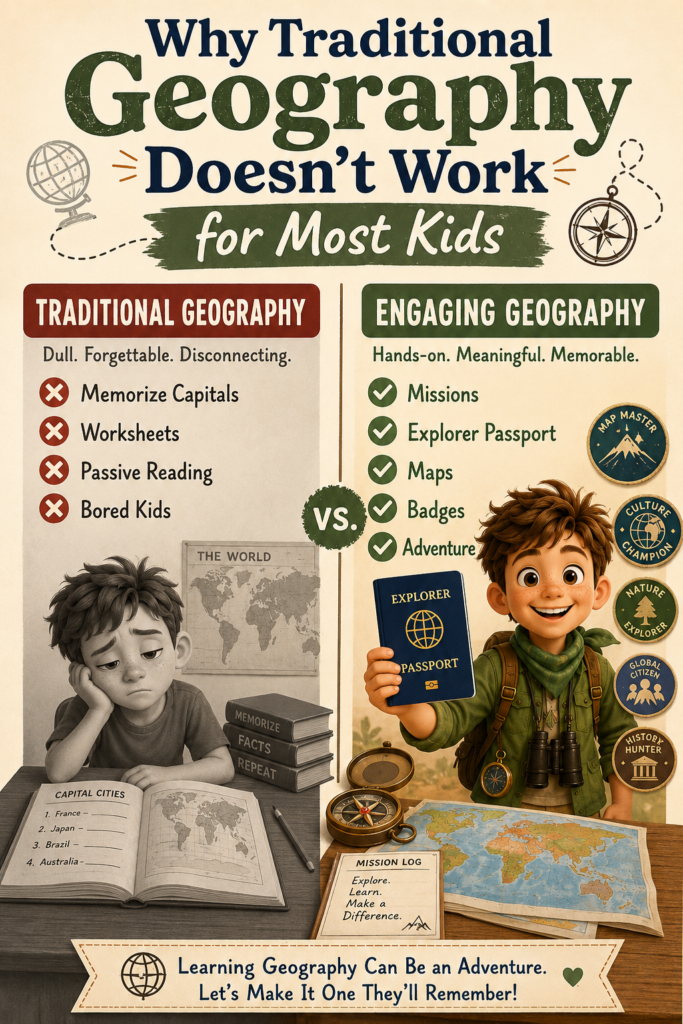
- The «Memorization Trap»: Standard programs often ask children to memorize lists of capitals, state birds, or major exports. To a 7-year-old, these abstract facts have zero connection to their real life. Without context, memorization becomes a tedious chore that is forgotten the moment the test is over.
- High Parental Prep Time: Many hands-on homeschool curriculums require parents to gather obscure craft supplies, print and cut dozens of flashcards, and build elaborate papier-mâché globes. Busy parents—especially those teaching multiple children—simply burn out.
- Lack of Personal Agency: When kids are passive receivers of information, their engagement drops. If they don’t feel like they are actively participating in a story or mission, boredom sets in immediately.
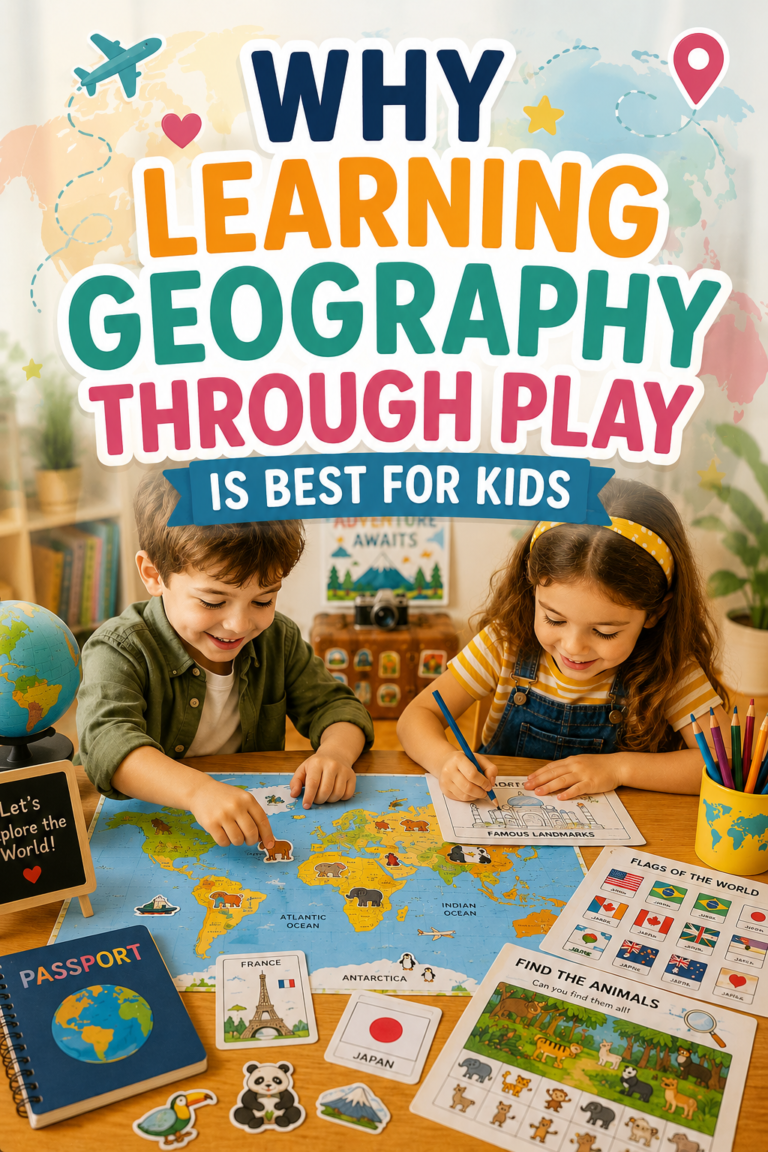
To overcome these hurdles, modern homeschoolers are turning to structured gamification. By transforming lessons into quests, we align education with how children naturally learn best: through play, curiosity, and visual progression. (If you want to dive deeper into the neurological benefits of this approach, read our comprehensive breakdown of why educational games help kids learn better.)
The 4 Pillars of an Effective Homeschool Geography Curriculum
When evaluating any homeschool geography curriculum for early elementary students (grades 1–3), look for programs that are built on these four foundational pillars:
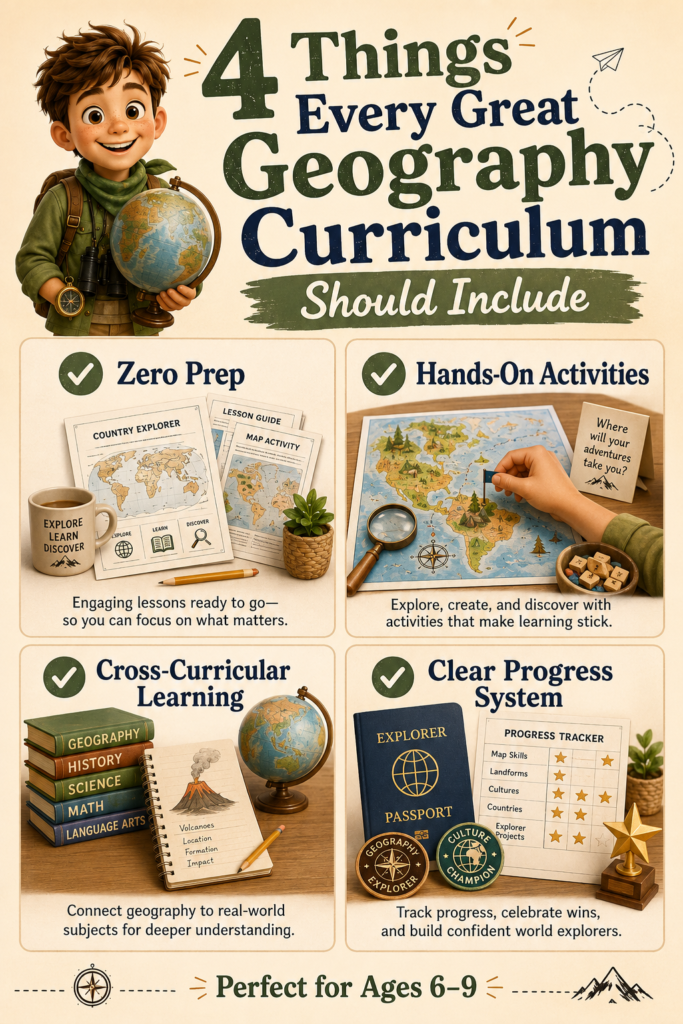
1. Open-and-Go Simplicity (Zero Prep)
The best curriculum is the one you actually use consistently. Look for materials that require nothing more than basic household supplies—like colored pencils, safe scissors, and a glue stick. You should be able to open the book on a Tuesday morning and start exploring immediately.
2. Multi-Sensory & Tactile Engagement
Children need to do geography, not just read about it. A robust curriculum incorporates interactive mapping, visual puzzle solving, tracing, and physical rewards. When a child physically glues a badge onto a page or traces an ocean current with their finger, muscle memory reinforces cognitive learning.
3. Interdisciplinary Connections
Geography does not exist in a vacuum. The most effective lessons seamlessly blend earth science (volcanoes and tectonic plates), biology (animal habitats and ecosystems), logic (code-breaking and mazes), and cultural empathy into one unified theme.
4. A Clear Progression System
Children are deeply motivated by visual milestones. A curriculum that utilizes badges, stamps, and collectible elements taps into their natural psychology. When kids can visually track their journey across the globe, they develop intrinsic motivation—meaning they will actually ask you to do schoolwork! (Learn more about this psychological trigger in our guide on why kids learn geography better through adventures, collections, and progression.)
The 15-Minute Daily Routine: A Sample Weekly Lesson Plan
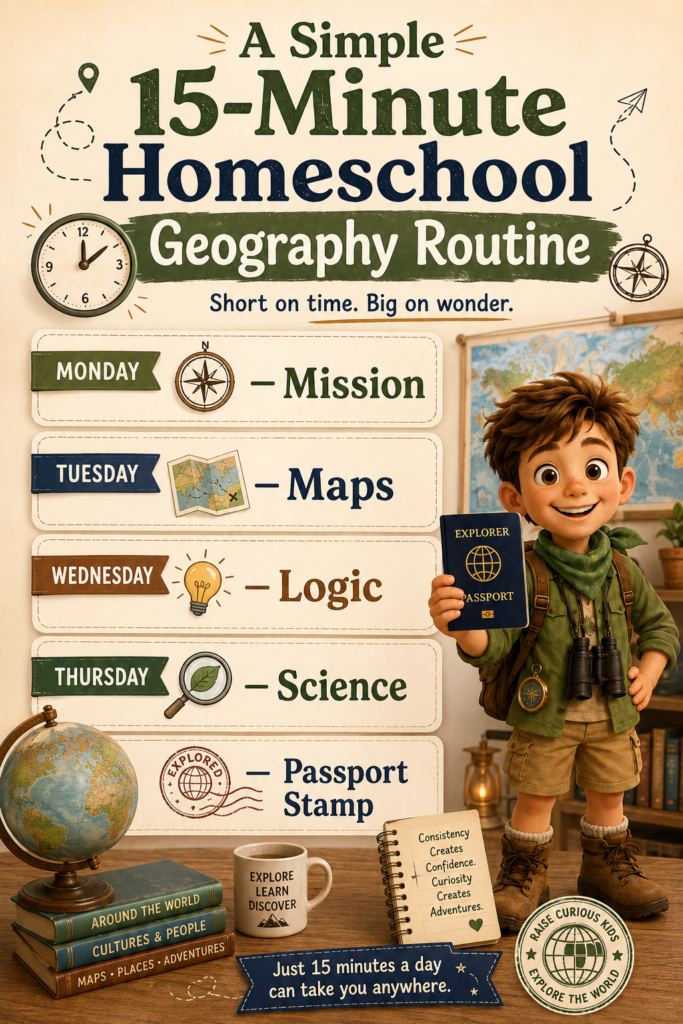
One of the biggest misconceptions about homeschooling is that every subject needs an hour of daily instruction. With a gamified approach, 15 to 20 minutes a day of focused, high-interest exploration is far more effective than an hour of forced reading.
Here is an easy, low-stress weekly schedule you can implement immediately:
| Day of the Week | Daily Theme | Activity Focus | Estimated Time |
| Monday | Mission Briefing | Read an engaging, high-interest fact page about a new region, ocean, or continent with your guide. | 15 Minutes |
| Tuesday | Map Mastery | Trace boundaries, locate landmarks on a visual map, and solve spatial awareness challenges. | 15 Minutes |
| Wednesday | Logic & Science | Complete a brain-boosting puzzle, ice maze, or coordinate sorting task related to the region’s climate or wildlife. | 20 Minutes |
| Thursday | Tactile Lab | Do a quick, low-prep at-home experiment or creative drawing exercise (e.g., drawing an animal habitat). | 20 Minutes |
| Friday | Visa & Celebration | Complete the final review quest, cut out the official regional badge, and glue the newly earned Visa Stamp into their Explorer Passport! | 15 Minutes |
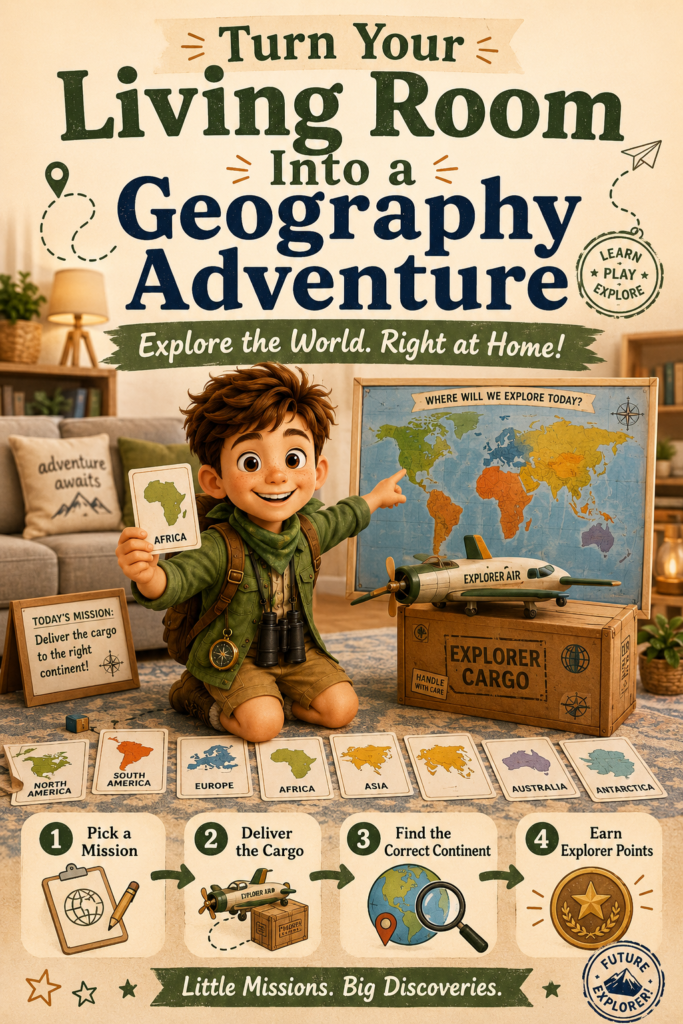
Low-Prep At-Home Activity: The «Continental Cargo» Game
Want to test the power of gamified geography in your homeschool today? Try this simple, active mapping game that teaches spatial awareness and global trade routes without any specialized equipment:
- The Setup: Take 7 pieces of paper and write the name of one continent on each. Spread these papers across the living room floor or backyard. This is your «Global Ocean.»
- The Mission: Tell your child they are a cargo ship captain. Give them a basket of small household items (e.g., a stuffed panda, a toy car, a plastic banana, a seashell).
- The Gamified Challenge: Call out shipping orders! «Captain, we need to deliver this giant panda to Asia immediately!» or «Take this shipment of bananas to South America!» Your child must navigate their «ship» around the room and deliver the cargo to the correct continent paper without stepping on the «deep ocean reefs» (pillows thrown on the floor).
- The Educational Bonus: This physical activity builds instant familiarity with continent names and global geography while burning off excess morning energy before seatwork!
Meet Your Complete Homeschool Solution: The World Explorer Series
If you love the idea of a gamified, open-and-go routine but don’t have the hours required to build custom lesson plans, maps, and reward trackers yourself, there is a ready-to-use ecosystem crafted specifically for your homeschool.
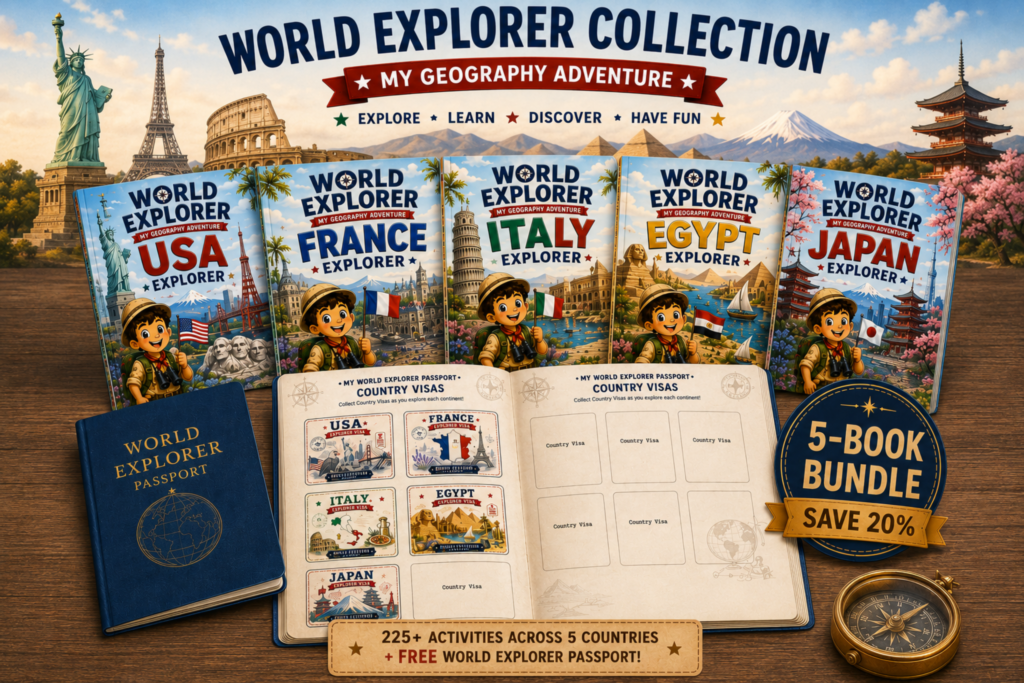
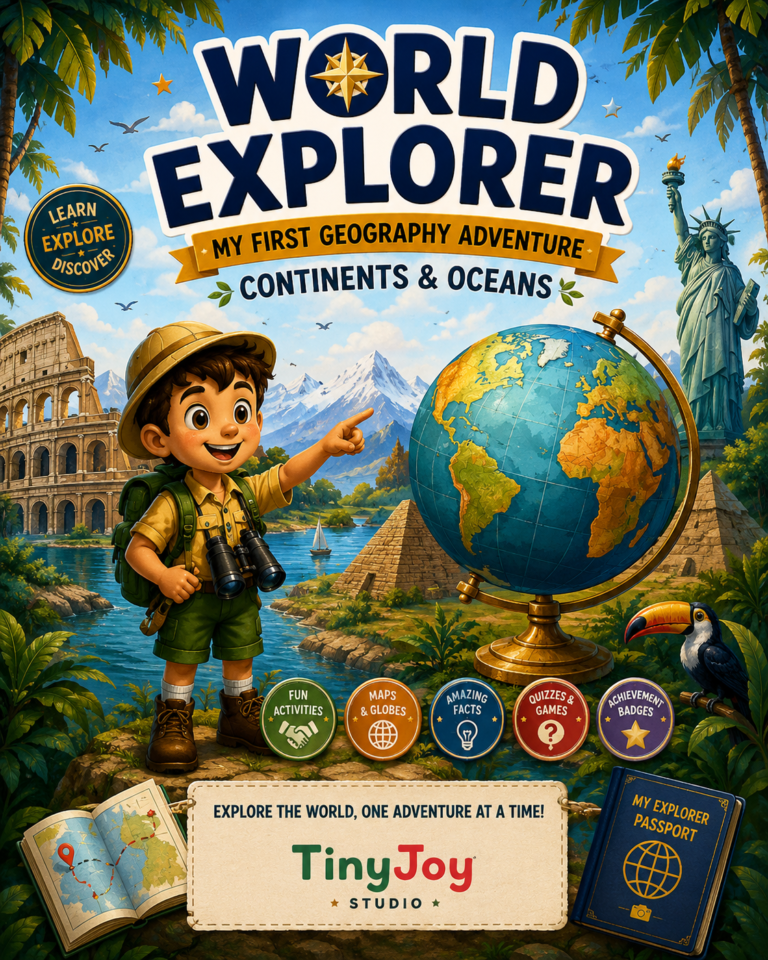
Enter The World Explorer Series by Tiny Joy Studio—a comprehensive, beautifully illustrated educational program designed to serve as your ultimate homeschool geography curriculum for kids ages 6 to 9.
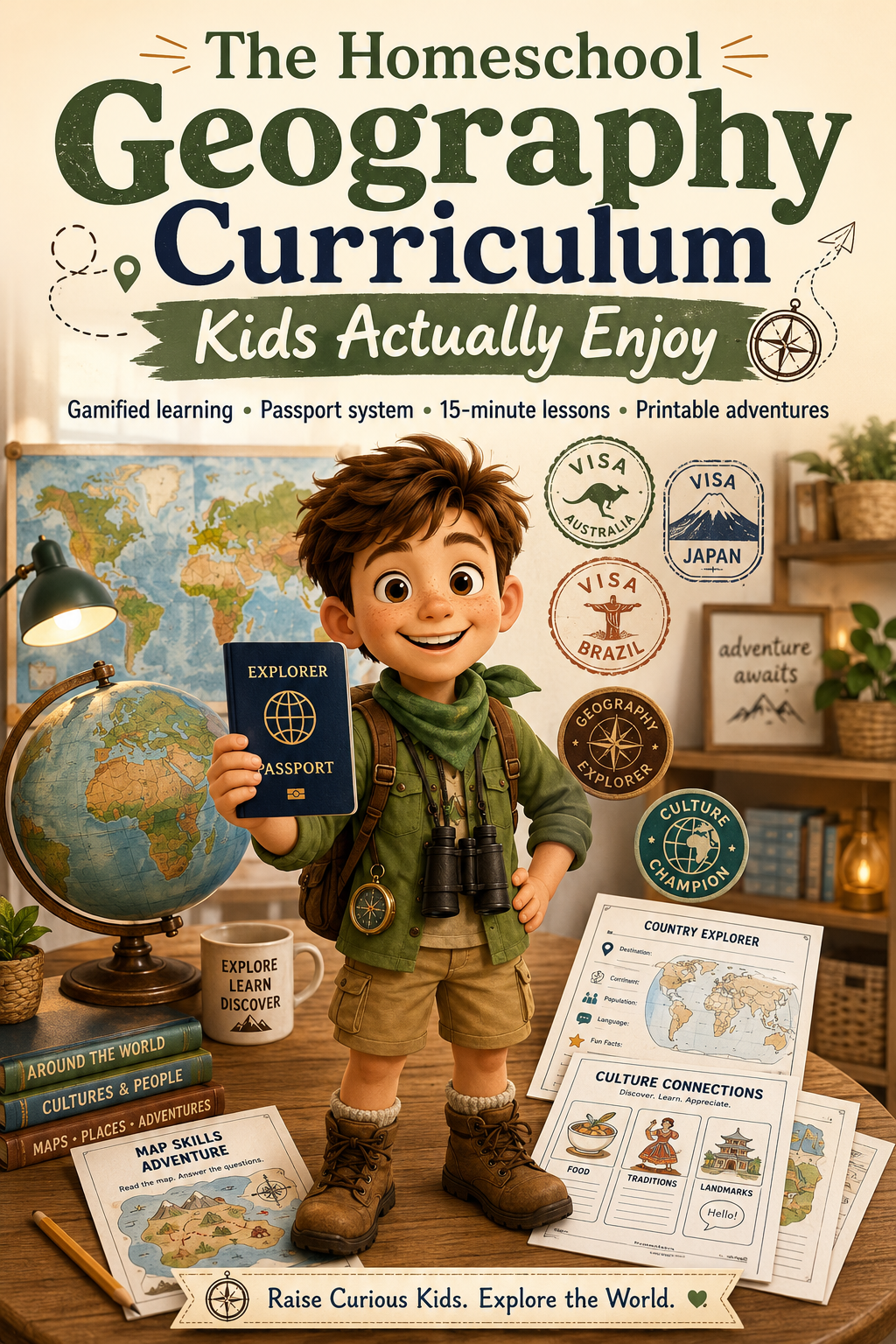
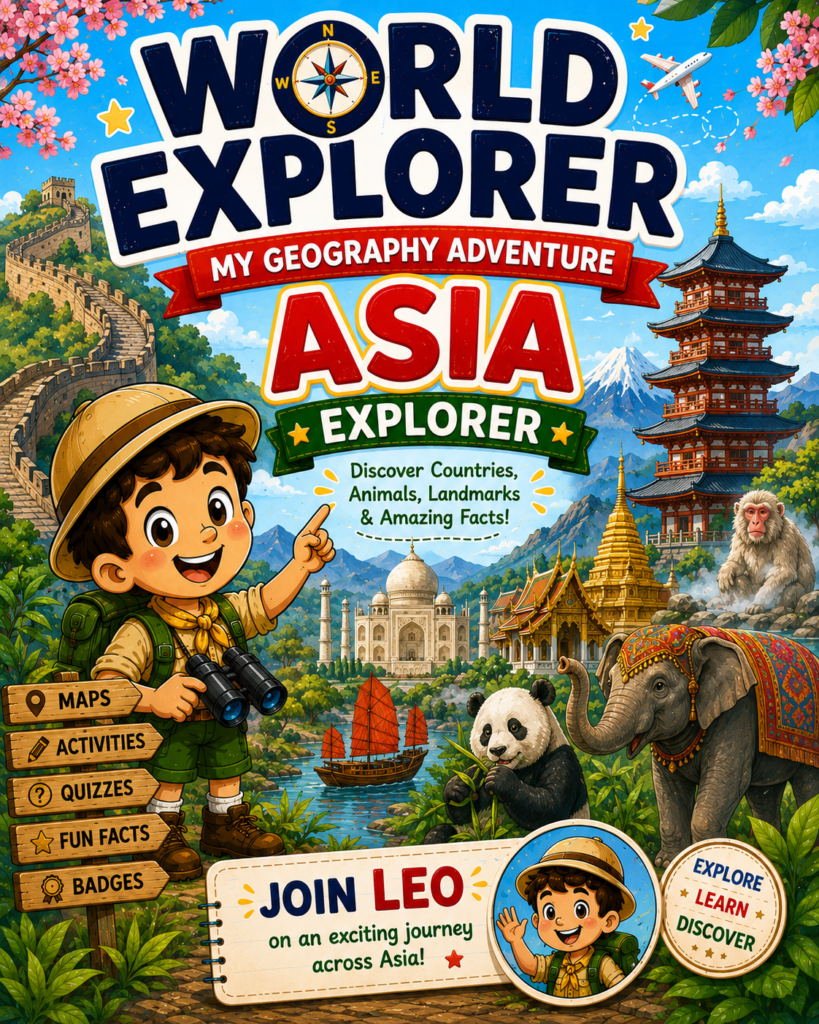
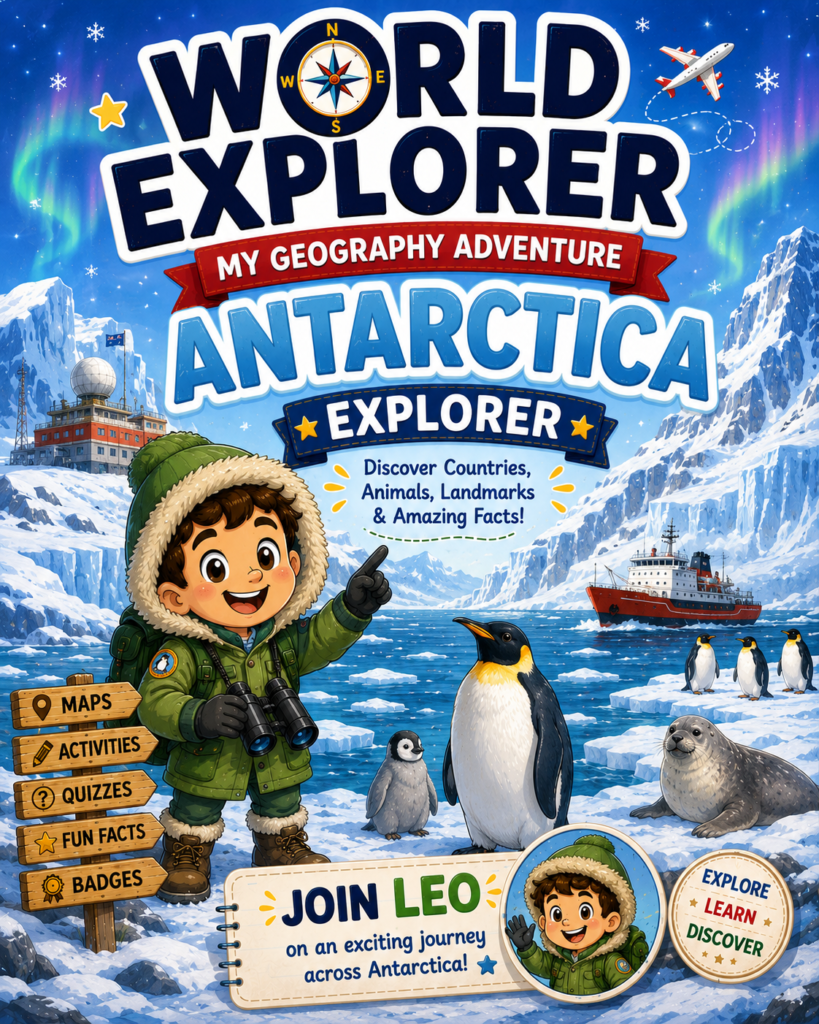
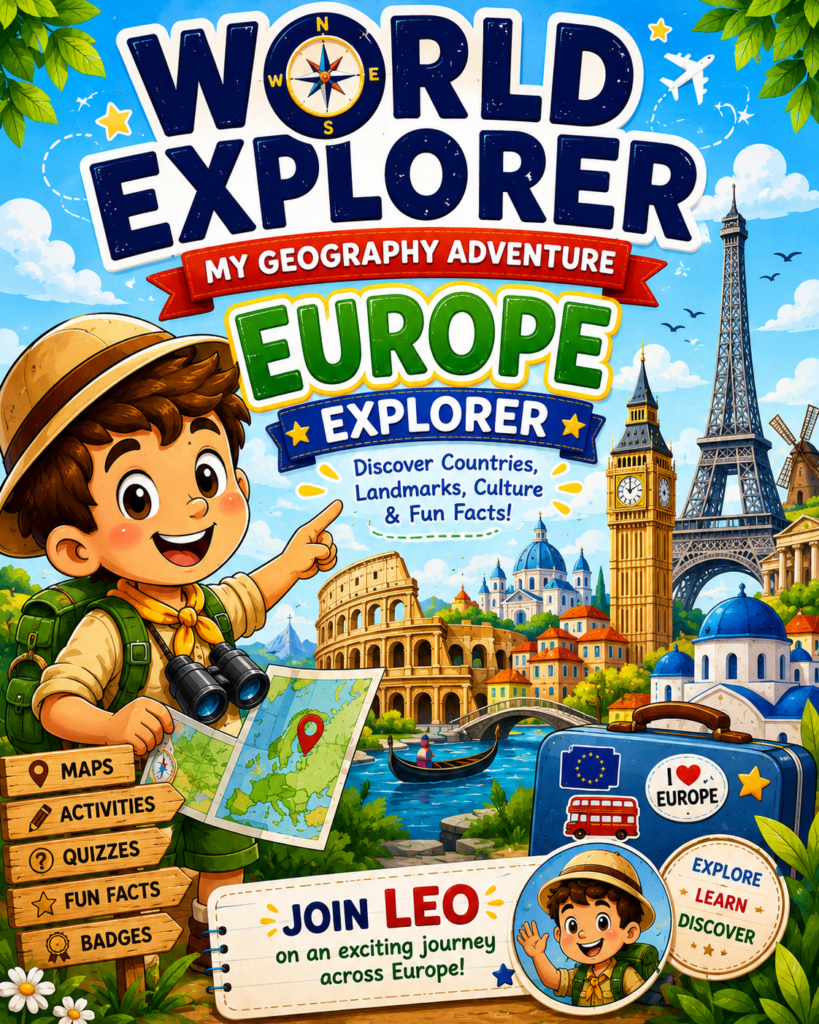
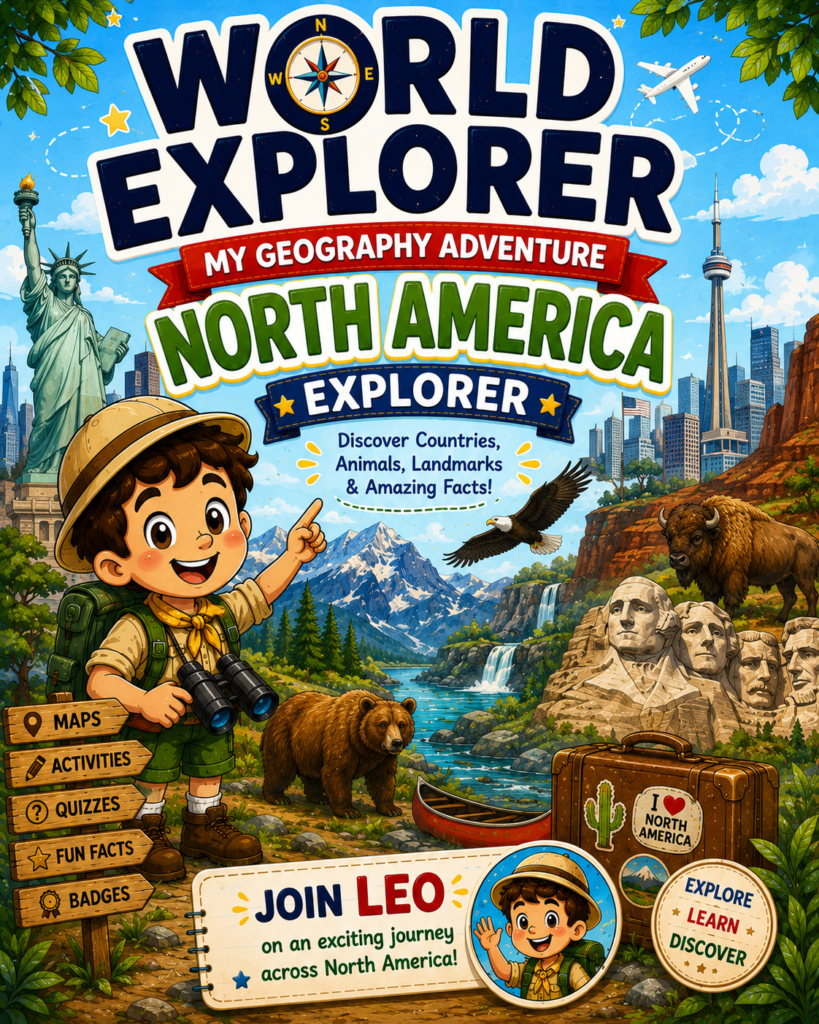
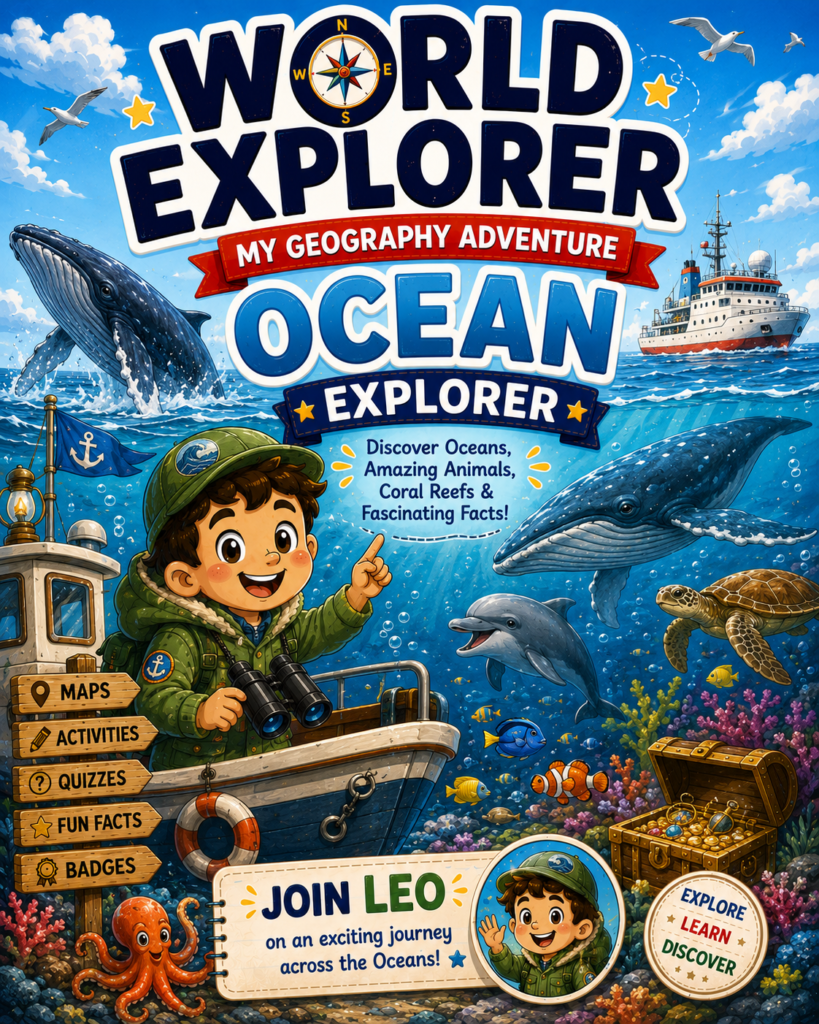
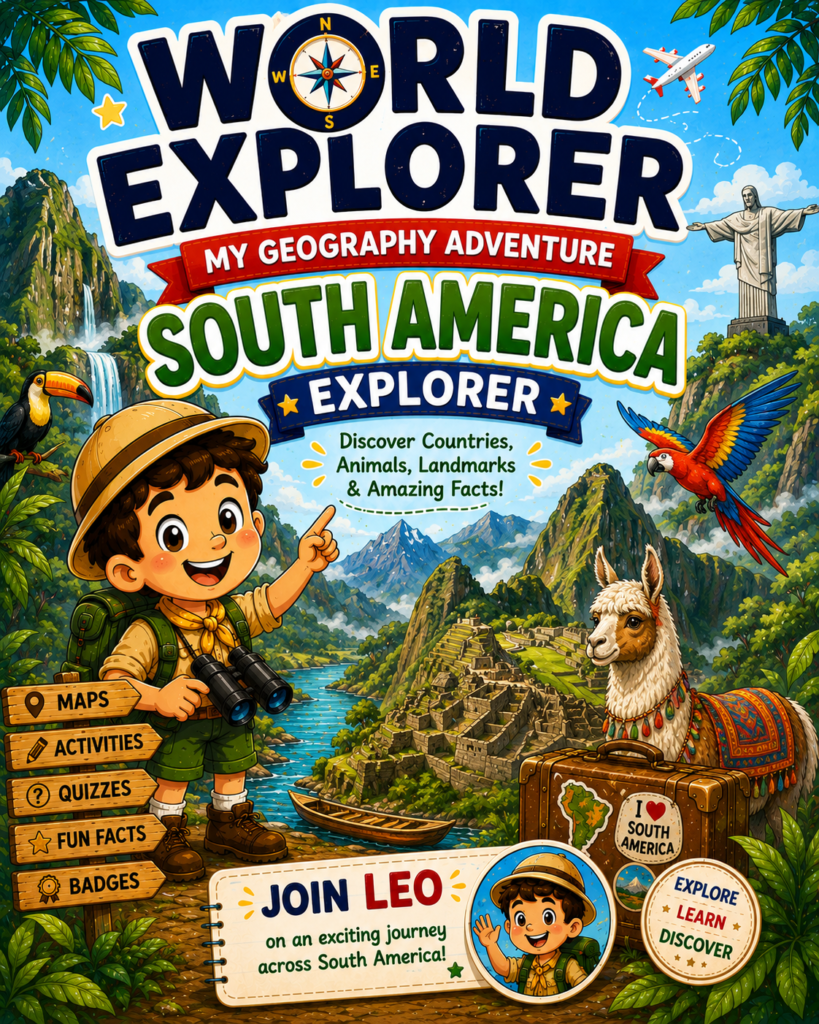
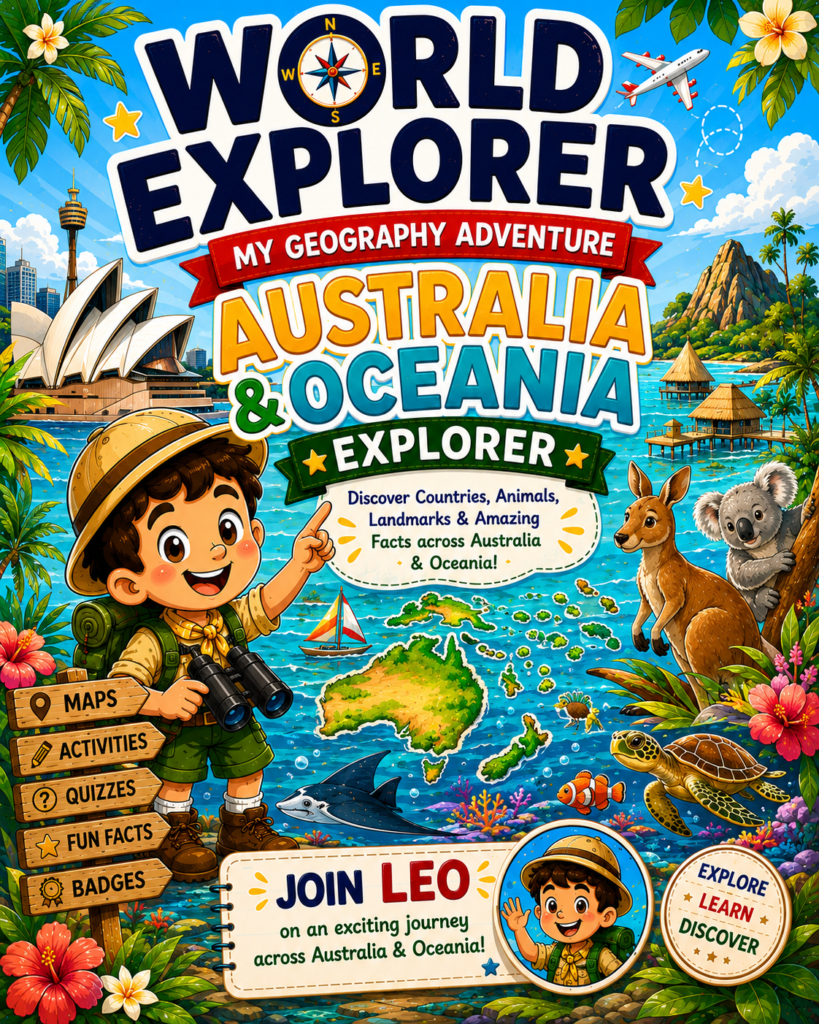
Led by an enthusiastic, kid-friendly cartoon guide named Leo, this curriculum replaces dry textbooks with an interactive, multi-level global quest that covers everything from foundational earth science to individual country explorations.
How It Works: A 3-Level Learning Ecosystem
What makes the World Explorer Series so uniquely suited for homeschoolers is its structured, multi-tier progression. It is built to grow with your child across an entire school year—or even multiple years:
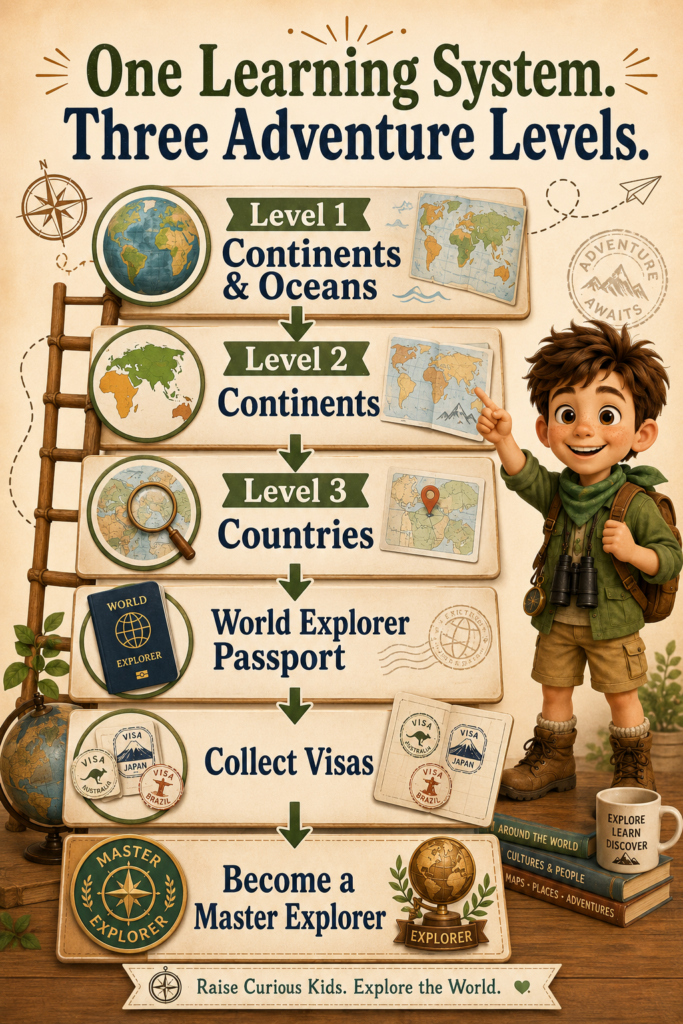
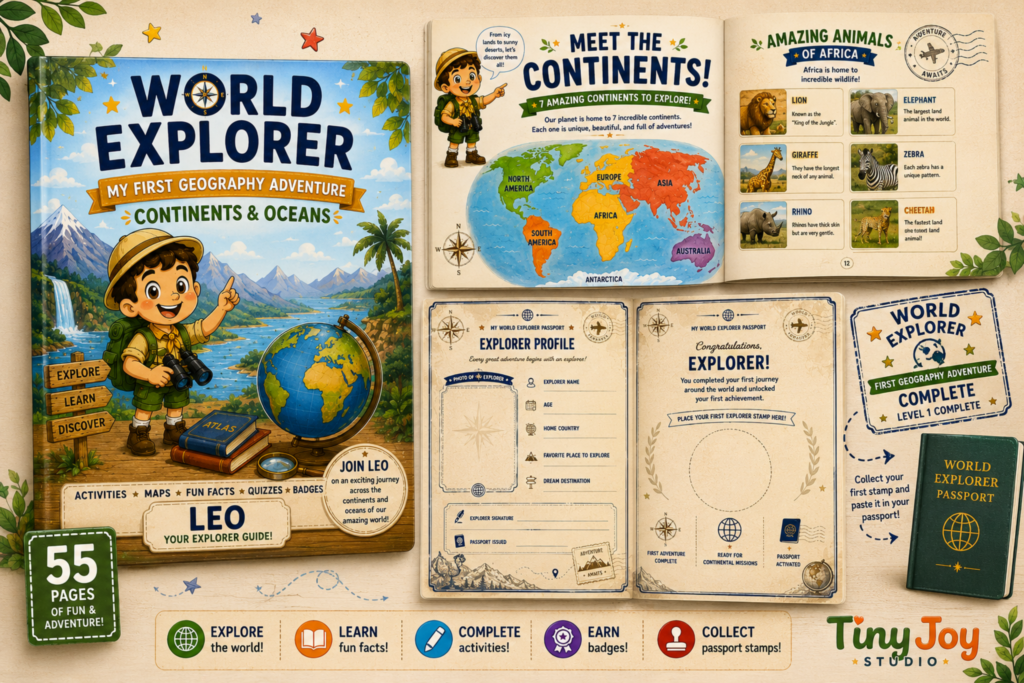
- Level 1: The Foundation (Continents & Oceans)This foundational activity book is your perfect starting line for the school year. Kids learn how our planet is pieced together, exploring tectonic plates, ocean currents, and the major continental landmasses through interactive puzzles, mapping exercises, and science mysteries.
- Level 2: Continental Mastery (8 Continental & Ocean Visas)Once the foundation is set, your child embarks on a deep dive across the globe. This level features dedicated books for the major continents and oceans, turning broad regional study into thrilling 10-part expeditions.
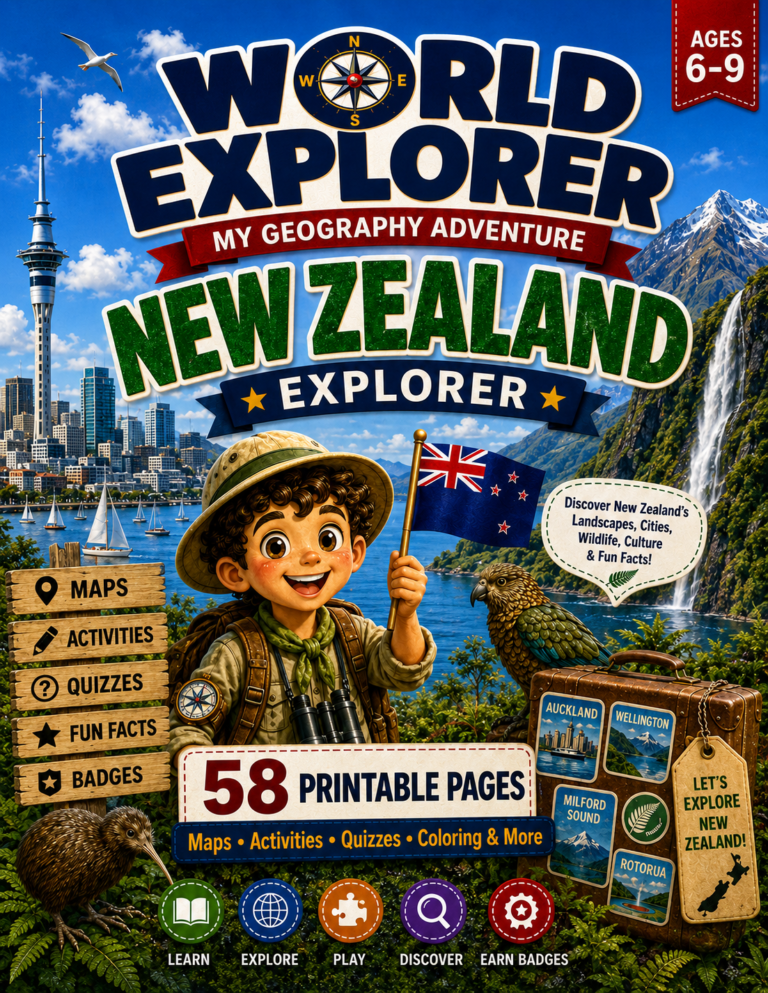
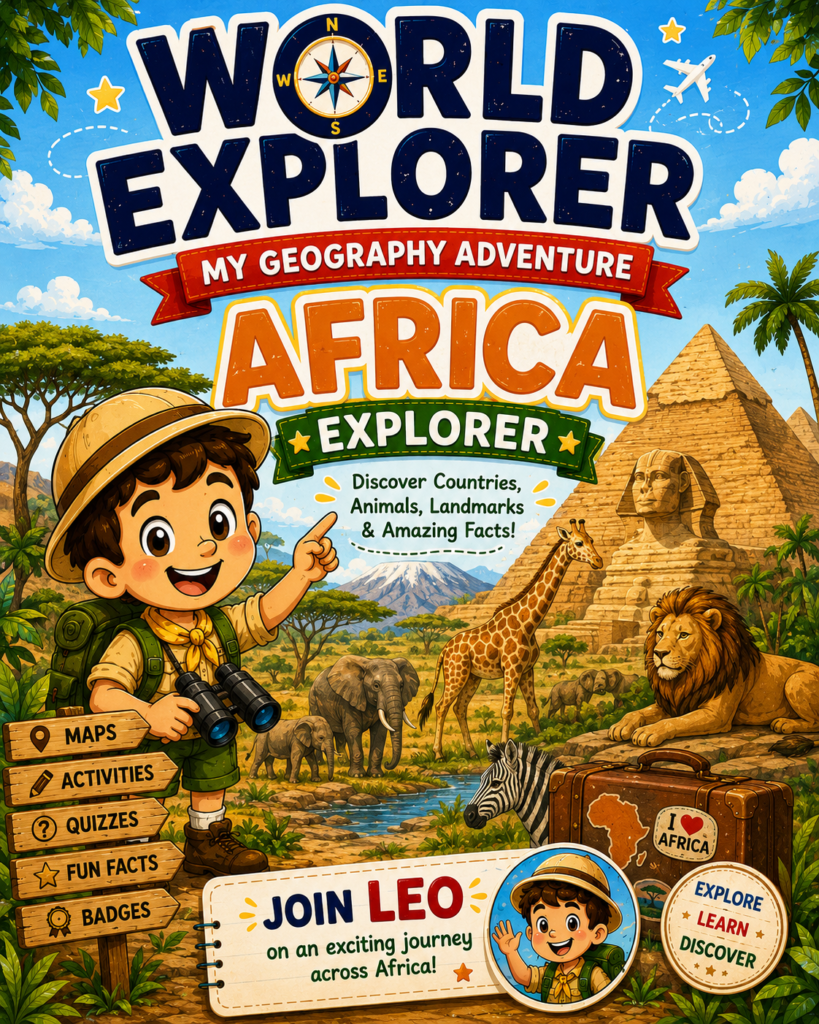
- Level 3: Country Explorations (30 Individual Country Books)Perfect for unit studies or elective explorations! Whether your child is fascinated by the pyramids of Egypt, the castles of Germany, or the cherry blossoms of Japan, Level 3 allows them to zoom in on specific cultures, traditions, and landmarks.
The Ultimate Motivation Hack: The Universal Passport
At the heart of the Tiny Joy Studio curriculum is the Universal Passport System—a brilliant gamification tool that solves the problem of student motivation once and for all.
Every foundational book comes bundled with an exclusive World Explorer Passport. Your child begins their homeschool year by setting up their official Explorer Profile: writing their name, recording their age, and drawing a self-portrait.
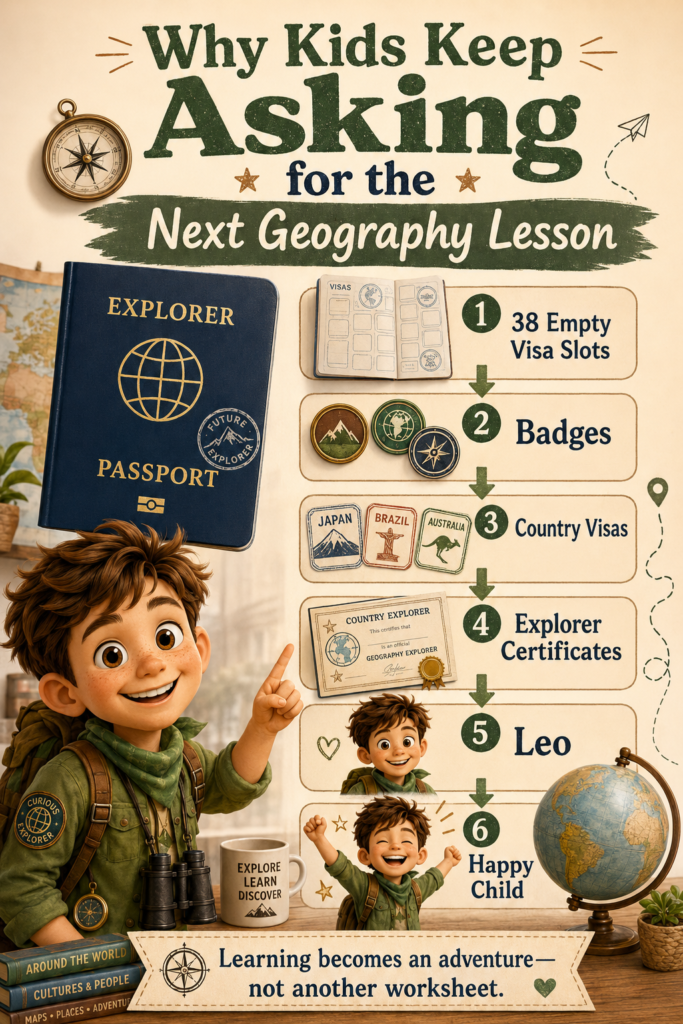
The passport features 38 dedicated slots corresponding to the entire 3-level ecosystem:
- Slots for foundational knowledge (Level 1)
- 8 slots for Continental & Ocean Visas (Level 2)
- 30 slots for individual Country Visas (Level 3)
As your child completes each expedition in their activity books—solving animal mysteries, navigating mazes, and decoding geographical maps—they don’t receive boring letter grades. Instead, they earn colorful, cut-out Badges and official Visa Stamps to glue directly into their Universal Passport.
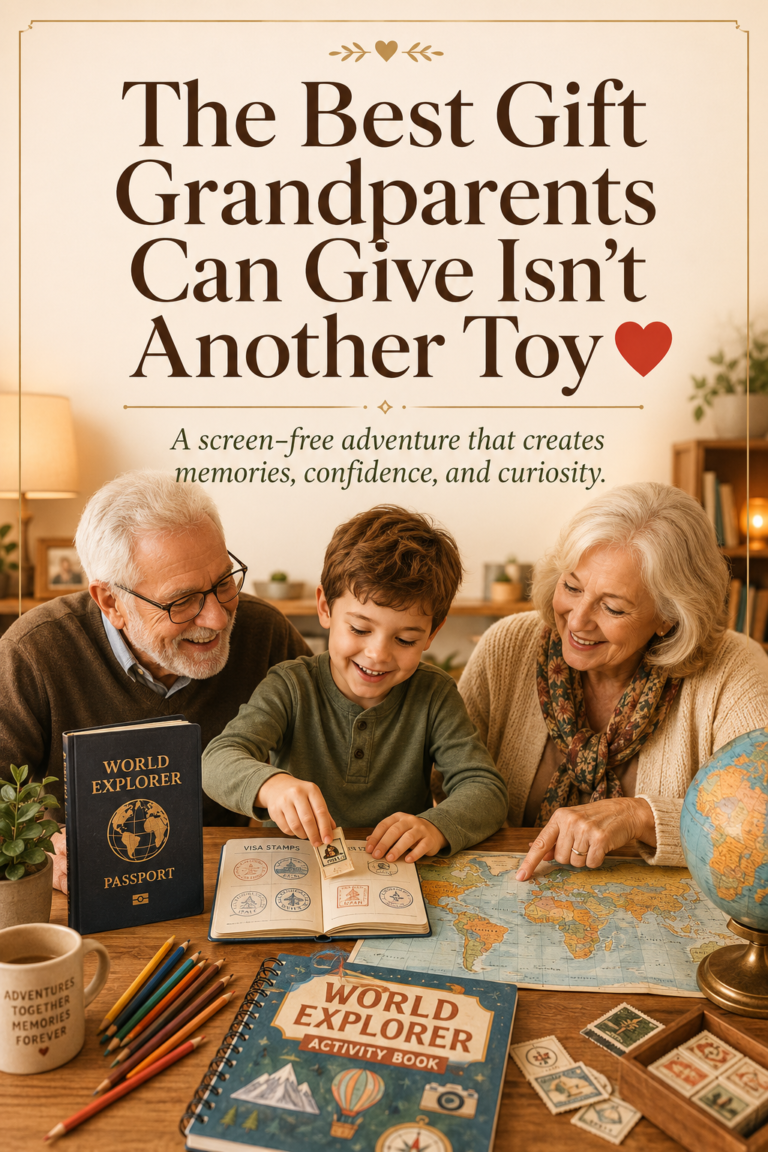
When a child opens their passport and sees empty slots waiting to be filled, a magical shift occurs. Learning geography transforms from a daily homeschool assignment into an epic personal collection. You won’t have to remind them to do their geography lesson; they will be begging you to print out the next country so they can earn their next stamp! (To see how this curriculum naturally expands into animal science, check out our guide on how animal activity books make learning more fun.)
Why Homeschoolers Love Digital Printables (Etsy Print-on-Demand)
One of the greatest advantages of the World Explorer Series is that it is available directly via Etsy as high-resolution digital printables. For homeschooling families, this format offers unbeatable benefits:
- Instant Access: Start your geography curriculum today without waiting for shipping or paying extra delivery fees.
- Multi-Child Friendly: If you are homeschooling two or three children in different grade levels, you only need to buy the digital file once! You can print multiple copies of the activity sheets and Universal Passports for all the children in your household.
- Mistake-Proof Learning: If a child makes an error on a map or wants to color a page again, simply print that single page over! No more ruined workbooks or tears over mistakes.
Final Thoughts: Start Your Global Expedition Today
Choosing the best homeschool geography curriculum doesn’t mean compromising between academic depth and your child’s happiness. By embracing gamification, multi-sensory activities, and the power of collectible milestones, you can turn world discovery into the most anticipated part of your homeschool day.
When you give your child autonomy, a compelling narrative with guide Leo, and a physical passport to track their growing knowledge, the world becomes a limitless classroom waiting to be explored.
Ready to transform your geography lessons from boring worksheets into an unforgettable global quest? Grab a box of colored pencils, download your foundational Level 1: Continents & Oceans Activity Book, and set up your child’s very own Universal Passport today directly via the Tiny Joy Studio Etsy Collection.
Your homeschool adventure starts now—let’s go explore the world!
Continental & Ocean (Level 2)
Country (Level 3)