Montessori Geography at Home: 5 Simple, Tactile Ideas to Teach the World
If you are drawn to the Montessori method, you already know that children learn best when they can use their hands, follow their natural curiosity, and explore concepts at their own pace. While practical life skills like pouring water or organizing a bookshelf are easy to implement in the living room, many parents feel intimidated when it comes to teaching cultural studies and global science. How do you practice montessori geography at home without buying expensive wooden puzzle maps or turning your house into a formal classroom?
The beauty of the Montessori philosophy is that it moves from the concrete to the abstract. To a 6- to 9-year-old child, the concept of a «continent,» a «tectonic plate,» or an «ocean current» is completely abstract. If you hand them a traditional textbook and ask them to memorize names on a flat paper map, they will quickly lose interest. But if you let them feel the rough texture of land, pour water into miniature clay oceans, and actively collect stamps in a personalized explorer journal, geography comes alive.
In this guide, we will explore 5 simple, low-prep, and tactile ideas to bring Montessori geography into your home today. Plus, we will introduce a brilliantly designed, passport-based educational activity series that naturally aligns with child-led exploration.
Why Montessori Principles are Perfect for Learning Geography
Before diving into the activities, let’s look at why Maria Montessori placed such a heavy emphasis on geography and cultural studies in the early elementary years.
During the ages of 6 to 9, children enter what Montessori called the «Second Plane of Development.» At this stage, their minds expand beyond their immediate home and classroom; they develop a deep psychological hunger to understand the broader universe, how things work, and their own place in the global community.
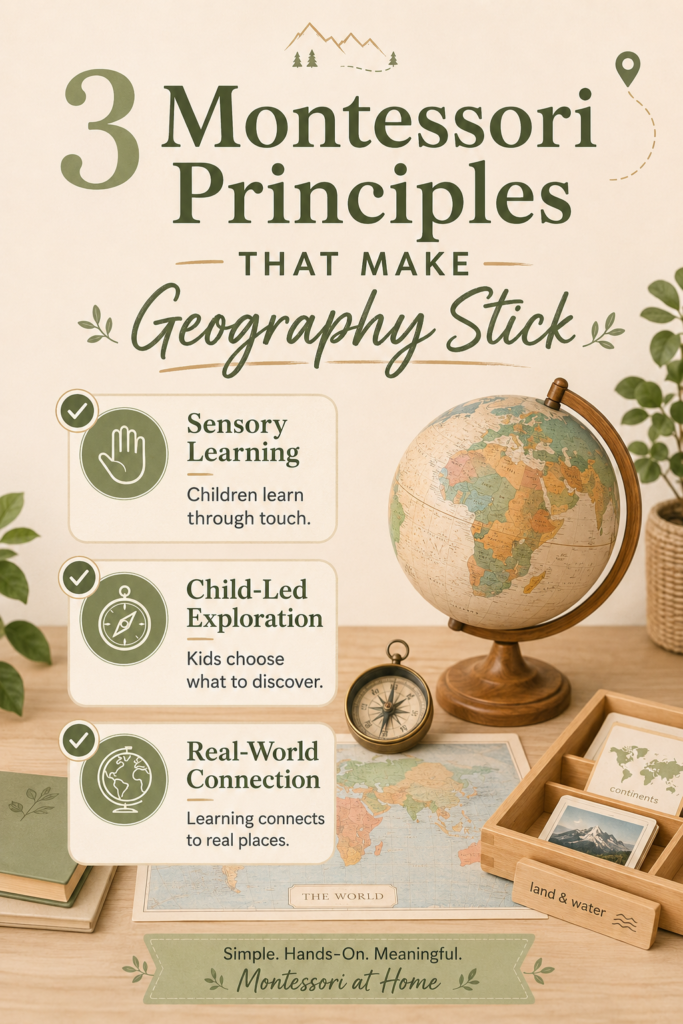
When you teach geography through a Montessori lens, you rely on three foundational pillars:
- Sensory Engagement: Children must touch, see, and build to understand spatial relationships.
- Child-Led Autonomy: Instead of forcing a rigid schedule, you allow the child to choose which continent, animal, or ocean they want to investigate first.
- Real-World Connection: Learning is tied to real cultures, real ecosystems, and tangible achievements rather than abstract test scores.
(To understand how hands-on, self-directed play deepens cognitive retention, explore our guide on why educational games help kids learn better.)
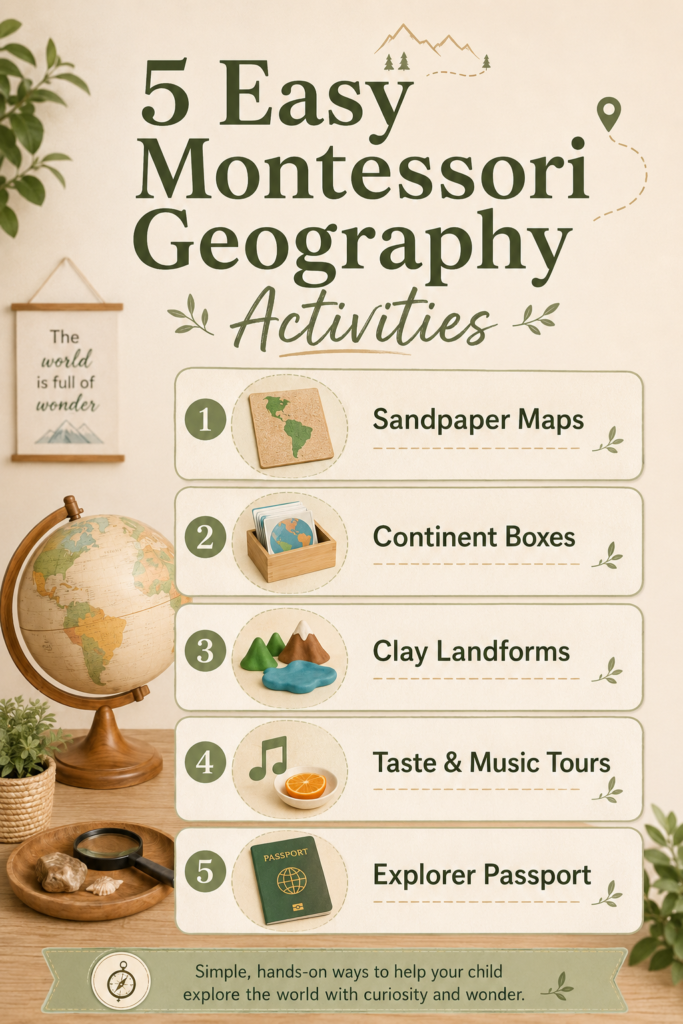
5 Simple, Tactile Ideas for Montessori Geography at Home
You do not need to spend hundreds of dollars on specialized classroom materials to practice Montessori geography. By using basic household items and a little creativity, you can build rich, tactile learning experiences right at your kitchen table.
1. The DIY «Sandpaper Globe» Effect (Land vs. Water)
In traditional Montessori classrooms, children are introduced to the globe using a sandpaper sphere where the land is rough and the oceans are smooth. You can recreate this tactile distinction easily at home!
- The Activity: Print out a simplified, large outline map of the 7 continents. Give your child a bottle of liquid glue and a bowl of clean play sand (or cornmeal).
- The Tactile Step: Have them trace the continental landmasses with glue and sprinkle the sand over them, leaving the oceans as smooth paper. Once dry, let them close their eyes and run their fingers across the page. Feeling the physical boundary between the rough, elevated land and the smooth, flat ocean reinforces spatial geography much faster than visual reading alone.
2. Create «Continent Boxes» (Sensory Bins of the World)
Montessori educators love «Continent Boxes»—shoeboxes or small baskets dedicated to each of the major regions of the world.
- The Activity: Label 7 simple boxes or bins with the names of the continents. Over the course of a few weeks, turn your child into a global treasure hunter. Challenge them to find objects around the house, cut out magazine pictures, or collect small figurines that belong to each region.
- What to Include: For Africa, they might add a toy safari animal, a piece of patterned fabric, or a cinnamon stick. For Europe, a postcard, a toy train, or a photo of a famous landmark. This activity encourages categorization and cultural curiosity! (Learn more about engaging animal themes in our article on how animal activity books make learning more fun.)
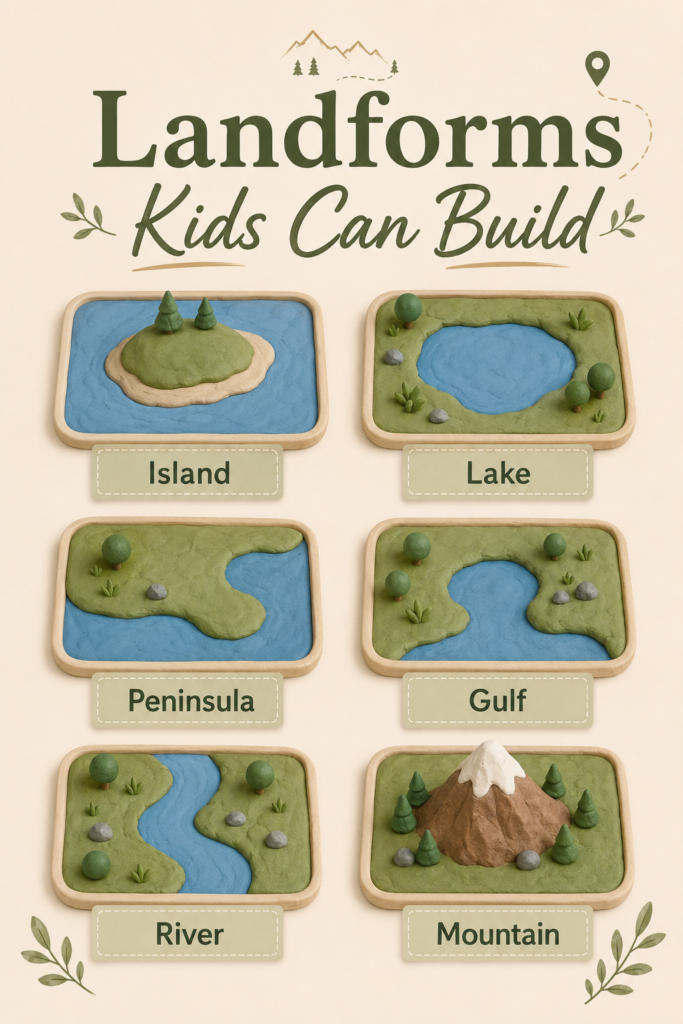
3. Clay Land and Water Formations
One of the most classic Montessori geography exercises is teaching land and water forms—such as an island (land surrounded by water) versus a lake (water surrounded by land), or a peninsula versus a gulf.
- The Activity: Take two waterproof plastic containers or soup bowls. Give your child some modeling clay or playdough and have them press it into the containers to form shapes. In Container A, they build a mountain of clay in the center (an island). In Container B, they line the edges with clay, leaving a deep hole in the middle (a lake).
- The Magic Step: Hand them a small pitcher of water tinted with blue food coloring and let them gently pour the water into both containers. Seeing the water surround the clay island and fill the clay lake turns complex geographical definitions into a satisfying, tactile experiment.
4. Cultural Taste and Sound Tours
Montessori philosophy emphasizes engaging all senses, not just touch and sight.
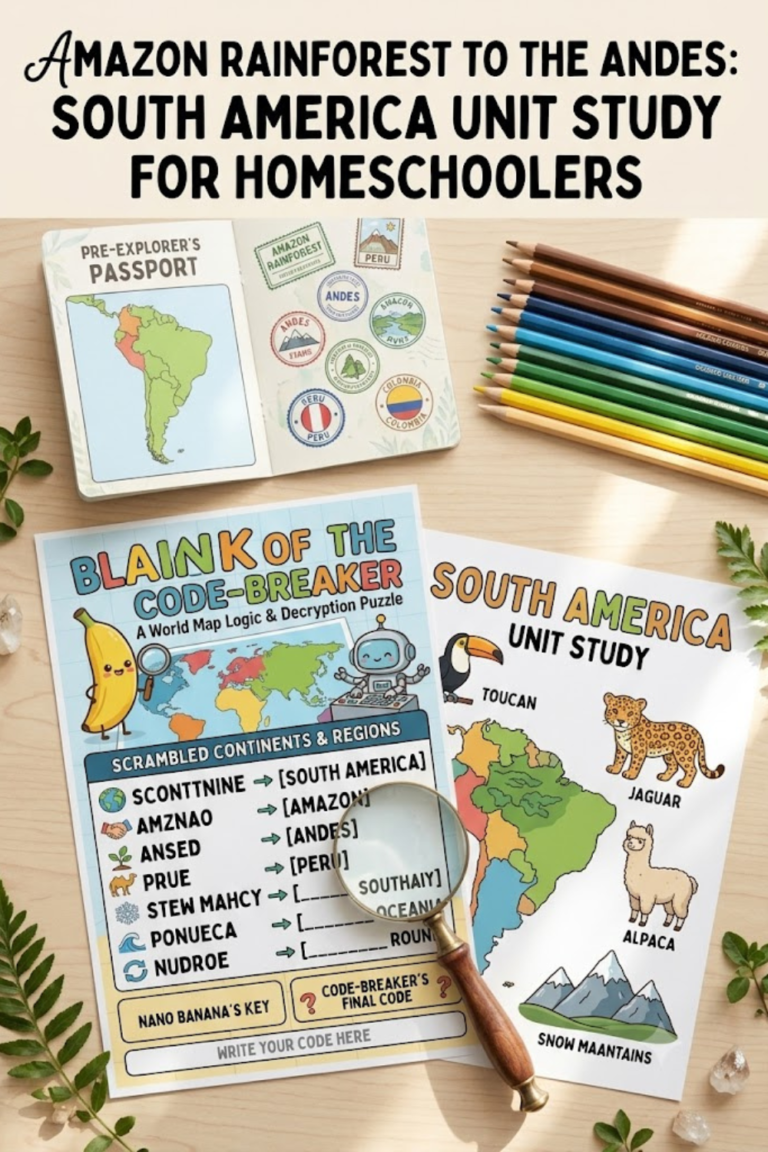
- The Activity: Dedicate an afternoon to exploring a specific region through sound and taste. If you are studying South America, play traditional Andean pan flute music in the background while chopping up fresh tropical fruits like papaya, mango, or pineapple.
- The Discussion: As your child tastes the fruit, look at a map together and talk about the warm climate and rain forests that allow these delicious plants to grow. It builds early empathy and appreciation for global diversity.
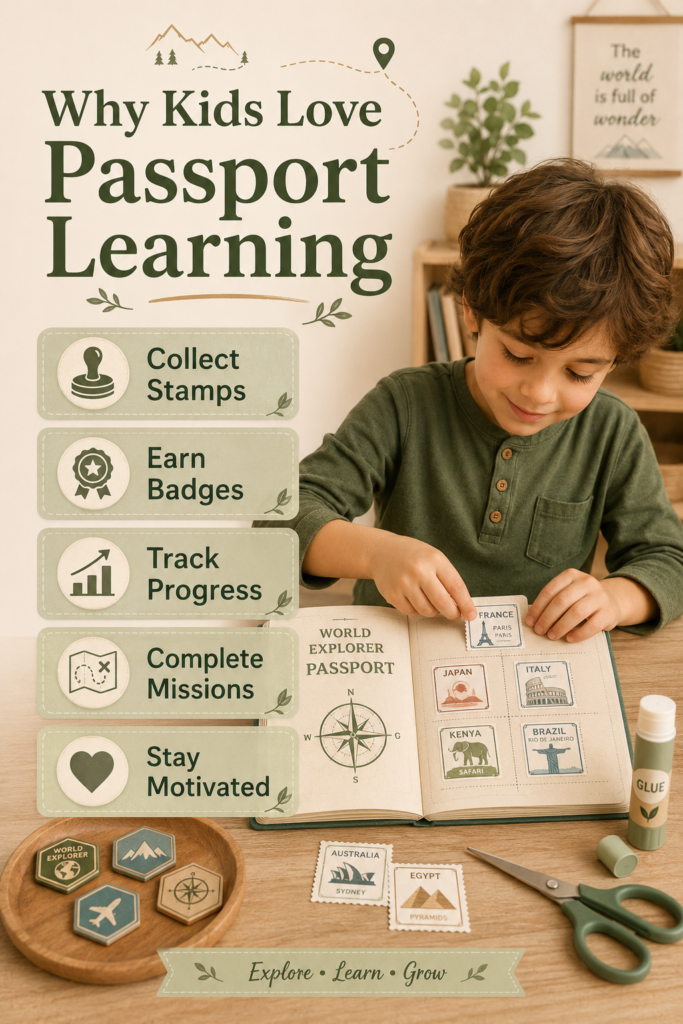
5. The «Explorer Journal» & Stamp Collection
Children in Montessori environments thrive when they can visually track their own progress without adult interference.
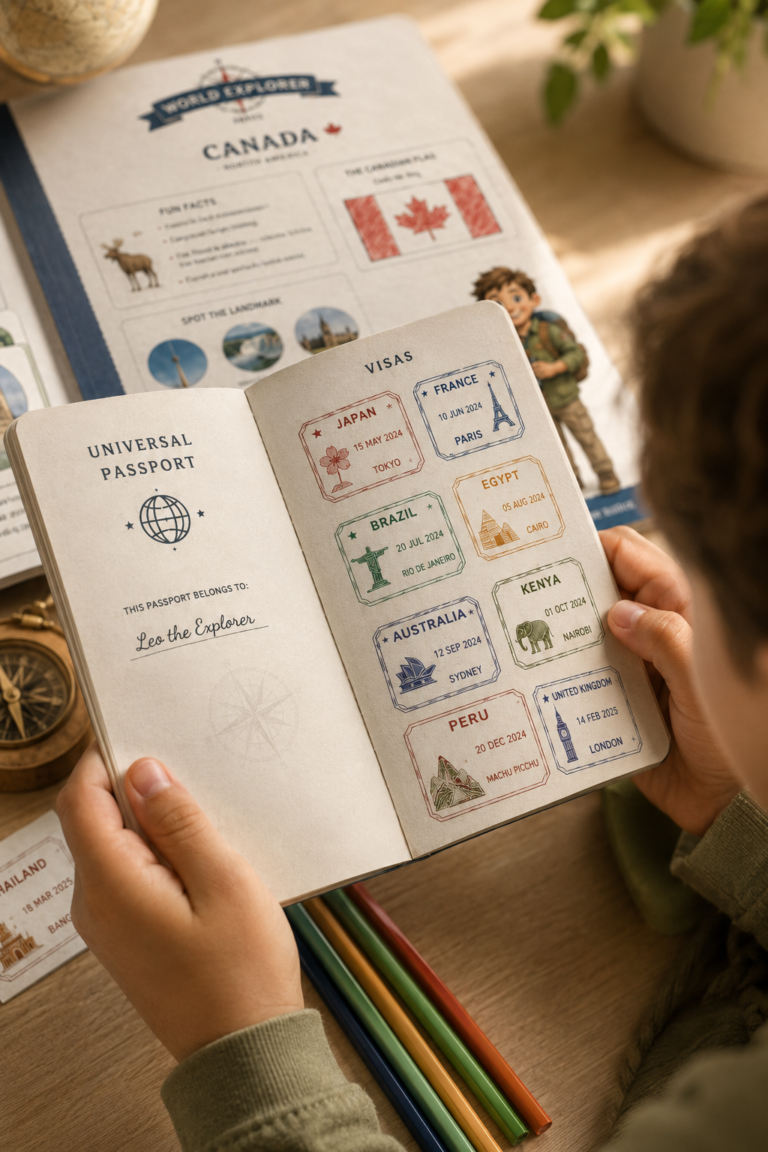
- The Activity: Instead of grading their geography work, give your child an official Explorer Profile or passport booklet. Every time they finish reading about a new country, complete a map puzzle, or master a continent box, let them cut out an official badge or glue a visa stamp into their personal journal.
- Why It Works: This shifts motivation from external rewards (pleasing parents) to internal pride (building a personal collection). (Discover the incredible power of this psychological trigger in our breakdown of why kids learn geography better through adventures, collections, and progression.)
Summary Table: Montessori Geography Activity Matrix
| Activity Name | Core Montessori Principle | Sensory Focus | Best For Ages |
| DIY Sandpaper Map | Concrete to Abstract | Touch (Rough vs. Smooth) | 6–8 years |
| Continent Boxes | Categorization & Curiosity | Sight & Tactile Sorting | 6–9 years |
| Clay Formations | Hands-On Practical Life | Touch & Pouring Water | 6–8 years |
| Taste & Sound Tours | Holistic Cultural Empathy | Taste, Smell & Hearing | 6–9 years |
| Passport Stamp Quest | Child-Led Progression | Visual & Fine Motor (Gluing) | 6–9 years |
Meet Your Montessori-Aligned Secret Weapon: The World Explorer Series
If you love the philosophy of tactile, self-directed geography but simply do not have the time to build wooden maps, curate dozens of continent boxes, or design weekly lessons after a busy workday, there is a ready-to-use ecosystem crafted specifically for your family.
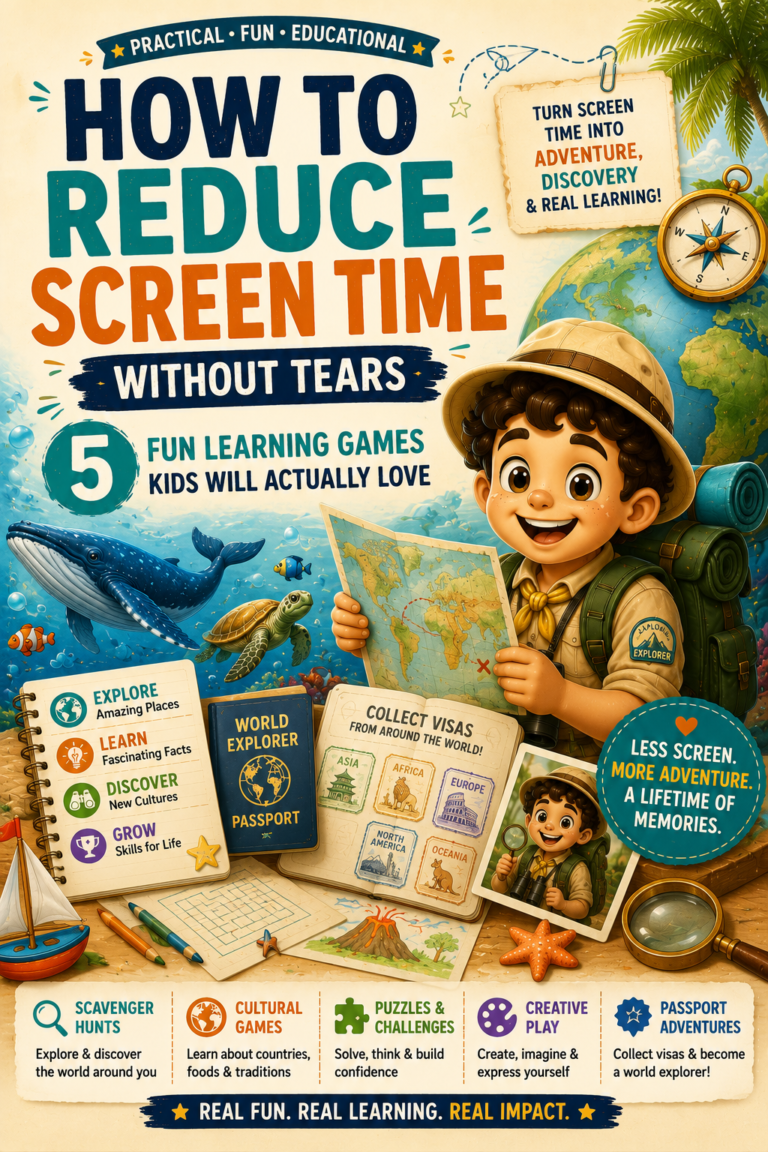
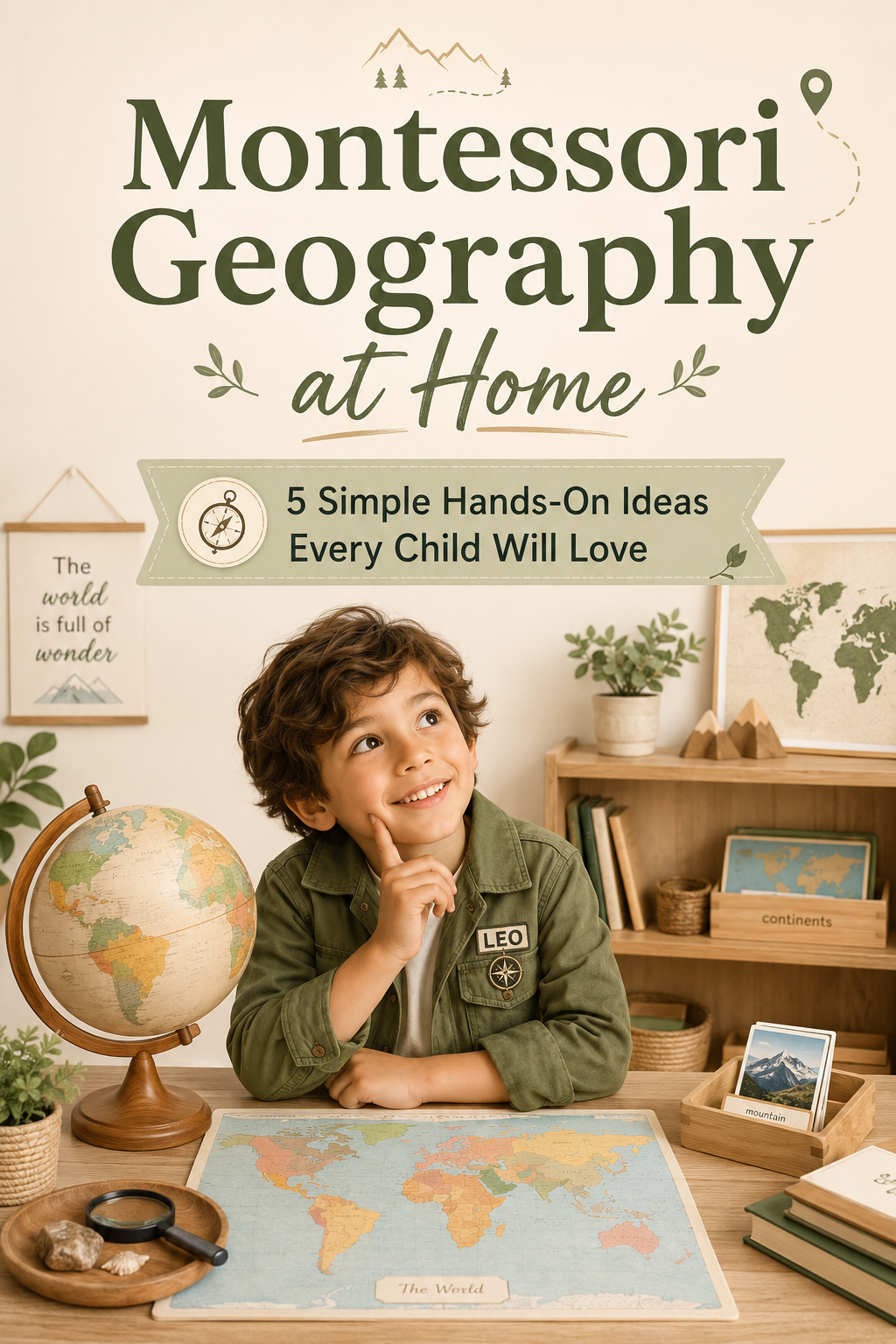
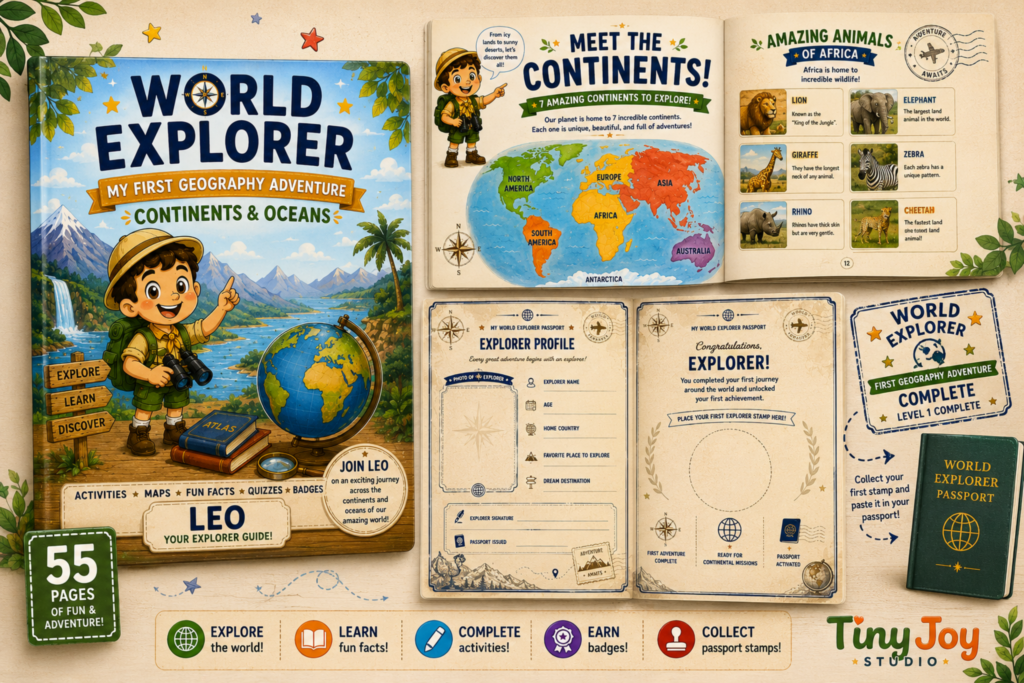
Enter Level 1: Continents & Oceans, the foundational activity book from the acclaimed World Explorer Series by Tiny Joy Studio. Designed specifically for curious 6- to 9-year-olds, this beautifully illustrated guide takes the heavy lifting off parents’ shoulders while adhering strictly to the principles of tactile, child-led exploration. Led by an enthusiastic cartoon guide named Leo, this book replaces passive screen time and dry memorization with an interactive, hands-on voyage across our entire planet.
Why It Fits Montessori Homeschooling Perfectly:
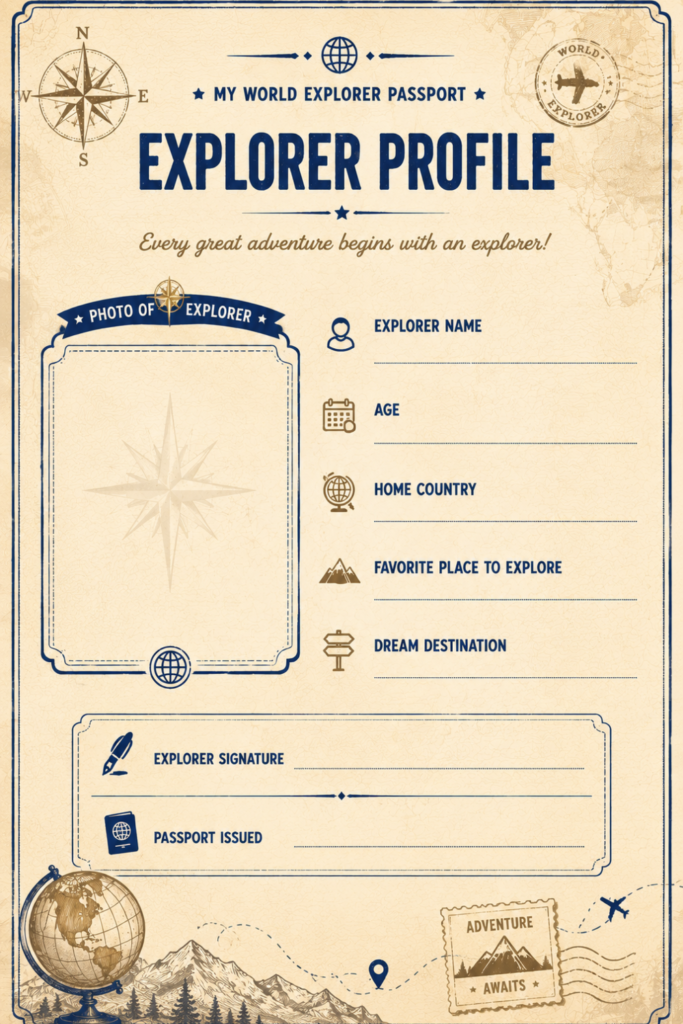
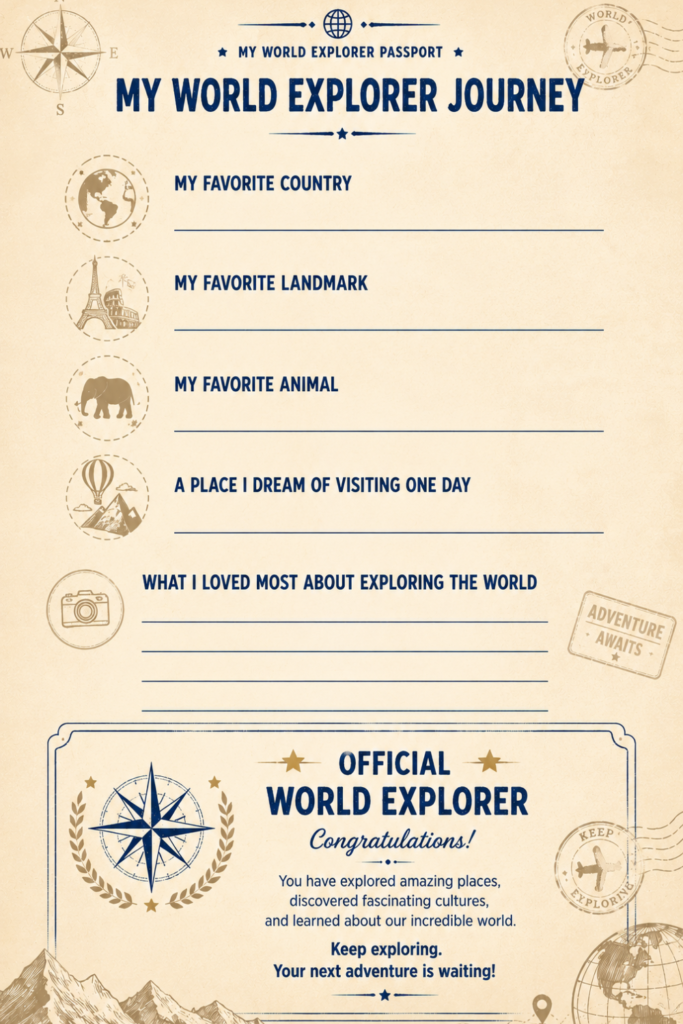
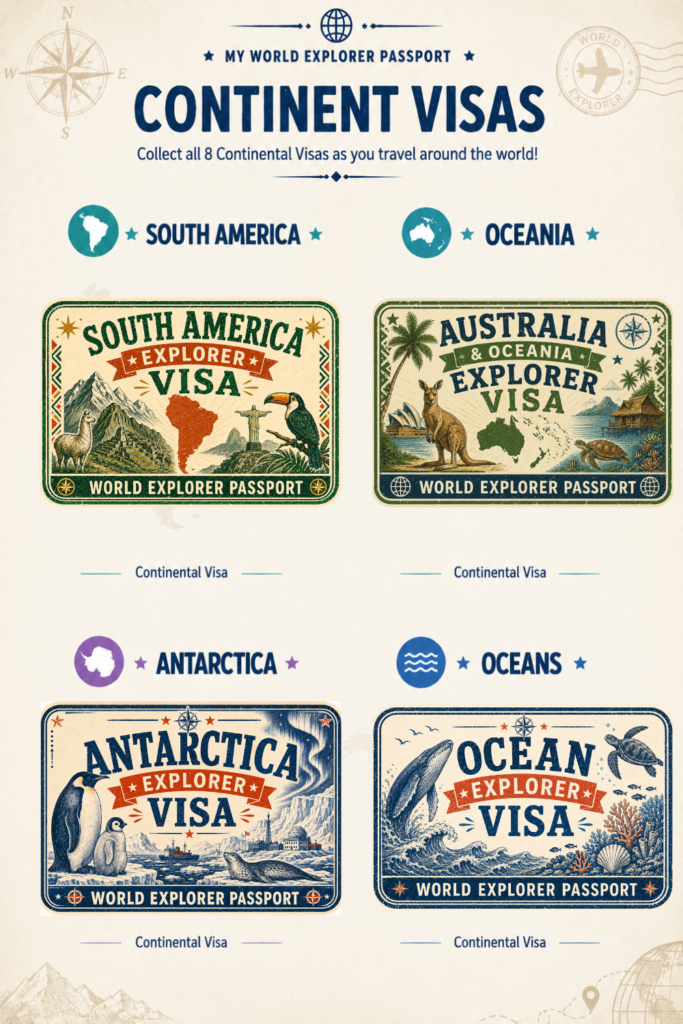
- Self-Directed Exploration: Every book comes bundled with an exclusive, customizable World Explorer Passport. Your child takes complete ownership of their learning from day one by filling out their personal profile, recording their age, and drawing their self-portrait. They aren’t just doing schoolwork; they are stepping into the role of an autonomous explorer.
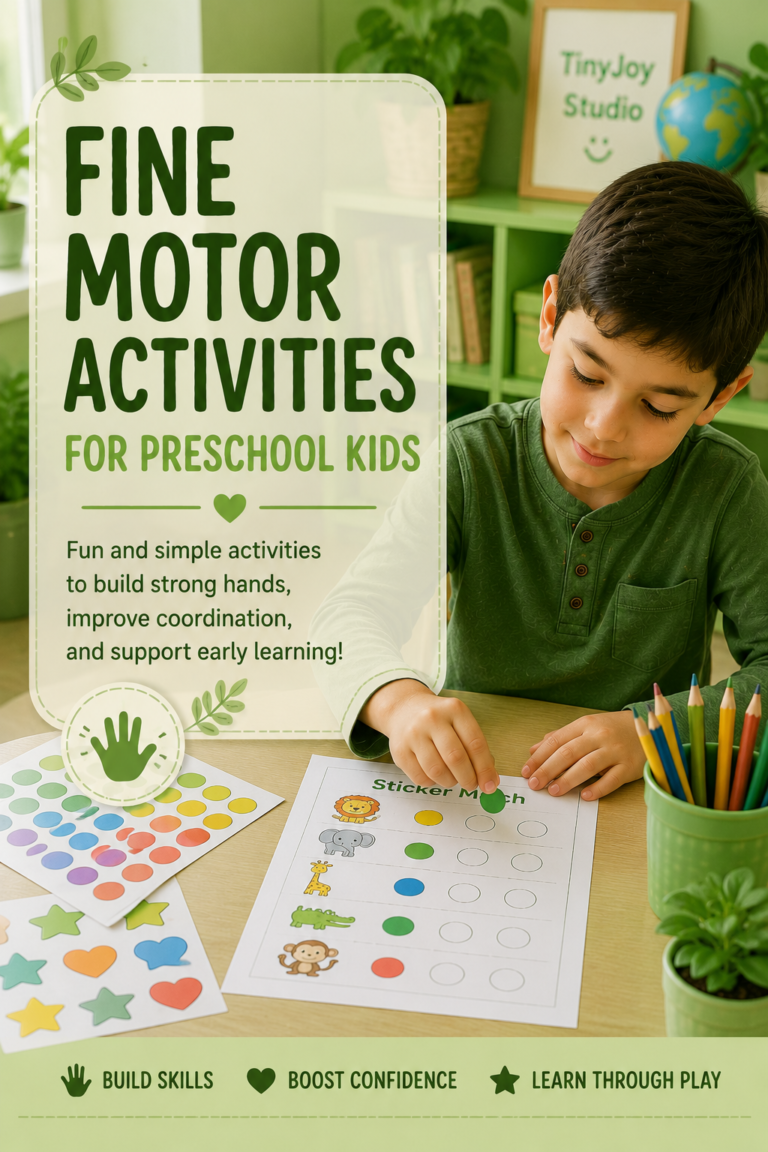
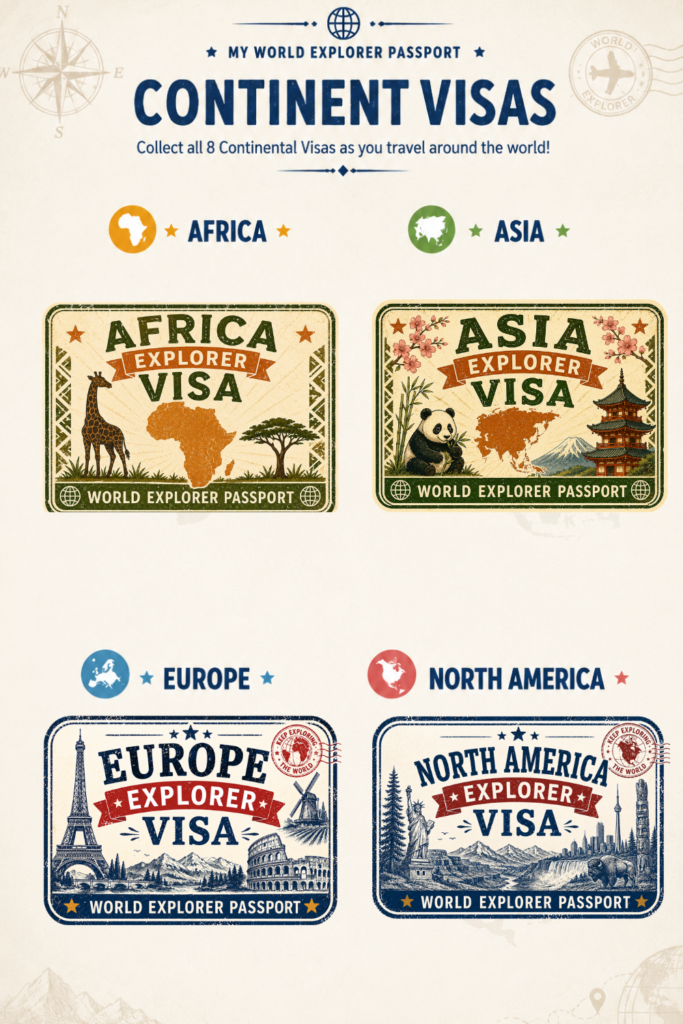
- Tactile, Fine-Motor Progression: Rather than answering multiple-choice questions for a grade, children complete engaging, hands-on expeditions—tracing ocean currents, navigating iceberg mazes in Antarctica, and solving tectonic plate puzzles. As they master each section, they use scissors and glue to cut out official badges and Visa Stamps, pasting them directly into the 38 dedicated slots of their Universal Passport.
- Real-World Conservation (Ocean Helpers): Montessori studies emphasize respect for our planet and global citizenship. The final sections of the Continents & Oceans book introduce children to real-world marine careers and actionable steps they can take in their daily lives—like reducing single-use plastics and cleaning local parks—to become official Ocean Helpers.
How to Create a Child-Led «Geography Corner» at Home
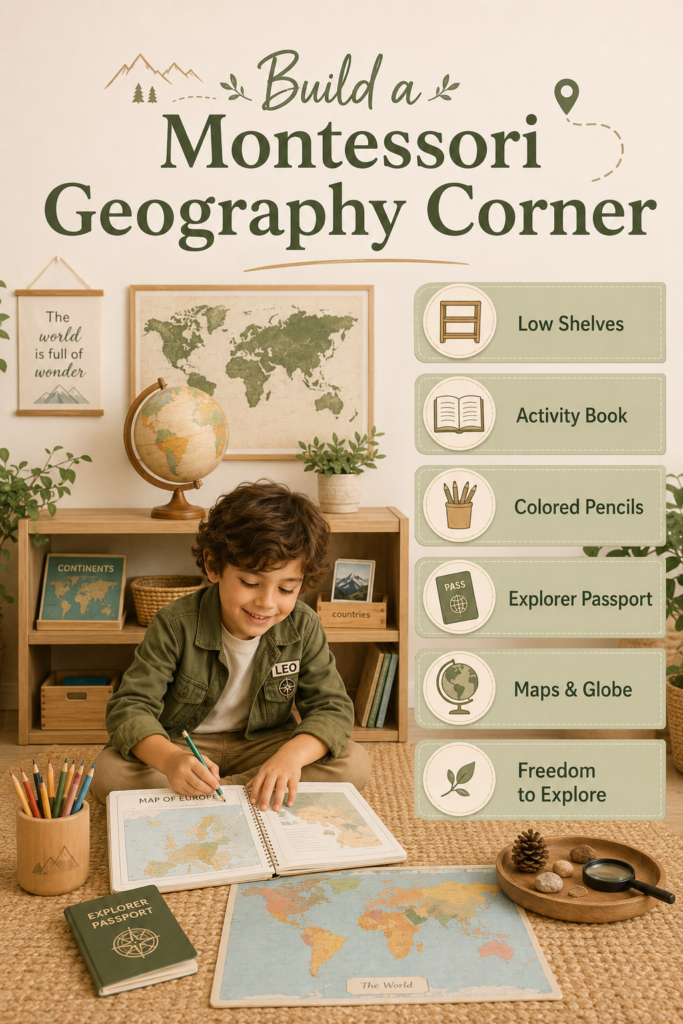
To make the transition into Montessori geography seamless, try setting up a simple, accessible learning space in your home:
- Use Low Shelves: Place your child’s Continents & Oceans Activity Book, a box of colored pencils, safe scissors, and a glue stick on a low, open shelf where they can reach them without asking for adult help.
- Display the Passport: Keep their growing Universal Passport open on a small bookstand or pinned to a bulletin board at eye level. Seeing empty slots waiting to be filled inspires natural curiosity and drives them to initiate their own learning sessions!
- Follow Their Lead: If your child becomes fascinated by sharks during an ocean expedition, don’t rush them to the next chapter. Let them linger, draw pictures, and explore at their own natural pace.
Final Thoughts: Let Your Child Guide the Journey
Practicing montessori geography at home does not require a formal classroom, expensive wooden materials, or hours of stressful parental prep. By shifting your focus toward tactile experiences, sensory engagement, and collectible milestones, you can open up an entire world of discovery right at your kitchen table.
When you give children the autonomy to lead their own journey, a friendly guide like Leo to spark their imagination, and a physical passport to track their growing knowledge, geography ceases to be a school subject—it becomes a lifelong passion.
Ready to start your child-led adventure? Grab a box of colored pencils, print out your foundational Level 1: Continents & Oceans Activity Book, and set up your child’s very own Universal Passport today directly via the Tiny Joy Studio Etsy Collection.
The world is waiting—let’s go explore it!