Gently Easing into Homeschool: A Low-Stress First Week Routine
Transitioning from summer to a low-stress homeschool first week routine is often filled with a mix of excitement and anxiety. You have bought the fresh supplies, organized the books, and created a beautifully color-coded schedule. But when Monday morning arrives, the reality of transitioning from lazy summer days to a structured learning environment can feel like a shock to the system for both you and your kids. If you want to avoid tears, frustration, and immediate burnout, the secret lies in gently easing into homeschool.
Trying to tackle every single subject on day one is a recipe for disaster. Instead, a successful homeschool first week routine should focus on connection, establishing new habits, and sparking a genuine love for learning. Today, we are sharing a step-by-step, low-stress guide to surviving—and thriving—during your first week back to school, plus one secret weapon that will make your kids actually beg to start their lessons.
Why You Shouldn’t Do Everything on Day One
One of the biggest mistakes new (and even veteran) homeschooling parents make is treating their living room like a traditional classroom. In a regular school, the first week is rarely about deep academics; it’s about learning the rules, breaking the ice, and getting comfortable. Your homeschool should be no different.
If you try to push a full schedule of math, language arts, history, science, and geography all at once, you will quickly encounter resistance. Children need a «deschooling» or transition phase. A low-stress homeschool first week routine means doing less, but doing it with joy.
The Step-By-Step Low-Stress Homeschool First Week Routine
Here is a simple, proven schedule to help you gently transition your family into the new academic year without the tears.
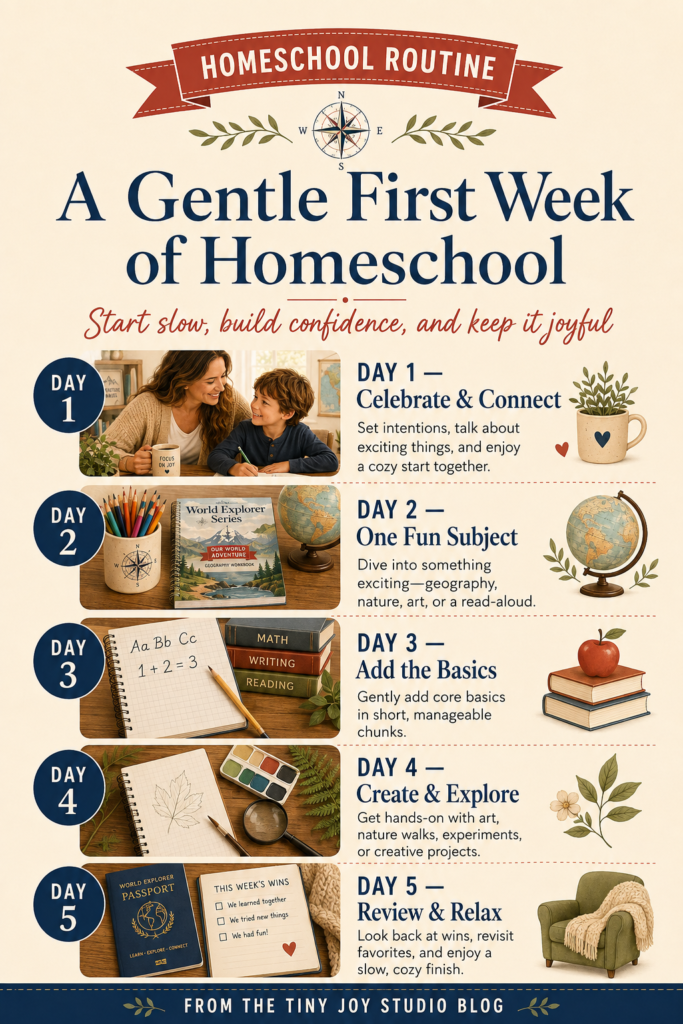
Day 1: Celebrate and Connect
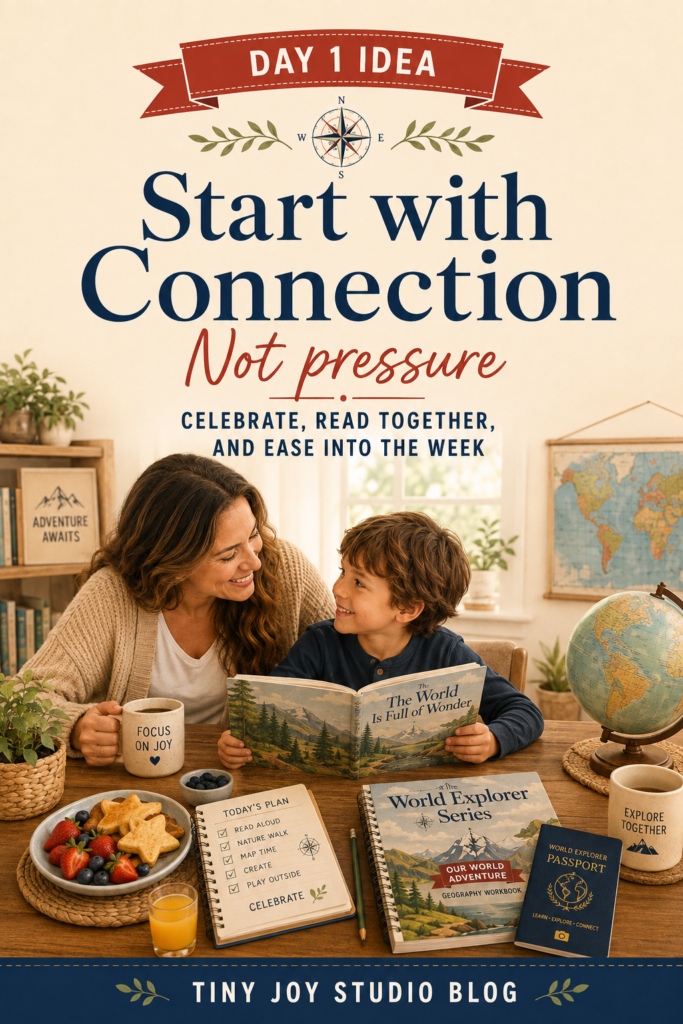
On the very first day, do not even open a math book. Make a special breakfast—pancakes, waffles, or something out of the ordinary. Take your «not-back-to-school» photos. Spend the morning reading a great book aloud, playing a board game, or going for a nature walk. The goal of Day 1 is simply to celebrate the freedom and joy of learning together.
Day 2: Introduce ONE Engaging Subject (The «Ice-Breaker»)
On Tuesday, introduce just one academic subject, but make sure it is something highly interactive and incredibly fun. This is not the time for heavy memorization.
For many families, an interactive homeschool geography curriculum is the ultimate ice-breaker. Kids naturally love animals, maps, and learning about far-off places.

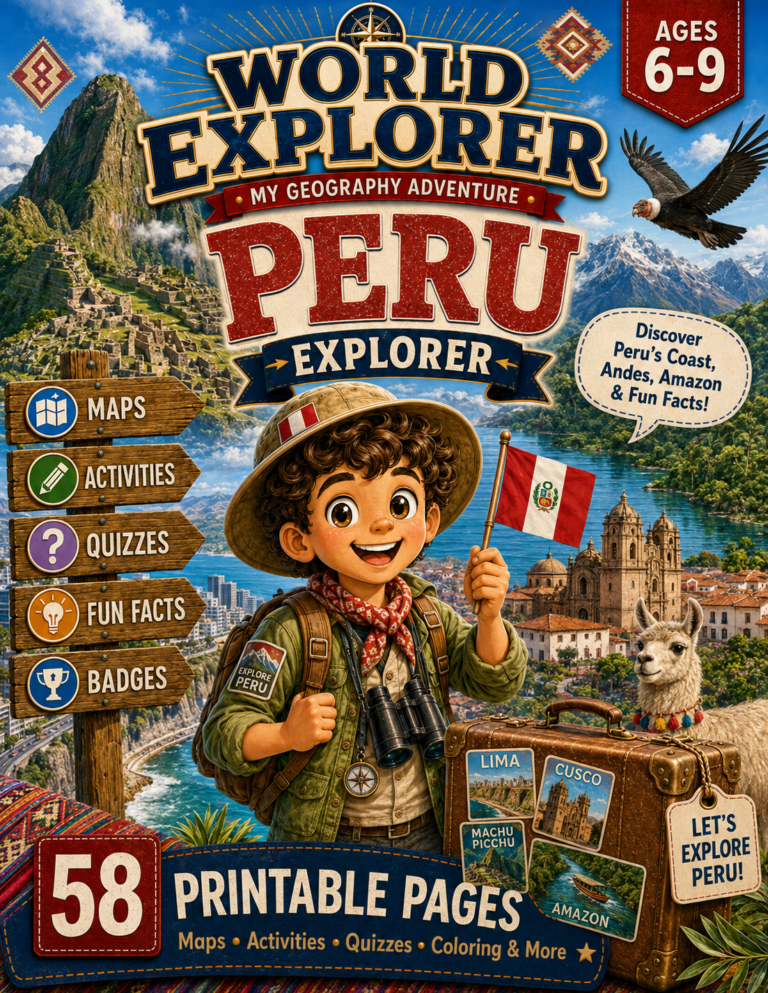
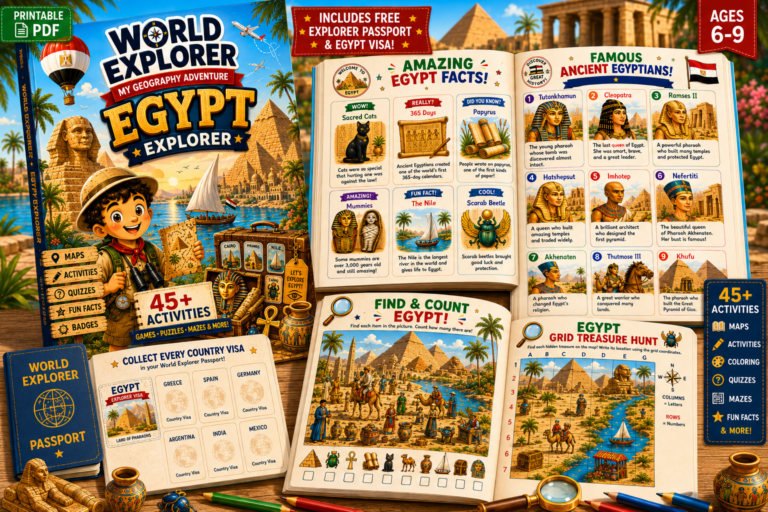
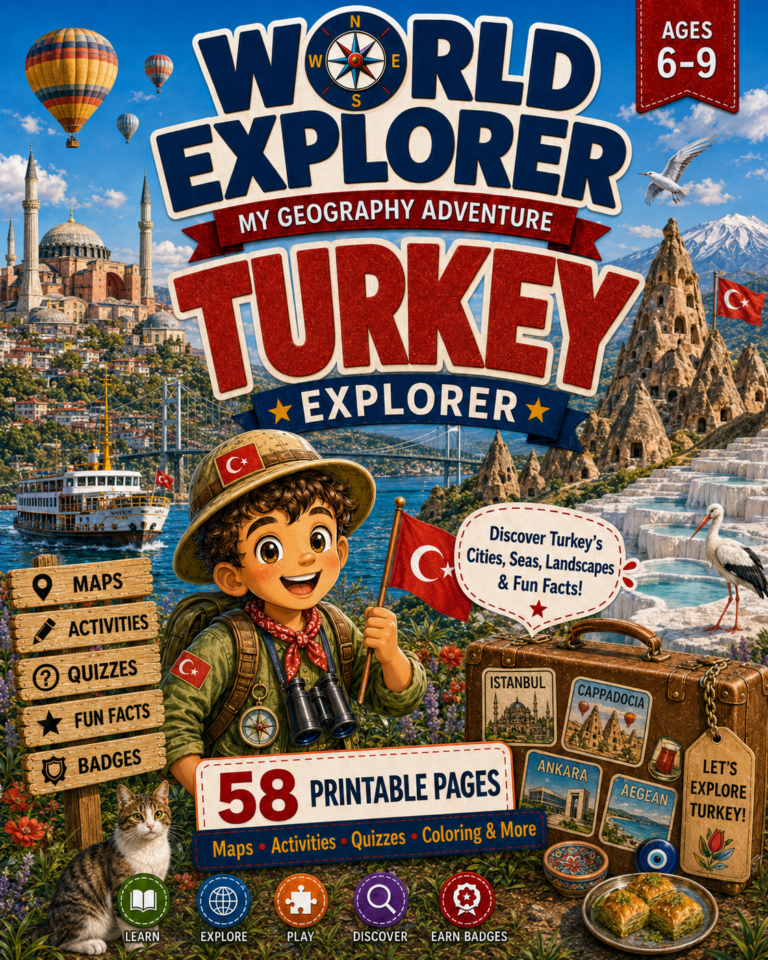
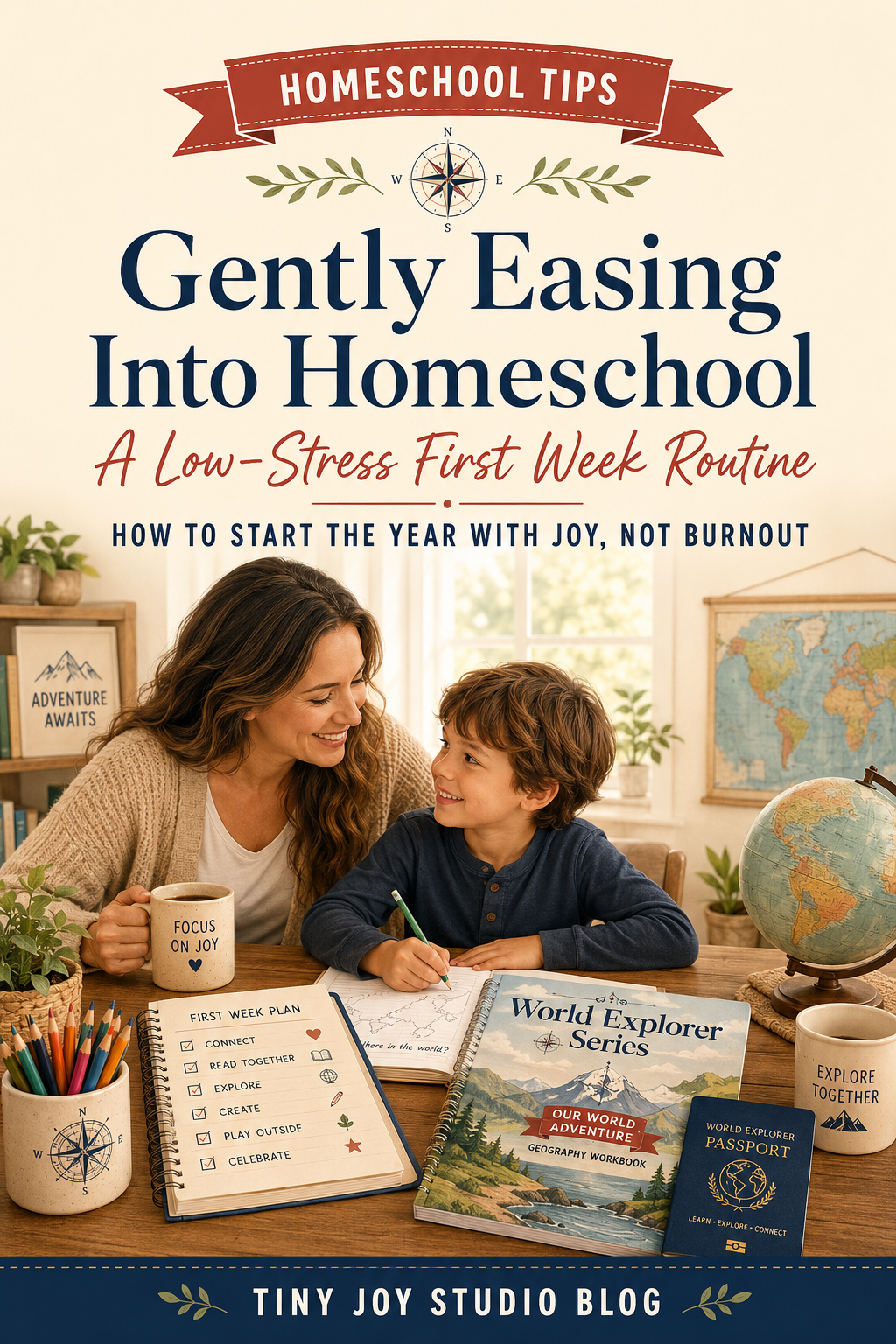
This is where the World Explorer Series by Tiny Joy Studio becomes your best friend. Instead of handing them a boring worksheet, hand them their very own Universal Passport. Tell them, “Today, we are traveling to Africa!” or “We are exploring the Continents and Oceans!” Because the Tiny Joy Studio bundles are completely open-and-go, there is zero prep required from you. You just print the pages, hand them some colored pencils, and let Leo the Guide take them on a gamified adventure.
Day 3: Add the Core Subjects (In Short Bursts)
By Wednesday, your kids are getting used to the idea of a morning routine. Now, you can gently introduce math and language arts, but keep the sessions incredibly short. Aim for 15-20 minutes per subject for younger kids.
If they start to feel overwhelmed, pull back and remind yourself that the goal is to make learning fun and sustainable, not to win a race. Reward their hard work by letting them complete another page in their World Explorer activity book to earn their next visa stamp!
Day 4: Hands-On Projects and Creativity
By Thursday, everyone might be feeling a little fatigued from the new routine. Shift gears into something creative. Bake a recipe from the country you are studying in your geography workbook. If you are exploring Japan, make simple sushi or origami.
This is the perfect opportunity to introduce project based learning in homeschooling. It allows children to use their hands, get messy, and see the real-world application of what they are studying, keeping the stress levels at absolute zero.
Day 5: Review, Relax, and Reflect
Friday should be a breeze. Review what you enjoyed during the week. Let the kids finish coloring their maps or cutting out their passport badges. Take the afternoon off to go to the park or watch a documentary related to your geography studies.
The Secret Weapon: Open-and-Go Materials
The main reason parents stress over their homeschool first week routine is the pressure of preparation. When you are trying to figure out a new schedule, the last thing you want to do is spend your Sunday night cutting out complex crafts or reading 50 pages of a teacher’s manual.
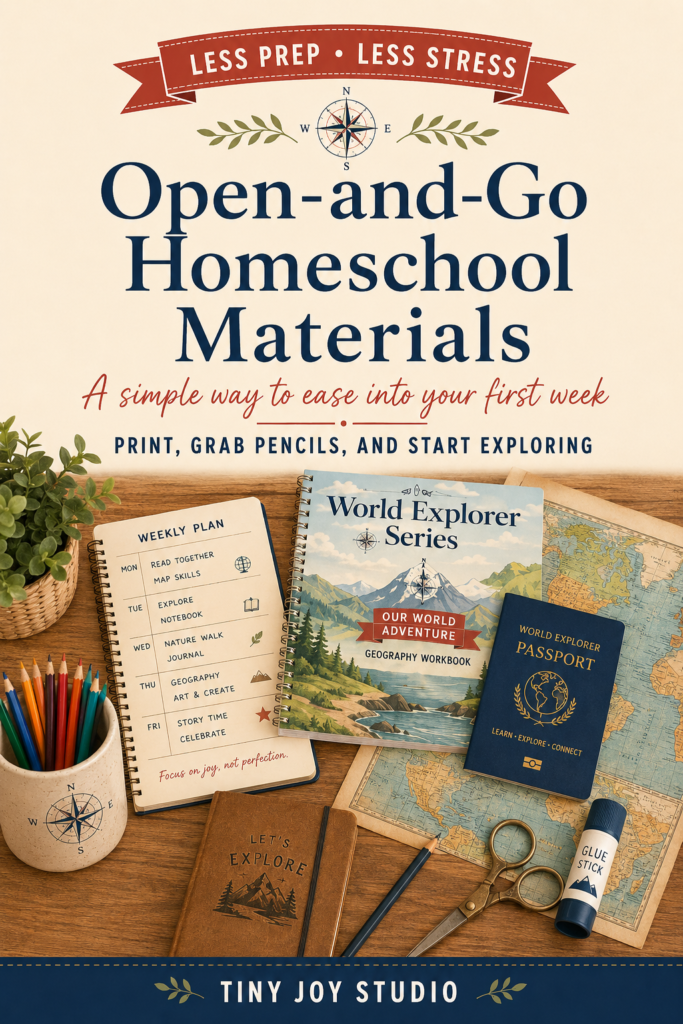
Gently easing into homeschool requires resources that do the heavy lifting for you. The World Explorer Series is designed specifically for this. It combines tactile activities, beautiful illustrations, and a rewarding passport system that motivates kids to learn independently. It is the perfect bridge between summer fun and structured education.
Start your year with a sense of adventure, not a sense of dread. Print your passports, pack your imaginary bags, and let the learning begin naturally!
Ready to start your global adventure? The absolute best way to build your geography curriculum (and save some serious money!) is by grabbing our curated Level Bundles below. Each bundle gives you a massive discount and provides months of open-and-go activities for your kids.
However, if you prefer to start small or are looking for one specific destination, you can absolutely purchase any of our activity books individually!
Level 1 + Level 2 ( 9 Books)


Level 3 Countries (Most popular)