The Ultimate South Korea Unit Study for Homeschoolers: A No-Prep Adventure
Finding the perfect balance between ancient history and modern marvels can be a challenge when teaching geography. Kids are naturally drawn to extremes—they love the idea of hyper-modern cities with bullet trains, but they are equally fascinated by ancient palaces, volcanic islands, and legendary tigers. If you want to capture your child’s imagination, packing their bags for a virtual trip to East Asia is the perfect solution.
Designing a comprehensive south korea unit study for homeschoolers is an incredible way to explore a country where high-tech innovation meets deeply rooted traditions. From the bustling streets of Seoul to the peaceful, wind-swept shores of Jeju Island, South Korea offers a rich, multi-layered educational experience for early elementary learners.
However, as homeschool parents, we know the struggle all too well. Gathering accurate maps, finding age-appropriate cultural facts, printing out worksheets, and creating a cohesive lesson plan can take hours of late-night prep work. You want to give your child the world, but you don’t want to burn out in the process.
Today, we are going to explore how to teach your kids about the vibrant geography, unique wildlife, and fascinating culture of South Korea—all without spending your entire weekend planning!
1. Start with the Contrast: Modern Megacities and Ancient Palaces
South Korea is a geographer’s dream because of its stark contrasts. It is a place where you can find a centuries-old royal palace sitting right in the middle of a city filled with towering skyscrapers and futuristic technology.
When introducing South Korea to kids ages 6 to 9, start by exploring its major cities. Show them Seoul, the capital city, which is a bustling hub of technology, K-pop, and culture. Then, trace the map down to Busan, a beautiful coastal city famous for its massive bridges, beaches, and bustling ports.
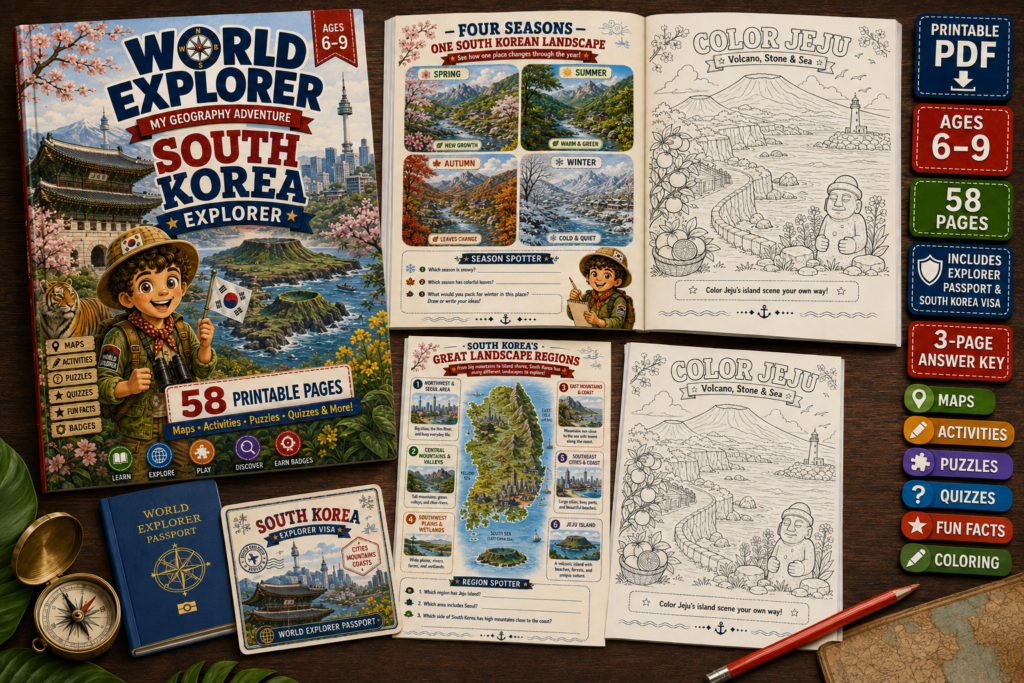
![south korea unit study for homeschoolers activity book]](https://tinyjoystudio.com/wp-content/uploads/2026/08/ChatGPT-Image-15-авг.-2026-г.-10_45_03-2-792x1024.png)
Ask your child: «How do you think people travel between these huge cities?» This is the perfect time to introduce the KTX (Korea Train eXpress)—one of the fastest high-speed trains in the world! Comparing how people live in sprawling megacities versus quiet farming villages is a fantastic way to introduce project based learning in homeschooling into your weekly routine. It encourages kids to think critically about infrastructure, population, and human geography.
2. Discover Natural Wonders: Volcanoes, Mudflats, and Mountains
Geography isn’t just about cities; it is about the shape of the Earth! South Korea’s physical geography is incredibly diverse and exciting for young explorers.
Instead of just looking at a flat map, dive into specific natural landmarks:
- Jeju Island: Often called the «Hawaii of South Korea,» this volcanic island is famous for its lava tubes, beautiful waterfalls, and Hallasan Mountain (a massive shield volcano!).
- The Getbol: These are Korean tidal flats (mudflats) that are so unique and important to marine life that they are protected by UNESCO.
- Seoraksan & Taebaek Mountains: South Korea is mostly mountainous, which means hiking is a huge part of the culture.
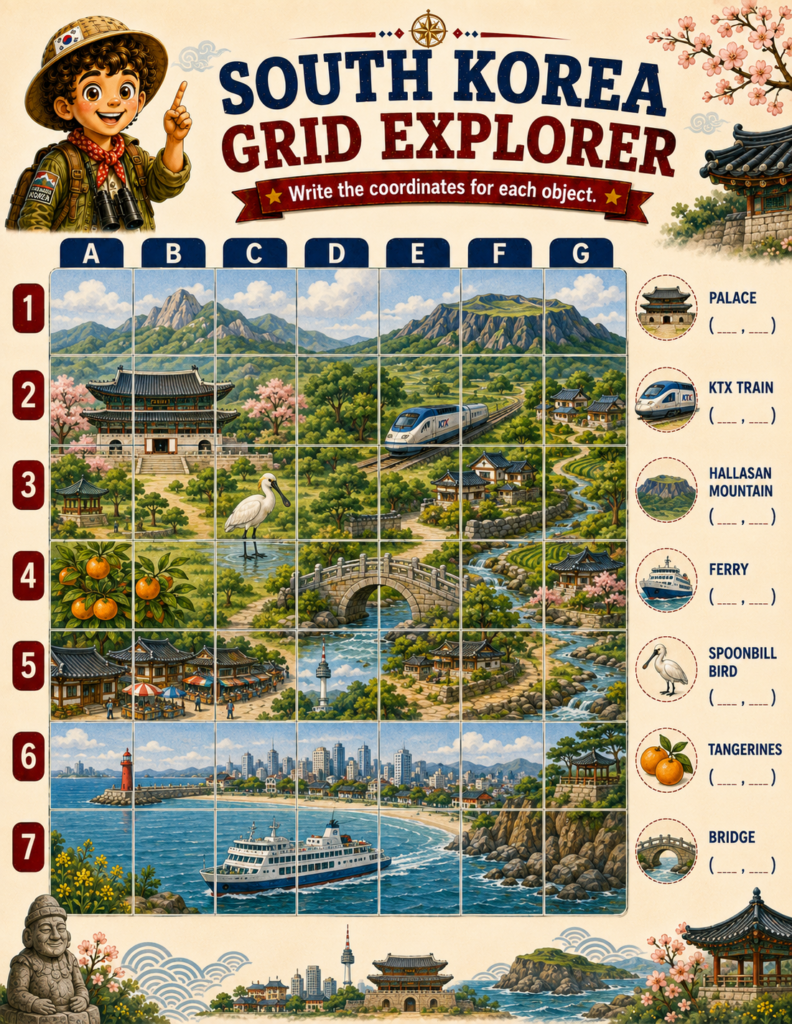
To make these landscapes memorable, use grid mapping activities. Having your child locate Hallasan Mountain or the KTX train on a coordinate grid blends spatial reasoning with geographical facts. Interactive mapping is a proven way to make learning fun for kids who might otherwise resist traditional textbook learning.
3. Dive into a Vibrant Culture: Hanbok, Hangul, and Kimchi
A true unit study must go beyond the physical map and touch the hearts of the people who live there. South Korean culture is rich, colorful, and deeply engaging for children.
- Traditional Clothing (Hanbok): Introduce your kids to the Hanbok, the beautiful, brightly colored traditional clothing worn during festivals and special holidays.
- The Alphabet (Hangul): Did you know that the Korean alphabet was deliberately invented by a king to be easy to learn? Kids love codes and symbols, and looking at the logical shapes of Hangul feels like solving a brilliant puzzle.
- Food (Kimchi): You can’t learn about Korea without talking about Kimchi! This spicy, fermented cabbage is served with almost every meal.
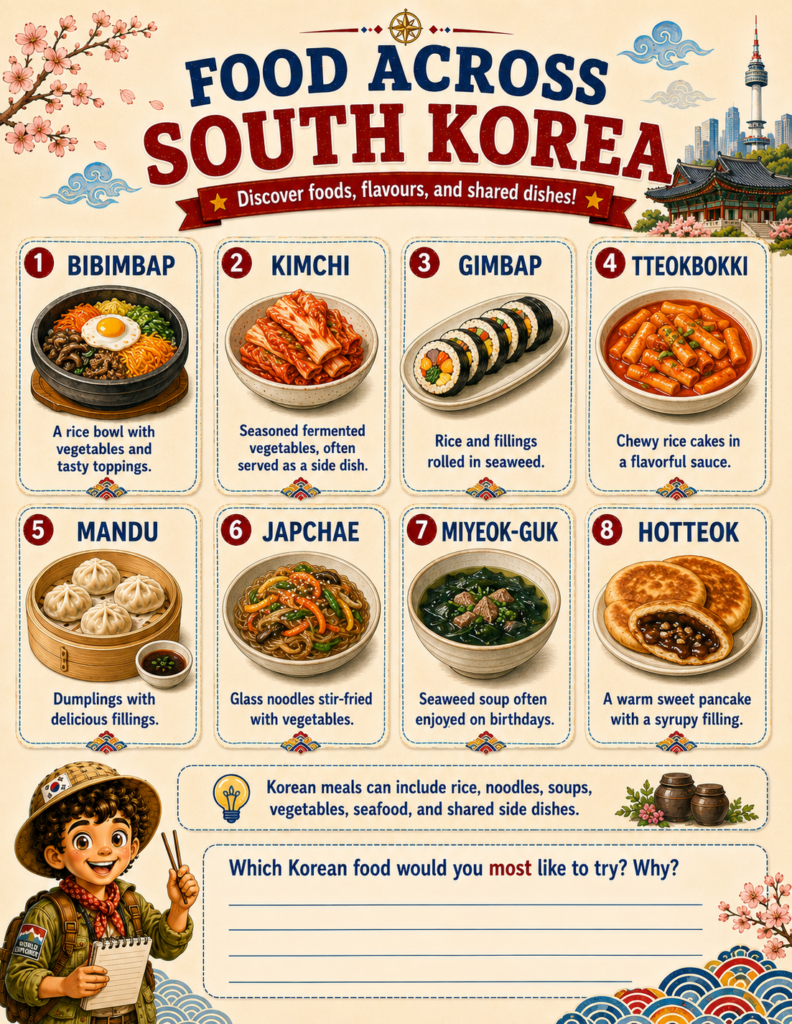
Discussing different types of food, clothing, and languages builds incredible empathy in young learners. It helps them realize that while people around the world may eat or dress differently, we all share the same human needs. This cultural appreciation is a fundamental step if you want to raise a global citizen who respects and celebrates global diversity.
4. Meet the Wildlife: Siberian Tigers and Rare Birds
No geography lesson is complete without meeting the local animals! While modern South Korea is highly developed, it has a rich history of fascinating wildlife.
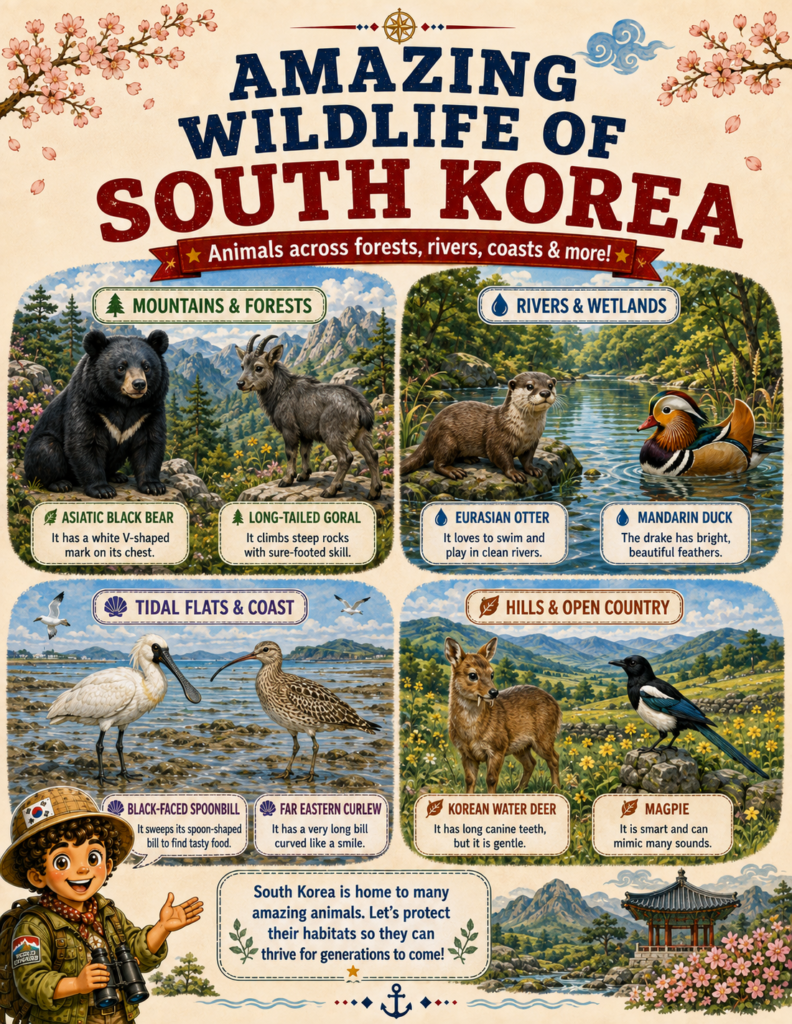
Historically, the Siberian Tiger roamed the Korean peninsula, and the tiger remains a deeply important cultural symbol in South Korea—often representing courage and power. Kids will also be fascinated by the Black-faced Spoonbill, a rare and funny-looking bird that uses its spoon-shaped beak to sweep through the shallow water of the mudflats to catch fish.
Integrating animal facts with mapping creates a well-rounded lesson that easily fills a rainy afternoon or provides the perfect screen free weekend activities for the whole family.
The Ultimate «No-Prep» South Korea Solution
We know that you want to provide these rich, culturally immersive experiences for your children. But let’s be honest—designing coordinate grids, finding accurate facts about Jeju Island, and creating vocabulary worksheets from scratch is exhausting.
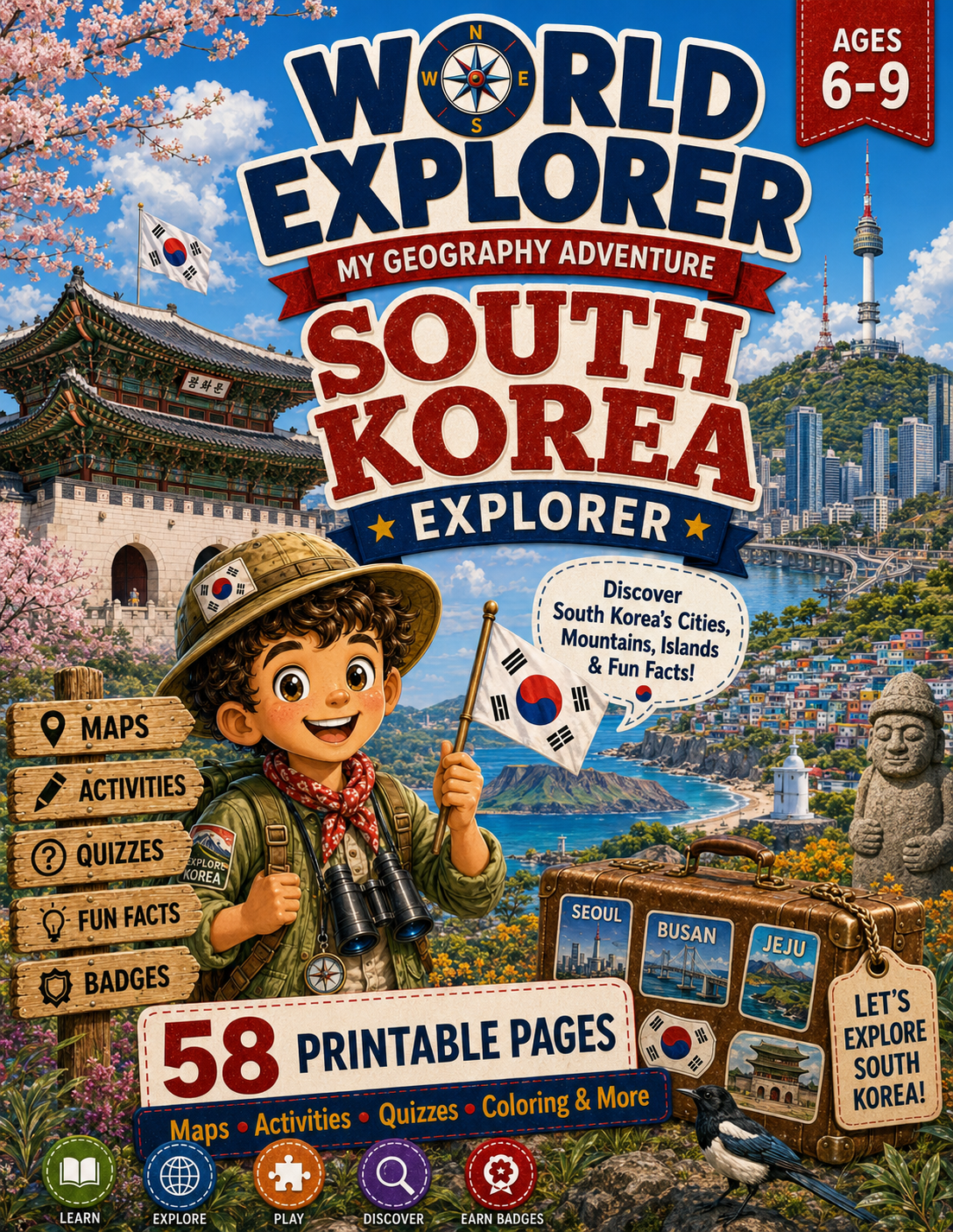
That is exactly why we created the South Korea Explorer activity book at Tiny Joy Studio!
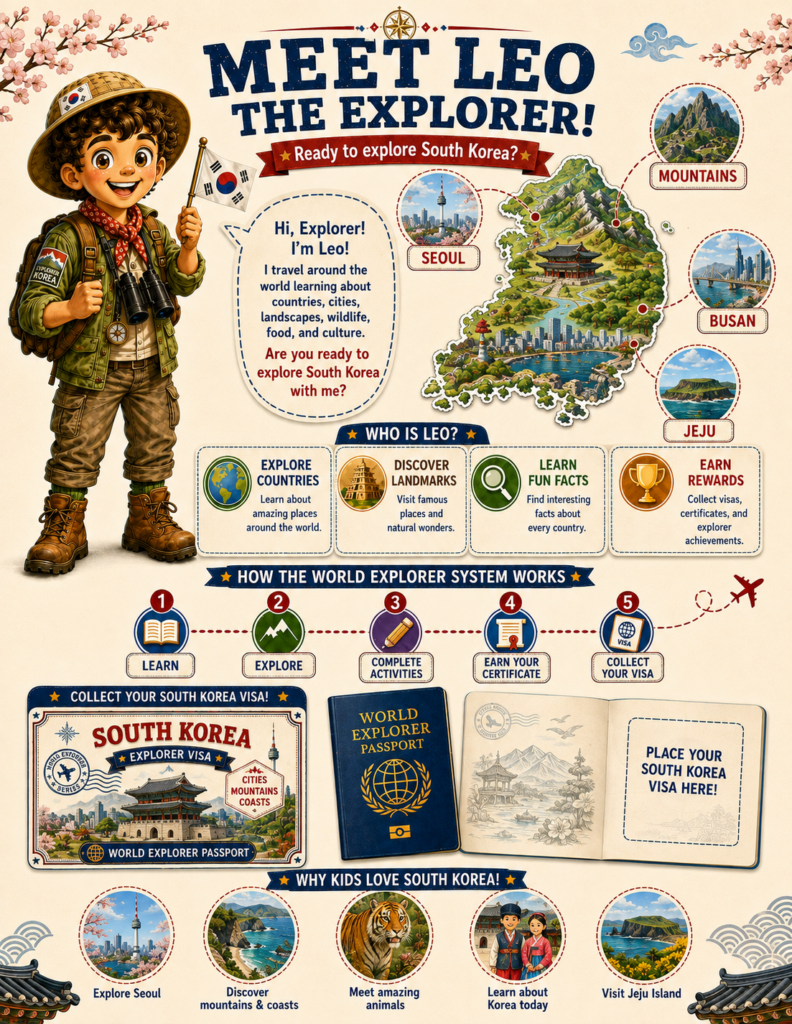
Designed specifically for curious minds ages 6 to 9, this massive 58-page printable activity book turns a complex geography lesson into a captivating, easy-to-understand adventure. Guided by Leo the Explorer, your child will:
- Navigate the streets of Seoul and the beaches of Busan.
- Solve geography mazes and decode Hangul-inspired secret messages.
- Locate Hallasan Mountain, lava tubes, and the KTX train on grid maps.
- Learn about Hanbok, Kimchi, and traditional Korean palaces.
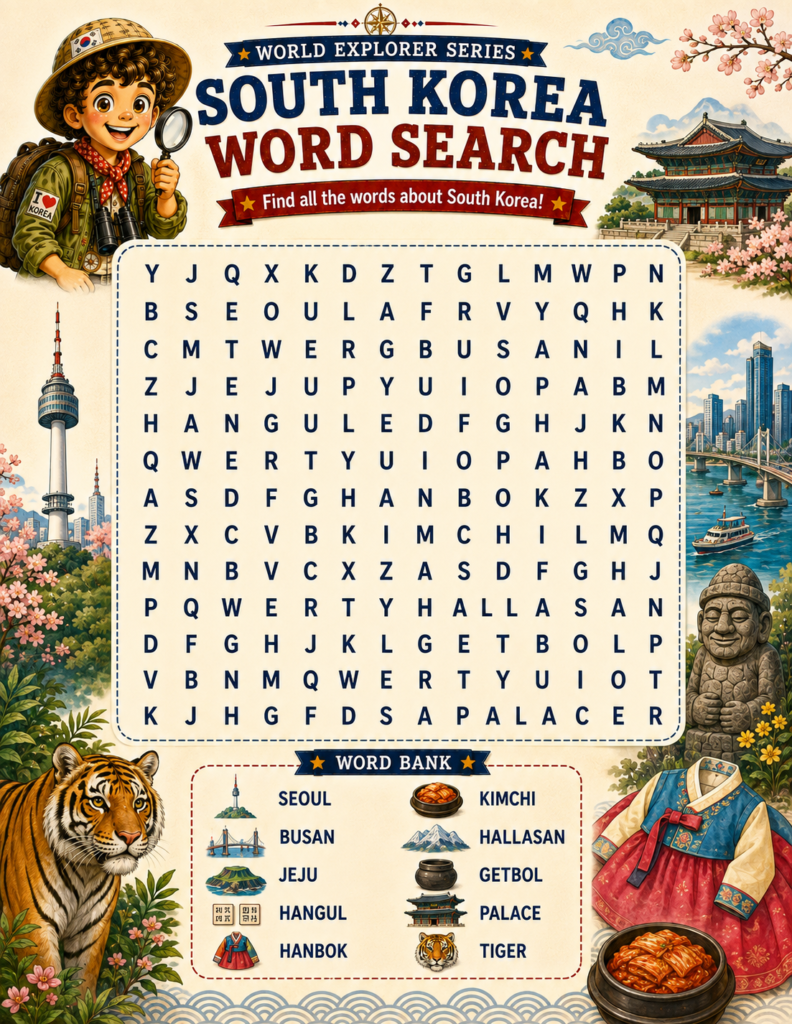
The best part? It is a 100% open-and-go curriculum addition. Just print the pages at home, grab some colored pencils, and let your child’s East Asian adventure begin!
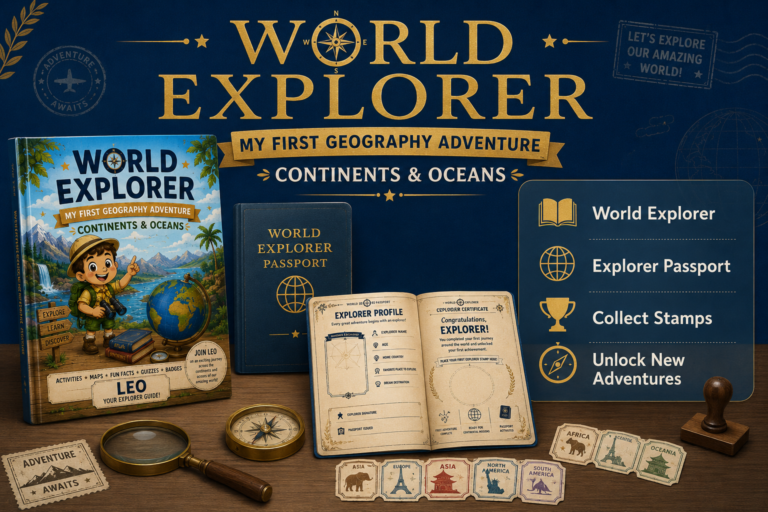
This workbook perfectly complements our World Explorer geography series. Once your child finishes their South Korean missions, they can grab their Universal Passport and earn their official South Korea Visa stamp, turning education into an exciting, gamified collection!
Ready to start your South Korean adventure today?