The Ultimate World Food Unit Study for Kids (No Prep!)
If you have ever tried to teach young children about world geography, you know that simply pointing at a map or memorizing capital cities rarely sparks genuine enthusiasm. To a 7-year-old, distant countries can feel incredibly abstract. But there is one universal language that instantly bridges the gap between different cultures, continents, and communities: Food!
Food is much more than what we see on a plate. It is a brilliant gateway to understanding human geography, climate, trade, and history. However, building a comprehensive world food unit study from scratch can be a daunting task for busy homeschool parents. Gathering recipes, explaining agricultural concepts, and finding engaging worksheets can quickly eat up your entire weekend.
If you are looking for a stress-free, «open-and-go» solution to make learning fun without the heavy prep work, you are in the right place. Let’s explore how you can take your child on a delicious global adventure right from your kitchen table!
Why Teach Geography Through Food?
Children naturally connect with what they know, and every child understands eating! By analyzing food, we give them «Food Clues»—a framework to ask smart questions about the world. They can investigate the Place (where it grows), the Source (farms, oceans, or orchards), the Ingredients, how it is Prepared, how people Share it, and how food Travels across the globe.
This approach turns a standard social studies lesson into a thrilling, interactive investigation. Here are the core concepts your world food exploration should include:
1. Tracing the Journey: From Farm to Plate
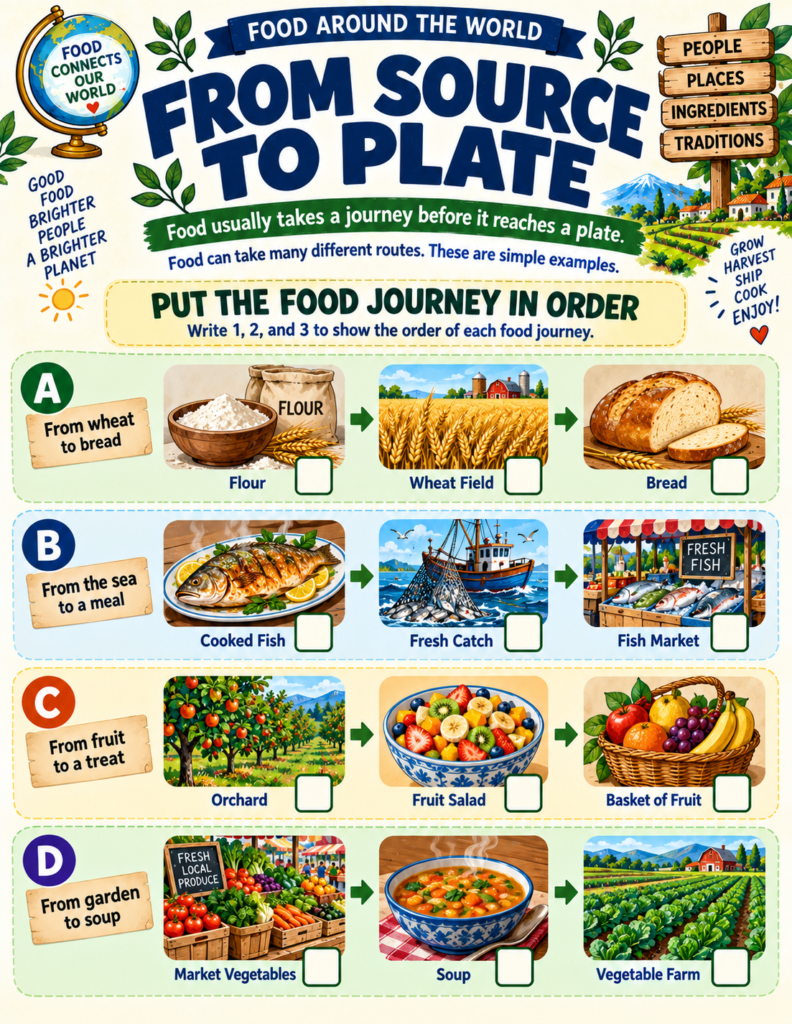
Before a meal reaches our table, it goes on an incredible journey. Many children (and even adults!) don’t often stop to think about the complex routes our ingredients take.
- The Learning Adventure: Challenge your child to sequence the journey of everyday items. For example, how does wheat in a field become the bread in their sandwich? How does a fresh catch from a fishing boat end up in a coastal market and then on a dinner plate?
- Why It Works: Sequencing activities build logical thinking and help children appreciate the immense effort and interconnected systems required to feed the world.
2. Discovering Staple Foods and Climates
The geography of a region—its climate, land, and water—directly influences what foods can grow there.
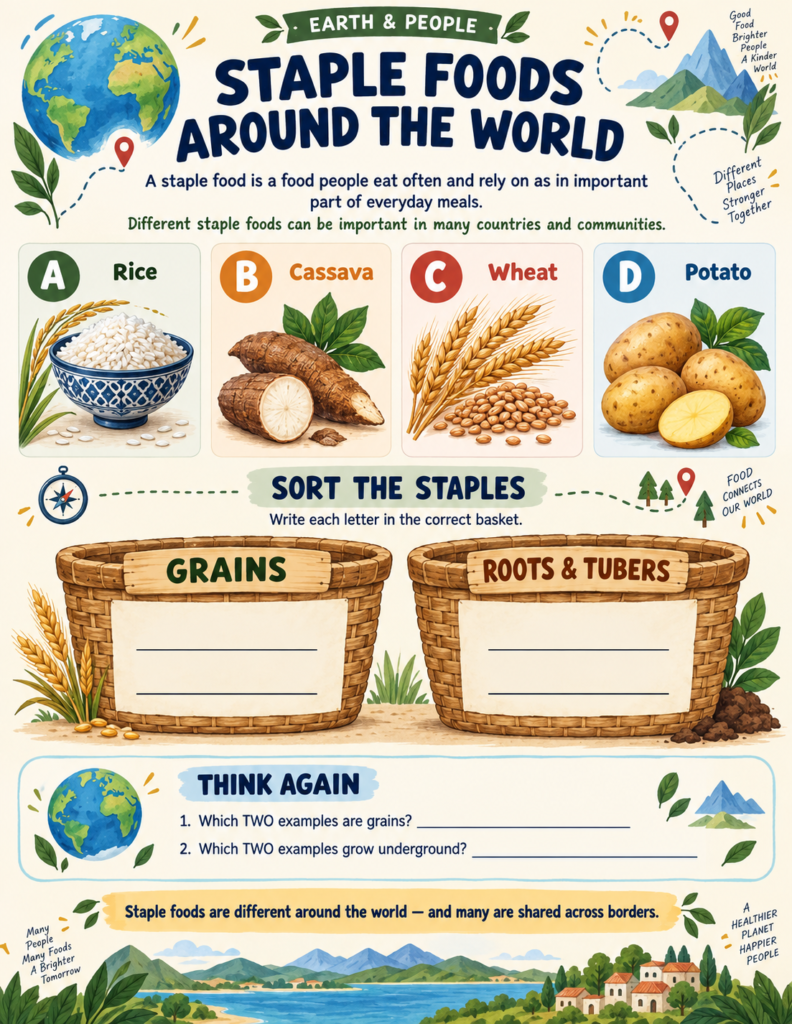
- The Learning Adventure: Introduce your young explorer to global staple foods. They can sort crops like rice, wheat, cassava, and potatoes into categories (like grains vs. roots and tubers). Discuss how rice thrives in warm, wet landscapes, while potatoes grow well in cool, high Andean slopes.
- Why It Works: This perfectly integrates earth science with human geography. It shows children that people adapt to their environments in ingenious ways. This hands-on categorization is a staple of hands-on montessori geography.
3. Preparation and Preservation: The Science of Food
Did you know that the same ingredient can be prepared in completely different ways across the globe? Maize (corn) becomes polenta in Italy, tortillas in Mexico, sadza in Zimbabwe, and arepas in Colombia!
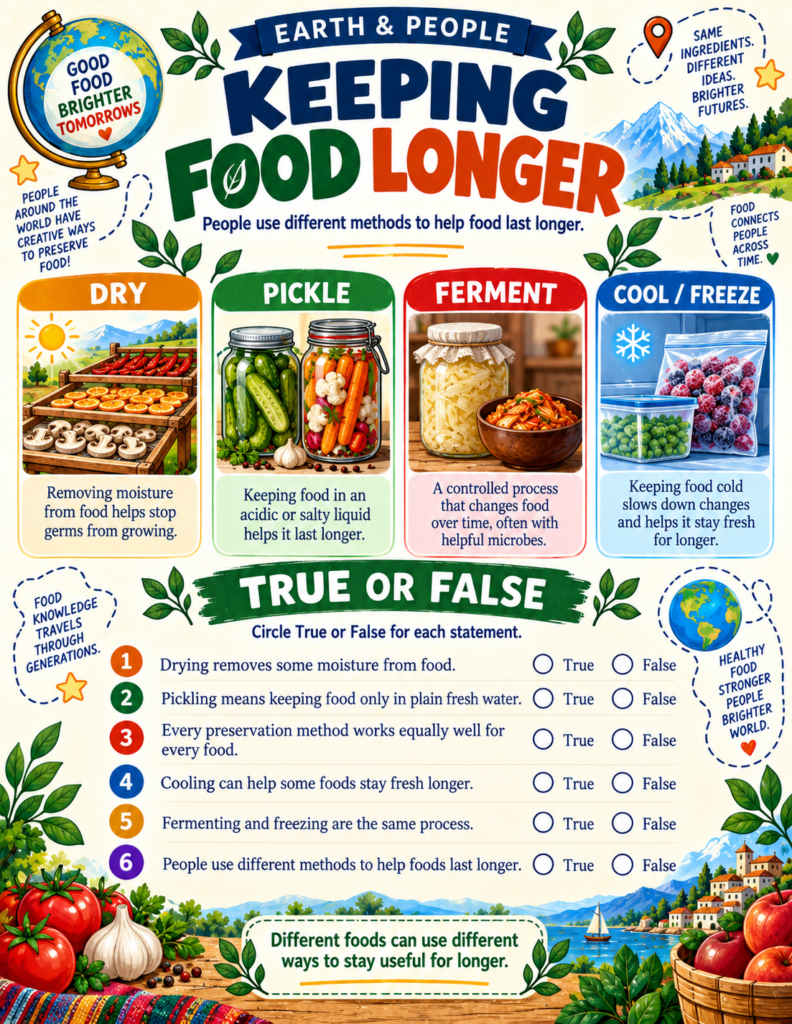
- The Learning Adventure: Teach your kids about cooking methods (steaming, baking, boiling, grilling) and traditional food preservation. Before modern refrigeration, how did people keep food from spoiling? Exploring methods like drying, pickling, fermenting, and cooling introduces a wonderful layer of historical context.
- Why It Works: It encourages critical thinking. Recognizing that diverse cultures use the exact same ingredients to create wildly different dishes fosters deep cultural empathy and curiosity.
4. Recipes that Travel and Change
Human beings have always been on the move, and they take their food traditions with them.
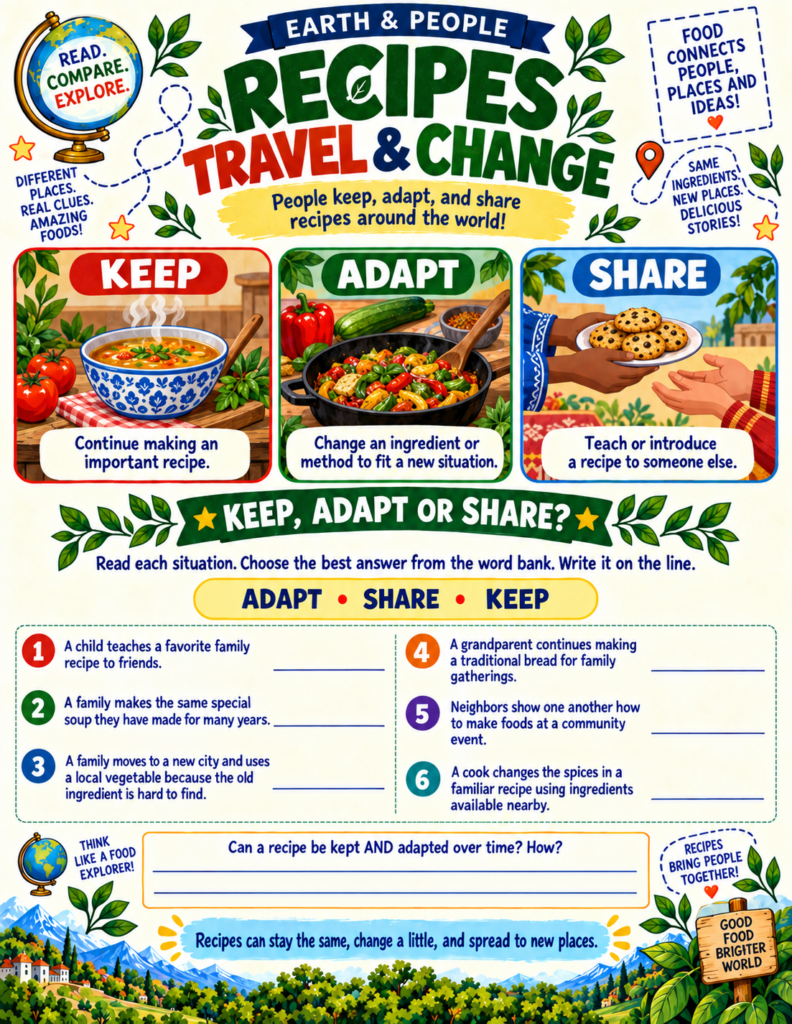
- The Learning Adventure: Investigate what happens when a recipe travels to a new city or country. Do people Keep making it exactly the same? Do they Adapt it by using local ingredients when their traditional ones aren’t available? Or do they Share and teach it to new friends?
- Why It Works: This is the heart of sociology for kids! It shows that cultures are living, breathing, and constantly evolving. Engaging with these concepts is a fantastic way to prevent summer slide by keeping their analytical minds active.
5. The Ultimate Reward: Finding the Connections
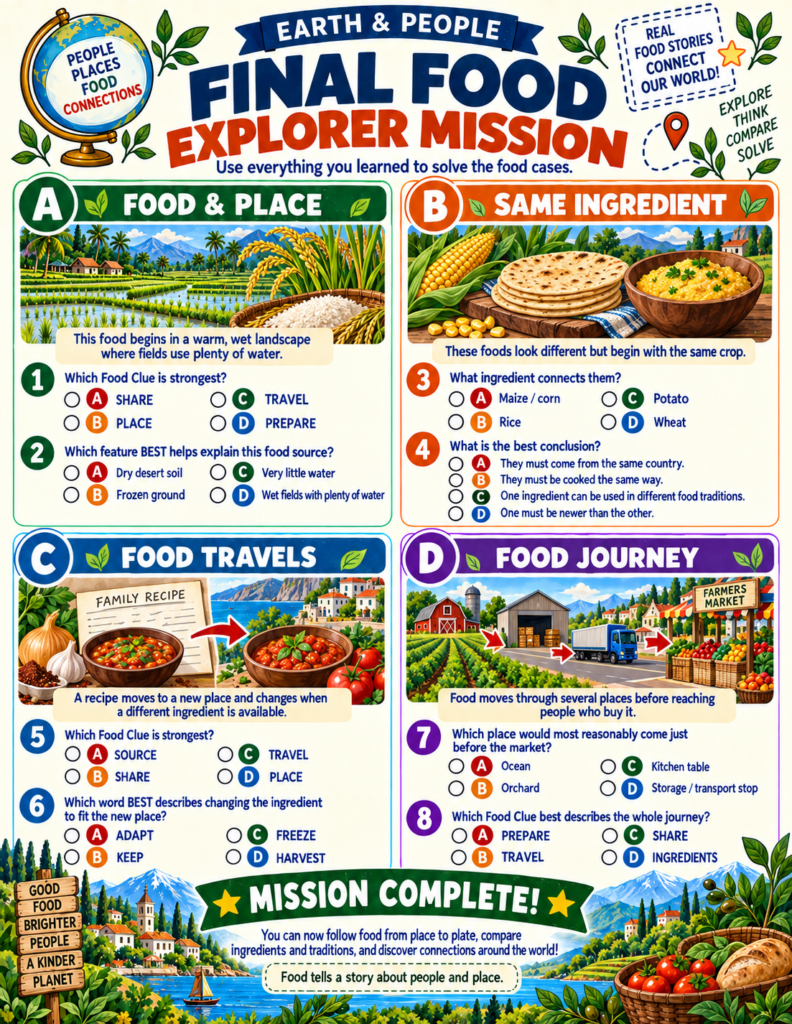
At the end of a deep dive into global foods, children should be able to look at two seemingly different dishes—like Indian Naan and Middle Eastern Pita, or West African Jollof Rice and Italian Risotto—and identify the shared ingredients and ideas that connect them.
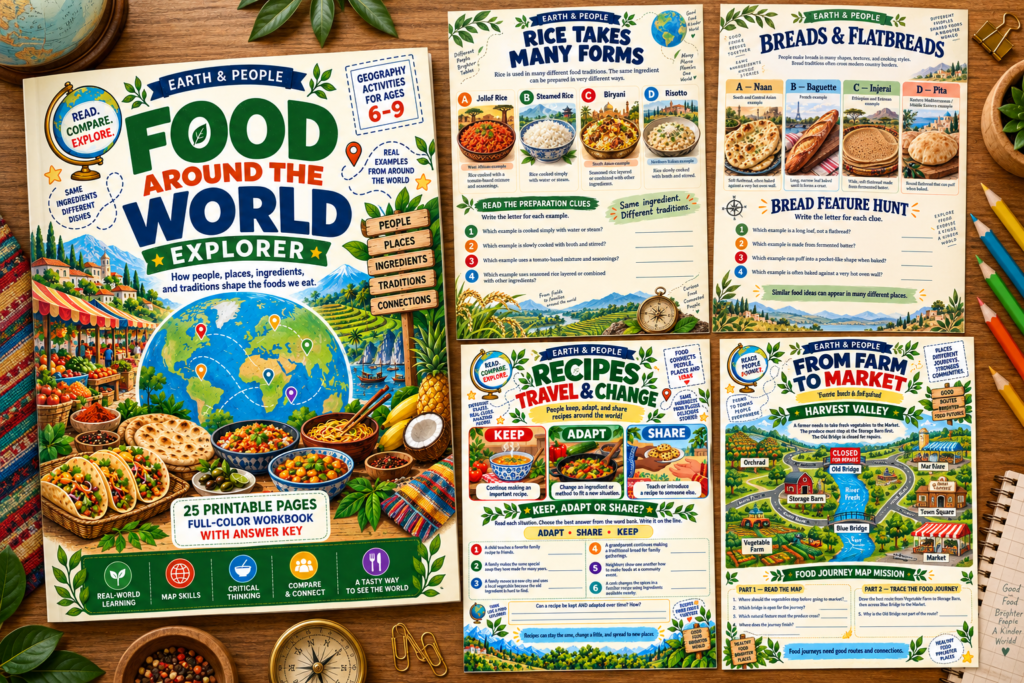
Your «Open-and-Go» Solution: The Food Around the World Explorer
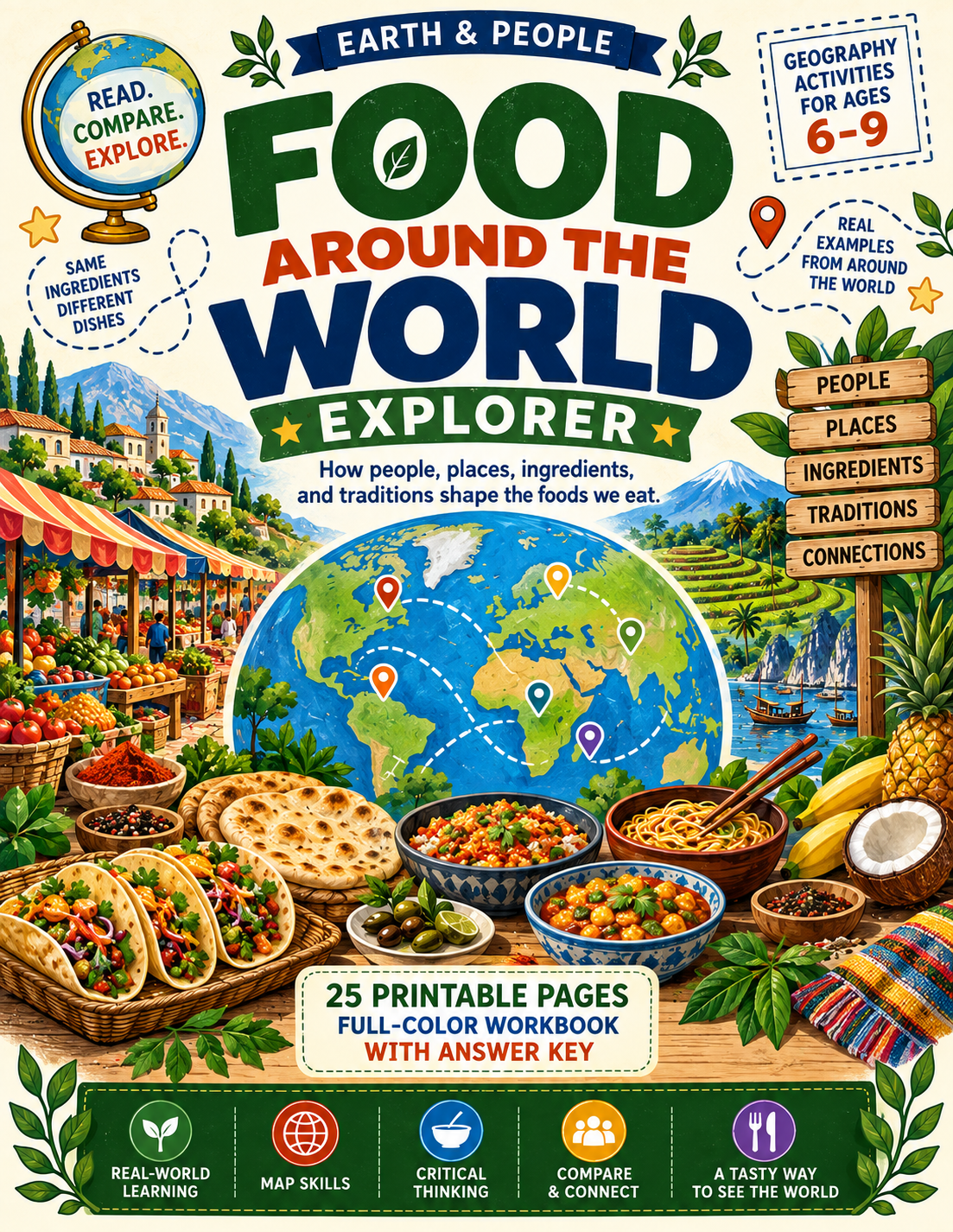
We know that pulling all of these concepts together—from climate maps to staple crop sorting—sounds like a lot of work. That is exactly why we created the Food Around the World Explorer activity workbook!
This 25-page, full-color digital workbook is designed specifically for curious 6 to 9-year-olds. It is the ultimate tool for project-based learning in homeschooling.
Why Parents Love It:
- Zero Preparation: Just print and explore! No need to hunt down obscure ingredients or spend hours crafting lesson plans.
- Critical Thinking Built-In: Kids don’t just read facts; they act as «Food Detectives,» sorting, matching, and solving geography challenges.
- Global Connection: It seamlessly connects people, places, ingredients, and traditions, showing kids that despite our differences, we all share a common table.
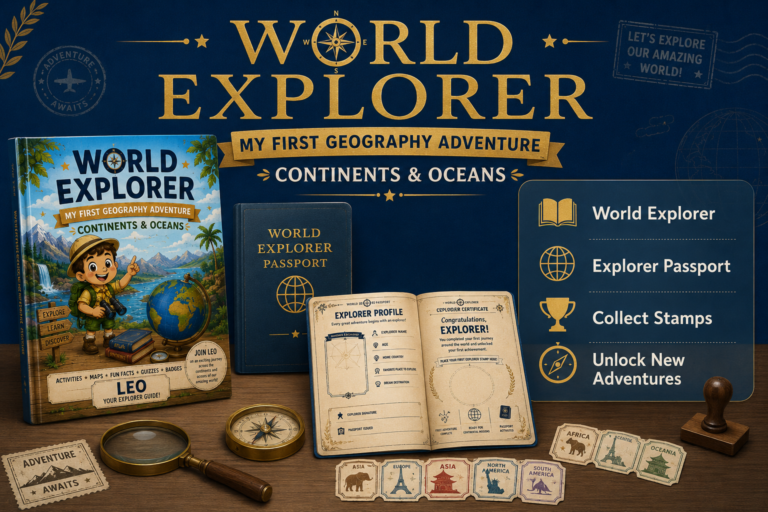
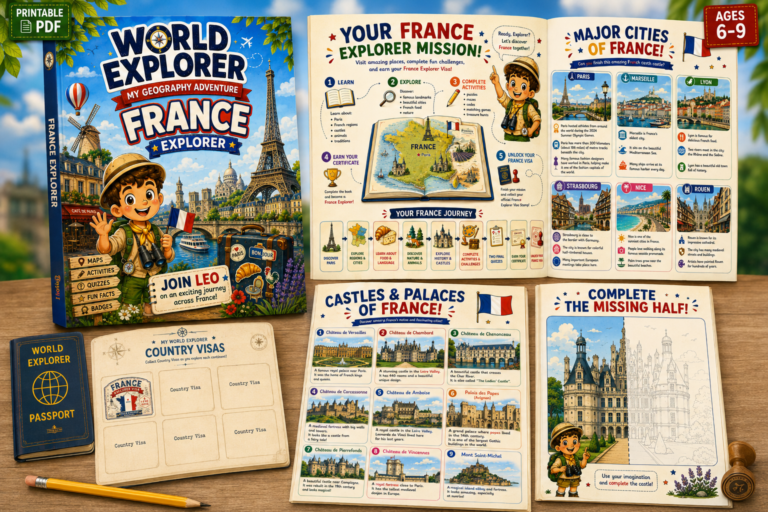
- Gamified System: Like all books in the World Explorer Series, it pairs beautifully with our Universal Passport system, keeping your child intrinsically motivated to learn more!
Ready to embark on a tasty journey to see the world? Grab your colored pencils, print the workbook, and discover the stories hidden in every meal!
👉 Grab the Food Around the World Explorer in the Tiny Joy Studio Etsy Shop Today!