How to Teach Rainforest Ecology as a Living System (Without Generic Worksheets)
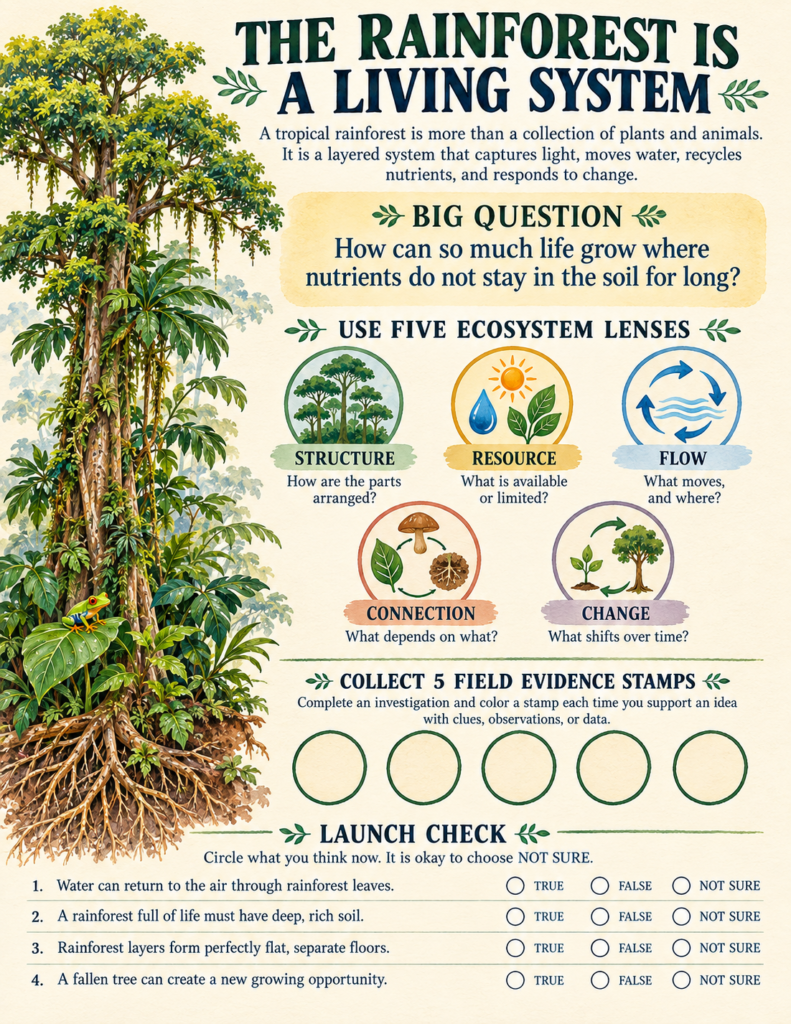
Ask an elementary student what they know about the Amazon or the Congo, and they will likely rattle off a predictable checklist: toucans, tree frogs, high humidity, and four neat layers stacked like tiers on a wedding cake. Yet when asked how ancient trees manage to flourish when tropical soils are notoriously nutrient-poor, the conversation stalls.
Finding substantive materials that bridge this gap is a recurring challenge in home and classroom education. Standard printables often reduce rich biomes to coloring pages and vocabulary matching, leaving students with disconnected trivia instead of scientific literacy.
Solving this problem requires moving beyond passive recall toward dynamic inquiry. A truly effective tropical rainforest workbook treats the forest as an interconnected web of energy, moisture, and biological matter.
Why Rainforest Ecology Demands Systems Thinking
Ecology is inherently relational. When children study an ecosystem solely as an assortment of charismatic fauna, they miss the causal mechanisms that sustain life on Earth. Understanding biomes requires grappling with resource scarcity, vertical gradients, and regenerative loops.
When young learners explore how water cycles through an ecosystem, they should see how plants directly alter atmospheric conditions. When they study the soil, they must investigate how warmth and moisture accelerate decomposition to keep life circulating.
These concepts introduce elementary students to early scientific modeling and evidence-based reasoning—skills that apply far beyond biology.
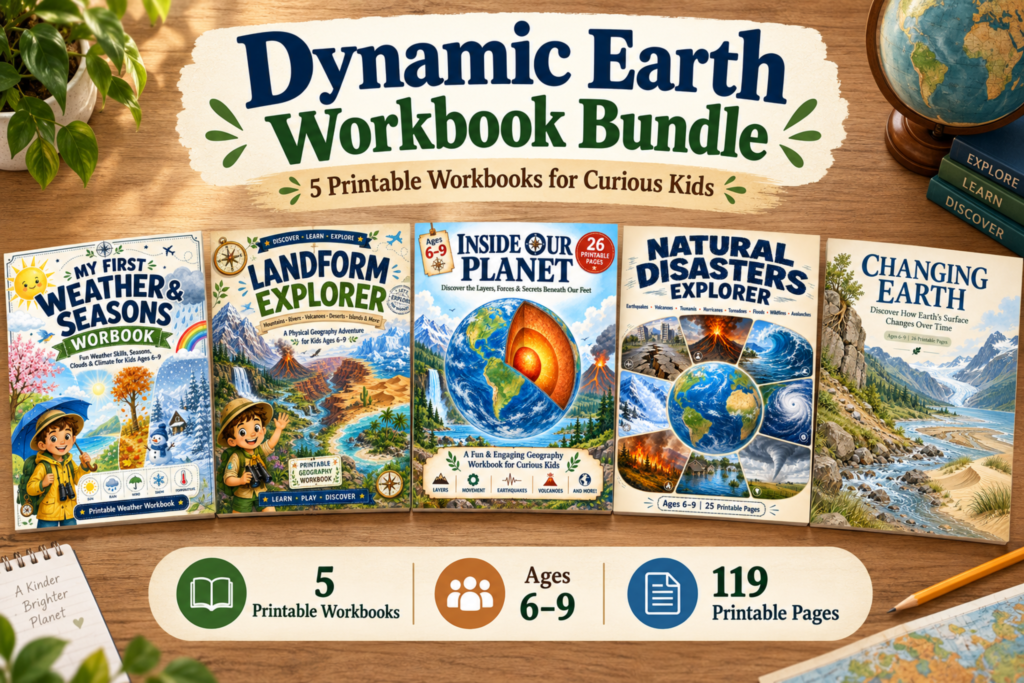
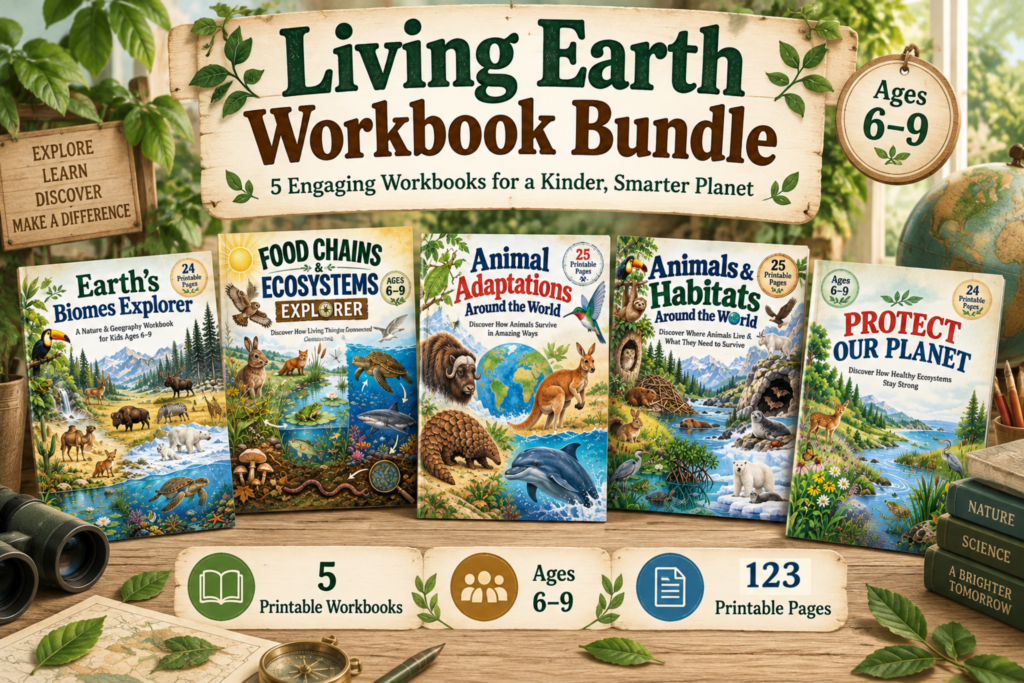
If your learner thrives when physical systems are tied to hands-on investigation, exploring the Dynamic Earth Workbook Bundle provides an essential foundation for how geology and climate intersect.
Moving Beyond the «Layer Cake» Model
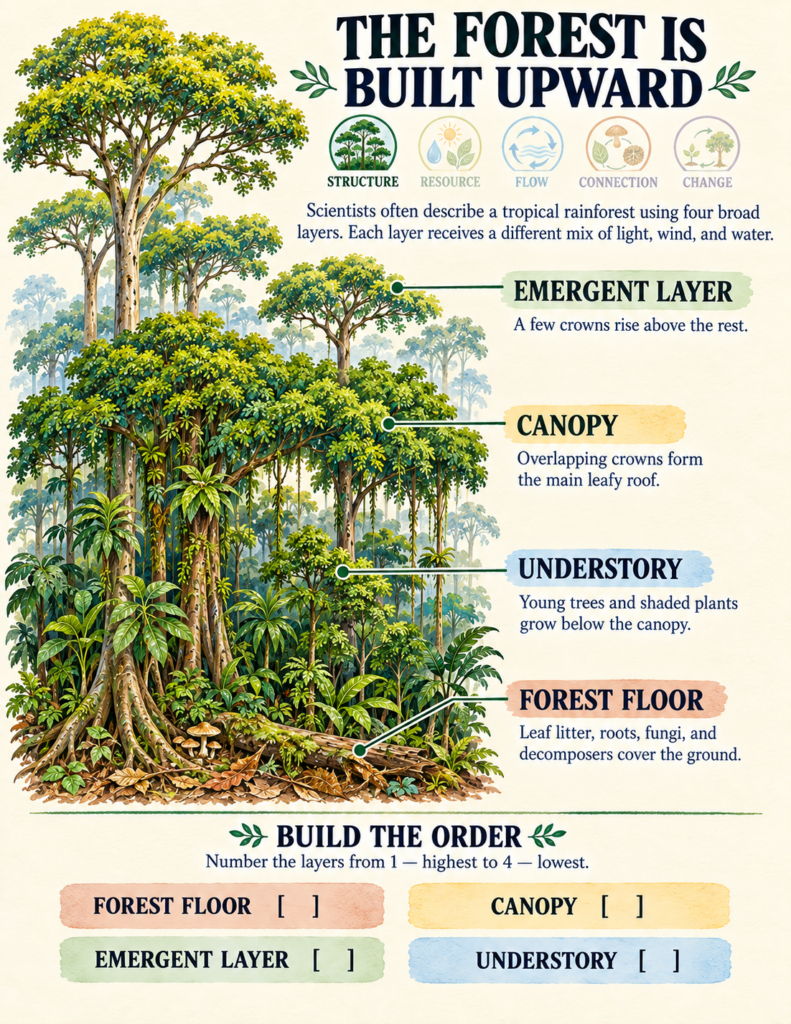
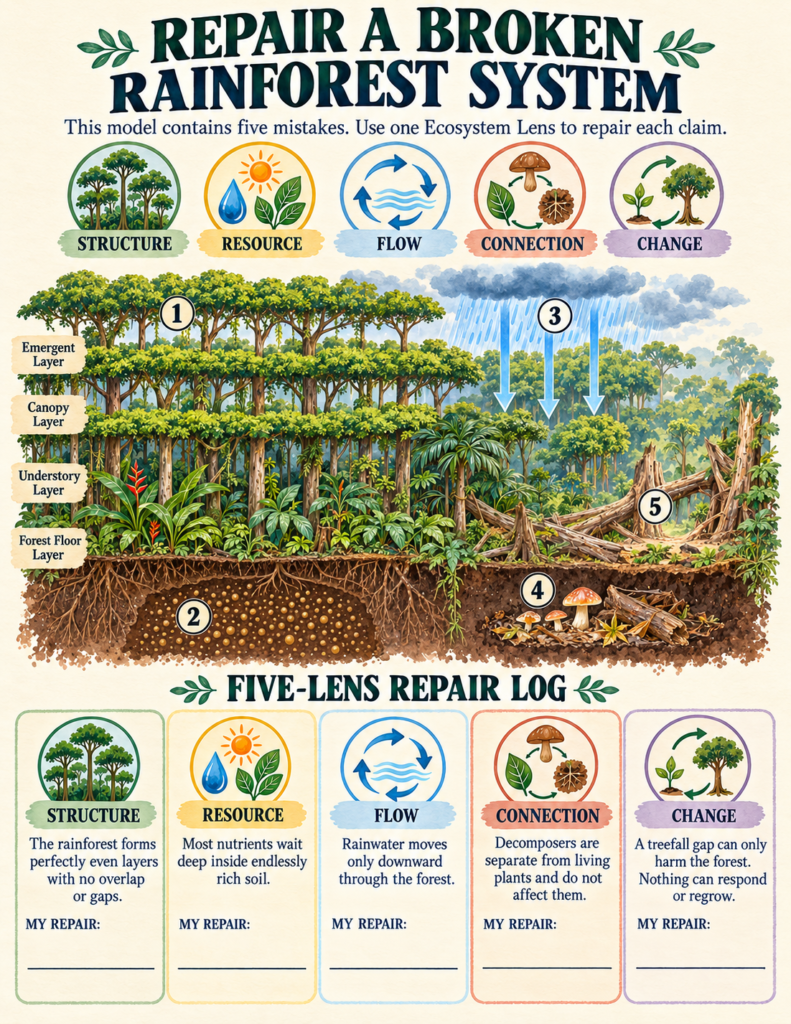
Most children learn that the rainforest comprises the emergent layer, canopy, understory, and forest floor. While this vertical framework helps orient beginners, nature does not conform to flat boundaries. Branches interlace, fallen logs pierce multiple strata, and sunflecks create localized microclimates.
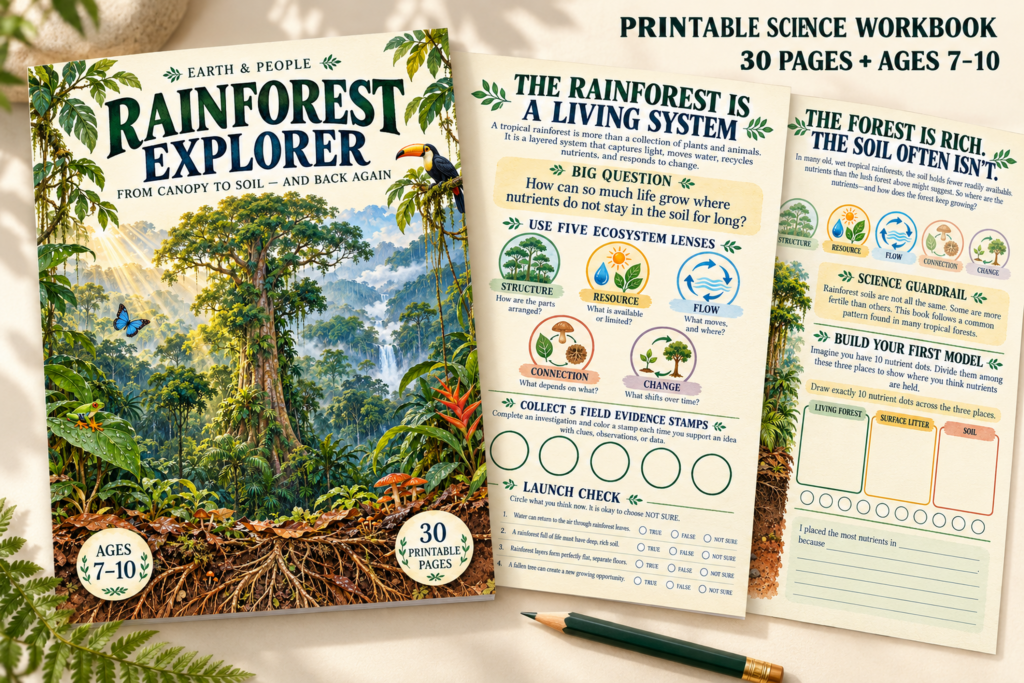
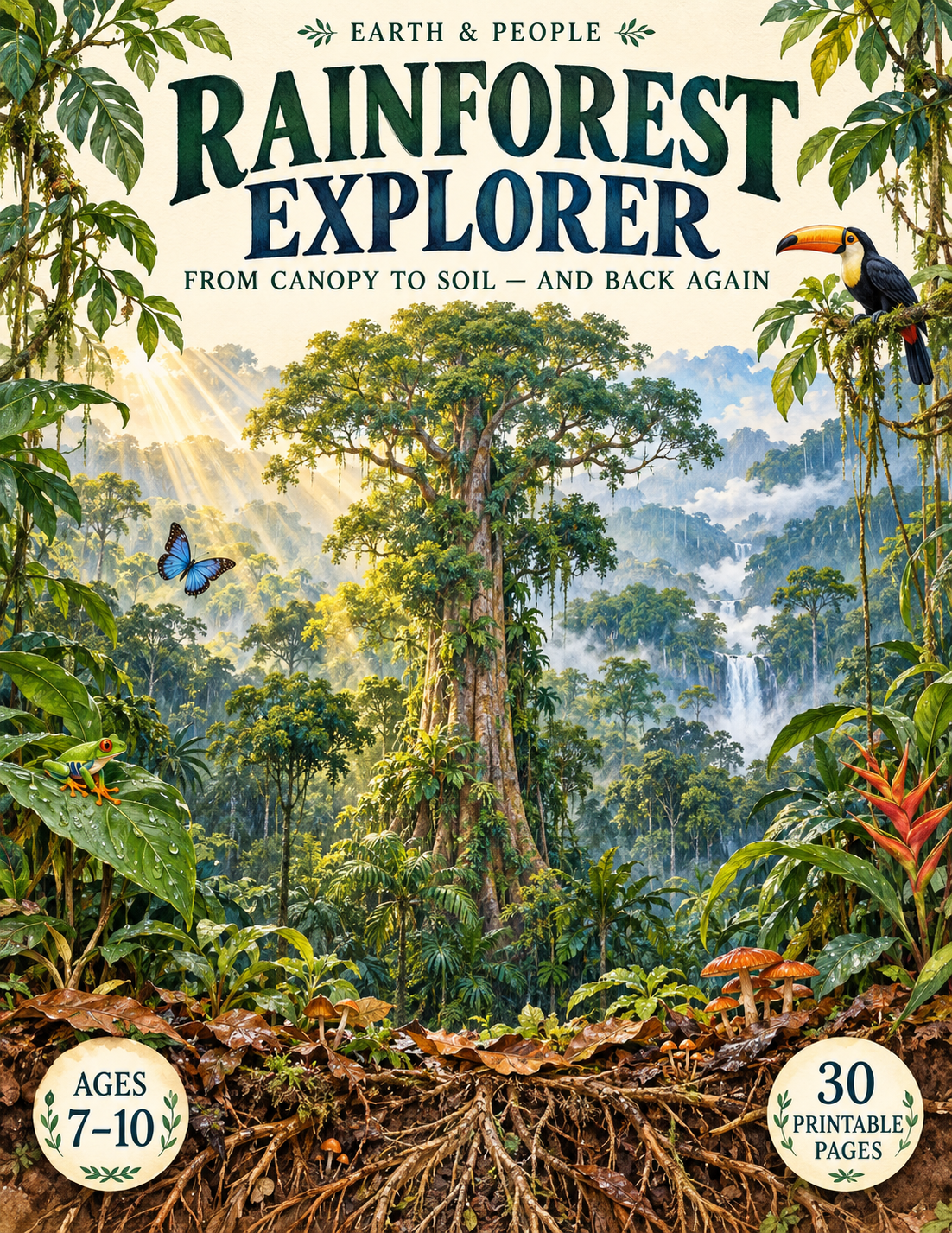
The 30-page Rainforest Explorer: From Canopy to Soil and Back Again (geared toward ages 7–10) directly challenges oversimplified views. Rather than accepting an idealized diagram, students contrast flat structural charts with realistic, irregular forest profiles.
They examine how light filters through gaps and discover that one tree functions as an entire neighborhood of distinct microclimates. Epiphytes, mosses, and canopy dwellers do not simply inhabit a «layer»; they occupy targeted microspaces defined by specific moisture, light, and bark conditions.
To expand these concepts into broader world biomes, pairing this study with curated Nature Workbooks for Kids allows students to compare tropical forest dynamics directly with marine, woodland, and desert ecosystems.
Investigating Natural Cycles Through Hands-On Evidence
Rather than spoon-feeding explanations, Rainforest Explorer structures learning around an investigative journey where students collect five «Field Evidence Stamps» by testing data and defending claims.
1. The Dynamic Movement of Water
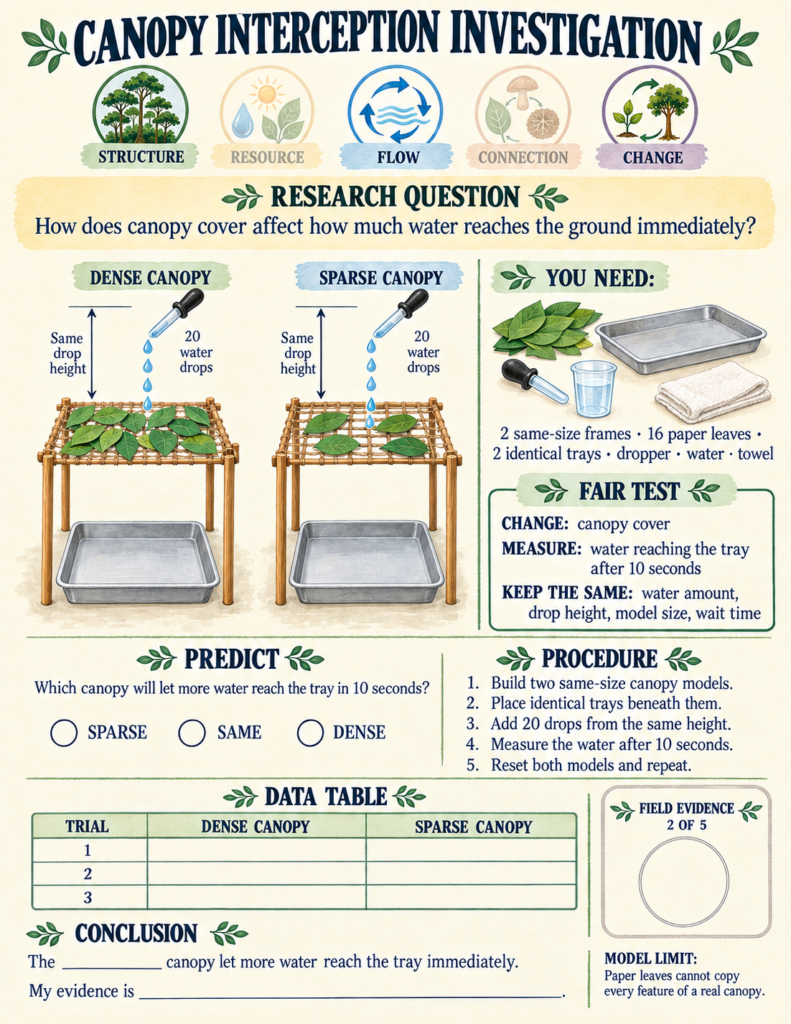
Instead of drawing arrows from a cloud straight to the ground, students trace alternative pathways: canopy interception, throughfall, stemflow, and infiltration.
They explore how dense vegetation captures precipitation and test this mechanism through a controlled canopy interception experiment using paper leaves, droppers, and collection trays.
Students also evaluate the reverse process: evapotranspiration, where moisture is returned upward from leaves to generate the very cloud systems that supply rainfall.
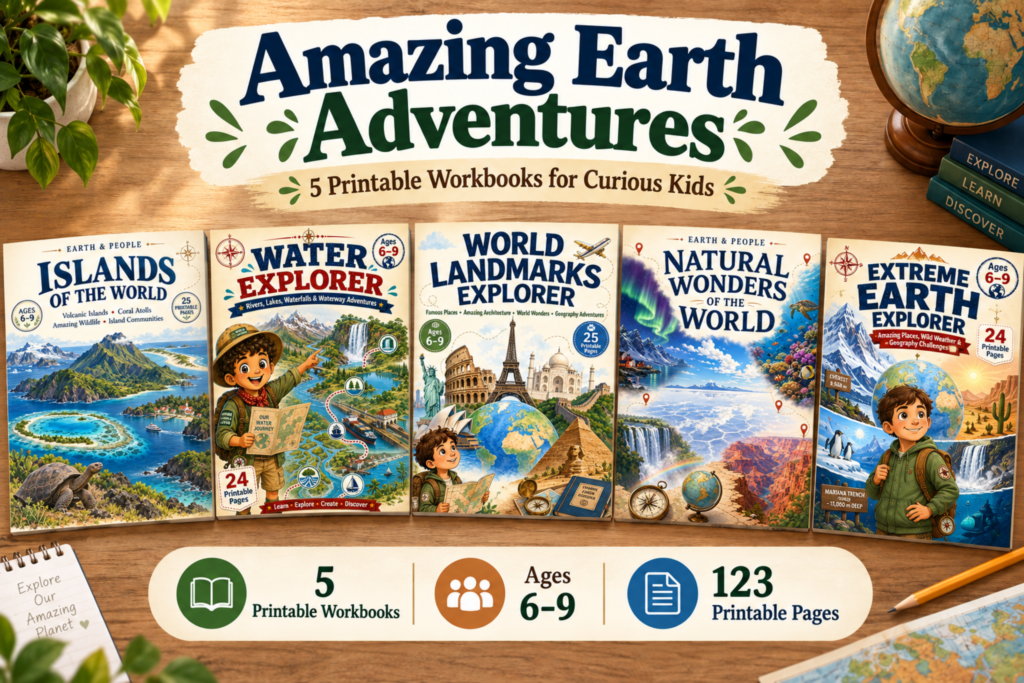
Understanding these planetary water mechanics pairs naturally with global geography. Homeschoolers often integrate these lessons alongside the Amazing Earth Adventures Workbook Bundle to trace how river basins interact with worldwide weather patterns.
2. Resolving the Tropical Soil Paradox
One of the most compelling scientific mysteries presented is the nutrient puzzle: How can so much plant life thrive when tropical soil holds so few reserves?
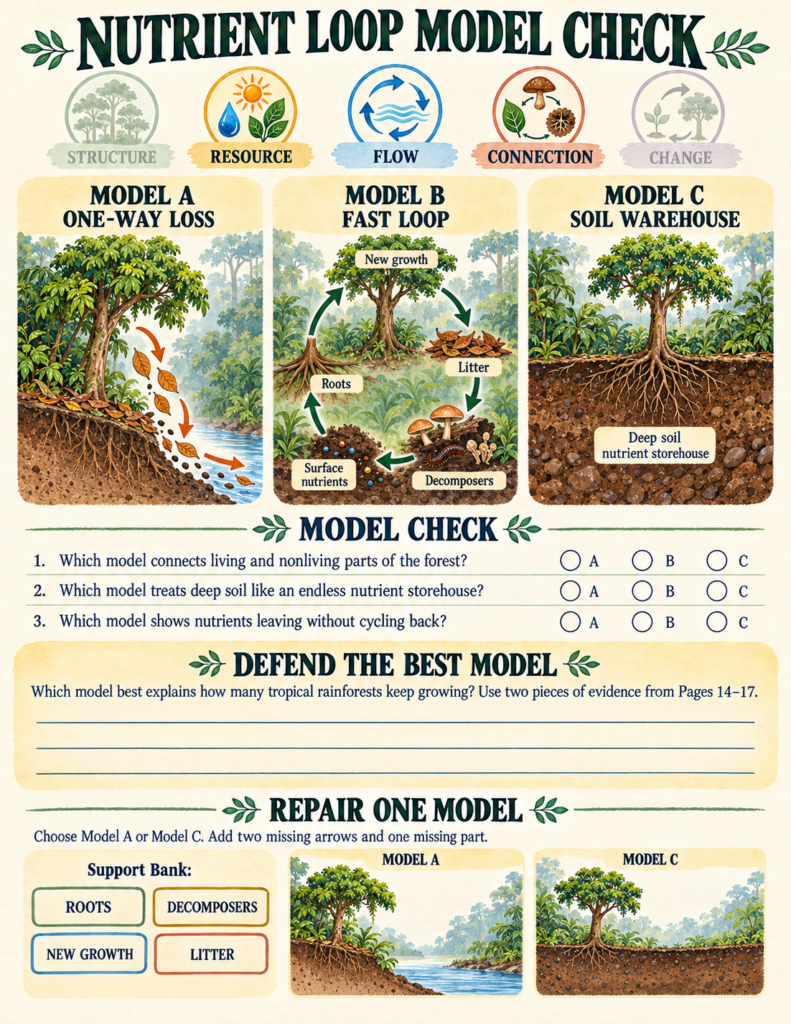
Students confront the widespread misconception that lush vegetation implies deep, nutrient-dense dirt. Through an empirical field study of leaf decay across moist and dry plots, children analyze real mass data to see how rapid decomposer activity prevents nutrients from staying trapped in the soil.
Nutrients are cycled directly from fallen organic matter back into shallow root networks, creating a fast, closed loop rather than an endless soil warehouse.
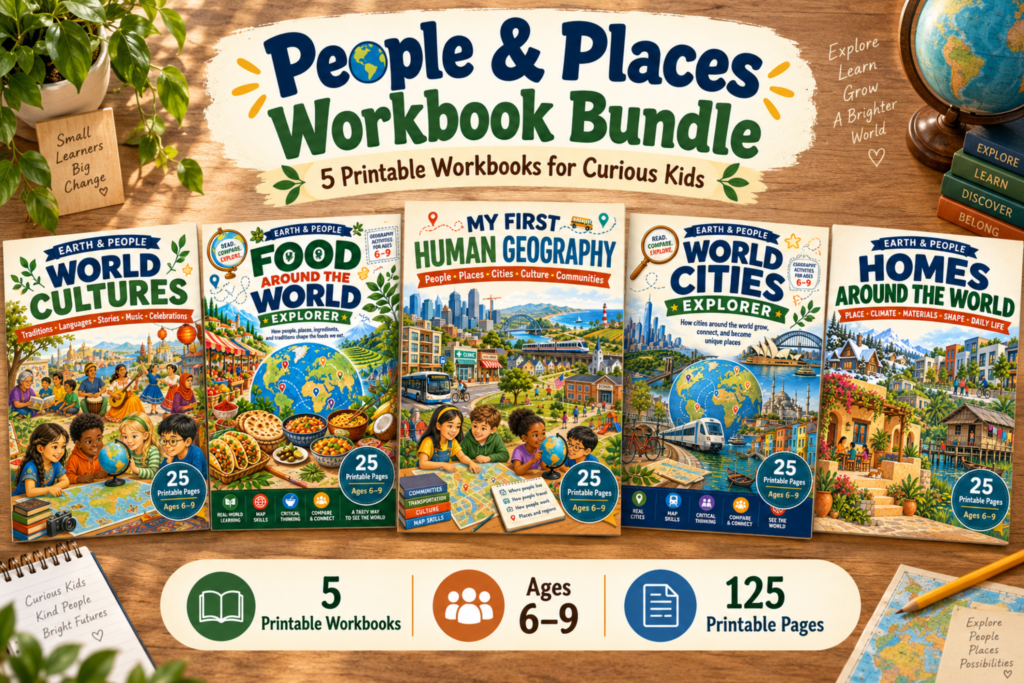
Understanding how human settlements historically adapted to these delicate ecological conditions is an exciting next step. The People and Places Workbook Bundle provides valuable context on how native populations thrive alongside their surrounding natural habitats.
Practical Integration for Home and Classroom
Because Rainforest Explorer is self-contained with embedded data sets, field notes, and visual models, it eliminates the need for elaborate prep work. It adapts flexibly across various educational routines:
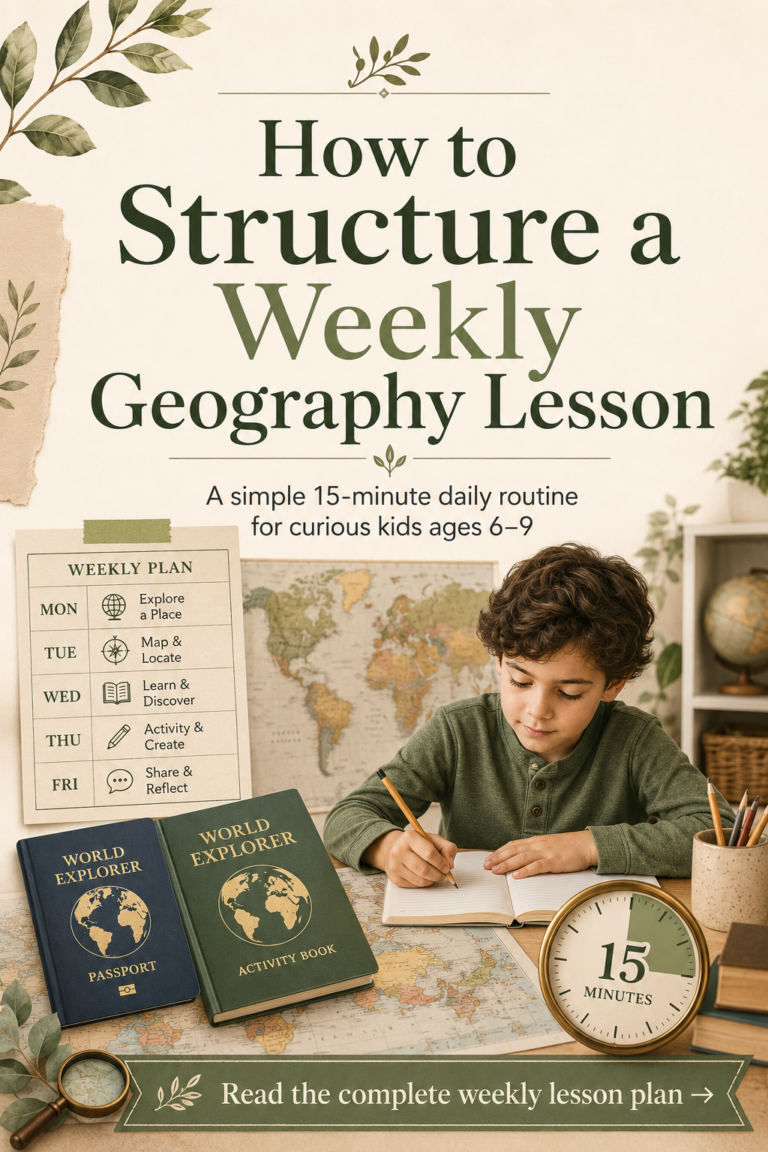
- Homeschool Science Block: Use it as an open-and-go 2- to 3-week comprehensive unit study.
- Classroom Science Centers: Assign individual investigation spreads—such as the «Layer Clue Detective» or «Water Model Check»—for collaborative science groups.
- Independent Research & Critical Thinking: Use the «Five-Lens Repair Log» as a performance assessment to check for deep comprehension rather than rote memory.
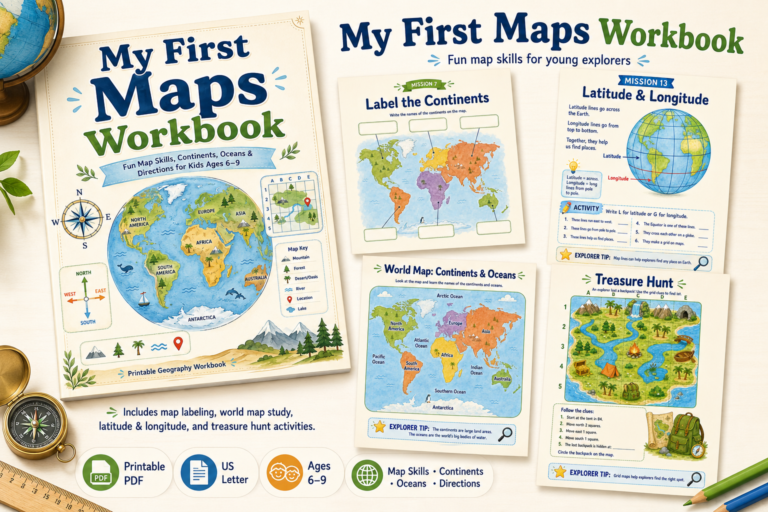
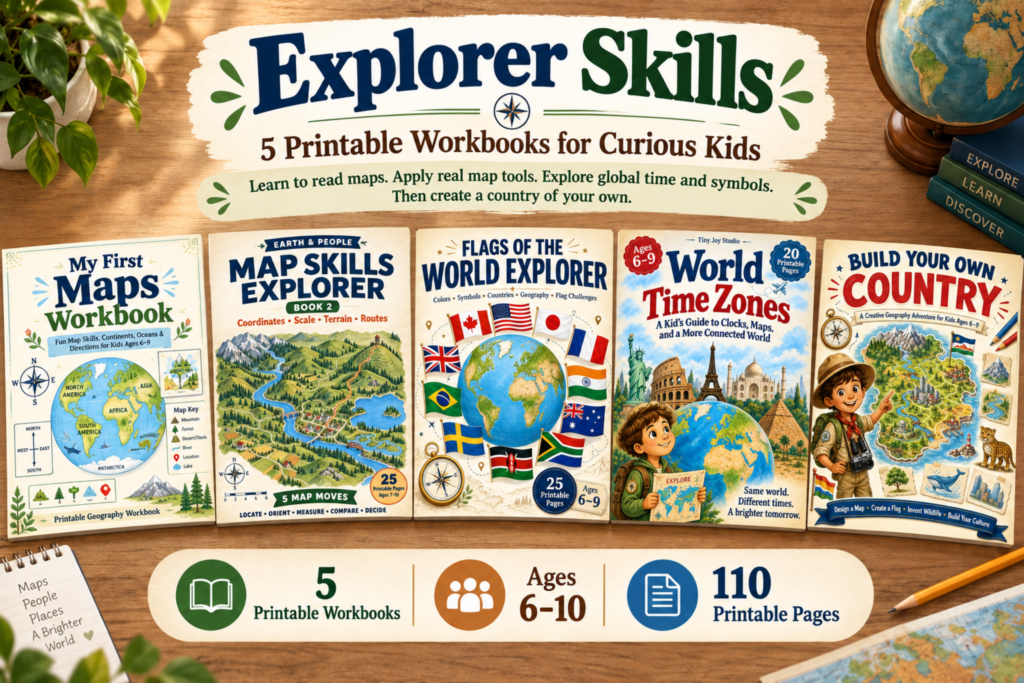
For children who enjoy mapping habitats, tracking coordinate paths, or logging field records, integrating the Explorer Skills Workbook Bundle gives them practical tools to navigate both real and thematic field surveys.
If you are looking for a printable science resource that trades passive worksheets for authentic evidence, model critique, and real ecological discovery, Rainforest Explorer offers an engaging, structured path straight through the living canopy.