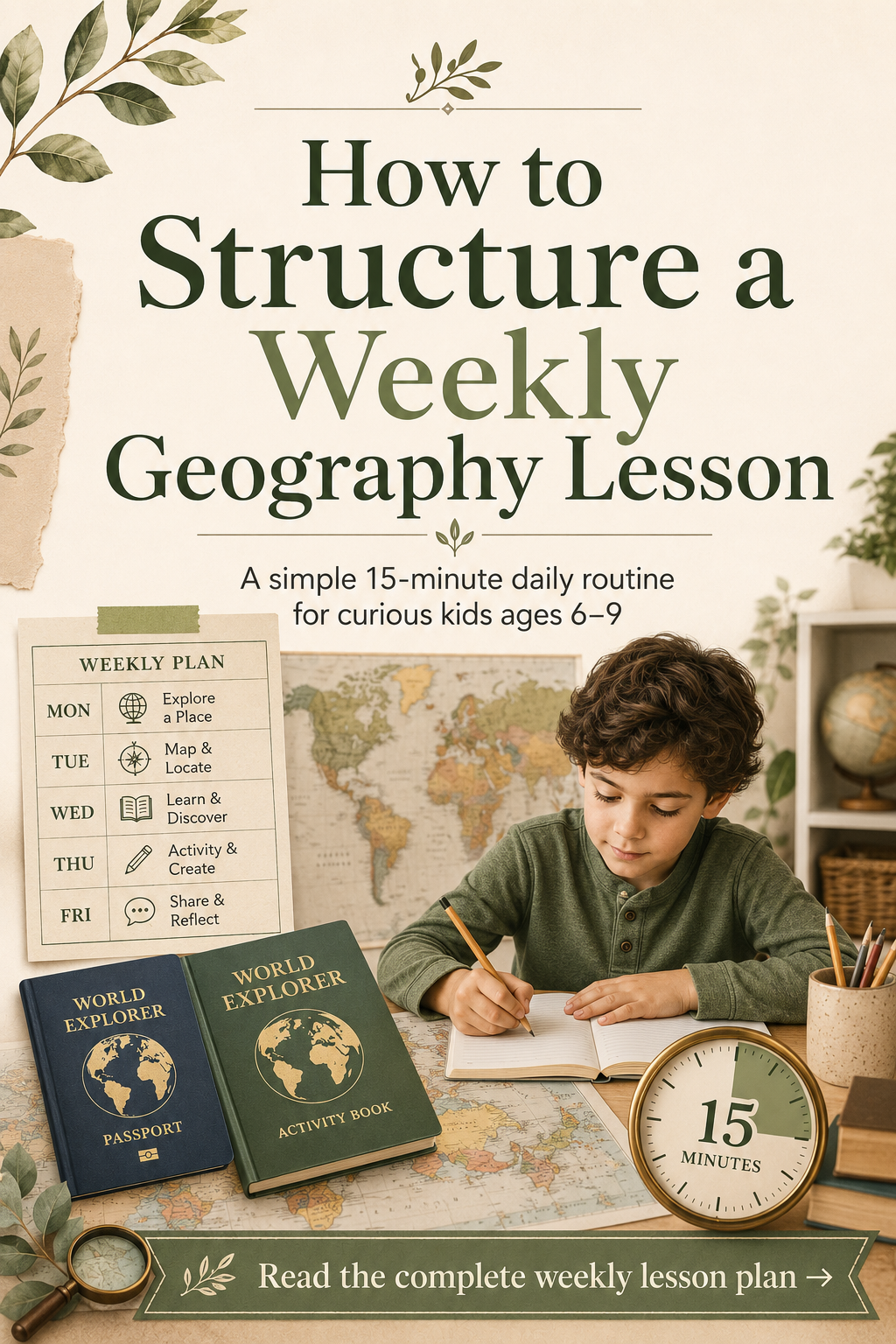
How to Structure a Weekly Geography Lesson: A 15-Minute Daily Routine
If you have ever tried to squeeze a comprehensive social studies curriculum into a busy homeschool week, you know how overwhelming it can feel. Between math manipulatives, language arts, and science projects, setting aside an entire hour for geography often leads to frustration, lost focus, and ultimate burnout. But what if you didn’t need an hour? What if the secret to raising culturally empathetic, globally aware children lies in a simple weekly geography routine that takes just 15 minutes a day?
In the world of childhood education, consistency always triumphs over intensity. Long, exhaustive lectures rarely stick in a 7-year-old’s memory. However, brief, daily touchpoints that combine visual mapping, tactile storytelling, and gamified rewards create deep, lasting neural connections without triggering cognitive overload.
Whether you are a seasoned homeschooler or a parent looking to supplement your child’s evening learning, structuring a sustainable weekly geography routine is easier than you think. Here is your complete, open-and-go blueprint for transforming global discovery into a stress-free, 15-minute daily adventure!
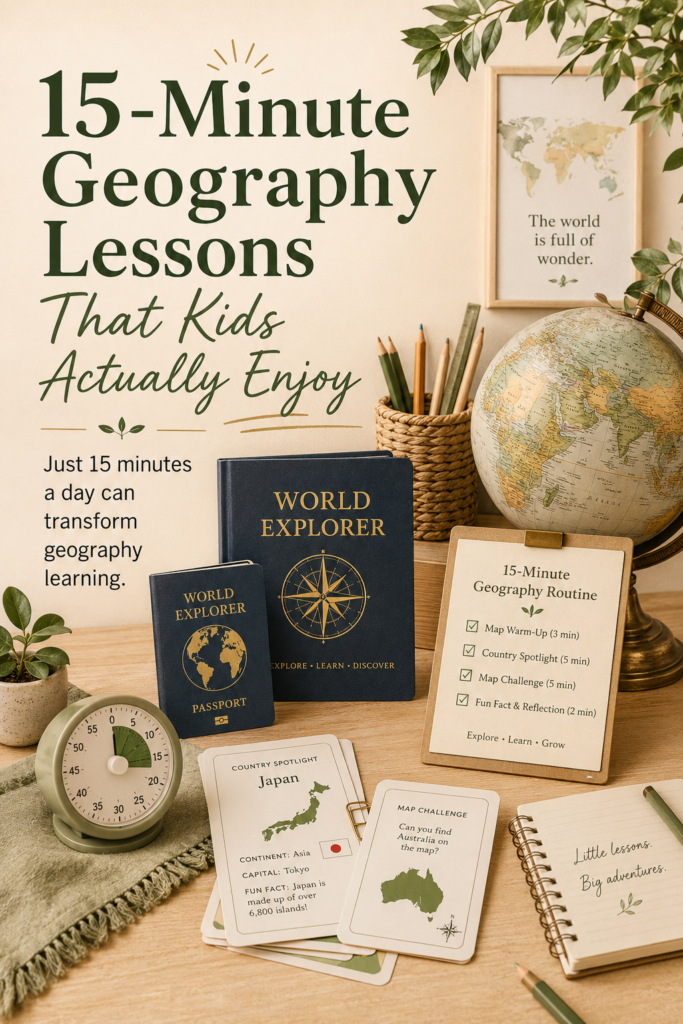
Why Micro-Learning Works: The Science of the 15-Minute Habit
Before diving into the daily schedule, it is essential to understand why short, bite-sized lessons are superior for elementary-aged learners (ages 6 to 9):
- Cognitive Load Theory: Young brains have a limited working memory capacity. When presented with too many facts, dates, and map coordinates at once, the brain simply dumps the information. A 15-minute session keeps focus sharp and ends the lesson while curiosity is still high.
- The Spaced Repetition Effect: By revisiting a single global region across five consecutive days for just a few minutes, children reinforce their memory pathways. (To understand how structured repetition boosts retention, read our guide on why educational games help kids learn better.)
- Zero Prep Time for Parents: A micro-routine eliminates parent burnout. You don’t need to spend Sunday evenings building elaborate dioramas; you simply open the activity book, set a timer, and explore together.
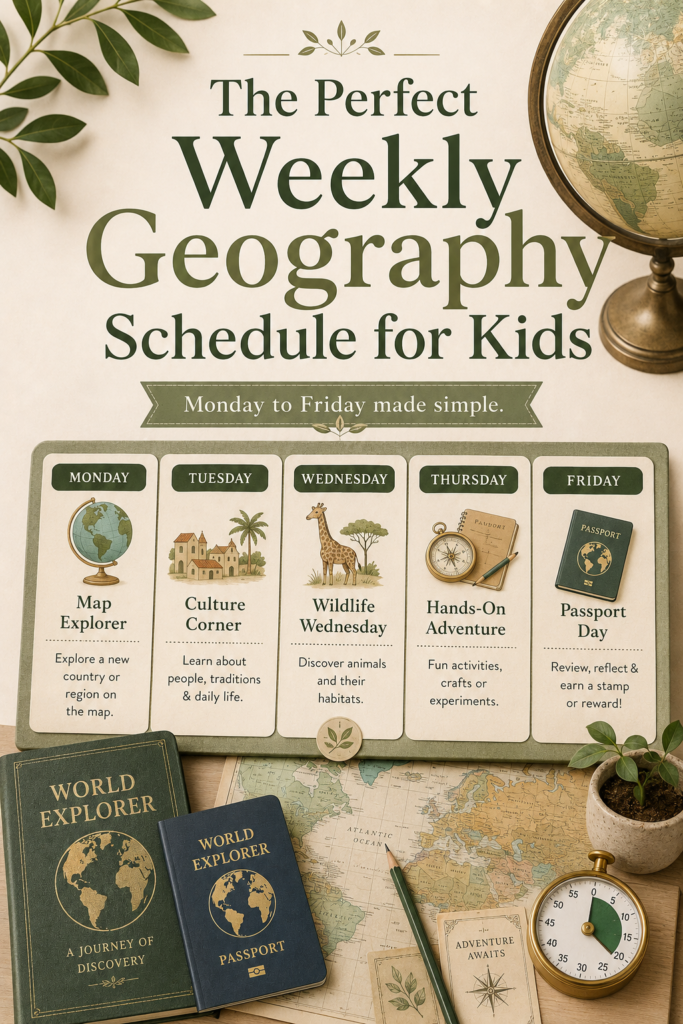
The 5-Day Blueprint: Your 15-Minute Weekly Geography Routine
To keep lessons engaging without feeling repetitive, assign a specific «theme» to each day of the week. This structured variation ensures that children develop spatial awareness, cultural empathy, STEM reasoning, and creativity all within one cohesive unit.
Monday: Map It Out (Spatial Awareness & Foundations)
- Time Allocation: 15 Minutes
- The Goal: Orient the child in the world and establish physical geography.
- The Activity: Start the week by introducing the target continent or country. Open your world map or globe and let the child physically point to the location. Discuss its borders, surrounding oceans, and hemisphere. Have the child color in the region on a blank map, tracing the coastline and noting major mountain ranges or rivers.
- Parent Tip: Ask orienting questions: «Is this country colder or warmer than ours based on how close it is to the equator?» or «What ocean would we cross to fly there?»
Tuesday: Culture & Curiosity (Symbols & Storytelling)
- Time Allocation: 15 Minutes
- The Goal: Connect with the human element of geography through symbols and traditions.
- The Activity: Today is all about visual culture. Introduce the country’s national flag, explaining the history behind its colors and symbols. Check out a local folk tale from the library, or read a short illustrated passage about traditional clothing, festivals, or daily life for a child living in that region.
- Parent Tip: Let your child color or draw the national flag in their notebook while you read aloud to keep their hands busy and their mind focused.
Wednesday: Wonders & Wildlife (STEM Integration)
- Time Allocation: 15 Minutes
- The Goal: Explore natural biomes, famous landmarks, and native animals.
- The Activity: Geography is deeply tied to earth science! Dedicate Wednesday to discovering the unique ecosystems of the region. Are there towering rainforests, arid deserts, or deep fjords? Investigate one famous natural or man-made landmark (like the Great Barrier Reef or the Eiffel Tower) and highlight 2–3 native animals that thrive in that habitat. (Explore why animal connections are so powerful in our article on how animal activity books make learning more fun.)
Thursday: Hands-On Connection (Tactile Play & Problem-Solving)
- Time Allocation: 15 Minutes
- The Goal: Solidify knowledge through interactive, screen-free puzzles.
- The Activity: Put away the reading materials and let the child actively interact with what they’ve learned. Give them an age-appropriate activity page: solving an iceberg maze in Antarctica, decoding a secret message using ocean currents, or matching native animal tracks across the African savanna. Tactile problem-solving transforms abstract geographical facts into concrete mastery.
Friday: Passport Stamp & Reflection (Gamified Progression)
- Time Allocation: 15 Minutes
- The Goal: Celebrate completion, review key takeaways, and reward progress.
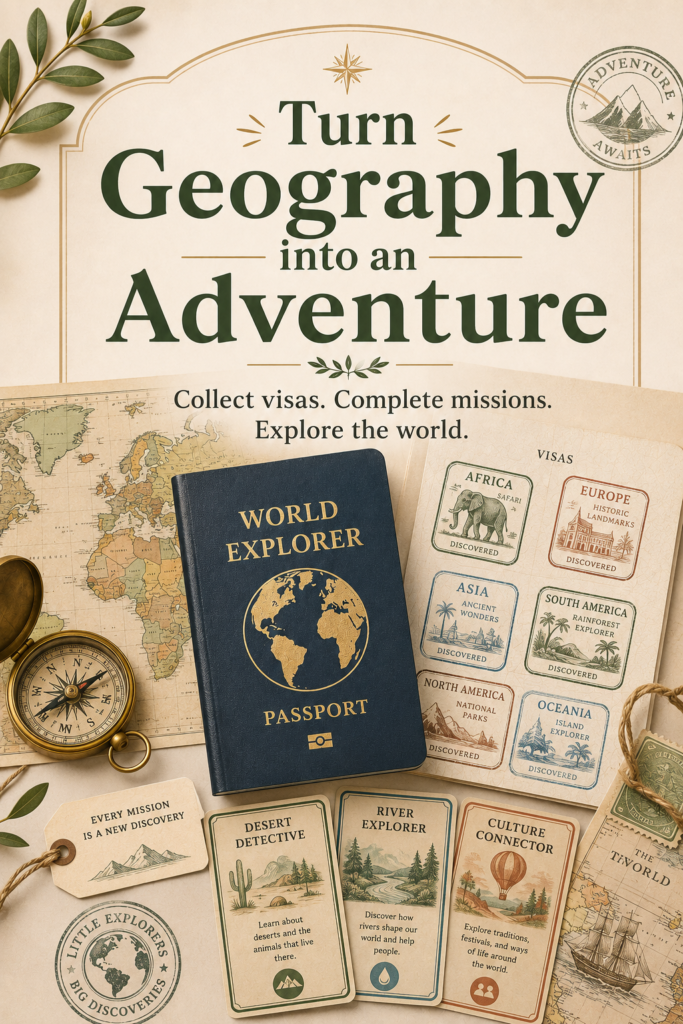
- The Activity: Friday is celebration day! Ask your child to share their favorite fact from the week. Once they demonstrate understanding, they earn their official progression reward. Let them cut out an official badge or visa stamp and paste it directly into their personalized explorer journal. This gamified closing creates a massive sense of accomplishment and builds anticipation for next week’s destination! (Learn more about the power of tangible rewards in our guide on why kids learn geography better through adventures and progression.)
Summary Table: The 15-Minute Daily Schedule at a Glance
| Day of the Week | Daily Theme | Core Focus Skill | Sample Activity |
| Monday | Map It Out | Spatial Awareness | Locating borders & coloring regional maps |
| Tuesday | Culture & Curiosity | Cultural Empathy | Decoding national flags & reading folklore |
| Wednesday | Wonders & Wildlife | STEM & Biology | Exploring biomes, landmarks & native animals |
| Thursday | Hands-On Connection | Problem-Solving | Solving regional mazes, codes & matching games |
| Friday | Passport Reflection | Gamified Progression | Earning & pasting the official Visa Stamp |
How to Execute This Routine with Zero Prep: The World Explorer Solution
While this 15-minute weekly geography routine sounds simple on paper, finding and printing separate maps, flag coloring sheets, animal puzzles, and badges every single Sunday can quickly become a chore.
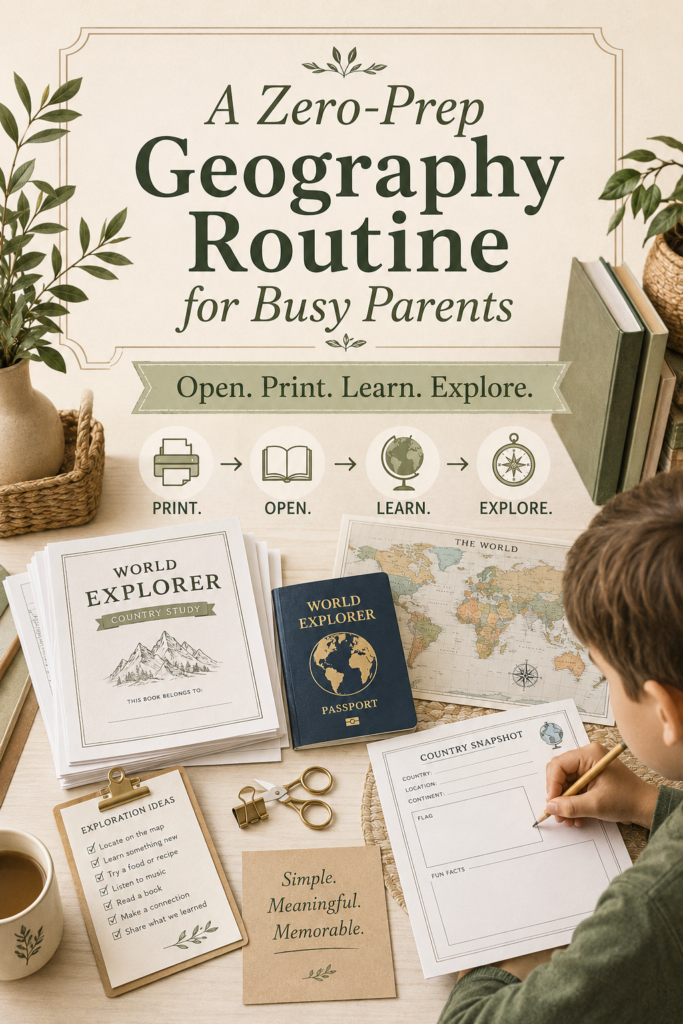
That is exactly why we created the World Explorer Series by Tiny Joy Studio. It is a complete, print-on-demand ecosystem designed specifically to execute this 5-day micro-routine without a single minute of parental prep time!
Here is how the system perfectly aligns with your new weekly schedule:
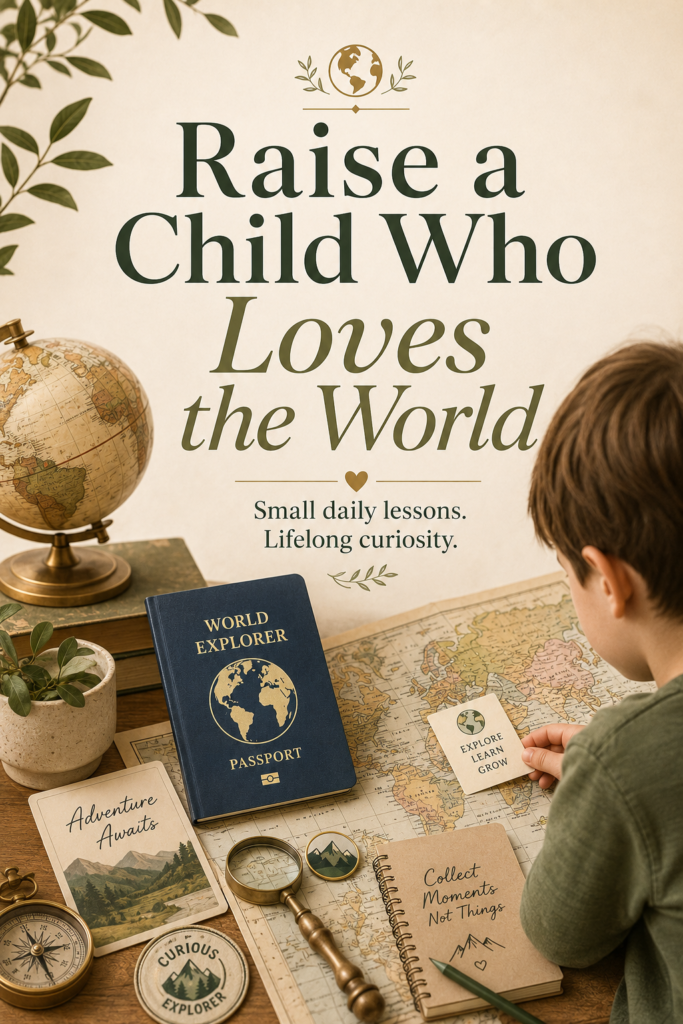
- Start with the Universal Passport: Your child begins by customizing their official World Explorer Passport. This serves as their master journal for Friday celebrations, featuring 38 dedicated slots for earned badges and visas.
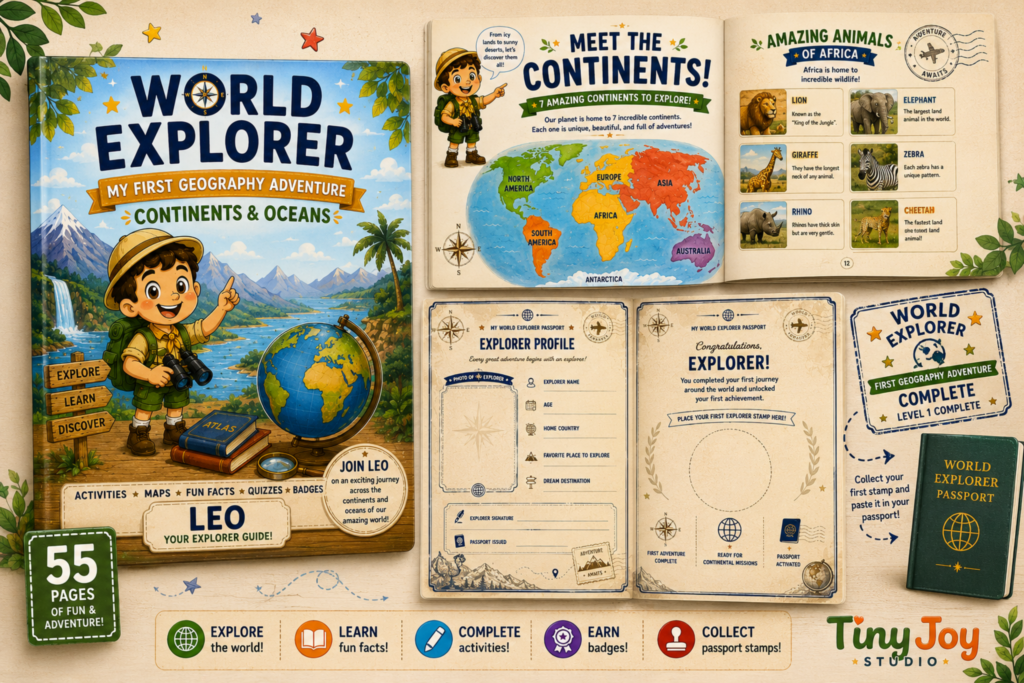
- Master the Basics (Level 1): Use the Continents & Oceans Activity Book for your foundational weeks. It provides the exact maps, ocean current decoders, and spatial puzzles needed for Monday through Thursday lessons.
- Explore the Continents (Level 2): Spend 8 weeks diving into broad regional ecosystems, earning colorful continental badges along the way.
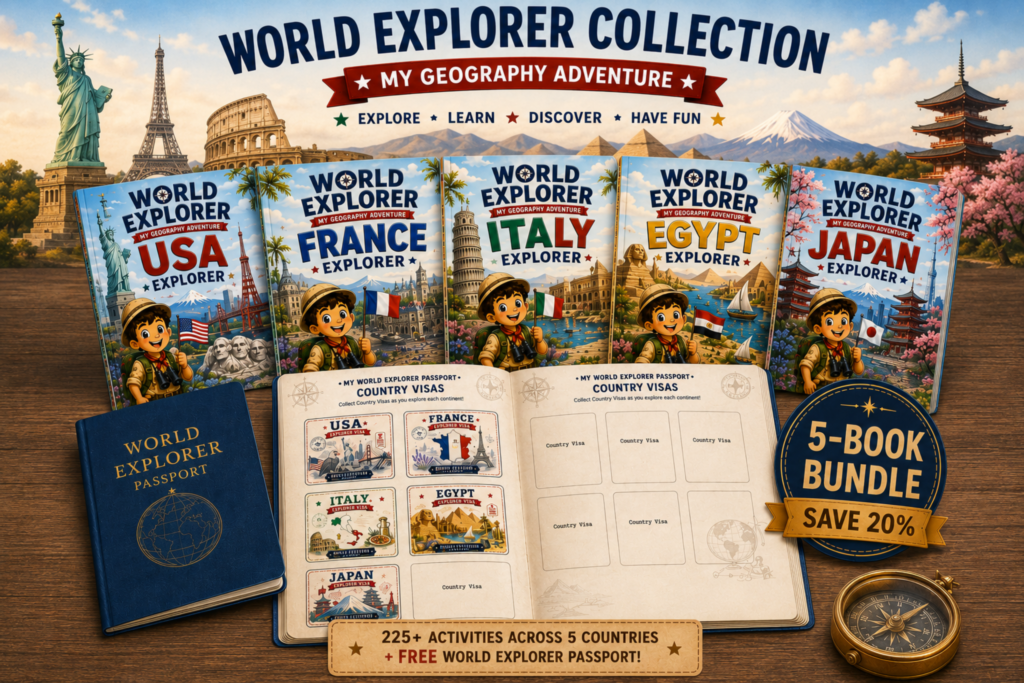
- Zoom in on Countries (Level 3): Embark on a 30-country world tour! Each dedicated country unit comes pre-loaded with flag decoding, cultural highlights, famous landmarks, and the all-important cut-out Country Visa Stamp for Friday’s reward session.
Because the entire curriculum is digital and instant-download via Etsy, you can print exactly what you need, when you need it. If your child makes a mistake or wants to revisit Japan or Brazil next semester, simply print the activity pages again!
Final Thoughts: Small Steps, Global Minds
You do not need hours of daily instruction or expensive, bulky curriculum boxes to raise a child who loves and understands the world. By implementing a structured, 15-minute weekly geography routine, you replace homeschool stress with joyful, bite-sized discovery.
When you sit down together for just fifteen minutes a day to color a map, decode a flag, or paste a new visa stamp into a passport, you are building more than geographic knowledge—you are nurturing a lifelong global citizen.
Ready to launch your 15-minute daily adventure? Download the foundational Level 1: Continents & Oceans Activity Book and the Universal Passport System today from the Tiny Joy Studio Etsy Collection, and watch your child’s world expand tomorrow!