10 Fun Geography Activities: How to Turn an Antarctica Expedition into a Screen-Free Adventure
Every parent knows the feeling: you buy a beautiful, expensive encyclopedia about our planet, your child flips through it for exactly ten minutes, and then the book is relegated to a dusty shelf. Meanwhile, they are right back to staring at their tablets.
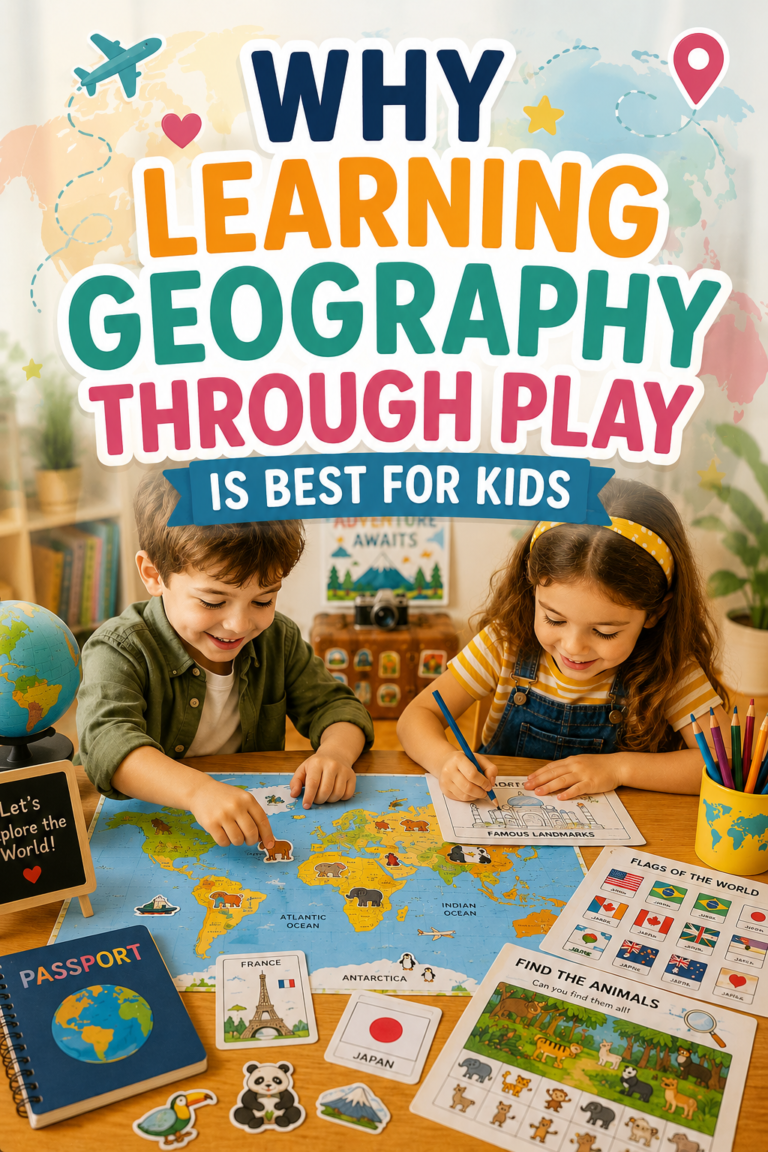
Why does this happen? Modern children don’t just want to read facts passively. Growing up with interactive apps and fast-paced videos, they need to act, explore, and feel like the main heroes of their own learning journey.
If you want to break the screen cycle, the secret lies in educational gamification. By transforming lessons into interactive quests, you can easily introduce fun geography activities that your kids will actually beg to do. And there is no better place to start this frosty adventure than the most mysterious, extreme continent on Earth: Antarctica!
Why Antarctica is the Ultimate Interactive Learning Playground
When we think of travel, we often think of tropical jungles or historic European cities. But to a child’s vivid imagination, Antarctica is basically outer space on Earth. It’s a land of extremes that naturally triggers curiosity.
By centering your lesson plans or weekend projects around the frozen continent, you can effortlessly introduce core scientific concepts.
- Wildlife Superheroes: How do Adelie penguins survive -50°C temperatures? Why do whales have blubber? This is a fantastic gateway to biology.
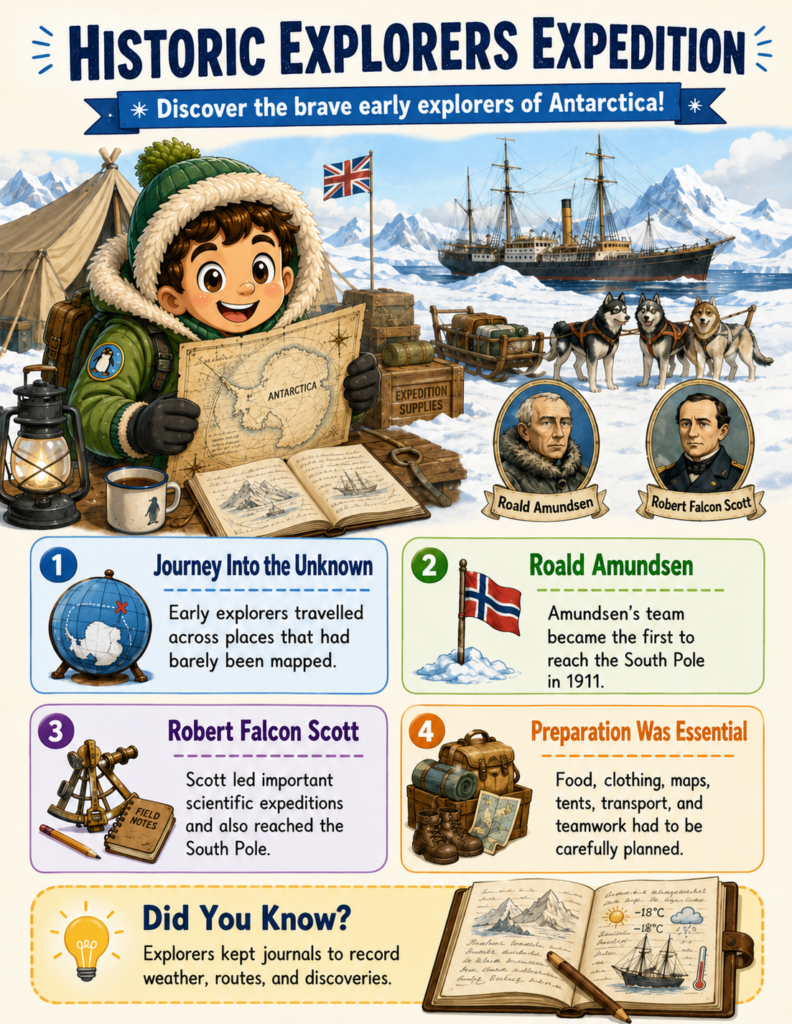
- The Age of Exploration: The dramatic race to the South Pole between Roald Amundsen and Robert Scott teaches kids about history, resilience, mapping, and grit.
- A Continent of Peace: Antarctica is the only place on Earth with no native population or countries—it belongs entirely to science and nature under the Antarctic Treaty.
Before diving deep into the snow, it helps to build a foundational understanding of how to introduce these topics. If you are new to this approach, check out our comprehensive guide on World Explorer Passport: A Fun Way for Kids to Learn Geography Through Adventure to get your bearings.
The Secret Weapon: Passports, Visas, and Secret Codes
How do you keep a 7-year-old engaged without a tablet? You give them a mission.
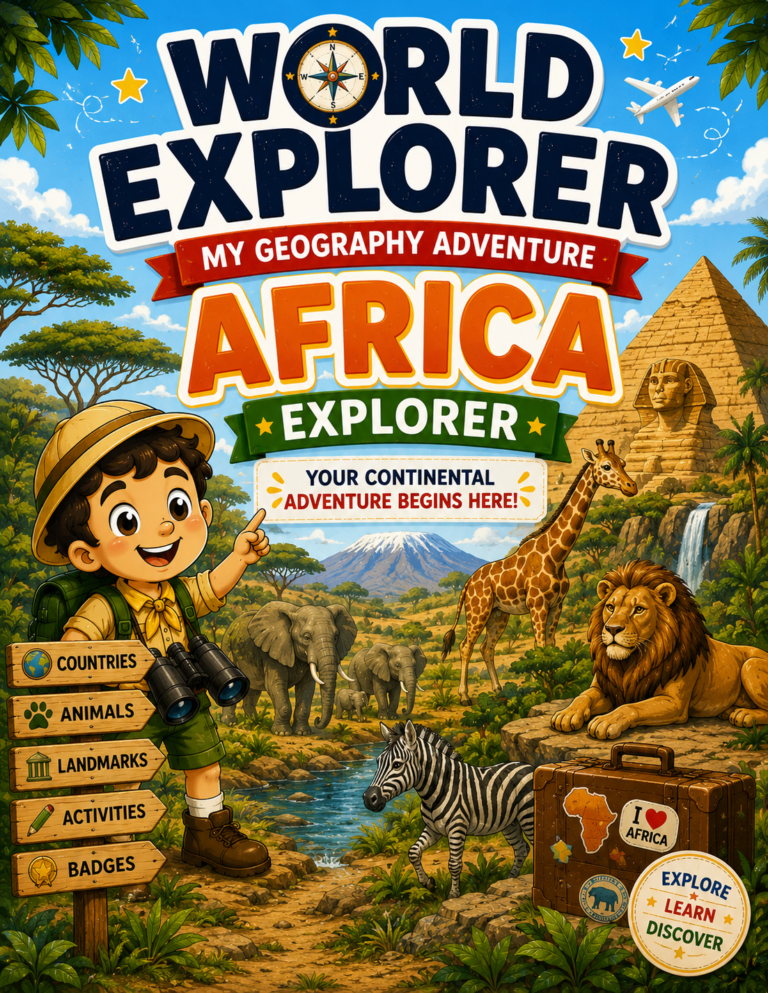
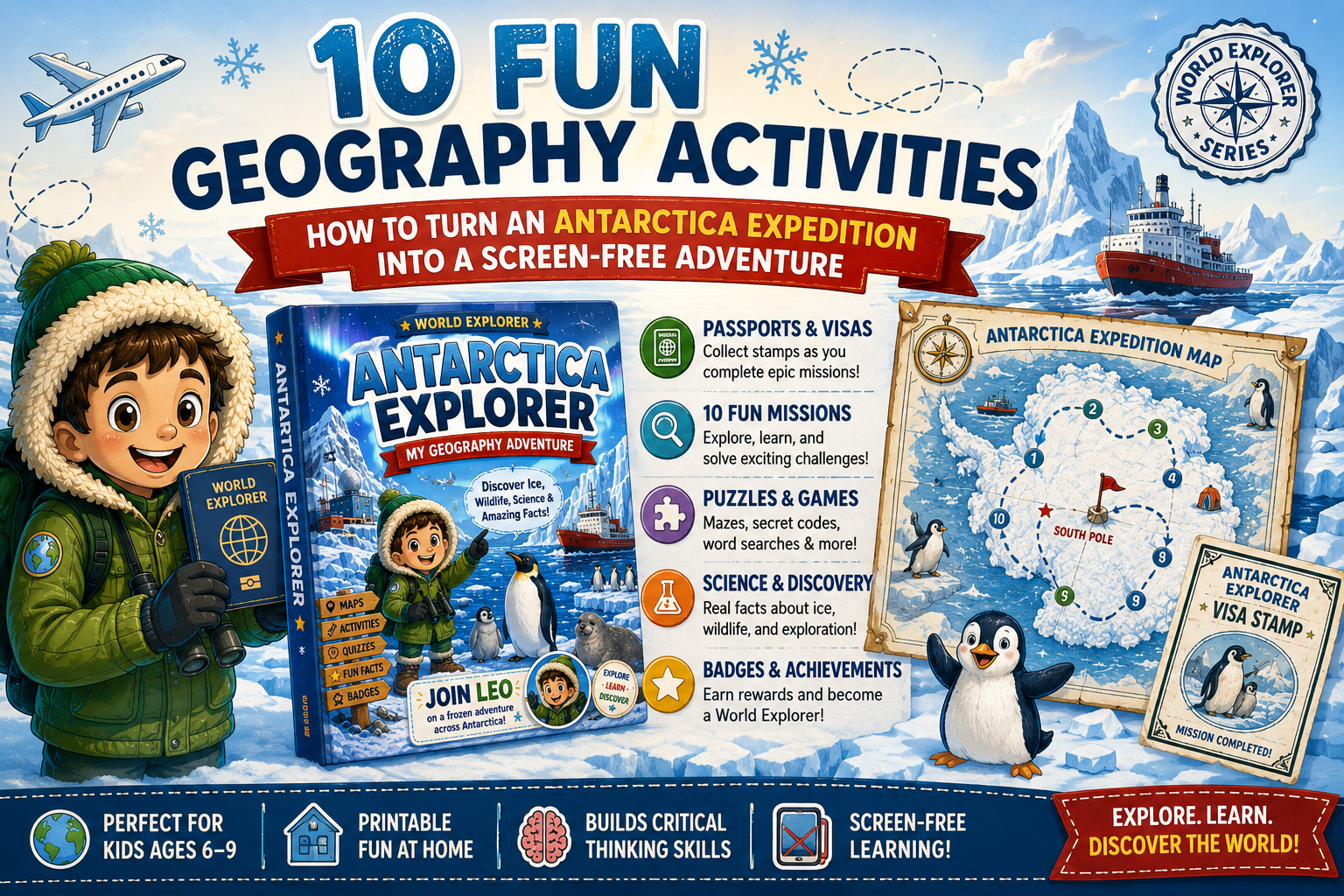
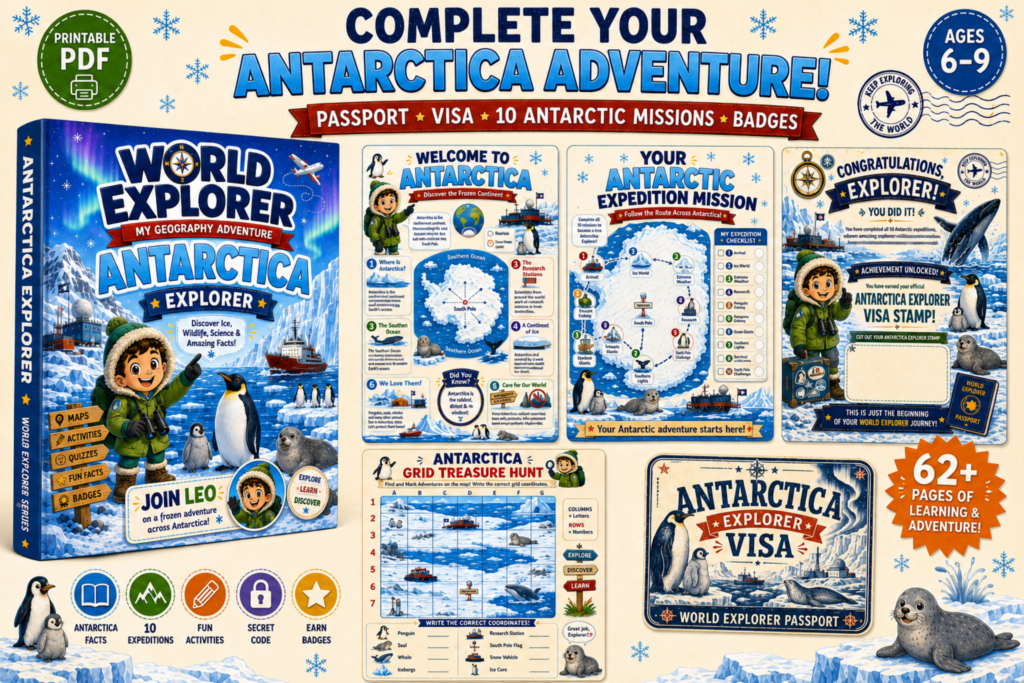
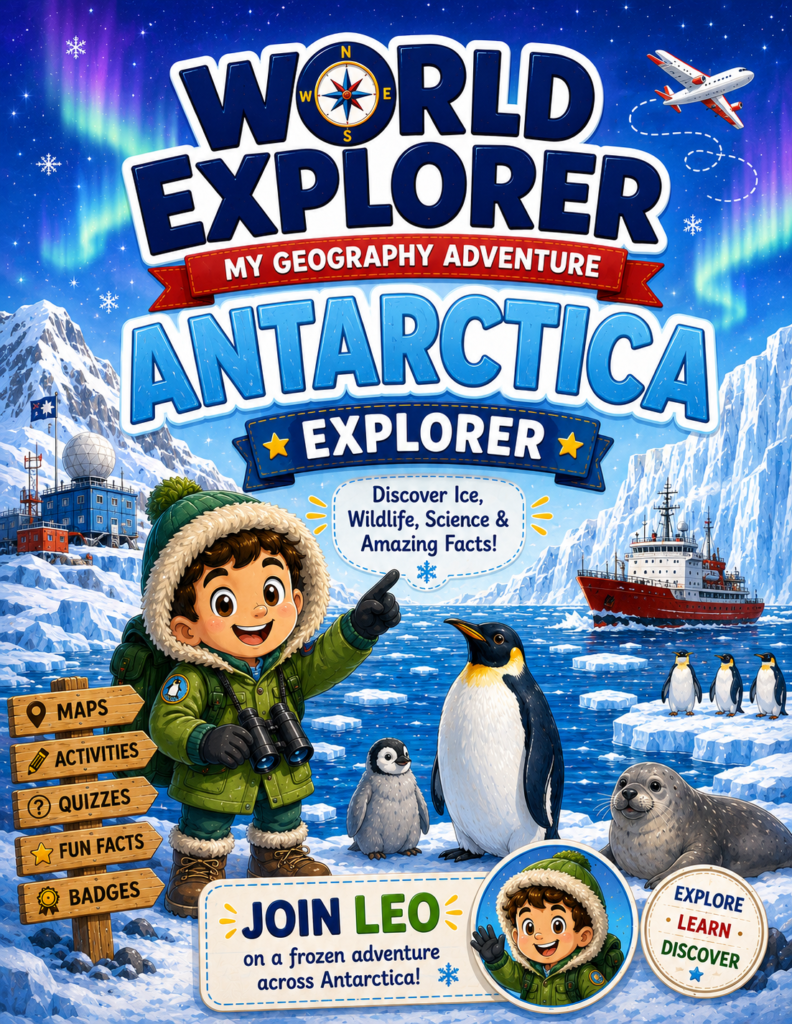
This exact framework is what inspired our brand-new interactive adventure book, Antarctica Explorer (part of the World Explorer Series). Instead of creating a traditional, text-heavy textbook, we designed it as a physical expedition logbook.
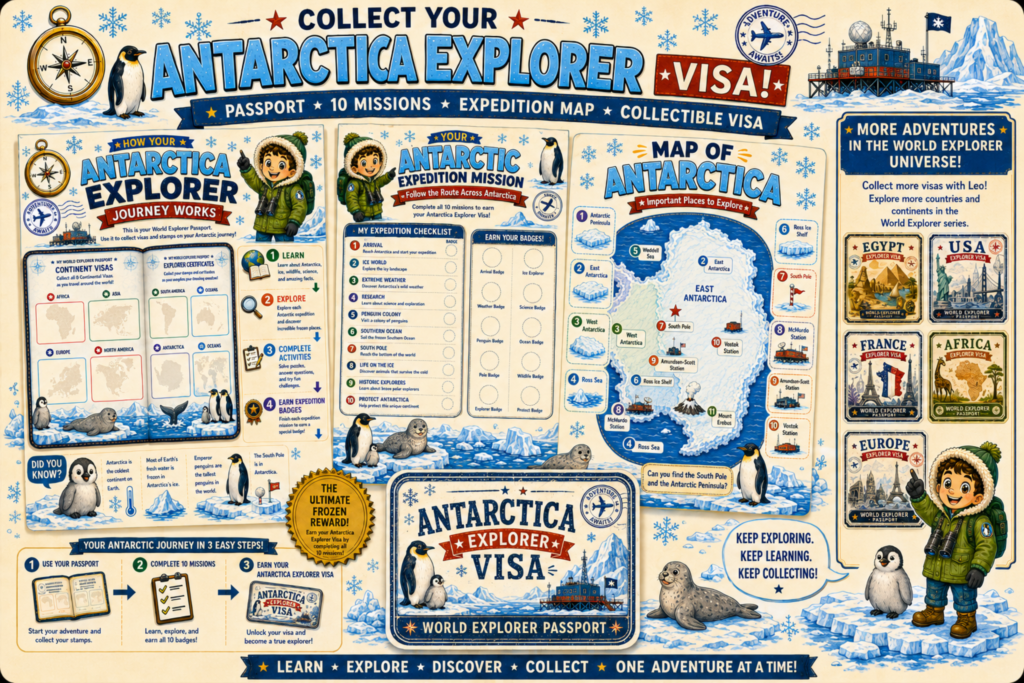
Here is how you can use gamification to create unforgettable fun geography activities at home:
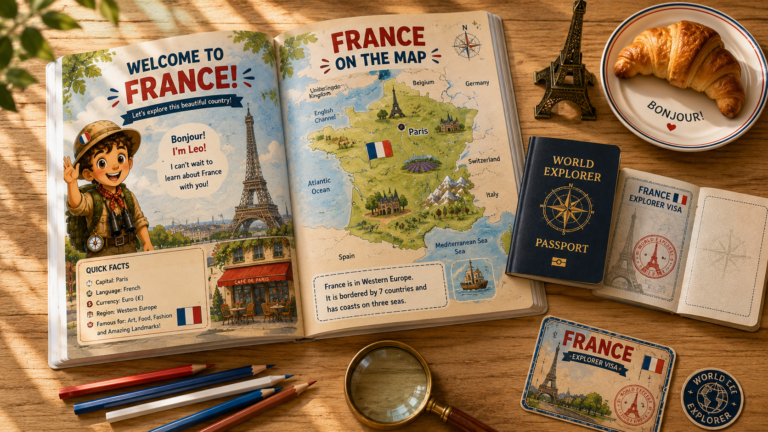
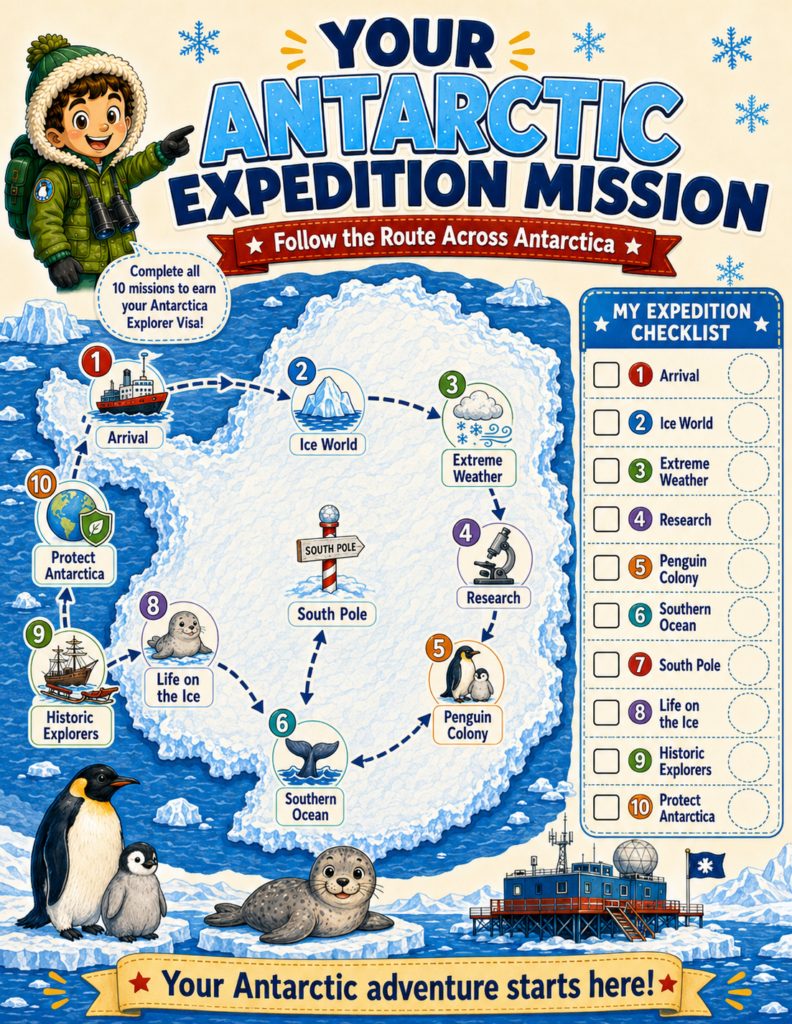
- Activate a World Explorer Passport: Give your child a dedicated «passport» at the start of their studies. In Antarctica Explorer, kids travel alongside Leo, their friendly polar guide. As they complete each of the 10 continental missions, they earn an official Visa Stamp to cut out and paste into their passport. This micro-achievement provides an immense sense of accomplishment!
- Vary the Cognitive Load: To keep young brains from getting fatigued, constantly alternate the types of challenges. Follow up a reading section with an Ice World Maze, an Antarctic Secret Code deciphering puzzle, a coloring page, or a Find & Count visual game.
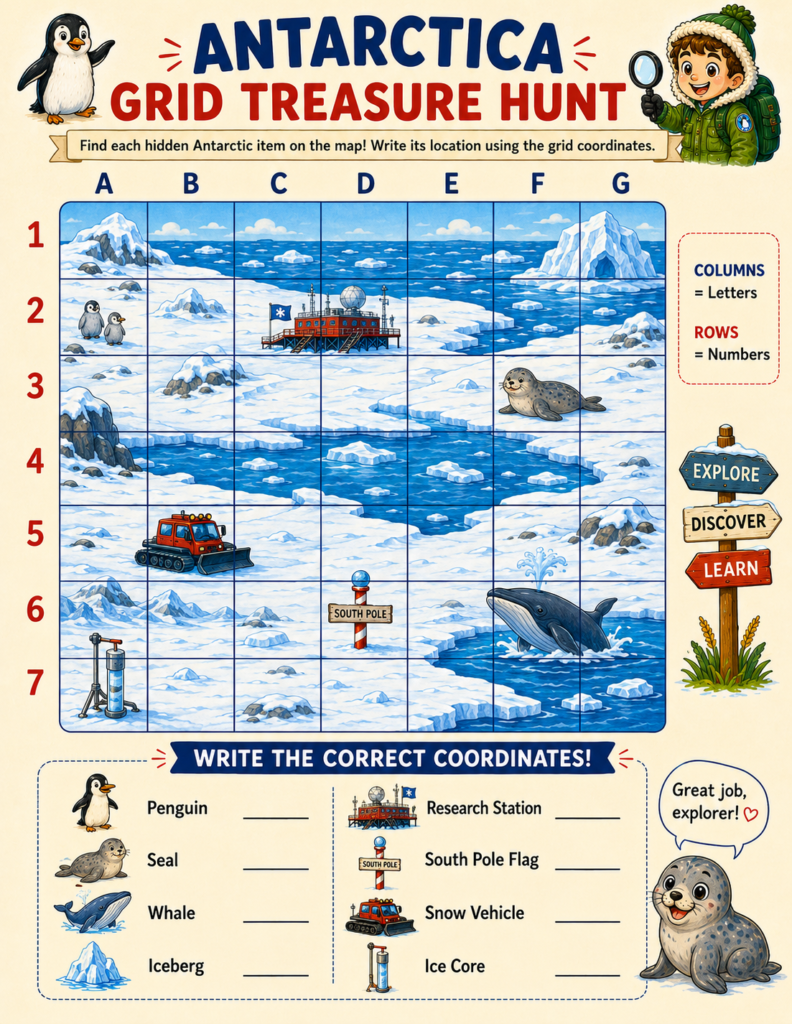
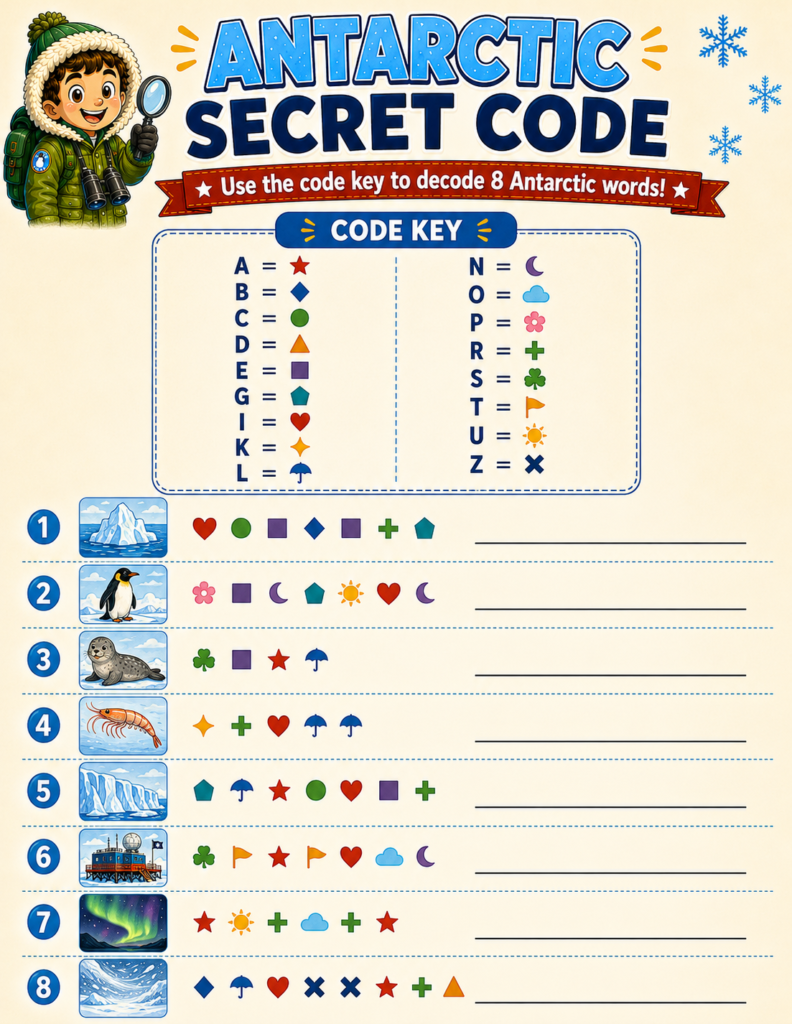
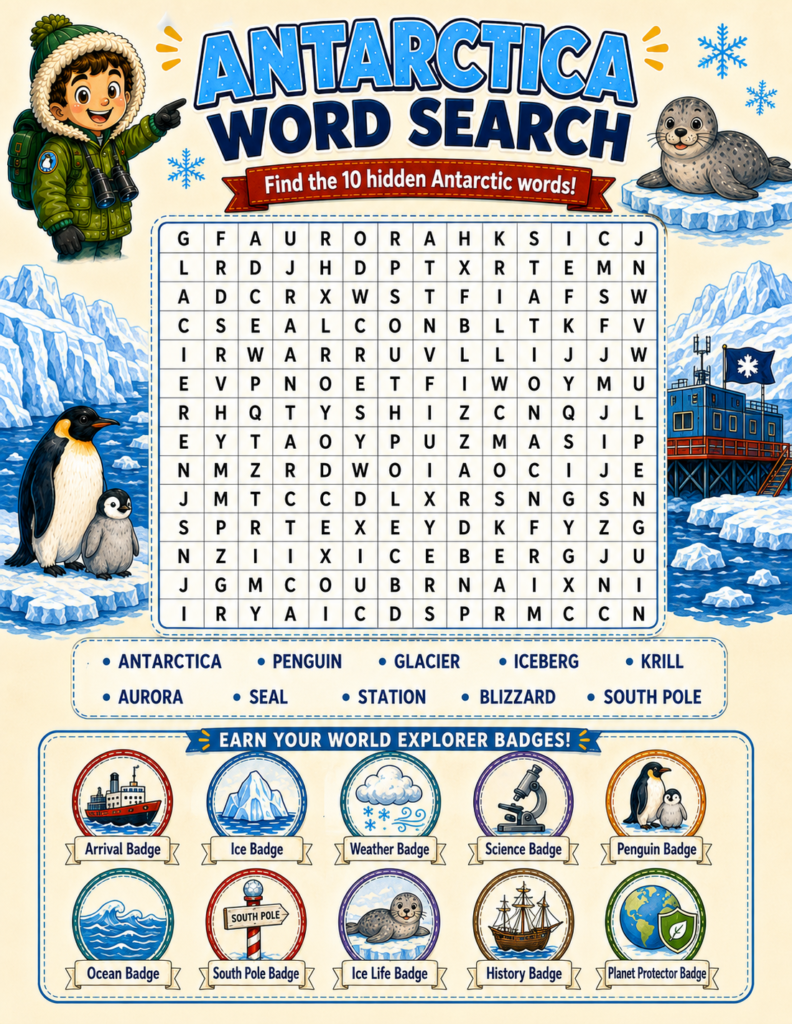
If you want to discover more ways to foster this hands-on mindset across other subjects, take a look at our favorite Why Kids Learn Geography Better Through Adventures, Collections, and Progression.
Developing Core STEM Skills Through Polar Science
Geography doesn’t exist in a vacuum—it is beautifully intertwined with science, technology, engineering, and math (STEM).
When children learn about Antarctica, they aren’t just memorizing capitals; they are discovering how meteorologists measure wind speeds during blizzards, how marine biologists study phytoplankton, and how massive ice sheets affect global sea levels.
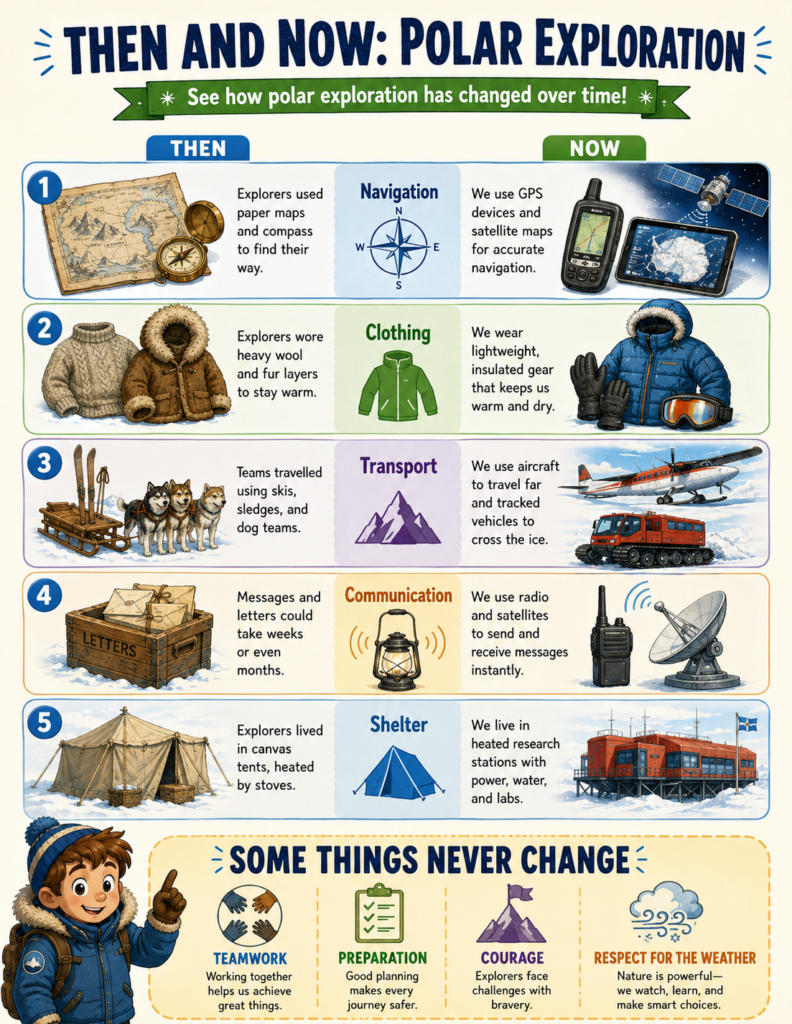
Encouraging this type of critical thinking early on is crucial for cognitive development. For more creative ideas on blending science and outdoor exploration, don’t miss our article on Why Educational Games Help Kids Learn Better: The Science Behind Play-Based Learning.
Bonus Activity: The Quick 5-Minute «Iceberg in a Glass» Experiment
Want to instantly bring your geography lesson to life right now? Try this simple, hands-on activity while discussing glaciers:
- What to do: Fill a clear glass with water and drop a large ice cube inside. Ask your child to look at the glass from the side rather than the top.
- The Lesson: They will instantly notice that the vast majority of the ice cube sits entirely below the water level. This perfectly illustrates the scientific phrase «just the tip of the iceberg» and visually explains how massive, dangerous icebergs navigate the Southern Ocean.
Ready to Set Sail to the South Pole? 🧭
You don’t have to wait for school curriculums to show your children how breathtaking and vast our planet is. Hand them a map, hand them a passport, and let them become the explorers they were born to be.
👉 [CLICK HERE TO EXPERIENCE THE ADVENTURE: GET YOUR COPY OF ANTARCTICA EXPLORER TODAY!]
Does your child prefer reading about exotic wild animals, or do they love solving puzzles and mazes? Let us know in the comments below, and tell us which continent or country you would love to explore next!