How to Raise a Global Citizen: 5 Ways to Teach Empathy
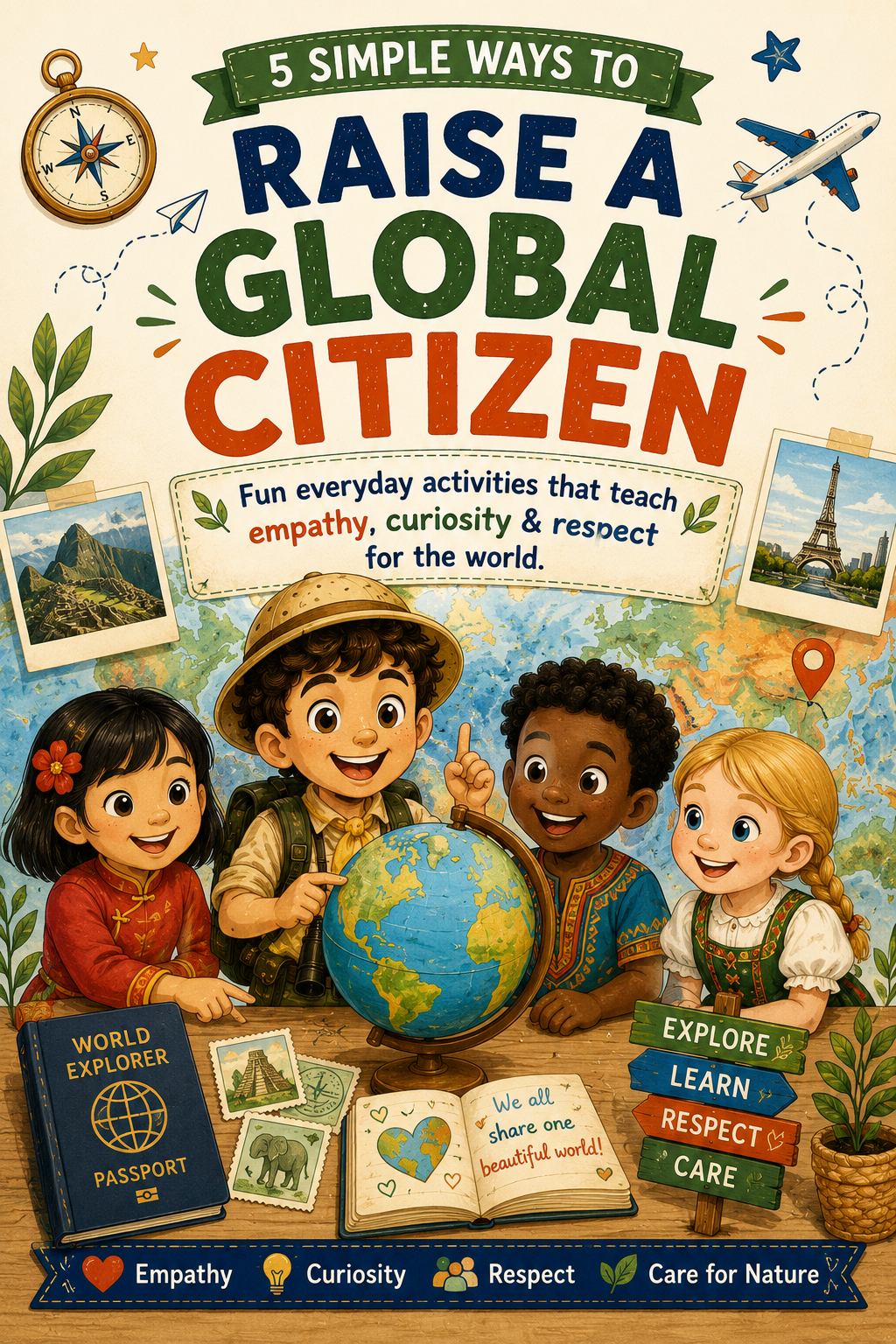
In an era where our world is more interconnected than ever, parents face a brand-new responsibility. We no longer just prepare our children for their local schools or neighborhoods; we prepare them for a globalized world. As parents, we often ask ourselves: How to raise a global citizen who is empathetic, curious, and respectful of diverse cultures, without overwhelming them with heavy political or academic concepts?
To a 6- to 9-year-old child, being a «global citizen» doesn’t mean understanding international diplomacy or memorizing world capitals. It means developing cultural empathy—the ability to look outside their everyday bubble, appreciate differences in how people live, eat, and speak, and recognize that we all share one beautiful, interconnected planet.
If you are struggling to bridge the gap between abstract global concepts and your child’s daily routine, you are not alone. Traditional school textbooks often present world geography as a dry list of borders and exports, which fails to touch a child’s heart. To foster true open-mindedness, we must make exploring the world an engaging, hands-on adventure.
In this guide, we will explore 5 simple, actionable strategies on how to raise a global citizen at home. We will share low-prep activities that spark cultural curiosity, and introduce a passport-based learning series designed to turn global exploration into your child’s favorite hobby.
Why Cultural Empathy Matters in Early Elementary (Ages 6–9)
Before we dive into the practical activities, let’s explore why the ages of 6 to 9 represent a critical window for teaching cultural empathy.
According to child psychologists and Montessori philosophies, children in early elementary enter a developmental stage where they become deeply fascinated by fairness, community, and the wider universe. During these formative years, children naturally begin to notice differences in language, appearance, and lifestyle.
When we actively introduce children to global diversity during this window, three powerful things happen:
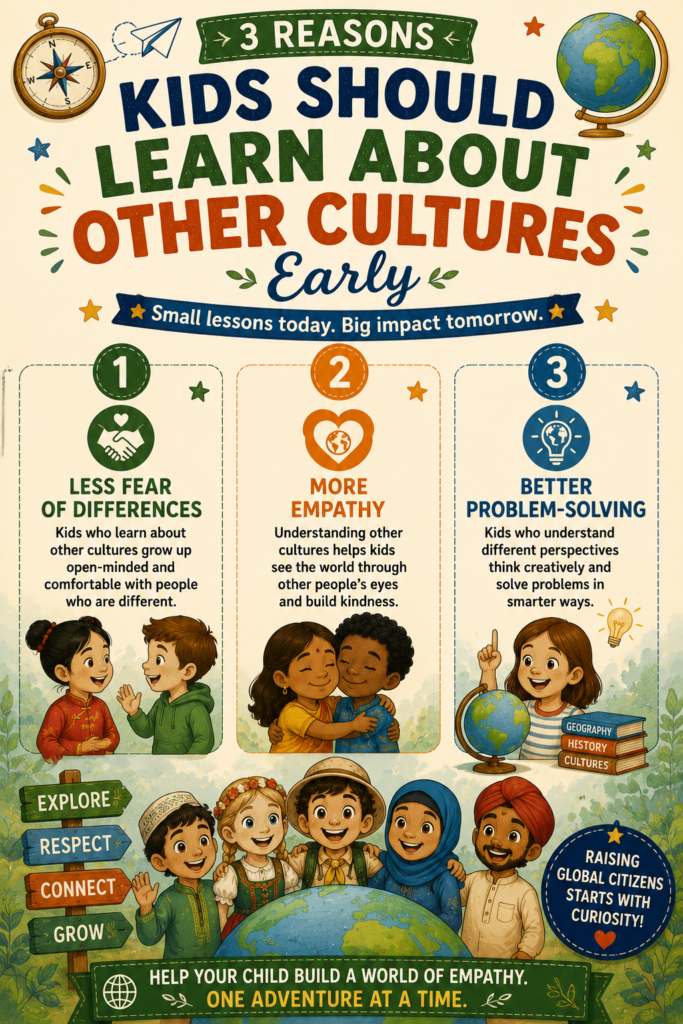
- It Reduces Fear of the Unknown: Familiarizing children with different traditions, homes, and customs eliminates stereotypes before they can take root.
- It Builds Cognitive Flexibility: Learning that people around the world solve everyday challenges—like cooking, building homes, or greeting one another—in different ways encourages creative problem-solving and critical thinking.
- It Fosters Environmental Stewardship: True global citizens understand that actions in one part of the world affect the entire planet—from our interconnected oceans to our shared climate.
(If you want to understand how interactive play deepens these cognitive connections, explore our comprehensive guide on why educational games help kids learn better.)
5 Simple Strategies on How to Raise a Global Citizen at Home
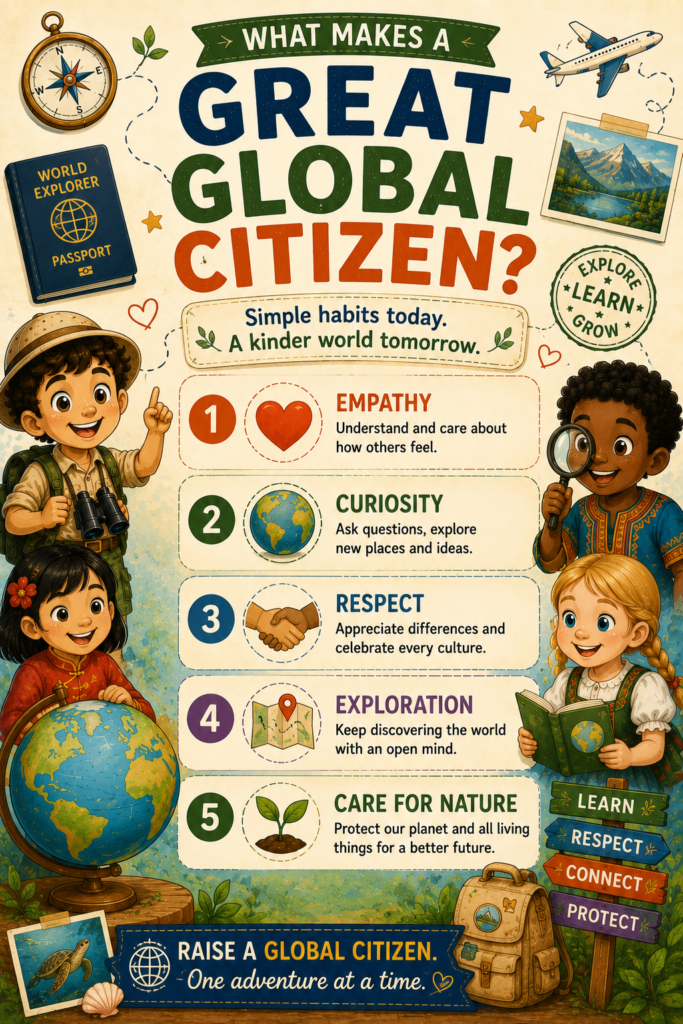
You do not need an international plane ticket or a hefty travel budget to teach your children about the world. Cultivating empathy and a global mindset starts right at your kitchen table. Here are five simple ways to bring the world into your home today:
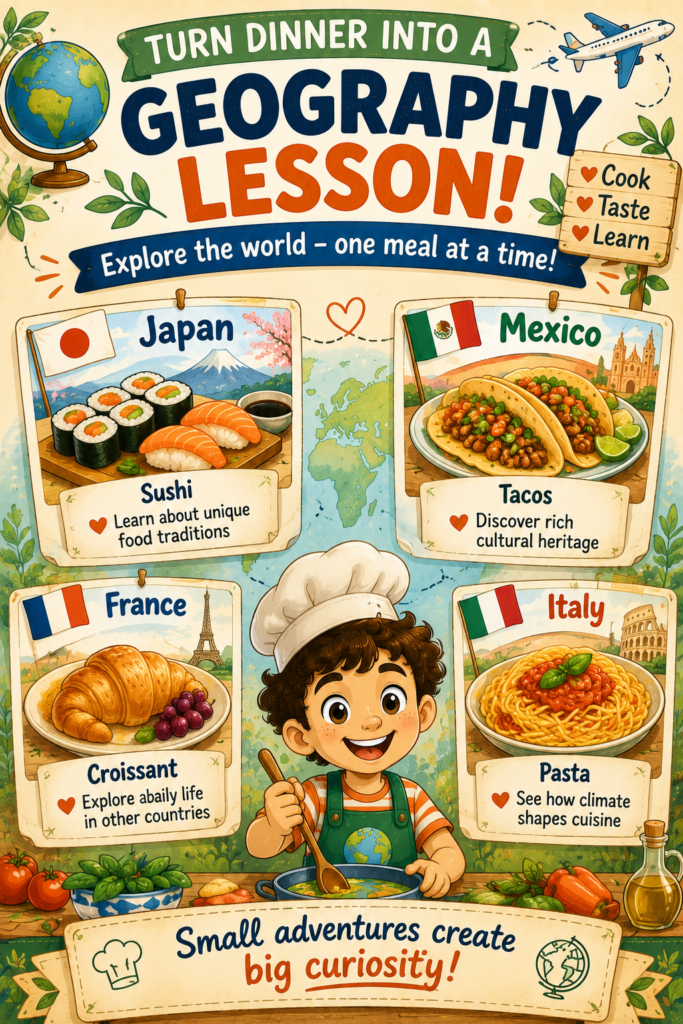
1. Practice «Kitchen Diplomacy» (Explore World Cuisines)
Food is the ultimate universal language. One of the easiest and most sensory ways to build cultural appreciation is through your weekly meal plan.
- The Routine: Dedicate one night a week or one lunch per month as «Global Kitchen Day.» Let your child choose a country on a map or globe—such as Japan, Italy, Mexico, or Ethiopia—and prepare a simple traditional dish together.
- The Empathy Connection: As you chop ingredients, talk about why certain foods grow in specific climates. When trying eating with chopsticks or flatbread instead of forks, discuss how different mealtime traditions bring families together around the globe.
2. Trade Standard Fairy Tales for Global Folklore
Stories shape how children view the world. If your child’s bookshelf only contains characters who look and live just like them, their worldview remains small.
- The Routine: Expand your bedtime reading by introducing folktales, myths, and legends from different continents—such as Anansi the Spider tales from West Africa, or Dreamtime stories from Indigenous Australia.
- The Empathy Connection: Talk to your child about the universal themes in these stories. Ask: «How is this hero similar to the heroes in our favorite stories? What values do we share with the people who wrote this tale?»
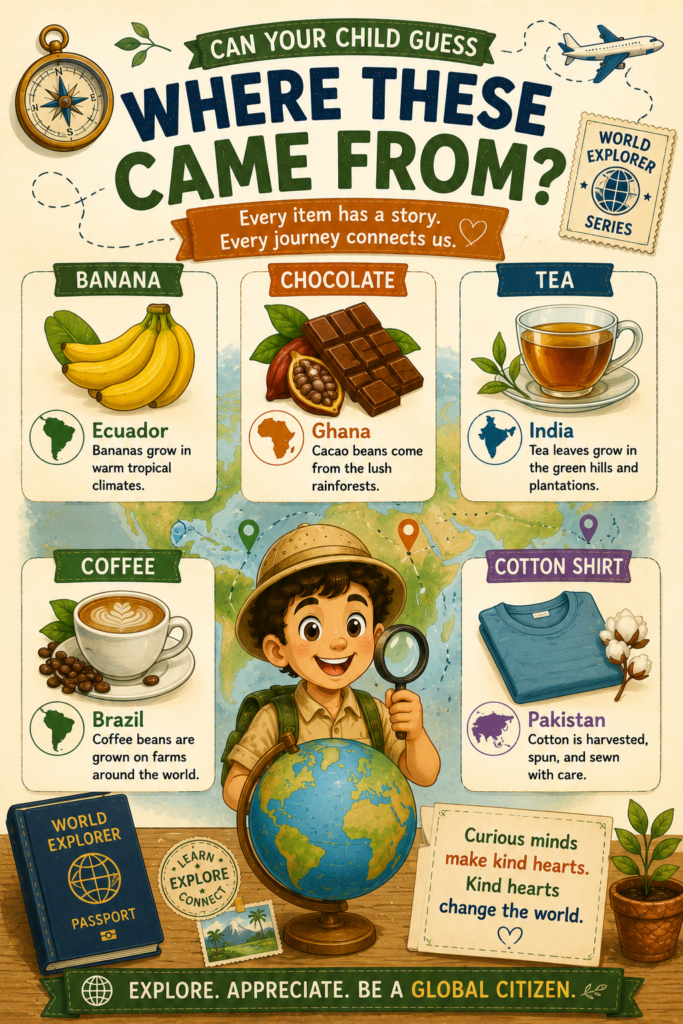
3. Play the «Where Did This Come From?» Game (Everyday Geography)
Children often assume that everything in their home magically appears at the local store. Connecting everyday items to global geography teaches them how deeply we rely on people all over the planet.
- The Routine: Pick three items in your living room or kitchen—a favorite cotton t-shirt, a banana, or a wooden toy. Look at the tags or stickers together to find the country of origin.
- The Empathy Connection: Pull out a world map and trace the journey that item took across oceans and continents to reach your hands. Express gratitude together for the farmers, factory workers, and sailors around the world who made your comfort possible.
4. Connect Empathy to Environmental Care (Become an «Ocean Helper»)
You cannot truly love humanity without respecting the home we all share. A vital pillar of global citizenship is environmental consciousness.
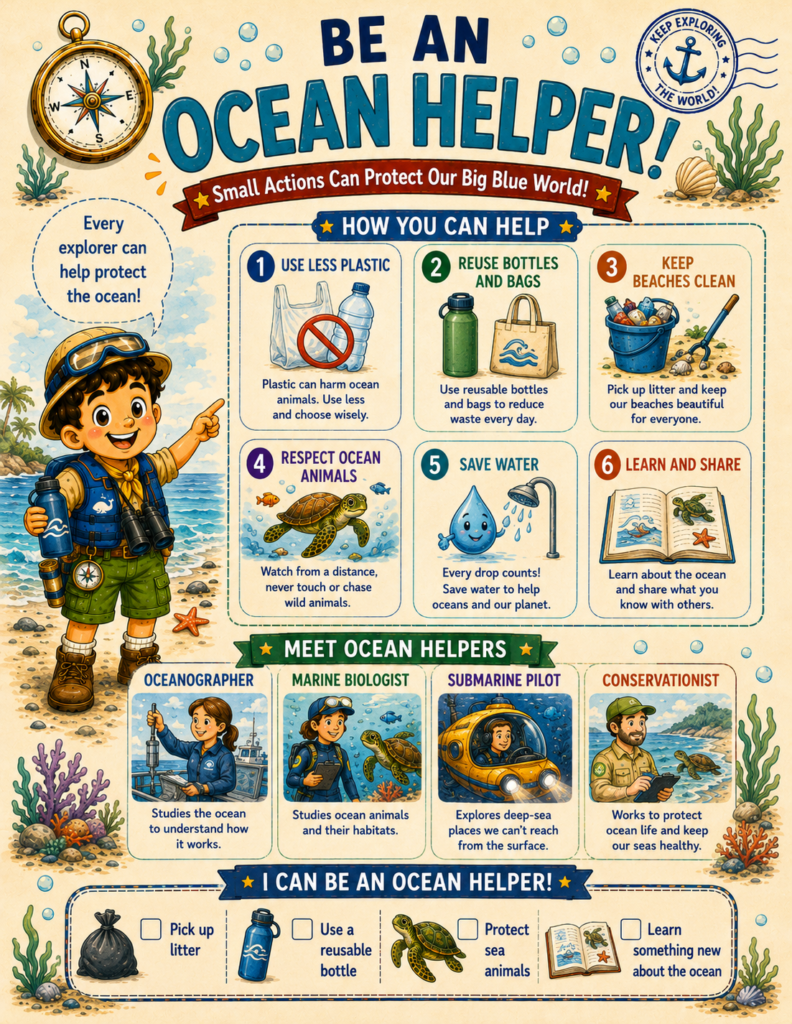
The Routine: Teach your child that our planet’s global ocean connects every continent. Introduce small, actionable daily habits—such as reducing single-use plastic straws, using reusable water bottles, or participating in a local park cleanup.
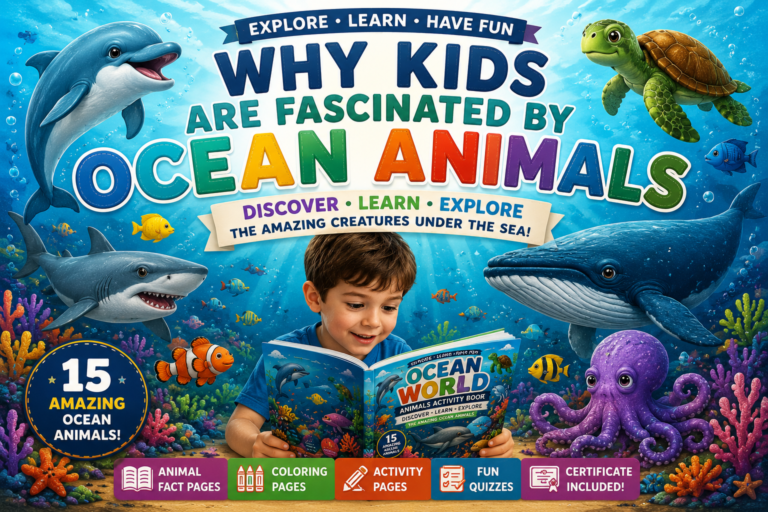
- The Empathy Connection: Frame these habits not as chores, but as missions to protect marine wildlife and coastal communities around the globe. When children realize their personal choices help protect sea turtles and clean the waters shared by children on the other side of the world, geography becomes a personal, compassionate mission.
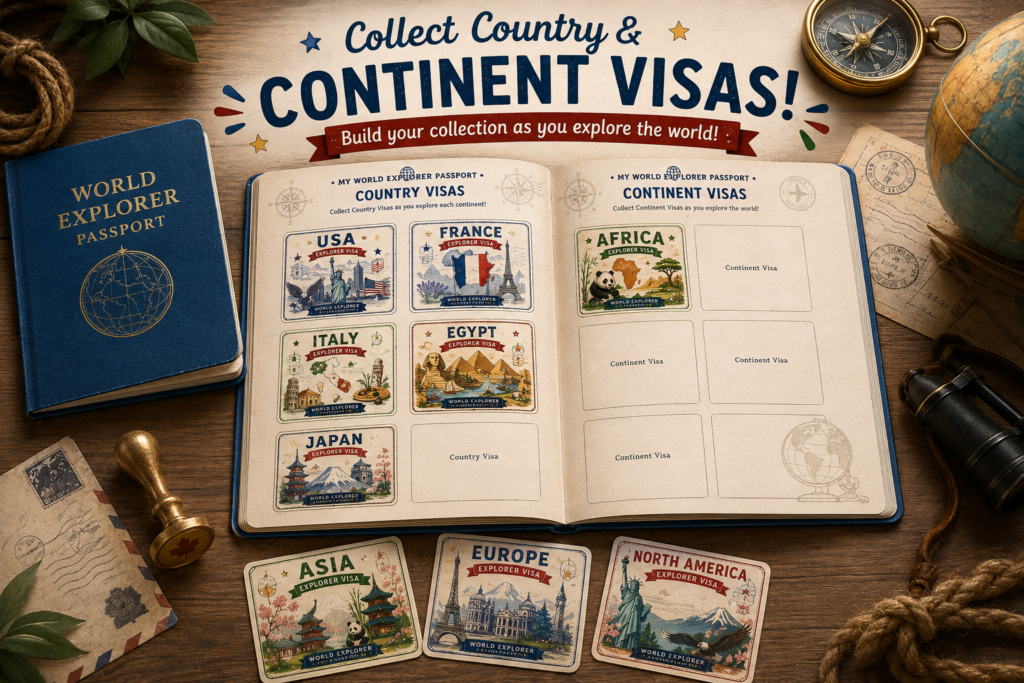
5. Gamify Discovery with a «Universal Passport»
Kids thrive on progression, collections, and tangible rewards. The most effective way to sustain long-term curiosity about the world is to turn learning into a structured, rewarding quest.
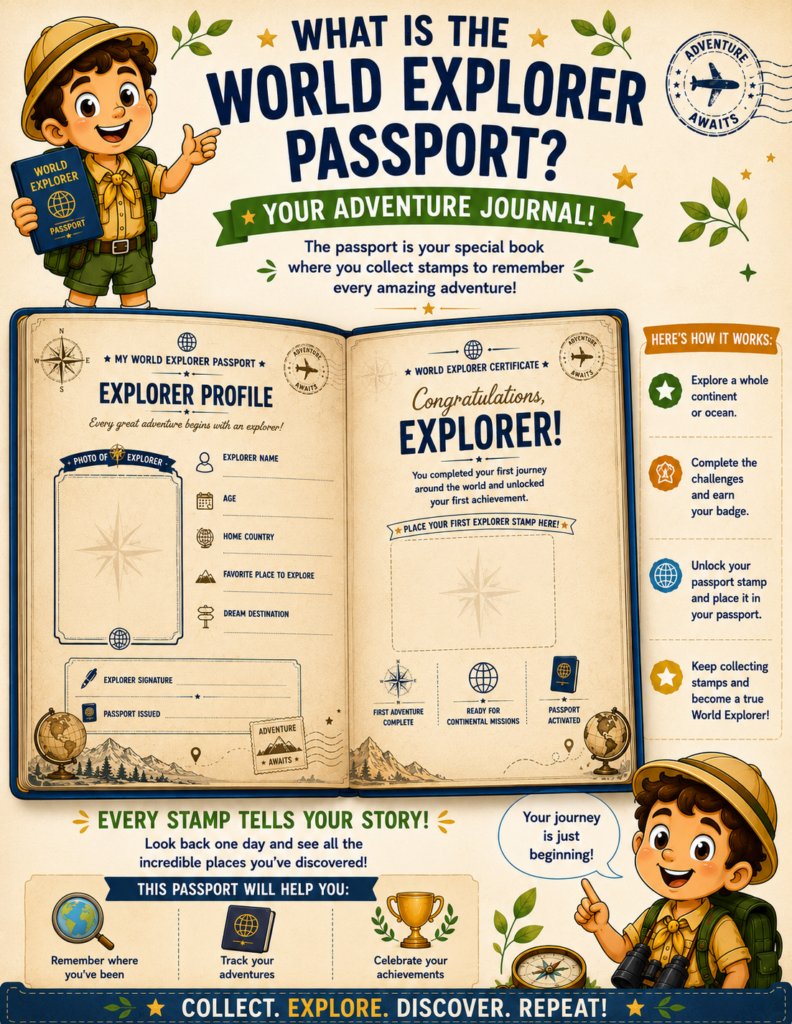
- The Routine: Instead of treating geography as homework, give your child an official «Explorer Profile» and a physical passport booklet. Every time they read about a new culture, complete a mapping puzzle, or try a new international dish, let them glue an official «Visa Stamp» into their journal.
- The Empathy Connection: Visually tracking their journey across continents transforms learning from a passive lesson into an exciting personal identity. They stop being passive consumers and proudly become «World Explorers.» (Discover why this habit is so effective in our breakdown of why kids learn geography better through adventures, collections, and progression.)
At-Home Activity: The «Culture & Climate» Sensory Box
Want to put these global citizenship strategies into practice this afternoon? Try this simple, zero-screen activity that builds spatial awareness and cultural empathy:
- The Setup: Grab an empty cardboard box or a sensory bin. Fill the bottom with dry rice, sand, or blue beads to represent land and water.
- The Mission: Select two contrasting environments on a globe—for example, the icy tundra of Antarctica and the warm, tropical rain forests of South America.
- The Challenge: Ask your child to forage around the house for small toys, fabric scraps, or pictures that belong to each region (e.g., a toy penguin and white cotton balls for Antarctica; a toy parrot and green leaves for South America).
- The Conversation: As your child places the items in the bin, discuss how the climate changes the way animals and humans live, build their houses, and dress. Remind them that despite these different adaptations, everyone on Earth shares the exact same basic needs for warmth, food, and community! (For more ways to integrate animal facts into your lessons, check out our guide on how animal activity books make learning more fun.)
Summary Table: The Global Citizen Toolkit
| Strategy Name | Core Value Taught | Sensory Focus | Prep Time | Best For Ages |
| Kitchen Diplomacy | Cultural Appreciation & Diversity | Taste & Smell | 20 Minutes | 6–9 Years |
| Global Folklore | Shared Human Values & Empathy | Hearing & Imagination | 10 Minutes | 6–9 Years |
| «Where Did It Come From?» | Global Interconnectedness | Touch & Visual Mapping | 5 Minutes | 6–8 Years |
| Ocean Helper Habits | Environmental Stewardship | Action & Daily Routine | Ongoing | 6–9 Years |
| Universal Passport Quest | Long-term Curiosity & Ownership | Visual & Fine Motor (Gluing) | Zero Prep (with tools!) | 6–9 Years |
Meet Your Ultimate Global Parenting Tool: The World Explorer Series
If you love the idea of raising an open-minded, culturally empathetic global citizen but simply do not have the hours required to curate global stories, print maps, and design reward trackers after a long workday, there is a beautifully crafted solution ready for your family.
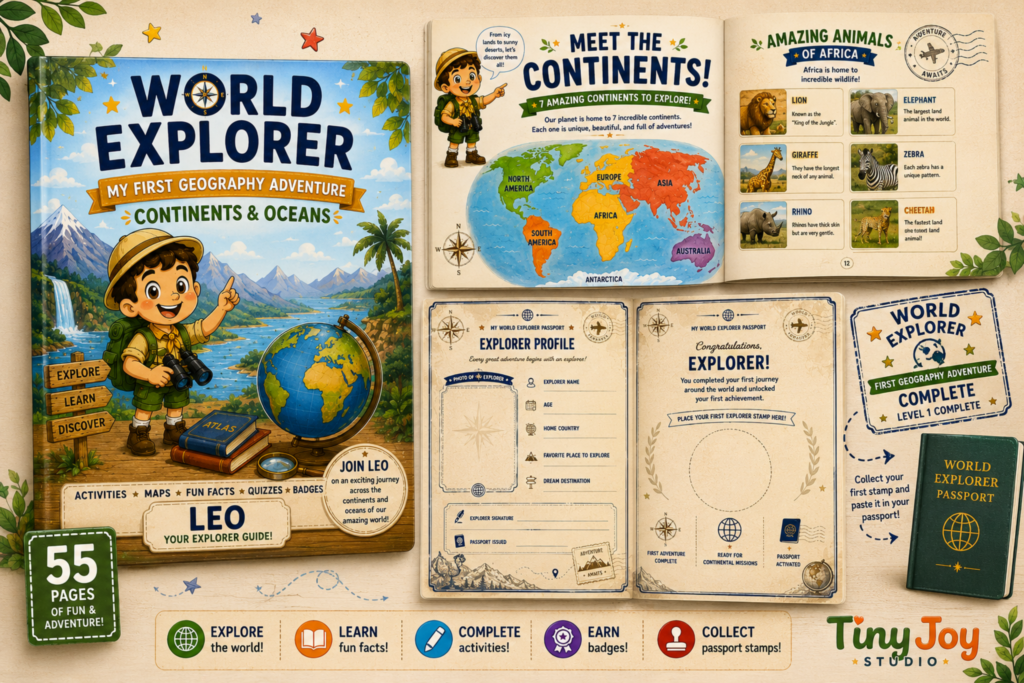
Enter Level 1: Continents & Oceans, the foundational activity book from the acclaimed World Explorer Series by Tiny Joy Studio. Designed specifically for curious 6- to 9-year-olds, this beautifully illustrated guide takes the heavy lifting off parents’ shoulders, replacing screen scrolling with a structured, hands-on voyage across our entire planet.
Why It Builds True Global Citizens:
- The Universal Passport Experience: Every foundational book comes bundled with an exclusive World Explorer Passport. Your child begins by filling out their official explorer profile, drawing their self-portrait, and signing their name. From day one, they step into the empowering role of a global explorer.
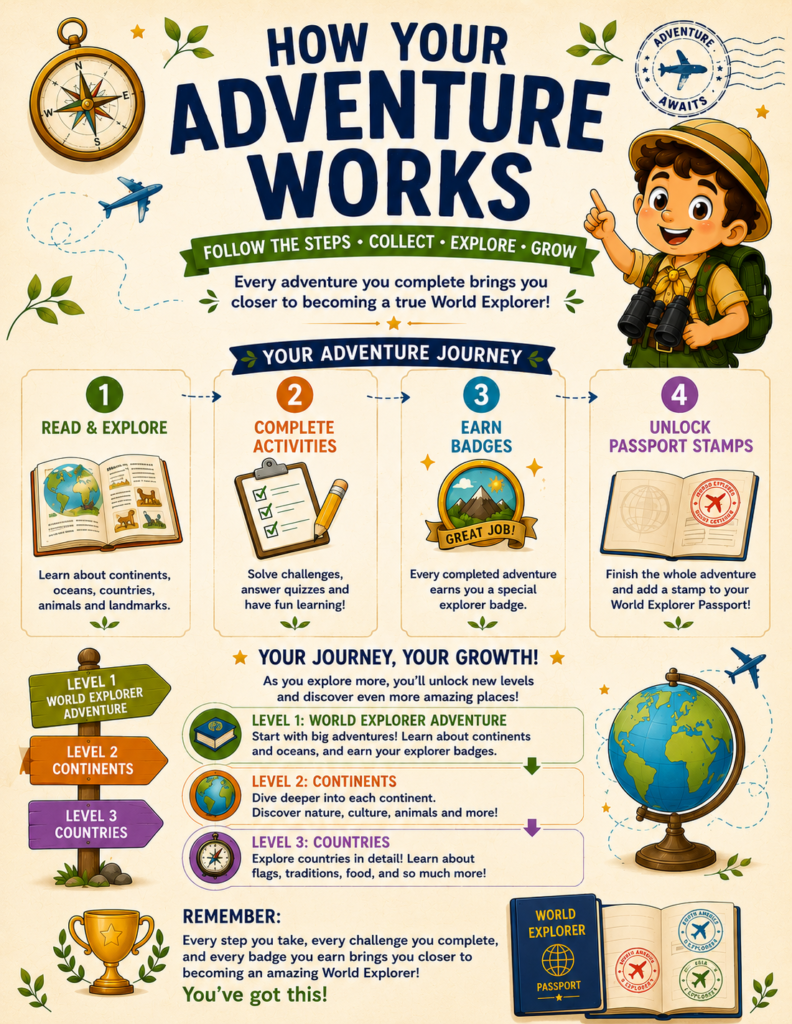
- A 3-Level Journey of Discovery: The Universal Passport features 38 dedicated slots structured to grow with your child:
- Level 1 (The Foundation): Mastering global earth science, ocean currents, and continents.
- Level 2 (The Continents): Earning 8 Continental & Ocean Visas by understanding broad regional ecosystems.
- Level 3 (The Countries): Earning 30 individual Country Visas by zooming in on specific cultures, traditions, and landmarks around the world!
- The «Ocean Helper» Pledge: Unlike standard workbooks, Tiny Joy Studio instills deep environmental empathy. The final sections of the book introduce kids to real-world marine conservation careers and provide actionable, daily routines—like reducing plastic waste and protecting local habitats—empowering your child to become an official Ocean Helper.
- Tactile, Earned Rewards: As your child solves mapping mysteries and explores diverse regions, they earn colorful, cut-out Badges and official Visa Stamps to paste directly into their Universal Passport, transforming global education into a lifelong passion.
Final Thoughts: Start Your Global Journey Today
Learning how to raise a global citizen doesn’t require rigid lectures or memorizing dry geography facts. By focusing on cultural empathy, everyday curiosity, and tactile exploration, you can open up the entire world to your child right from your kitchen table.
When you give children autonomy, a friendly cartoon guide like Leo to spark their imagination, and a physical passport to track their victories, the world ceases to be a distant, intimidating place—it becomes a friendly neighborhood waiting to be explored.
Ready to start your family’s global adventure? Grab a box of colored pencils, download your foundational Level 1: Continents & Oceans Activity Book, and set up your child’s very own Universal Passport today directly via the Tiny Joy Studio Etsy Collection.
The world is waiting—let’s go explore it!