The Psychology of Collecting for Kids: Why Badges, Stickers, and Passports Work
If you have ever raised or taught a 6- to 9-year-old, you have witnessed the phenomenon firsthand. Whether it is an obsessive assortment of Pokémon cards, a pocketful of shiny rocks, or a carefully curated sticker album, children love to collect. They will spend hours organizing, trading, and admiring their treasures with a level of focus and dedication that often completely vanishes when it is time to open a school workbook.
Why does a sheet of colorful stickers hold so much power over a child’s attention? More importantly, how can homeschooling parents and teachers harness this natural obsession to make educational subjects like science, history, and geography irresistible?
The answer lies in the psychology of collecting for kids. By understanding the neurological and developmental triggers behind why children gather and categorize objects, we can move away from daily homeschool power struggles and design gamified learning experiences that naturally spark joy, autonomy, and deep academic engagement.
The Science Behind the Obsession: Why Kids Collect
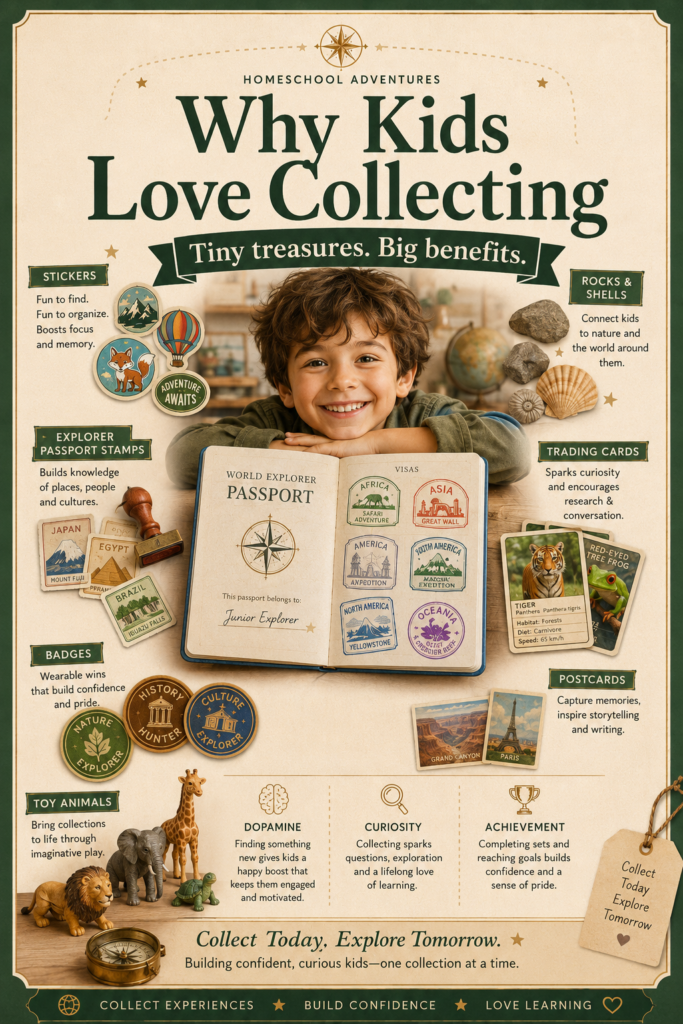
Collecting is not just a quirky childhood phase; it is a fundamental cognitive exercise. Between the ages of 6 and 9, a child’s brain is rapidly developing executive function, spatial awareness, and a sense of individual identity. Here is what is actually happening beneath the surface when a child becomes hooked on collecting:
- The Dopamine Loop of Discovery: Every time a child acquires a new item for their collection—whether it is a rare seashell or a printed «Explorer Stamp»—their brain releases a burst of dopamine. This neurotransmitter is responsible for feelings of pleasure and reward, creating a positive neurological loop that makes the brain crave more learning and discovery.
- The Zeigarnik Effect (The Need for Completion): In psychology, the Zeigarnik Effect states that the human brain remembers unfinished tasks better than completed ones and feels a natural psychological tension until a pattern is filled. When a child sees an empty slot in a passport or a blank space on a badge chart, their brain experiences an irresistible urge to complete the set.
- Autonomy and World-Building: Young children control very little of their daily routines. A collection is a tangible micro-world where they are the absolute ruler. They decide how to categorize, arrange, and display their items, fostering a crucial sense of independence and agency.
(To dive deeper into how developmental science supports gamified education, check out our comprehensive guide on why educational games help kids learn better: the science behind play-based learning.)
Intrinsic vs. Extrinsic Motivation: The Gold Star Trap
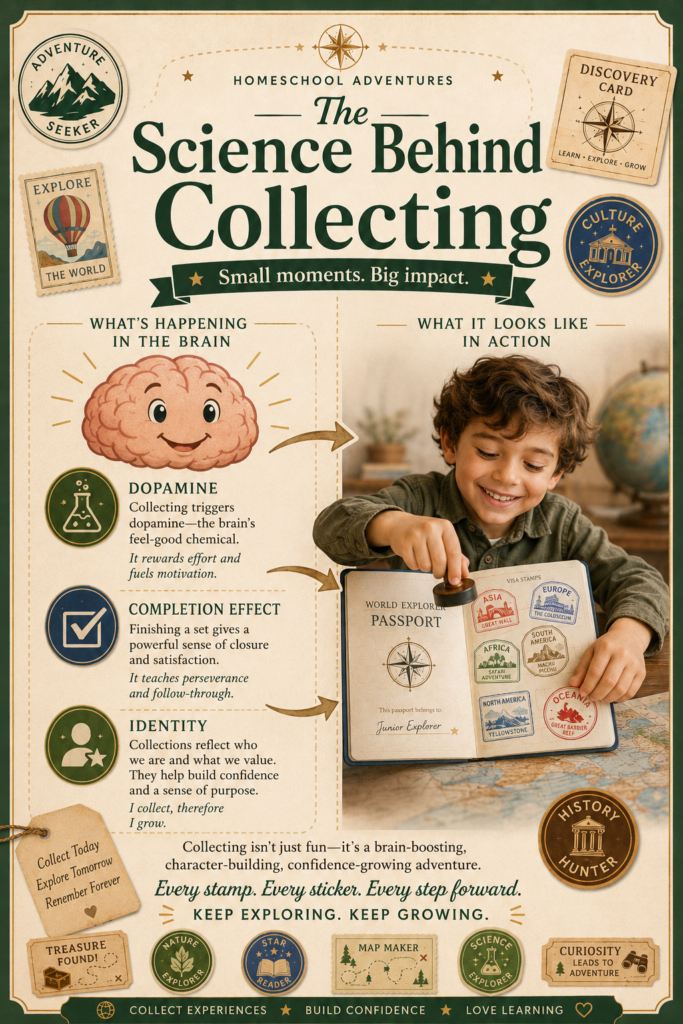
When discussing rewards in education, many parents worry about falling into the «gold star trap»—bribing kids with arbitrary treats or generic stickers just to get them to finish a math worksheet. While arbitrary rewards rely heavily on extrinsic motivation (doing something just to get a prize), meaningful educational collectibles work differently by bridging the gap toward intrinsic motivation (doing something because it is personally rewarding).
The difference lies in context and identity.
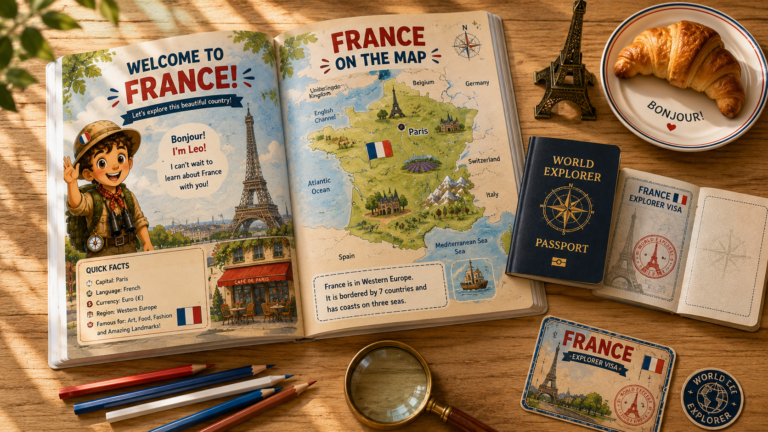
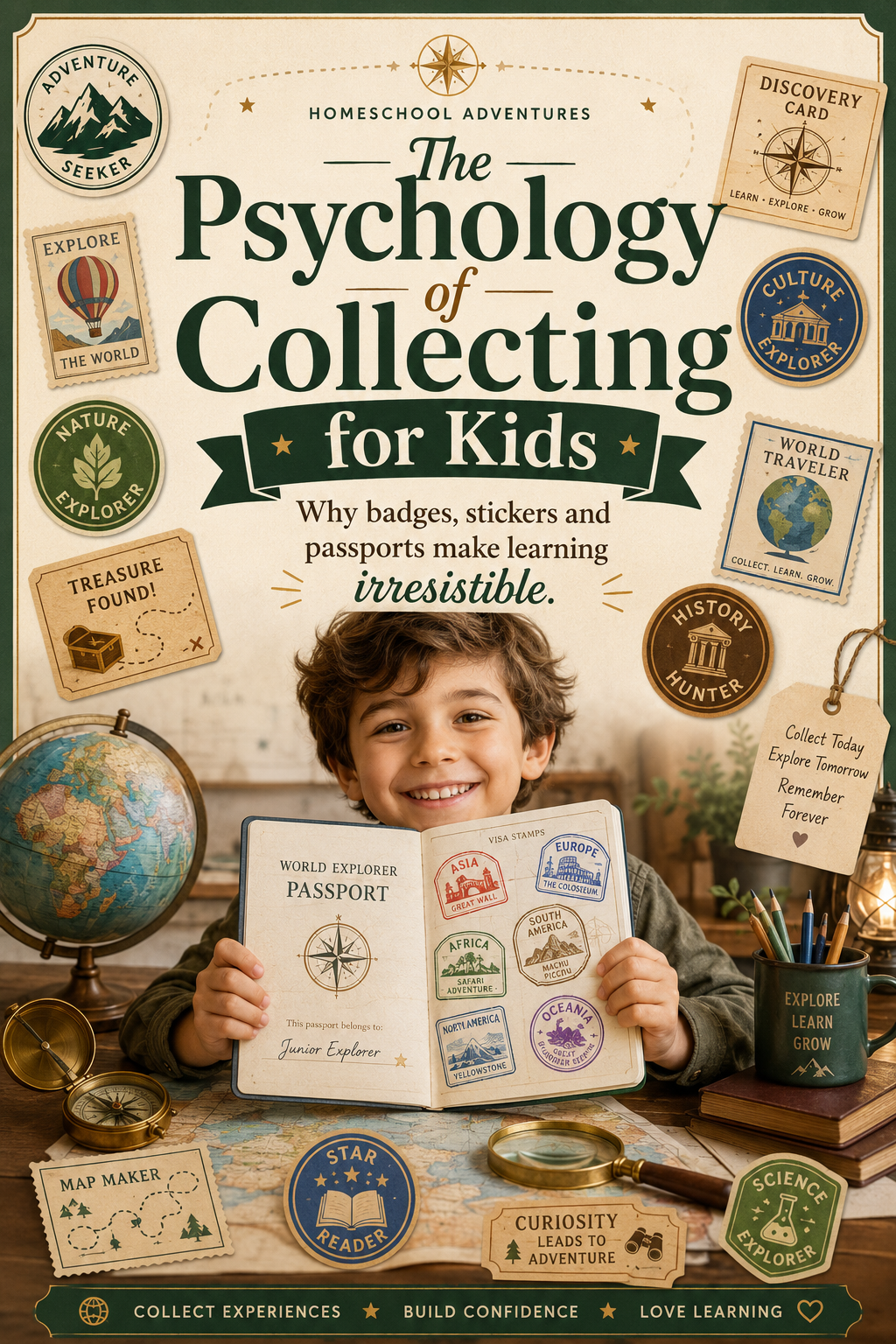
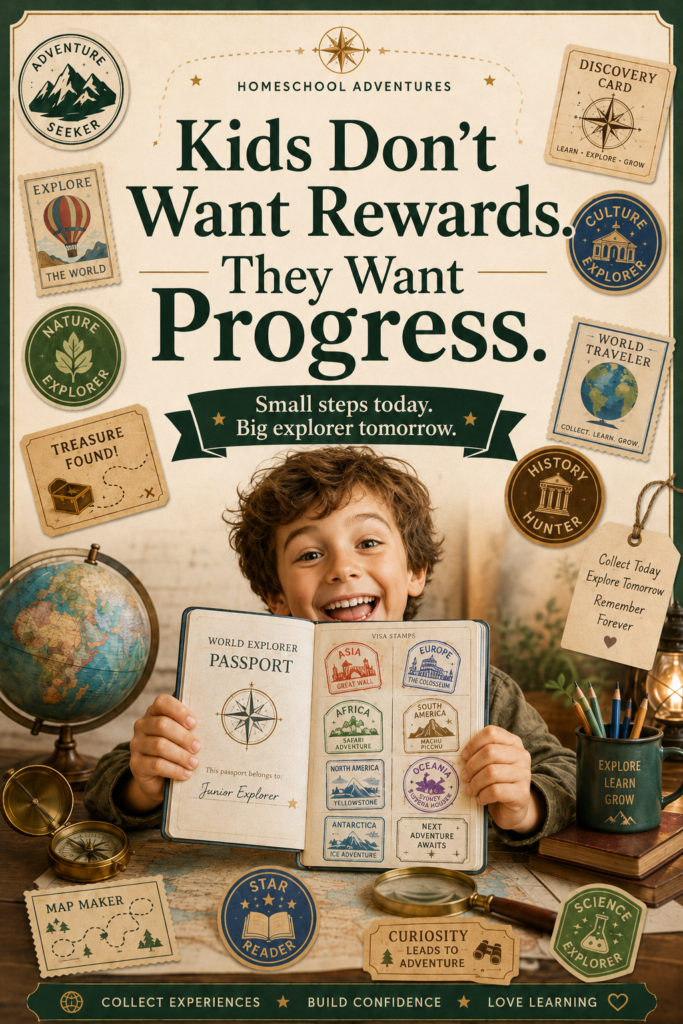
A random smiley-face sticker placed at the top of a spelling test is an external judgment from an adult. It says, «I approve of your work.» However, a collectible Country Visa Stamp earned after mapping the Amazon rainforest and pasted into a personalized «World Explorer Passport» is an identity badge. It tells the child, «I am a capable explorer who has mastered this corner of the world.» The sticker itself is not just a bribe; it is a physical symbol of their growing knowledge and adventure.
4 Ways to Harness the Psychology of Collecting in Your Homeschool
You don’t need a background in educational psychology to use these principles at home. Here are four practical, screen-free ways to integrate the psychology of collecting into your daily lesson plans:
1. Leverage Visual Progress Trackers (The Grid Effect)
Children struggle with abstract concepts like «making progress over the semester.» They need to see their learning made physical.
- How to use it: Provide a physical grid, map, or journal with defined empty spaces. When children can visually see how many milestones they have conquered—and how few are left to go—their internal motivation skyrockets.
2. Shift to Identity-Based Collectibles
Stop rewarding children for simply «completing chores» or «doing schoolwork.» Frame rewards around stepping into an exciting real-world role.
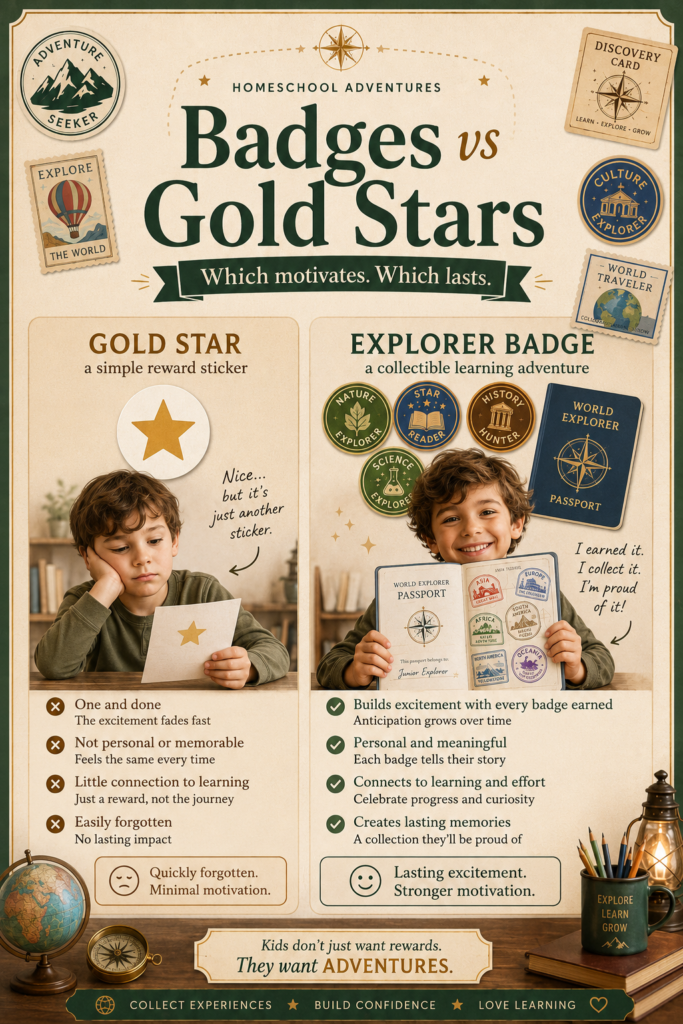
- How to use it: Instead of giving a generic sticker for reading a chapter about animals, award them a «Wildlife Biologist Badge» to glue into an official field notebook. Connect the reward directly to the skill acquired. (Read more on this in our breakdown of why kids love learning about animals and how to build interdisciplinary units.)
3. Prioritize Tactile, Screen-Free Milestones
Digital badges in educational apps are convenient, but they lack the sensory weight of physical objects. Young brains crave tactile confirmation.
- How to use it: Let your child use scissors to cut out their badge, apply the glue, and firmly press it into their book. That physical act of making an imprint solidifies the memory of the lesson far better than tapping a screen.
4. Build a Story-Driven Ecosystem
A collection is much more engaging when the items connect to a grander narrative or journey.
- How to use it: Thread your weekly lessons together with a storyline. Rather than teaching isolated facts about France or Japan, frame the school year as a global expedition where each completed lesson unlocks the next stop on the world map. (Explore how narratives boost retention in our article on geography learning through adventure and progression.)
Arbitrary Rewards vs. Educational Collectibles
| Feature | Arbitrary Rewards (Generic Stickers/Treats) | Educational Collectibles (Badges & Passports) |
| Psychological Trigger | Short-term extrinsic compliance (bribes). | Long-term intrinsic pride and identity building. |
| Context | Disconnected from the educational material. | Directly represents the skill or concept mastered. |
| Child’s Perception | «I did a chore for Mom and got a sticker.» | «I am a World Explorer charting new territories!» |
| Retention Impact | Minimal; forgotten as soon as the prize is won. | High; serves as a permanent visual portfolio of success. |
| Long-Term Engagement | Drops quickly as the novelty wears off. | Increases over time due to the need for completion. |
Meet the Ultimate Collectible Ecosystem: The Universal Passport
If you want to seamlessly integrate the psychology of collecting into your homeschool geography curriculum without spending hours designing charts or printing out makeshift stickers, we have created the exact tool you need.
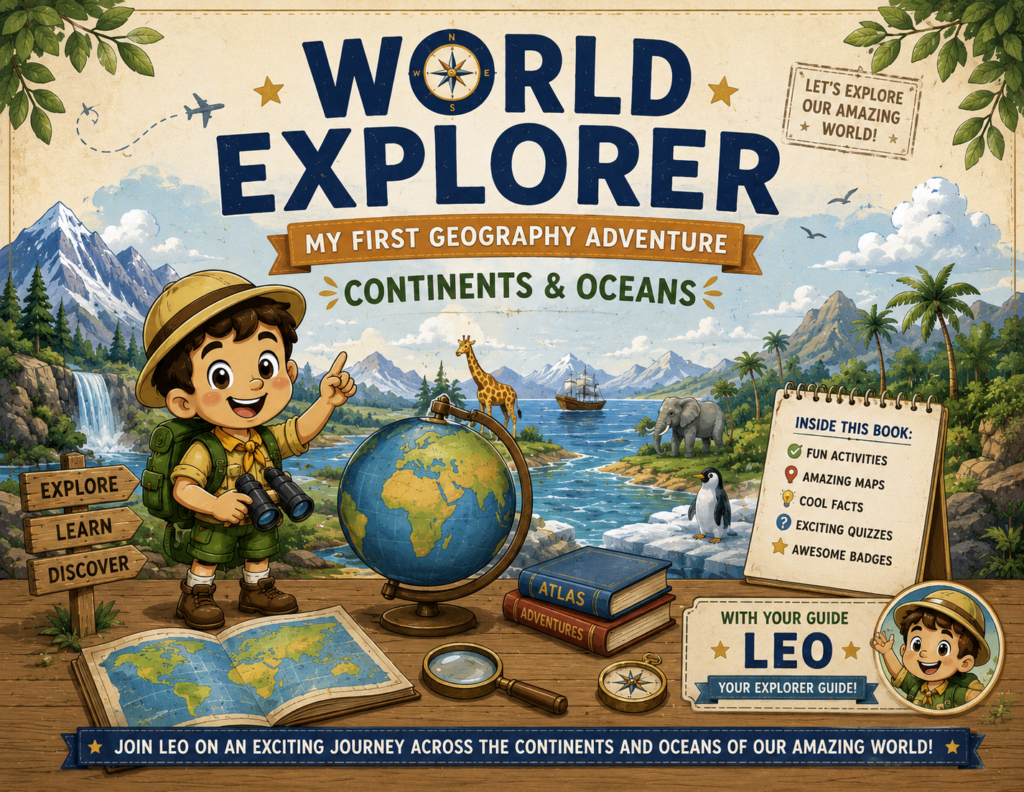
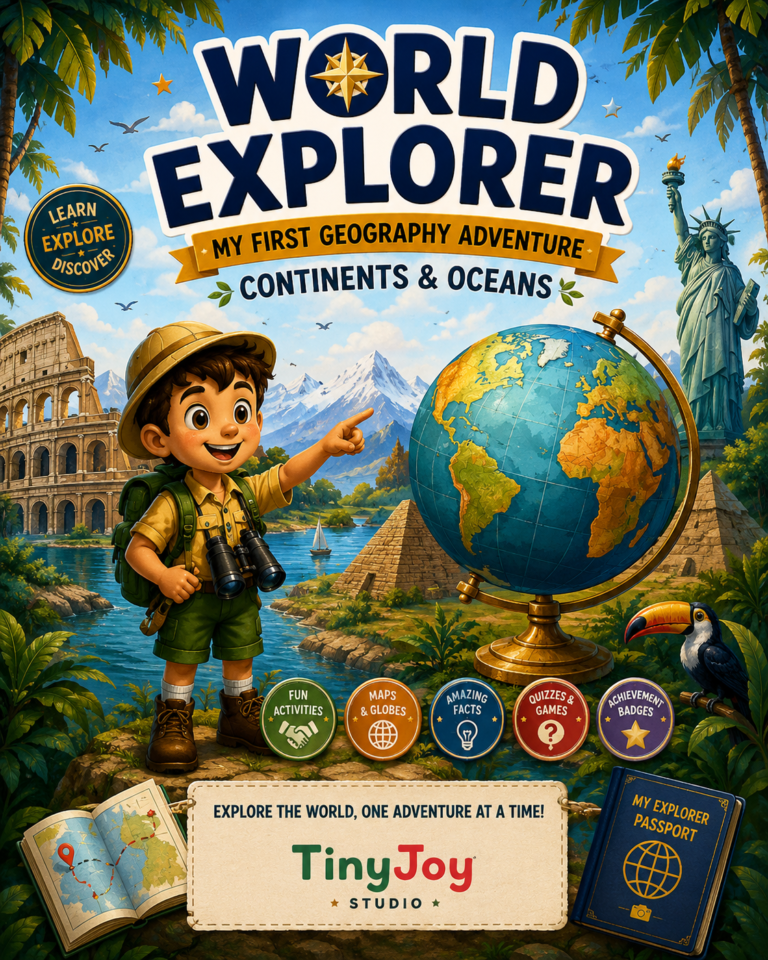
Enter the Universal Passport, the heart of the acclaimed World Explorer Series by Tiny Joy Studio.
Designed specifically for curious 6- to 9-year-olds and led by an enthusiastic cartoon guide named Leo, this curriculum transforms traditional geography into a thrilling, collectible adventure. We replaced boring grades and arbitrary charts with a beautifully illustrated, print-on-demand passport that grows with your child across the entire school year!
Why the Universal Passport Captures Kids’ Hearts:
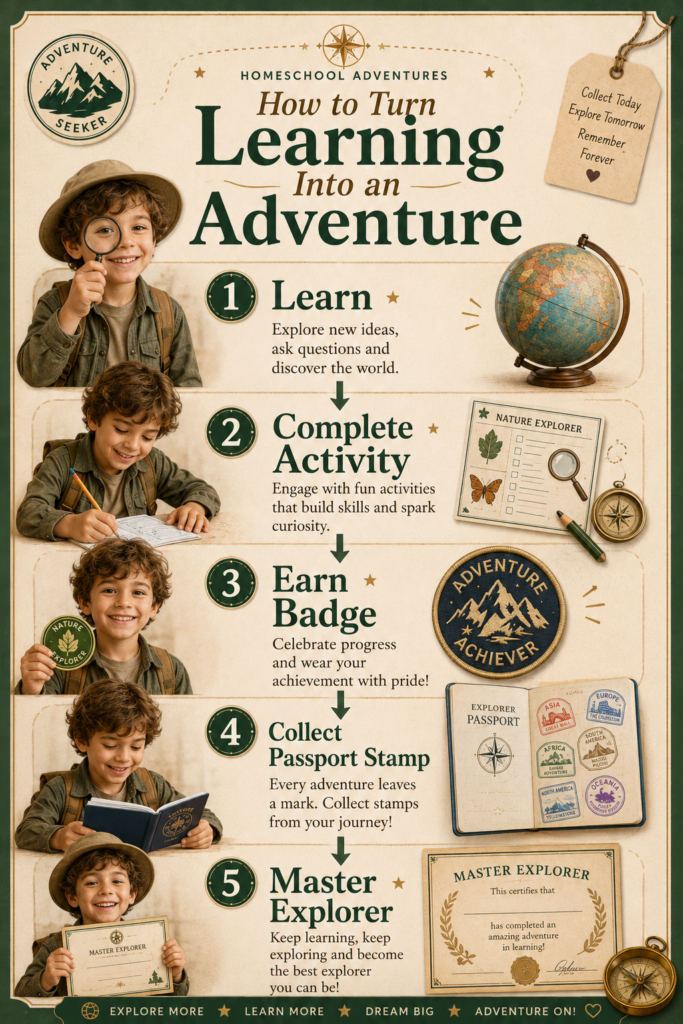
- 38 Dedicated Collectible Slots: Built directly upon the Zeigarnik Effect, the Universal Passport features 38 specific spaces waiting to be filled, driving a natural psychological desire to complete the entire global set!
- A Structured 3-Level Progression: The collectible ecosystem is carefully divided to reward learning at every stage of your child’s journey:
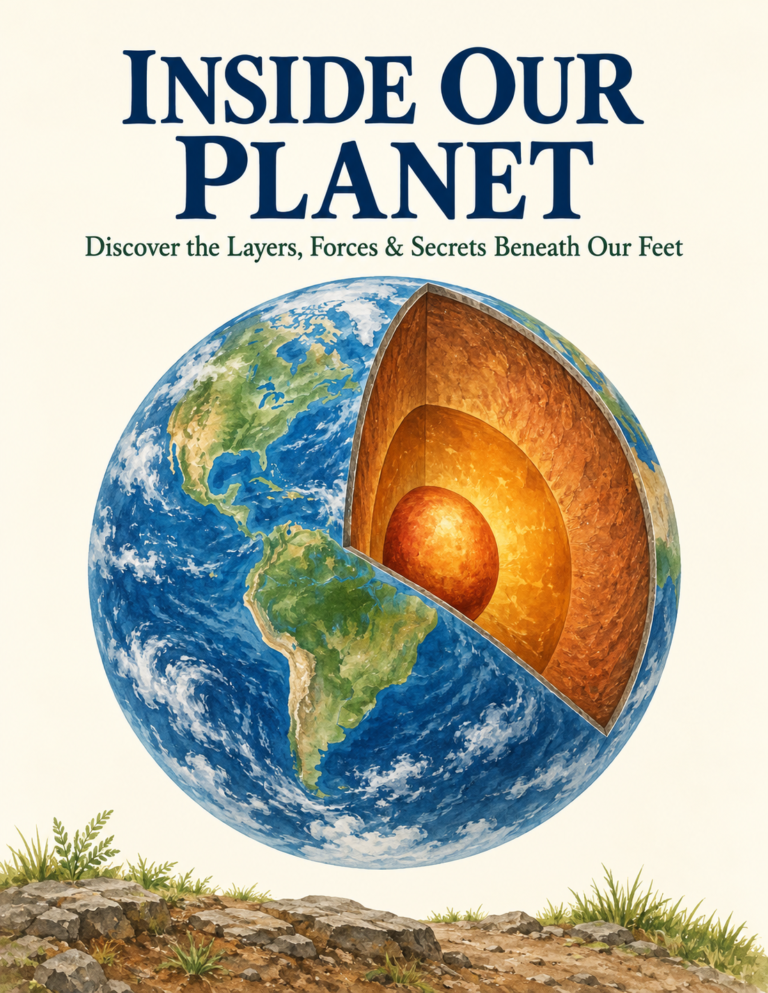
- Level 1 (The Foundation): Earn foundational badges by mastering tectonic plates, ocean currents, and global navigation in the Continents & Oceans Activity Book.
- Level 2 (The Continents): Unlock 8 Continental & Ocean Visas as your child explores regional ecosystems, major landmarks, and wildlife.
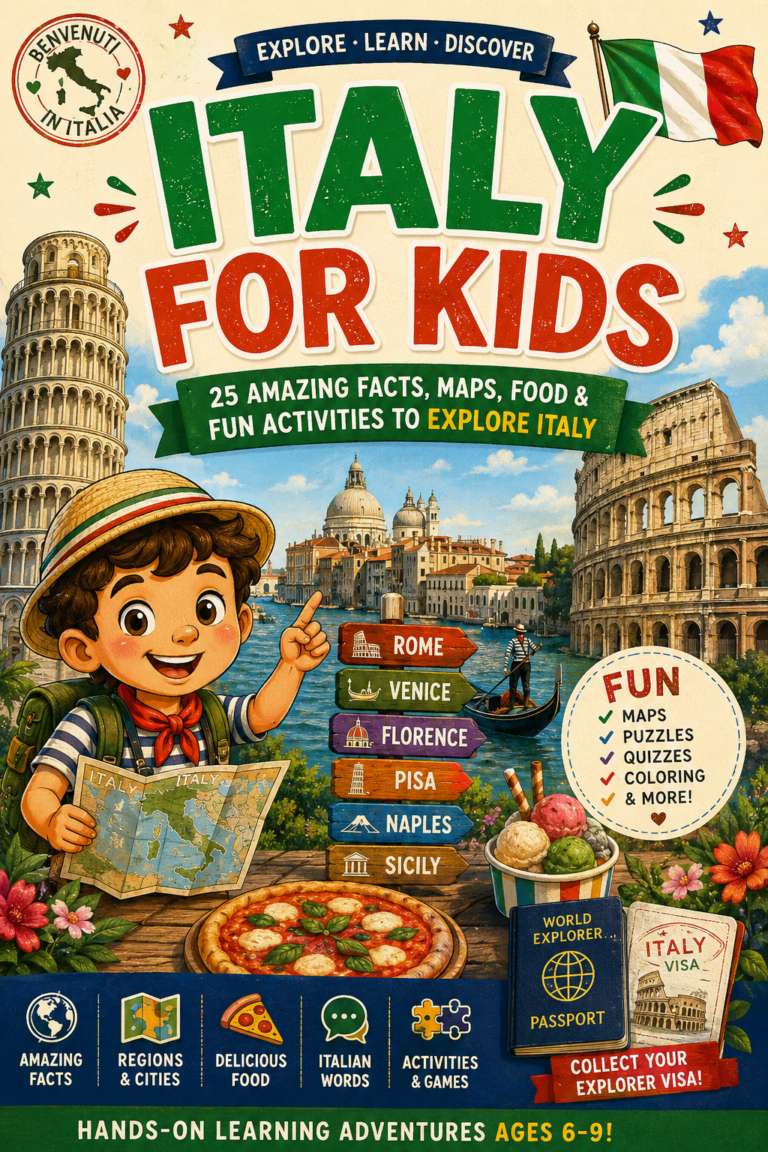
- Level 3 (The Countries): Collect 30 individual Country Visas, zooming in on specific cultures, traditions, and national monuments from around the globe!
- 100% Tactile and Screen-Free: Every time your child completes a mapping puzzle or decodes a geographic mystery, they use scissors and glue to cut out their vibrant, high-resolution Visa Stamp and paste it directly into their official passport booklet.
- A Keepsake Portfolio: By the end of the year, your child won’t just have a stack of discarded worksheets in the recycling bin. They will hold a personalized, fully stamped passport that serves as a permanent testimony to their global exploration—something they will proudly show to grandparents, friends, and evaluators!
Turn Your Child’s Obsession into Their Superpower
You do not need to fight your child’s natural urge to collect, sort, and gather treasures. By shifting your homeschooling strategy away from boring rote memorization and toward gamified, collectible milestones, you can turn their favorite hobby into their superpower.
When you give a young explorer a world map, an enthusiastic guide like Leo, and a passport waiting to be filled with earned visa stamps, learning ceases to be a chore. It becomes a thrilling quest for completion.
Ready to unlock the power of educational collectibles in your home? Grab your scissors, download your foundational activity books, and print out your child’s very own Universal Passport today directly via the Tiny Joy Studio Etsy Collection. Let the global adventure—and the collecting—begin!