Samurai Japan Unit Study: Spark Curiosity with Interactive History
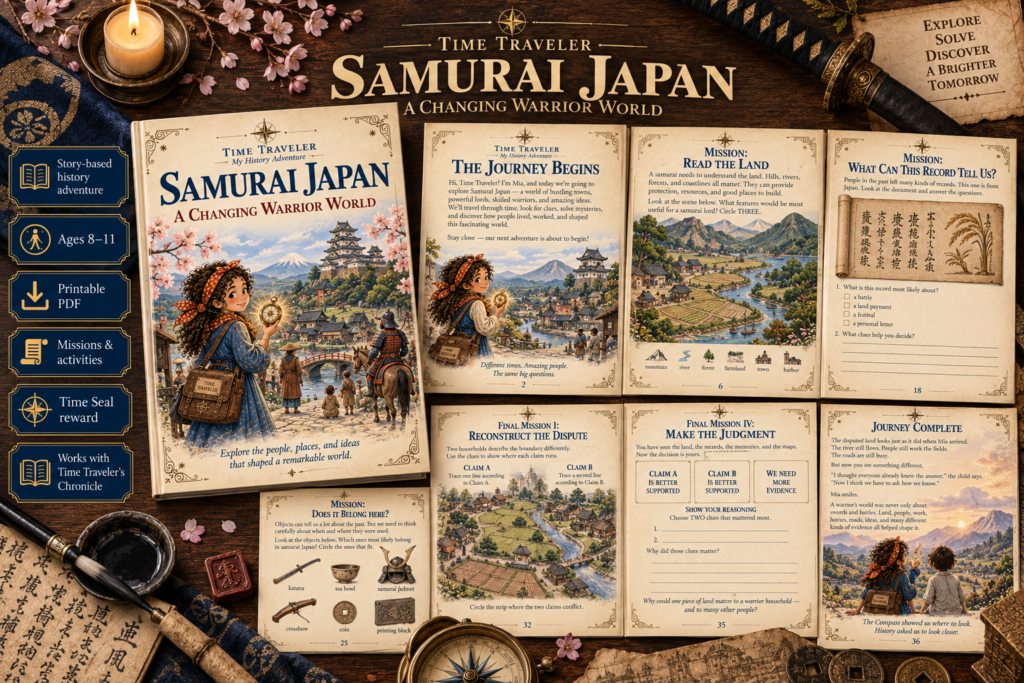
When it comes to capturing a child’s imagination, medieval Japan is a treasure trove of exciting historical adventures. Between the disciplined warriors on horseback, the evolving armor and weapons, and the intricate land disputes, it is an era practically designed to thrill young minds. But how do we turn this natural fascination into genuine educational value? The answer lies in an engaging Samurai Japan unit study that prioritizes interactive learning and critical analysis over passive reading.
By using thoughtfully designed materials, parents can transform a simple history lesson into a hands-on adventure. Let’s explore how interactive history books about samurai, households, and historical evidence develop a child’s curiosity, chronological reasoning, and problem-solving skills.
Why Interactive History for Kids Works
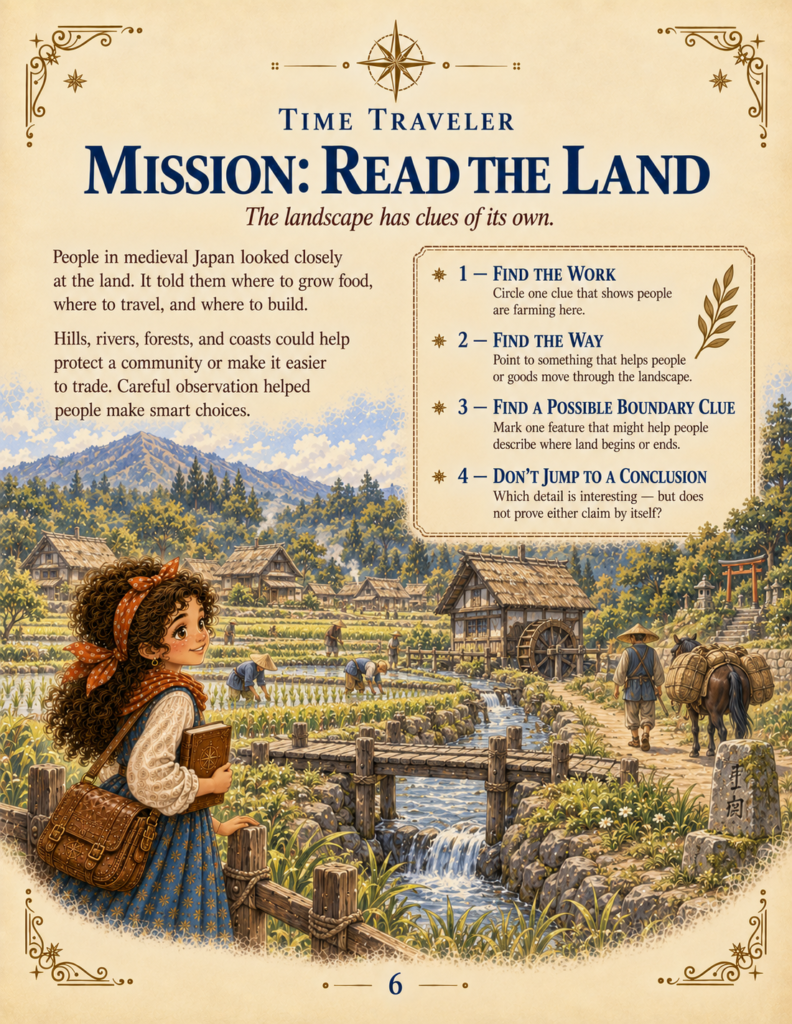
Children learn best when they are analyzing, solving, and doing. A standard textbook might tell a child that a samurai used a bow and a horse, but an interactive workbook asks them to look at the landscape and figure out how a piece of land supported a whole warrior household. This shift from passive consumption to active participation is the core of effective education.
When you incorporate a structured interactive history for kids curriculum, you aren’t just teaching them dates and names. You are teaching them how to evaluate situations, prioritize evidence, and think like young historians.
Exploring the Warrior Ecosystem
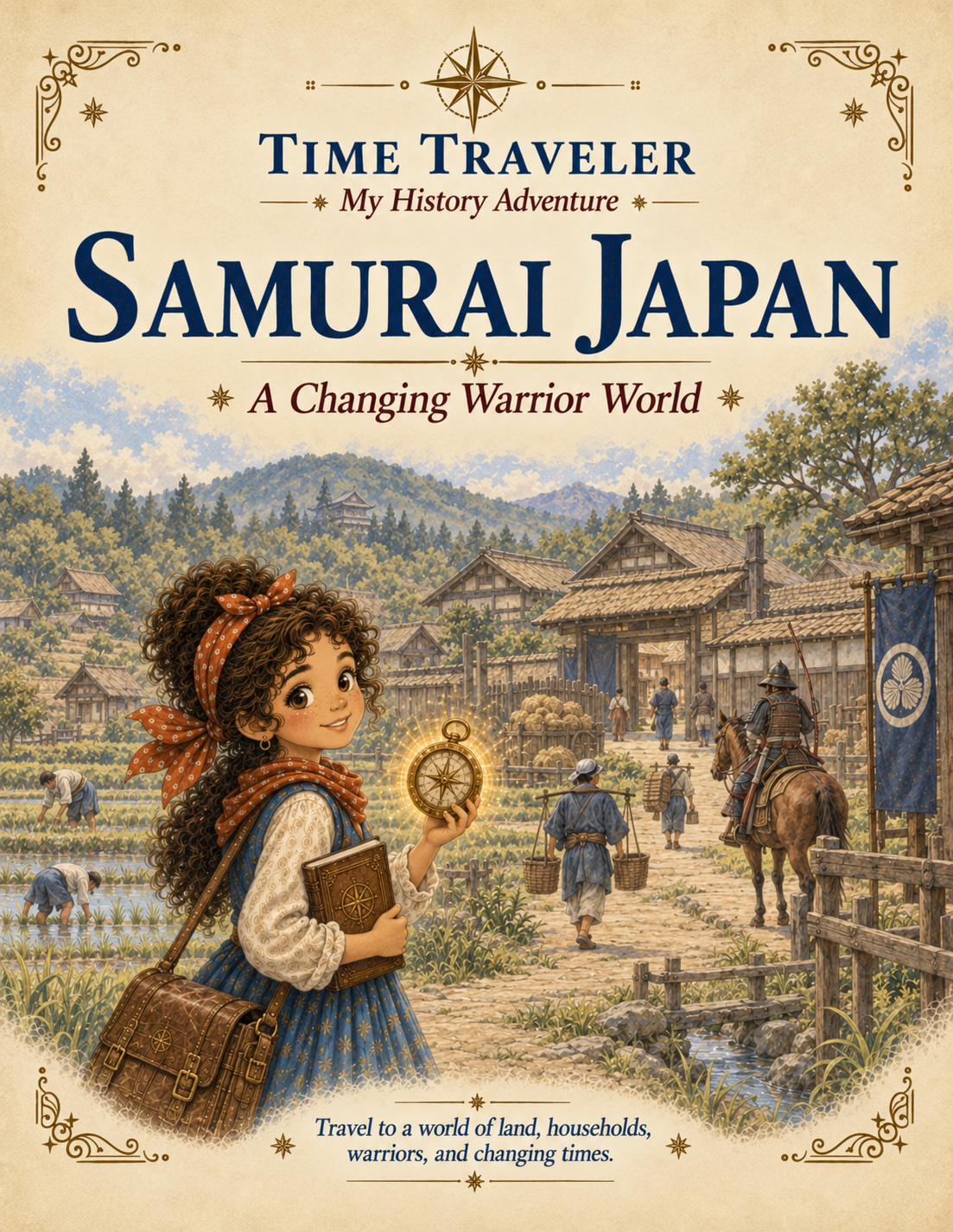
One of the most effective ways to teach history is to show children that warriors did not exist in a vacuum; a warrior’s life depended on a much larger world of people and work. A samurai household included family members, retainers, farmers, and messengers who all helped daily life continue.
Much like the analytical skills we foster in our Ancient Egypt activities for kids and the puzzle-solving in our Ancient Greece unit study, a well-rounded Samurai Japan unit study asks children to make connections. A dispute over a small strip of land matters because that land provides food, supports animals, and contributes to the duties people carry out.
Learning Through Doing: «Does It Belong Here?» Activity
To truly spark curiosity, children need to feel like they are deciphering the past. Engaging worksheets allow them to step into the shoes of a historian trying to sort clues by their correct time period.
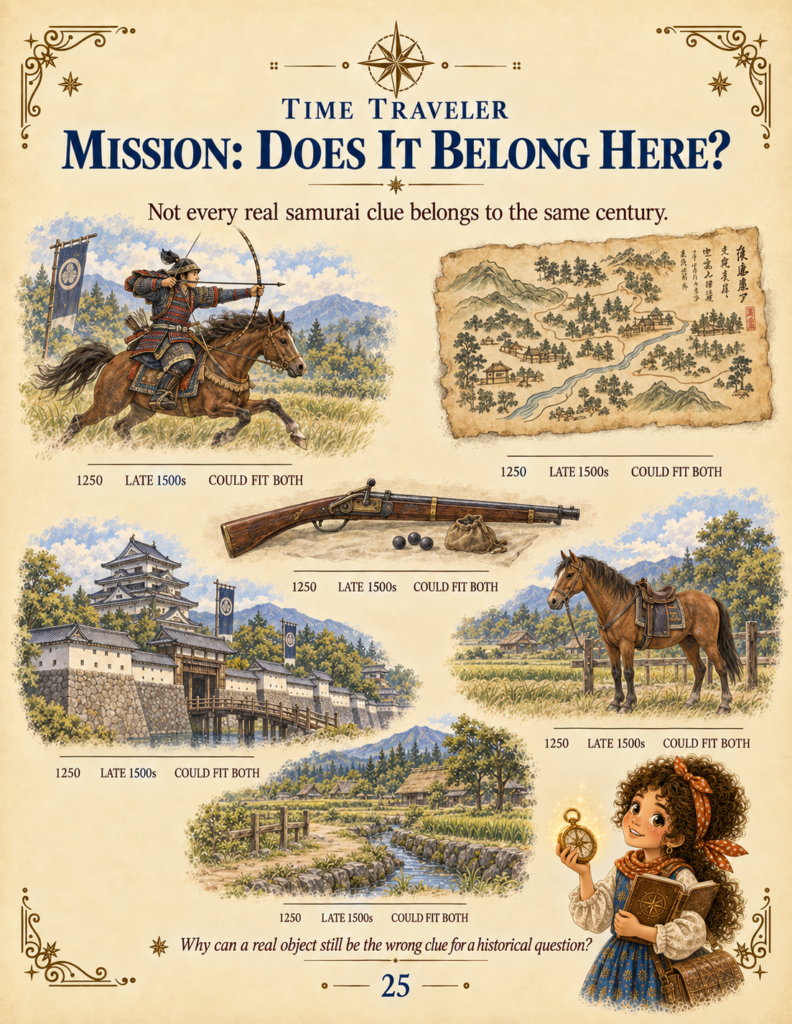
In activities exploring historical changes, children must look at real samurai clues and decide if they belong to 1250 CE, the late 1500s, or both. They learn that warfare changed over time, shifting from mounted archery to larger armies using spears and firearms. This requires logic, attention to detail, and a deep understanding of historical context.
Thinking Like a Historian: Testing the Claims
The ultimate goal of any educational resource should be to teach children how to think. This is where an in-depth Samurai Japan unit study truly shines.
History often involves conflicting records and memories. Interactive history books introduce children to this reality by presenting them with competing land claims. Children learn that a useful clue depends on the exact question they are asking.
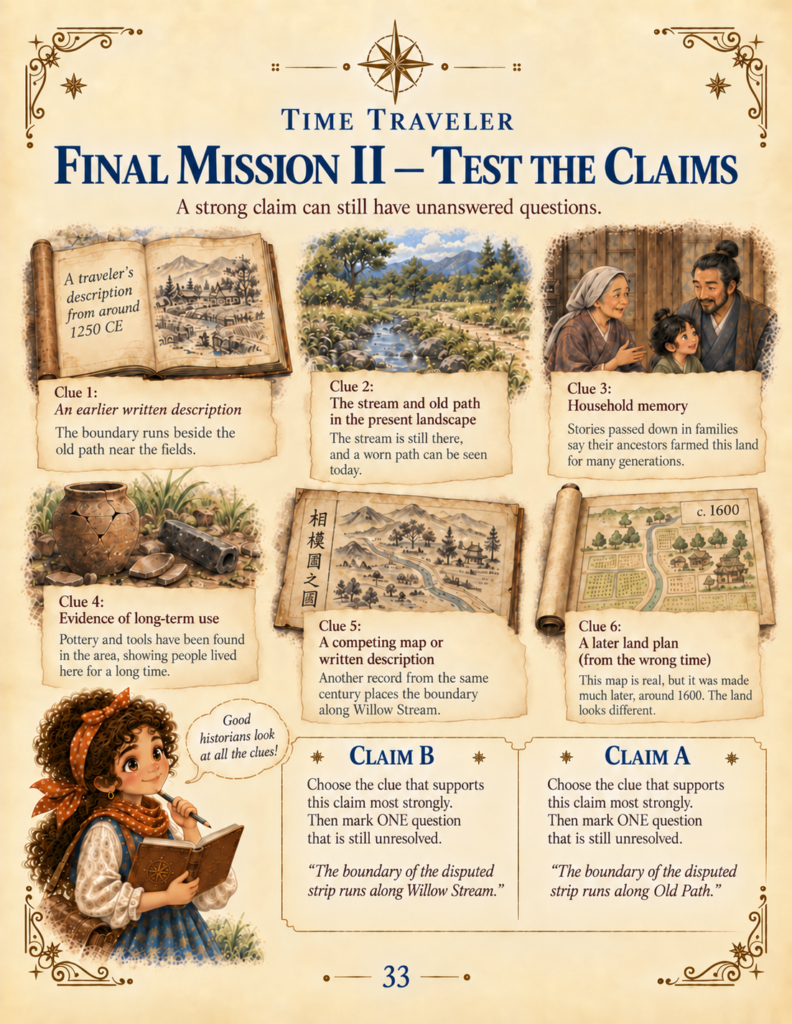
By asking kids to test these claims, they learn to differentiate between strong evidence, like an older written description, and clues that might be visually impressive but less relevant, like a map from the wrong century. They realize that good historians look at all the clues and sometimes conclude that they simply need more evidence. These are the kinds of critical thinking challenges that prepare children for advanced academic success.
Spark Your Child’s Curiosity Today
Parents are always on the lookout for resources that are both educational and highly engaging. Books and materials that focus on hands-on history offer the perfect balance. They take a naturally fascinating subject like samurai and layer it with puzzle-solving, evidence evaluation, and interactive tasks.
By providing your child with resources that treat them like young historians, you are doing more than just teaching them about armor and swords. You are fostering a lifelong curiosity about the world, how societies change over time, and the people who built our history.
Ready to dive into the past? Start your adventure today and watch your child’s historical curiosity come to life!