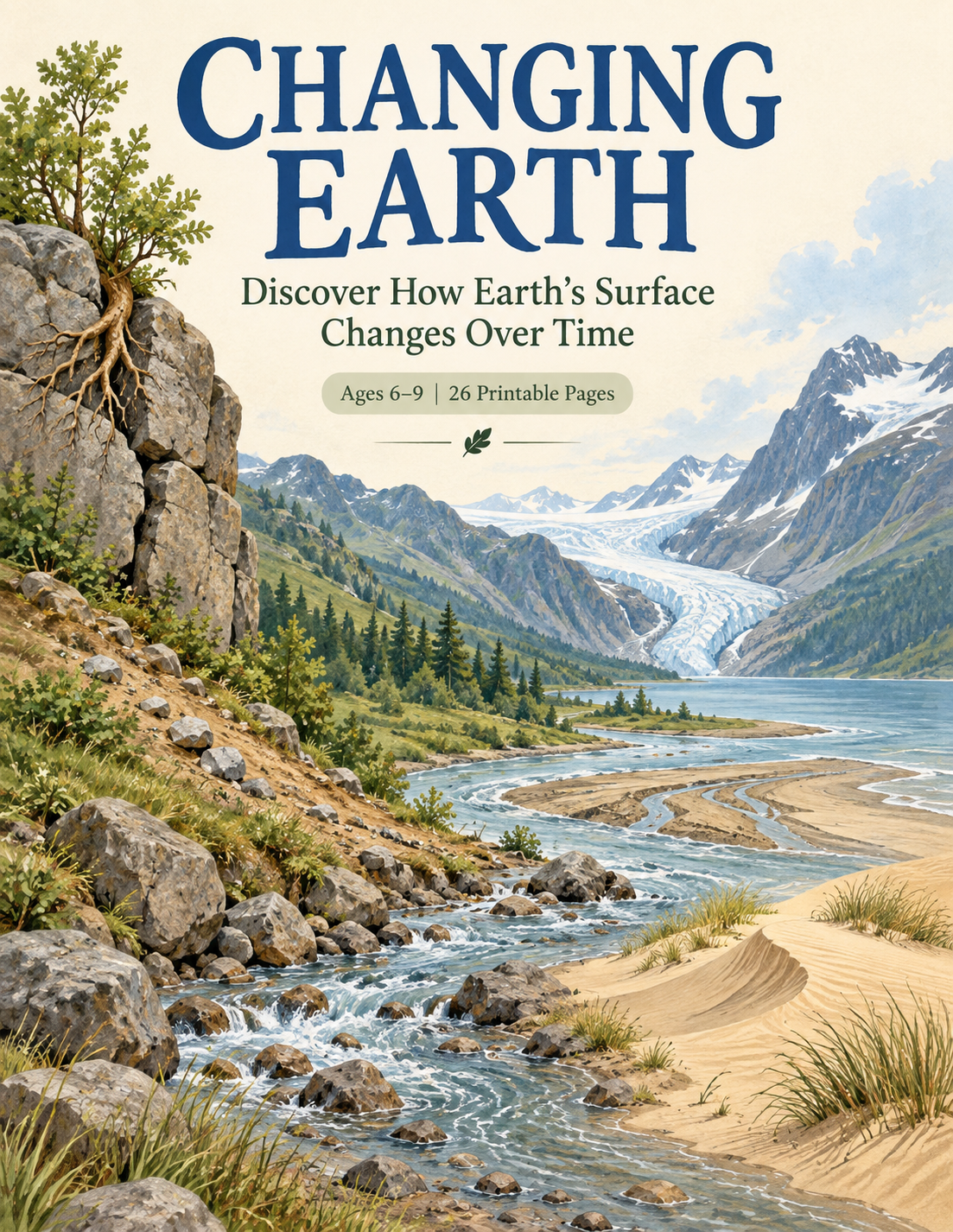
The Ultimate Changing Earth Unit Study for Kids (No Prep!)
When we look out at the world around us, it is easy to think of nature as static and permanent. We see towering mountain ranges, steady riverbanks, and calm sandy beaches, assuming they have looked the same for thousands of years. But Earth is constantly moving, breaking down, and reshaping itself. If you have ever tried to explain to a 6- to 9-year-old child how a rushing river carves a deep canyon, or how freezing ice can crack solid rock, you know how quickly abstract geological concepts can make young eyes glaze over.
Trying to piece together a comprehensive, visually stunning earth science unit from random internet printouts or complicated textbook chapters can feel exhausting for busy parents. If you want to transform your science lessons into an exciting journey through weathering, erosion, and deposition without spending your weekends hunting for worksheets, we have the ultimate «open-and-go» solution.
Meet Your Science Guide: The Changing Earth Workbook
Instead of overwhelming young minds with dry paragraphs, the Changing Earth: Discover How Earth’s Surface Changes Over Time activity book invites your child on a guided, hands-on geological expedition.
Designed specifically for curious elementary students, this workbook acts as a personal field guide. It seamlessly fits into your geography learning path for kids, taking them on a structured journey to explore how water, wind, ice, and gravity slowly reshape our planet. Let’s explore the hands-on missions your child will complete on their journey!
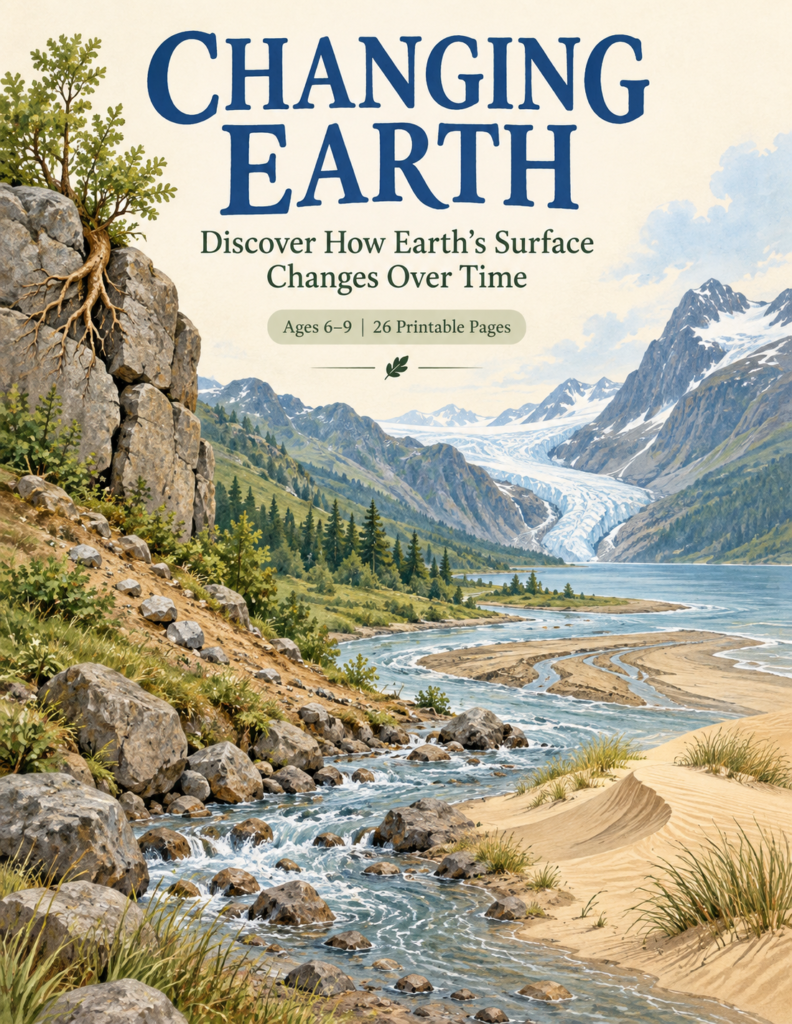
1. Fast vs. Slow: How Earth Changes at Different Speeds
Before kids can understand specific geological processes, they need to understand the timeline of our planet.
- What’s Inside the Book: Young explorers learn that some changes happen very quickly—like wind blowing sand across a beach—while others take thousands or even millions of years, like a glacier carving a valley. Through visual matching exercises, children sort various natural events into categories like «Quick Change,» «Slow Change,» and «Very Slow Change».
- How to Bring It to Life at Home: Take a quick walk outside in your neighborhood or backyard. Challenge your child to spot one thing that might have changed quickly (like fallen leaves or windblown dirt) and one thing that takes a very long time (like weathered stone steps or mature trees).
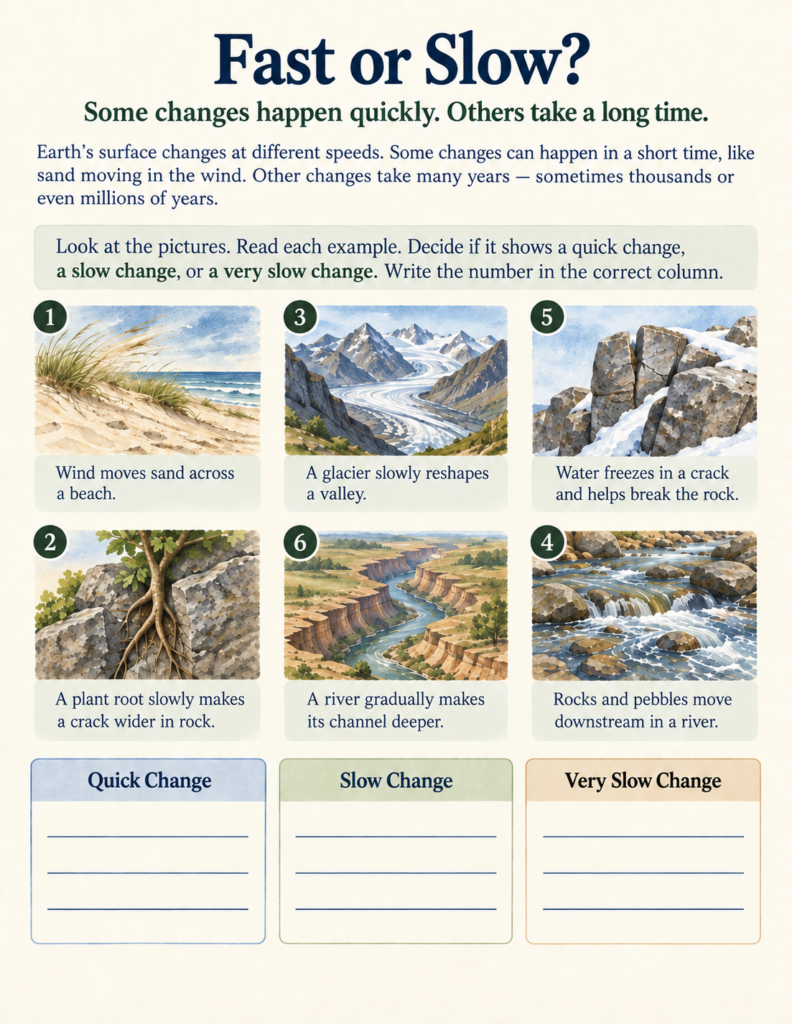
2. The Dynamic Trio: Weather, Move, and Drop
How does the Earth actually reshape its surface? It comes down to three fundamental steps.
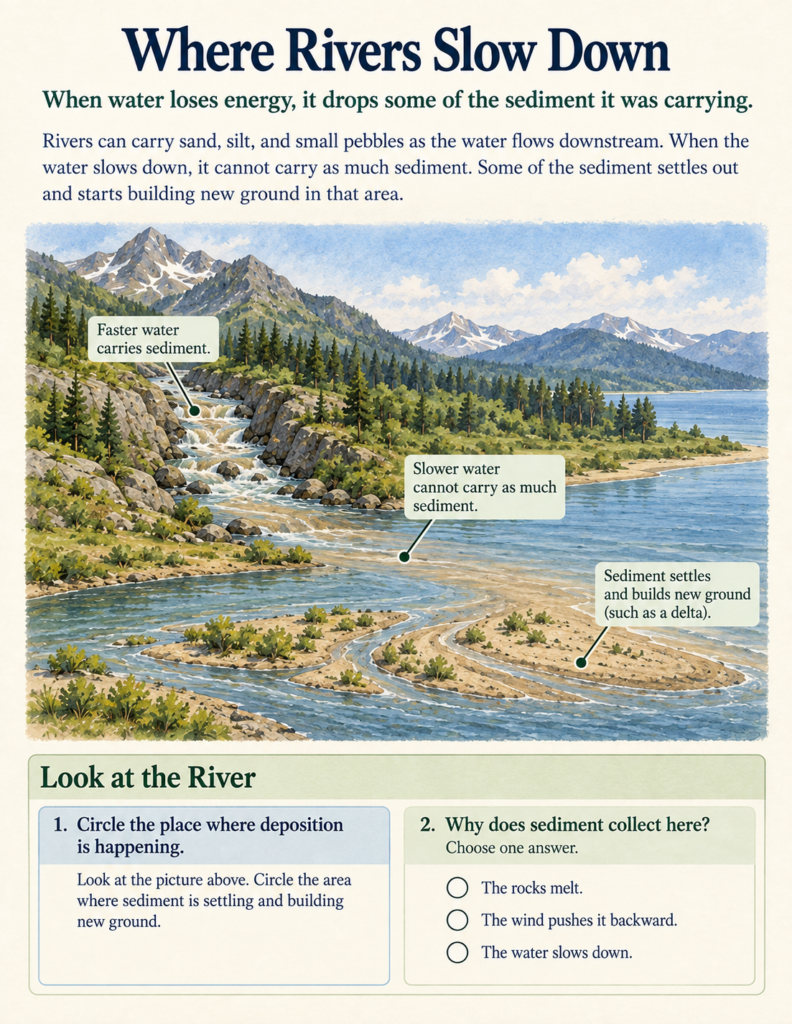
- What’s Inside the Book: The workbook introduces the core mechanics of geology: Weathering (breaking rock into smaller pieces), Erosion (moving those pieces away), and Deposition (dropping them in a new location). Kids follow a visual river journey to label how rocks are broken, carried downstream, and settled to form new ground like river deltas.
- How to Bring It to Life at Home: This is a brilliant example of why project-based learning is essential! Grab some dirt, a tray, and a watering can. Pour water over the dirt mound to physically watch the soil break apart, wash away, and settle at the bottom of the tray.
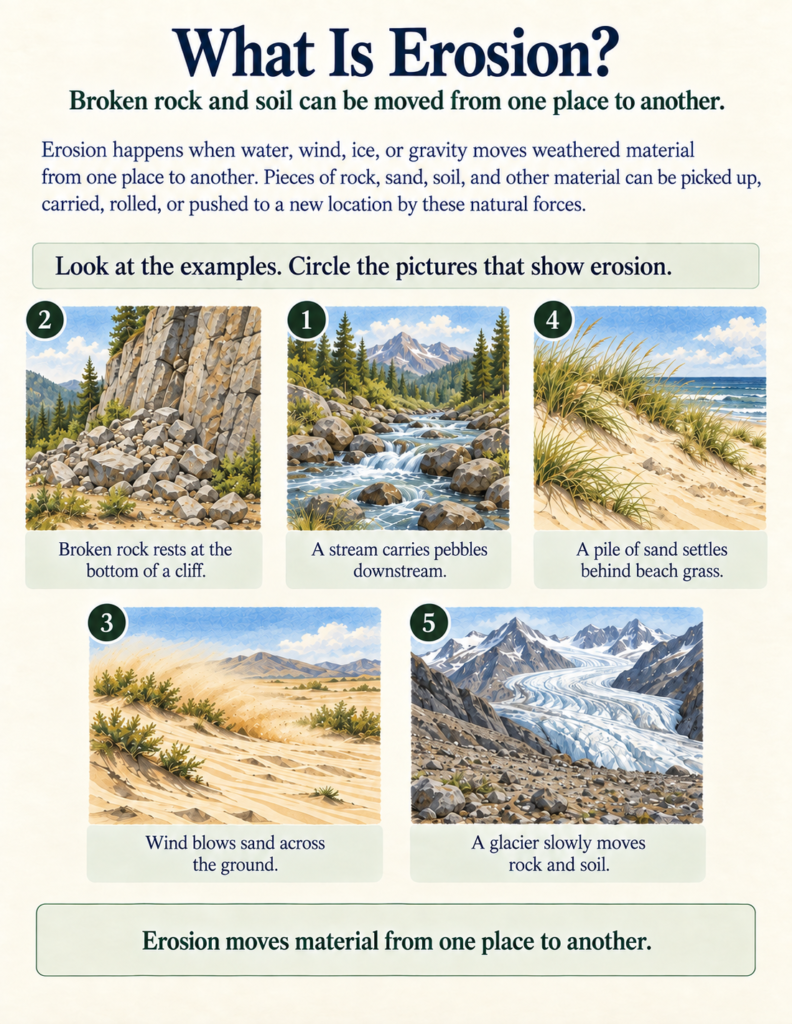
3. Weathering in Action: Ice Wedging and Tree Roots
Weathering breaks rock down, but it doesn’t carry the pieces away yet. How does nature crack solid stone?
- What’s Inside the Book: Children discover two amazing natural wedge systems. First, they explore ice wedging: water seeps into tiny cracks in the rock, freezes, expands, and slowly forces the stone wider. Second, they investigate root-pry: tiny plant roots find shelter in rock crevices, growing thicker over time and splitting the stone apart. Kids sequence step-by-step comic panels to show how water freezes and expands over multiple winter cycles.
- How to Bring It to Life at Home: Look closely at sidewalk cracks in your neighborhood where weeds or small trees are growing. It’s living proof of plant roots breaking concrete right in your own backyard!
4. Shaping the Land: Rivers, Waves, Glaciers, and Wind
Once rocks are broken down, nature’s heavy machinery goes to work moving them.
- What’s Inside the Book: The adventure continues as kids explore how running water carves deep river canyons, how ocean waves batter shorelines to build sandy beaches, how slow-moving glaciers act like giant sheets of sandpaper over mountain valleys, and how wind builds rolling sand dunes. Students solve maze puzzles, analyze before-and-after landscape illustrations, and act as «Landscape Detectives» to identify which natural force shaped a specific scene.
The Secret to Motivation: Small Steps, Big Discoveries
Even with the most fascinating geological mysteries, young learners can sometimes lose momentum. The secret to keeping them engaged until the final page is combining clear visual examples with a tangible sense of progression. This is why learning through collecting for kids is such a powerful educational framework!
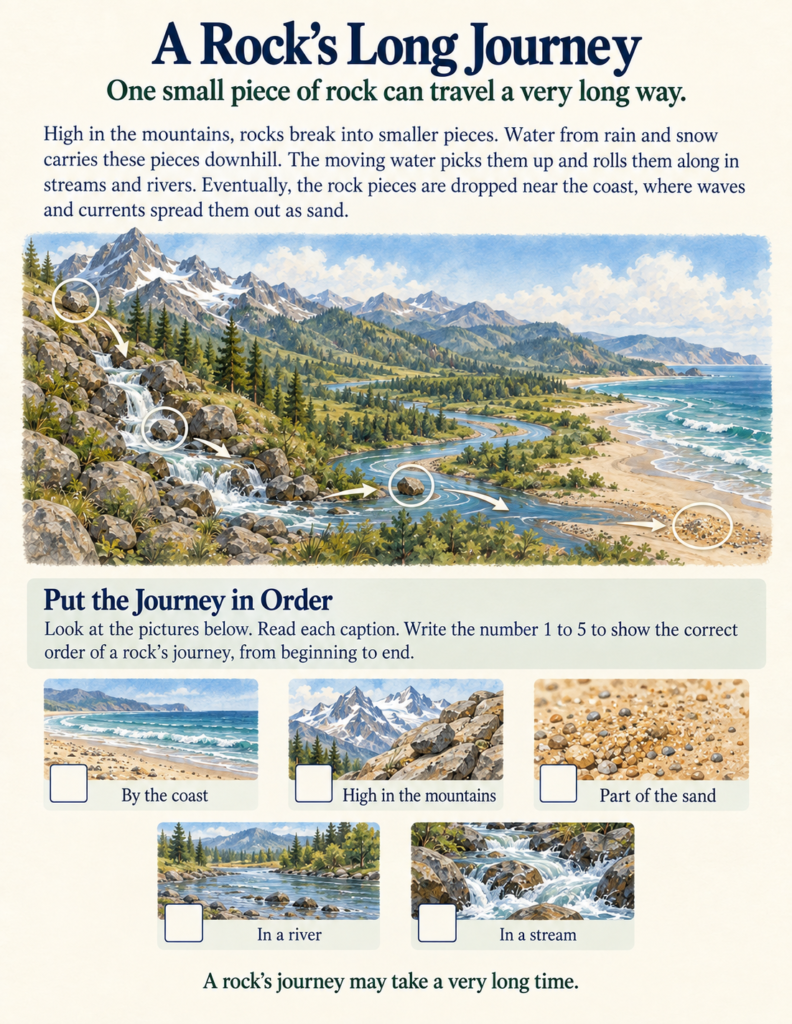
Throughout the workbook, your child isn’t just reading about rocks; they are tracking a single rock fragment’s long journey from a high mountain peak all the way to a coastal beach, solving detective clues, and completing an interactive review challenge.
Are you ready to take your kids on an unforgettable geological journey across mountains, rivers, and coastlines? Grab your colored pencils, print the workbook at home, and let the Earth science adventure begin!
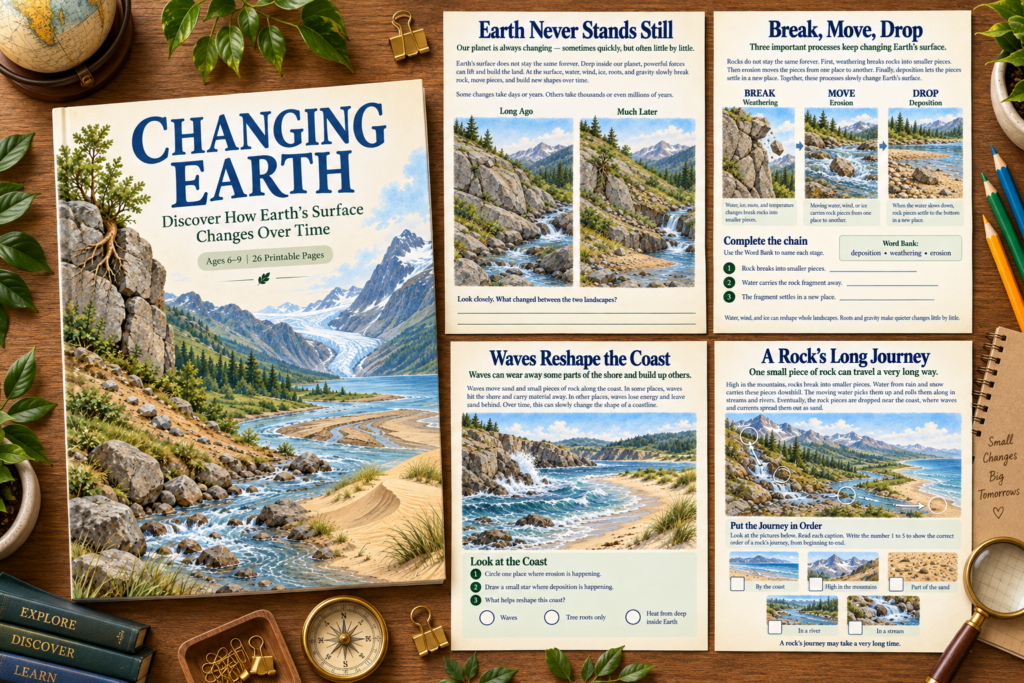
👉 Grab the Changing Earth Activity Book in the Tiny Joy Studio Etsy Shop Today!