Exploring Vietnam From Ha Long Bay to the Mekong Delta: A Hands-On Unit Study for Kids
Teaching a Vietnam unit study for kids comes alive when children trace how water shapes nearly every part of daily life across the country. Stretching in a long S-shape along the South China Sea, Vietnam connects northern mountains and limestone bays with two massive river systems—the Red River Delta in the north and the Mekong Delta in the south.
For elementary learners ages 6 to 9, that geography turns abstract map terms into concrete cause-and-effect discoveries. Instead of memorizing isolated facts, children examine why farmers manage water levels in rice fields, how canals and footbridges link riverside schools and markets, and how rainwater slowly carves giant underground caves out of solid limestone.
Navigating Vietnam’s Six Landscape Worlds and Cities
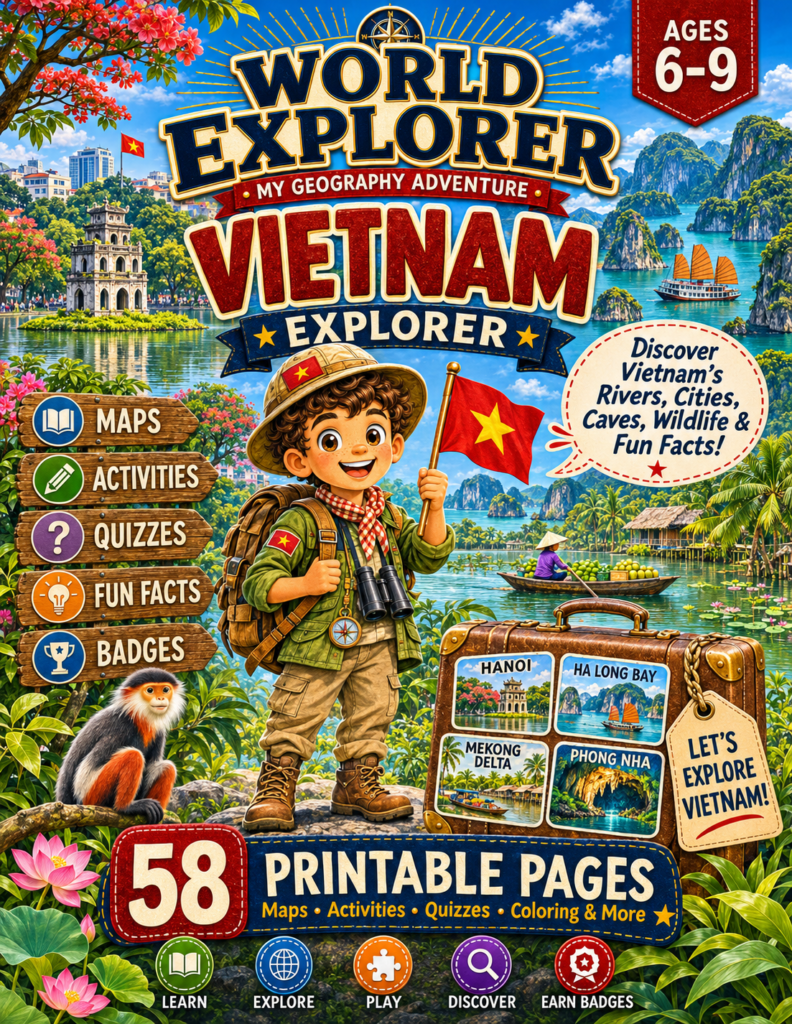
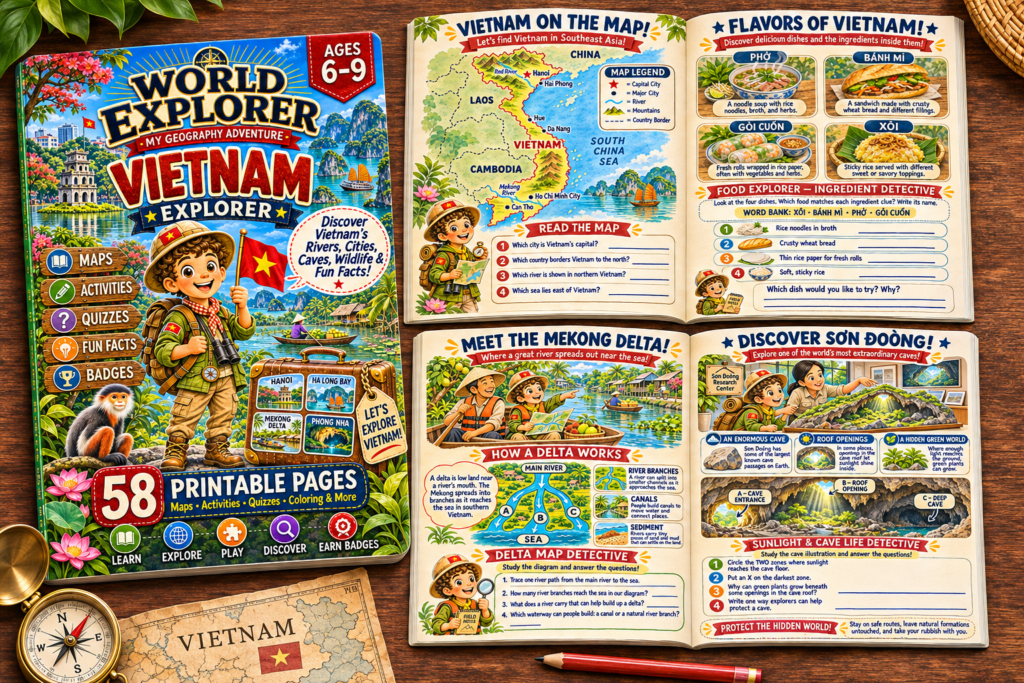
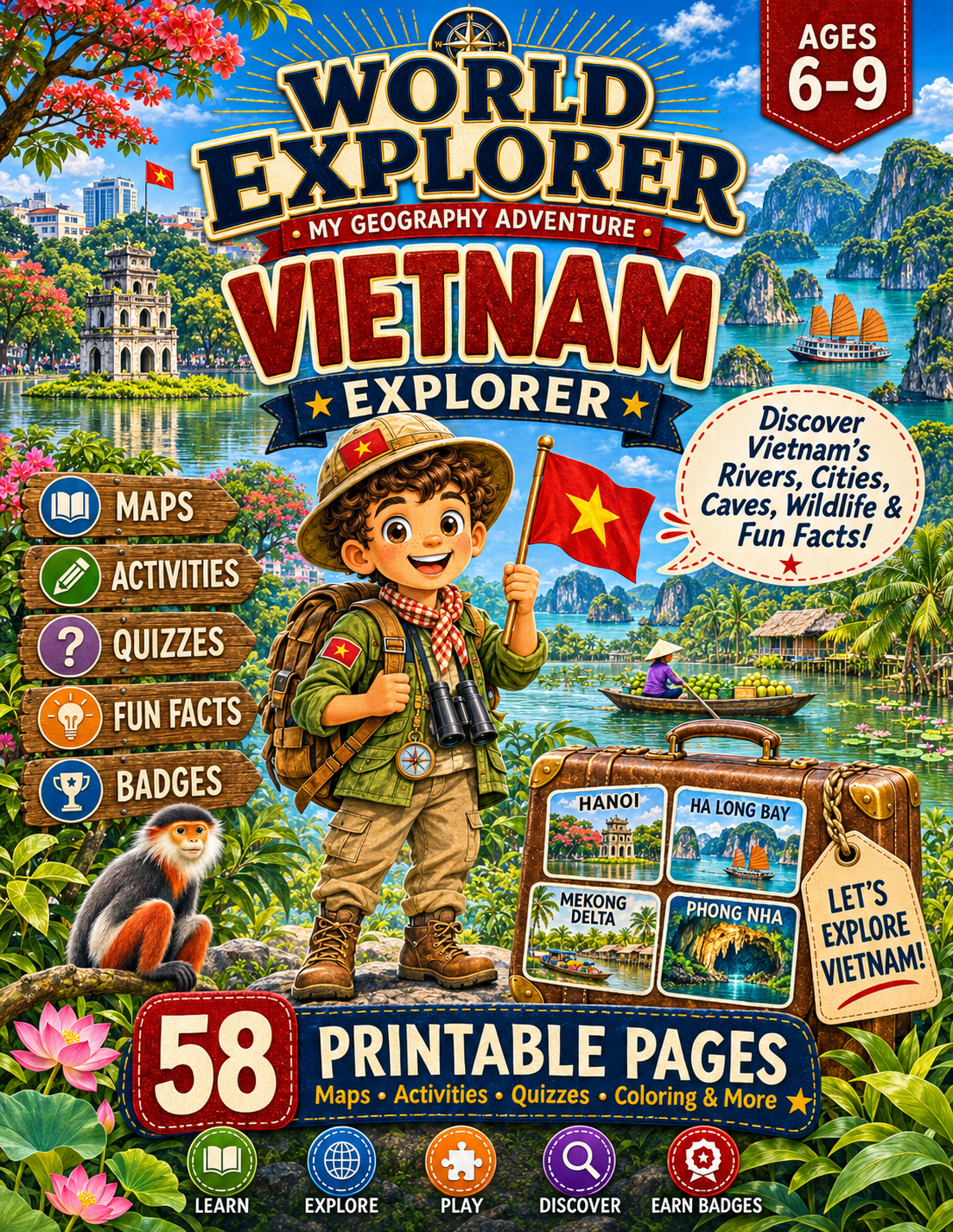
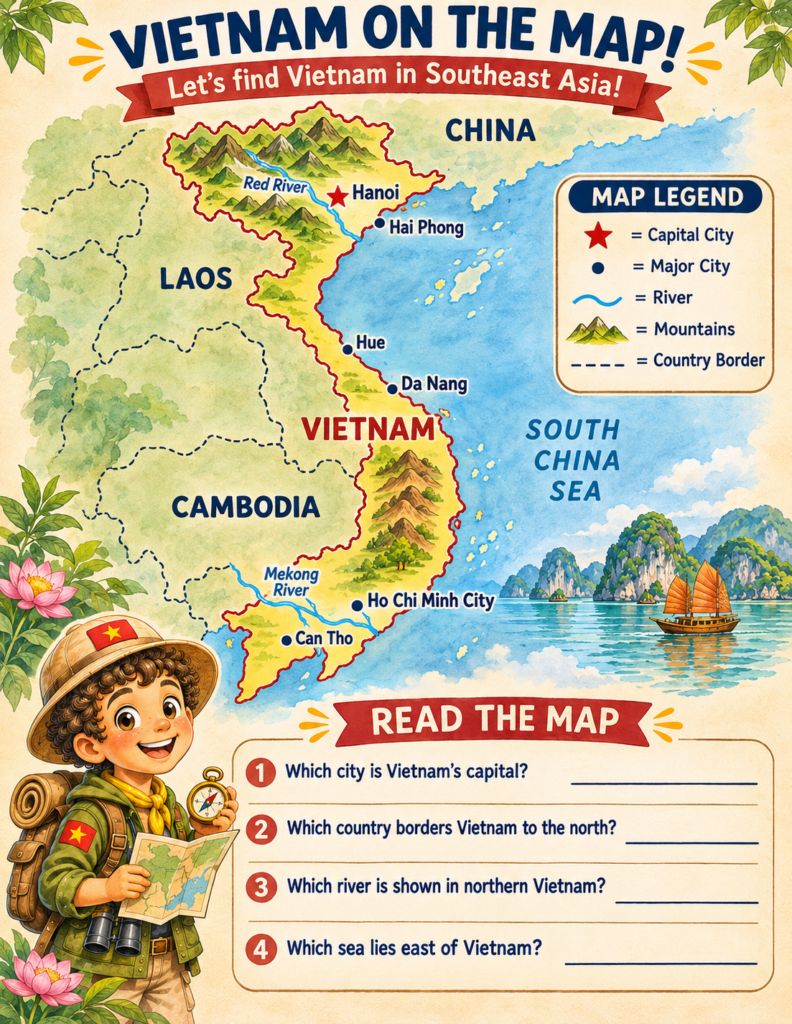
A meaningful geography unit begins by anchoring places on a real map. In the World Explorer Series: Vietnam Explorer workbook—part of the TinyJoy Studio Learning Library—students use compass directions and map legends to explore six distinct explorer regions: the Northern Mountains, Red River Delta, Central Coast, Central Highlands, Southeast, and Mekong Delta.
Rather than stopping at one capital city, the workbook introduces twelve real destinations from north to south—including Hanoi, Hai Phong, Ha Long, Hue, Da Nang, Hoi An, Nha Trang, Da Lat, Buon Ma Thuot, Vung Tau, Ho Chi Minh City, and Can Tho. In Vietnam Map Challenge, kids plot six major cities on the map, solve compass direction questions, and match rivers to their deltas.
Historic Landmarks, Living Traditions, and Everyday Culture
Once children understand the map, they step into eight architectural and natural landmarks across Vietnam—matching Ha Long Bay’s limestone islands, Hanoi’s Temple of Literature, Trang An’s river caves, Hue Imperial City, Hoi An Ancient Town, Da Nang’s Dragon Bridge and Golden Bridge, and Landmark 81 in Ho Chi Minh City.
Cultural lessons connect landmarks to the people who live there:
- Tone Marks and Everyday Phrases: Kids practice polite Vietnamese greetings (Xin chào!, Cảm ơn!, Xin lỗi!, Tạm biệt!) while noticing how tone marks sit above and below Latin letters.
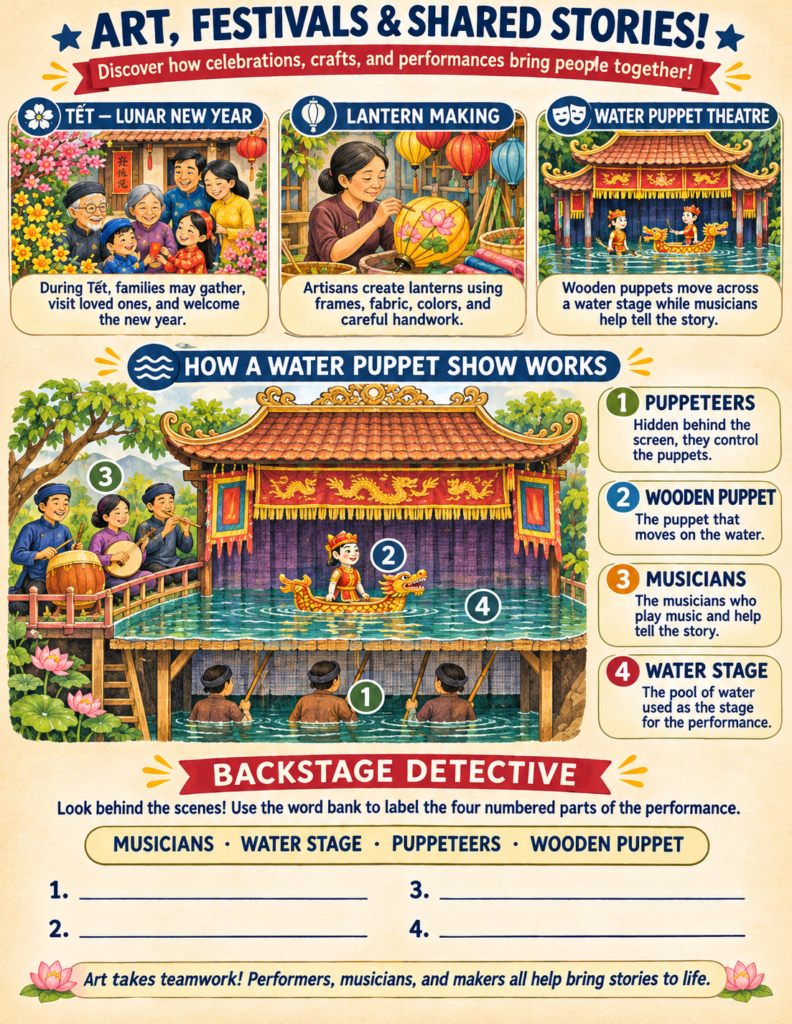
- Symbols, Street Food, and Storytelling: Students examine national symbols (the lotus, áo dài, and nón lá conical hat), match ingredients in phở, bánh mì, gỏi cuốn, and xôi, and look behind the scenes of traditional water puppet theatre—labeling hidden puppeteers, musicians, wooden puppets, and the water stage before designing a puppet character of their own.
Mekong Delta Hydrology and Limestone Cave Chemistry
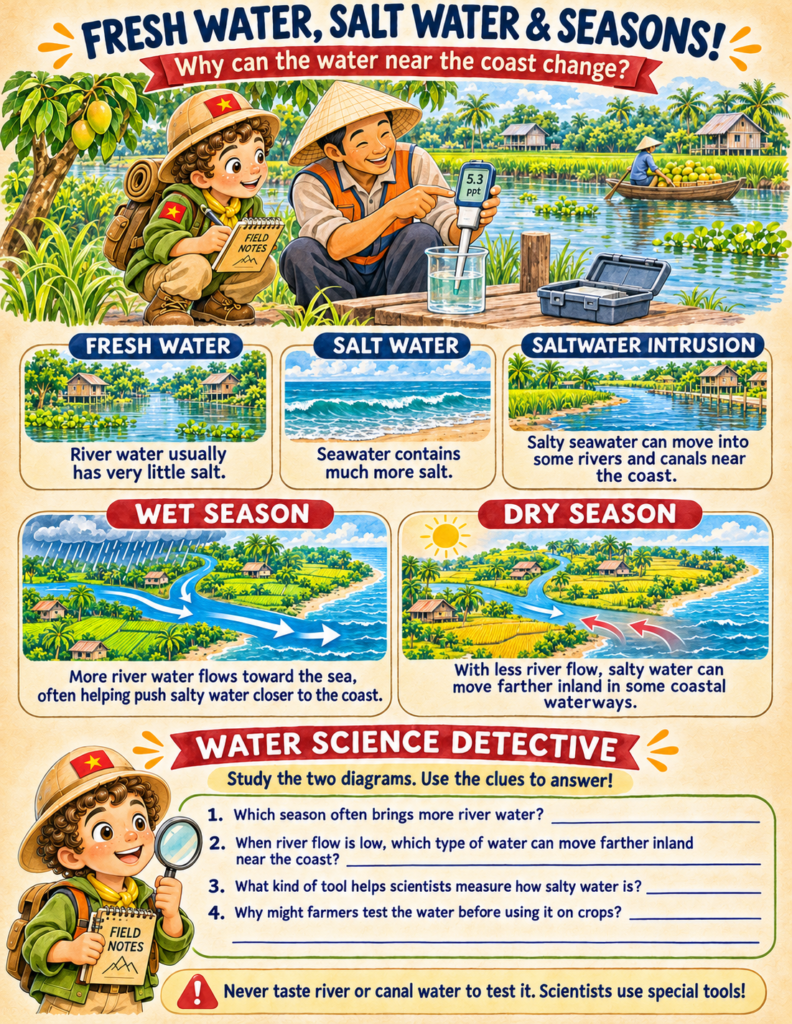
What makes this workbook stand out from basic coloring packets is how deeply it integrates Earth science and community problem-solving. In the Mekong Delta unit, children trace how a river splits into branches and deposits sediment near the sea, compare wet-season freshwater flow with dry-season saltwater intrusion, and design a water-smart community with raised walkways, footbridges, and freshwater storage tanks.
Next, students head underground into Phong Nha-Ke Bang National Park and Sơn Đoòng Cave to investigate karst geology:
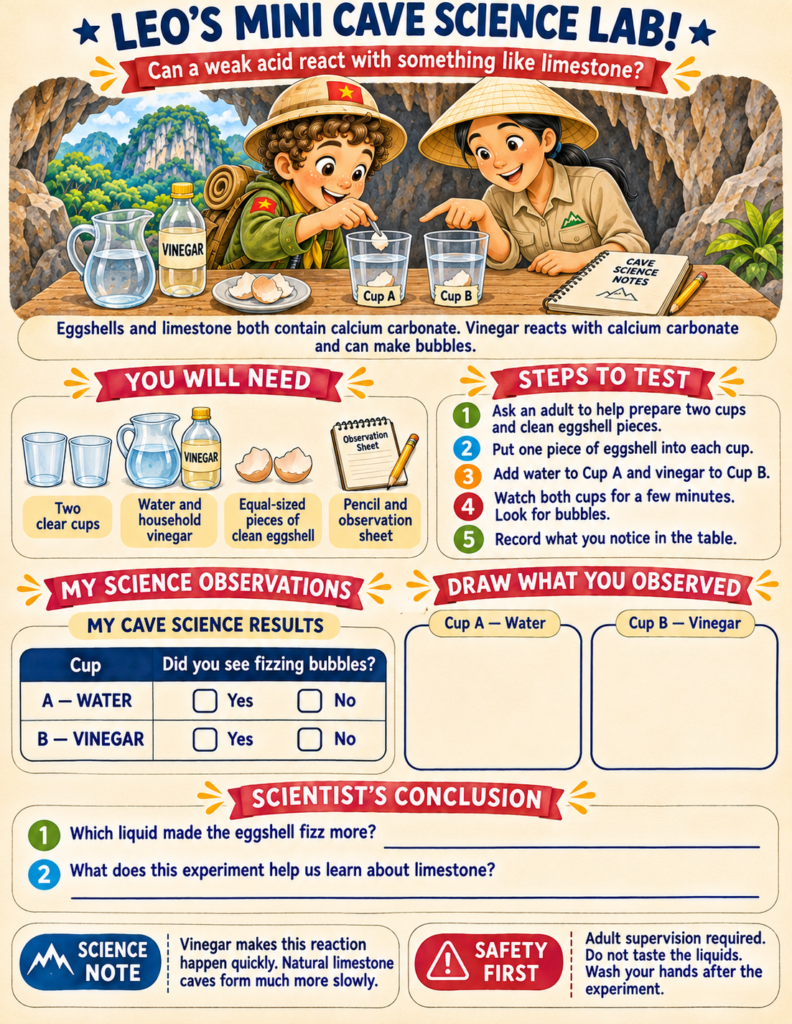
- Cave Formation and Cross-Sections: Kids sequence how slightly acidic rainwater dissolves cracks in limestone over thousands of years, label stalactites, stalagmites, columns, and underground streams, and discover why sunlight shining through cave roof openings allows green plants to grow underground.
- Tabletop Vinegar-and-Eggshell Experiment: In Leo’s Mini Cave Science Lab!, families use two clear cups, water, household vinegar, and clean eggshell pieces (which contain calcium carbonate just like limestone) to observe fizzing bubbles firsthand and record their findings.
Rare Wildlife, Coordinate Maps, and Screen-Free Puzzles
Biology lessons introduce six remarkable species adapted to Vietnam’s diverse habitats—from the rare forest-dwelling saola, red-shanked douc, and Cat Ba langur to wetland sarus cranes, fin-walking mangrove mudskippers, and nesting green sea turtles. Children also build a mangrove food-web diagram and practice national park ranger rules.
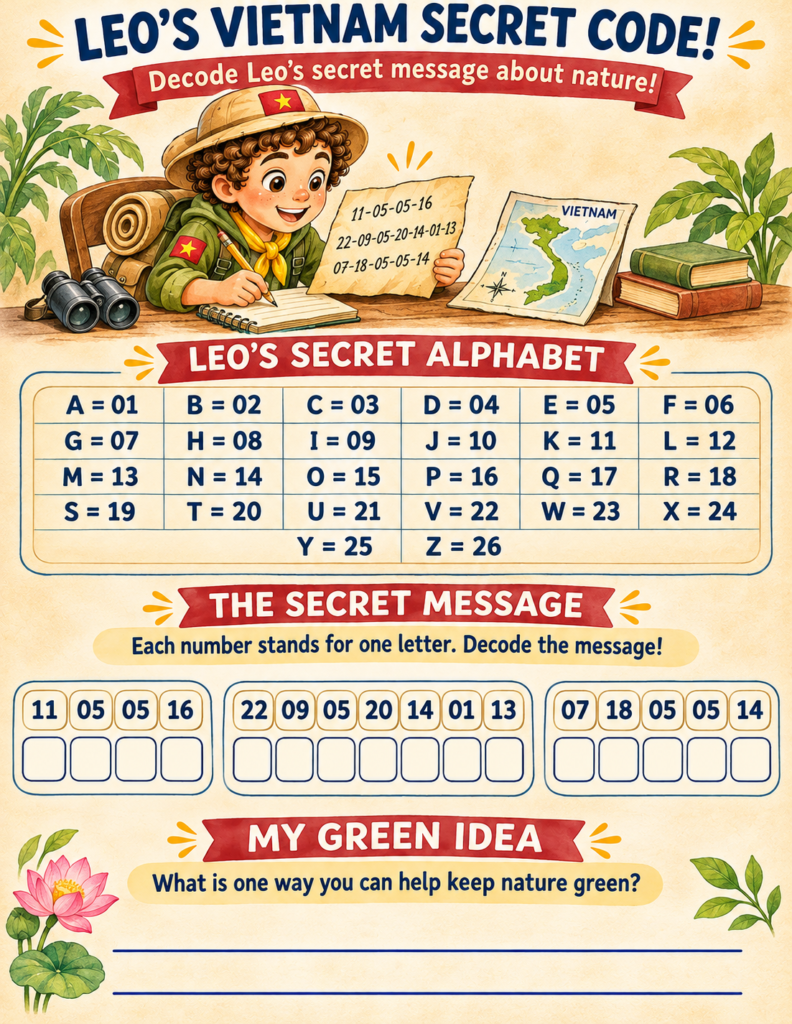
For parents building a library of screen-free homeschool activities, the final puzzle section strengthens observation and logic through an underground cave maze, a six-difference coastal scene, a number cipher, a category odd-one-out check, and Vietnam Explorer Grid Challenge using A1–G7 coordinates.
Flexible Ways to Use This Workbook at Home
With 58 printable pages and a complete three-page Answer Key included at the back, the packet adapts easily to different homeschool and classroom schedules:
- Three-to-Four-Week Geography Block: Work through two or three pages per sitting. Pair the Flavors of Vietnam lesson with rolling fresh rice-paper spring rolls (gỏi cuốn) together, or run the vinegar-and-eggshell cave experiment during a Friday science session. Families mapping out a year of learning adventures at home can easily anchor their Southeast Asian geography unit around this printable.
- Multi-Age Sibling or Co-Op Learning: Confident readers (ages 8–9) can independently complete the compass map challenges, saltwater intrusion questions, cave cross-sections, and grid coordinates. Younger siblings (ages 6–7) can work alongside them on the wildlife habitat sorting, find-and-count discovery scene, water puppet design, and Hoi An riverside coloring page.
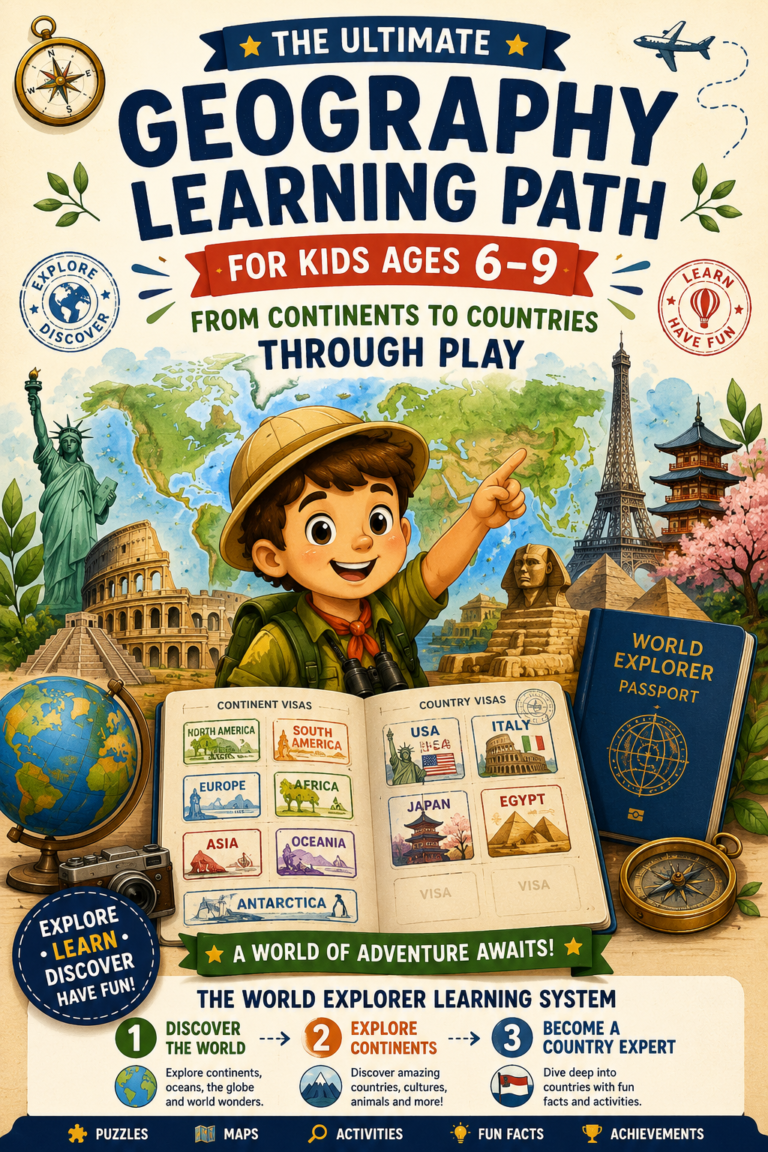
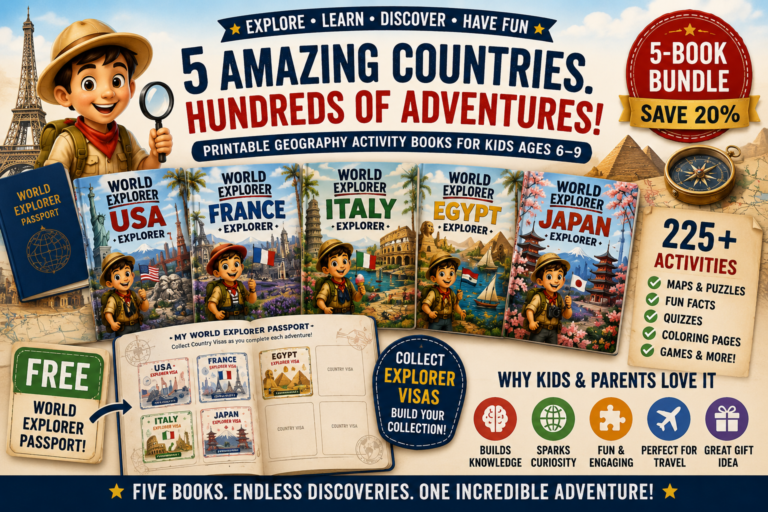
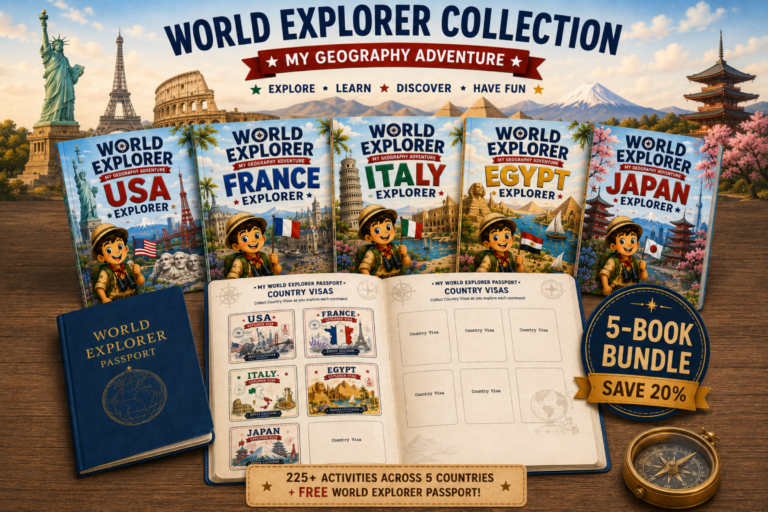
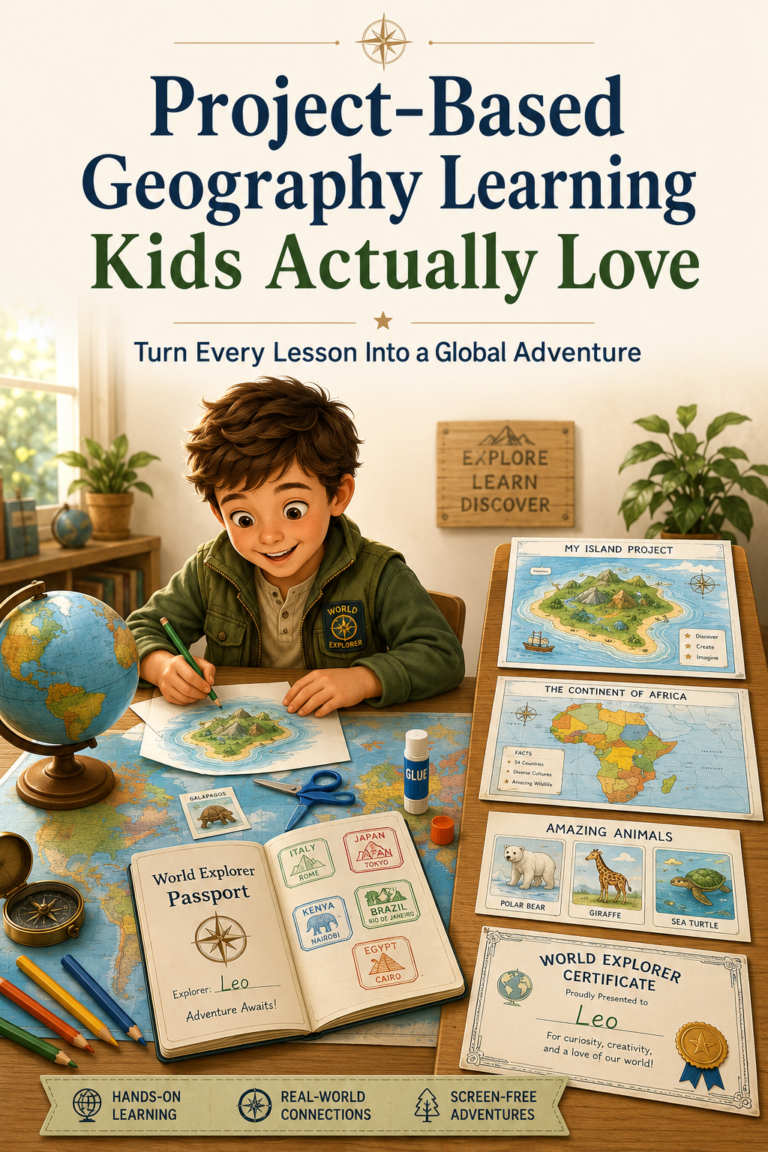
- Collectible Passport Progression: Kids begin on page 2 by designing their own explorer badge and signing their explorer promise, and finish by cutting out their Vietnam Explorer Visa and signing their Certificate of Exploration. If your family is following our structured geography learning path for kids, each earned visa gives children a tangible record of every country they explore.
Ready to Start Your Vietnam Expedition?
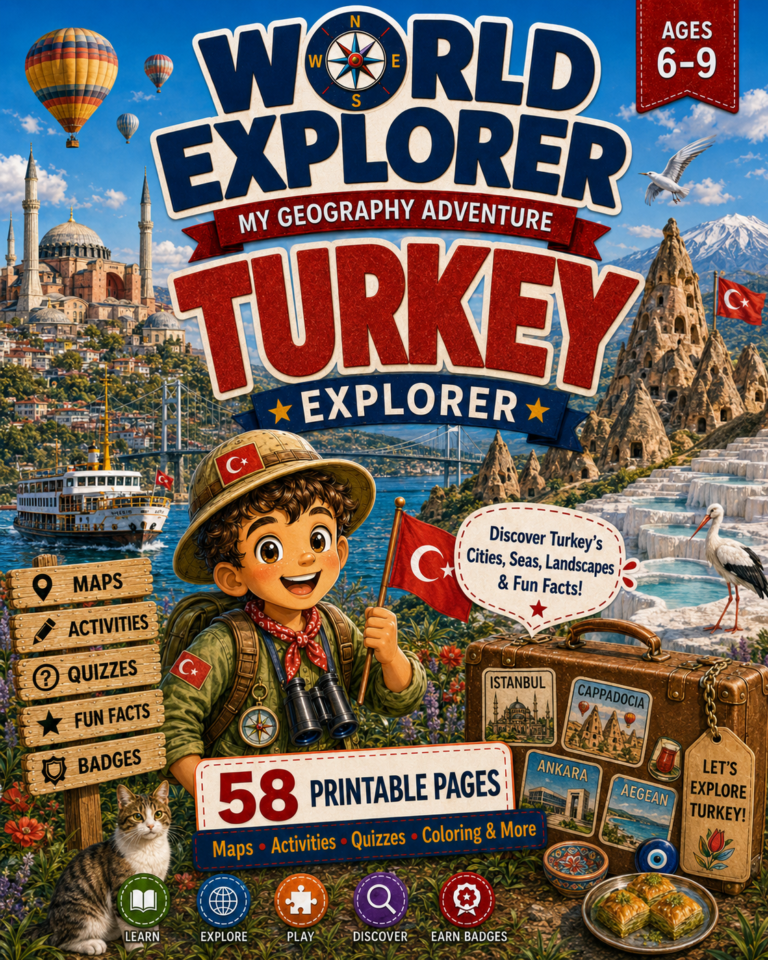
If you want a thorough, screen-free Vietnam unit study for kids that brings Mekong Delta geography, limestone cave science, cultural traditions, and map skills together in one organized printable, World Explorer Series: Vietnam Explorer is ready to print and use. You can also browse our complete world geography curriculum for kids to pick your next destination.