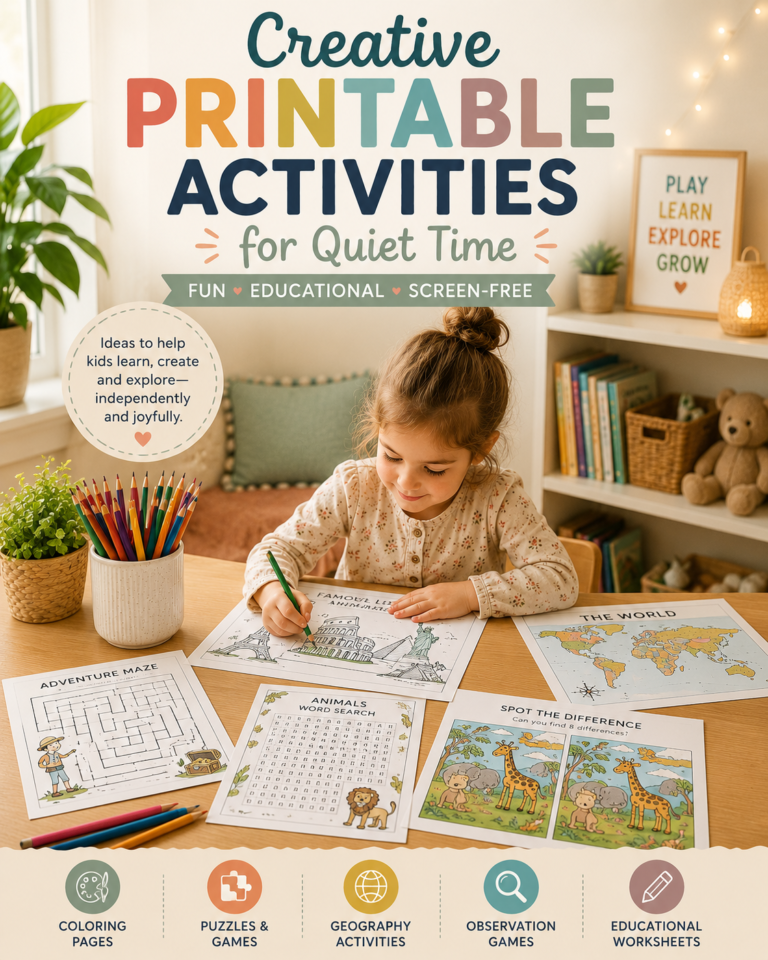
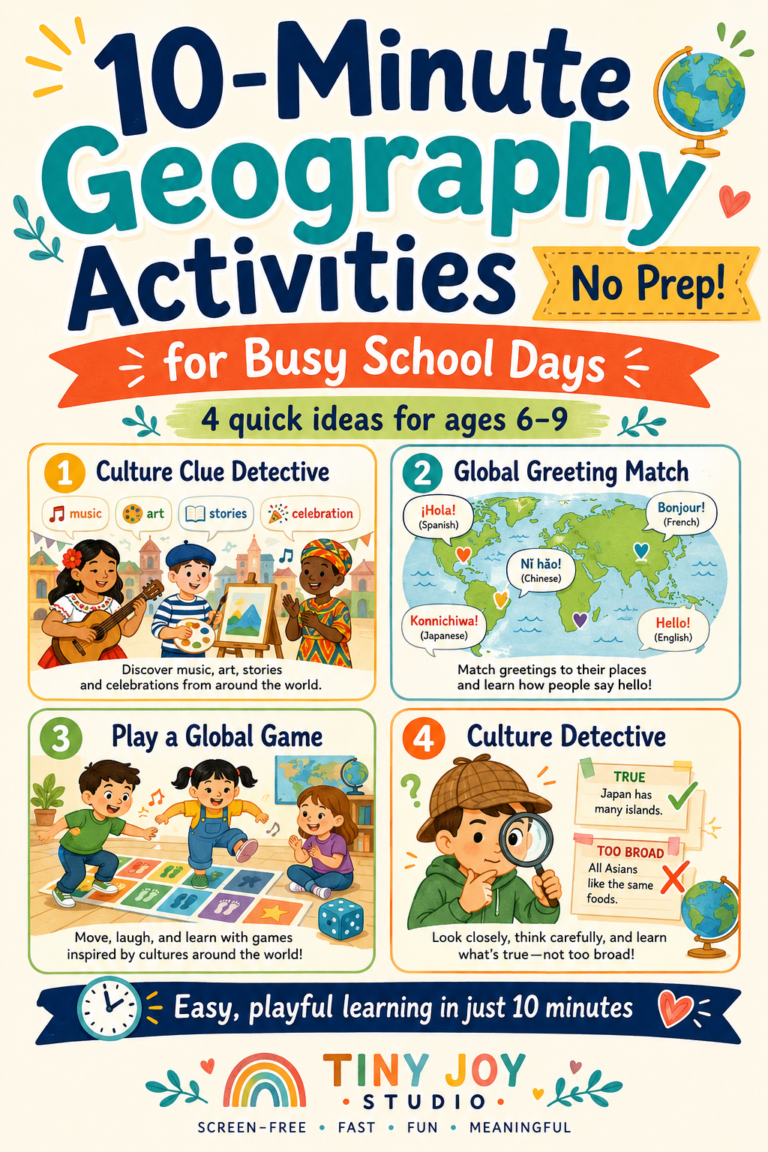
The Complete Tiny Joy Studio Learning Library: Explore, Discover, Think & Create
Homeschool families and elementary educators rarely struggle to find printable worksheets; they struggle to find resources that respect how children actually think. Designed to turn passive memorization into active reasoning, the tiny joy studio learning library brings together seven distinct, screen-free curriculum lines for learners ages 5 to 12. Instead of disconnected coloring pages or trivia drills, every workbook in this catalog treats young learners as capable investigators—asking them to weigh evidence, compare systems, test variables, and defend their conclusions.
Whether you are planning a full homeschool year, assembling a seasonal unit study, or looking for meaningful afternoon enrichment, this guide maps out the entire Tiny Joy Studio ecosystem. Bookmark this hub as your central directory: as new titles and series launch, we will continue expanding each branch right here.

1. Geography Learning Path: A Three-Step Ladder Around the World
Most elementary geography programs jump straight into isolated state facts or random country trivia before children understand how maps, climates, and human settlements actually work. Our geography learning path for kids solves that problem with a deliberate, three-step learning ladder that builds spatial confidence from the big picture down to local realities:

- Step 1: Global Foundations (Continents, Oceans & Map Literacy). Children learn how globes translate onto flat maps, how latitude and climate zones shape environments, and how to read scale, legends, and coordinates without confusion.
- Step 2: Regional Systems & Physical Regions. Learners examine how mountain chains, river basins, coastlines, and climate corridors connect neighboring territories and influence trade, agriculture, and daily life.
- Step 3: Individual Country Deep Dives. Once the global and regional frameworks are in place, students explore specific nations through authentic cultural geography, landscape adaptation, and comparative evidence rather than tourist clichés.

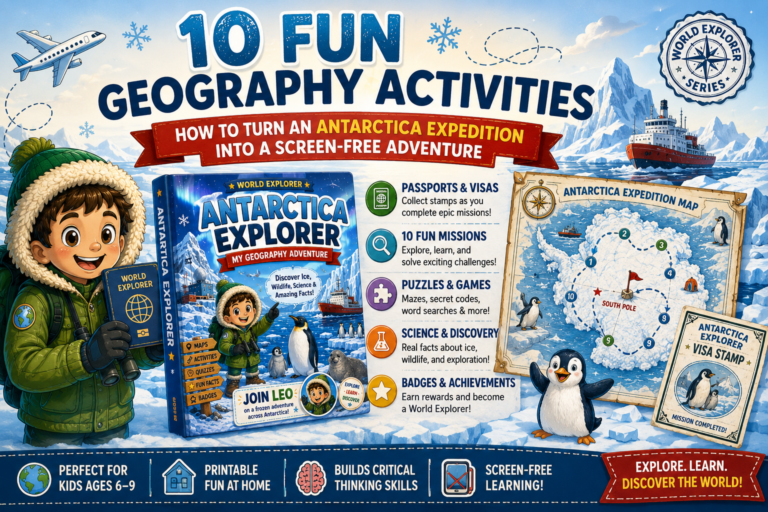
Ready to explore the world? Discover our growing collection of country workbooks, complete geography adventures, earn collectible visas, and build your very own World Explorer Passport.
2. Earth & People: Thematic Science, Living Systems & Cultural Bundles
While the Geography Learning Path moves systematically across the globe, Earth & People offers modular, topic-driven investigations for ages 6–10 that explore how our planet functions and how human communities adapt to it. Each 28- to 30-page workbook focuses on one high-interest phenomenon—from solar physics and nocturnal pollinators to floating boat schools and global transit networks—and pairs empirical data analysis with real-world case studies.
To make curriculum planning simple and economical, these standalone titles are grouped into curated thematic collections across natural science, physical earth systems, and human geography:
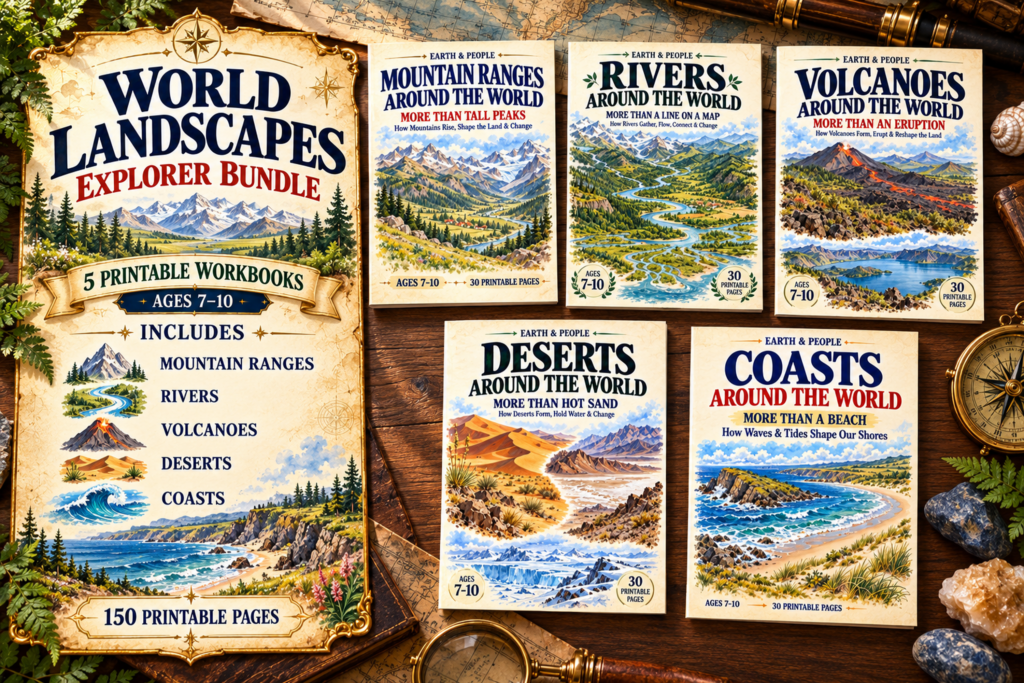
- Physical Earth & Landforms: Investigate tectonic uplift, river watersheds, volcanic mechanics, coastal erosion, and atmospheric motion with the Dynamic Earth Workbook Bundle and the World Landscapes Workbook Bundle for Kids.
- Living Systems & Global Habitats: Explore canopy microclimates, coral symbiosis, savanna root networks, seasonal wetlands, and arctic permafrost inside the Biomes and Ecosystems Workbook Bundle for Kids alongside our broader collection of nature workbooks for kids.
- Astronomy & Planetary Mechanics: Unify axial tilt, solar energy, lunar phases, eclipses, and constellation depth models with the Earth and Space Science Bundle for Kids.
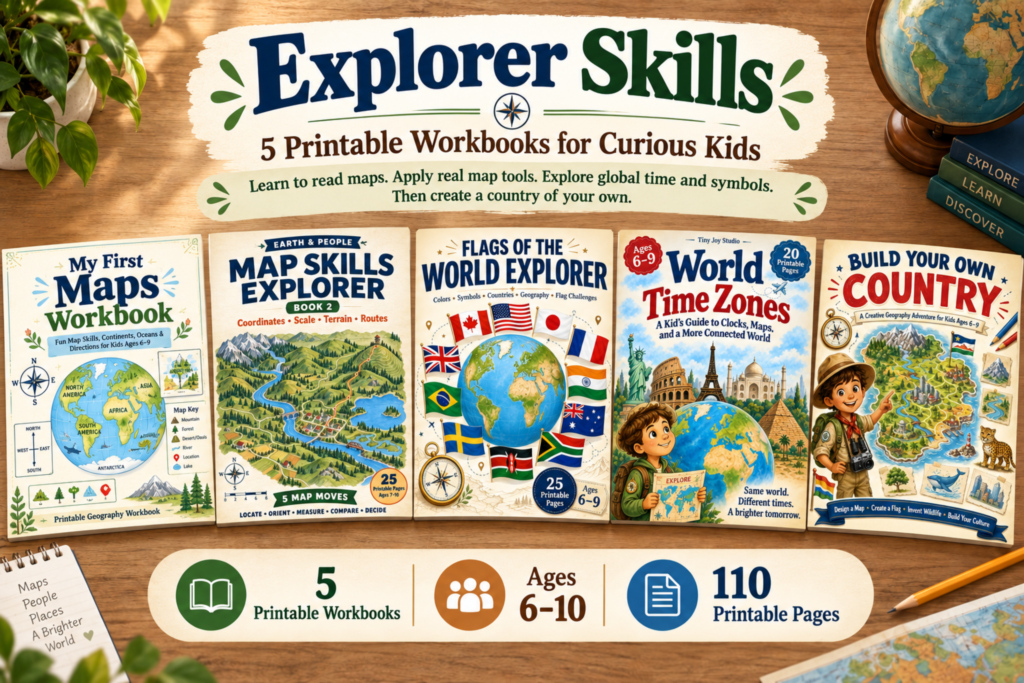
- Human Culture & Navigation Skills: Examine how communities build homes, schools, festivals, and trade routes across contrasting environments through the People and Places Workbook Bundle, the Amazing Earth Adventures Workbook Bundle, and the Explorer Skills Workbook Bundle.


3. Time Traveler: 18 Stand-Alone Historical Adventures with Mia
History clicks for elementary learners when the past feels like a lived human story rather than a wall of dates. Built as an interactive history for kids curriculum, the Time Traveler series follows Mia across 18 self-contained historical adventures.

The Time Traveler Chronicle: The page shown above comes from the Time Traveler Chronicle, a companion document that connects all 18 historical adventures. After completing each book, young explorers reflect on what they’ve discovered and collect a unique Time Seal found inside that adventure’s workbook. Over time, their Chronicle becomes a personal record of their journey through history.
Each stand-alone Time Traveler adventure includes approximately 38–42 printable pages filled with historical discoveries, interactive activities, puzzles, and meaningful challenges.
Each volume drops learners into a distinct historical era where they examine everyday life, primary-source clues, maps, inventions, and decision-making dilemmas alongside Mia. Because every book is engineered as a complete stand-alone mission, families can follow historical chronology from start to finish or jump directly into whichever period matches their current read-aloud or homeschool unit.


4. Focused History: Deep-Dive Unit Studies on Pivotal Civilizations & Eras
When a child develops a fascination with a major civilization or turning point, a quick overview is rarely enough. Focused History slows down the pace so learners can examine how a society actually operated—analyzing architecture, daily labor, governance, trade networks, primary evidence, and historical cause and effect.
How is Focused History different from Time Traveler? While Time Traveler brings history to life through immersive, story-driven adventures alongside Mia, Focused History takes a different approach. Instead of traveling through an era as part of an unfolding adventure, learners become historical investigators, examining one civilization, society, or turning point in greater depth. They analyze evidence, explore how people lived and made decisions, and uncover the causes and consequences behind major historical developments. Both series encourage critical thinking, but they offer two distinct ways to experience the past: live the adventure or investigate the history behind it.
Rather than skimming surface trivia, each dedicated unit builds sustained analytical depth around a single historical subject, including:
- Ancient Civilizations: Investigate Nile agriculture, monumental engineering, daily records, and civic life with our Ancient Egypt activities for kids and our comprehensive Ancient Rome unit study.
- Defining Historical Turning Points: Examine primary perspectives, strategic geography, and civic debates with our American Revolution unit study for homeschool, plus an expanding catalog of focused world and national history studies.


5. Young Naturalist: A Foundational Field Journal & 9 Four-Week Outdoor Units
Nature study often stalls when families are handed either blank sketchbook pages with zero guidance or dense field guides written for adults. The Young Naturalist line bridges that gap for ages 5–12 with a two-part outdoor learning system:


- The Foundational Entry Guide: Children begin their outdoor habit with My First Nature Journal—a gentle, sensory-rich nature journal for kids (ages 5–9) that establishes the “Choose, Observe, Wonder” rhythm and the ethical “Look, Don’t Take” stewardship code.
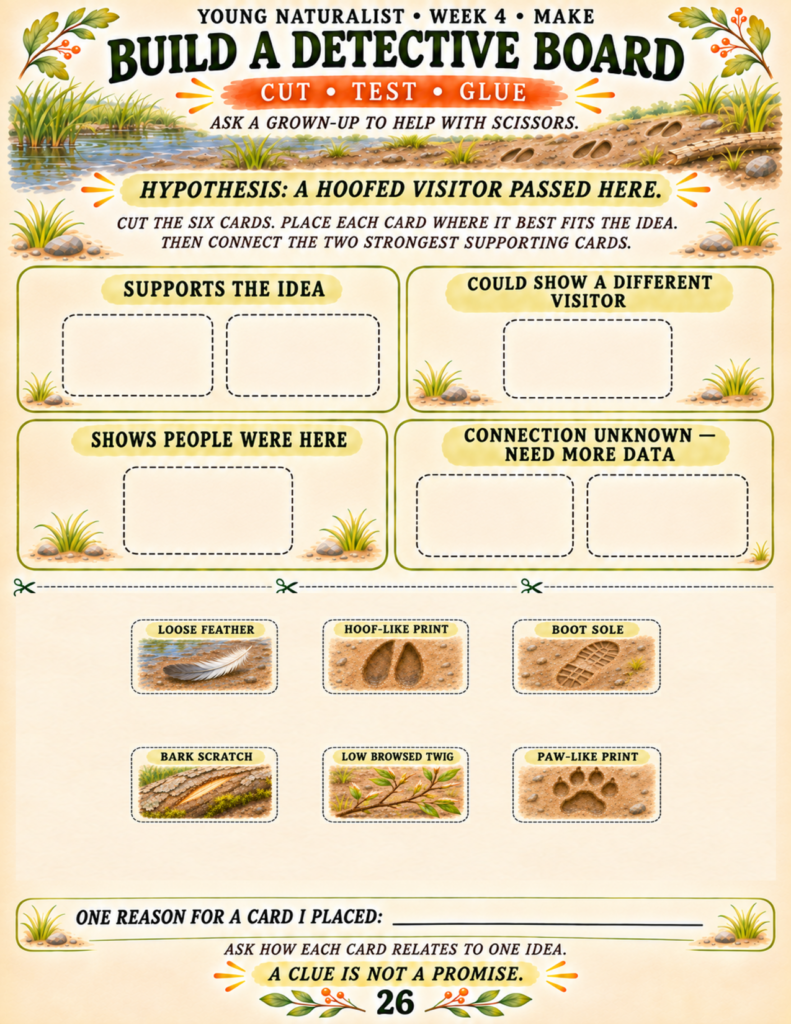
- Nine 4-Week Specialized Field Units (Ages 7–12): Once learners are ready for structured scientific fieldwork, nine self-paced 32-page units guide them through insects, trees, forest floors, animal tracks and feathers, weather, rocks and soil, and more. Every unit follows a calm, predictable 4-week cycle (Learn → Think → Go → Observe → Make → Check) that works equally well in a city park, backyard, or forest trail.
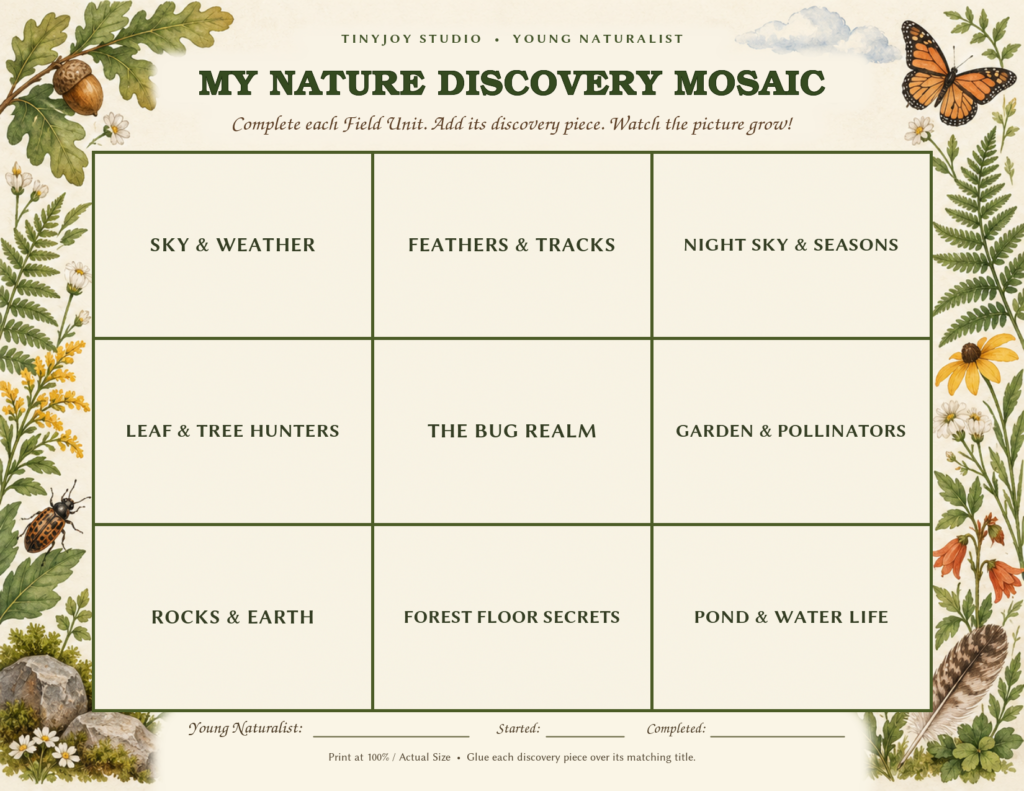
- The Collectible 9-Piece Discovery Mosaic: Completing each of the nine 4-week field units unlocks one full-color 3 х 2-inch mosaic tile that fits into the master My Nature Discovery Mosaic poster—turning a full year of outdoor observation into a tangible visual achievement.
6. Business Evolution: 10 Stand-Alone Microeconomics & Decision Adventures
Children encounter prices, trade-offs, waiting lines, and teamwork every day, yet economics is rarely taught until high school—and usually through abstract graphs. Business Evolution turns microeconomics and strategic problem-solving into 10 playable, story-driven challenges where learners step into the manager’s shoes.
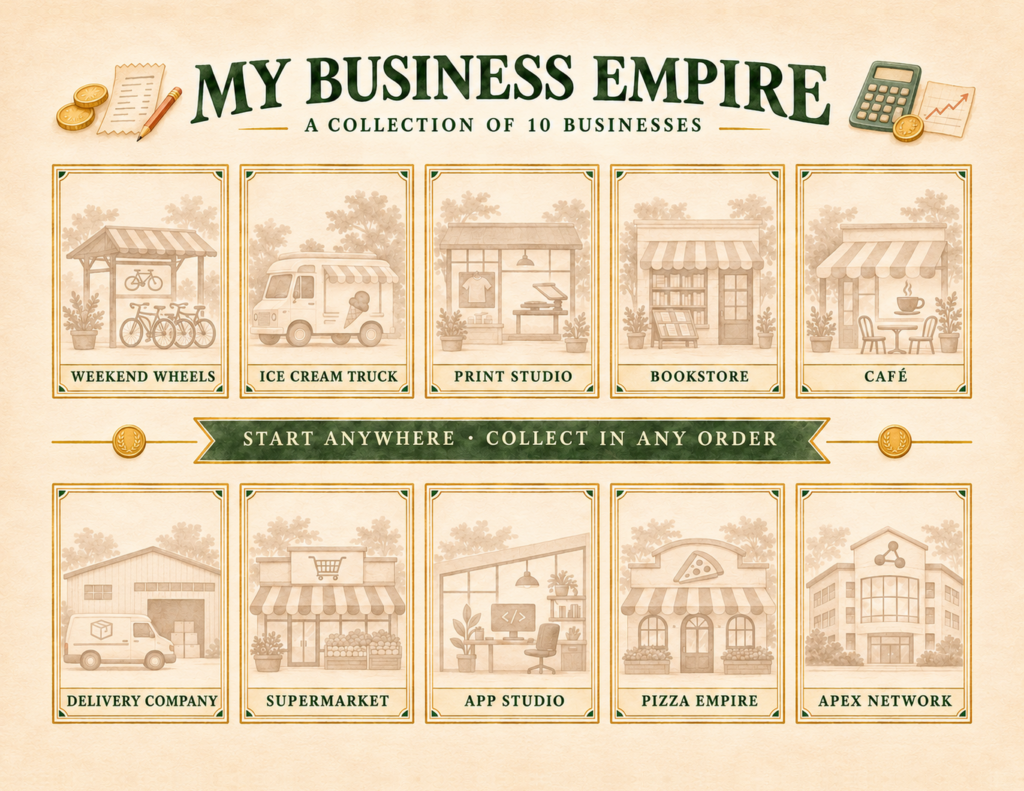
Every book in the series is a complete stand-alone adventure—children can start anywhere and collect in any order, earning a collectible business card from each title to build their My Business Empire portfolio:


- Weekend Wheels (Opportunity Cost & Capacity): Available as our flagship business workbook for kids, this simulation challenges learners to make smart booking choices when weekend time and rental equipment are limited.
- Ice Cream Truck (Forecasting & Inventory): Use weather clues and neighborhood patterns to prepare the right stock before customers arrive.
- Print Studio (Quality Control & Rework): Balance production speed, craftsmanship, and the hidden cost of fixing avoidable mistakes.
- Bookstore (Cash Flow & Cash Reserves): Keep the shop ready to pay bills on time—even when customer payments arrive later.
- Café (Team Roles & Workflow): Organize staff roles and station handoffs so orders keep moving and customers stay happy.
- Delivery Company (Logistics & Deadlines): Plan efficient delivery routes while honoring every time promise.
- Supermarket (Pricing & Demand): Featured in our pricing and demand workbook for kids, this price lab tests how different retail prices change shopper behavior and profit.
- App Studio (Market Research & Idea Validation): Gather real customer evidence to test an idea before investing time and money into building it.
- Pizza Empire (Scaling & Standardization): Expand a successful shop into multiple locations without losing quality or operational control.
- Apex Network (Supply Chains & Bottlenecks): Keep interconnected businesses running smoothly when one link in the chain slows down or fails.

7. Prehistoric Earth: Evidence-Based Paleontology & Deep-Time Missions
Popular dinosaur books routinely lump millions of years of prehistoric life into a single cartoon jungle where T. rex battles Stegosaurus beside woolly mammoths. Prehistoric Earth replaces toy-box myths with evidence-driven paleontology missions for ages 6–10, training children to separate what fossils directly prove from what scientists infer and what remains unknown.
- Mesozoic Ecosystems & Park Engineering: Learners separate Late Jurassic and Late Cretaceous worlds, evaluate anatomical adaptations, and design balanced ancient habitats in our dinosaur workbook for kids.
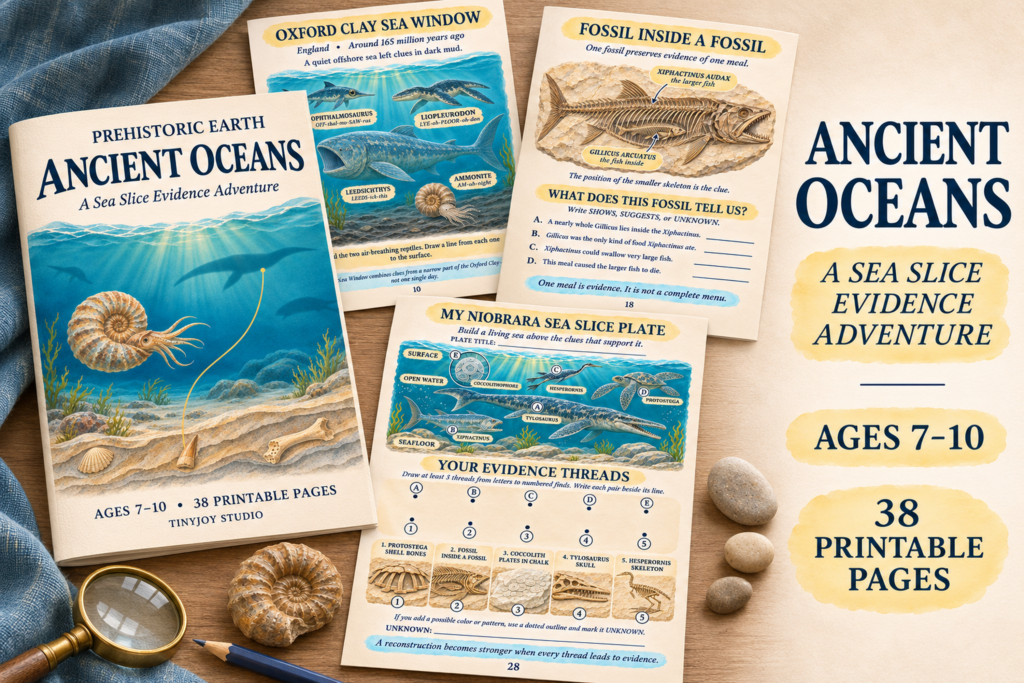
- Prehistoric Marine Worlds: Investigate ancient marine reptiles, ammonites, fossilized seafloors, and deep-ocean food webs with our ancient oceans workbook for kids.
- Pleistocene Megafauna & Documentary Editing: Put young learners in the director’s chair to audit Mammoth Steppe and Rancho La Brea tar-pit evidence in our ice age workbook for kids, with additional prehistoric eras joining the series.


How to Choose Your Starting Point in the Tiny Joy Studio Library
Because every workbook in the tiny joy studio learning library is designed for immediate, low-prep printing, you do not need to follow a rigid grade-level script. Use this quick matrix to match a series to your learner’s current curiosity and age:
| If Your Learner Loves… | Best Starting Series | Recommended Ages | Key Cognitive Skills Practiced |
| Maps, Travel & World Cultures | Geography Learning Path or Earth & People | Ages 6–10 | Spatial reasoning, map critique, climate-to-culture adaptation |
| Stories, Artifacts & Ancient Worlds | Time Traveler or Focused History | Ages 7–11 | Chronological sequence, primary-source analysis, cause & effect |
| Bugs, Trees, Weather & Rocks Outdoors | Young Naturalist (Journal + 4-Week Units) | Ages 5–12 | Field observation, variable tracking, scientific honesty |
| Strategy Games, Money & Problem-Solving | Business Evolution (10 Stand-Alone Books) | Ages 8–12 | Trade-off analysis, applied math, systems & workflow logic |
| Dinosaurs, Sea Monsters & Fossils | Prehistoric Earth | Ages 6–10 | Deep-time separation, evidence vs. inference, food-web balance |
Every resource across Tiny Joy Studio shares a consistent educational promise: clear instructions, calm visual design, zero busywork, and genuine intellectual respect for young minds. Explore the series above, pick a single starting mission that sparks your child’s curiosity today, and build a custom, screen-free learning library one discovery at a time.