Explore the Past: An Evidence-Based History & Prehistoric Curriculum for Kids
Teaching young learners to understand the past is one of the trickiest challenges in elementary education. Without a clear framework, history quickly collapses into a blur of disconnected dates, while prehistory turns into a “prehistoric soup” where woolly mammoths, Tyrannosaurus rex, and Roman gladiators somehow share the same timeline. When families search for an explore the past history curriculum for kids, they are rarely looking for another stack of passive coloring sheets or trivia quizzes—they want a structured path that teaches children how we actually know what happened long ago.
At Tiny Joy Studio, our historical and deep-time branch is built on a single guiding principle: the past leaves physical clues, and children can learn to read them. Drawn directly from the Tiny Joy Studio Learning Library, the Explore the Past ecosystem unites three complementary curriculum lines for ages 6 to 11—Prehistoric Earth, Time Traveler, and Focused History—guiding learners from millions of years before written records right into the heart of human civilizations.
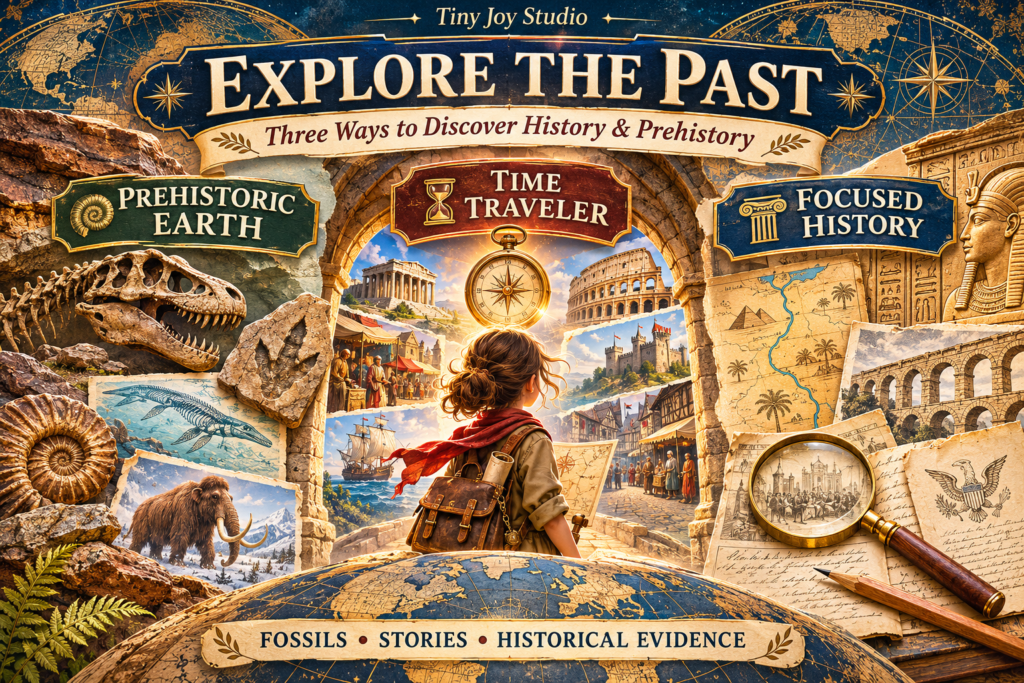
How the Three Branches Work Together
Rather than forcing every child into one rigid textbook format, Explore the Past organizes historical and deep-time inquiry into three distinct lenses:
| Curriculum Branch | Timeframe & Focus | Core Learning Format | Best For |
| Prehistoric Earth | Deep Geological Time (Mesozoic Seas & Land to Pleistocene Ice Age) | 38-page Evidence Missions + 8 foldable double-sided Evidence Cards per book | Building chronological discipline and separating fossil fact from speculation |
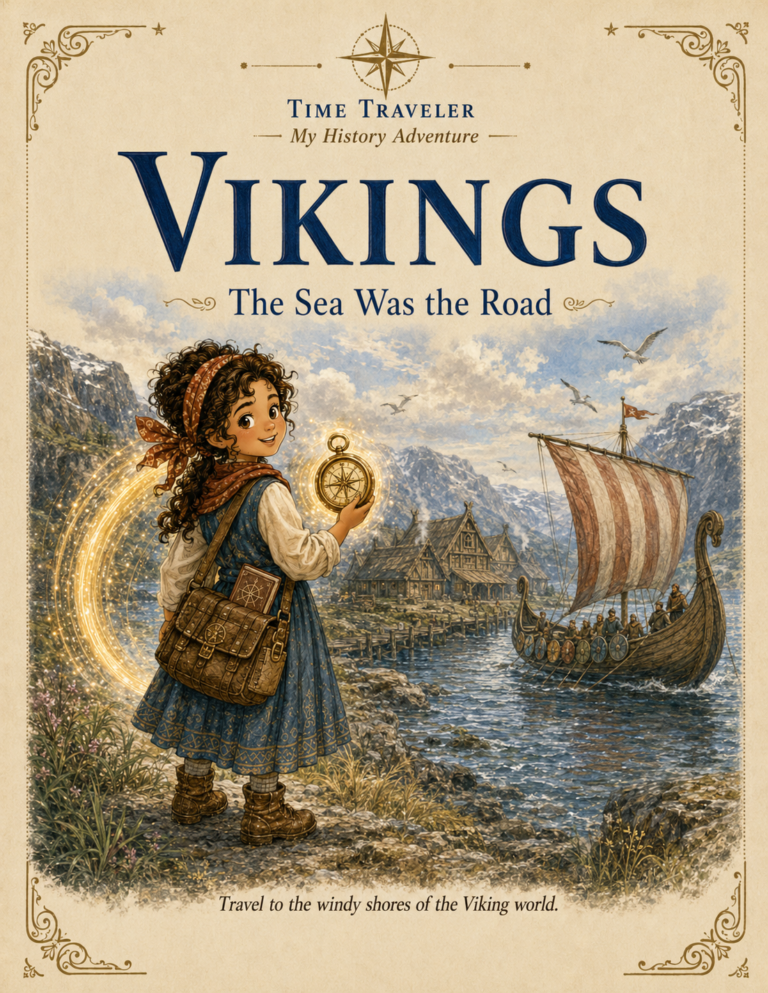
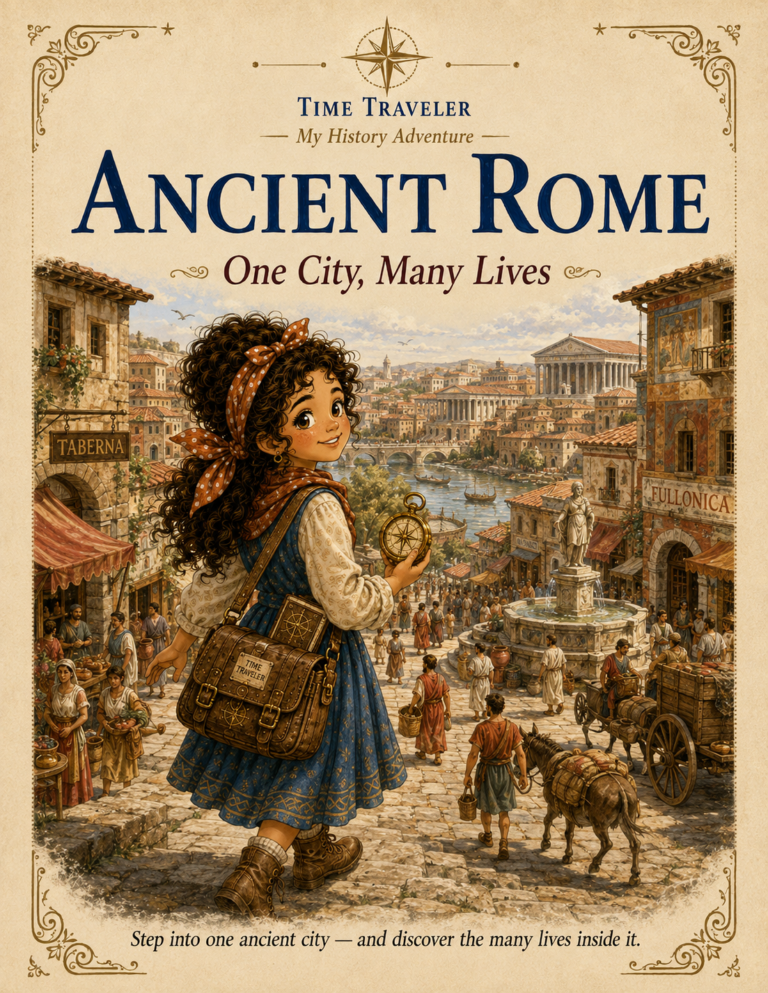
| Time Traveler | 18 Distinct Eras of Human History | Self-contained, story-driven missions alongside Mia | Narrative immersion, everyday life in the past, and flexible era jumping |
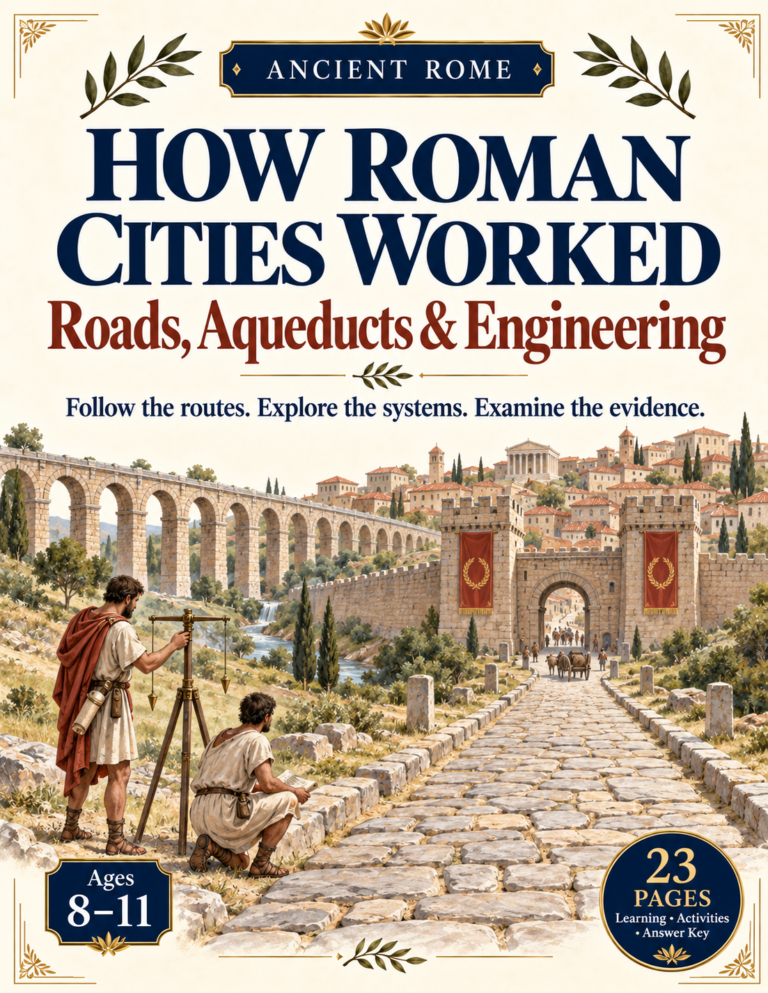
| Focused History | Single Civilizations & Pivotal Turning Points | Deep-dive multi-week thematic unit studies | Sustained analytical depth, primary-source critique, and portfolio projects |
Whether you move chronologically from ancient oceans to modern revolutions or follow your child’s immediate curiosity, every workbook trains the same habit: look at the physical evidence first, weigh what it proves, and recognize what remains unknown.
Branch 1: Prehistoric Earth — Evidence-Based Paleontology & Deep Time
Before children can grasp centuries of human history, they need a grounded sense of deep geological time. Popular media routinely mixes species separated by tens of millions of years and presents artistic guesses as settled facts. Prehistoric Earth (designed for ages 7–10) puts young learners in the investigator’s seat, training them to separate what fossils directly show from what scientists infer and what remains unknown.

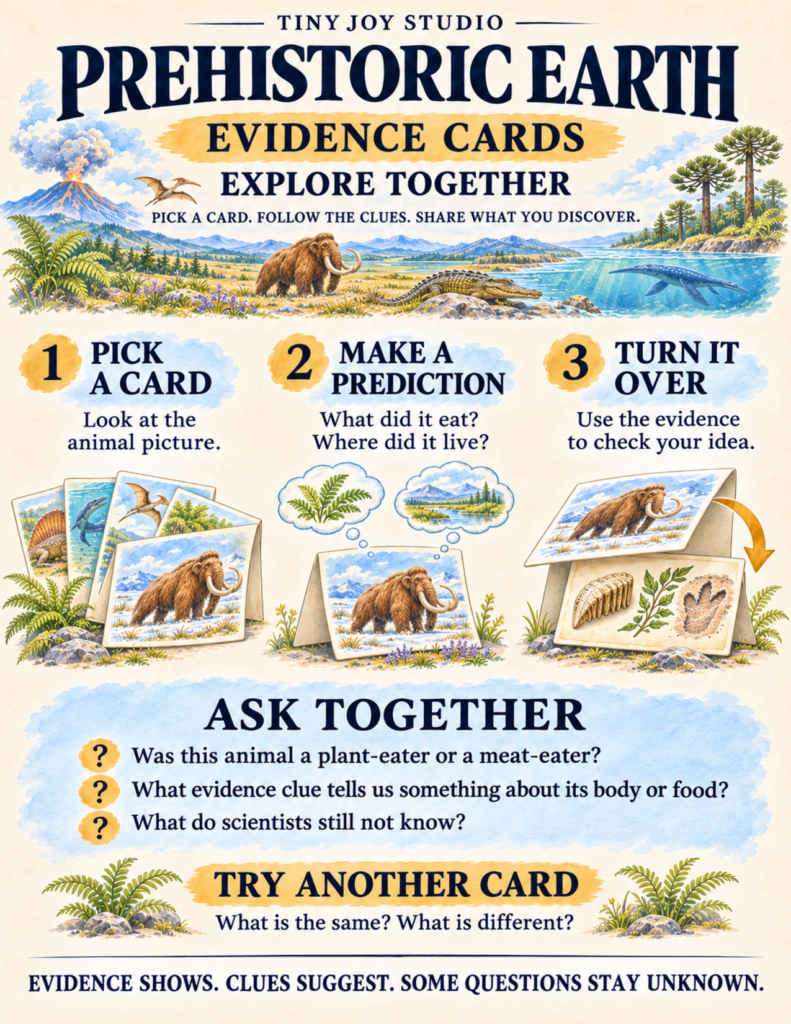
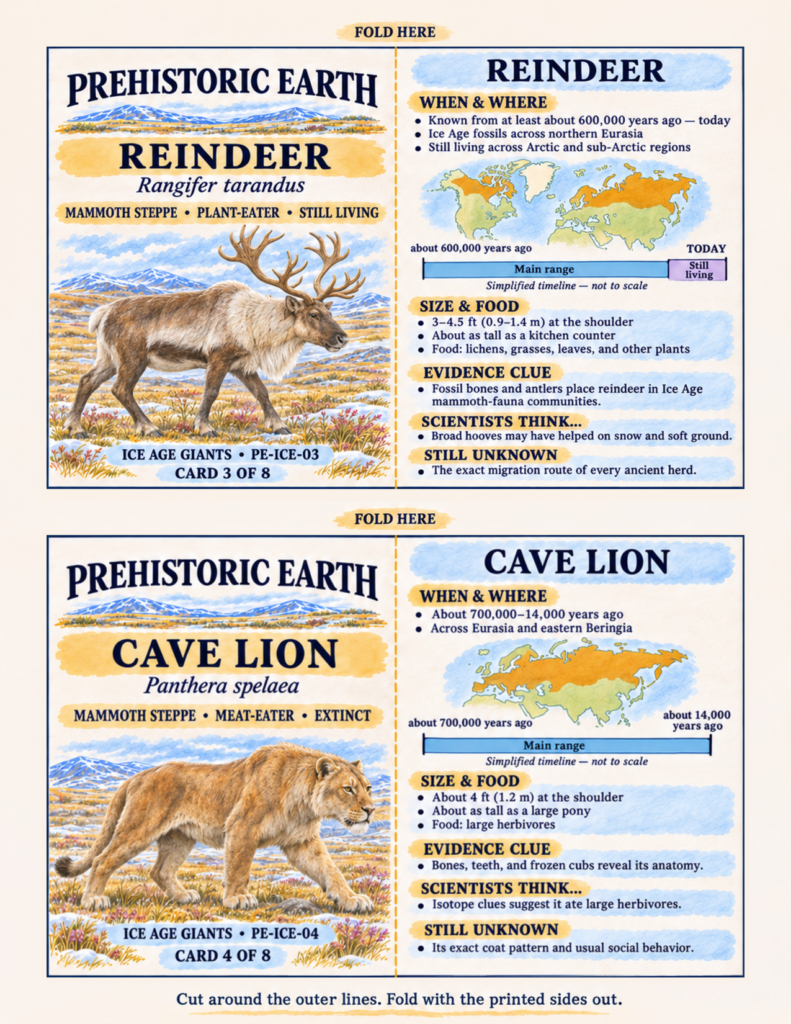
Each 38-page mission focuses on specific, verified fossil windows and includes eight foldable, double-sided Prehistoric Earth Evidence Cards with range maps, relatable scale benchmarks, and scientific mystery prompts:


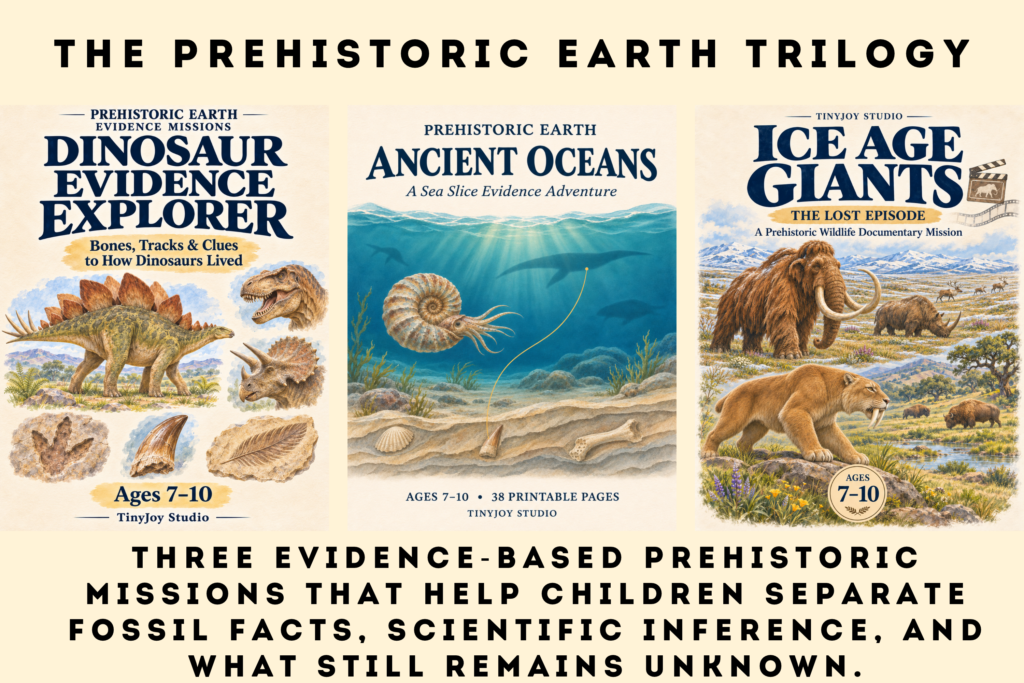
- Mesozoic Land Ecosystems & Fossil Mysteries: In our dinosaur workbook for kids (Dinosaur Evidence Explorer), learners separate Late Jurassic (Stegosaurus) and Late Cretaceous (T. rex) worlds by 83 million years, distinguish true dinosaurs from flying pterosaurs and swimming reptiles, read sauropod trackways, and solve real historical paleontology revisions like Iguanodon’s thumb spike and Oviraptor’s brooding nest.
- Ancient Marine Windows & Seafloor Strata: Our ancient oceans workbook for kids (Ancient Oceans: A Sea Slice Evidence Adventure) takes students into Middle Jurassic England (Oxford Clay) and Late Cretaceous Kansas (Niobrara Chalk). Learners separate air-breathing marine reptiles from gill-breathing fish, audit exaggerated television monster claims against real skeletal scale bars, and tether living ocean creatures to numbered fossils in the rock layers below.
- Pleistocene Megafauna & Documentary Editing: Stepping into the Science Director’s chair in our ice age workbook for kids (Ice Age Giants: The Lost Episode), students contrast the frozen grasslands of the Mammoth Steppe with the asphalt traps of Rancho La Brea—revising sensationalized documentary captions so every claim matches physical tooth, hair, and bone evidence.
Branch 2: Time Traveler — 18 Stand-Alone Historical Adventures with Mia
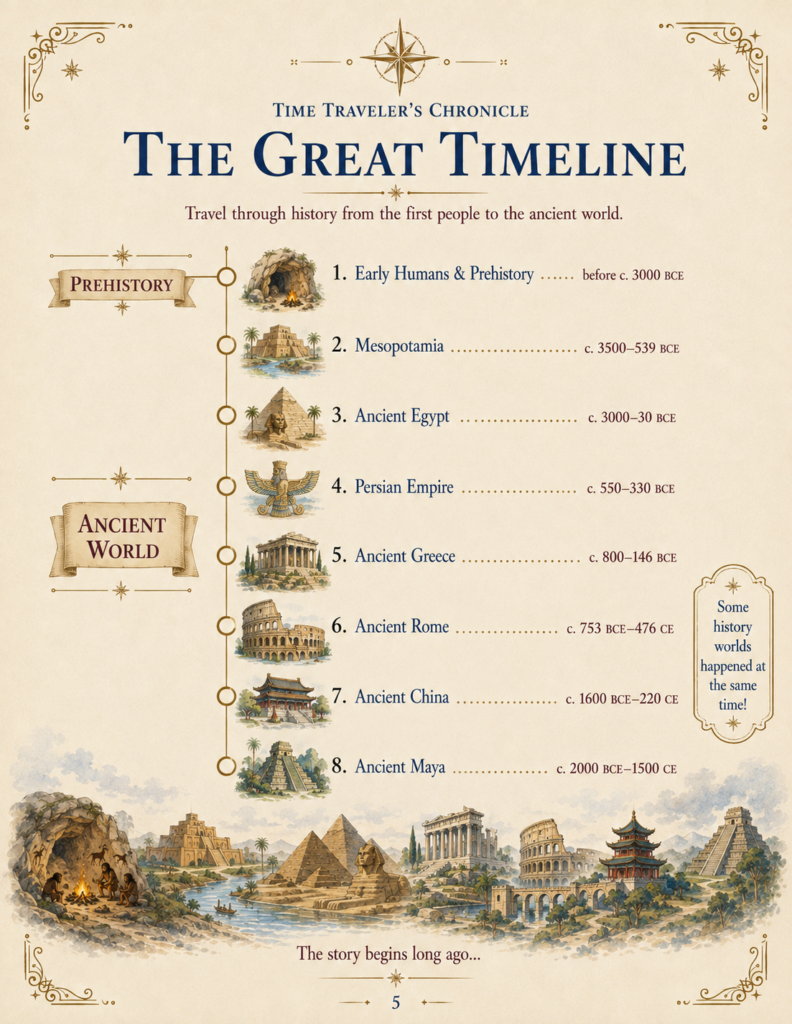
Once human history begins, elementary learners connect fastest when they can step inside daily life rather than memorizing lists of rulers and battles. Designed as an interactive history for kids curriculum, the Time Traveler series follows Mia across 18 self-contained historical adventures.

Inside a Time Traveler Adventure: This example features American Revolution: The Road Was Not Set, a stand-alone historical workbook that follows Mia through the choices, challenges, and events leading toward American independence. Each adventure combines historical discoveries, interactive activities, reflection, and a collectible Time Seal that connects to the larger Time Traveler Chronicle.
In each volume, Mia arrives in a new era and invites the reader to help decode how people actually lived, worked, traded, and solved everyday problems:
- Primary Clues Over Passive Summaries: Instead of being told what to think about an era, children examine period maps, tools, architectural layouts, trade goods, and historical records alongside Mia.
- Complete Stand-Alone Flexibility: Every one of the 18 books is engineered as an independent mission. Families can follow world history in chronological order from start to finish, or pull a single volume off the shelf to match a historical fiction read-aloud, museum trip, or co-op theme.
- Human Perspective Across Eras: By seeing how ordinary families, artisans, travelers, and builders navigated their world, children build genuine historical empathy and chronological intuition.

Branch 3: Focused History — Deep-Dive Unit Studies on Pivotal Civilizations & Eras
When a spark turns into a sustained fascination, learners are ready to slow down and examine how an entire civilization or historical turning point worked from the inside out. Focused History replaces brief textbook chapters with rich, multi-week thematic unit studies built around primary evidence, geography, governance, and cause-and-effect reasoning:
- Ancient Civilizations in Depth:
- With our Ancient Egypt activities for kids, learners investigate how the annual rhythm of the Nile shaped agriculture, monumental engineering, hieroglyphic record-keeping, and daily life across social roles.
- In our Ancient Rome unit study, students trace how Rome grew from a Tiber River settlement into a Mediterranean power—analyzing engineering feats, civic governance, trade networks, and material artifacts.
- Defining Historical Turning Points:
- Our American Revolution unit study for homeschool moves beyond memorized battle dates to examine colonial grievances, geographic strategy, competing perspectives, and the primary documents that shaped a new nation.
- An Expanding Catalog of Deep Studies: Alongside Egypt, Rome, and the American Revolution, the Focused History library continues to grow with dedicated deep dives into major world civilizations, landmark eras, and pivotal historical movements.

Connecting History with Geography & Earth Systems
Human history never happens in a vacuum—rivers determine where cities rise, mountain chains protect borders, and climate shifts reshape trade routes. That is why Explore the Past pairs seamlessly with our spatial and earth-science lines:
- Ground History in Real Terrain: Before studying Nile flooding, Roman road networks, or colonial ports, build map fluency with our geography learning path for kids and explore how rivers, mountains, and coastlines shape settlement inside the World Landscapes Workbook Bundle for Kids.
- Connect Civilizations to Daily Culture: Pair historical eras with the People and Places Workbook Bundle to compare how modern communities across continents still adapt homes, calendars, and traditions to their environments.
Sample Year-Long “Explore the Past” Homeschool Pathways
Because every title in the explore the past history curriculum for kids is print-and-go with built-in answer keys and visual scaffolds, you can tailor your pacing to your family’s schedule:
- The Chronological Explorer Path (Full Year): Start in the fall with Prehistoric Earth (Ancient Oceans → Dinosaurs → Ice Age Giants) to anchor deep time, move through early civilizations in Time Traveler, and pause for 3- to 4-week deep dives in Focused History (Ancient Egypt and Ancient Rome).
- The Interest-Led Unit Study Path: Let your child pick a high-interest anchor—such as Ancient Egypt or Dinosaur Evidence Explorer—and pair it with the matching Time Traveler mission and regional geography study for an immersive, cross-curricular month.
- Multi-Age Sibling Co-Learning: Use a Focused History unit or Time Traveler volume as your shared family spine, letting younger learners (ages 6–8) focus on visual clue sorting and map tracing while older siblings (ages 9–11) complete evidence audits and written historical arguments.
If you want a screen-free history and prehistory program that respects your child’s intelligence—turning fossil beds, ancient ruins, and historical turning points into genuine detective work—start with any volume in Explore the Past and build a timeline your learner will actually understand.