Why Kids Love Collecting: How Explorer Passports Turn Learning Into an Adventure
Introduction
Learning through collecting is one of the most effective ways to keep children motivated and engaged. Whether they collect stickers, stamps, badges, or achievements, children naturally enjoy tracking their progress and celebrating new discoveries.
Stickers, trading cards, badges, stamps, rocks, shells, or even simple achievement certificates can quickly become treasured possessions. There is a reason for this. Collecting gives children a sense of progress, accomplishment, and excitement.
Educational experts have long understood that children learn best when learning feels like an adventure rather than an obligation.
That is why many successful learning systems use rewards, badges, levels, and collections to keep children motivated.
At TinyJoy Studio, we designed the World Explorer series around this powerful idea: turning learning into a collection-based adventure that encourages children to keep discovering more about our amazing world.
Every great adventure needs a starting point.
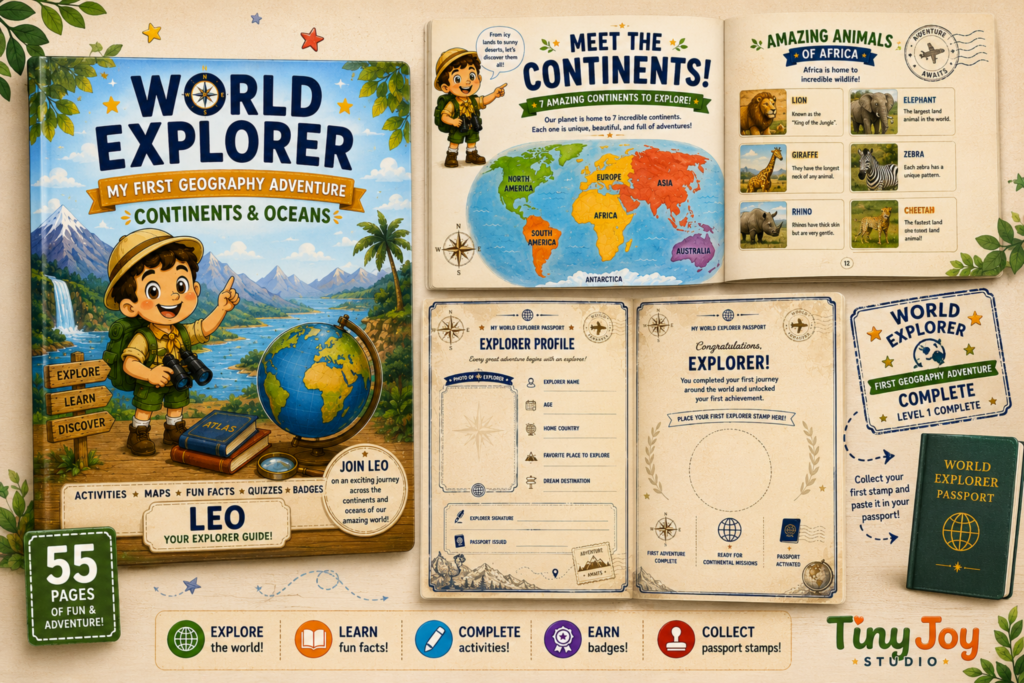
In the World Explorer system, that first step is the World Explorer: Continents & Oceans activity book.
Children begin by learning about the seven continents, five oceans, world maps, animals, landmarks, and geography basics. Along the way, they complete activities, answer questions, earn their first explorer achievement, and unlock their very first passport stamp.
This first adventure lays the foundation for everything that comes next.
Why Collecting Is So Powerful for Learning
When children collect something, they naturally become more engaged.
Learning through collecting helps transform education into an adventure. Instead of focusing only on completing tasks, children become excited about earning rewards, unlocking achievements, and building their collections.
Collecting helps children:
- Stay motivated
- Set goals
- Feel proud of achievements
- Track progress visually
- Build positive learning habits
- Develop curiosity
Instead of focusing on «I have to learn this,» children begin thinking:
«I want to unlock the next badge.»
«I want another stamp.»
«I want to complete the next adventure.»
This small shift can dramatically increase motivation.
Turning Geography Into a Journey
Geography is one of the most fascinating subjects children can learn.
It introduces them to:
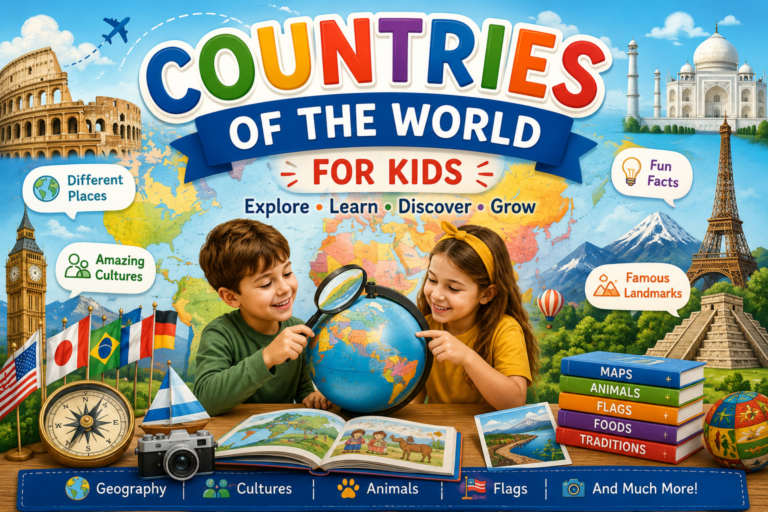
- Different countries
- Unique cultures
- Amazing animals
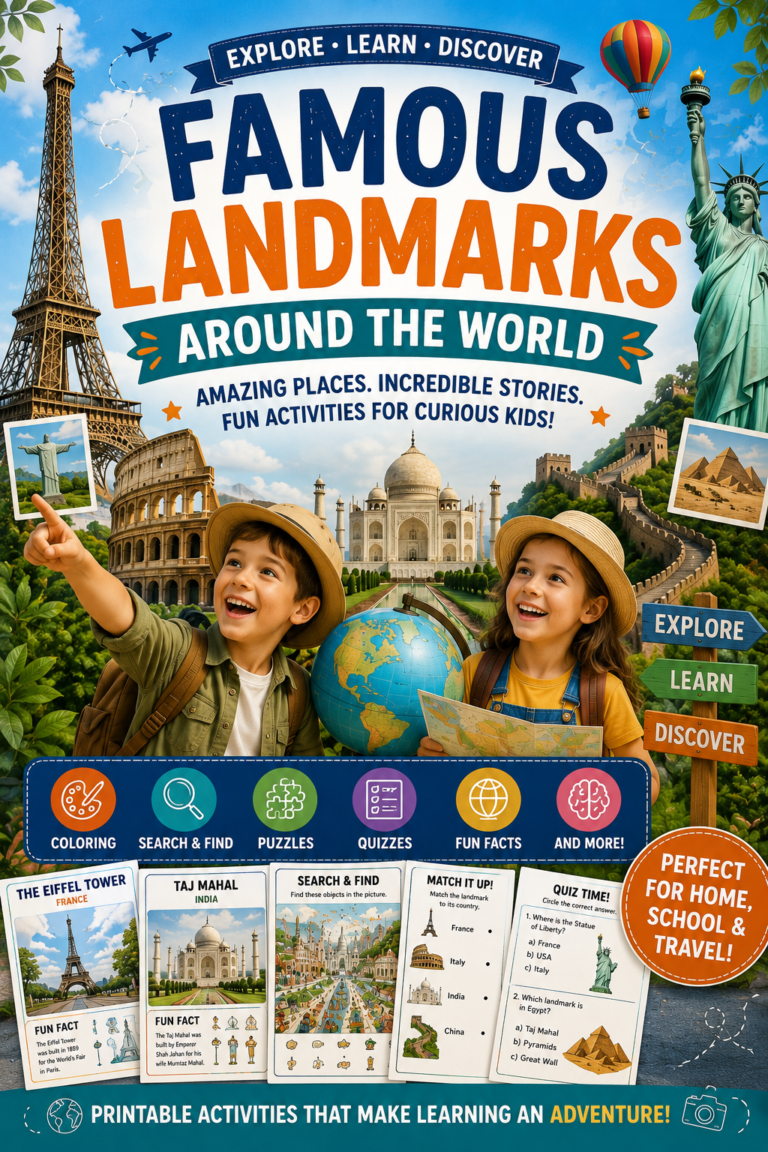
- Famous landmarks
- Foods and traditions
- Maps and locations
In fact, many families are discovering that children can learn about different countries without ever leaving home. Through stories, activities, maps, and cultural exploration, kids can build a deeper understanding of the world while having fun.
The challenge is keeping that curiosity alive over time.
A single worksheet may be fun.
A single activity book may be exciting.
But what happens after the last page?
Many educational resources end there.
We wanted the adventure to continue.
Introducing the World Explorer System
The World Explorer series was created as a connected learning journey rather than a collection of separate books.
The journey begins with a beginner-level world exploration book that introduces continents and oceans and teaches children how our planet is organized.
As children complete activities, solve challenges, answer quizzes, and explore new places, they prepare for larger adventures ahead.
Instead of reaching the end and stopping, children unlock the next stage of exploration.
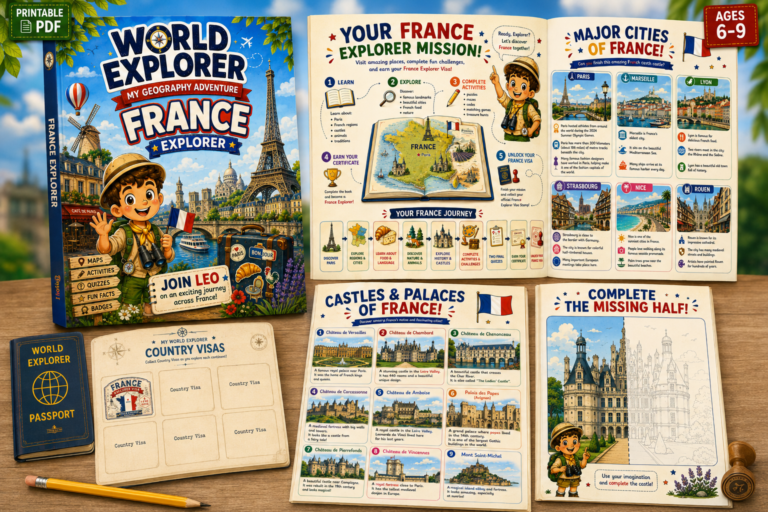
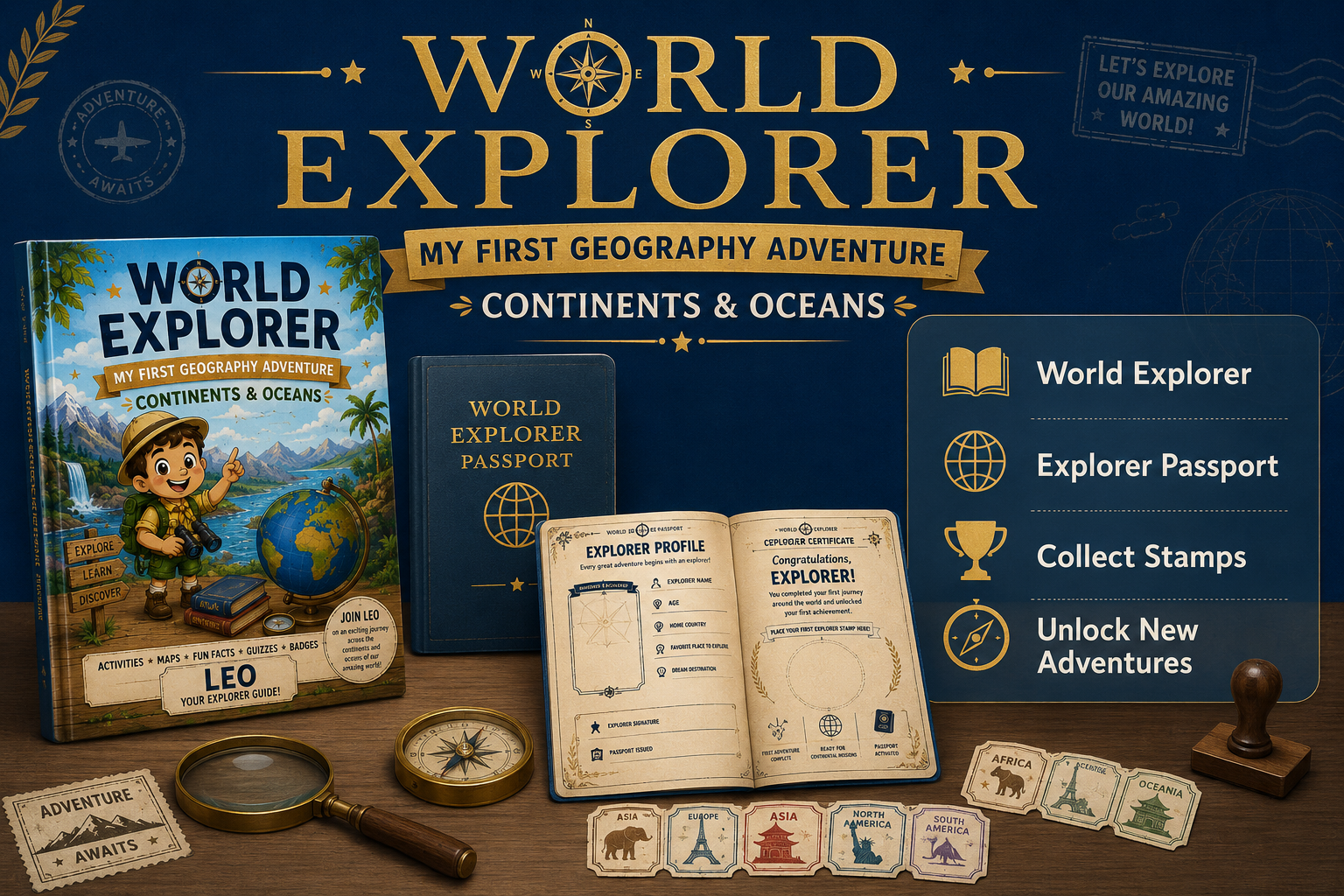
The World Explorer Passport
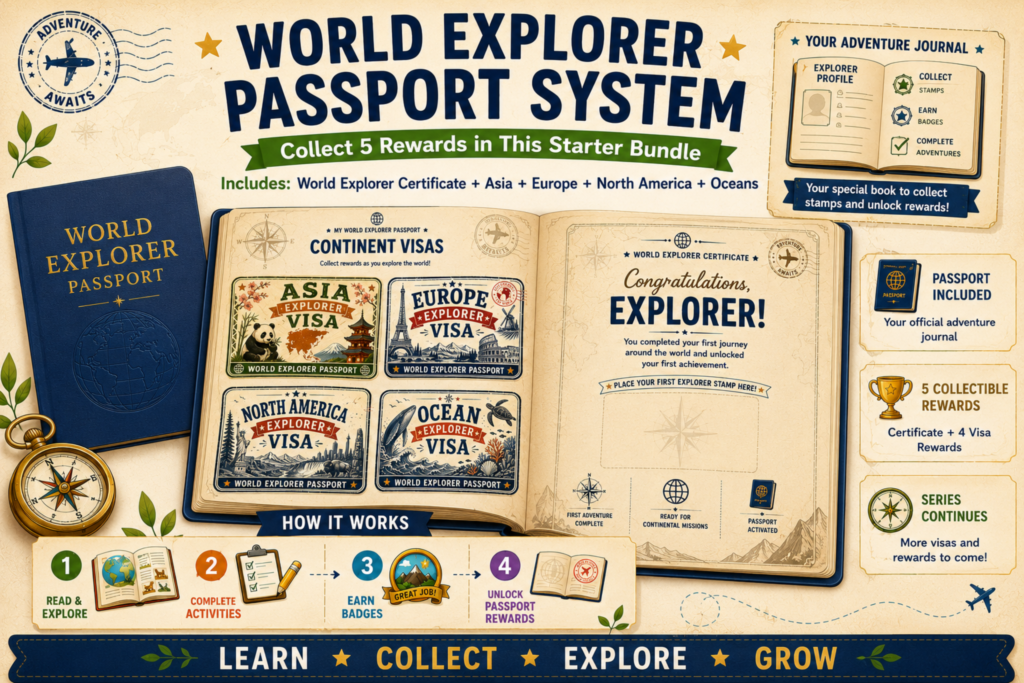
One of the most exciting parts of the system is the World Explorer Passport.
The passport includes:
- An Explorer Profile page
- Achievement pages
- Continent Visa pages
- Country Visa pages
- Explorer certificates
- A personal travel journal section
The passport transforms educational progress into a visual adventure journal.
Children are no longer simply completing worksheets.
They are becoming explorers.
Every Stamp Tells a Story
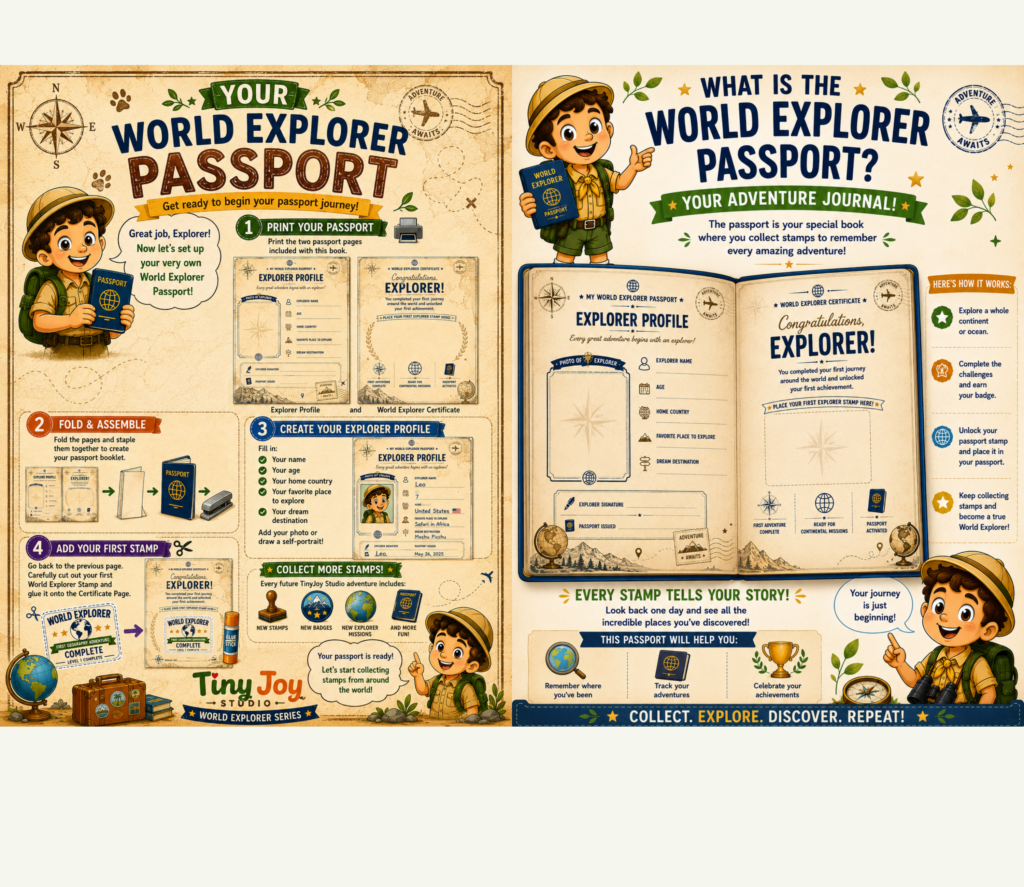
Imagine a child finishing a book about Asia.
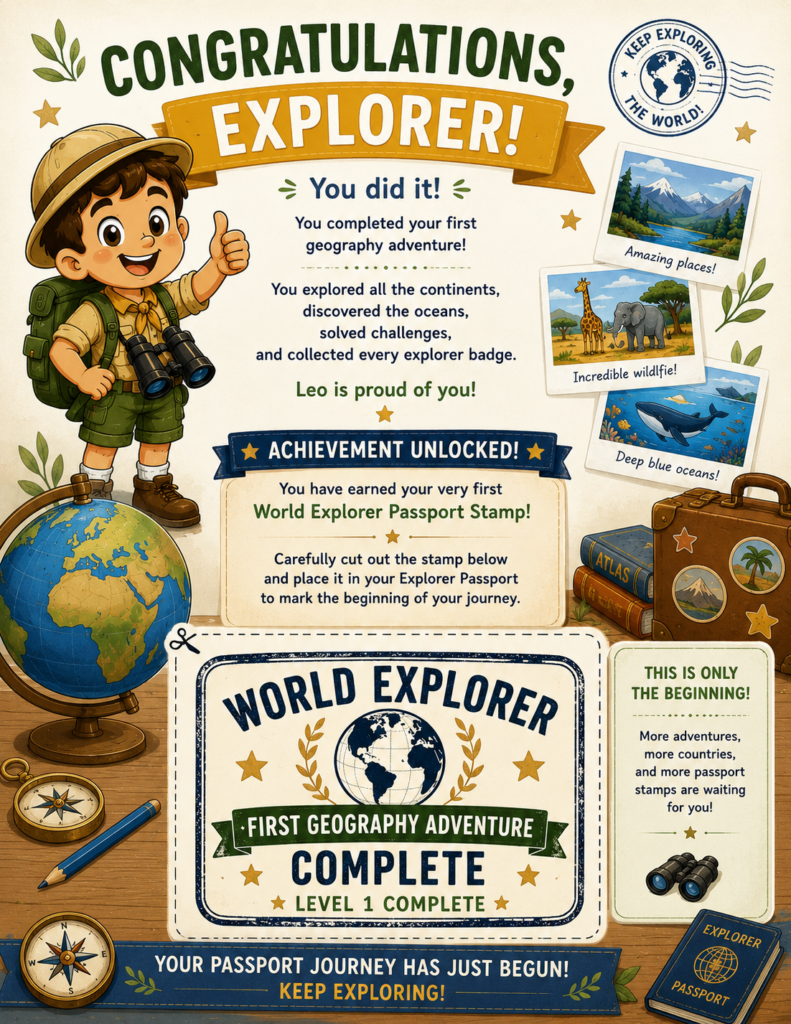
Instead of simply closing the book and moving on, they receive a special Asia Explorer stamp.
They carefully cut it out.
They open their passport.
They place the stamp inside their collection.
Suddenly that learning experience becomes memorable.
The stamp represents:
- Countries discovered
- Animals learned about
- Landmarks explored
- Challenges completed
- Knowledge gained
The child now has a visible reminder of their achievement.
And naturally, they start asking:
«What continent can I explore next?»
Learning Through Levels
Children love progression systems.
Video games use levels.
Sports use belts and rankings.
Schools use grades and certificates.
The World Explorer series applies the same motivational principle to geography learning.
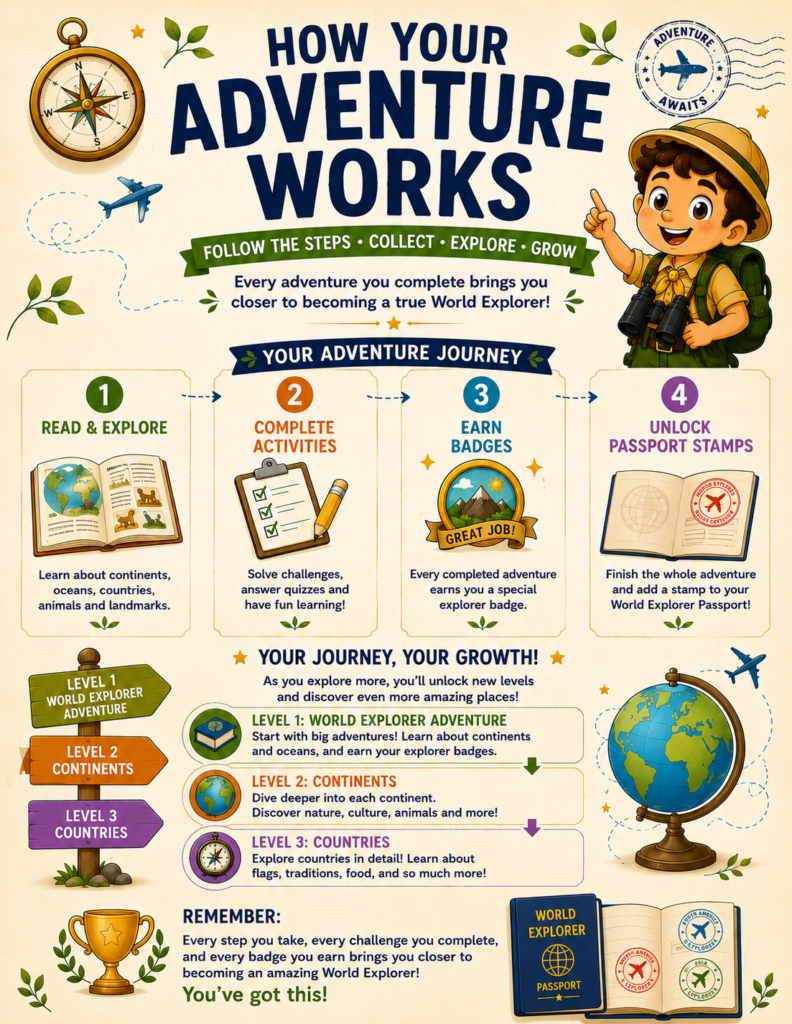
Level 1: World Explorer
Children learn:
- Continents
- Oceans
- Maps
- Earth facts
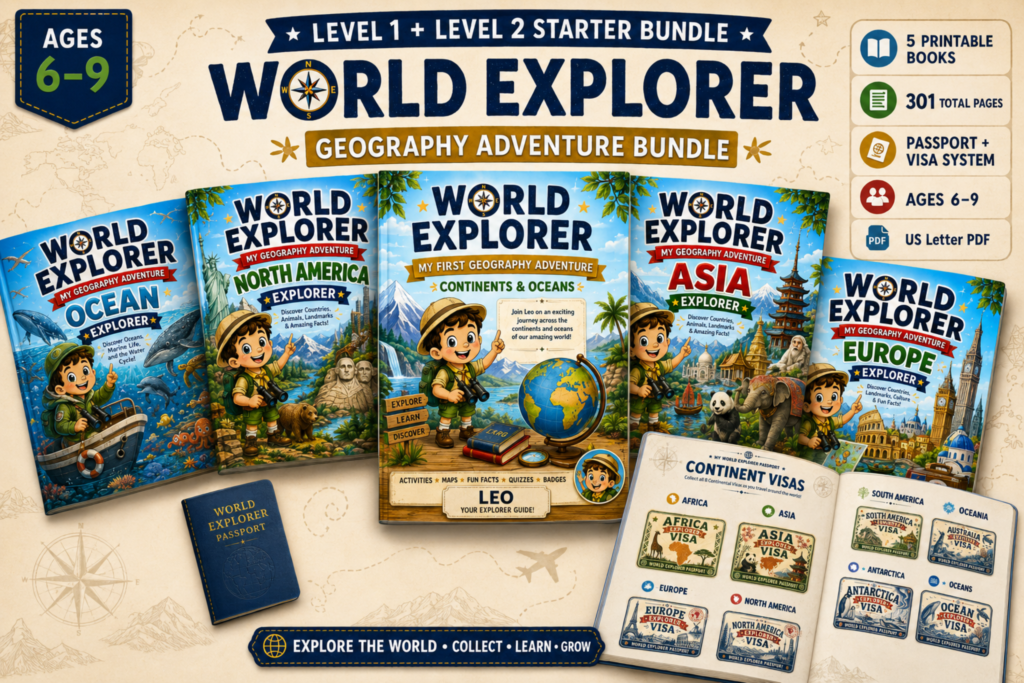
Level 2: Continent Adventures
Children explore:
- Africa
- Asia
- Europe
- North America
- South America
- Oceania
- Antarctica
Each completed continent unlocks a new passport achievement.
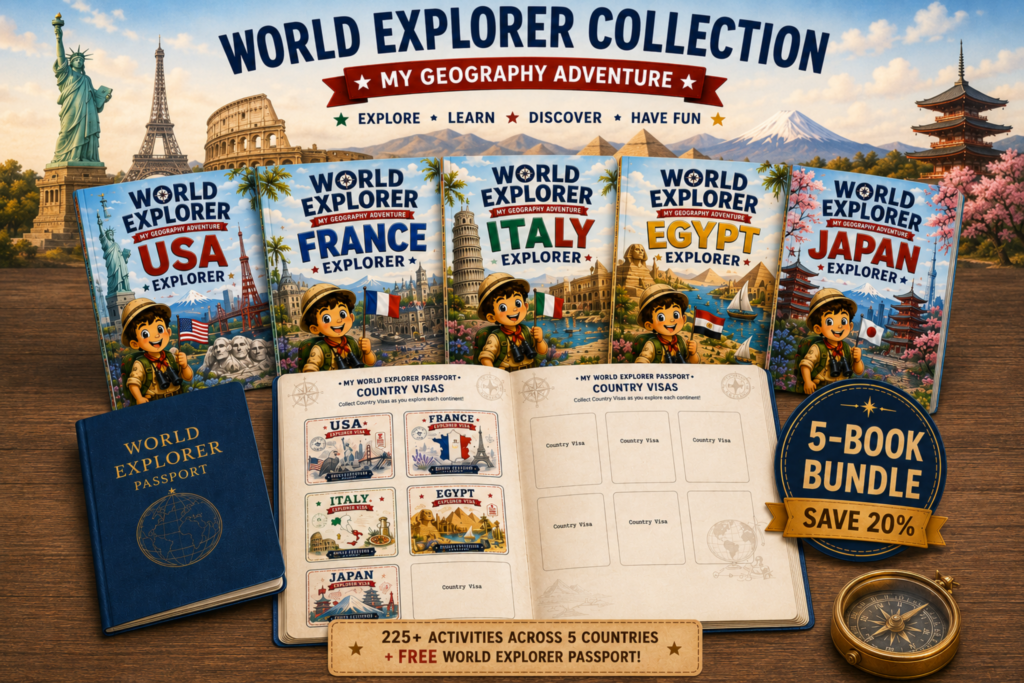
Level 3: Country Explorer Books
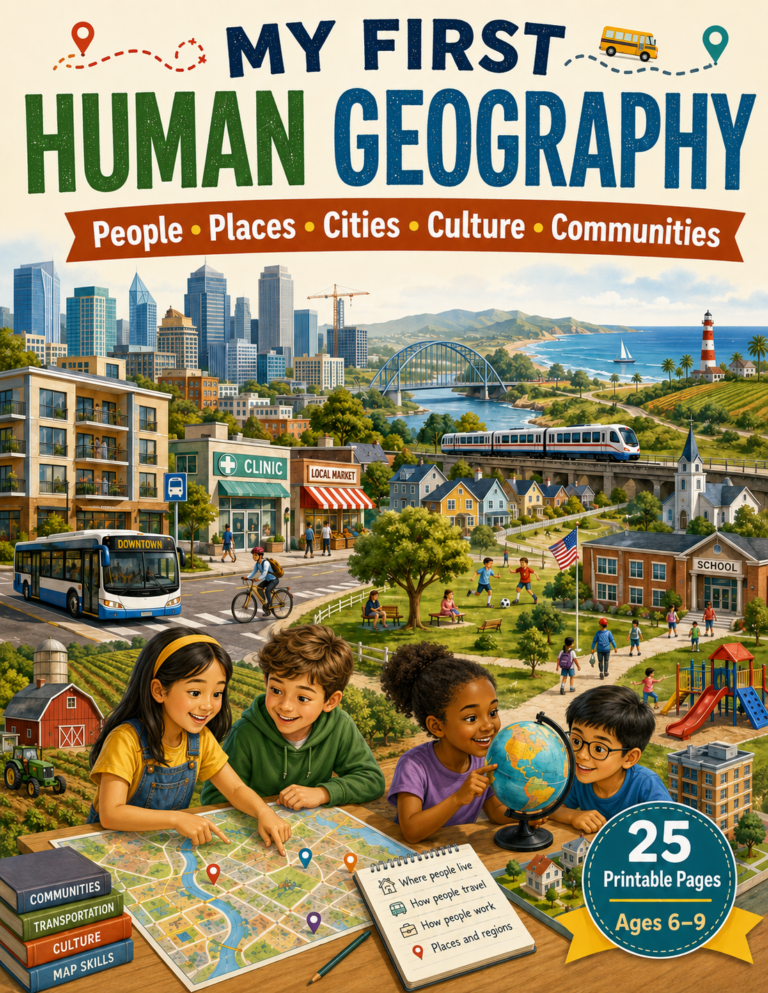
Children dive deeper into individual countries.
For example:
- Japan
- France
- Egypt
- Australia
- Brazil
Each country adds another stamp, visa, or achievement to their collection.
The adventure keeps growing.
Why This Works Better Than Traditional Learning
Traditional learning often focuses on completing assignments.
Collection-based learning focuses on completing journeys.
Children become emotionally invested in the process.
They want to:
- Fill their passport
- Earn new stamps
- Complete continent collections
- Unlock new destinations
- Build their explorer identity
This type of motivation is closely connected to curiosity. When children become excited about discovering new places, animals, and cultures, they naturally ask more questions and become more engaged learners.
Learning becomes something they choose rather than something they are forced to do.
Building Lifelong Curiosity
The ultimate goal is not simply teaching geography.
The goal is helping children develop curiosity about the world.
When children become excited about discovering countries, cultures, animals, and landmarks, they begin asking questions on their own.
That curiosity often leads to:
- Reading more books
- Exploring maps
- Learning history
- Understanding different cultures
- Developing a global perspective
Those habits can last a lifetime.
Conclusion
Children naturally love collecting, exploring, and achieving goals.
By combining educational activities with passports, stamps, badges, and progression systems, learning becomes an adventure rather than a task.
The World Explorer Passport helps children celebrate every discovery, track their progress, and stay excited about what comes next.
Because every stamp tells a story.
And every story inspires the next adventure.
The journey begins with a single adventure.
For many young explorers, that adventure starts with learning about the continents and oceans of our world, earning their first explorer stamp, and opening their World Explorer Passport for the very first time.