How to Teach a Meaningful Colombia Unit Study for Kids at Home
Putting together a Colombia unit study for kids often stalls when you realize how many printable packets stop at coloring a flag and matching three basic vocabulary words. Yet for children ages 6 to 9, Colombia offers one of the richest geography and science case studies in the world.
Positioned near the equator with coastlines on both the Caribbean Sea and the Pacific Ocean, Colombia packs six distinct natural regions—from snow-dusted Andean peaks to Amazon rainforests and open plains—into a single country. When lessons help kids examine why those landscapes behave differently, world geography becomes an active exercise in critical thinking rather than rote memorization.
Why Studying Colombia Sharpens Spatial and Scientific Thinking
Children often assume that countries near the equator stay hot everywhere. Colombia immediately challenges that assumption and teaches young learners how elevation shapes climate, architecture, and daily life.
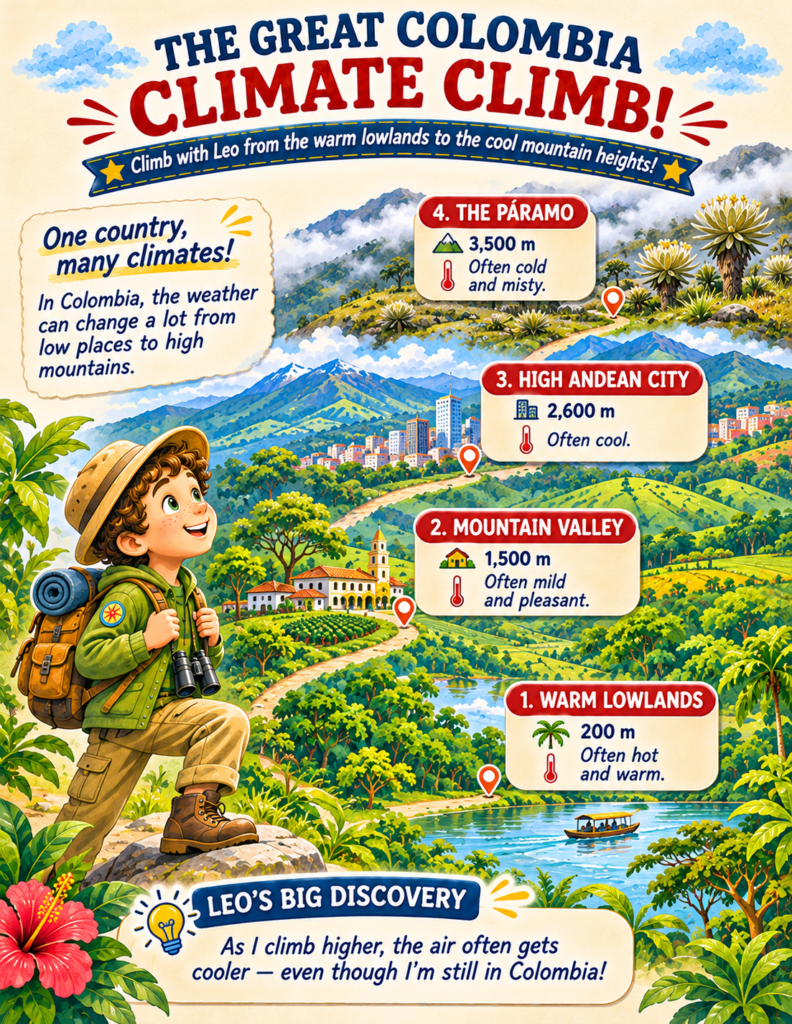
When students compare warm lowland towns at 200 meters with cool Andean cities like Bogotá at 2,600 meters and misty high-mountain páramo ecosystems at 3,500 meters, they practice real scientific reasoning. They begin connecting physical geography to human engineering—such as why Medellín and Bogotá rely on public cable cars to connect steep hillside neighborhoods, or why Amazonian communities near Leticia depend on riverboats for food and school supplies.
Moving From Trivia to Field-Style Investigation
Children retain geography best when they analyze maps, interpret weather data, and solve engineering problems rather than passively reading facts. That inquiry-first structure anchors the TinyJoy Studio Learning Library and drives the World Explorer Series: Colombia Explorer workbook.
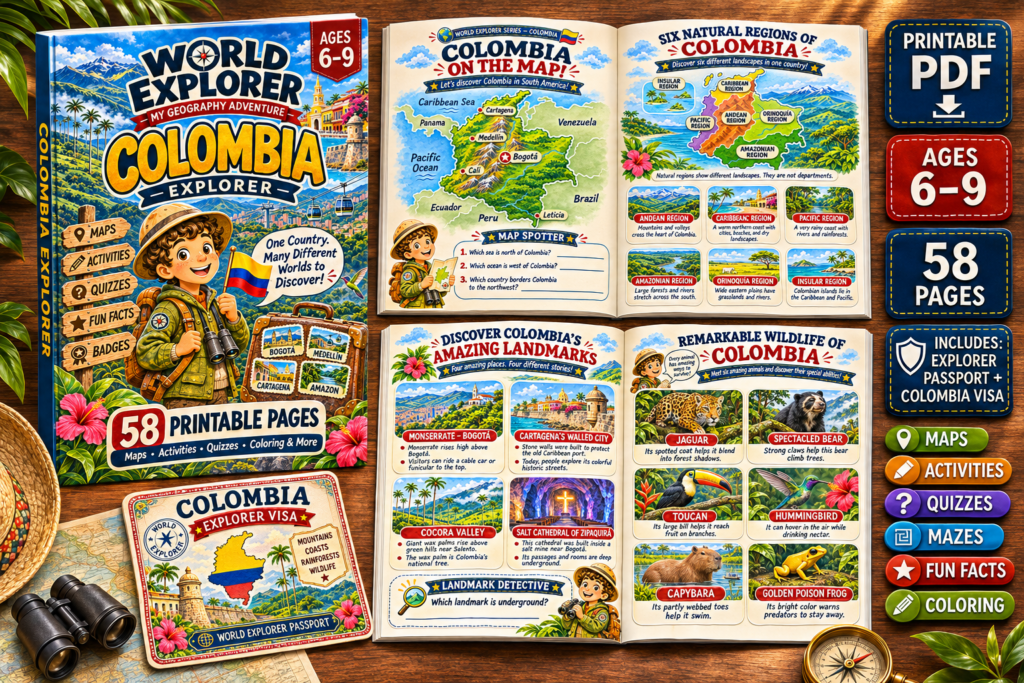
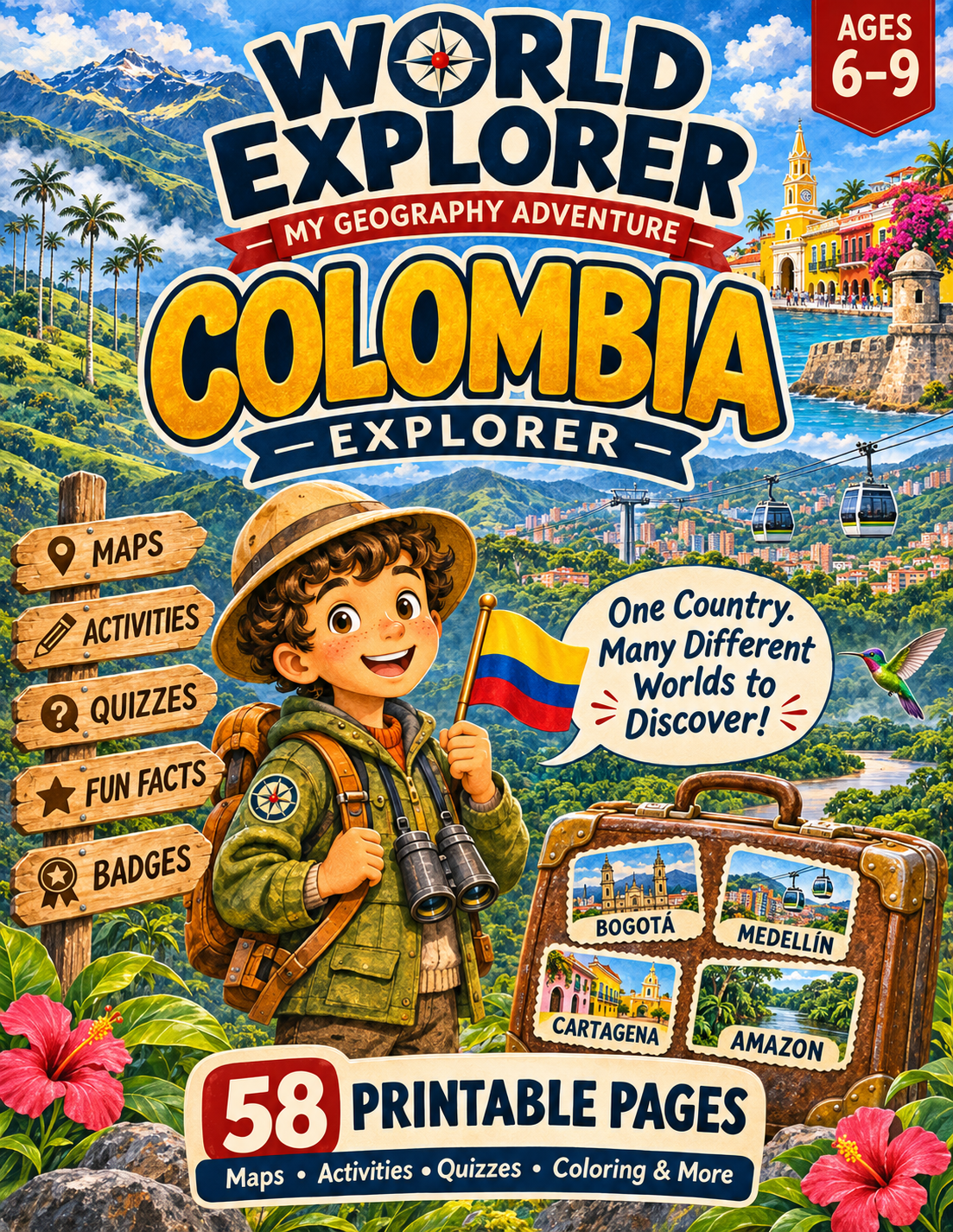
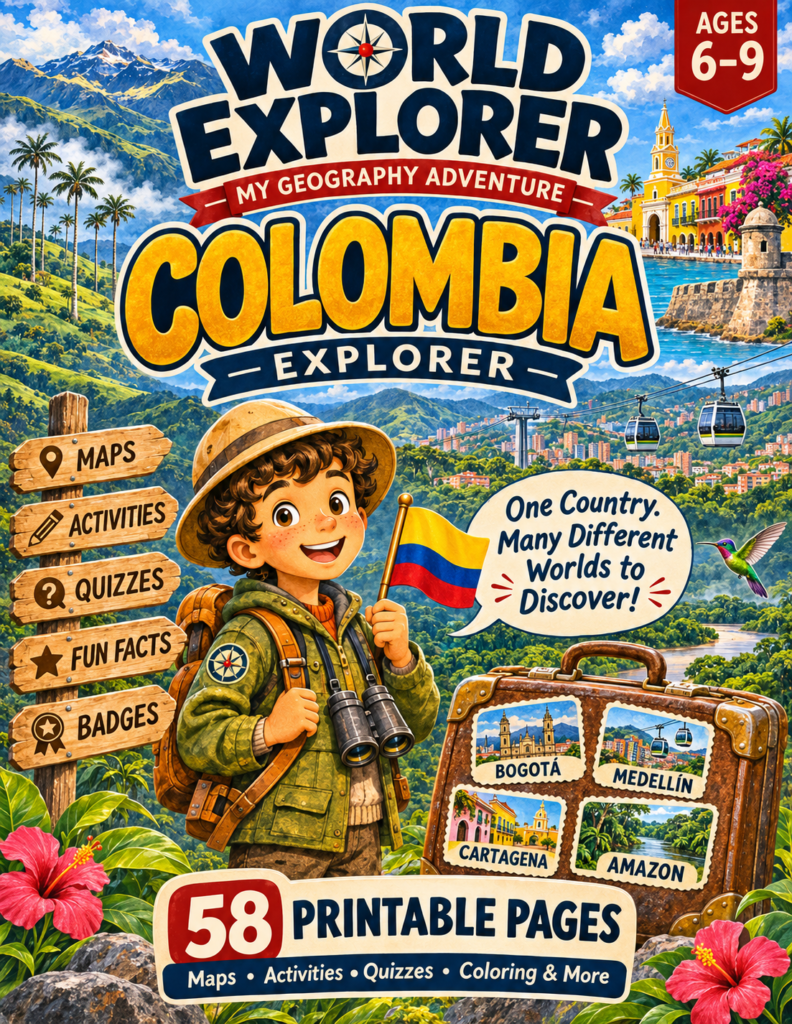
Built for ages 6–9, this 58-page printable packet pairs young learners with Leo the Explorer across nine progressive missions. Instead of isolated worksheets, each section builds on the last—moving from map orientation and landmarks to atmospheric science, transport engineering, ecology, and data puzzles.

How the Colombia Unit Study for Kids Progresses
Every chapter in the workbook pairs clear visual explanations with active “detective” tasks that require children to apply what they just read:
- Map Literacy and Six Natural Regions: Kids locate Colombia in South America, identify its two oceans and neighboring countries, and compare the Andean, Caribbean, Pacific, Amazonian, Orinoquía, and Insular regions. In Colombia Map Detective, students plot Bogotá, Medellín, Cartagena, Cali, and Leticia on a map and solve directional clues.
- Landmarks and Historical Continuity: Students explore eight landmarks—including Cartagena’s Walled City, the underground Salt Cathedral of Zipaquirá, Cocora Valley’s towering wax palms, Caño Cristales, and Las Lajas Sanctuary—before sorting historical vs. modern clues in Cartagena – Then & Now.
- Linguistic Diversity and Everyday Culture: Cultural pages introduce Spanish greetings (Hola, Gracias, Por favor) alongside Indigenous and Creole languages spoken in Colombia, including Wayuunaiki, Nasa Yuwe, and Embera. Kids also explore regional foods like arepas and ajiaco, music styles such as cumbia and vallenato, and Medellín’s Feria de las Flores.
- Mountain Climate Science and Weather Data: In The Great Colombia Climate Climb, children learn how rising air expands and cools at higher elevations, and how high-altitude páramo plants called frailejones trap mist and release water into mountain streams. Students then analyze temperature records across three elevations in Leo’s Mountain Weather Lab to calculate degree differences and pack appropriate expedition gear.
- Transport Engineering in Challenging Terrain: In Colombia on the Move, kids examine how engineers solve geographic barriers using Metrocable and TransMiCable systems, mountain bridges and tunnels, riverboats, and cargo ships—then match real logistics problems to the right transport solution.

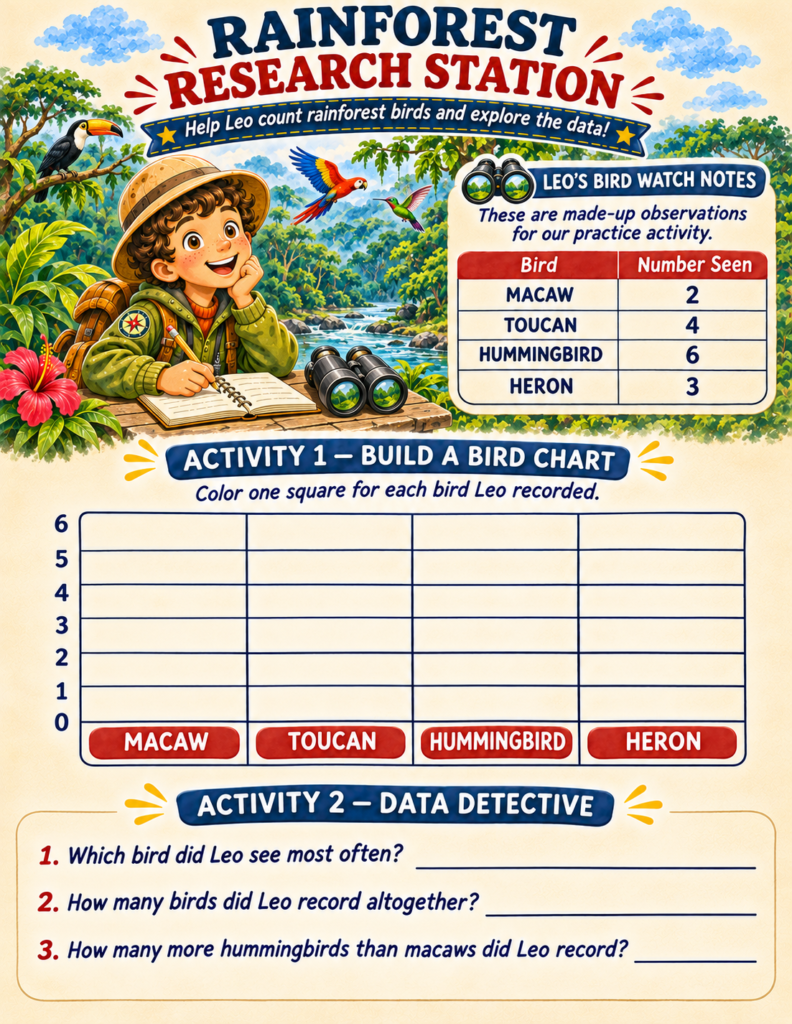
- Wildlife Adaptations and Rainforest Data: Ecology lessons examine how jaguars, spectacled bears, toucans, hummingbirds, capybaras, and golden poison frogs survive in their habitats, and how pollinators, seed dispersers, and mangrove roots keep ecosystems connected. In Rainforest Research Station, kids build a bar graph from bird-watch observations and answer math comparison questions.
- Screen-Free Logic Puzzles and Explorer Rewards: The final section reinforces focus through an Andean mountain maze, an 8-difference Cartagena visual puzzle, a two-ocean symbol cipher, a fact-or-fiction review, and a 10-question Final Quiz.
Practical Ways to Use This Workbook at Home or in Class
With 58 printable pages and a complete three-page Answer Key included at the back, the packet fits smoothly into different teaching rhythms:
- Three-to-Four-Week Homeschool Unit: Cover two or three pages per sitting. Pair the Foods of Colombia lesson with making corn arepas together, or listen to cumbia and vallenato music while working through the creative studio pages. Families mapping out a year of learning adventures at home can easily anchor their South American geography block around this unit.
- Multi-Age Sibling or Co-Op Learning: Older readers (ages 8–9) can tackle the map coordinate tasks, weather lab calculations, and bar graphs independently, while younger learners (ages 6–7) thrive on the animal mysteries, habitat spotters, find-and-count market scene, and coloring pages.
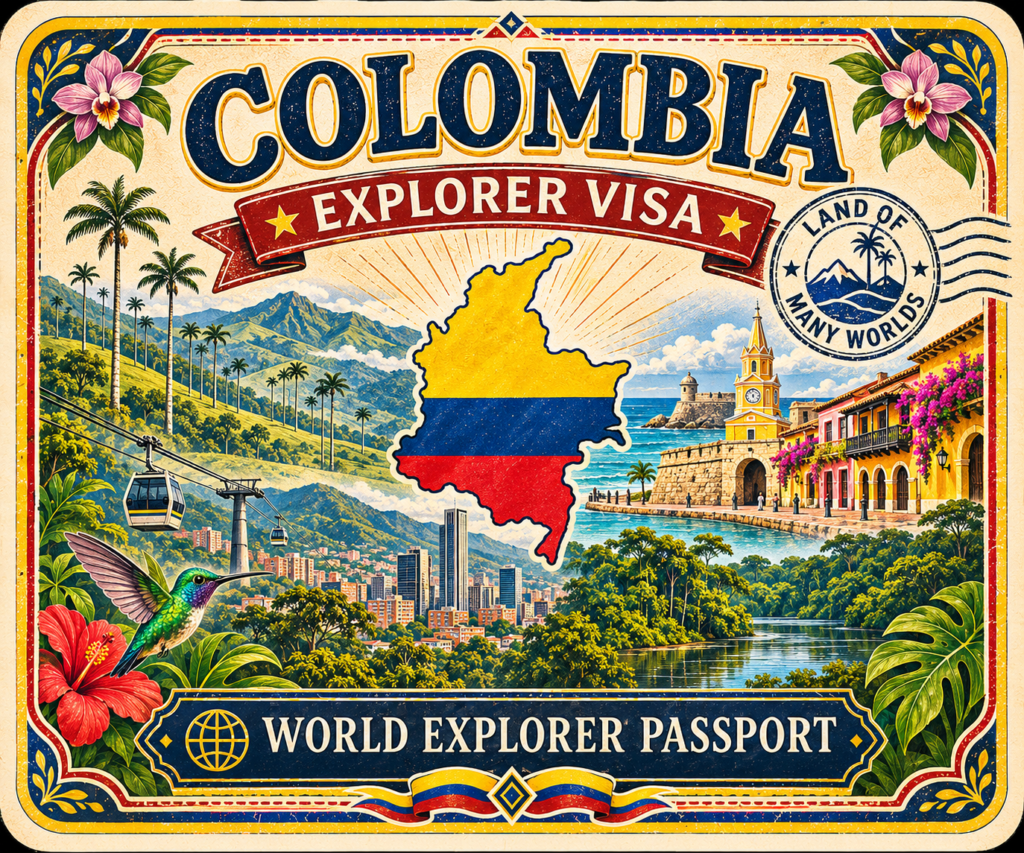
- Collectible Passport Progression: Children begin on page 2 by designing their own explorer badge, and conclude by cutting out their Colombia Explorer Visa and earning a personalized Certificate of Exploration. If you are following our structured geography learning path for kids, each visa gives children a concrete visual record of the countries they have mastered.

Ready to Begin Your Colombia Expedition?
If you want a thorough, screen-free Colombia unit study for kids that blends real map work, mountain science, and cultural curiosity in one ready-to-print resource, World Explorer Series: Colombia Explorer is built to guide every step. You can also explore our complete world geography curriculum for kids to plan your next country adventure.