The Ultimate Extreme Environments Unit Study for Homeschoolers
Let’s be honest for a moment: teaching physical geography and earth science can sometimes feel like a daunting task. If you have ever tried to explain abstract concepts like tectonic plates, sea-level pressure, or arid climates to a seven-year-old using a dry, traditional textbook, you have probably been met with glazed-over eyes and a chorus of heavy sighs.
Traditional education often makes the mistake of taking the most thrilling, awe-inspiring aspects of our planet and reducing them to flat, black-and-white worksheets. But children do not want to just memorize vocabulary words about the Earth—they want to be amazed by it. They are naturally drawn to the «extremes.» They want to know where the hottest place on Earth is, how deep a submarine can dive before it gets crushed, and where they would find the tallest waterfall.
Capitalizing on this natural curiosity is the absolute best way to teach physical geography. Today, we are going to explore how to put together an unforgettable extreme environments unit study. We will share hands-on activities that bring wild weather and natural wonders right into your living room, and we will reveal the ultimate «open-and-go» resource that will save you hours of exhausting lesson planning.
Why Kids Love «Extreme» Earth Science
There is a psychological reason why kids love learning about the biggest, deepest, hottest, and coldest things. In the elementary and early middle school years, children are trying to figure out the boundaries of the world they live in. Understanding the «extremes» helps them create a mental framework for everything else.
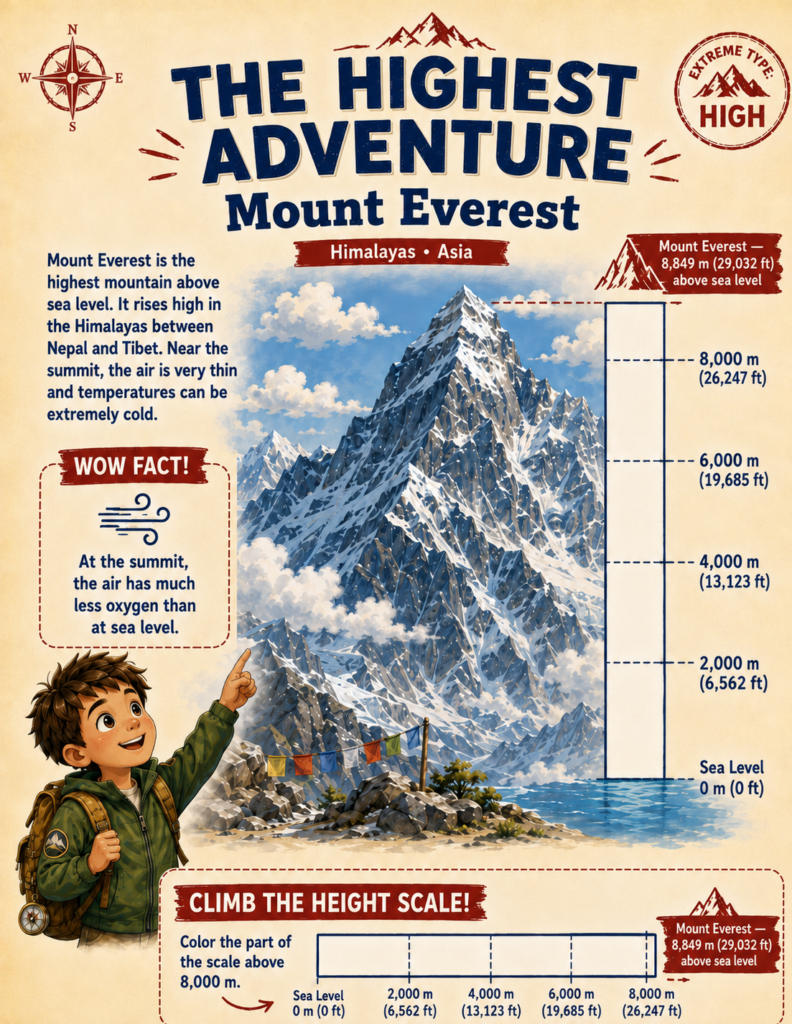
When you tell a child that Mount Everest is 8,849 meters high, it’s just a number. But when you explain that it is so high airplanes fly below its peak, their minds are blown! By framing your geography lessons around extreme environments, you instantly activate their intrinsic motivation. This makes it incredibly easy to implement project based learning in homeschooling, because the subject matter itself is framed as a massive, world-spanning quest.
4 Hands-On Extreme Environments Activities for Kids
To make your unit study truly memorable, you need to engage your child’s senses. Here are four interactive ways to explore Earth’s extremes without ever leaving your house.
1. The Mariana Trench Pressure Experiment
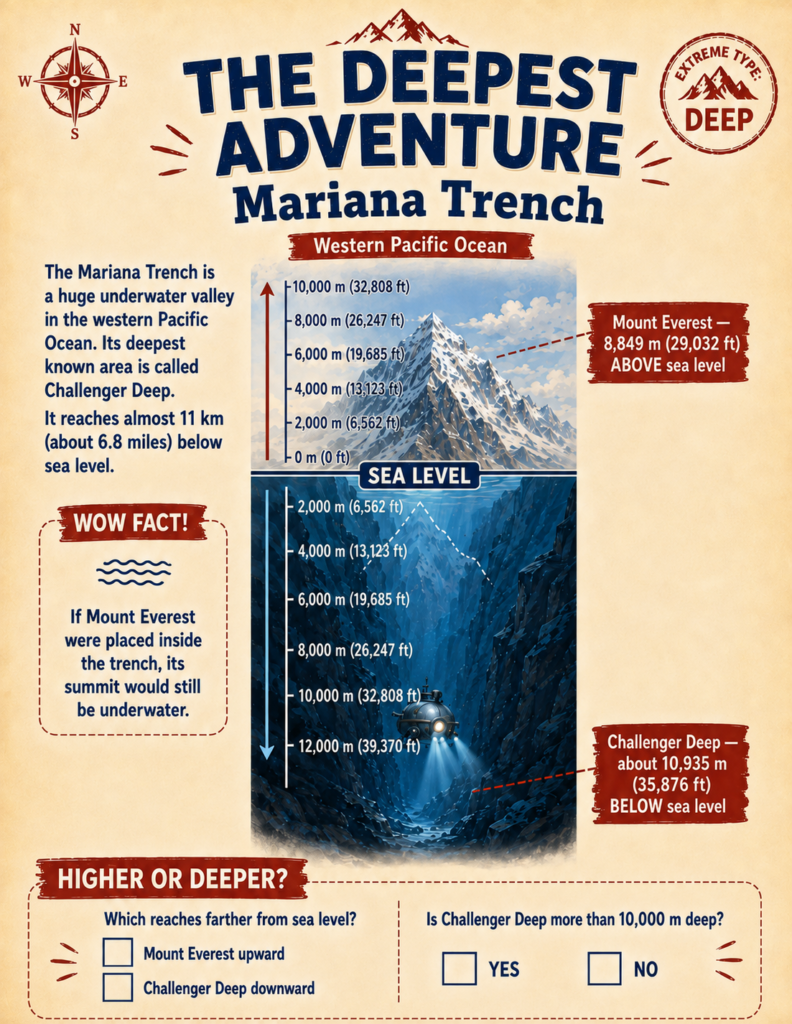
The Mariana Trench is the deepest oceanic trench on Earth, plunging a staggering 10,935 meters down. But how do you explain deep-sea water pressure to a child?
Grab a tall, empty plastic water bottle. Poke three small holes in the side of the bottle: one near the top, one in the middle, and one near the bottom. Put a piece of tape over the holes and fill the bottle with water. Have your child stand over the sink, pull the tape off, and watch the water shoot out! They will instantly notice that the water from the bottom hole shoots out much further and faster than the top hole because the weight (pressure) of the water above it is pushing it out. This is a brilliant, tactile way to bring montessori geography at home to life through science!
2. Freeze and Melt: Antarctica vs. Death Valley
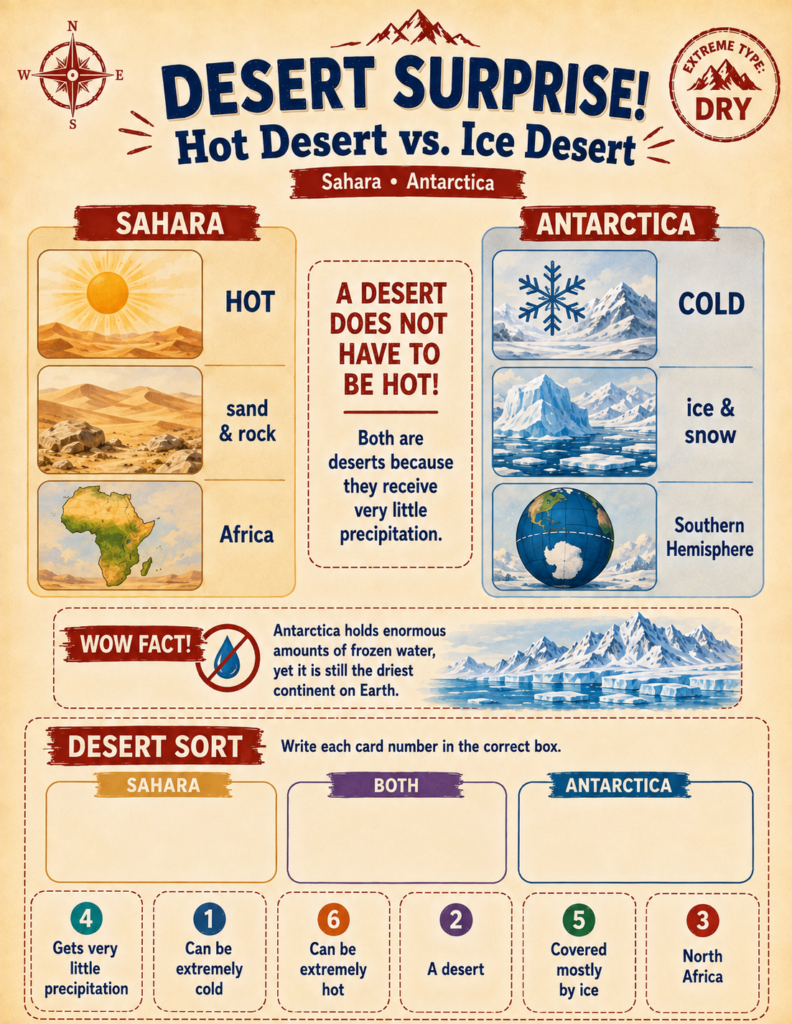
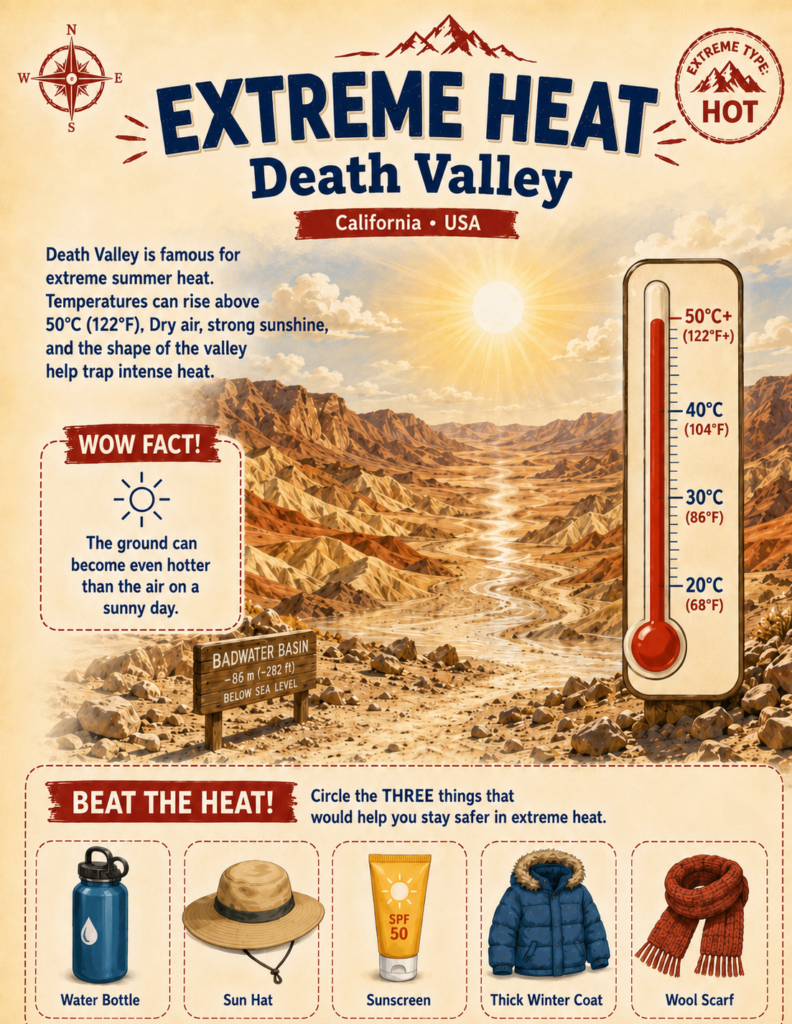
Earth features some mind-boggling temperature extremes. To help children grasp this, set up a simple sensory station. In one bowl, create an «Antarctica» environment using ice cubes, cold water, and maybe some toy penguins. In another bowl, create a «Death Valley» environment using warm sand (you can heat play sand slightly in the oven or under a heat lamp) and some rocks.
Have your child move their hands between the two bowls to feel the stark contrast. You can use this moment to discuss how animals and humans have to adapt to survive in freezing blizzards versus scorching, dry heat.
3. Build a Topographic Mountain (Mount Everest)
Understanding elevation is a key component of physical geography. Instead of looking at a flat map, have your child build a 3D topographic map of Mount Everest using playdough or salt dough.
Have them start with a wide, flat base layer, then add progressively smaller layers on top until they form a peak. Once it is built, you can take a piece of dental floss and carefully slice the mountain horizontally to show them how those 3D layers translate to the contour lines they see on real topographic maps. It is a fantastic afternoon project, especially if you are looking for engaging screen free weekend activities for the whole family.
4. Create a «Rain Shadow» Effect (The Atacama Desert)
The Atacama Desert in Chile is the driest non-polar desert in the world, largely due to the Andes mountains blocking rain clouds. You can demonstrate this «rain shadow» effect simply!
Have your child build a tall «mountain» out of Lego blocks or Tupperware boxes. Take a spray bottle (representing rain clouds) and spray it at one side of the mountain. Show them how the water hits the mountain and drips down the front, leaving the back side of the mountain completely dry.
The Ultimate «Open-and-Go» Solution: Extreme Earth Explorer
We know what you might be thinking right now: «These experiments sound incredibly fun, but I am already exhausted. I simply do not have the time to plan 10 different science experiments, draw maps, and research facts about the Sahara Desert and Angel Falls.»
We hear you loud and clear. As homeschooling parents, we want to provide these magical «aha!» moments for our children, but the reality of preparing a robust physical geography curriculum from scratch often leads to serious parent burnout. You need a solution that offers the depth of a premium unit study with zero late-night prep work.
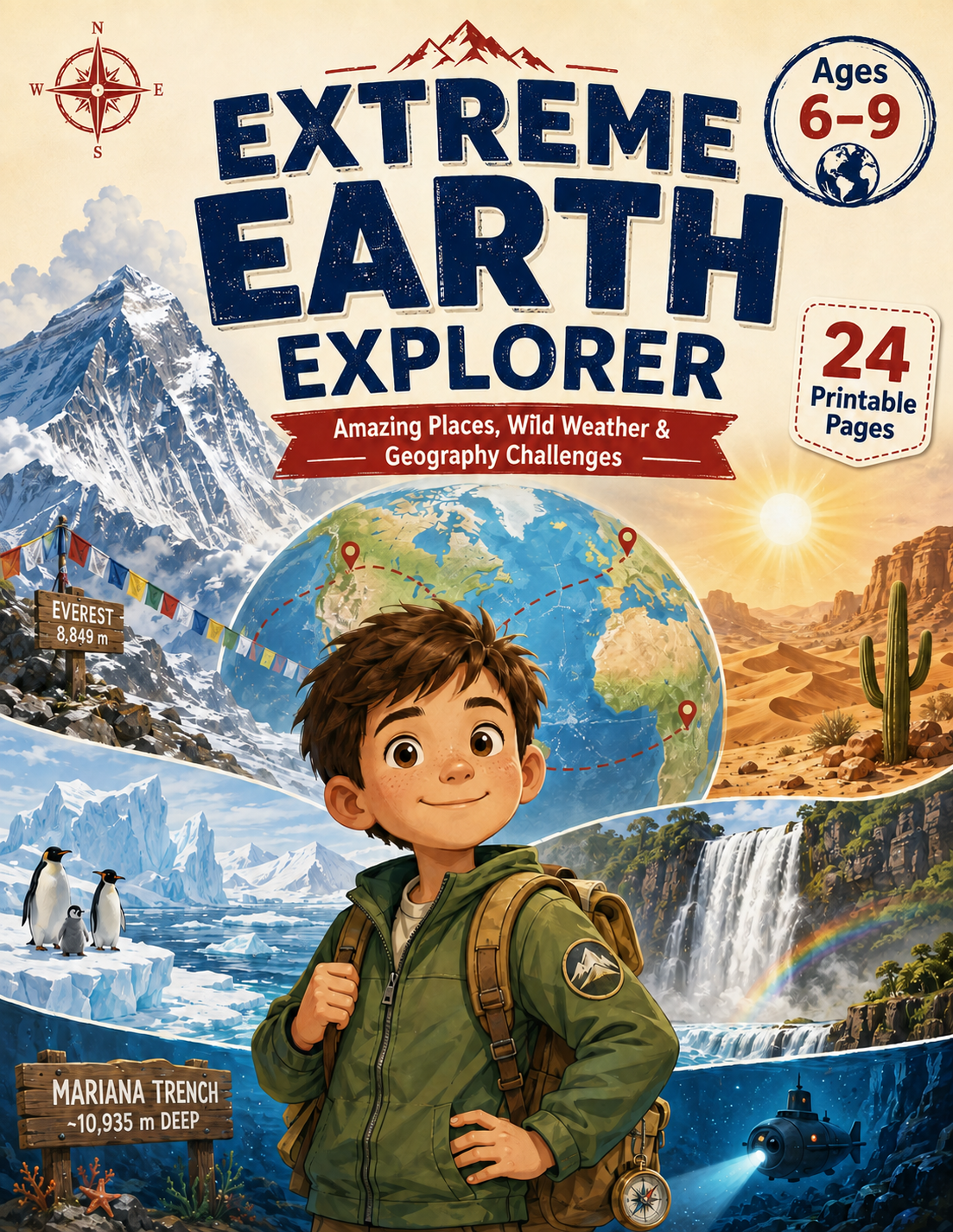
That is exactly why we created the Extreme Earth Explorer: Amazing Places, Wild Weather & Geography Challenges activity book!
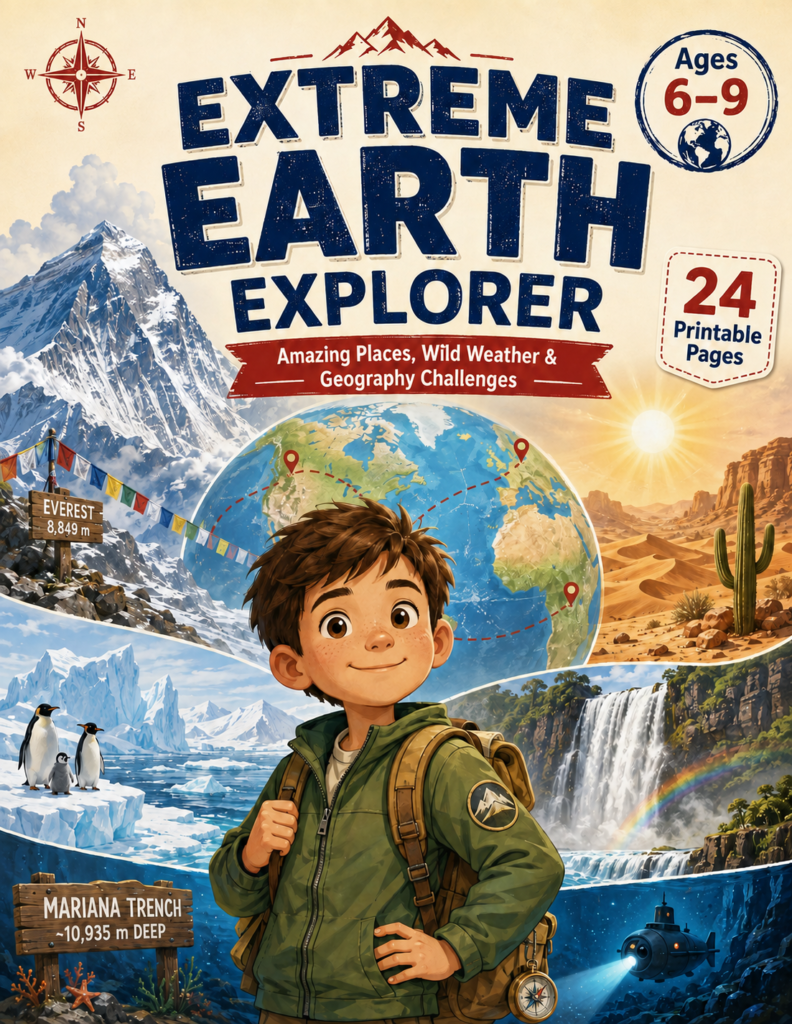
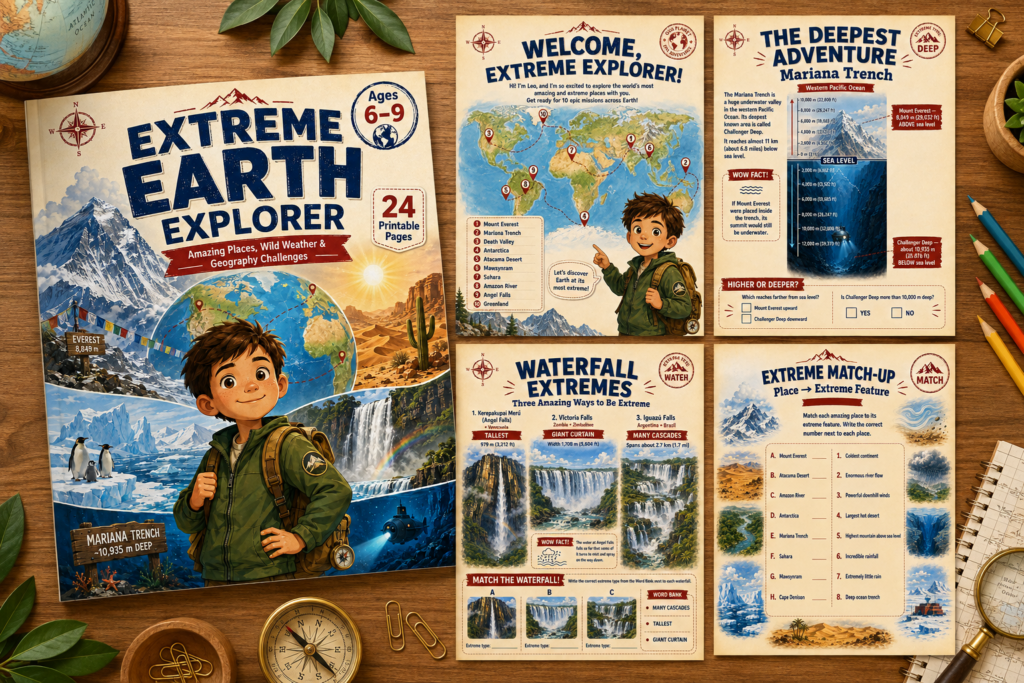
This massive, 24-page digital masterpiece takes the burden of planning entirely off your shoulders. It is perfectly designed for kids ages 6-9 and acts as a complete, «open-and-go» adventure. Your child will team up with Leo the Guide to embark on 10 epic missions across the globe.
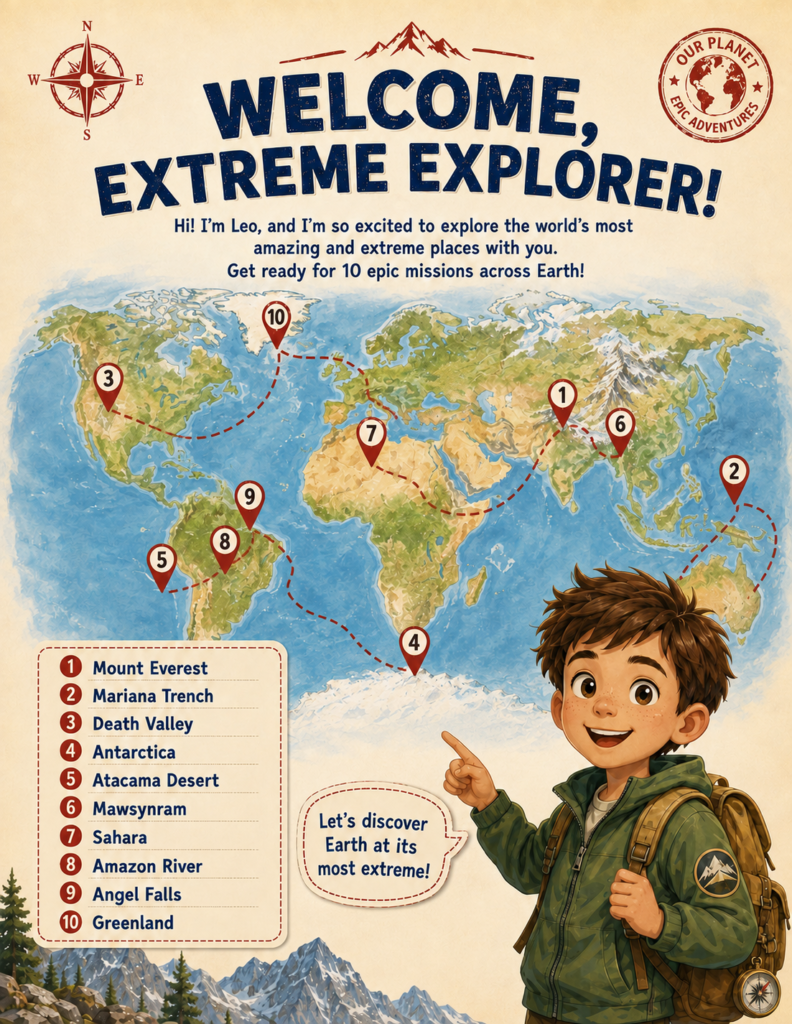
Here is why this workbook will transform your geography lessons:
- Zero Prep Required: No expensive supplies or complex lesson plans. Just print the beautiful, high-resolution pages, hand your child their favorite colored pencils, and let Leo guide them through the world’s most extreme locations.
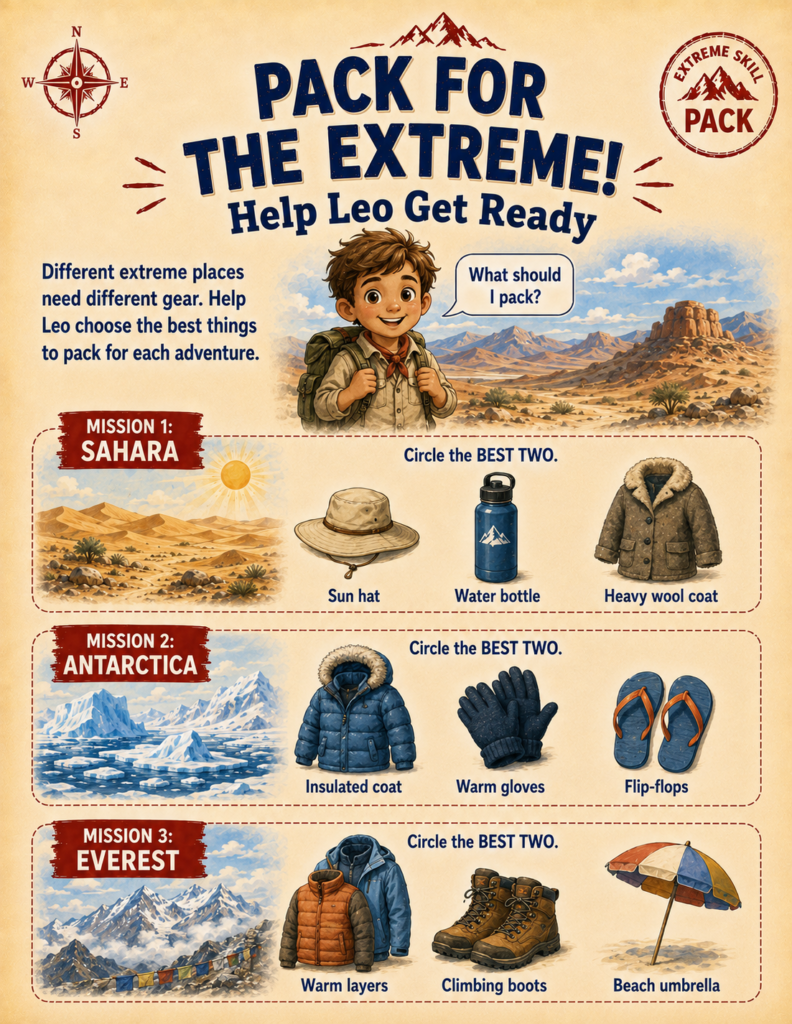
- 10 Epic Global Missions: Your child won’t just be reading; they will actively navigate Mount Everest, dive into the Mariana Trench, survive Death Valley, brave the freezing winds of Antarctica, and explore the Amazon River and Greenland!
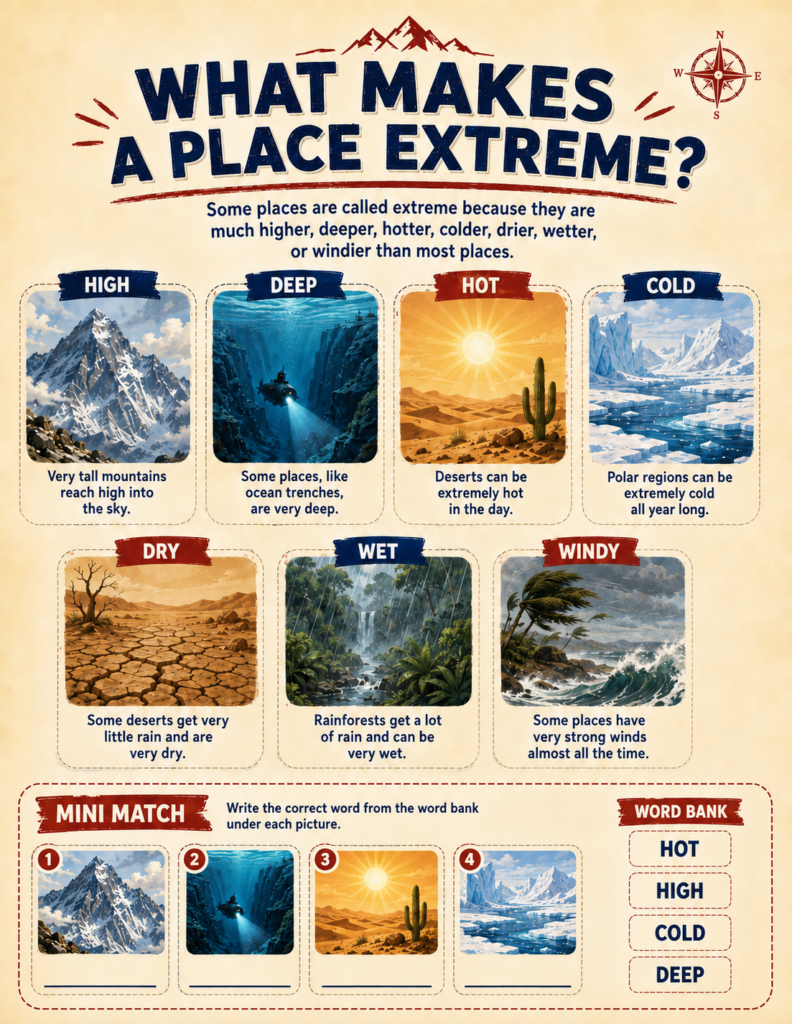
- Conceptual Learning: It beautifully explains exactly what makes a place extreme (high, deep, hot, cold, wet, dry) through highly engaging visuals and puzzles.
- Perfect for Any Schedule: Whether you want to use it as your core science curriculum, a fun Friday activity, or a tool to prevent summer slide, it easily adapts to your family’s unique pacing.
Are you ready to dive deep, climb high, and explore the wildest wonders of our planet without the stress of planning?
👉 Get the Extreme Earth Explorer Activity Book in the Tiny Joy Studio Etsy Shop Today