The Ultimate World Cities Unit Study for Kids (No-Prep Human Geography!)
When we teach children geography, we often focus on the physical world: memorizing the names of continents, locating vast oceans, and identifying majestic mountain ranges. While these are essential foundations, there is an entire other side to geography that is incredibly fascinating for children yet often overlooked in elementary curriculums: Human Geography.
Instead of just asking where a place is, human geography asks how people live there. Why are some streets built in a perfect grid while others wind like a maze? Why do some communities rely on ferries while others build massive underground subway systems? How do parks, rivers, and bridges shape our daily lives?
If you want to dive deep into urban planning, architecture, and global cultures without spending hours creating lesson plans from scratch, we have the perfect solution. Let’s explore how to create an engaging, hands-on world cities unit study that will turn your kids into brilliant urban detectives!
Why Teach Human Geography and Urban Planning?
Children are naturally curious about the world around them. They build towering cities out of Lego bricks, draw intricate road networks with chalk on the driveway, and create bustling towns in video games.
By introducing a formal world cities unit study into your homeschool routine, you are taking that natural curiosity and giving it an educational framework. Kids begin to understand that a city isn’t just a random pile of concrete and glass; it is a living, breathing ecosystem shaped by history, nature, and the people who call it home. This type of learning fosters incredible critical thinking and cultural empathy.
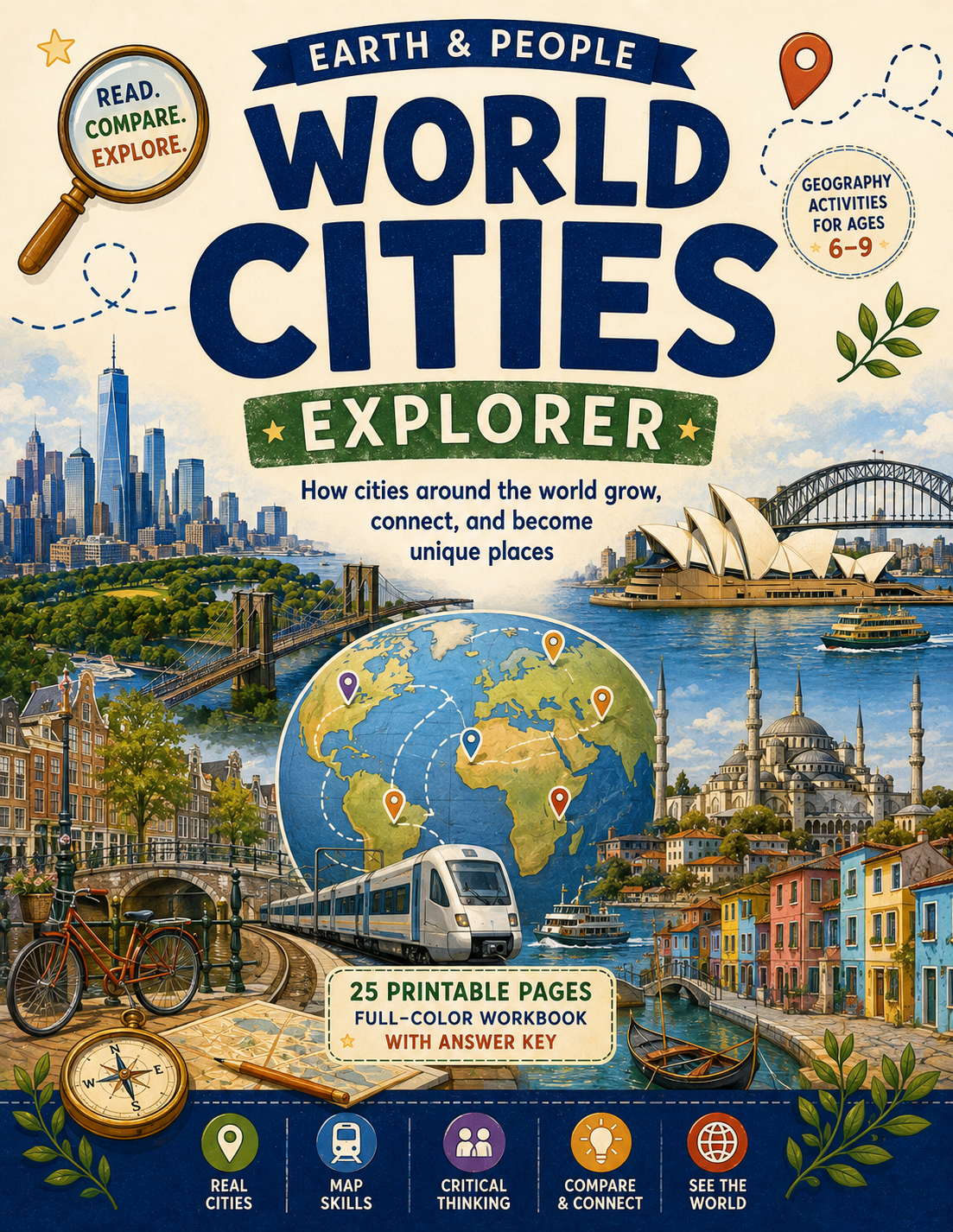
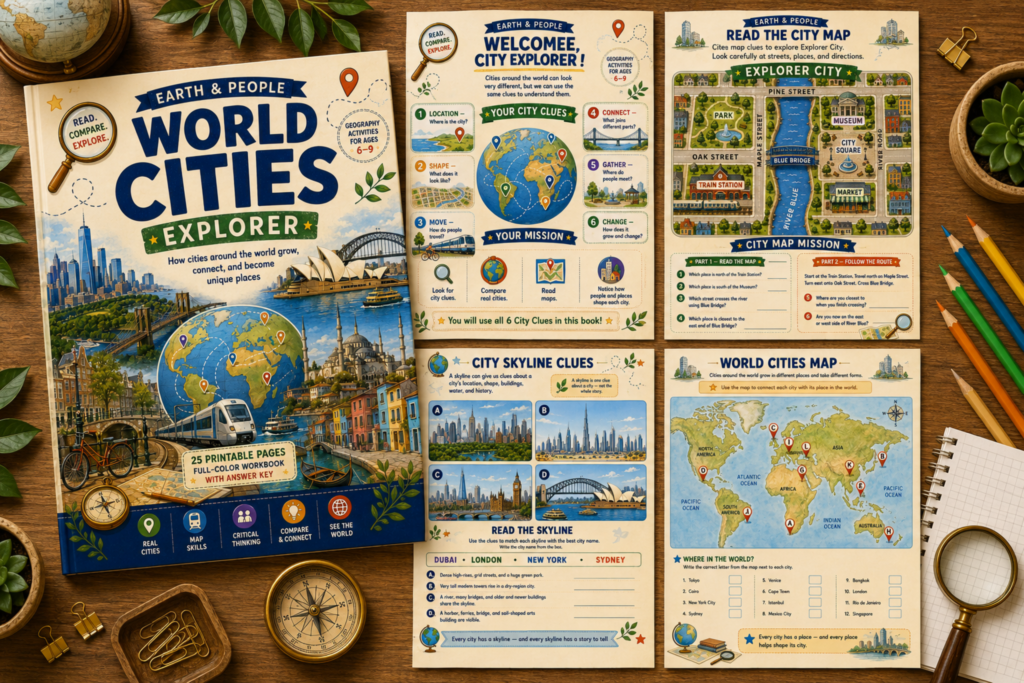
However, finding age-appropriate materials that teach urban concepts to 6- to 9-year-olds without boring them to tears can be a challenge. That is exactly why the World Cities Explorer Activity Book was created. It serves as a complete, open-and-go curriculum that transforms complex urban concepts into fun, interactive puzzles.
The 6 City Clues: A Framework for Exploration
The secret to the World Cities Explorer workbook is that it teaches children to read a city using «6 City Clues.» By mastering these clues, your child will be able to look at a map or a photograph of any city in the world and understand how it functions.
1. Location and Geography (Where land meets water)
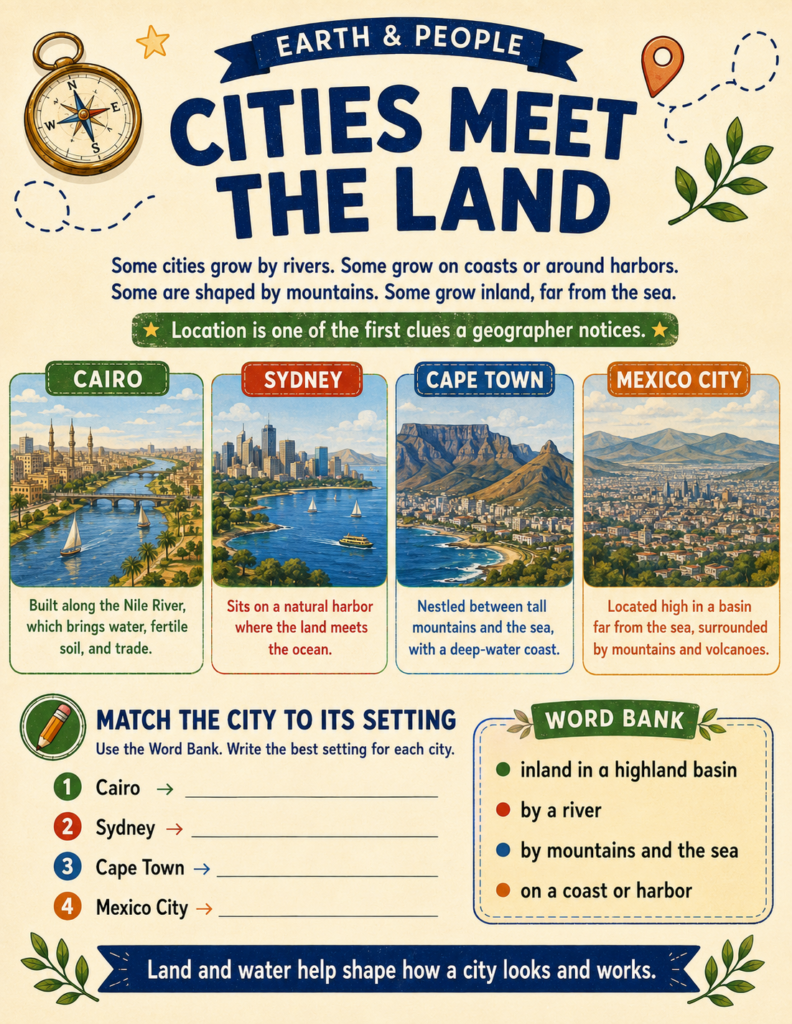
Before a single brick is laid, nature decides a city’s destiny. Does the city sit in a highland basin like Mexico City? Does it wrap around a natural harbor like Sydney? Or does it rely on the fertile soil and trade routes of a massive river like Cairo and the Nile?
- Hands-on Idea: While working through the workbook pages on city locations, have your kids look at a map of your own hometown. Is it near a river, ocean, or mountain? How did that location help your town grow? Connecting global concepts to local environments is a proven way to prevent summer slide and keep their minds active.
2. City Shapes and Footprints
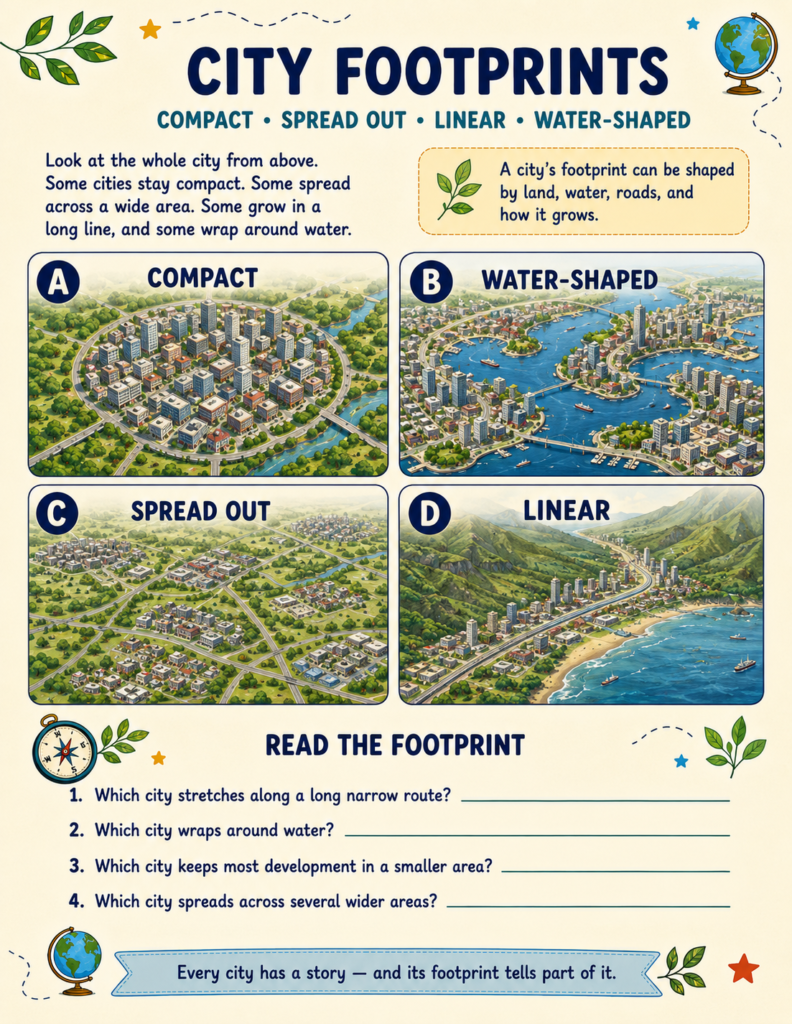
If you fly over a city in an airplane, what does it look like? Some cities, like New York, are built on a strict, mathematical grid of avenues and streets. Others, like Paris, feature grand avenues radiating outward from a central point, while ancient cities like Marrakech have winding, maze-like alleys designed for walking.
- Inside the Book: Your child will play «City Detective,» analyzing bird’s-eye views and identifying whether a city’s footprint is compact, spread out, linear (built along a coastline or valley), or shaped by water.
3. Transportation and Movement
How do millions of people get to work and school every day? Movement is the lifeblood of any metropolis.
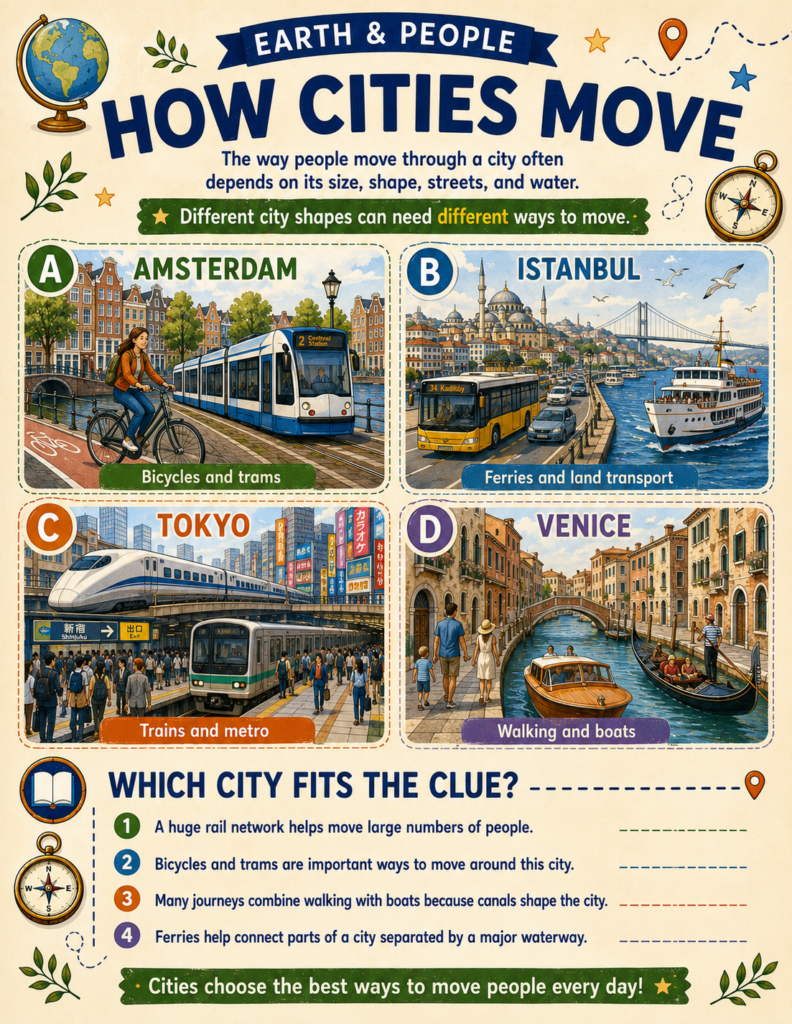
- Inside the Book: Kids will explore how geography dictates transportation. They will learn why Amsterdam relies heavily on bicycles and trams, why Tokyo needs a massive, high-speed rail network, and why Venice uses walking and boats instead of cars.
- Extend the Lesson: After completing this section, challenge your kids to design their own futuristic transportation system for your neighborhood. Engaging in these types of creative design challenges is exactly why project-based learning is essential for elementary students.
4. Connection and Gathering Spaces
A successful city isn’t just about moving people from point A to point B; it’s about giving them places to stop, rest, and connect.
- Inside the Book: Your child will analyze the importance of public spaces. They will differentiate between shaded plazas, waterfront promenades, neighborhood parks, and bustling market squares. They will even tackle real-world urban problems, such as figuring out how to reduce the heat on a paved city street by adding green spaces and street trees!
Critical Thinking: Comparing Global Metropolises
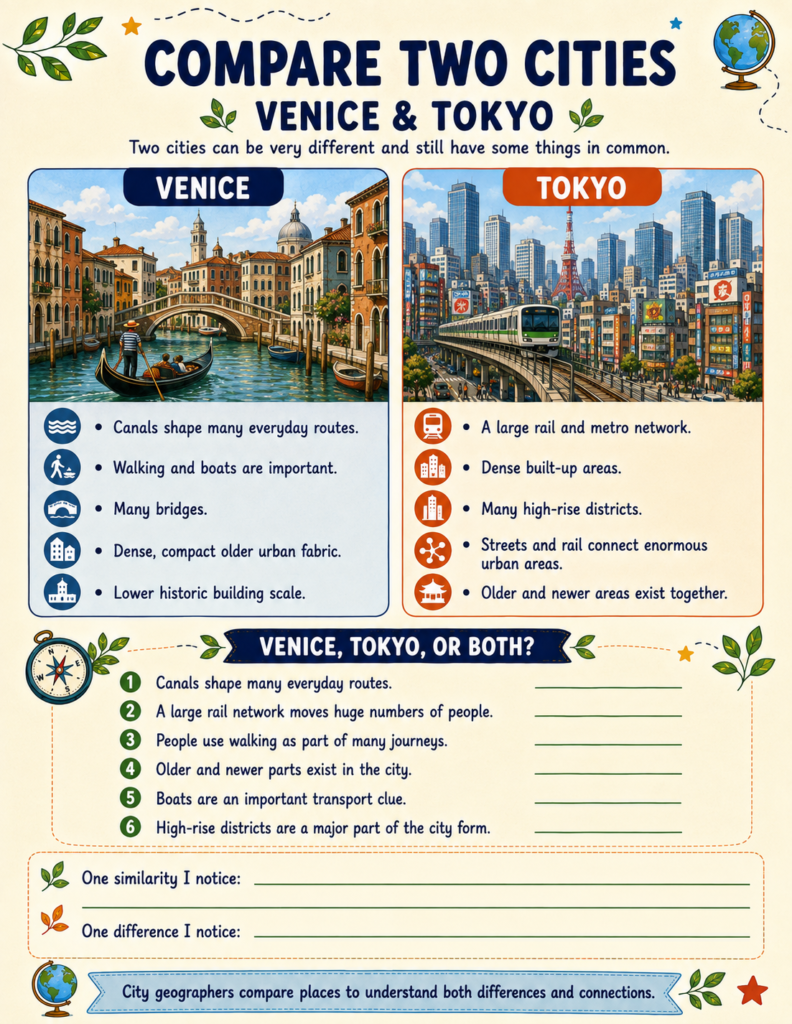
One of the most valuable skills a child can develop is the ability to compare and contrast. The World Cities Explorer book includes a dedicated section where kids must analyze two vastly different places—for example, the canal-filled, historic city of Venice and the neon-lit, high-tech, and densely packed city of Tokyo.
By finding similarities (both have older and newer parts, both rely on walking) and differences (boats vs. metro trains, low historic buildings vs. skyscrapers), children develop a nuanced worldview. They realize that while human communities look very different on the outside, we all share the same basic needs for connection, shelter, and movement.
Gamify Your Geography Lessons
Even with the most fascinating topics, kids can sometimes lose focus if they feel like they are just doing «schoolwork.» The secret to keeping them engaged from the first page to the last is motivation and rewards. This is where gamification in education changes everything.
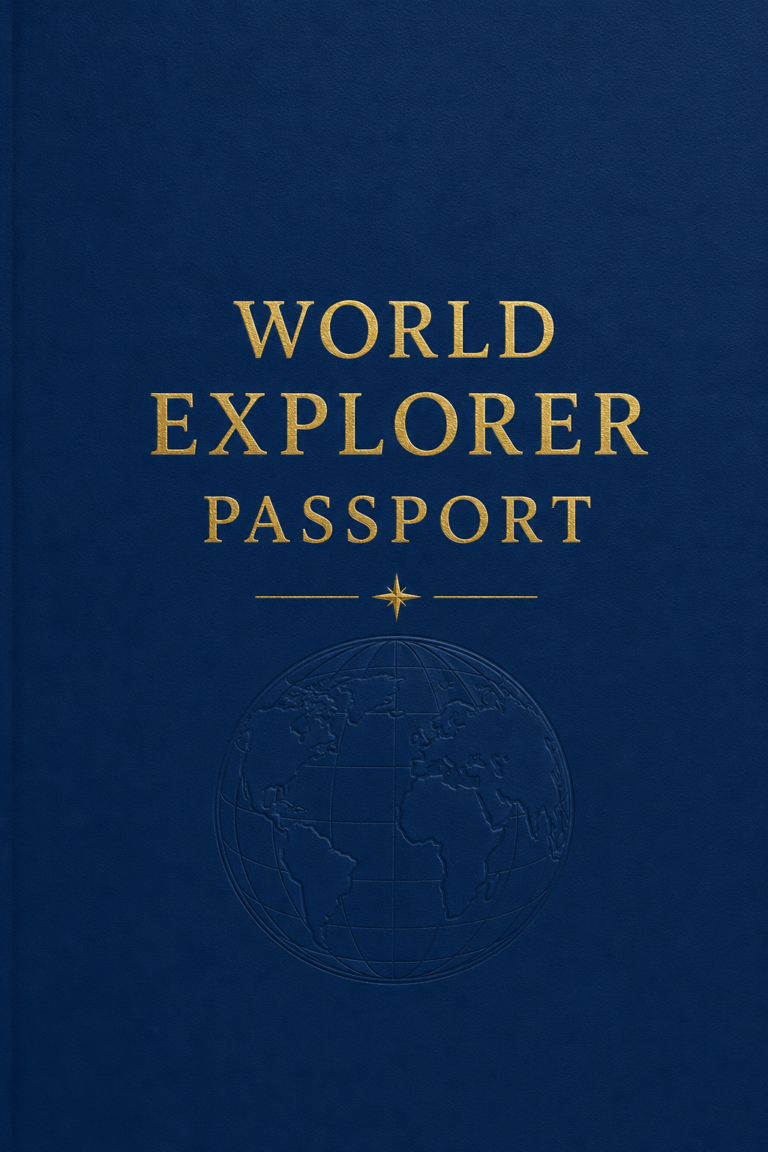
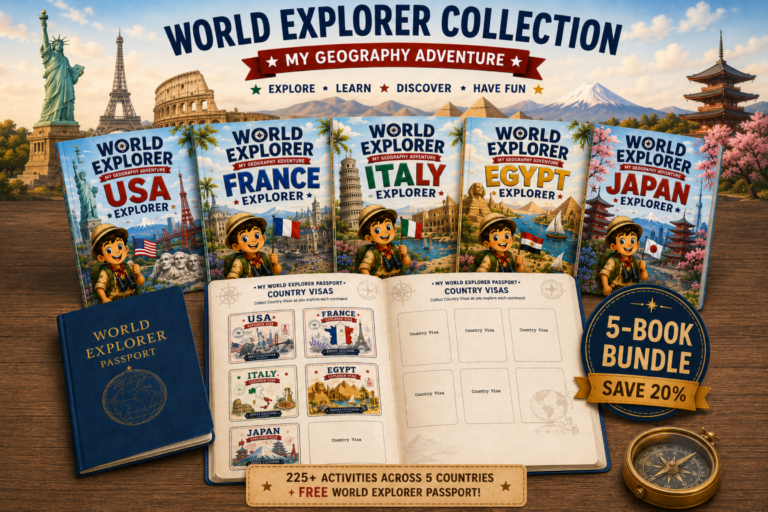
When your child completes their urban planning missions, they aren’t just done—they are rewarded! The World Cities Explorer book integrates perfectly with the World Explorer Passport system. Upon finishing the book, your child earns an official Certificate of Achievement and a unique Visa stamp to cut out and glue into their passport.
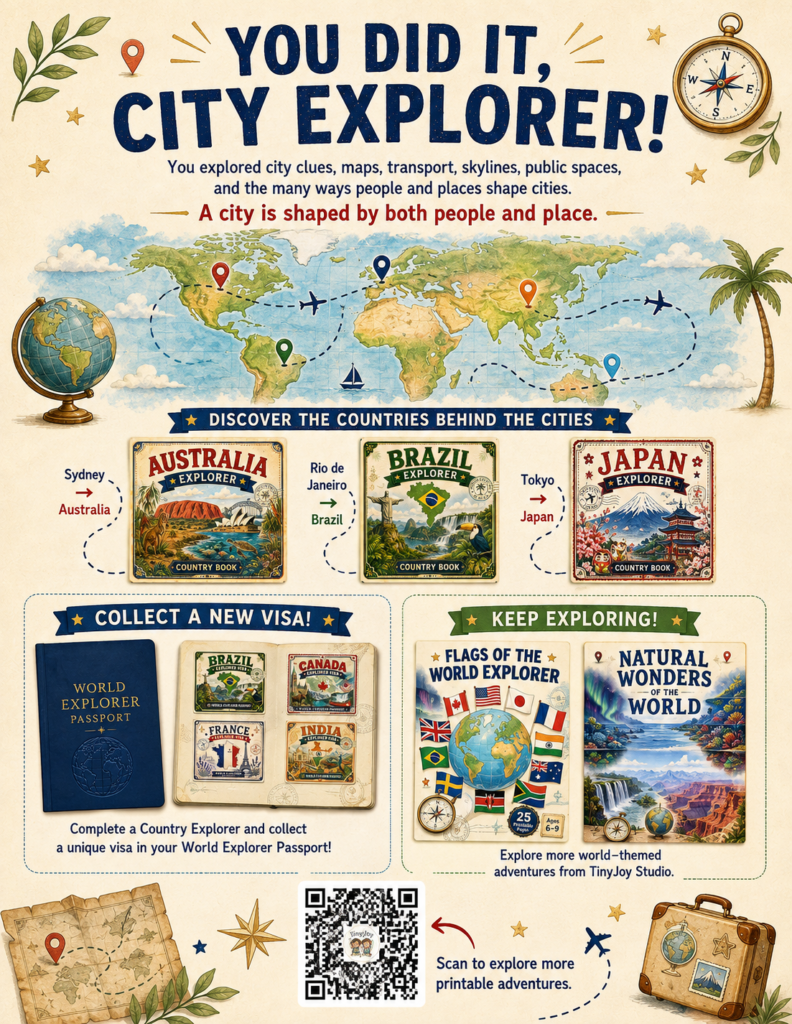
This simple act of collecting visas creates a massive sense of pride and accomplishment. Before you know it, they will be begging you to print out the next country or city to explore just so they can fill their passport!
Are you ready to grab your map, pack your bags, and become a master city explorer? Say goodbye to boring textbooks and hello to interactive, screen-free learning.
👉 Grab the World Cities Explorer Activity Book in the Tiny Joy Studio Etsy Shop Today!