Interactive Bodies of Water Activities for Kids: A No-Prep Geography Unit Study
If you have ever tried to explain to a 7-year-old the difference between a gulf, a bay, a strait, and a canal, you know how quickly eyes can glaze over. For young learners, physical geography can easily feel abstract and overwhelming if it is presented as a list of textbook definitions. Yet, water is one of the most fascinating topics in Earth science! Finding hands-on bodies of water activities for kids can turn dry geography facts into a thrilling exploration of our living planet.
Water connects every corner of the Earth. From roaring waterfalls in lush rainforests to man-made canals cutting through massive continents, waterways shape how humans live, travel, and trade. For homeschool parents and early elementary educators, teaching these concepts in a memorable, visual way usually requires hours of searching for worksheets, printing maps, and designing diagrams.
In this comprehensive guide, we will break down the easiest, most engaging ways to teach your kids about rivers, lakes, waterfalls, deltas, straits, and canals—without spending your entire weekend on prep work!
1. Start with the Big Picture: The 6 Essential Waterways
Before diving into complex global maps, young explorers need a solid grasp of the primary types of water features. Rather than memorizing long definitions, children learn best by comparing shapes, movement, and features.
Start your unit study by introducing the six key waterways that shape our world:
- Rivers: Dynamic, flowing paths of fresh water that travel across land toward an ocean or lake.
- Waterfalls: Dramatic drops where river water rushes off cliffs or steep rocks.
- Lakes: Calm, still bodies of fresh or saltwater completely surrounded by land.
- Deltas: Unique, fan-shaped wetlands formed where a river slows down and spreads into the sea.
- Straits: Narrow passages of water that connect two larger bodies of water.
- Canals: Amazing man-made waterways created to connect distant places for ships.
[Вставь скриншот Страницы 2 из книги (Water Places to Explore). Alt text: types of water bodies for kids worksheet printable]
Hands-on Tip: Use household items to demonstrate these concepts! You can pour water down a slanted baking sheet to show a river, create a small dam with clay to make a lake, or use sponges to show how a river delta filters water. Linking physical experiences with visual learning is a proven way to make learning fun for kids.
2. Follow the Flow: Mapping Rivers from Source to Sea
Once your child recognizes basic water features, it is time to show them how water moves across the globe. Rivers are nature’s highways, carrying water, nutrients, and sediments across thousands of miles.
Children are naturally curious about where things begin and end. Ask your child: «Where does a river start?» (High up in the mountains or hills!) «Where does it end?» (In the ocean or a sea!). Tracing a river’s journey helps kids understand elevation, erosion, and environmental connections.
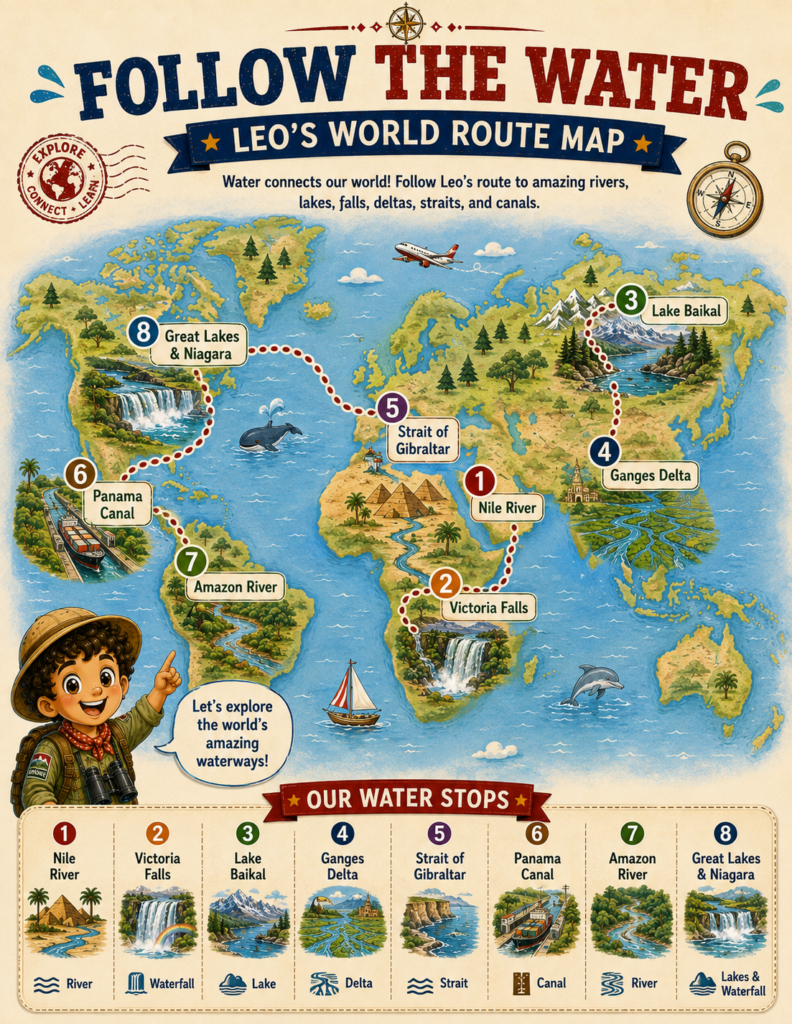
Have your young geographer use blue colored pencils to trace major world rivers on a map—like the Amazon River in South America or the Nile River in Africa. This simple mapping activity builds Spatial reasoning and encourages project based learning in homeschooling.
3. Explore World Famous Water Landmarks
Kids love record-breakers! When you pair physical geography with famous real-world landmarks, the concepts suddenly come alive. Instead of just studying «waterfalls,» study Niagara Falls or Victoria Falls!
Here are three famous water landmarks to feature in your unit study:
- Victoria Falls (Africa): One of the largest and most spectacular waterfalls on the planet, known locally as «The Smoke That Thunders.»
- The Amazon River (South America): The greatest river in the world by water volume, flowing through the vast Amazon Rainforest.
- The Panama Canal (Central America): A miraculous engineering feat that allows massive cargo ships to cross directly between the Atlantic and Pacific Oceans.
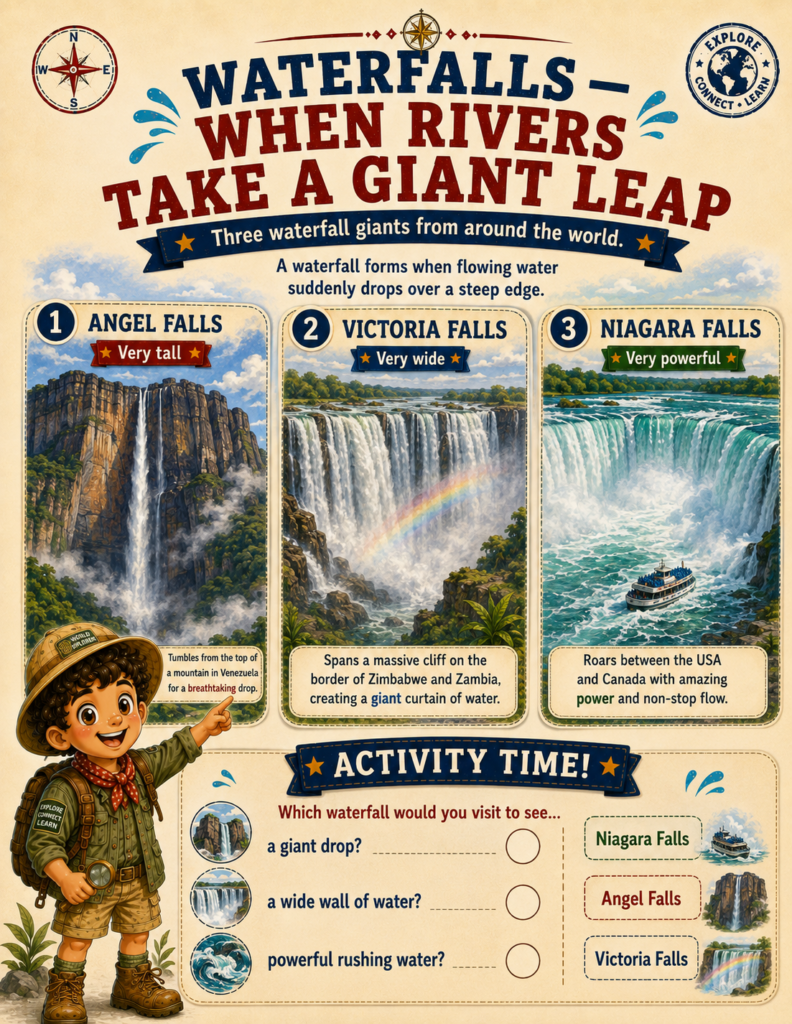
Connecting geography with wildlife and natural wonders nurtures a deep appreciation for the environment. It is a fantastic tool to raise a global citizen who understands how interconnected our world truly is.
4. Compare Straits and Canals: Nature vs. Engineering
One concept that often confuses kids is the difference between a strait and a canal. Both are narrow waterways that connect larger bodies of water, but one was formed by nature, and the other was built by humans!
- Straits (Natural): Formed over thousands of years by tectonic movements or glaciers (e.g., the Strait of Gibraltar).
- Canals (Man-Made): Dug out by engineers, machines, and workers to shorten shipping routes (e.g., the Suez Canal).
Discussing how canals save ships weeks of travel time around entire continents introduces children to history and engineering alongside geography. To keep their minds active during quiet hours or travel, physical activity sheets offer the perfect screen free activities for kids.
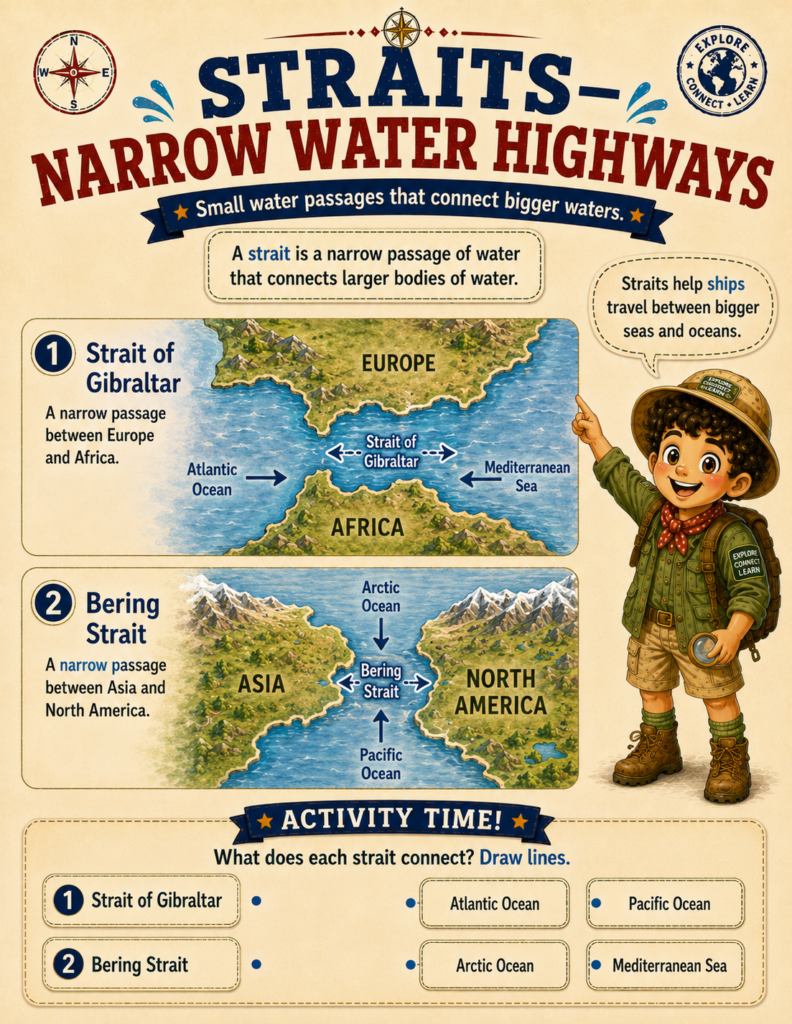
The Ultimate «No-Prep» Solution for Water Geography
You don’t need to spend hours designing matching games, drawing river diagrams, or searching for age-appropriate maps online.
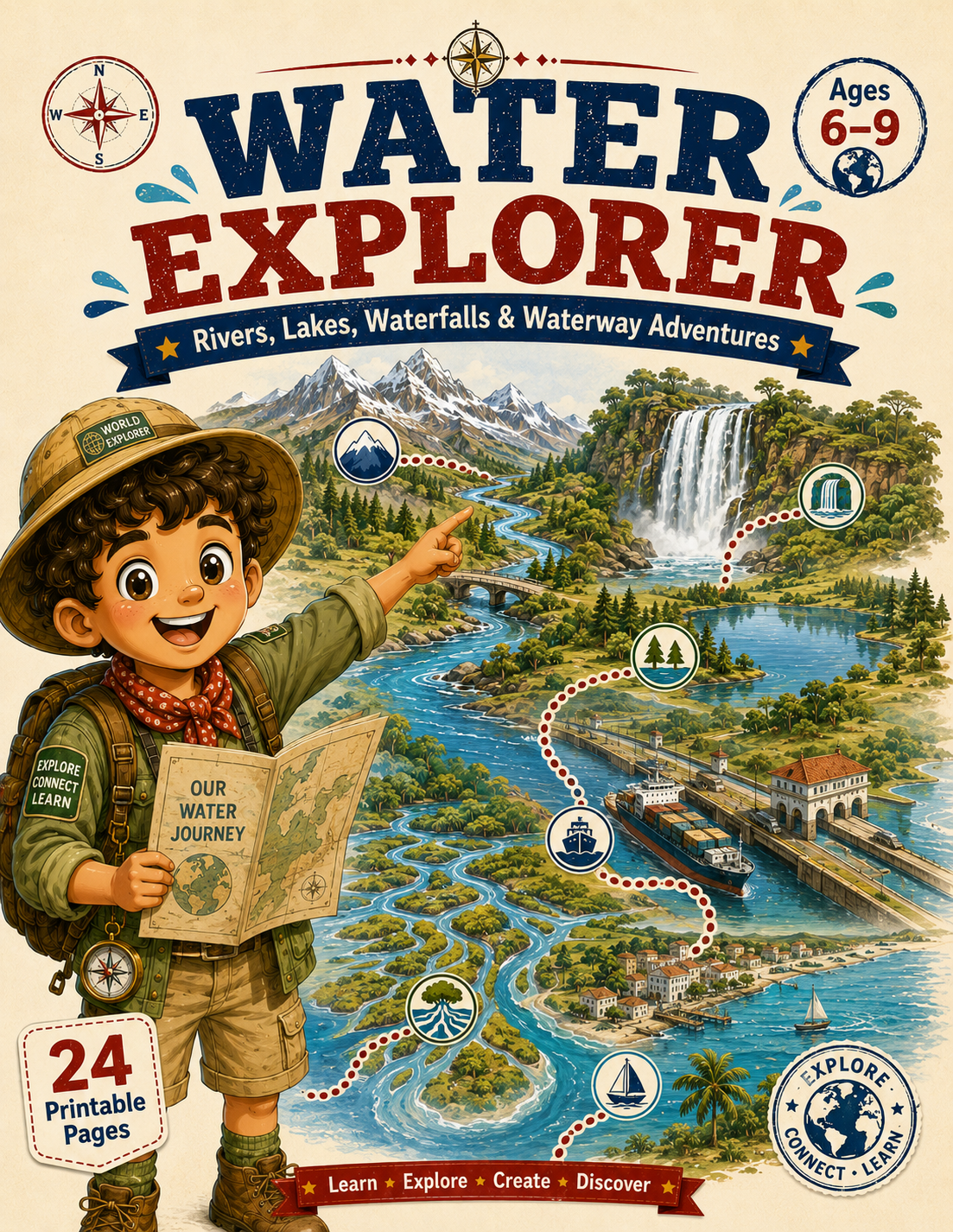
That is why we created the Water Explorer: Rivers, Lakes, Waterfalls & Waterway Adventures workbook at Tiny Joy Studio!
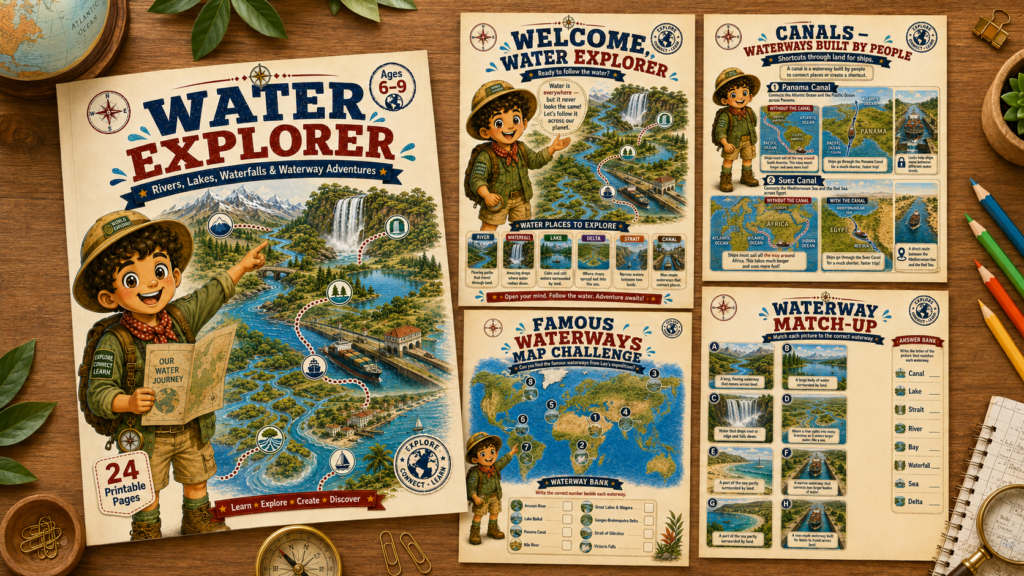
Specially created for curious explorers ages 6 to 9, this 24-page printable activity book turns physical geography into a captivating quest with Leo the Explorer Guide. Inside, your child will:
- Identify rivers, waterfalls, lakes, deltas, straits, and canals.
- Follow river routes across world continents.
- Solve water-themed logic puzzles, mazes, and word challenges.
- Earn their official Water Explorer badge!
The best part? It is 100% open-and-go. Just print the pages at home, grab some crayons or colored pencils, and watch your child fall in love with exploring Earth’s waterways!
Ready to launch your water adventure today?